
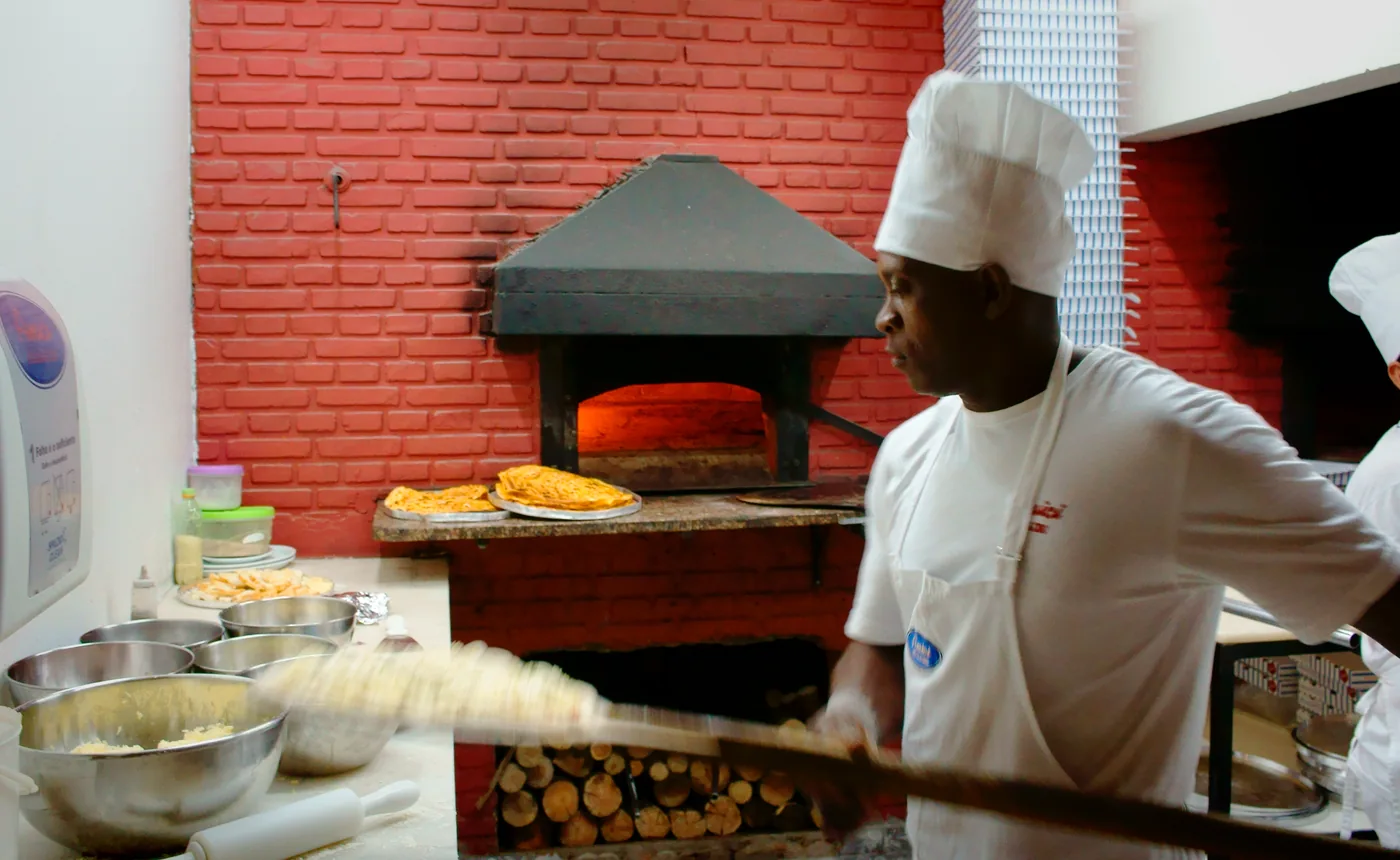
On 15 September a jury in Naples announces the hundred best pizzerias on earth, from a stage at the Teatro Mercadante.1 Naples has the strongest claim to be making that announcement: UNESCO added the Neapolitan pizzaiuolo's craft to its intangible heritage list in 2017, protecting the dough and the oven rather than the food.2
Then the dish left. It went to Connecticut and got charred, to Chicago and got deep, to Detroit and got square, and to a delivery network that now runs on an app. Fourteen rankings on this site hold pizza or a piece of it, and no two of them want to know the same thing.
Every list agrees pizza belongs on it. None of them agree whose pizza.
Mac and Cheese vs Pizza: the dish nobody has to cook
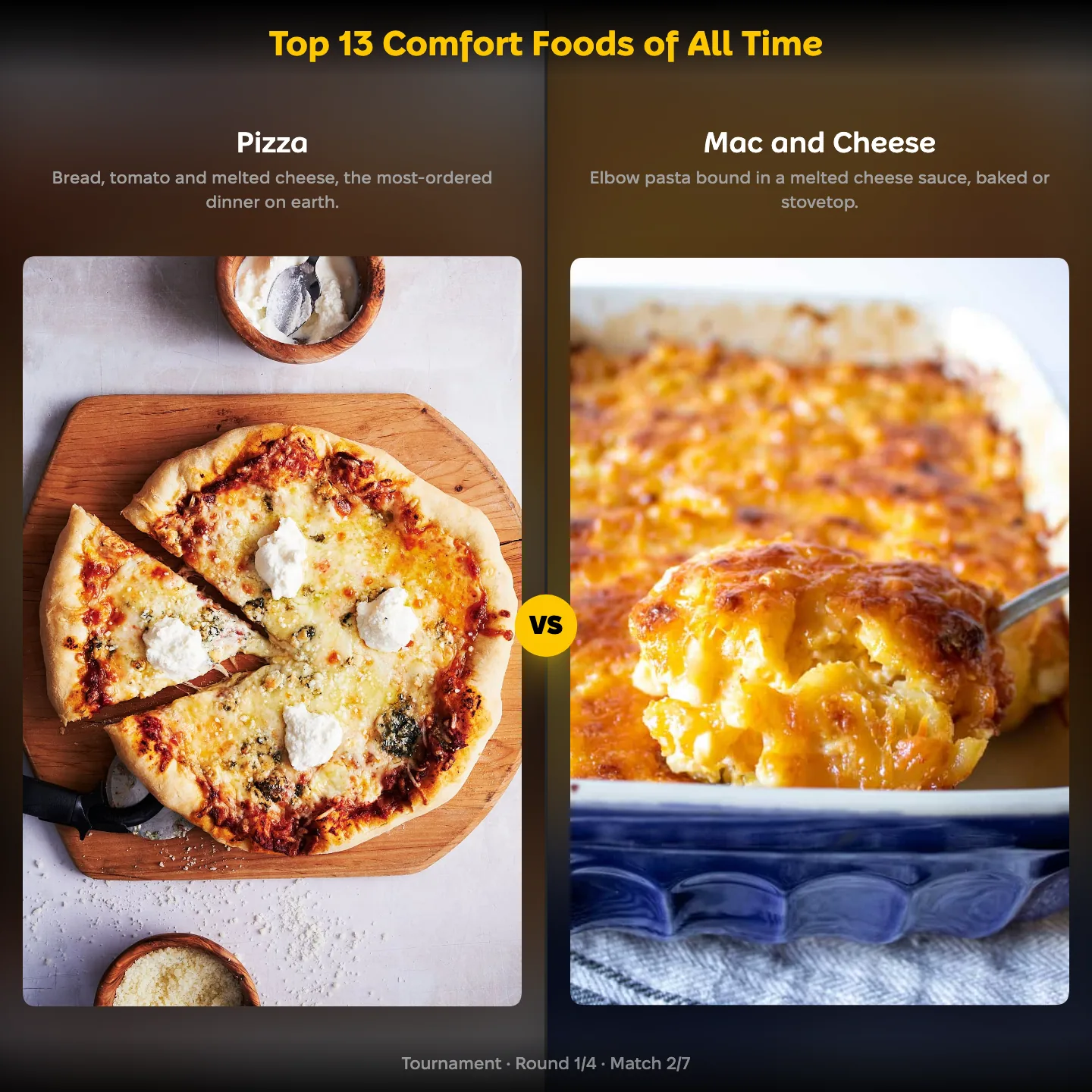
Comfort food is the broadest room pizza ever walks into. The competition is thirteen dishes people make when the week has gone badly, most of them requiring an oven, a pan and forty minutes.
Pizza is the exception on that list, and the exception is the whole case for it. It is the only entry that arrives at the door already made.
Mac and cheese is the one with the deeper household claim. It is cheap, it is a store cupboard away, and it has been an American staple since long before anyone was delivering anything.
The rest of the field runs to chicken noodle soup, meatloaf and pot roast, all of which taste like somebody cooked for you. That is exactly what pizza cannot offer, and exactly why it wins the nights when nobody wants to.
Döner Kebab vs Pizza: the closing-time institutions
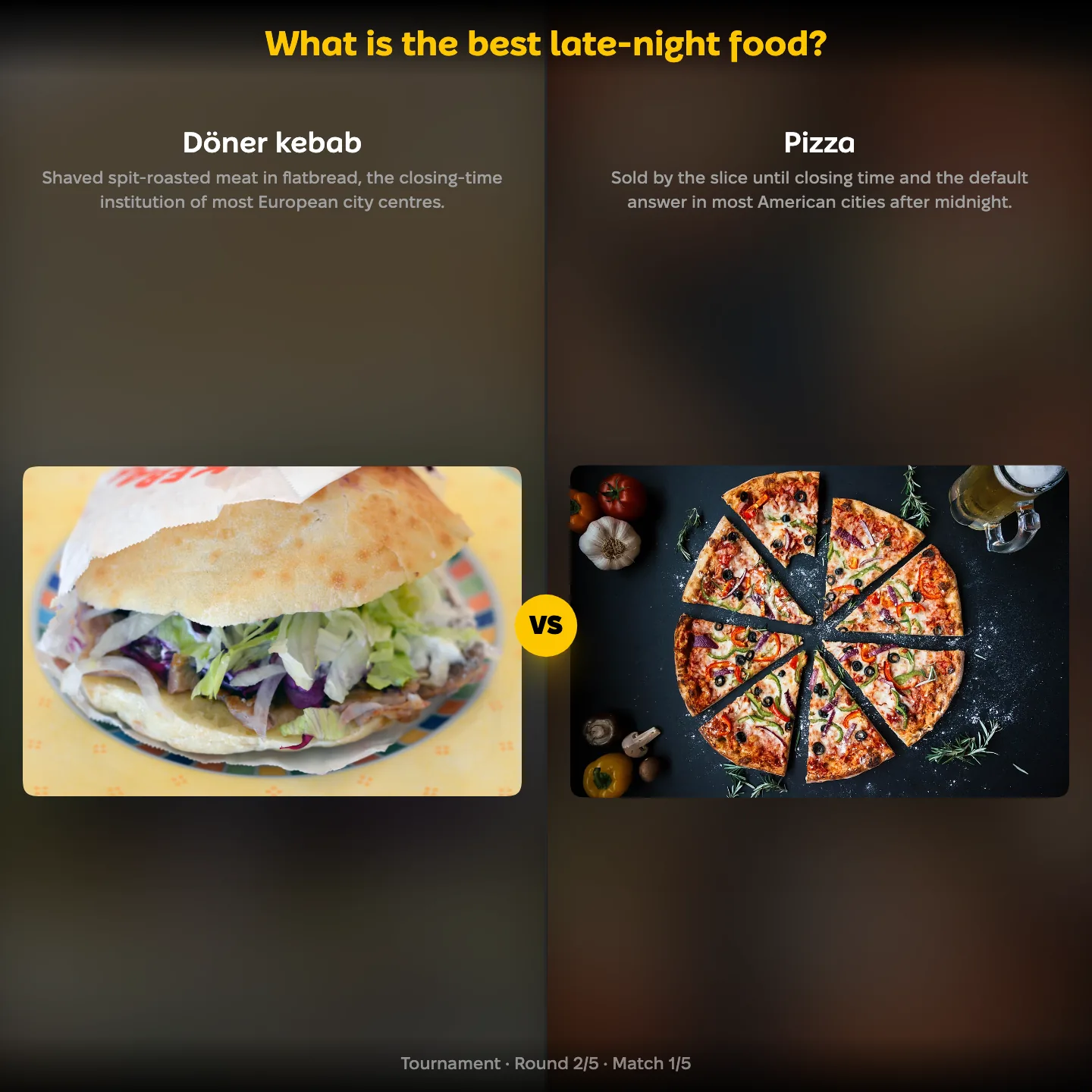
After midnight the field changes completely. Ramen, poutine, shawarma and a bacon roll are all serious contenders in some city at three in the morning, and none of them are contenders at lunchtime.
Pizza owns the American version of that hour, because the slice is sold as a unit. One dollar of decision-making, no cutlery, eaten walking.
The döner kebab owns the European version for the same structural reason. Shaved meat, flatbread, sauce, handed over in eleven seconds by the only lit window on the street.
Every other option here needs a table or a chair or a fork, which is why the two that need neither keep meeting near the front of this one.
Buffalo Wings Were Invented for This
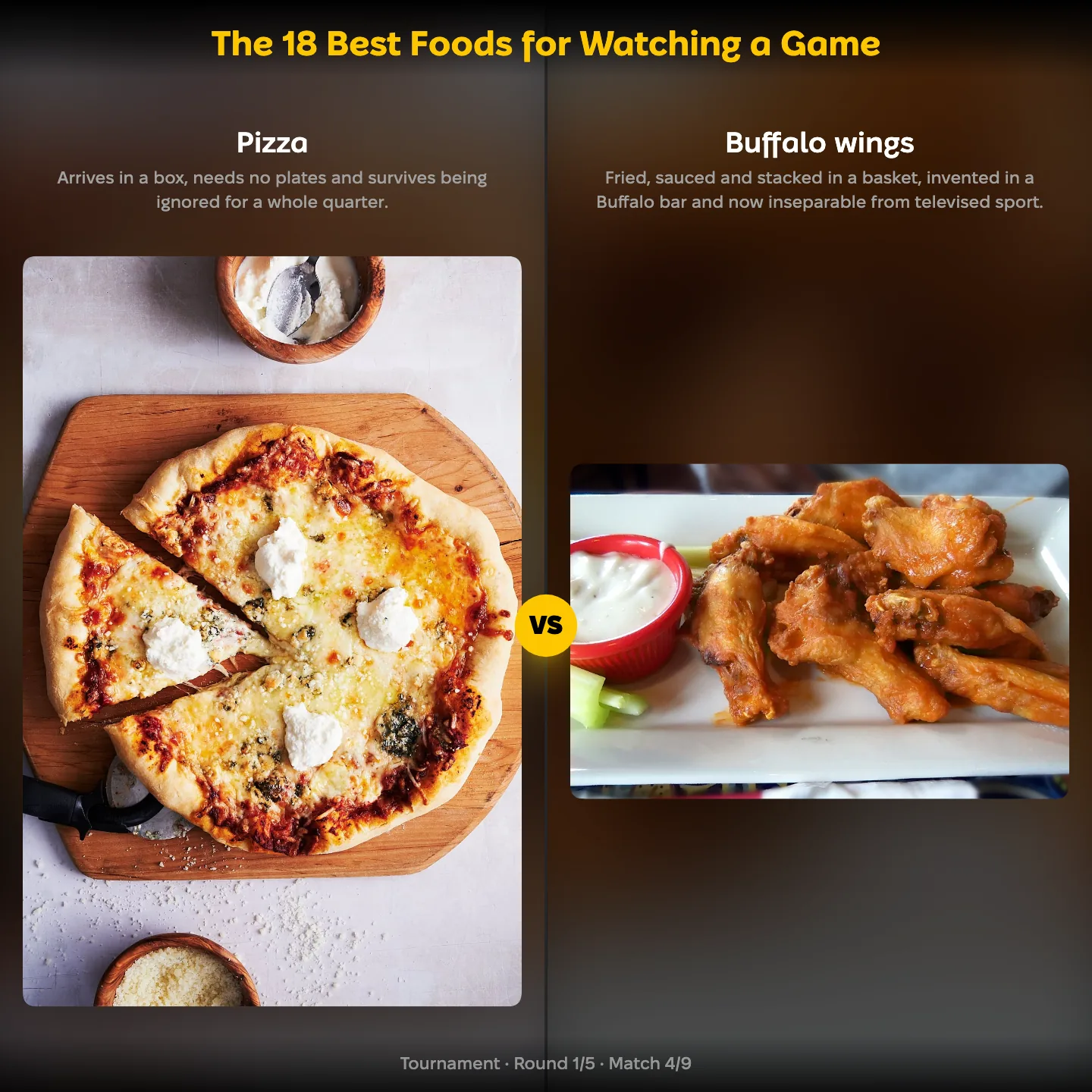
Watching sport is the one occasion food gets judged on logistics rather than flavour. Nothing on this list needs a plate, and nothing survives being ignored for a whole quarter.
Buffalo wings came out of a bar in Buffalo, New York, and they have never really left one. They are the purest game-day food on the list because they were designed for people who are looking somewhere else.
Pizza has a duller advantage. It is the only item here that can feed nine people without anybody cooking, which is why it turns up on tables that have already ordered wings.
Pepperoni, Pineapple and the 29% Who Refuse Anchovies
Zoom in one level and pizza stops being an option and becomes the question. Thirty-two toppings, and the country has hard numbers on most of them.
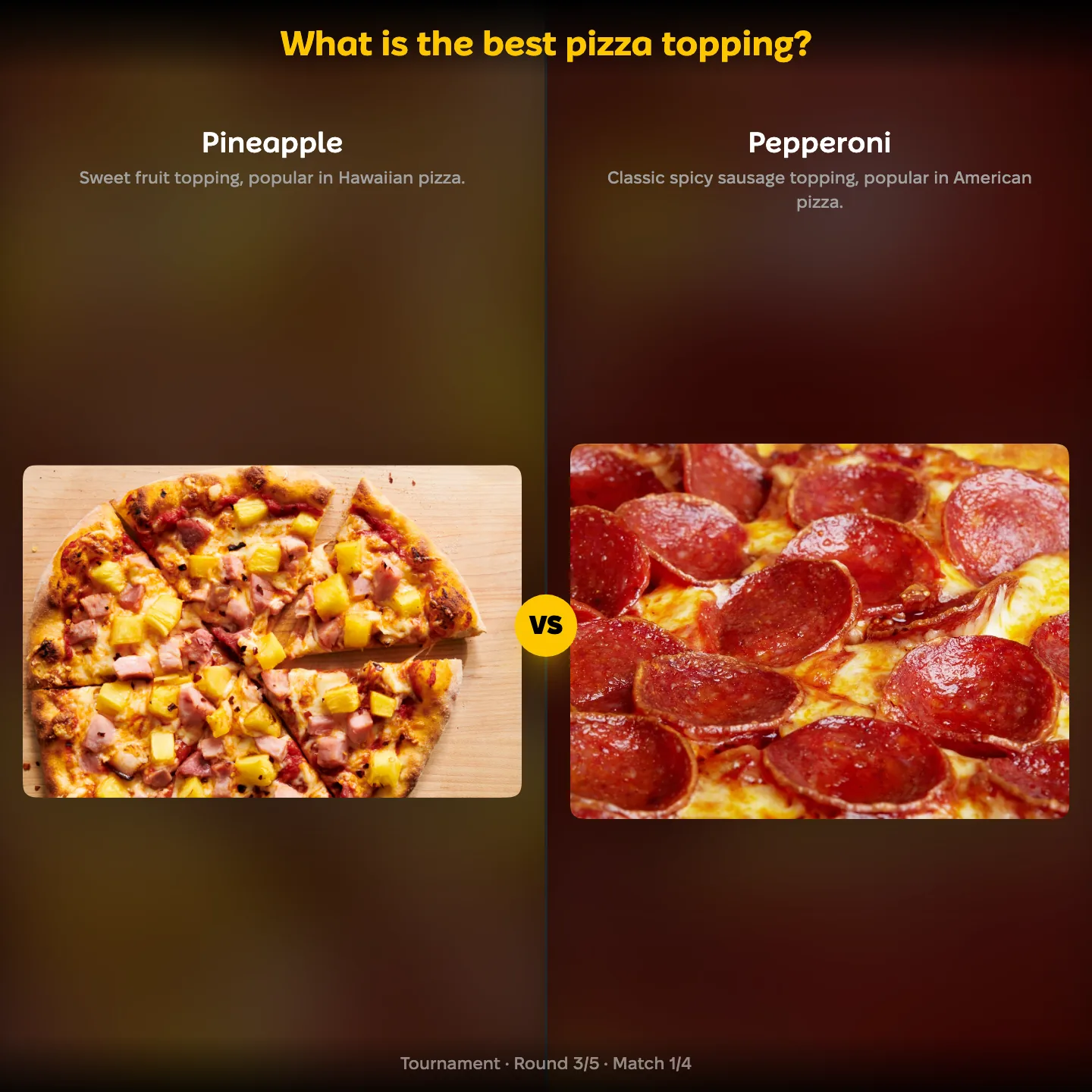
Pepperoni is the settled answer. A YouGov survey of 1,000 American adults in March 2023 found 24% naming it their all-time favourite, well clear of everything else on the board.3
Anchovies are the settled non-answer. The same survey found 29% calling them their least favourite topping, the largest rejection any topping collected.3
Pineapple is the interesting one, because it is not actually unpopular. It is polarised: 22% love it, 37% like it, 18% dislike it and 19% hate it. A topping most people are fine with, and a fifth of the country treats as a personal insult.
Domino's vs Pizza Hut: $9.5 Billion and a Red Roof
Most of America eats independent pizza. This ranking is about the other kind, the sixteen chains whose names everybody knows and whose products almost nobody has compared directly.
Domino's is the largest of them by a distance. Its own 2024 results reported $9.5 billion of US retail sales across 7,014 American stores, with more than 85% of that ordered through a screen rather than a phone call.4
Pizza Hut has the older claim on the culture. It is the red roof, the personal pan, the reading-programme certificate, and for a generation of Americans it was the first restaurant they were taken to on purpose.
Little Caesars, Papa Johns and Marco's fill out the familiar tier. Below them sit the regional names most of the country has never eaten: Round Table on the West Coast, Godfather's across the plains, Cicis in the South.
Chicago Deep-Dish vs the New York Slice
Thirteen American regional styles, and the two everybody has heard of are barely the same dish.
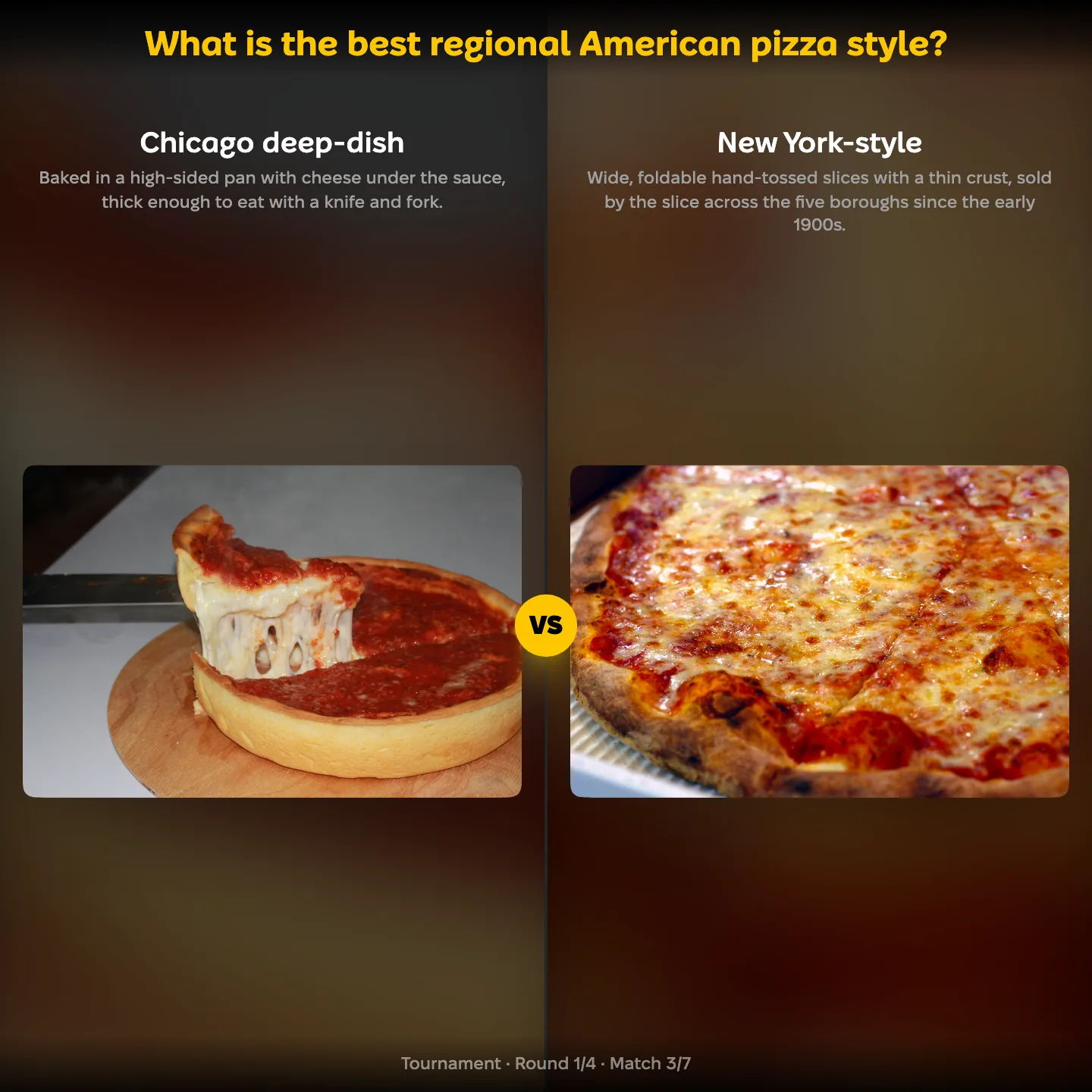
The New York slice is a delivery system. Thin, wide, foldable, sold by the slice since the early 1900s, engineered so that a person can eat it standing up with one hand.
Chicago deep-dish is the opposite of portable. It is baked in a high-sided pan, cheese below the sauce, it takes the better part of an hour, and it is eaten sitting down with a knife and fork.
Detroit falls between them and has the best origin story of the three. Gus Guerra made the first square pizza at Buddy's Rendezvous, on Six Mile at Conant, in 1946, using his wife Anna's Sicilian family dough and blue steel pans borrowed from the local auto plants.5
Further down, the specialists take over. St. Louis puts Provel on a cracker crust and cuts it into squares. Quad City grinds sausage into a spiral and cuts the pie into strips. Ohio Valley adds the cheese after the pizza leaves the oven, cold, on purpose.
New Haven vs New York: Coal Ovens Since 1925
Ask which American city does pizza best and the honest answer names a town few people outside the Northeast have ever driven to.
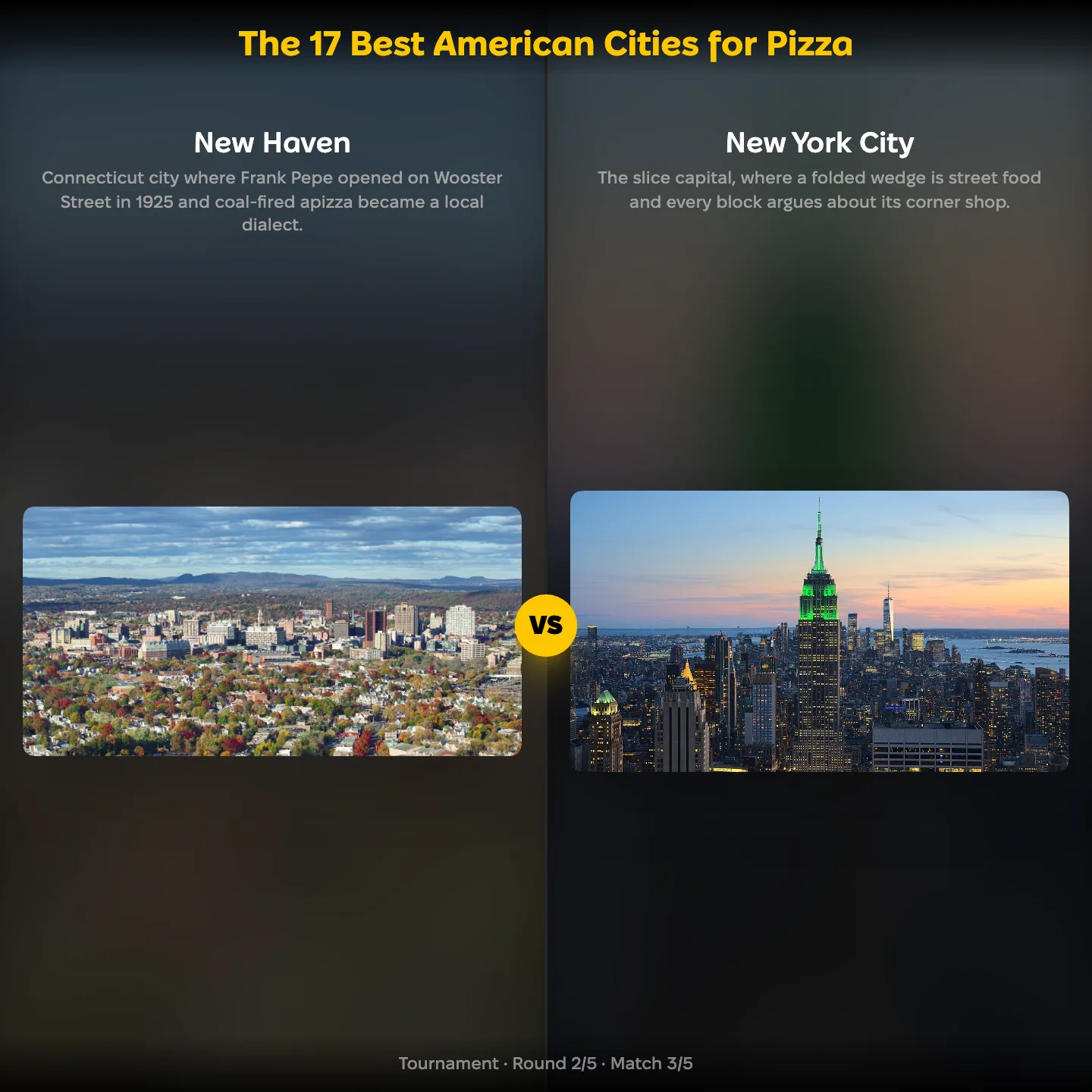
New Haven, Connecticut, is a city of about 130,000 people with a claim built on one street. Frank Pepe opened there in 1925 and made his name on coal-fired apizza: charred, chewy, oblong, ordered plain with grated cheese or under white clam.6
New York has the volume, the slice shops and the delivery culture that the rest of the country copied. It also has the strongest external endorsement available: 50 Top Pizza named Una Pizza Napoletana, in New York, the best pizzeria in the United States for 2026, ahead of Pizzeria Sei in Los Angeles and Tony's Pizza Napoletana in San Francisco.7
Chicago and Detroit each invented a style, which is their entire case. Phoenix and Portland are there because the modern American pizzeria stopped being an East Coast phenomenon two decades ago.
And Trenton, New Jersey, quietly makes tomato pies with the sauce on top of the cheese, which is either heresy or the older way round, depending on who is talking.
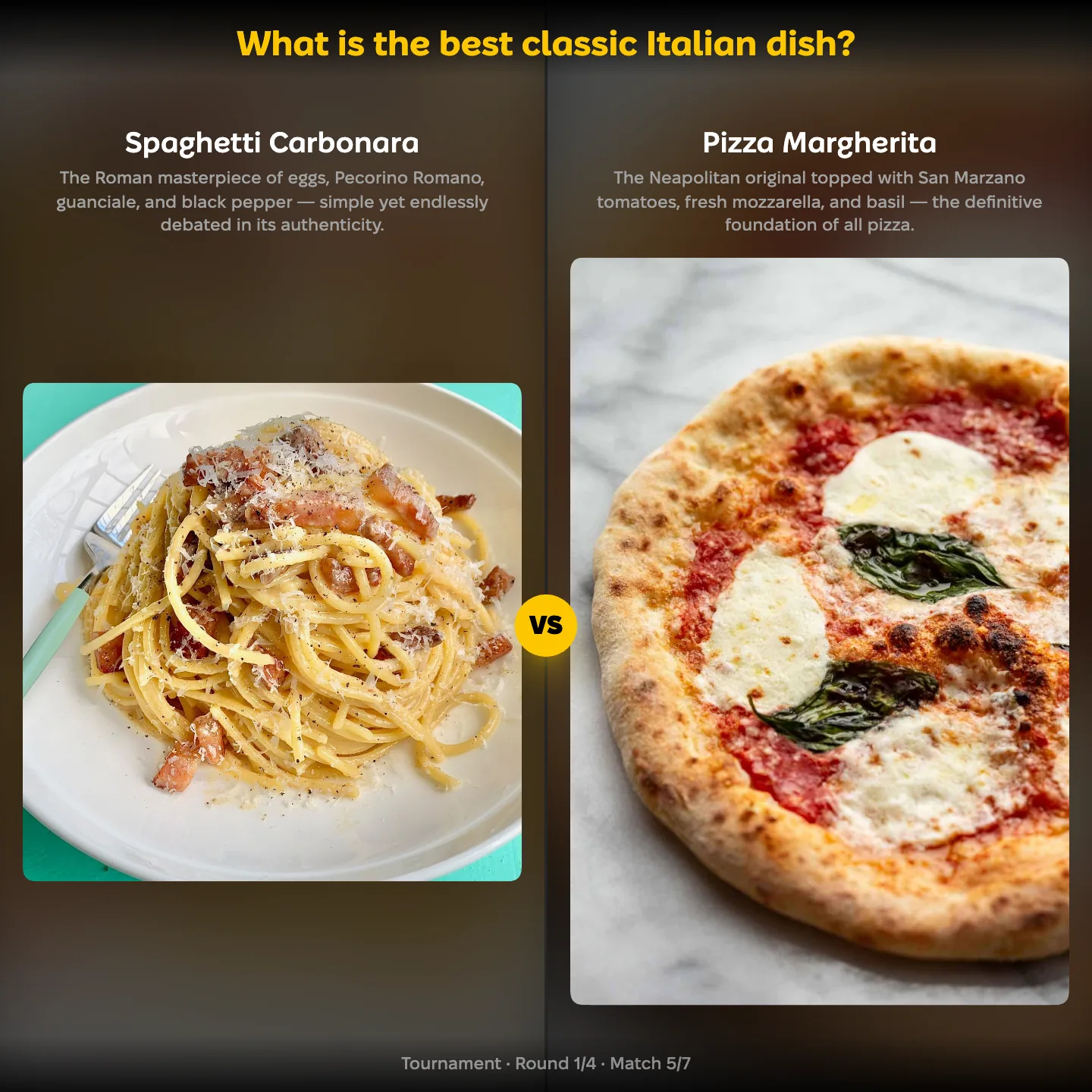
Carbonara vs Margherita: Rome and Naples on One List
Back in Italy, pizza is not the national dish. It is one of thirteen, and the company is unforgiving.
Pizza Margherita carries the whole southern case: San Marzano tomatoes, fresh mozzarella, basil, and a dough that has been made the same way for long enough to become a protected craft.
Spaghetti carbonara carries Rome's, and it does it with four ingredients and an argument about every one of them. Guanciale or pancetta, pecorino or parmesan, and never, under any circumstances, cream.
Behind the two of them sit osso buco, cacio e pepe, lasagna al forno and bistecca alla fiorentina, each the flagship of a different region that does not accept Naples as the capital of anything.
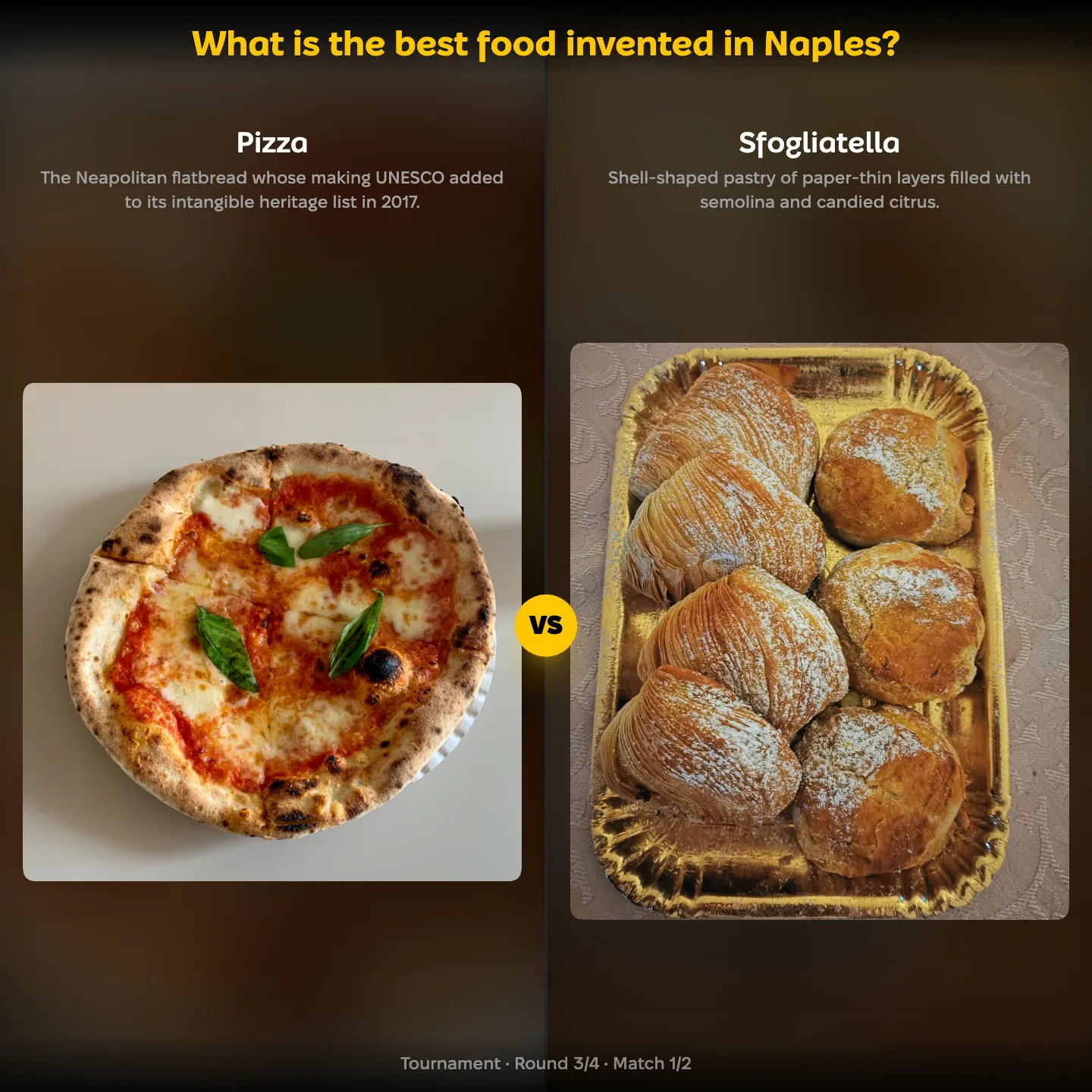
Naples Also Invented the Sfogliatella
Narrow the map to one city and pizza suddenly has thirteen local rivals, most of which never made it past the ring road.
The sfogliatella is the strongest of them. Shell-shaped, built from paper-thin layers, filled with semolina and candied citrus, and difficult enough that most Neapolitans buy it rather than attempt it.
Ragù napoletano is the one that runs the household. Whole cuts of meat go into tomato for the best part of a day, the sauce dresses the pasta as a first course and the meat arrives as a second, and the smell decides what a Sunday is.
Then there is the awkward fact underneath this section. 50 Top Pizza's 2026 Italian ranking named Confine, in Milan, the best pizzeria in the country; the best-placed Naples pizzeria, Palazzo Petrucci, came third.8
Naples invented the thing and holds the UNESCO listing for the craft. It does not automatically hold the top of the guide any more, and that gap is what makes this one worth arguing about.
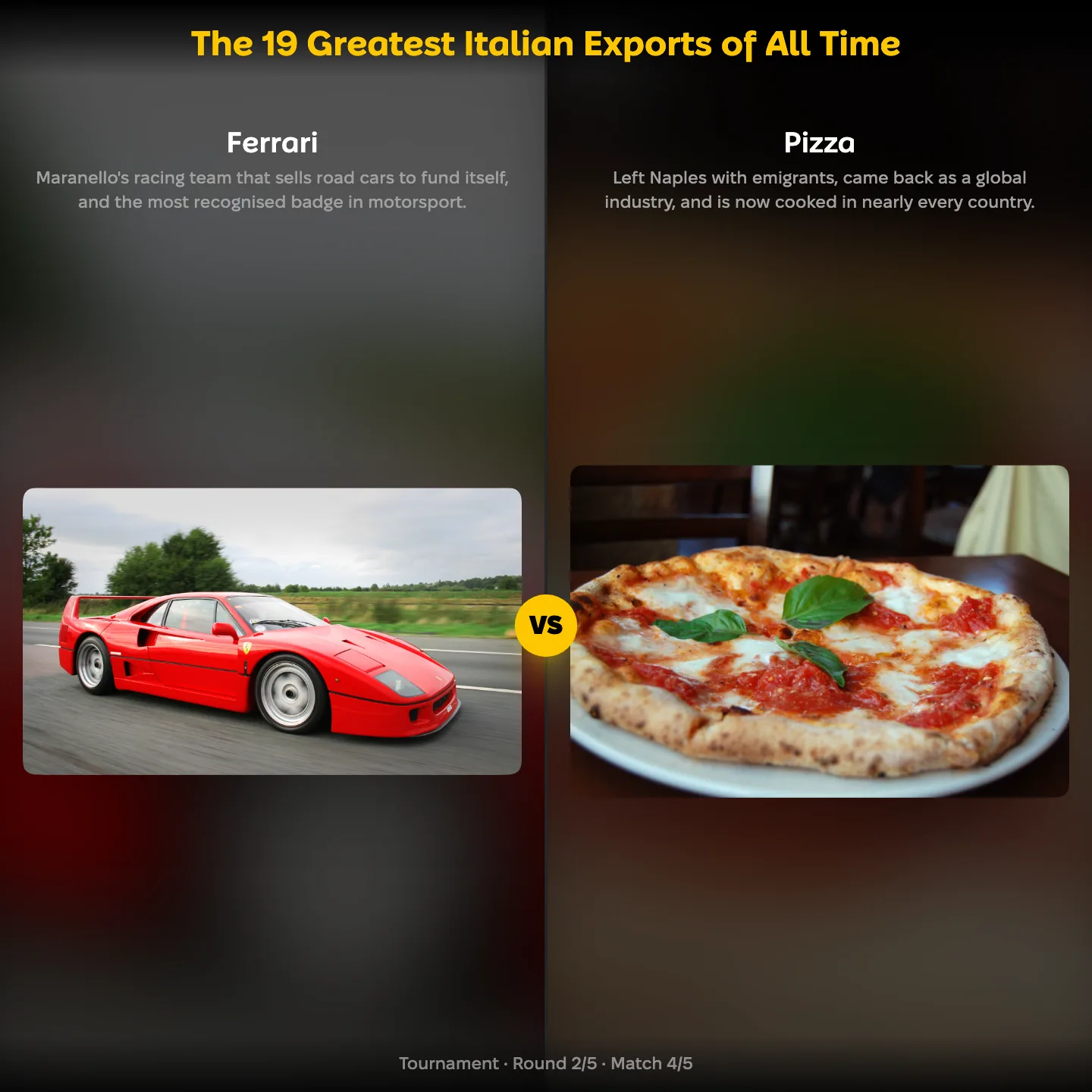
Ferrari, Vespa, Espresso — and a Flatbread
Widen it as far as it goes and pizza is competing with an entire country's output. Nineteen Italian exports, few of them edible.
Ferrari is the badge that funds a racing team by selling road cars, and the one Italian name a person can recognise at 200 metres without reading it.
Pizza's case is different and mostly arithmetic. It left with emigrants, arrived somewhere with no reputation at all, and is now cooked almost everywhere there is a kitchen, which is not true of the Vespa, the Fiat 500 or opera.
The interesting company is the middle of that list. Espresso, gelato, Parmigiano-Reggiano and olive oil are all things that half the planet consumes weekly without connecting them to Italy at all.
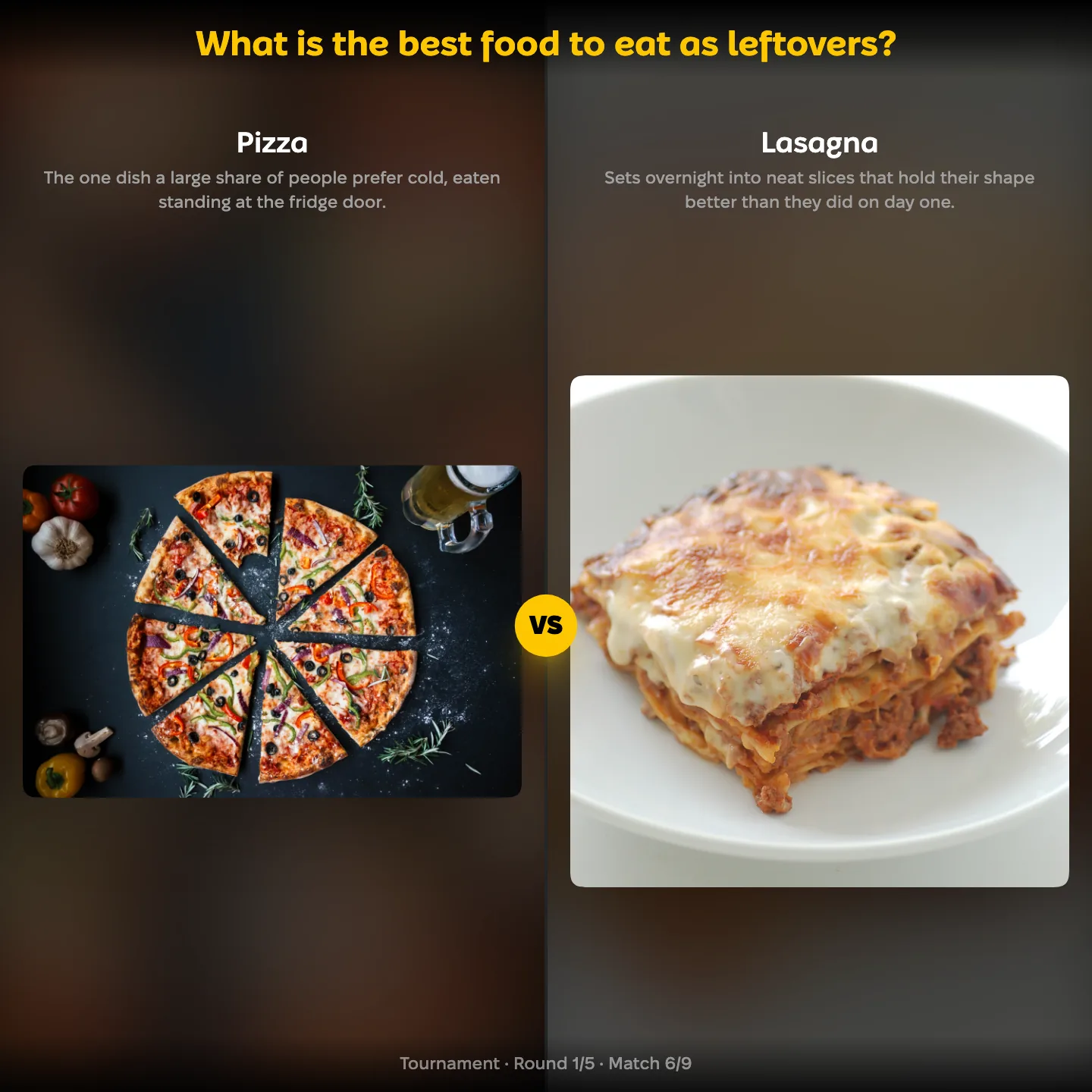
Cold Pizza vs Second-Day Lasagna
Leftovers are judged on a single quality: what the dish is like after a night in the fridge.
Lasagna has the technical case. It sets overnight into slices that hold their shape better than they did when hot, and reheats without losing anything.
Pizza is the one people eat cold on purpose, standing up, before the kettle has boiled. No other dish on this list of seventeen has a ritual attached to its second day.
Durian Is Banned From Trains; Pineapple Is Only Banned From Conversations
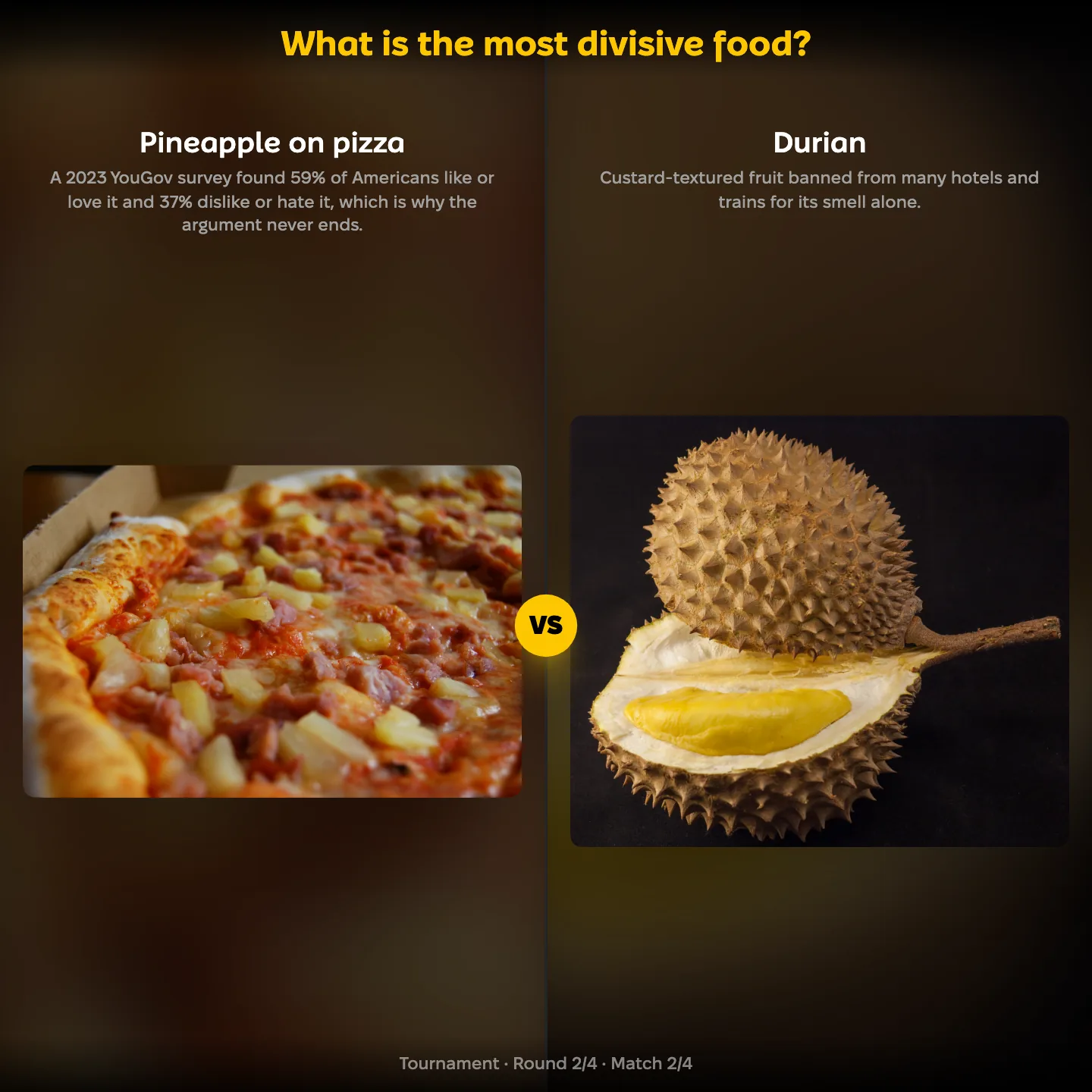
This ranking is about food that splits a room, and pineapple on pizza is the entry everyone expects to see near the top.
The YouGov numbers say it should not be. Fifty-nine per cent of Americans like or love pineapple on pizza and 37% dislike or hate it, which makes it contested rather than rejected.3
Durian is the real thing. Hotels and rail networks across Southeast Asia ban it outright, which is a level of institutional dislike no pizza topping has achieved.
Cilantro has the strangest case on the list, because the split is genetic rather than cultural: a minority carry an olfactory receptor variant that makes it taste of soap. Nattō, black licorice and candy corn make up the rest of a field where nobody is neutral.
Deep-Dish Joins Avocado Toast on the Overrated List
Twelve foods accused of being sold better than they taste. One of them is a pizza.
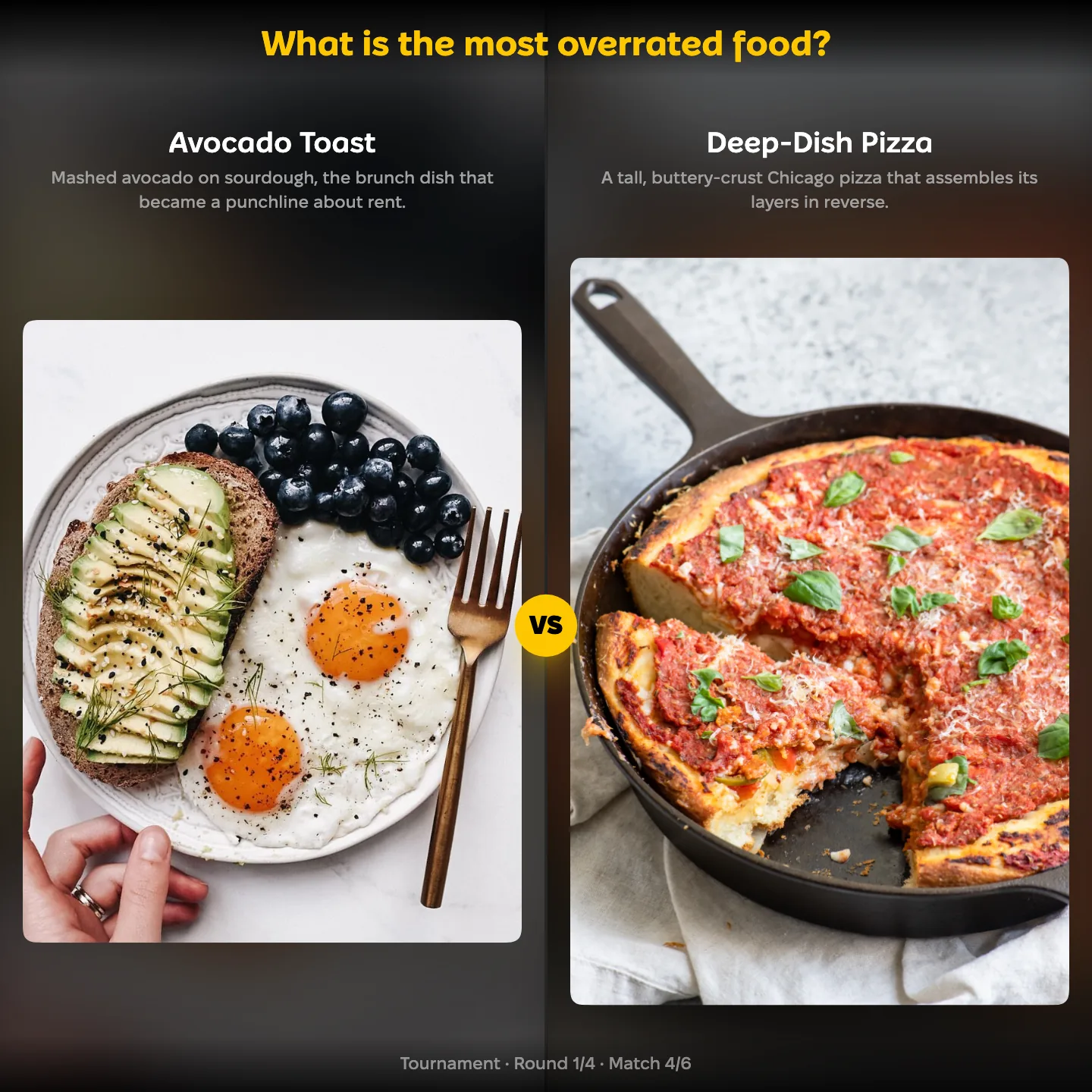
Chicago deep-dish is the accused. The charge is that it inverts the dish it is named after: a tall buttery crust, cheese underneath, sauce on top, an hour in the oven, and a slice that has to be eaten with cutlery.
Its defence is that it never claimed to be a slice. Chicago's own everyday pizza is tavern-style, cracker-thin and cut into squares, and deep-dish is the special-occasion version the rest of the country mistook for the local default.
Even the invention is contested. Uno tells it as Ike Sewell creating deep-dish in 1943 at Ohio and Wabash;9 the Culinary Historians of Chicago, working from Peter Regas's research, put the first one at 29 East Ohio Street in autumn 1943 and credit Ric Riccardo, with Sewell arriving as a part-owner afterwards.10
Truffle oil, gold-leaf desserts and avocado toast fill out the field, which is the company being kept here rather than a verdict.
McDonald's Pizza and the Arch Deluxe
Thirteen fast-food failures, and three of them were somebody's attempt at pizza.
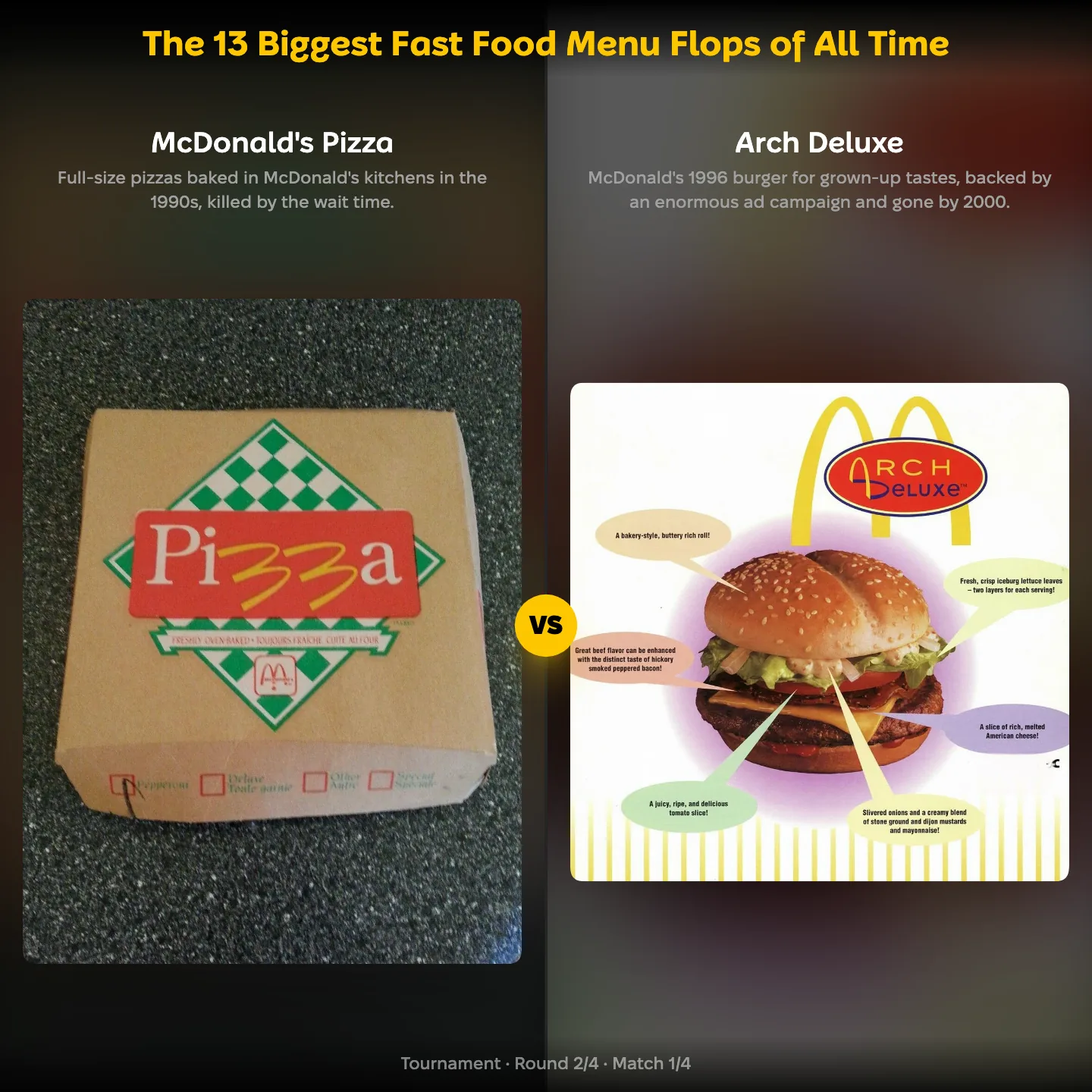
McDonald's Pizza is the one people still remember. Full-size pies baked in McDonald's kitchens through the 1990s, killed by the simple fact that a chain built on ninety seconds could not make customers wait eleven minutes.
Pizza Hut's Priazzo and Domino's Oreo dessert pizza fill out the trio, one of them a deep-dish stuffed pie that cost too much to assemble, the other a dessert nobody had asked for.
The Arch Deluxe is the more famous disaster next to them: a 1996 burger aimed at grown-up palates, backed by an enormous advertising campaign, gone by 2000.
Fourteen Lists, Fourteen Different Pizzas
Naples has the craft and the heritage listing. New York has the slice. Chicago has the pan and the accusation that comes with it. Detroit has the steel. Domino's has the delivery network, and none of them are talking about the same food.
A dish that travels that far stops being one thing to rank and becomes a category, sorted one matchup at a time.
If your city, your chain or your topping got a raw deal above, the fix is a ranking of your own.
More rankings, more angles
- Cheese, Ranked Many Ways — the ingredient pizza cannot do without
- McDonald's, Ranked Many Ways — the chain that tried pizza and quit
- Coca-Cola vs Pepsi — the other food argument nobody has settled
- Beer Has a 1516 Recipe and a 2026 Problem — what the pizza usually arrives with
Sources
- 50 Top Pizza — 50 Top Pizza World 2026 ceremony, Teatro Mercadante, Naples, 15 September 2026: 50toppizza.it (checked 2026-09-05)
- UNESCO — "Art of Neapolitan 'Pizzaiuolo'", inscribed on the Representative List of the Intangible Cultural Heritage of Humanity in 2017: ich.unesco.org (checked 2026-09-05)
- YouGov — survey of 1,000 US adults, 11–14 March 2023: pepperoni the favourite topping for 24%, anchovies the least favourite for 29%, and the pineapple split (22% love / 37% like / 18% dislike / 19% hate): yougov.com (checked 2026-09-05)
- Domino's Pizza — fourth quarter and fiscal 2024 results: $9,500.1m of US retail sales, 7,014 US stores at 29 December 2024, over 85% of US retail sales through digital channels: prnewswire.com (checked 2026-09-05)
- Buddy's Pizza — company history: Gus Guerra's first square pizza at Buddy's Rendezvous, Six Mile and Conant, Detroit, 1946, baked in blue steel automotive pans: buddyspizza.com (checked 2026-09-05)
- Frank Pepe Pizzeria Napoletana — company history: opened in New Haven in 1925, coal-fired apizza: pepespizzeria.com (checked 2026-09-05)
- 50 Top Pizza — 50 Top Pizza USA 2026: Una Pizza Napoletana (New York) first, Pizzeria Sei (Los Angeles) and Tony's Pizza Napoletana (San Francisco) tied second: 50toppizza.it (checked 2026-09-05)
- 50 Top Pizza — 50 Top Pizza Italia 2026: Confine (Milan) first, Palazzo Petrucci (Naples) third: 50toppizza.it (checked 2026-09-05)
- Uno Pizzeria & Grill — company history: Ike Sewell and the original Chicago deep-dish, 1943: unos.com (checked 2026-09-05)
- Culinary Historians of Chicago — Peter Regas on the disputed origin of deep-dish: 29 East Ohio Street, autumn 1943, credited to Ric Riccardo: culinaryhistorians.org (checked 2026-09-05)