
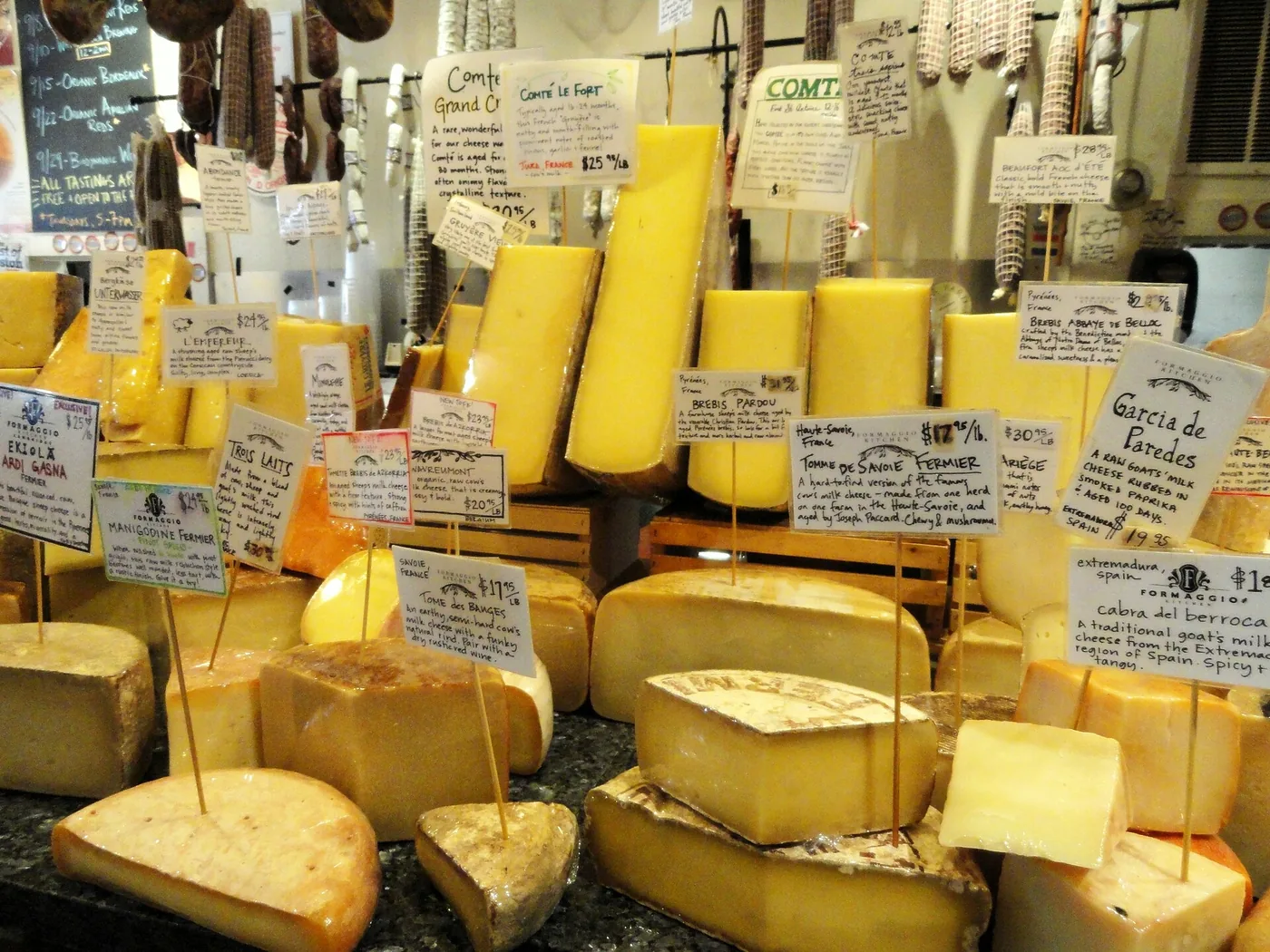
America has never made more cheese than it makes now. In January 2026 its plants turned out 1.28 billion pounds, 4.7% above the same month a year earlier, and Italian-style cheese out-produced American-style for the month.1 Cheese is also the largest single share of what Americans get from the dairy aisle: per person per day it overtook fluid milk years ago and has more than doubled since 1979.2
That sits oddly next to what cheese actually does on a menu. It is a topping, a side, a dessert, a snack, a sandwich filling, and in a few countries the whole meal — six jobs that share nothing except an ingredient.
Fifteen rankings hire cheese for fifteen different jobs, and the cheese that is right for one of them would ruin the next.
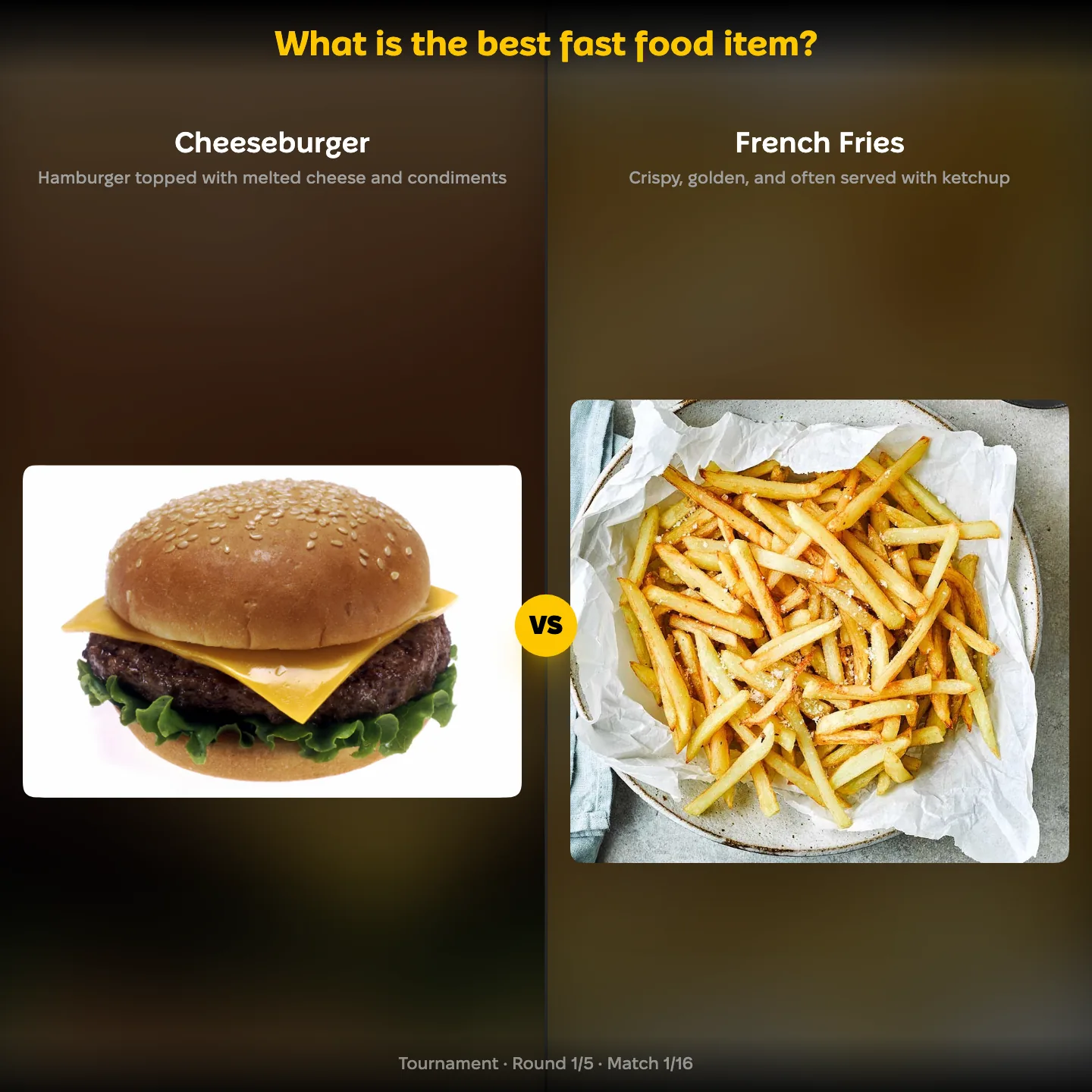
Cheeseburger vs French Fries: the oldest fight at the counter
The broadest fast-food ranking on the site holds thirty-two things you can order at a counter: tacos, milkshakes, hash browns, wings. Two of them are cheese wearing a disguise, the cheeseburger and the mozzarella stick.
The cheeseburger's claim is that one slice changed the product. A hamburger with American cheese melted over the patty became the default order in the United States, and the dairy ended up in the name of the thing rather than in the description.
French fries have the opposite case. Nobody orders fries as the point of a meal, and they still outsell almost everything they sit beside.
Everything else here makes dairy look optional. Chicken nuggets, tacos, a burrito, fried chicken and chicken wings are all on it, dairy-free by default.
The Quarter Pounder puts the cheese in its own name
Seventeen items make up the McDonald's ranking, and dairy is doing quiet work in most of them. One says so out loud.
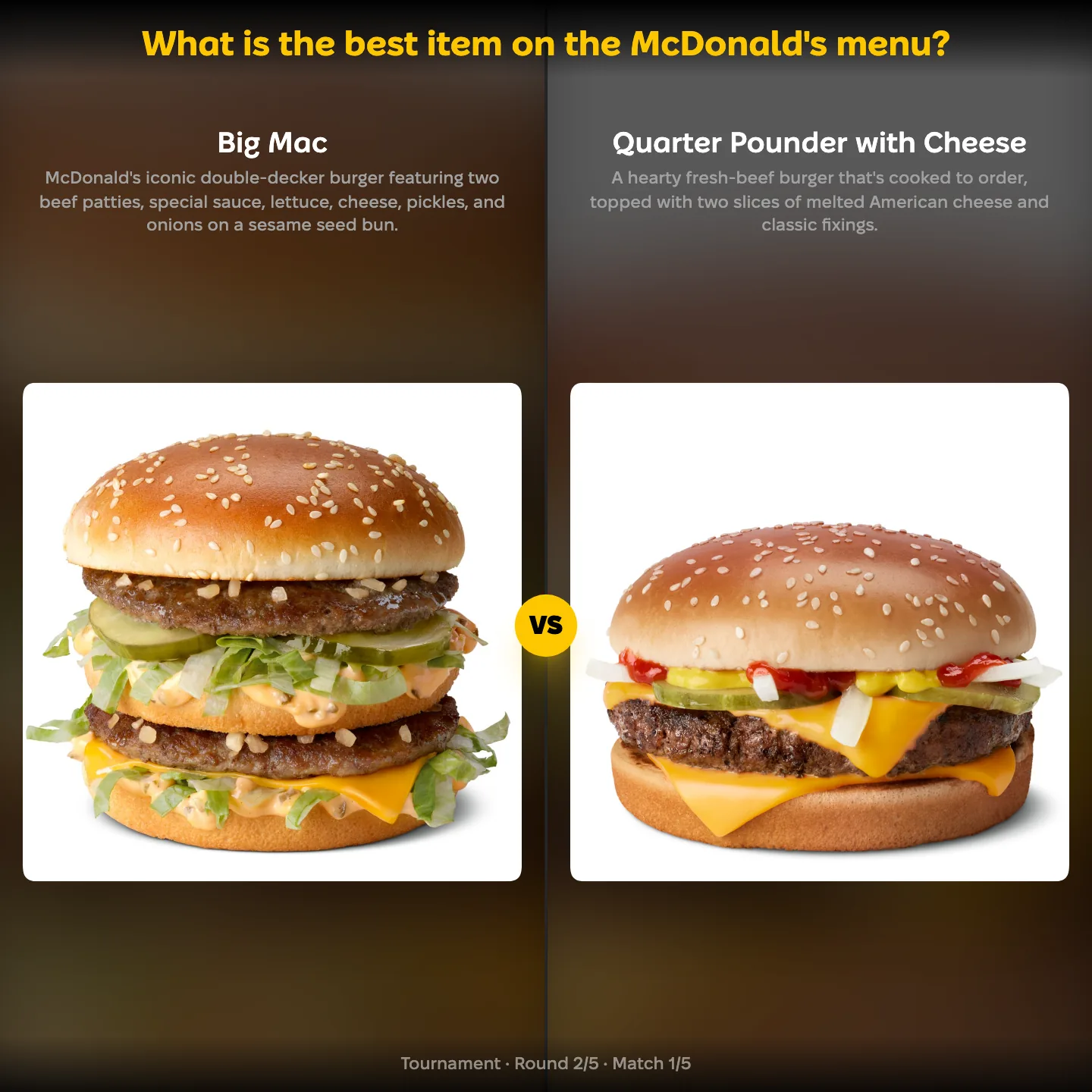
The Quarter Pounder with Cheese is named after its beef weight and its dairy, and the menu describes two slices of American melted over a patty cooked to order. The Double Quarter Pounder with Cheese is here too, doubling both halves of the name.
A Big Mac carries a slice as well, under the middle bun, where nobody bothers mentioning it. Same ingredient, no billing.
Then comes the part of the menu cheese cannot reach: the fries, the hash browns, the Filet-O-Fish, the apple pie. A burger chain is only partly a cheese business.
Pepperoni vs Goat Cheese: cheese demoted to a topping
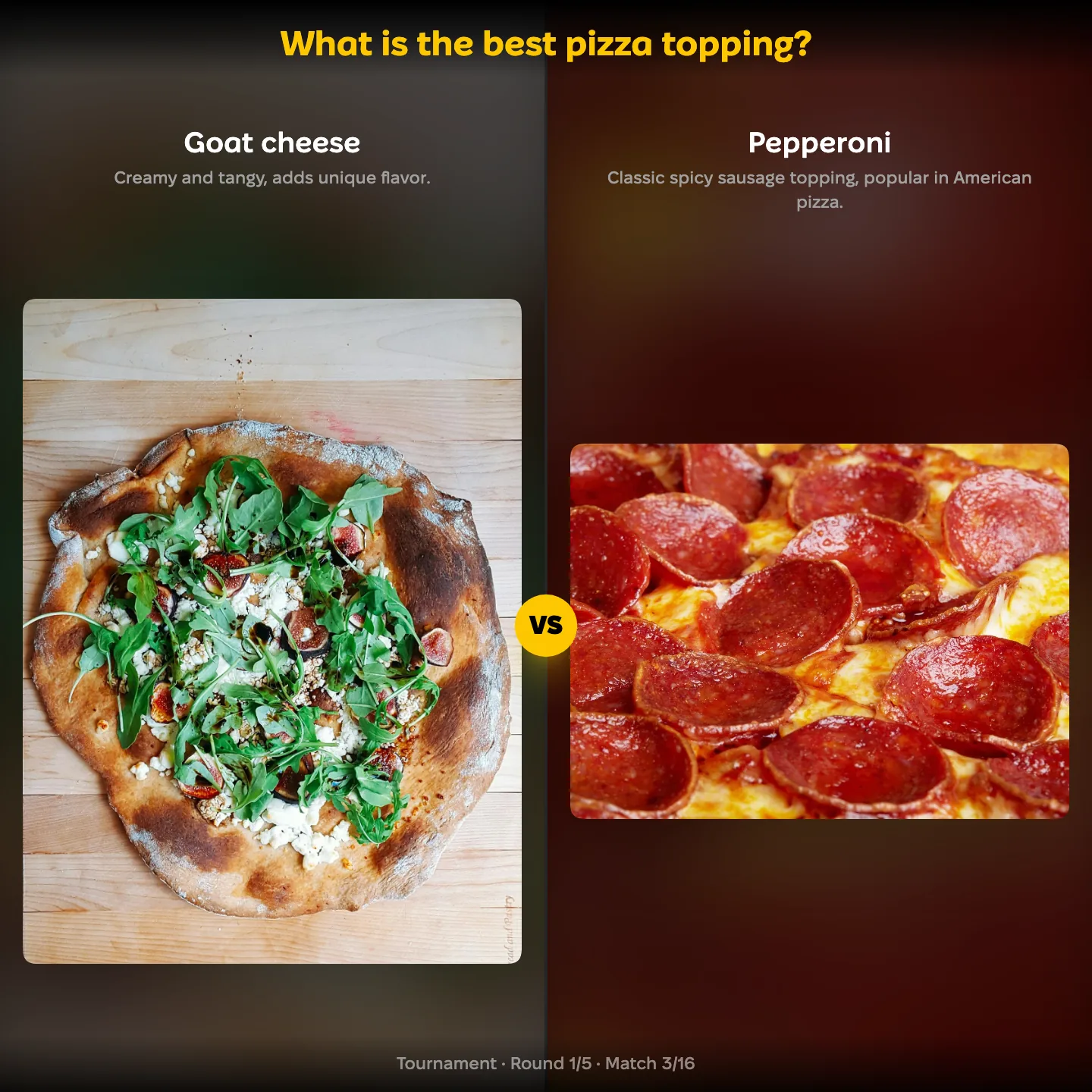
Cheese has an unfair problem on a pizza-topping ranking: it is already on the pizza. The mozzarella base is assumed, so cheese has to queue up as an extra alongside pepperoni, mushrooms and pineapple.
Six of the thirty-two options are cheeses anyway (mozzarella, parmesan, gorgonzola, ricotta, feta, goat cheese), which reflects how the American pizza industry buys dairy. In January 2026 US plants made more Italian-style cheese, the mozzarella family, than American-style cheddar and jack.1
Pepperoni is the topping Americans order most, and it is cured pork.
Goat cheese is the specialist entry: tangier, crumblier, and usually a signal that the pizza came out of a wood oven rather than a delivery box.
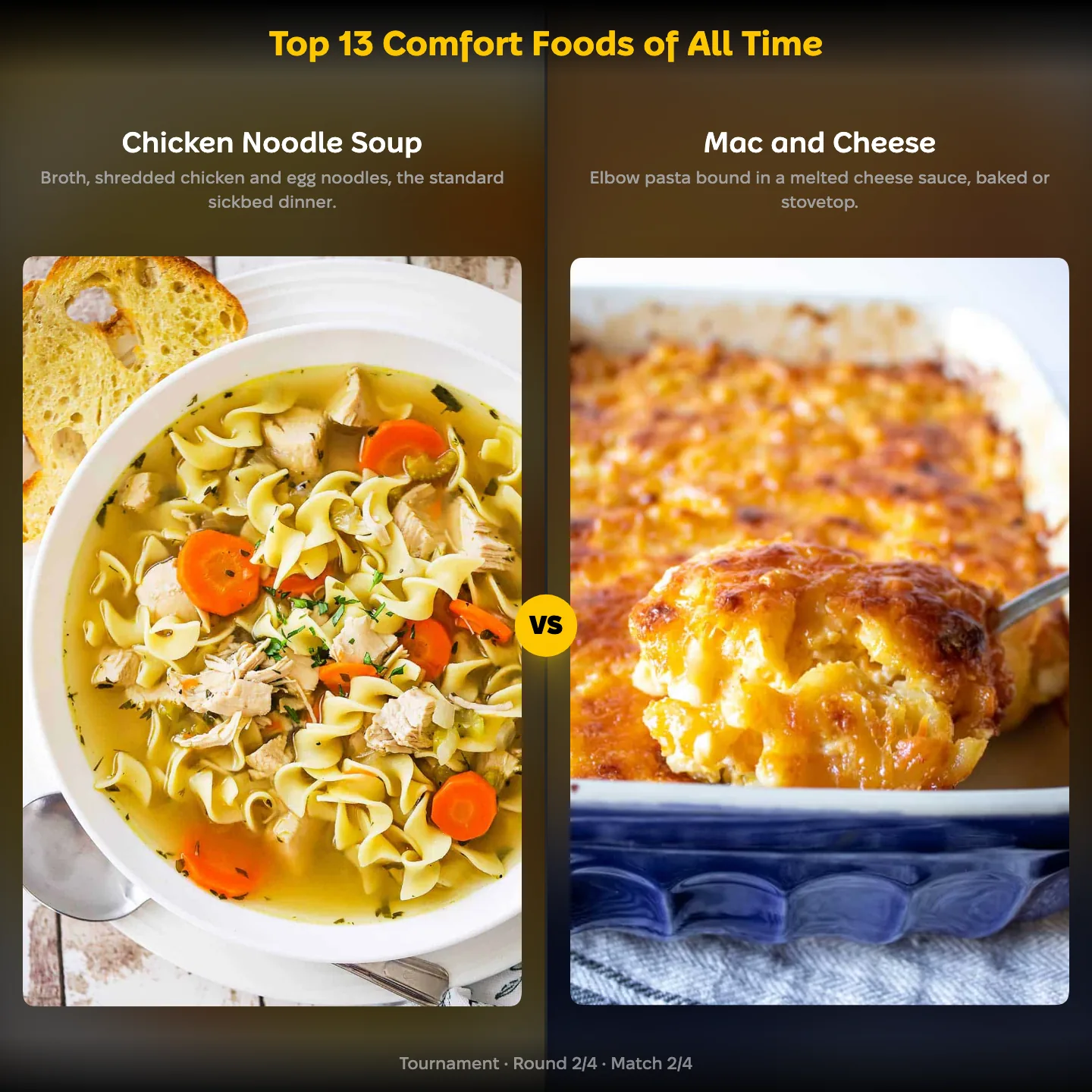
Mac and Cheese is what Americans eat when they feel terrible
Comfort food has no rules except recognition. Thirteen dishes stand in this one: fried chicken, ramen, meatloaf, chili, pot roast, apple pie.
Two of them are built on cheese. Mac and cheese is pasta whose entire sauce is dairy; a grilled cheese sandwich is bread whose only filling is dairy.
Chicken noodle soup is the counter-example, and it contains none. Feeling low gets you cheese; being genuinely ill gets you broth.
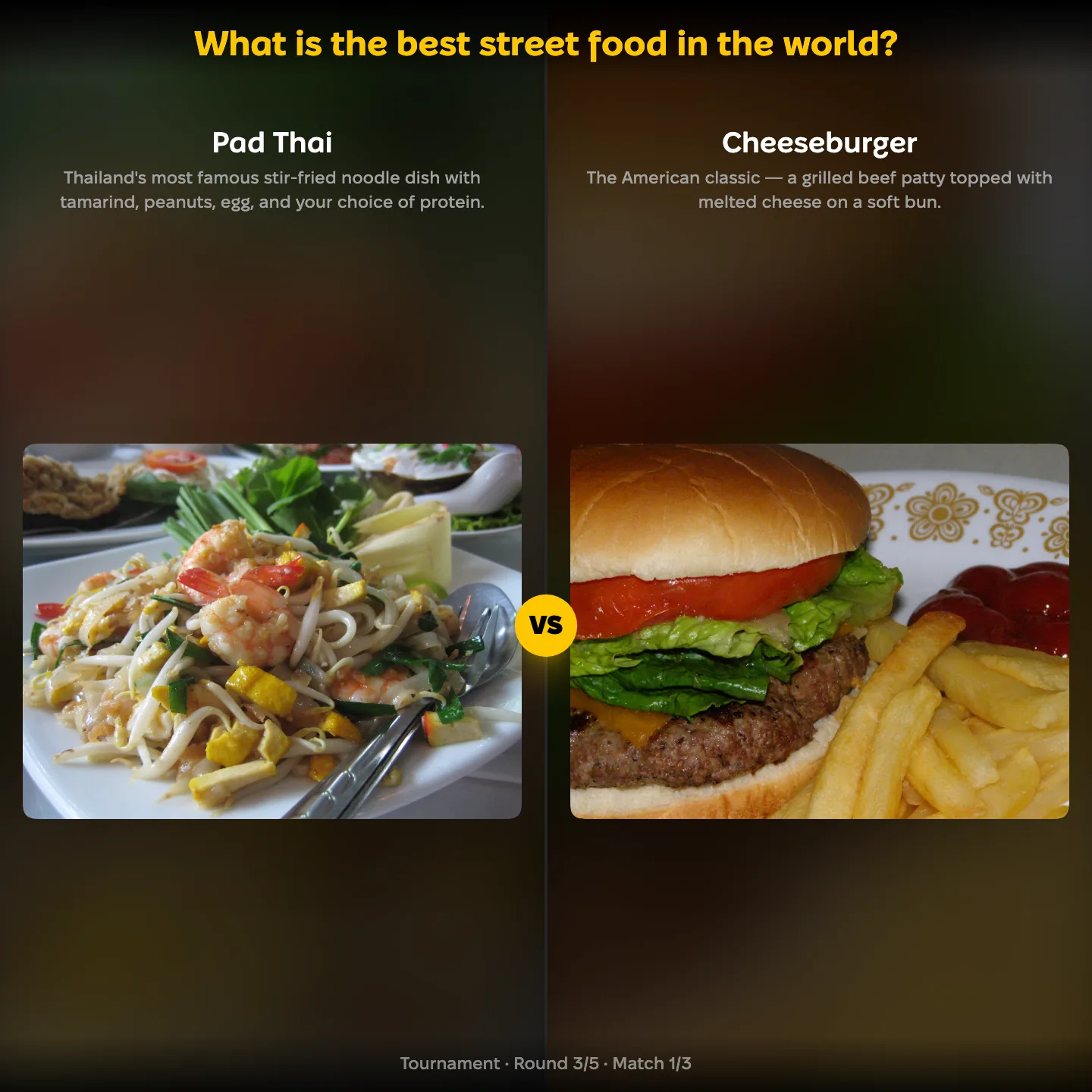
Cheeseburger vs Pad Thai: America's entry in a street-food contest
Twenty street dishes from four continents make up this ranking: tacos from Mexico, baozi from China, pho from Vietnam, gyros from Greece, köfte from Turkey, tteokbokki from Korea.
The cheeseburger is the American entry, and the only one of the twenty whose name contains a dairy product.
Pad Thai is the hardest comparison in the list. Thailand exported it to every high street on earth, built on rice noodles, tamarind, egg and peanuts, with no cheese anywhere near it.
Most of the world's street food works that way. Cheese is a northern European technology that travelled to the Americas, and outside that corridor a portable snack is usually built on rice, wheat, meat or fish.
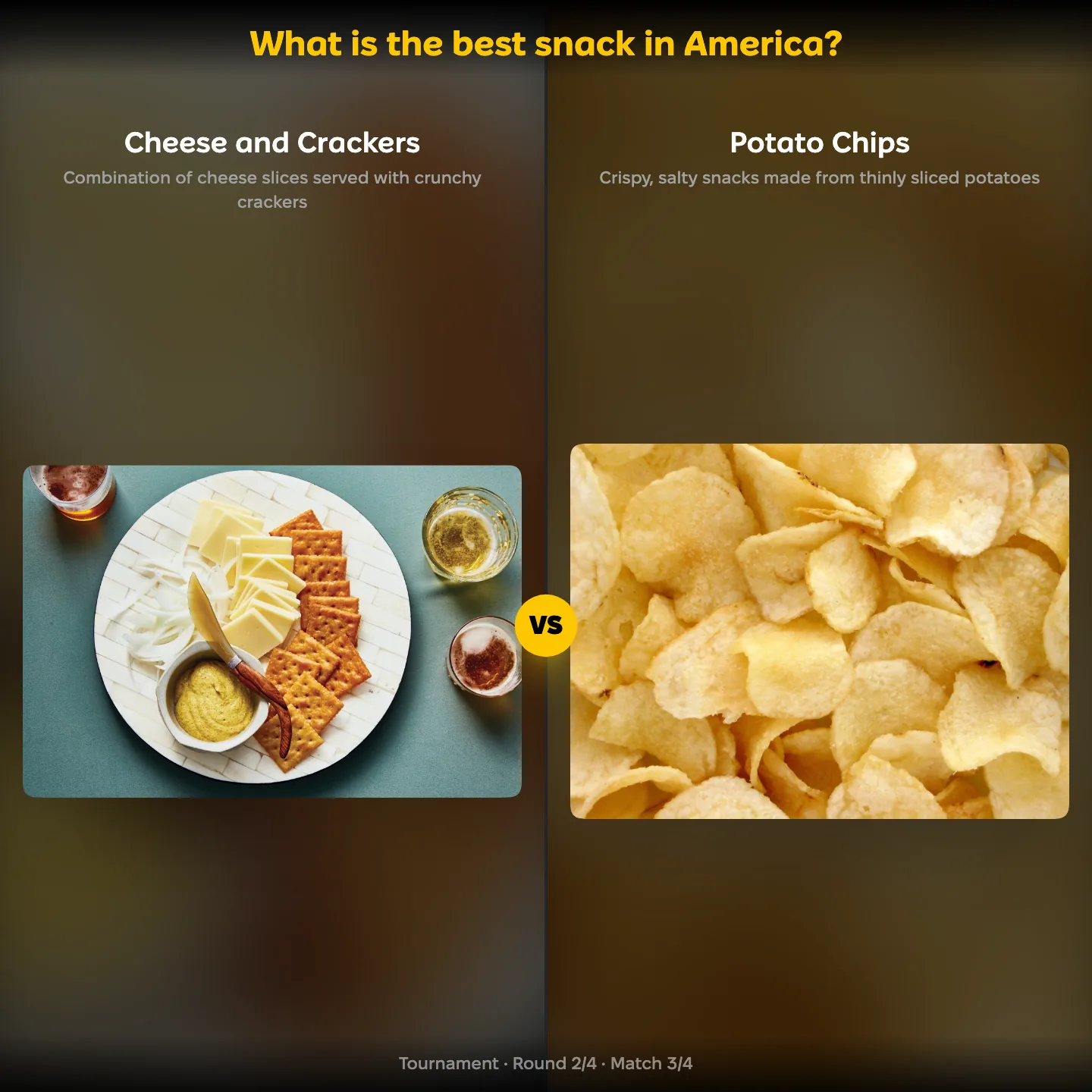
The snack aisle: Cheese and Crackers against Potato Chips
Sixteen American snacks are on this list and cheese has two of the slots. One is the adult version, cheese and crackers on a board. The other is string cheese, mozzarella pulled into strands and sold in a plastic tube for a lunchbox.
Potato chips are the incumbent and always have been. Salt, fat, crunch, no refrigeration.
That last word is the real difference. A snack has to survive a glovebox and a school bag, and cheese needs a fridge to be worth eating.
There is a limit on the audience, too. The National Institute of Diabetes and Digestive and Kidney Diseases puts lactose malabsorption at about 68% of the world's population, and about 36% of people in the United States.3
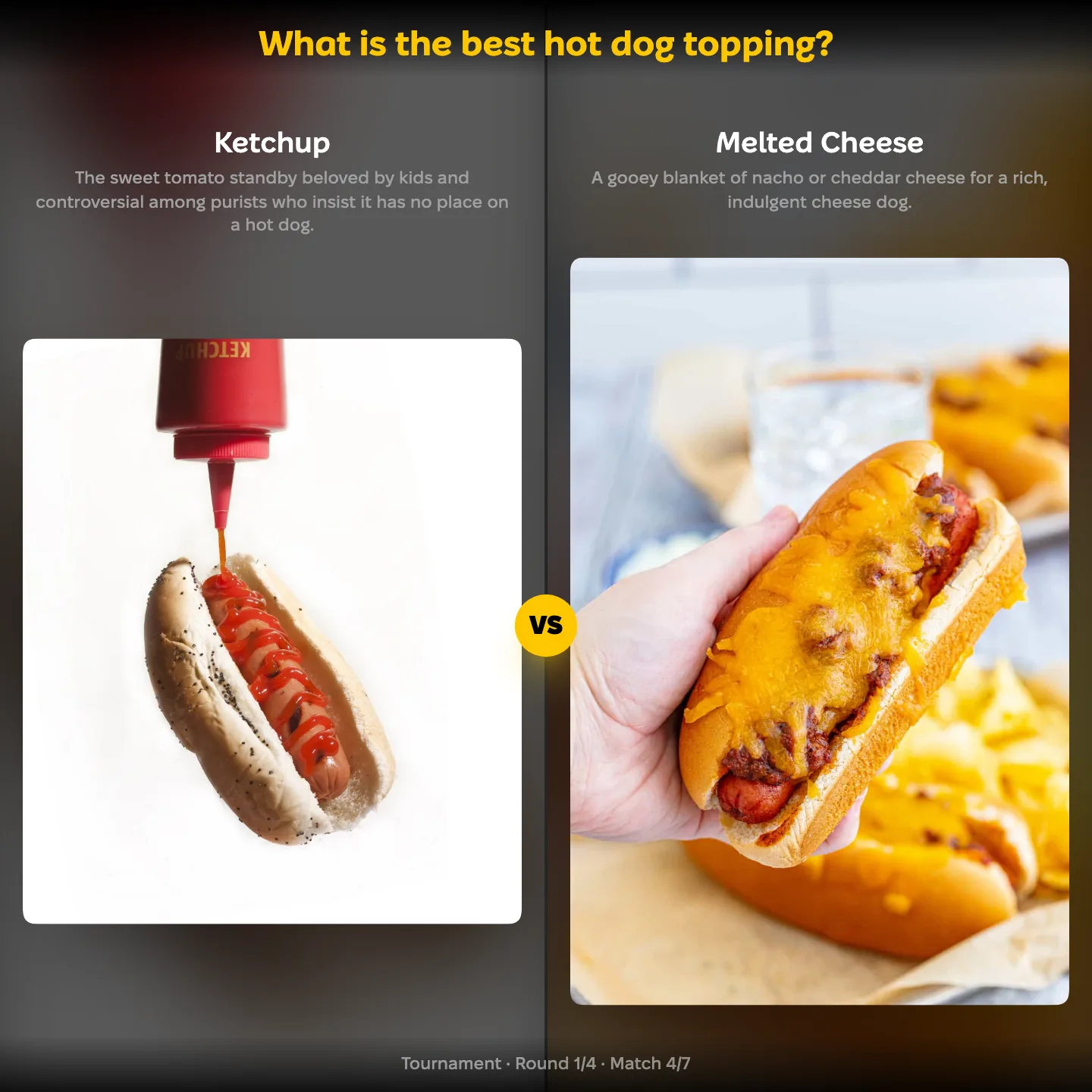
Melted Cheese vs Ketchup, and Chicago's hot-dog rules
Fourteen toppings compete here, and the hot dog is the American food with a written etiquette. The Chicago version takes mustard, relish, onion, tomato, a pickle spear and sport peppers, and it does not take ketchup.
Cheese has two entries. Melted cheese turns the thing into a cheese dog, a diner and ballpark staple. Cream cheese is the Seattle version, spread on the bun under grilled onions, and it splits a room faster than anything else on the list.
Ketchup is the topping everyone claims to be above and most people use anyway.
Cheese is at its weakest in this company. Against mustard, kraut, chili and raw onion it is the newcomer, and a sausage in a bun managed for a century without any dairy at all.
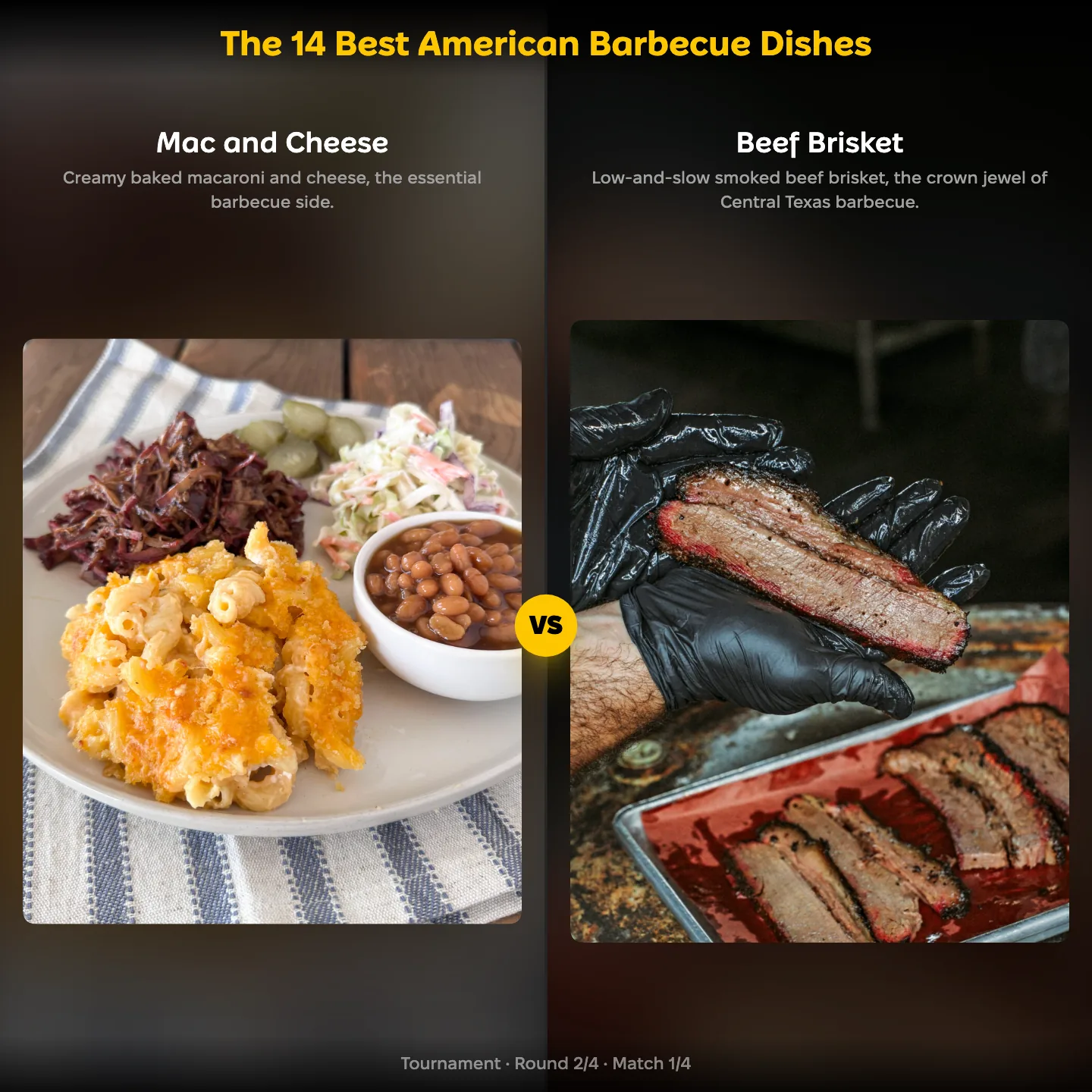
Central Texas brisket, and the mac and cheese beside it
American barbecue is a meat argument. Fourteen dishes fill this ranking and eleven of them are animals cooked over wood: brisket, pulled pork, spare ribs, burnt ends, smoked sausage, whole hog.
Mac and cheese is on it anyway, as the one entry that never goes near a smoker.
Its case is the tray rather than the pit. A Central Texas plate is brisket, white bread, pickles and sides, and the mac is what keeps two pounds of beef from being unbearable.
Baked beans, coleslaw and cornbread are all after the same job, and two of them are cheaper to make. Cheese earns a place on a barbecue menu by being the richest thing there that is not meat.
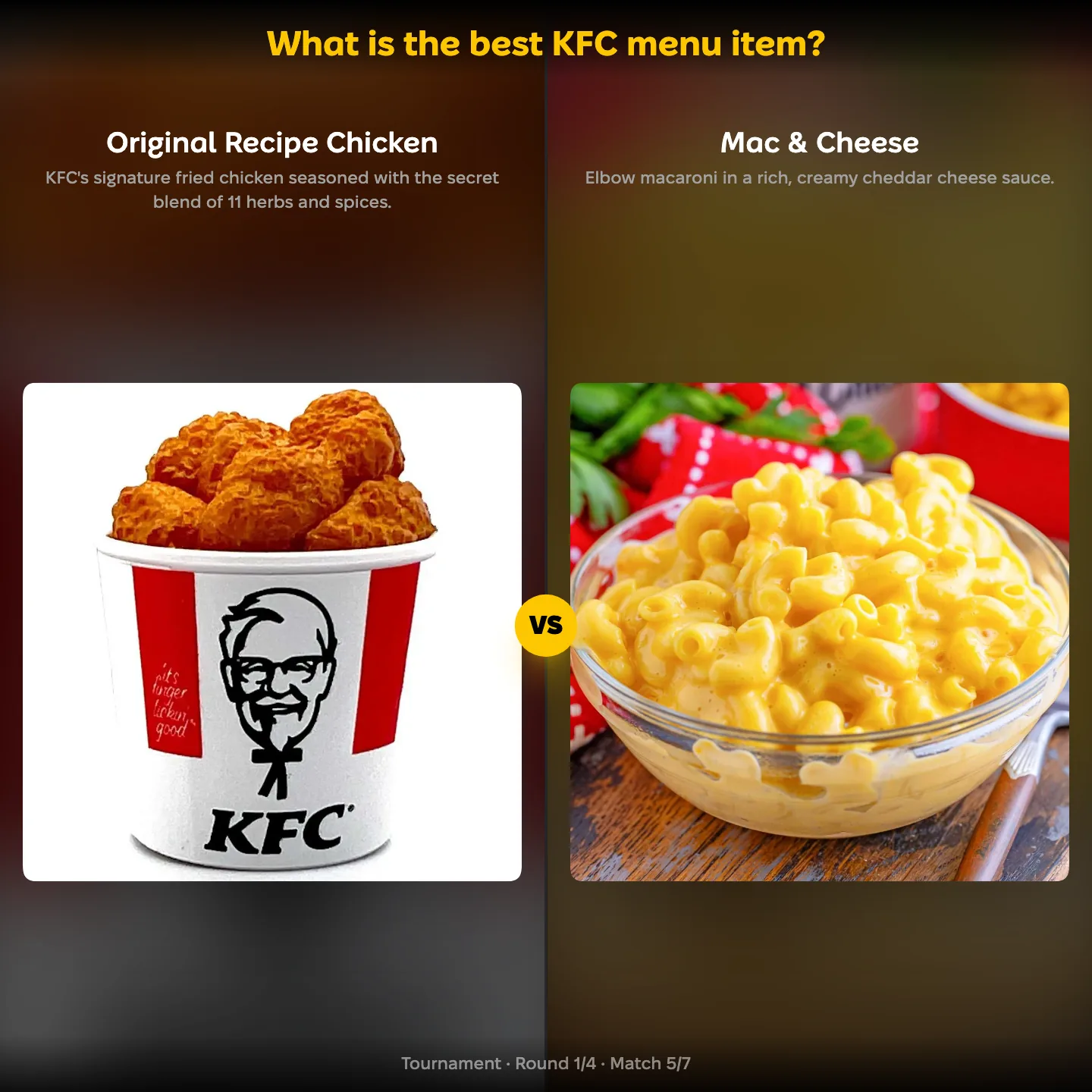
KFC sells 11 herbs and spices, and a tub of Mac & Cheese
Fourteen items make up the KFC ranking and thirteen of them involve chicken: Original Recipe, Extra Crispy, the Famous Bowl, popcorn chicken, tenders, hot wings, the pot pie.
Mac & Cheese is the exception, a side of elbow macaroni in cheddar sauce sold by a company whose whole identity is fried bird.
The Original Recipe bucket is the reason anyone knows the brand at all. Its blend of 11 herbs and spices is a piece of American advertising about as old as the interstate.
Cheese is the passenger in this ranking, which is exactly why it belongs in the article. A side dish gets onto a menu list because people add it every time, not because the sign outside promises it.
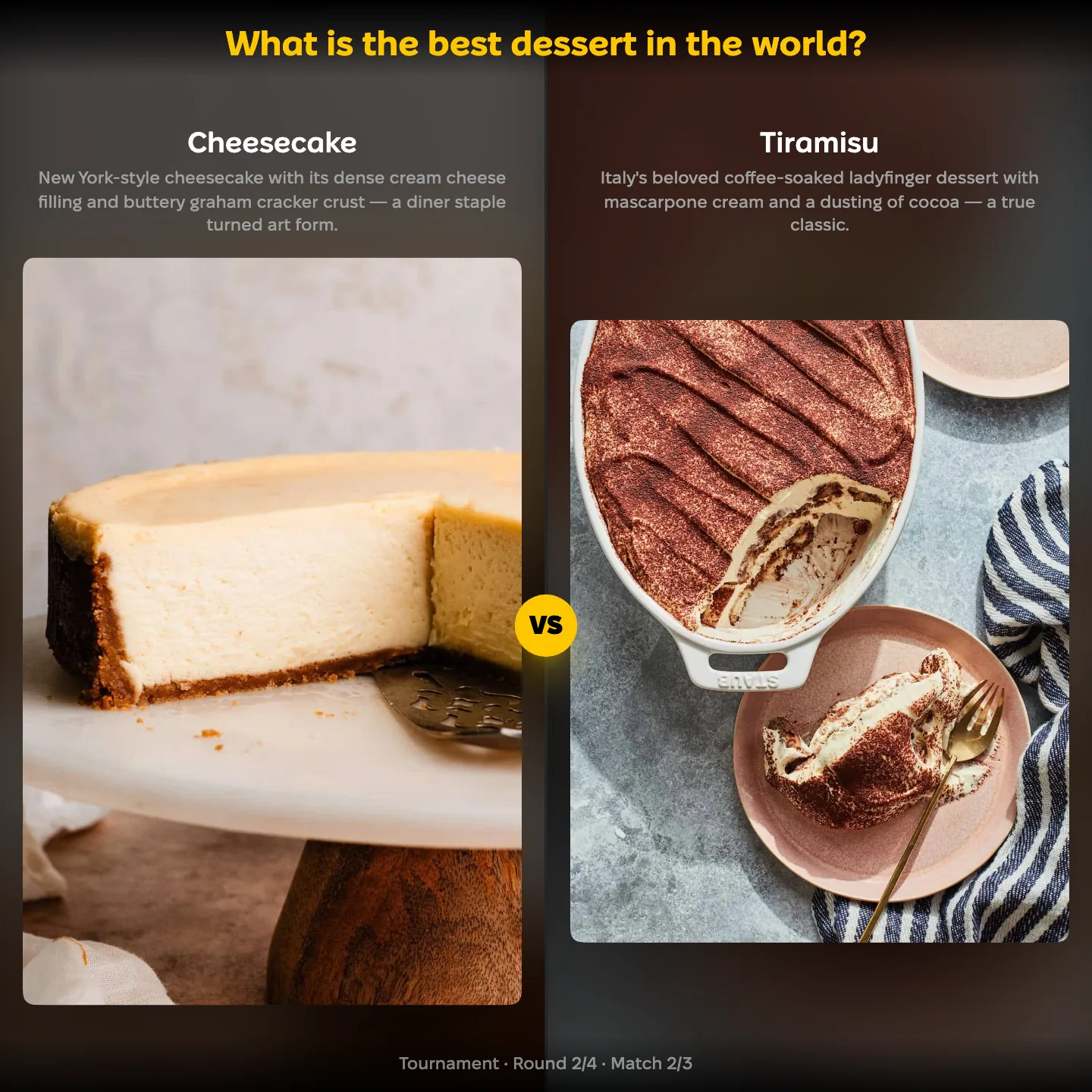
Cheesecake vs Tiramisu: cheese served as pudding
Twelve desserts sit here, and three are cheese in a sweet register. Cheesecake is the obvious one. Tiramisu is built on mascarpone, and a cannoli is a tube filled with sweetened ricotta.
New York cheesecake is the version most people picture: cream cheese, eggs and sugar over a graham cracker crust, dense enough to cut with a wire.
Tiramisu hides its dairy better. Coffee, cocoa and ladyfingers take the credit while the mascarpone does the work of holding everything together.
The dessert list shows cheese stopping being cheese the moment sugar arrives. Nobody eating a slice of cheesecake describes it as eating cheese, which is the neatest trick this ingredient pulls anywhere in the article.
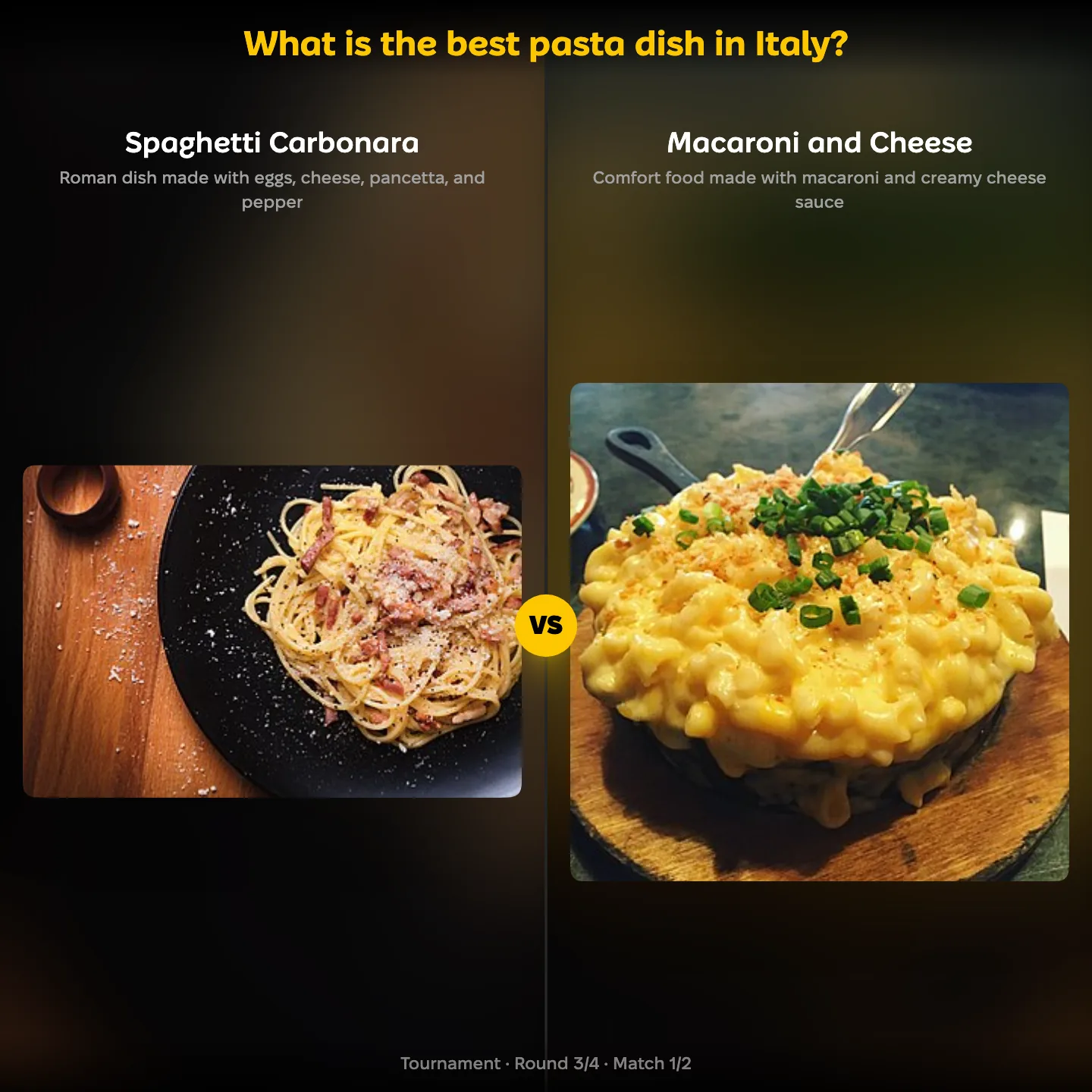
Macaroni and Cheese on an Italian pasta list
Sixteen Italian pasta dishes are ranked here, and Macaroni and Cheese is one of them. A Roman cook would refuse to serve it.
The list is full of cheese regardless. Cacio e pepe translates as cheese and pepper. Carbonara binds pecorino with egg yolk and pork fat. Pasta alla Norma is finished with salted ricotta.
The difference is what the cheese is asked to do. In Rome it is a seasoning that emulsifies with starch and pasta water. In an American casserole it is the sauce itself, thickened with butter and flour and baked under a crust.
Macaroni and Cheese appearing on an Italian list is a border dispute, and it makes the ranking sharper than a tidier field would.
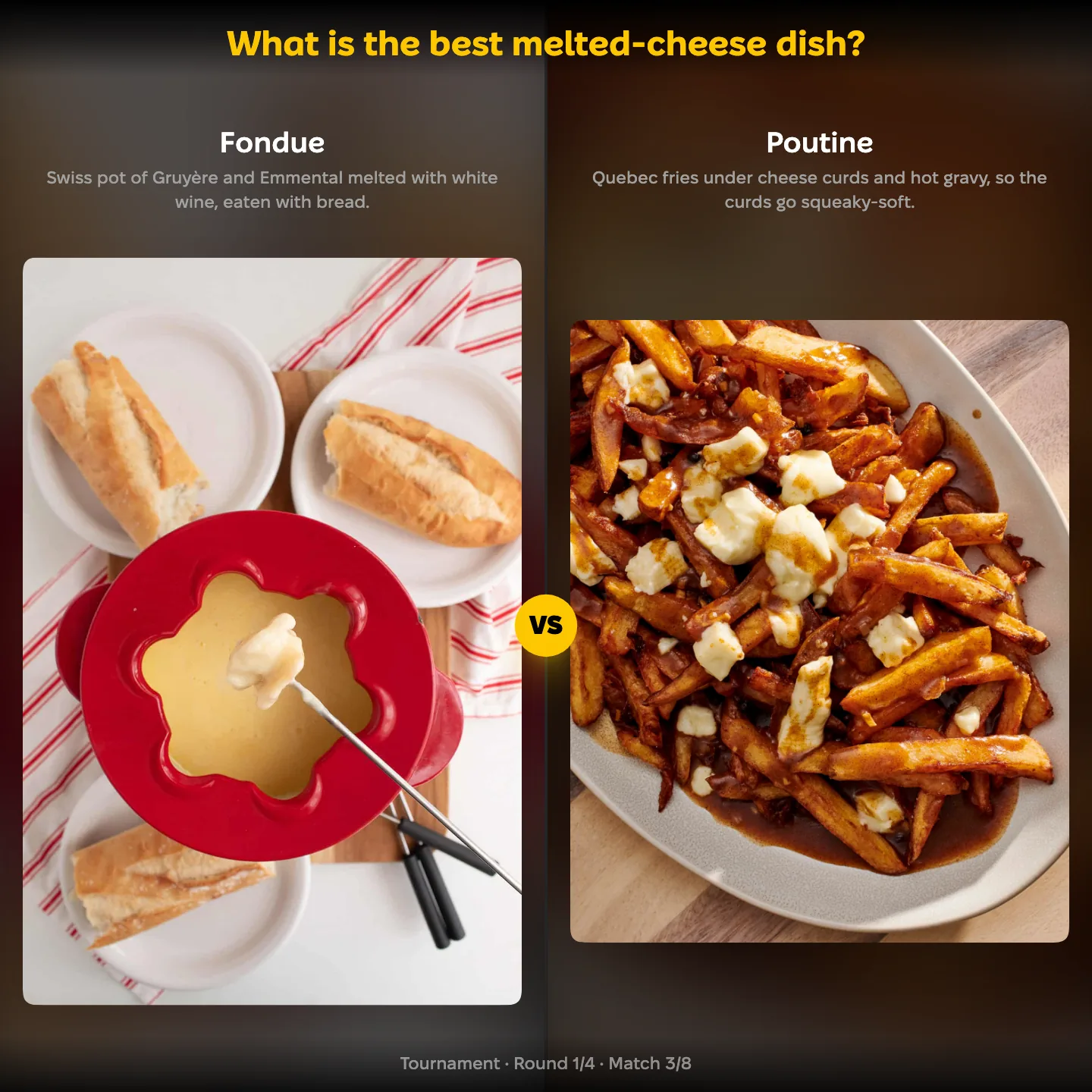
Fondue vs Poutine: fifteen ways to melt the same thing
This ranking exists for one question: which country solved melted cheese best? Fifteen dishes answer it and no two use the same method.
Fondue is the Swiss answer, a pot of Gruyère and Emmental loosened with white wine and eaten communally on long forks. Raclette is that country's other idea, a half wheel warmed at the edge and scraped over potatoes and pickles.
Poutine is Quebec's, and the most technically exacting dish here. Fresh curds go onto hot fries and are drowned in gravy at the moment they begin to give.
Then there is everything else people do to a wheel. Aligot is potato beaten with Tomme until it ribbons, khachapuri is a Georgian bread boat of molten cheese and egg yolk, saganaki is fried at the table in Greece. In Gloucestershire they carry a 7 to 9 pound Double Gloucester to the top of a slope of about 50% and chase it down.4
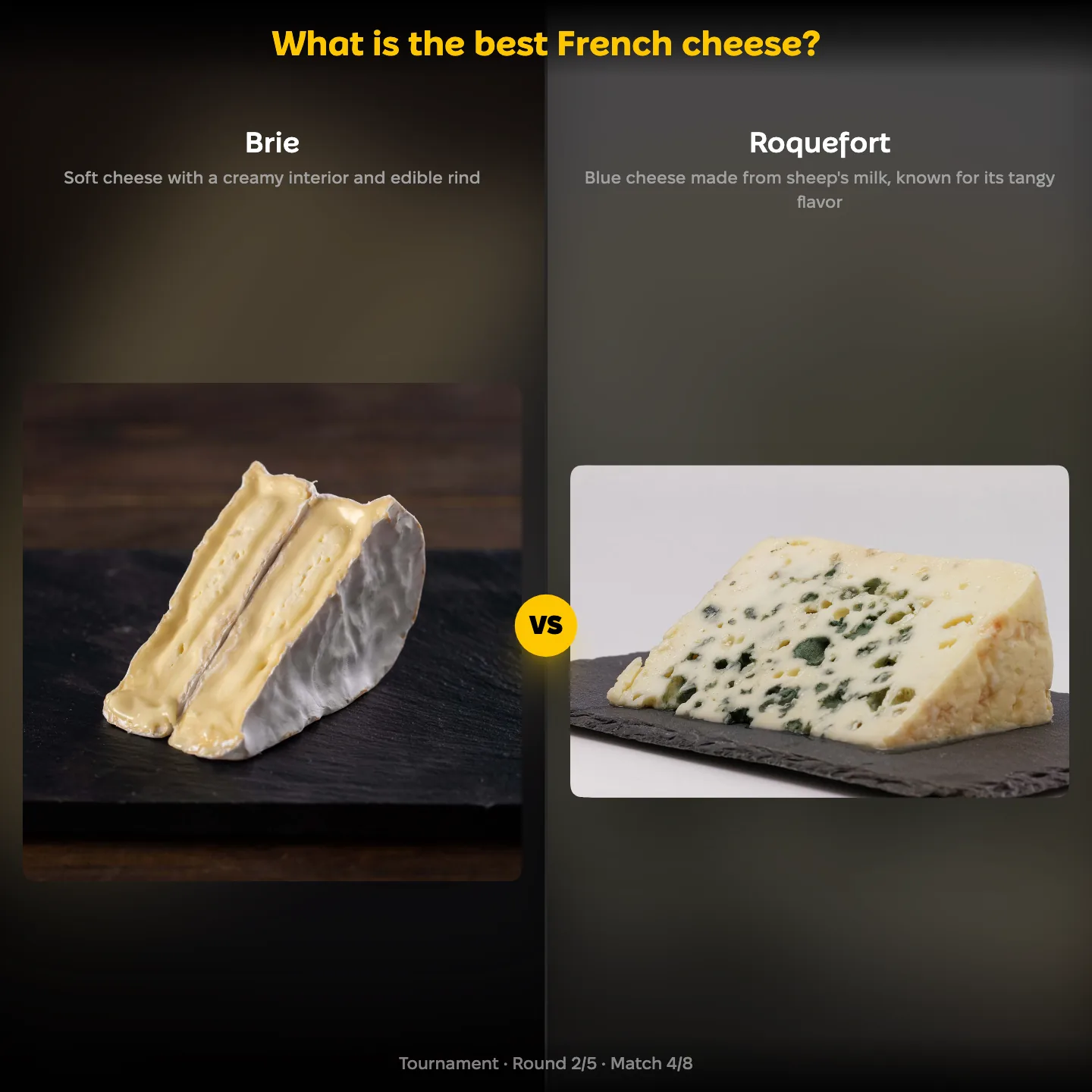
Brie, Roquefort, and the Swiss Gruyère that beat 5,200 cheeses
Thirty-two French cheeses make up this ranking. Nowhere else on this page is cheese the whole subject rather than a component of something bigger. Brie is the soft-rind entry. Roquefort is sheep's milk blue ripened in the Combalou caves. Comté comes off the Jura plateau in wheels the size of a car tyre.
France has the deepest catalogue in the world and does not automatically win with it. At the 2025 World Cheese Awards in Bern, judges placed a Gruyère AOP from the Swiss dairy Bergkäserei Vorderfultigen ahead of more than 5,200 entries from 46 countries, and it took the title by a single point.5
Spain holds the money record. Guinness World Records lists the most expensive cheese ever sold at auction as a Cabrales blue that went for €36,000 in Asturias in August 2024.6
Set against 32 protected French names, "best" quietly turns into "best at what". Comté for a plate, Roquefort for a salad, Brie for a baguette and a knife.
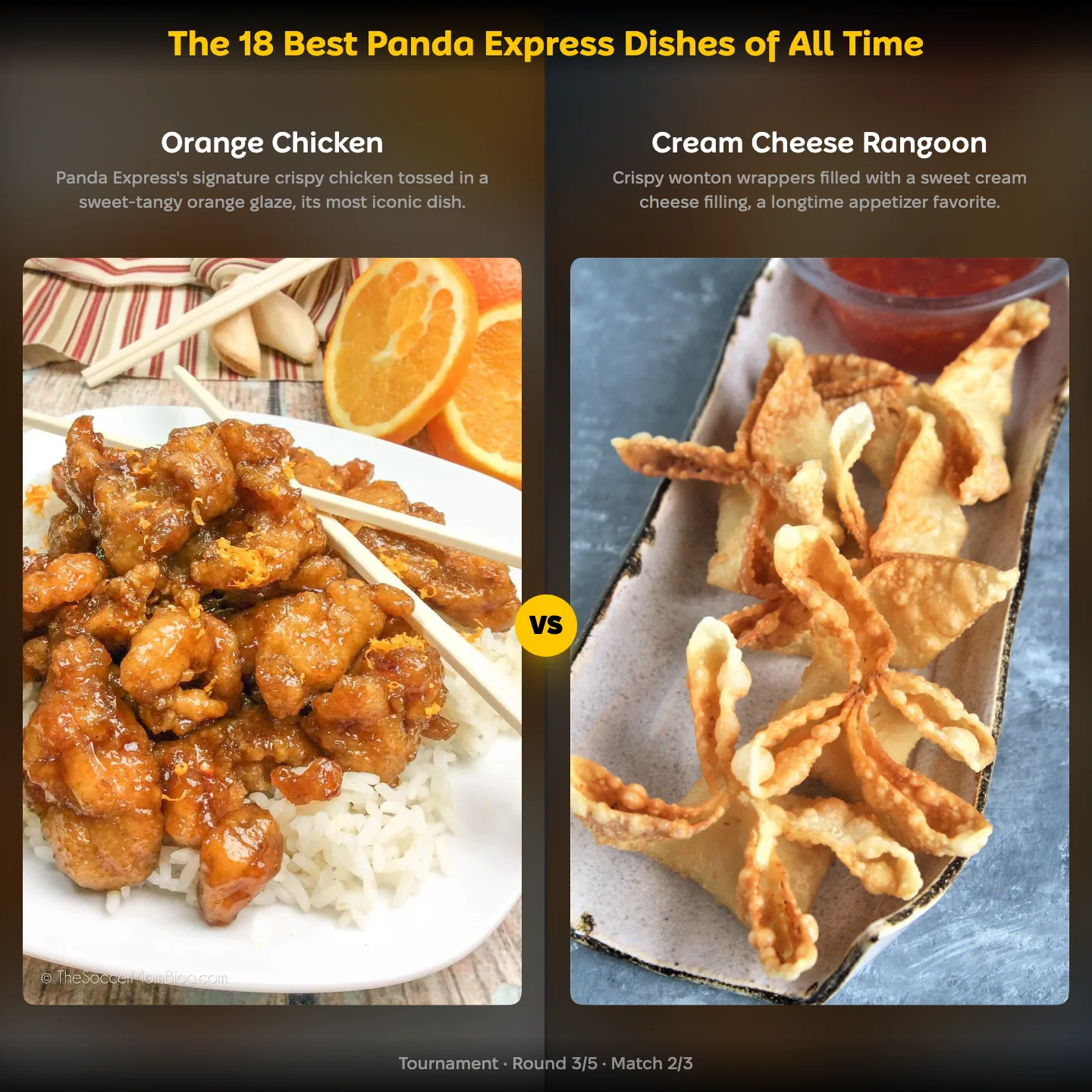
Cream Cheese Rangoon: cheese inside a wonton wrapper
Eighteen Panda Express dishes are ranked here and seventeen come from a Chinese-American kitchen with no use for dairy. Orange chicken, chow mein, Beijing beef, kung pao chicken: no cheese anywhere.
The exception is Cream Cheese Rangoon, a fried wonton parcel of sweetened cream cheese. It is an American restaurant invention rather than anything from China, and it exists because a crisp wrapper and a soft cheese behave beautifully together.
Orange chicken is the dish the chain was built on, tossed in a sweet-tangy glaze copied by every mall food court in the country.
The rangoon is the most revealing cheese entry in the article. It appears in a cuisine that never asked for cheese, holds a permanent place on the menu anyway, and manages it by arriving as an appetiser instead of a dairy course.
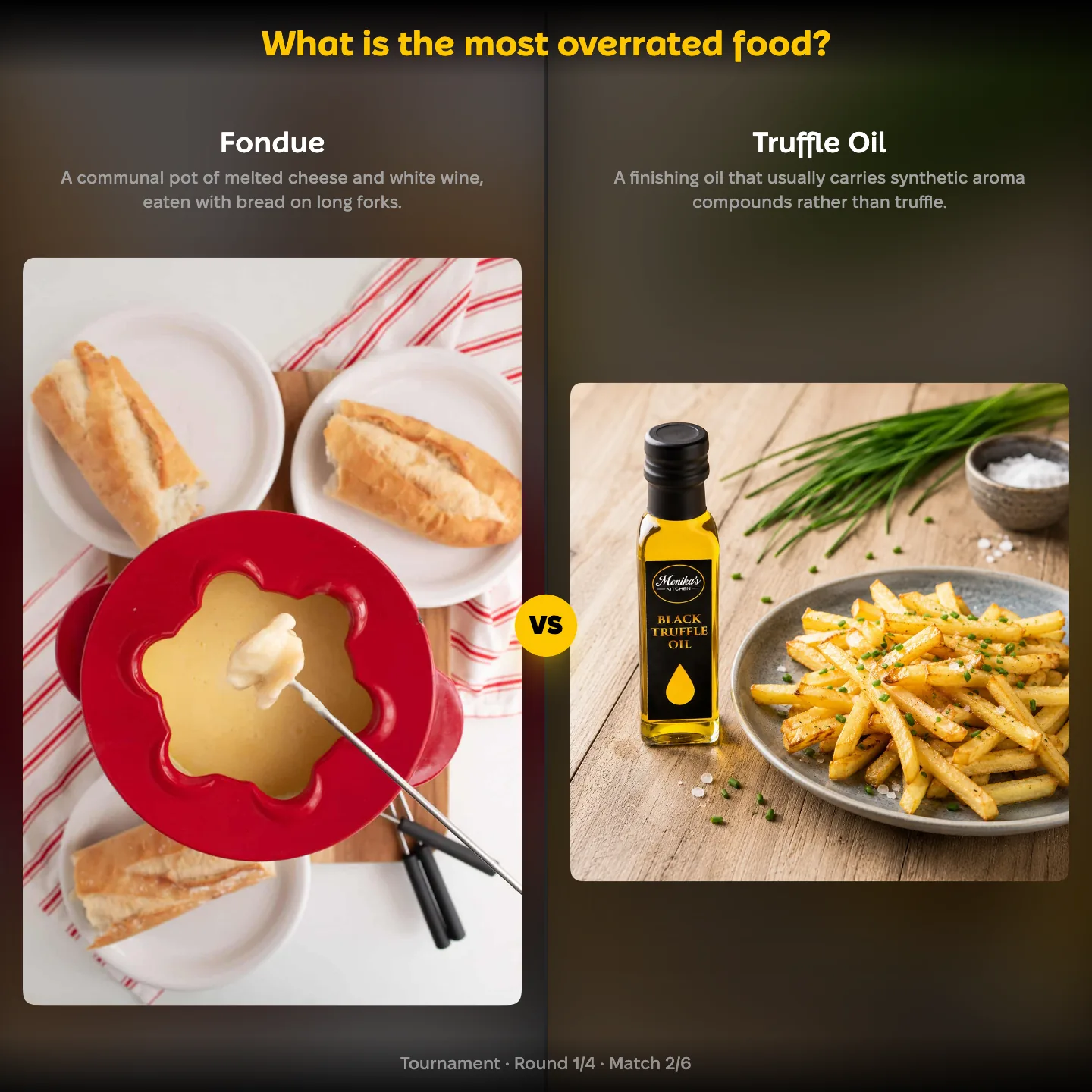
Fondue vs Truffle Oil: the case against the cheese pot
The unflattering ranking. Twelve foods that arrive with a queue and a reputation: caviar, avocado toast, kale, quinoa, cupcakes, gold leaf on a chocolate tart.
Fondue is the cheese entry, and the case against it writes itself. A pot of melted cheese and wine needs a dedicated pot, dedicated forks and an agreement that nobody double-dips, and it began as a way of using up hard cheese and stale bread through a Swiss winter.
Truffle oil makes the strongest rival case. Most bottles carry a laboratory aroma compound rather than truffle, and the stuff is poured over fries at a considerable markup.
This ranking is in the article because an ingredient that never looks bad is an ingredient nobody argues about. Cheese spends fourteen sections being indispensable, and here it has to defend itself.
One ingredient, fifteen job descriptions
Nothing else in this catalogue holds fifteen job titles at once: seasoning in Rome, sauce in a casserole dish, pudding in New York, appetiser in a mall food court, national dish in a Swiss chalet. The counter in the photograph at the top of this page sells dozens of labelled versions of one idea, and no single wedge from it would do all fifteen jobs.
More is coming, too. USDA economists put 2026 US milk production at 236.6 billion pounds and the all-milk price at $20.00 per hundredweight, so the cheese case gets fuller rather than emptier.7
Each ranking here is decided in pairs, by the head-to-head method the whole site runs on. If your answer for the best melted-cheese dish is missing from ours, make the ranking that asks your question instead.
More rankings, more angles
- Nobody Ranks McDonald's the Same Way Twice — the chain that sells the cheeseburger, on fourteen lists
- How Chocolate Ends Up on 15 Unrelated Lists — the other everyday ingredient with too many jobs
- Pizza: Naples Made It, Detroit Squared It, Chicago Went Deep — where most of the mozzarella ends up
- Coca-Cola vs Pepsi: The Cola Wars, Ranked 15 Ways — 140 years of the same shelf argument
Sources
- USDA Economic Research Service, Dairy Data — January 2026 cheese production (1.28 billion lb, +4.7% year on year; Italian-type 554 million lb against American-type 500 million lb): esmis.nal.usda.gov (checked 2026-08-12)
- USDA Economic Research Service, Charts of Note — cheese as the largest share of US per-capita dairy consumption, 0.72 cup-equivalents per person per day against 0.5 for fluid milk, up from 0.34 in 1979: ers.usda.gov (checked 2026-08-12)
- National Institute of Diabetes and Digestive and Kidney Diseases (NIH) — lactose malabsorption in about 68% of the world's population and about 36% of people in the US: niddk.nih.gov (checked 2026-08-12)
- Cooper's Hill Cheese-Rolling and Wake — the 7–9 lb Double Gloucester and the roughly 50% slope in Gloucestershire: en.wikipedia.org (checked 2026-08-12)
- DairyReporter — World Cheese Awards 2025 in Bern: Gruyère AOP Vorderfultigen Spezial by Bergkäserei Vorderfultigen won by one point from more than 5,200 entries across 46 countries: dairyreporter.com (checked 2026-08-12)
- Guinness World Records — most expensive cheese sold at auction, a €36,000 Cabrales DOP in Asturias, 25 August 2024: guinnessworldrecords.com (checked 2026-08-12)
- USDA Economic Research Service, Dairy Market Outlook (updated 17 July 2026) — 2026 milk production forecast of 236.6 billion lb and an all-milk price of $20.00 per cwt: ers.usda.gov (checked 2026-08-12)