
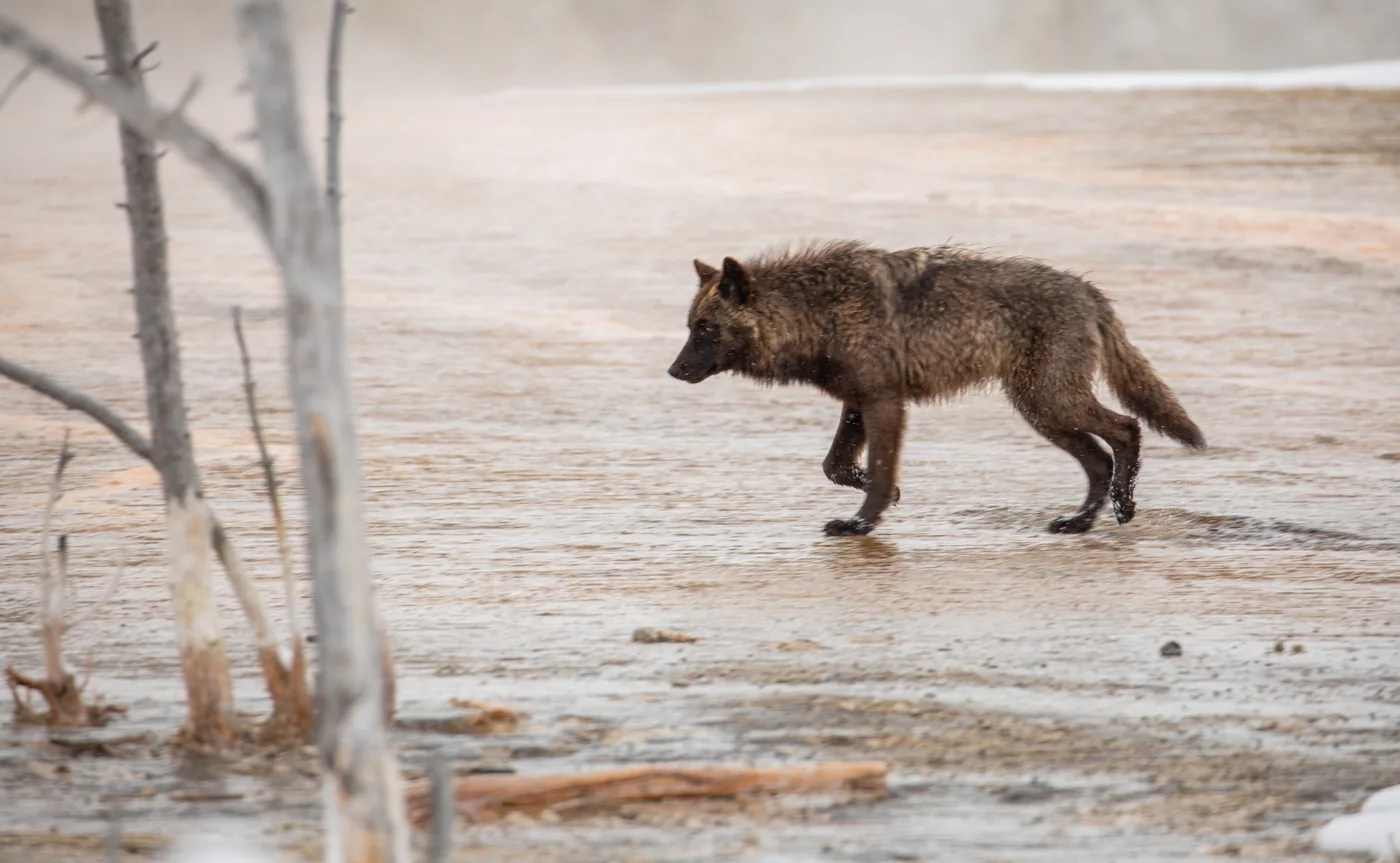
The gray wolf is the most fought-over animal in the United States. On 3 November 2025 the U.S. Fish and Wildlife Service announced it would not write a national recovery plan for the species, saying one is no longer necessary.1 Six weeks later the House passed the Pet and Livestock Protection Act, which orders the Interior Department to reissue a 2020 rule removing the wolf from the endangered list across the lower 48, and bars any court from reviewing it. The bill now sits with the Senate Environment and Public Works Committee.2
That fight is about one animal. The same animal is also a Norse god-killer, a fairy-tale con artist, an Oscar winner, a Warhammer faction and a Minecraft pet you tame with a handful of bones.
Every other famous animal is admired or feared. The wolf is the only one people insist on doing both at once, and sixteen lists here split along that exact seam.
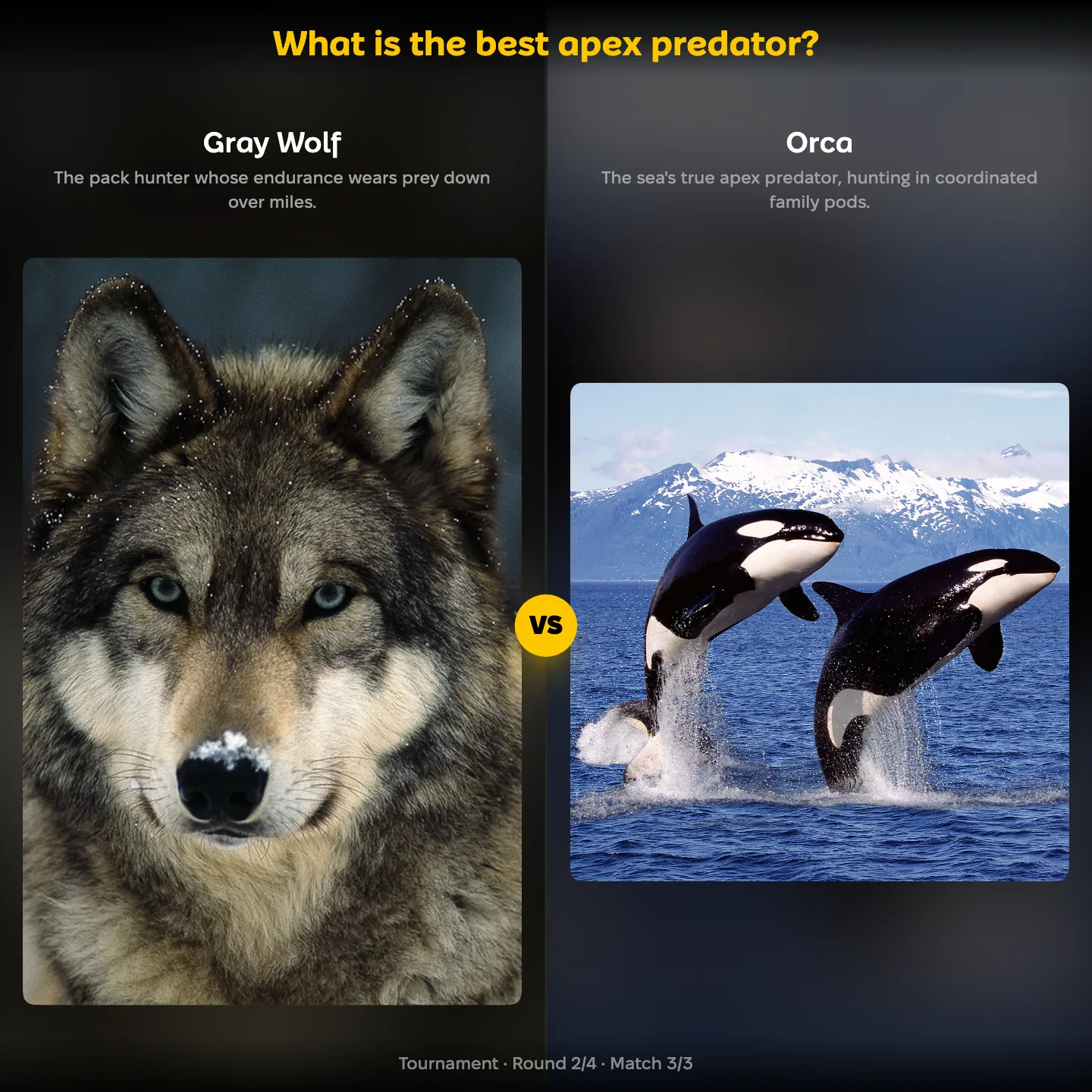
Gray Wolf vs Orca: the lightest animal in the apex-predator field
The apex-predator ranking gathers the animals nothing else hunts, and the gray wolf is the smallest thing in the room.
A wolf kills prey many times its own weight by hunting in a pack and running the animal to exhaustion. Endurance is the weapon. Mass belongs to the orca, the polar bear and the saltwater crocodile standing next to it on the same list.
Yellowstone is where that method got its reputation. The National Park Service released 41 wolves into the park from Alberta, British Columbia and northwest Montana across 1995 and 1996, and elk behaviour across whole valleys shifted with them.3
Set beside a great white shark, the wolf looks modest. That is the honest reading of this field: it was built for solitary heavyweights, and the wolf got in on cooperation.
Moose vs Gray Wolf: what actually hurts people in North America
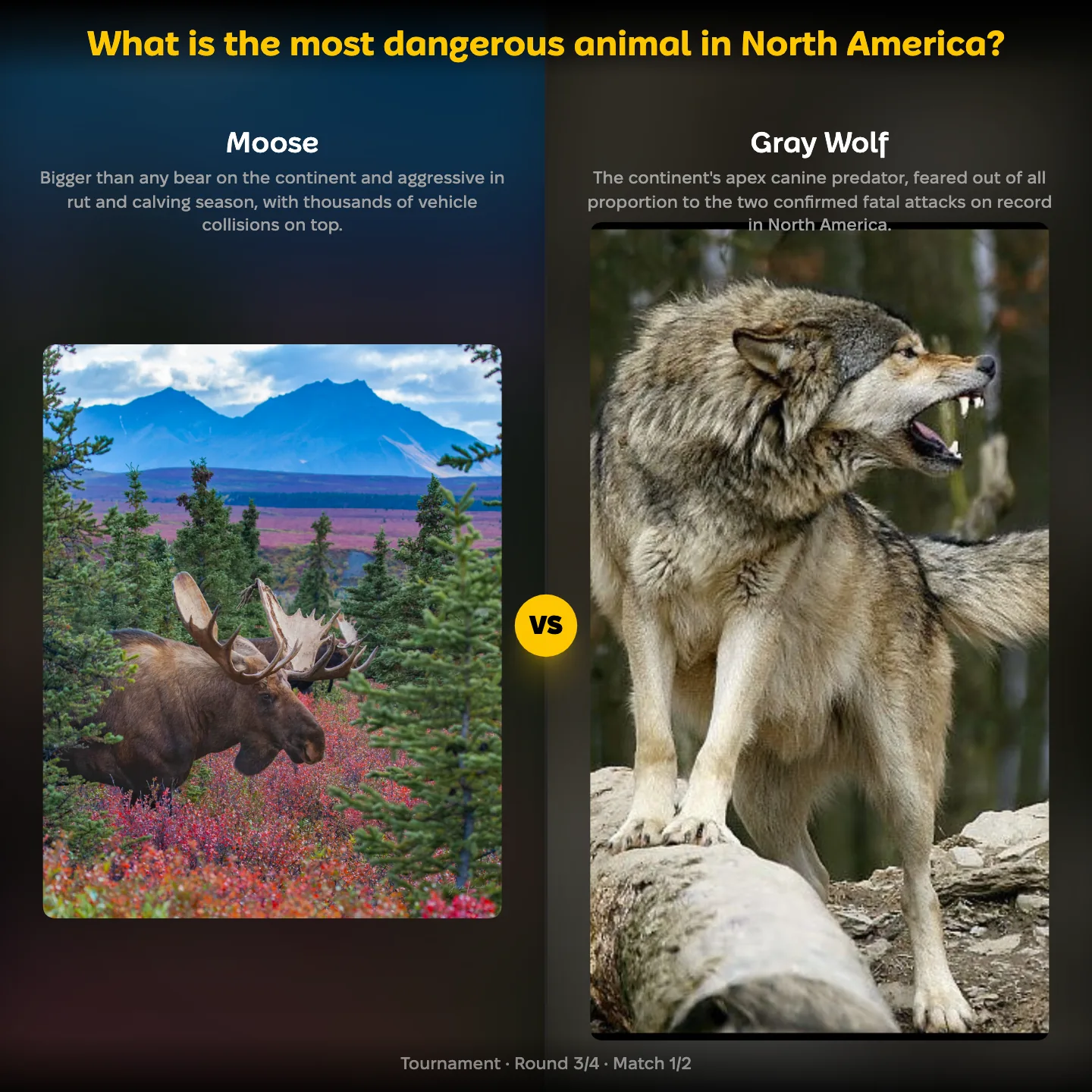
This ranking is where the wolf's reputation meets the casualty record, and the record is thin.
Two fatal wild wolf attacks are documented in modern North America: Kenton Carnegie, killed in northern Saskatchewan in November 2005, and Candice Berner, killed in Chignik, Alaska, in March 2010.4 Two, across a continent, across a century.
The moose facing it is a heavier proposition. It weighs half a ton, turns aggressive in rut and calving season, and reaches people mainly through windscreens on northern highways.
The white-tailed deer on the same list works the same way, and neither animal has a folklore problem. The wolf is on this ranking because of what people expect it to do, which is the thing the ranking is quietly testing.
Gray Wolf vs Bald Eagle: two American comebacks, one still unfinished
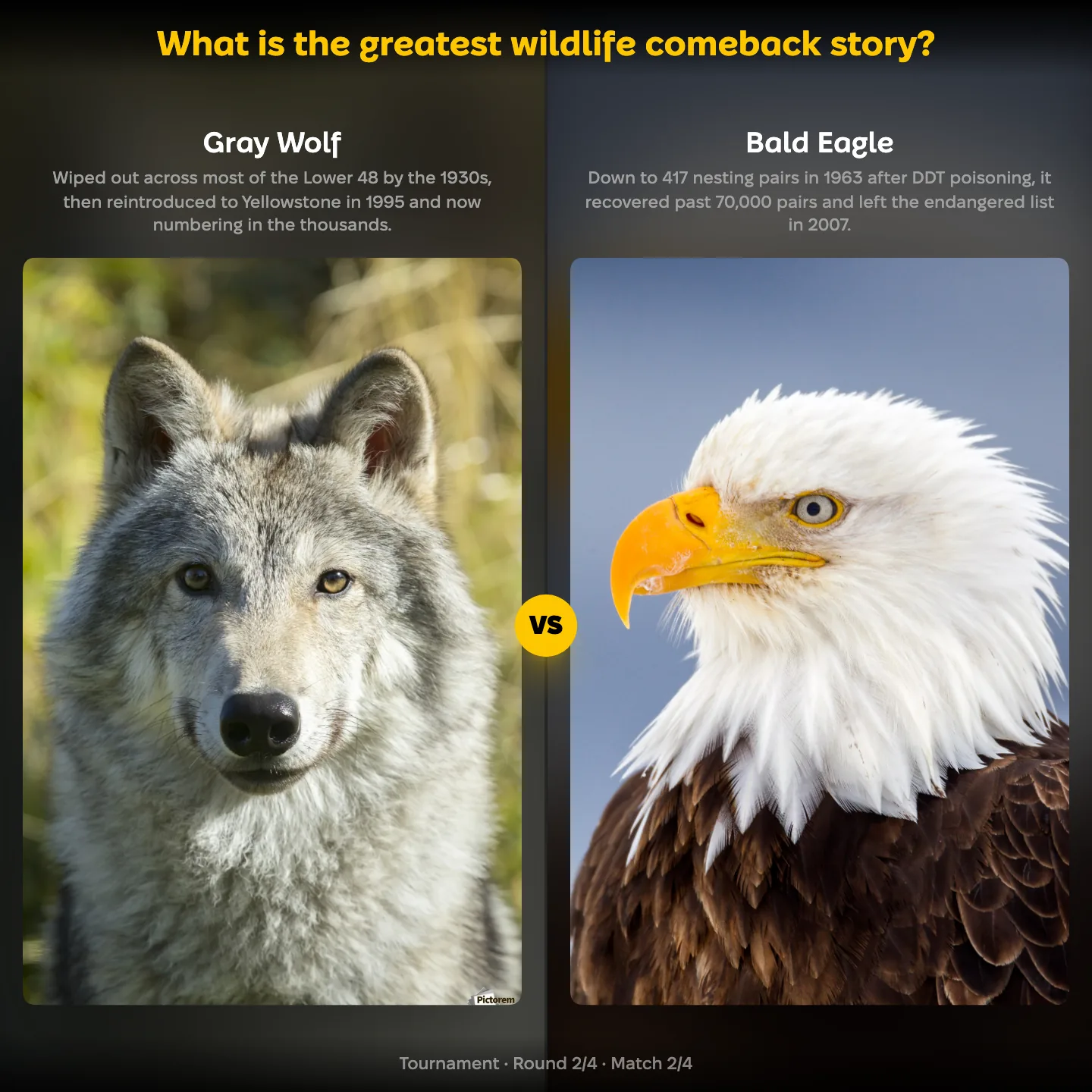
The comeback ranking collects species that were nearly gone and are not any more, and it puts the two most American of them next to each other.
The bald eagle is the benchmark. About 417 breeding pairs were left in the lower 48 states in 1963, DDT thinning the eggshells; the bird came off the endangered species list in 2007 and now numbers in the tens of thousands.5
The wolf's version is faster and far less settled. Poisoned and trapped out of most of the Lower 48 by the 1930s, flown back into Yellowstone in 1995, and currently the subject of the delisting bill sitting in Congress.
That gap is the whole entry. The eagle's recovery finished and got a ceremony. The wolf's is still in committee.
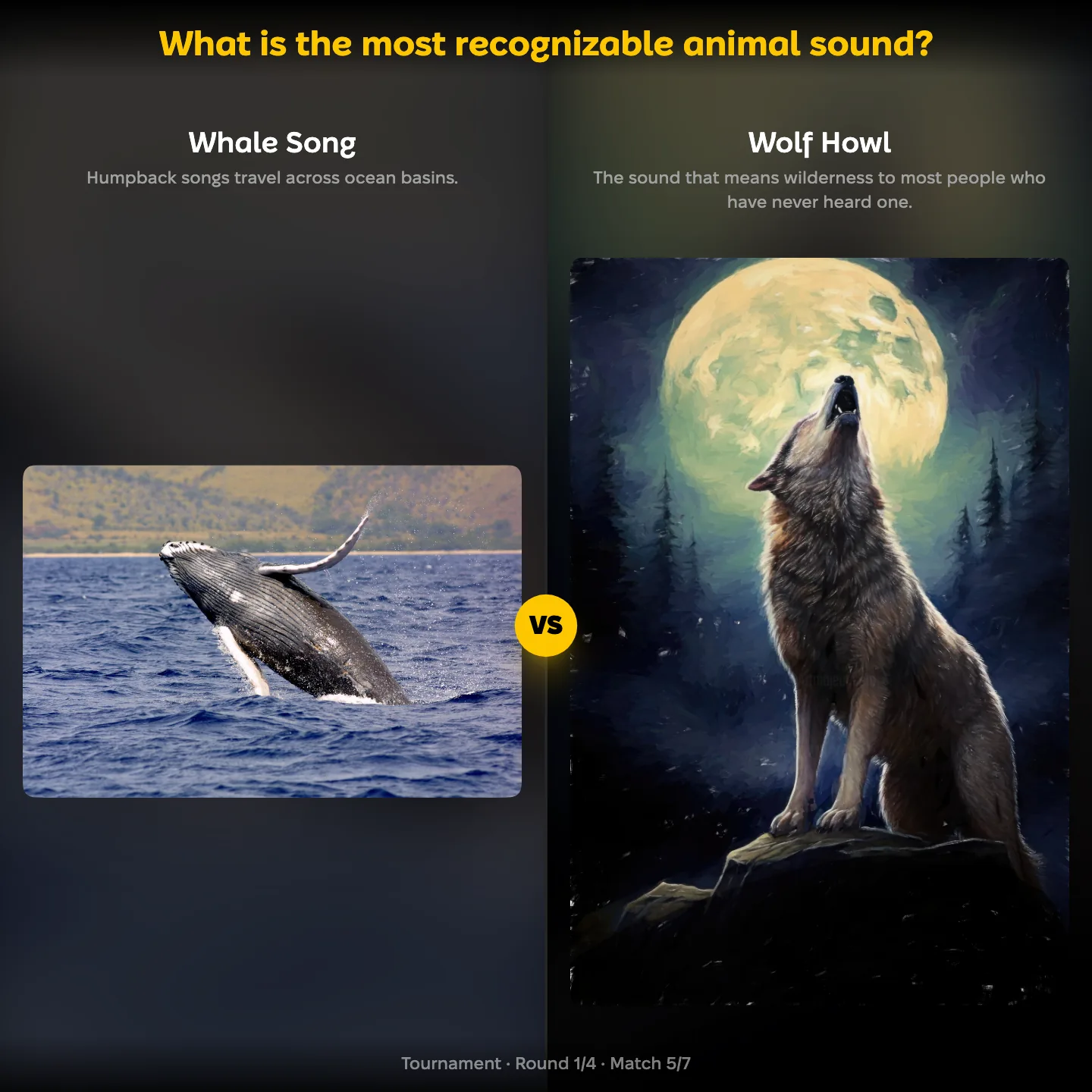
Wolf Howl vs Whale Song: a sound almost nobody has heard live
Most animals on the recognizable-sound ranking are ones people meet. Dogs bark in the street, roosters crow on farms, crickets fill a summer evening.
The wolf howl is different. Wolves are absent from most of the country where the people naming the sound live, so the howl arrives secondhand, through films and documentaries, and lands anyway.
Whale song sits in the same odd category, which makes them a fair pair: both are famous for distance and loneliness rather than volume. A howl carries across valleys because that is its job, holding a scattered pack together over ground a person would need a day to walk.
Recognition here has nothing to do with familiarity. The culture taught everyone this sound, and the animal never had to show up.
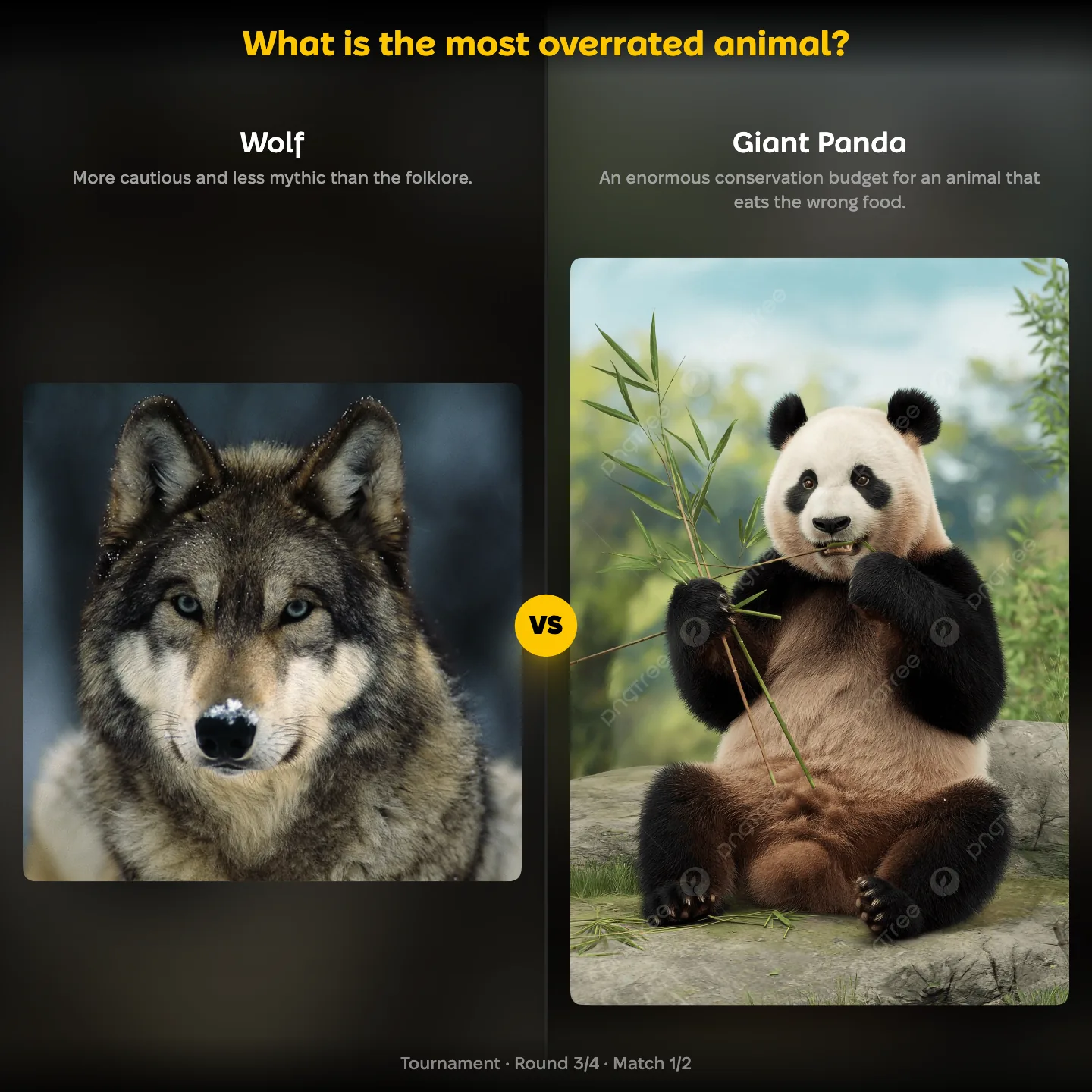
The most overrated animal, nominated by people who like animals
Being called overrated takes a certain kind of fame, and the wolf has it. This ranking sets it beside the giant panda, the dolphin and the bald eagle: animals carrying more myth than the biology supports.
The case against the wolf is that the reputation outgrew the numbers. Colorado has brought in 25 gray wolves in two translocations, 10 from Oregon in December 2023 and 15 from British Columbia in January 2025.6 Colorado Parks and Wildlife's report for the year ending 31 March 2026 counted at least 32 animals statewide in four packs, after ten deaths in twelve months and a third release that never happened.7
Thirty-two animals is the size of the thing an entire state argues about. The red wolf is smaller still: around 26 are known in the wild, all of them across five counties of eastern North Carolina, and that is the only wild red wolf population on earth.8
The defence is that the reputation is doing real work. An animal nobody romanticised would never have been flown back into two states at public expense.
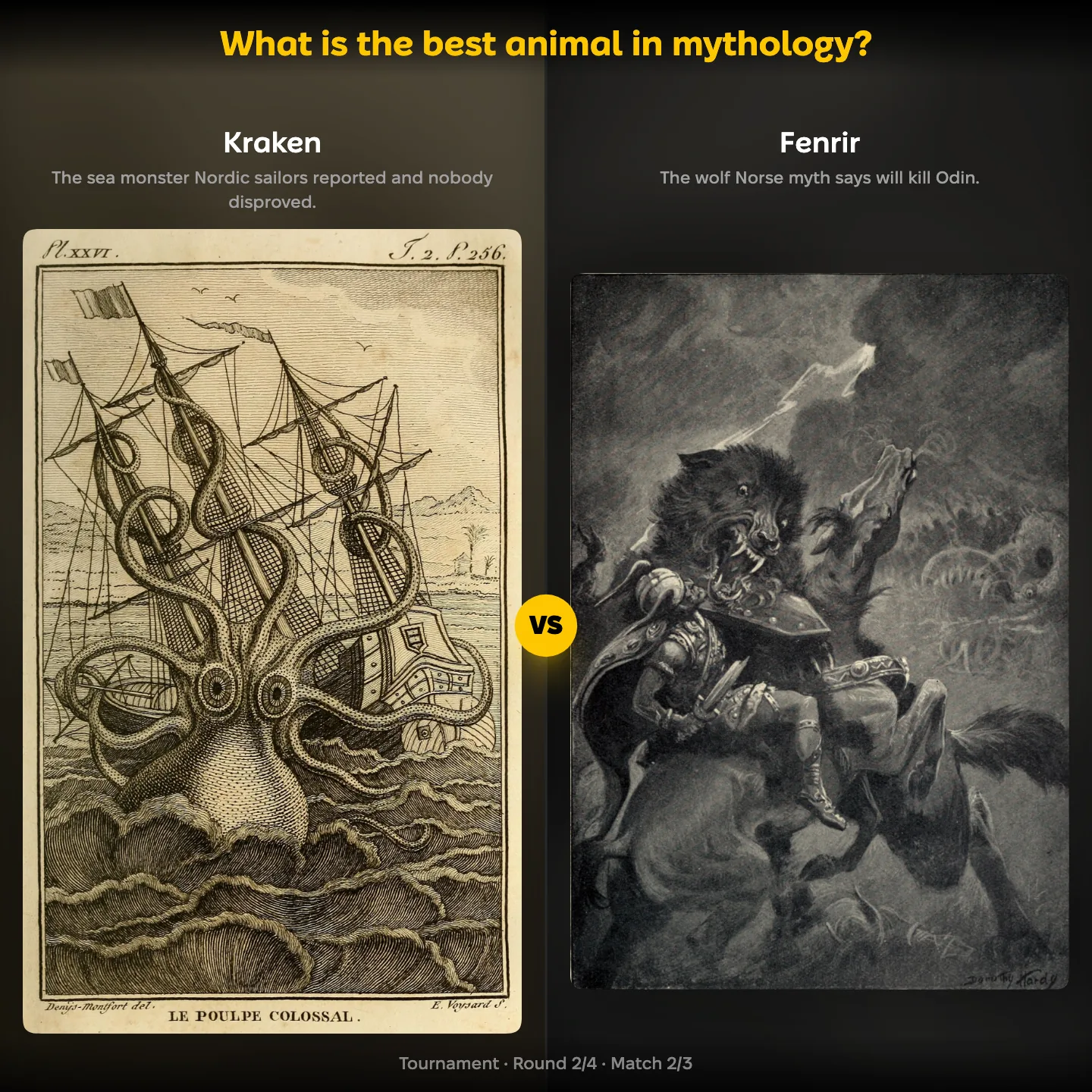
Fenrir: the wolf Norse myth says will kill Odin
Mythology's animal ranking is full of hybrids. The dragon, the sphinx, the chimera and the kraken were all assembled from parts. Fenrir is a wolf, and that is the whole of him.
Norse myth hands him the ending. The gods bind him because a prophecy says he will kill Odin at Ragnarök, and the binding costs Týr his hand. Fenrir is not a beast the hero defeats on the way to somewhere else. He is what the story is heading towards.
That is a rare job for an animal in myth. Most mythic creatures exist to be overcome by somebody. This one outlives the god.
Against the kraken, a sea monster reported by Nordic sailors and never once produced, Fenrir has the better paperwork: a name, a father, a prophecy and a fixed role in the end of the world.
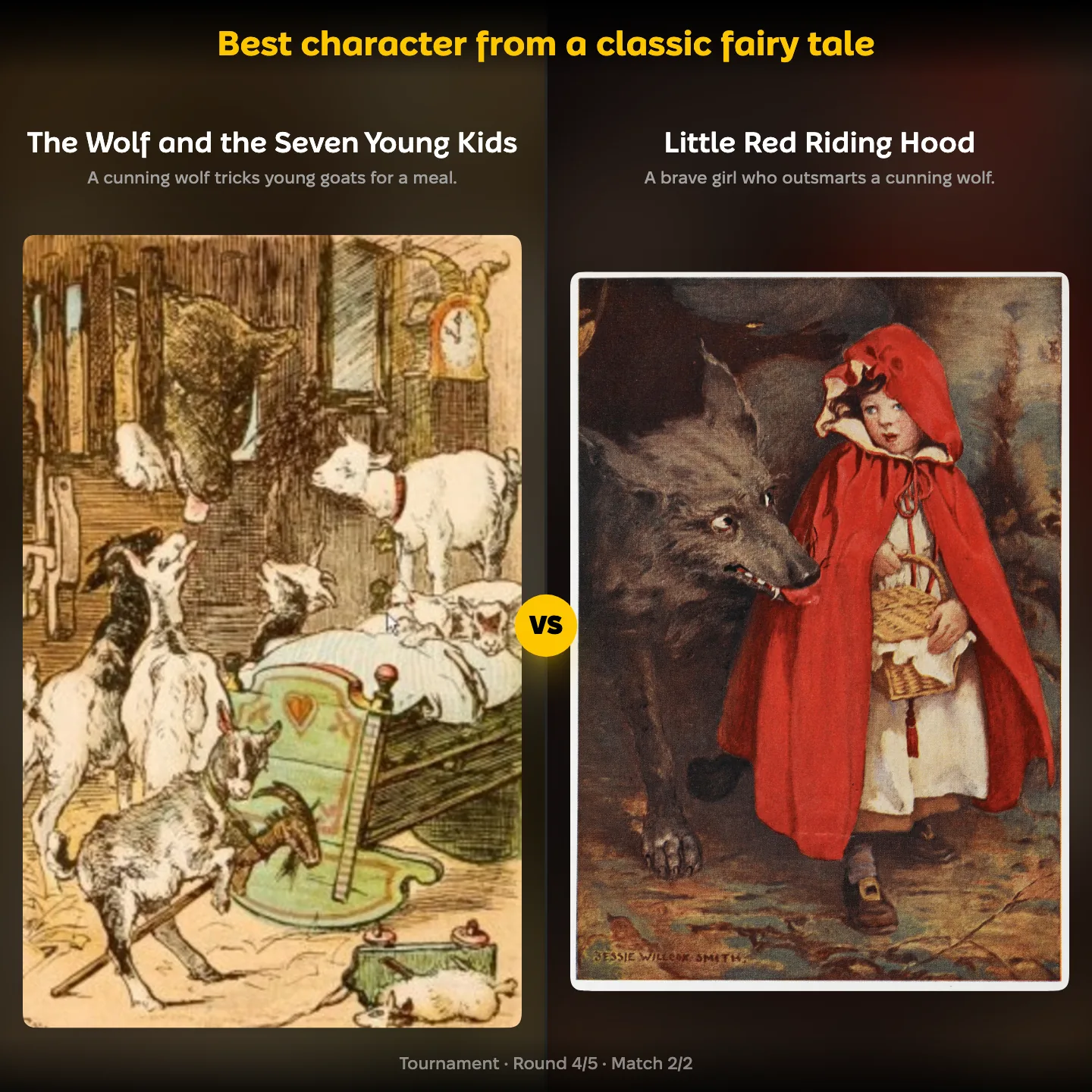
The Wolf and the Seven Young Kids vs Little Red Riding Hood
European fairy tales handed the wolf one job and kept giving it to him. In the Grimms' tale of the seven young kids he disguises his voice, whitens his paws with flour and talks his way through a locked door.
Little Red Riding Hood runs the same play on a different victim, and it is the version everyone knows. Both stories sit on this ranking, so the wolf is effectively in it twice: once as the trickster, once as the thing the girl outwits.
Bedtime stories are where most people meet a wolf first, and the character is fixed long before anyone learns what the animal eats. Centuries of that shaped what a rancher in Colorado feels about a collar signal on a hillside.
The counter is that these tales give him the brains rather than the teeth. He does not break the door down. He knocks.
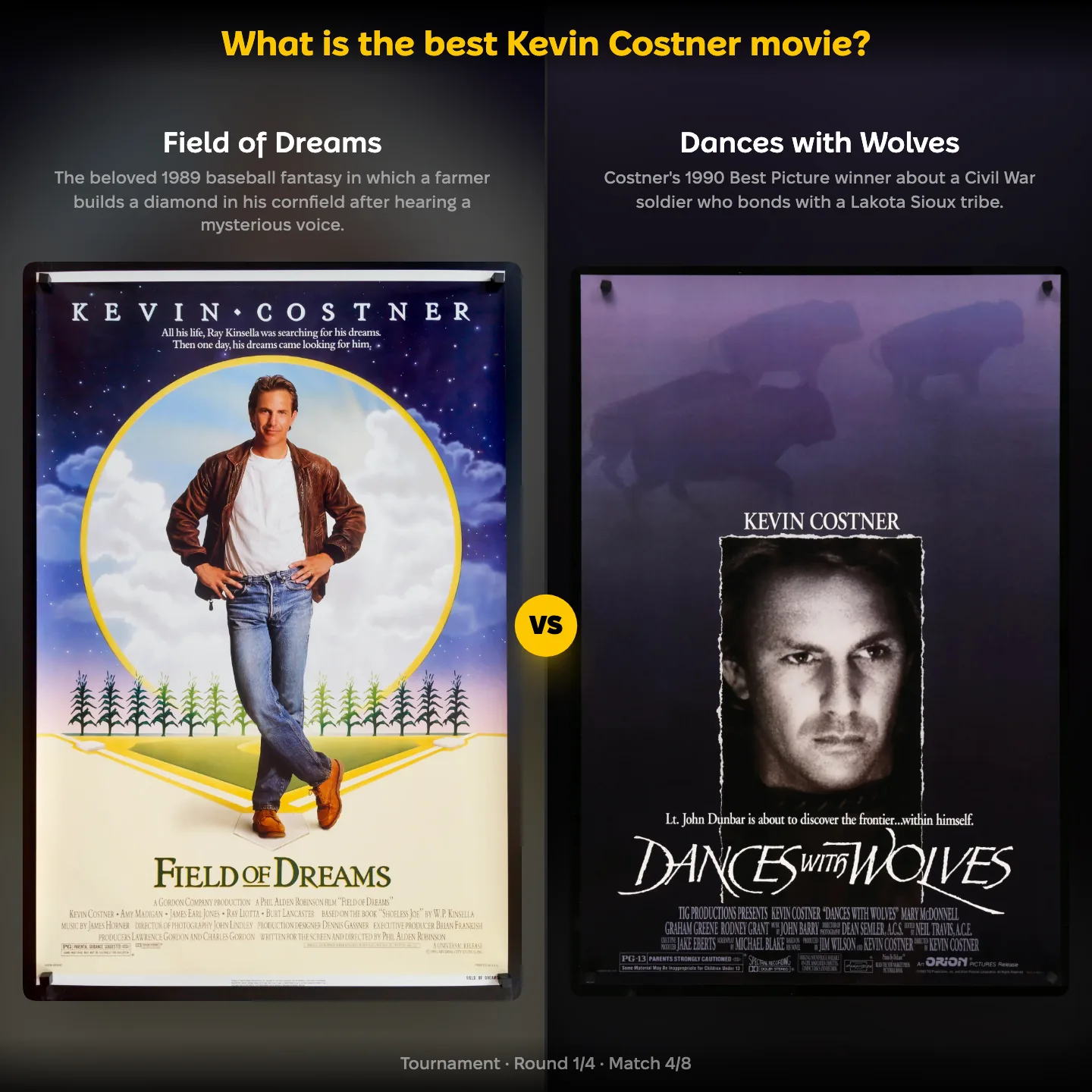
Dances with Wolves: seven Oscars and a wolf called Two Socks
Kevin Costner's filmography is a run of American institutions: baseball, the Untouchables, the Kennedy assassination. One of them has a wolf in the title and a wolf in the plot.
Dances with Wolves won seven Academy Awards at the 63rd ceremony in 1991, including Best Picture and Best Director, and was the first Western to take Best Picture since Cimarron sixty years earlier.9 Costner's soldier earns his Lakota name from the animal he plays with out on the plains.
The film matters to the wolf's reputation more than the trophy count suggests. It reached an audience of millions four years before the Yellowstone releases, and it put a wolf on screen as company rather than threat.
Field of Dreams is the Costner film people quote, and there is no wolf anywhere in it. That is the size of the company this entry is keeping.
An American Werewolf in London: the transformation that created an Oscar
Horror comedy lives or dies on tone. An American Werewolf in London holds the balance by making its funniest film contain its most painful scene.
Rick Baker's transformation sequence won the first Academy Award for Best Makeup ever given, at the 54th ceremony in 1982; the category was created and he took it.10 Bones lengthen under skin in full light, on camera, with no cutaway to hide the work.
The wolf in it is not a wolf. It is a man losing a fight with one, which is the oldest way people have talked about the animal: the thing inside that gets out.
Shaun of the Dead is the better-known title on this list, and it owes this one its whole method. Play the horror straight and let the comedy come from the people.

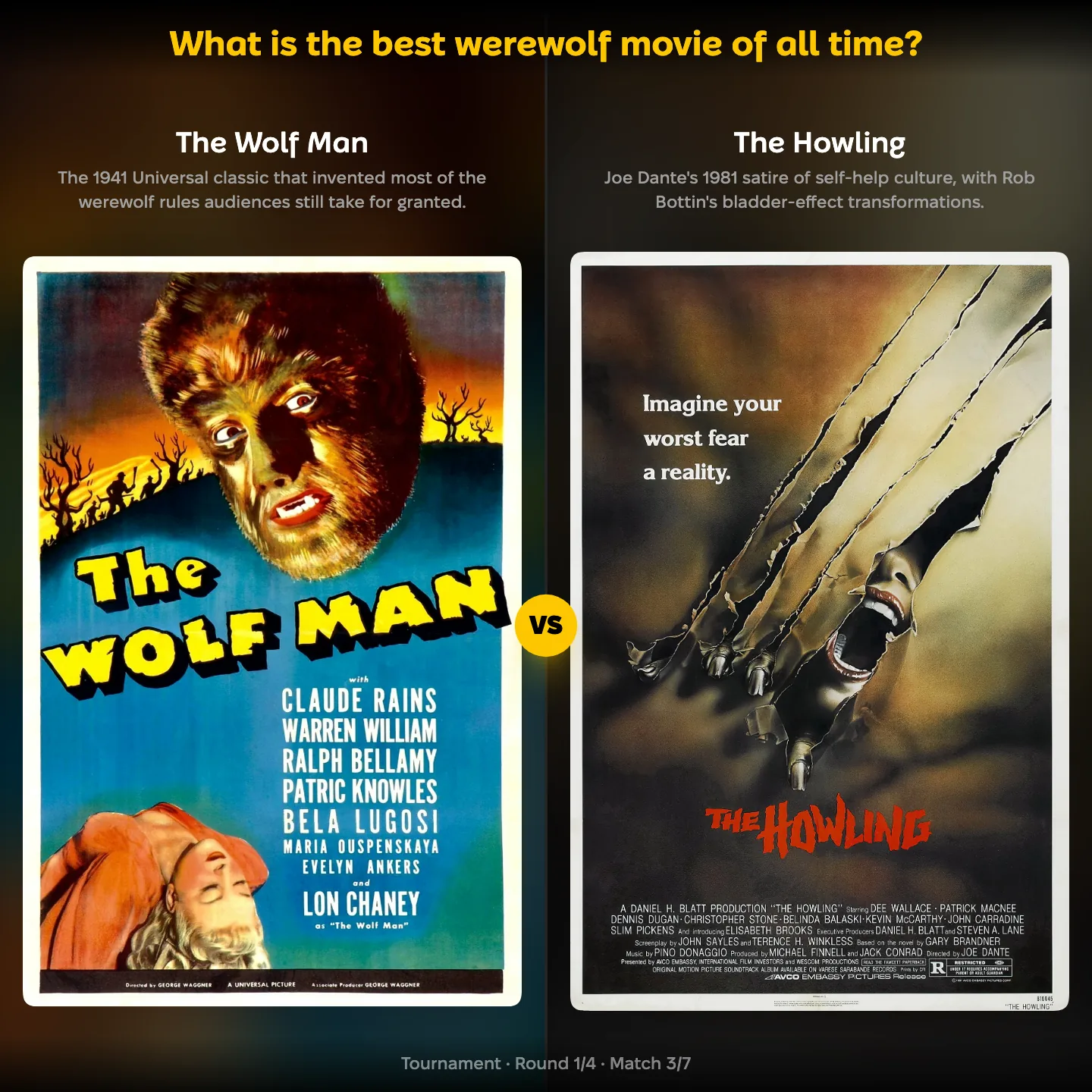
The Wolf Man vs The Howling: forty years of the same change
A ranking of werewolf films is the one place on this page where every option is a wolf.
The Wolf Man, Universal's 1941 picture with Lon Chaney Jr., invented most of what audiences still assume: the full moon, the silver, the curse passed on by a bite. Very little of that came from folklore. It came from a screenwriter.
The Howling and An American Werewolf in London both landed in 1981, and both used new bladder-effect makeup to show the change in full light. That pair of releases is where the subgenre stopped being a man in a mask.
The rest of the field goes strange in useful directions. Ginger Snaps reads the transformation as puberty, Dog Soldiers drops it into a firefight, and Brotherhood of the Wolf turns it into an 18th-century French mystery.
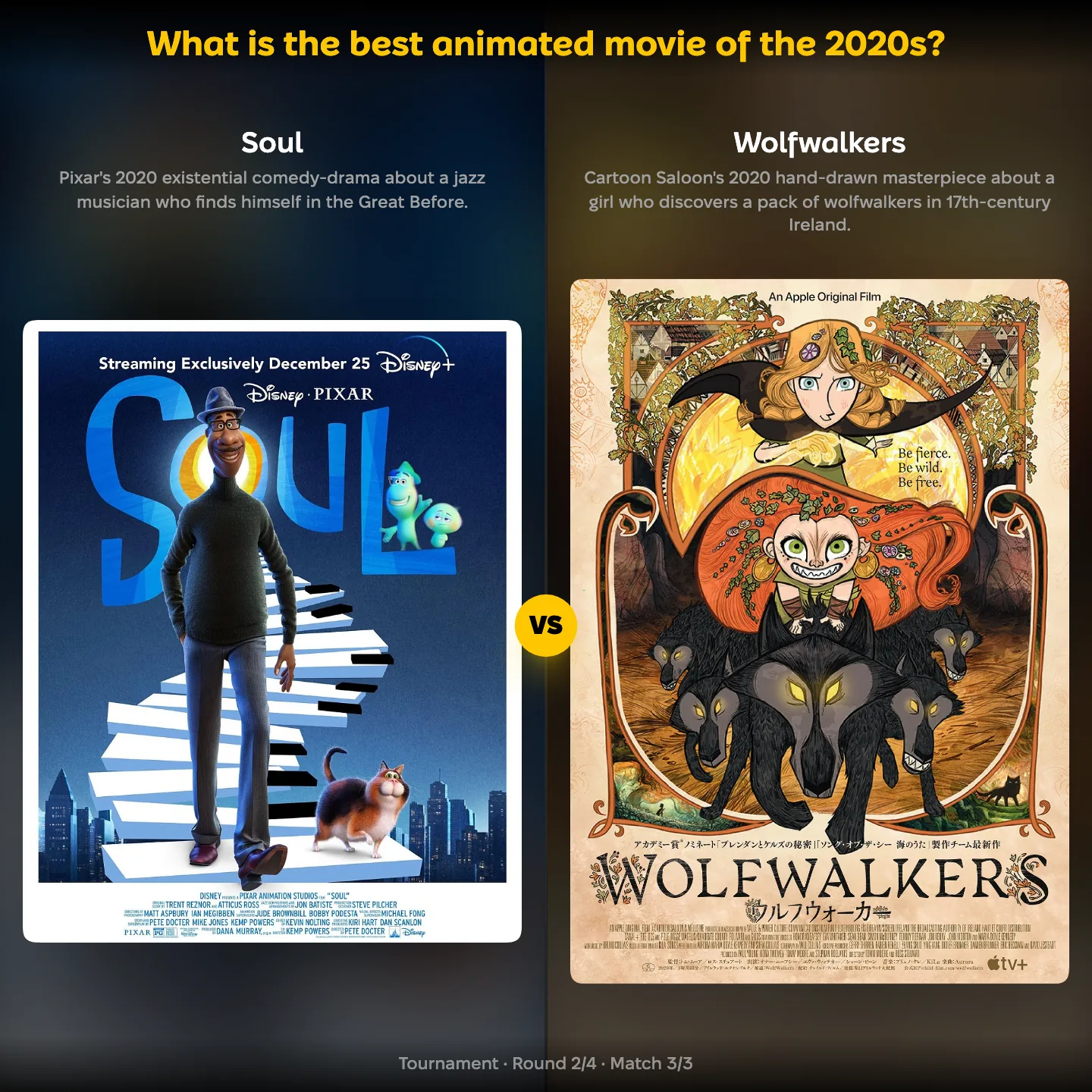
Wolfwalkers: the wolf as the thing worth saving
Every list so far has the wolf as predator or villain. Wolfwalkers is where the animal changes sides.
Cartoon Saloon's hand-drawn film is set in 17th-century Kilkenny, under an English lord clearing the forest and the wolves out of it. The girl who becomes a wolf at night is the hero and the men with the guns are the problem. It was nominated for the Academy Award for Best Animated Feature in 2021 and won five Annie Awards, including Best Direction.11
The history under it is real. Ireland's wolves were hunted to nothing, under bounty, across roughly the period the film depicts.
Against Soul, a Pixar feature about a jazz musician and the afterlife, this is a small hand-drawn production from an Irish studio. The company on this ranking is the largest animation houses working.
Wolf Children vs Summer Wars: Mamoru Hosoda's quietest film
Mamoru Hosoda builds films around noisy set pieces: a virtual world under attack in Summer Wars, a global pop concert in Belle. Wolf Children has none of that.
A student falls in love with the last wolf-man, he dies early, and she raises their two children alone in the countryside while each of them decides whether to live as a person or an animal. The wolf here is neither monster nor mascot. It is an inheritance the children have to make a decision about.
Hosoda spends the film on ordinary things: a leaking roof, a first day at school, a mother who cannot take either child to a doctor.
Summer Wars made his name and is the more entertaining film. This is the one people reach for when they want to say he is more than that.

Spice and Wolf: a wolf goddess who would rather discuss grain prices
Anime world-building rankings tend to run on scale. One Piece has an ocean of islands, Attack on Titan has walls and a buried history, Fullmetal Alchemist: Brotherhood has a military state built on a crime.
Spice and Wolf builds a medieval trade route instead. Holo is a centuries-old wolf goddess of the harvest, and the plot she drives concerns currency debasement, monopolies and the margin on a cart of furs.
Making the wolf an economist is a genuinely strange decision, and it is why the show still gets named in these conversations two decades on. The supernatural creature is the one explaining why a coin is worth less this year.
The scale is tiny next to the rest of the field. A trade route is not a continent.

A handful of bones, and the apex predator becomes a pet
Minecraft's mob ranking is mostly things trying to kill the player. Creepers explode, endermen teleport, the warden hunts by sound.
The wolf is the one that switches sides. Feed a wild wolf enough bones and it turns, follows the player, fights alongside them and dies doing it.
That mechanic is the entire domestication story compressed into a few seconds of play, and it is why a whole generation knows the wolf as a companion before it knows the wolf as a predator.

Great Grey Wolf Sif: the boss players apologise to
Dark Souls names its boss themes after the things you have to kill. Most of them are grand. Sif's is a violin line that sounds like mourning.
The fight is a giant wolf defending the grave of a dead knight, its master's sword in its mouth, and the game later shows you exactly why. Players discuss this one with something close to guilt, which very few video game encounters manage.
Ornstein and Smough, the duo across from it here, are the series' most infamous difficulty spike. Sif is remembered for the opposite reason.

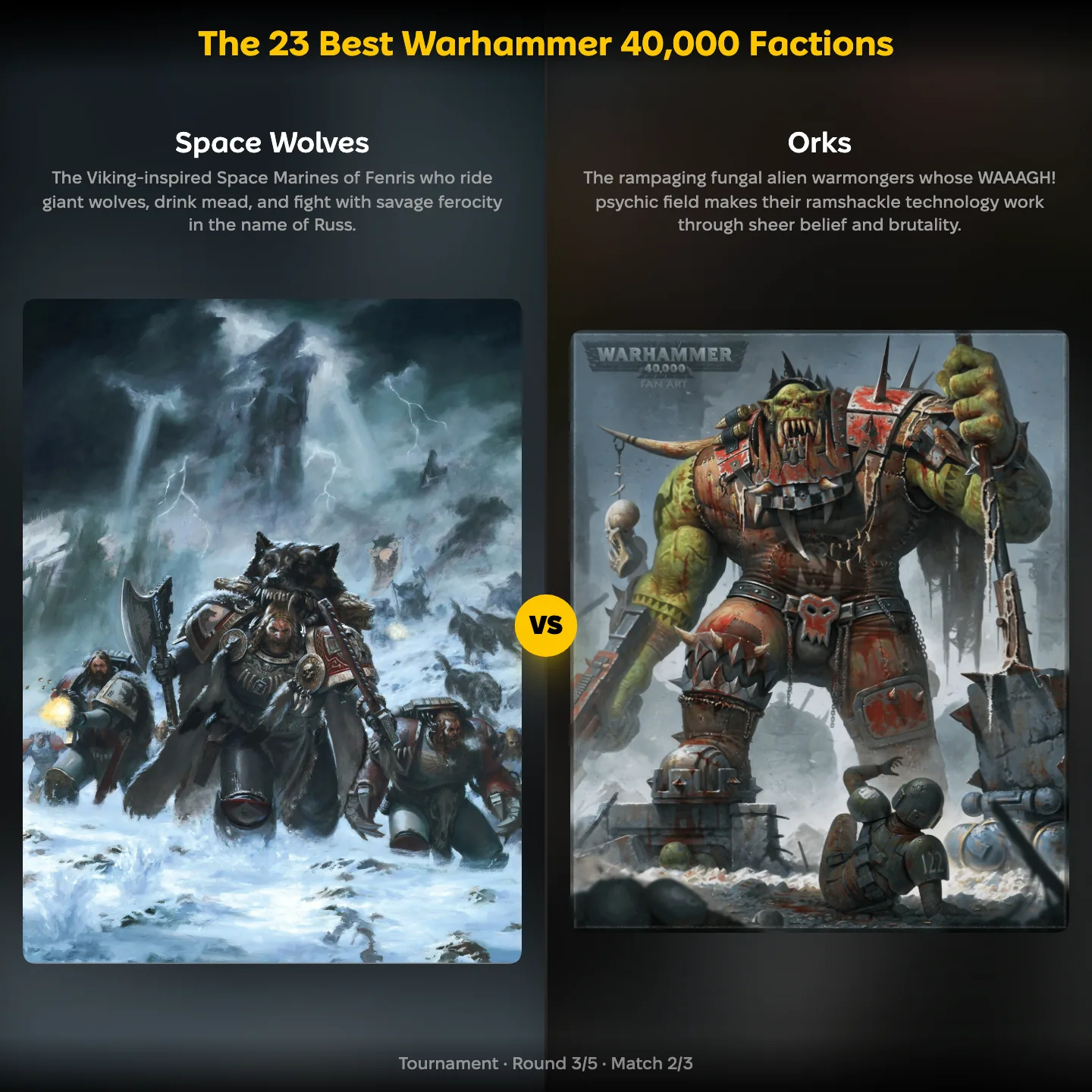
Space Wolves: Vikings in power armour, forty thousand years out
Warhammer 40,000 gave its Space Marines twenty-odd flavours, and one chapter got the wolves. The Space Wolves ride giant wolves, drink mead, keep skalds and fight in the name of Leman Russ.
Even a setting built on gothic cathedrals and continent-sized war machines wanted the animal in it somewhere. The wolf survives the trip to the 41st millennium intact, still standing for loyalty and ferocity in the same breath.
The Orks across from them are loved for the opposite quality: no dignity at all, and technology that works because they believe it does.
Sixteen lists, and the wolf never means the same thing twice
Across these rankings the wolf is a hunter, a fraud, a god-killer, a door-knocking liar, a companion and a grief note in a soundtrack. No other animal is asked to carry that range, and none of it cancels out. The Colorado rancher and the person who cried at Wolfwalkers are describing the same species.
The strangest turn is still ahead of it. Colossal Biosciences has produced three genetically modified gray wolves it calls dire wolves, Romulus and Remus born on 1 October 2024 and Khaleesi on 30 January 2025, and independent experts dispute the name.12 Even the wolf's extinctions are contested now.
Every ranking here sorts itself one pair at a time, stacking small comparisons until a full order falls out of them.
Sixteen questions, and you almost certainly disagree with one already. Go settle that one.
More rankings, more angles
- Lion vs Tiger, Ranked — the other animal fight, settled list by list
- The Bald Eagle Steals Fish, Squeaks, and Represents America — the national bird that robs ospreys
- Dogs vs Cats and the 15 Lists That Split Them — the pet version, from apartments to memes
- Secretariat Set Three Records in 1973. All Three Still Stand — three 1973 clocks nobody has beaten
Sources
- National Association of Counties — the U.S. Fish and Wildlife Service announcement of 3 November 2025 that it will not develop a national gray wolf recovery plan, and the species' current listing status by region: naco.org (checked 2026-08-09)
- Congress.gov — H.R. 845, the Pet and Livestock Protection Act: sponsor, "Passed House" status, the 18 December 2025 referral to the Senate Environment and Public Works Committee, and the bill's instruction to reissue the 2020 delisting rule without judicial review: congress.gov (checked 2026-08-09)
- National Park Service — wolf restoration in Yellowstone, 41 wolves released across 1995–96 from Alberta, British Columbia and northwest Montana: nps.gov (checked 2026-08-09)
- Wikipedia — list of wolf attacks in North America, covering the two confirmed modern fatalities, Kenton Carnegie (2005) and Candice Berner (2010): wikipedia.org (checked 2026-08-09)
- American Bird Conservancy — the bald eagle's low of 417 breeding pairs in the lower 48 states in 1963 and its removal from the endangered species list in 2007: abcbirds.org (checked 2026-08-09)
- Colorado Parks and Wildlife — the two translocations that brought 25 gray wolves to Colorado, in December 2023 and January 2025: cpw.state.co.us (checked 2026-08-09)
- Summit Daily, 7 May 2026, reporting Colorado Parks and Wildlife's annual gray wolf report for the year ending 31 March 2026 — population, packs, mortality and the cancelled third release: summitdaily.com (checked 2026-08-09)
- WFAE (NPR Charlotte), 20 May 2026 — the wild red wolf population in eastern North Carolina: wfae.org (checked 2026-08-09)
- Wikipedia — Dances with Wolves at the 63rd Academy Awards, seven wins including Best Picture, and the Cimarron comparison: wikipedia.org (checked 2026-08-09)
- Wikipedia — An American Werewolf in London and Rick Baker's win of the first Academy Award for Best Makeup at the 54th ceremony: wikipedia.org (checked 2026-08-09)
- Wikipedia — Wolfwalkers awards, including the 2021 Academy Award nomination for Best Animated Feature and five Annie Awards: wikipedia.org (checked 2026-08-09)
- Wikipedia — the Colossal Biosciences dire wolf project: the birth dates of Romulus, Remus and Khaleesi, their status as edited gray wolves, and the criticism from the IUCN Canid Specialist Group and others: wikipedia.org (checked 2026-08-09)