
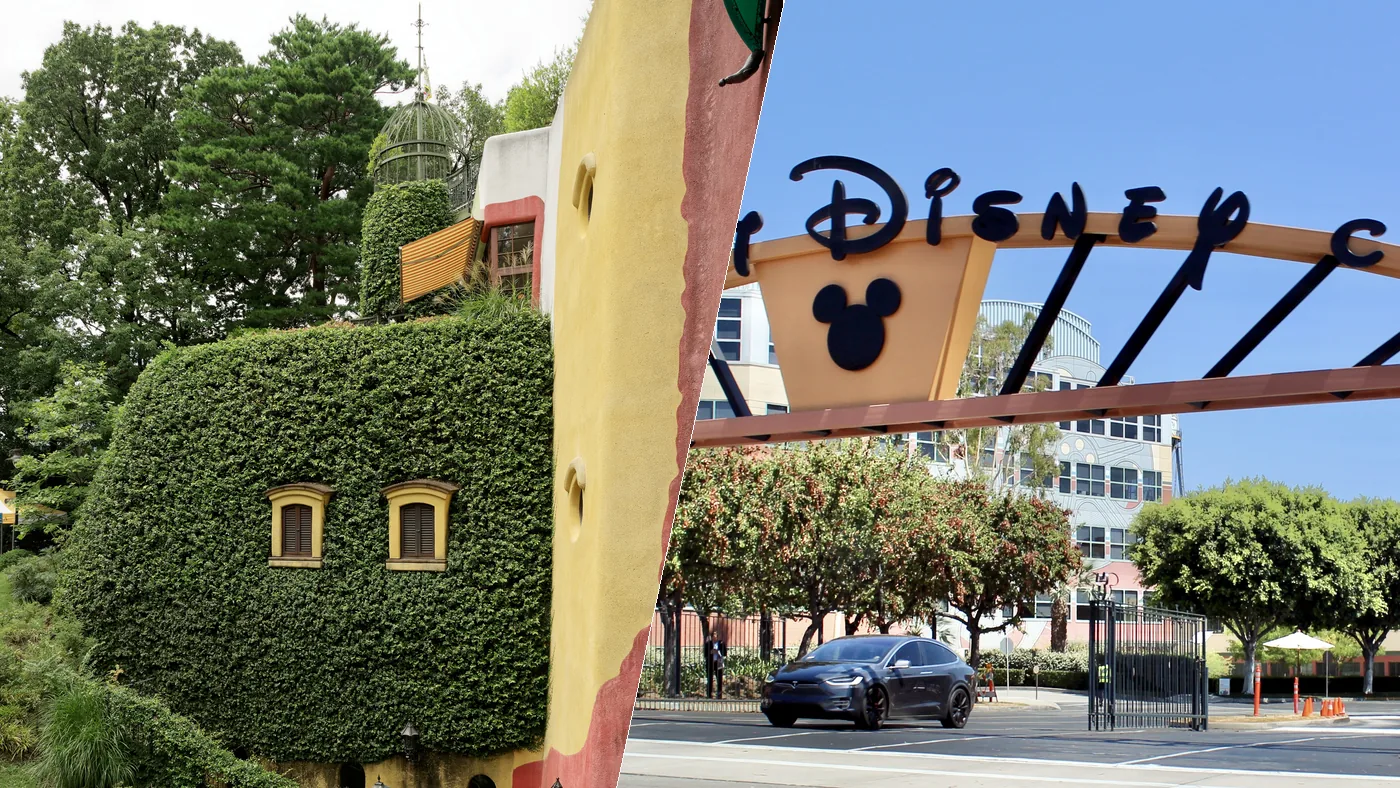
Studio Ghibli and Disney have spent thirty years being described as opposites, and this summer made the description look literal. Disney and Pixar released Toy Story 5 in June 2026; it took $160 million in North America on its opening weekend, the biggest debut of the year.1 Ghibli's newest work arrived three weeks later: a short film screening in exactly one building on earth, the Cinema Orion inside Ghibli's Grand Warehouse at Ghibli Park.2
They are not strangers. Disney spent the late 1990s as Ghibli's distributor in the West, which is how most American viewers met these films at all.
Both studios sit inside the same fifteen rankings below. Disney here covers Walt Disney Animation and Pixar, which Disney has owned since 2006.
Every animation list has room for both, until it names its criterion: songs, villains, box office, silence.
Toy Story vs Princess Mononoke: the all-time animated list
The broadest animation question on the site puts twenty films in one list, and both studios arrive in force. Five are Studio Ghibli: My Neighbor Totoro, Princess Mononoke, Spirited Away, Howl's Moving Castle and Grave of the Fireflies.
Eleven come from Disney and Pixar, from Beauty and the Beast in 1991 to Inside Out in 2015. Toy Story, the first feature animated entirely on computers, sits in the middle of them.
Ghibli's five were drawn by hand at a studio that has never employed more than a few hundred people. Disney's eleven came out of two studios and three decades of industrial pipeline.
Neither of them owns the list. Akira, Shrek, How to Train Your Dragon and Spider-Man: Into the Spider-Verse are all in it, and the last of those has a serious claim on the top.
"Cartoon movie": the word that hands Disney the field
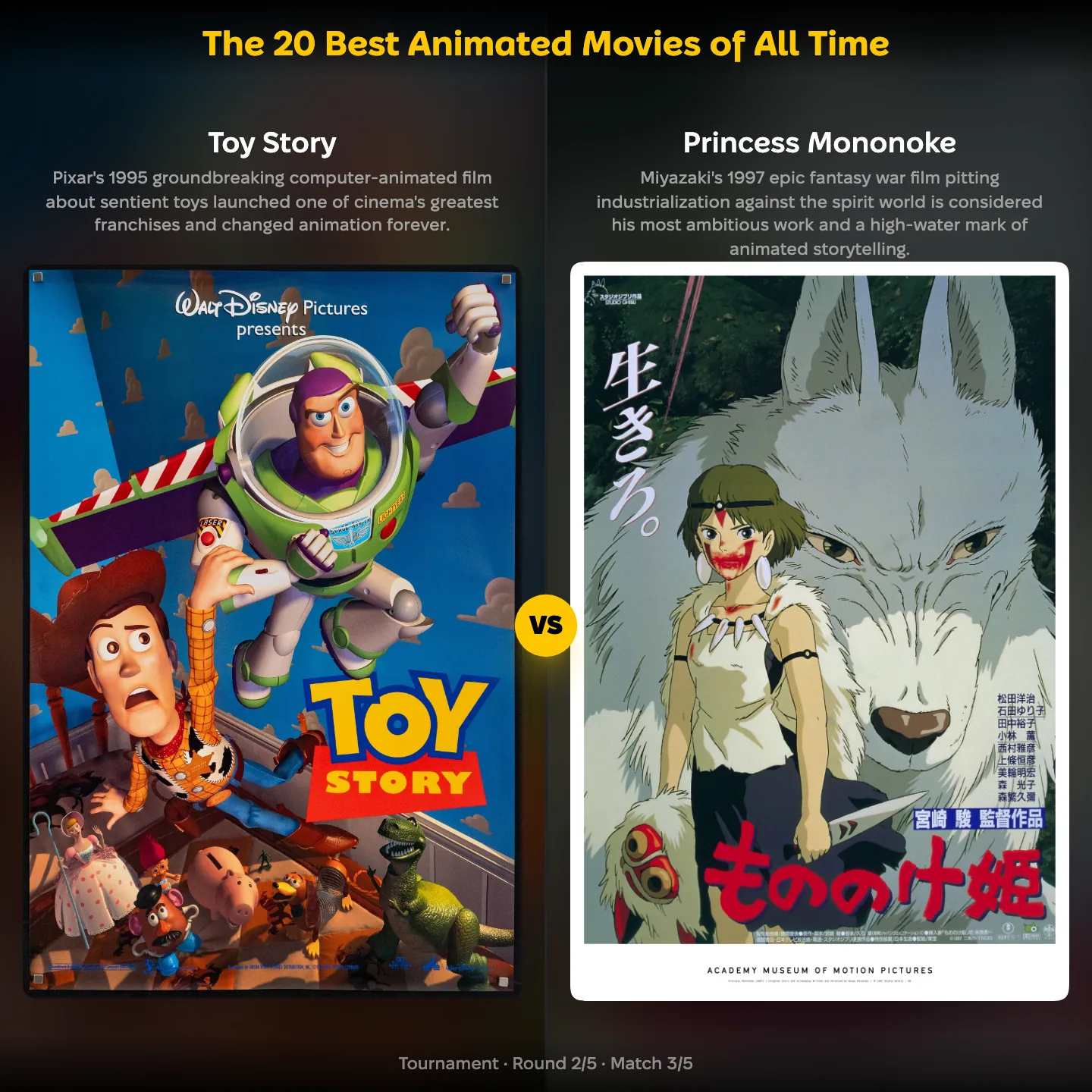
Ask the same question in the most casual words available and the balance collapses. The list of best cartoon movies runs to thirty-two options. Twenty of them are Disney or Pixar. One is Studio Ghibli.
That one is Spirited Away, which took $360.8 million worldwide.3 It is the Ghibli film most casual American viewers can name without prompting.
The word is doing the work. In American English a cartoon is a Disney thing by default, and Ghibli arrived under a different label.
Disney is the reason it arrived at all. A 1996 agreement with Ghibli's parent company Tokuma Shoten gave Disney home-video rights to part of the catalogue and the international theatrical rights to Princess Mononoke.4 The films still reached shops filed as anime: a separate shelf, and a separate shelf in the mind.
Nothing about the films changed between this list and the last one. Only the vocabulary did.
Spirited Away and The Boy and the Heron: two Oscars, twenty-one years apart
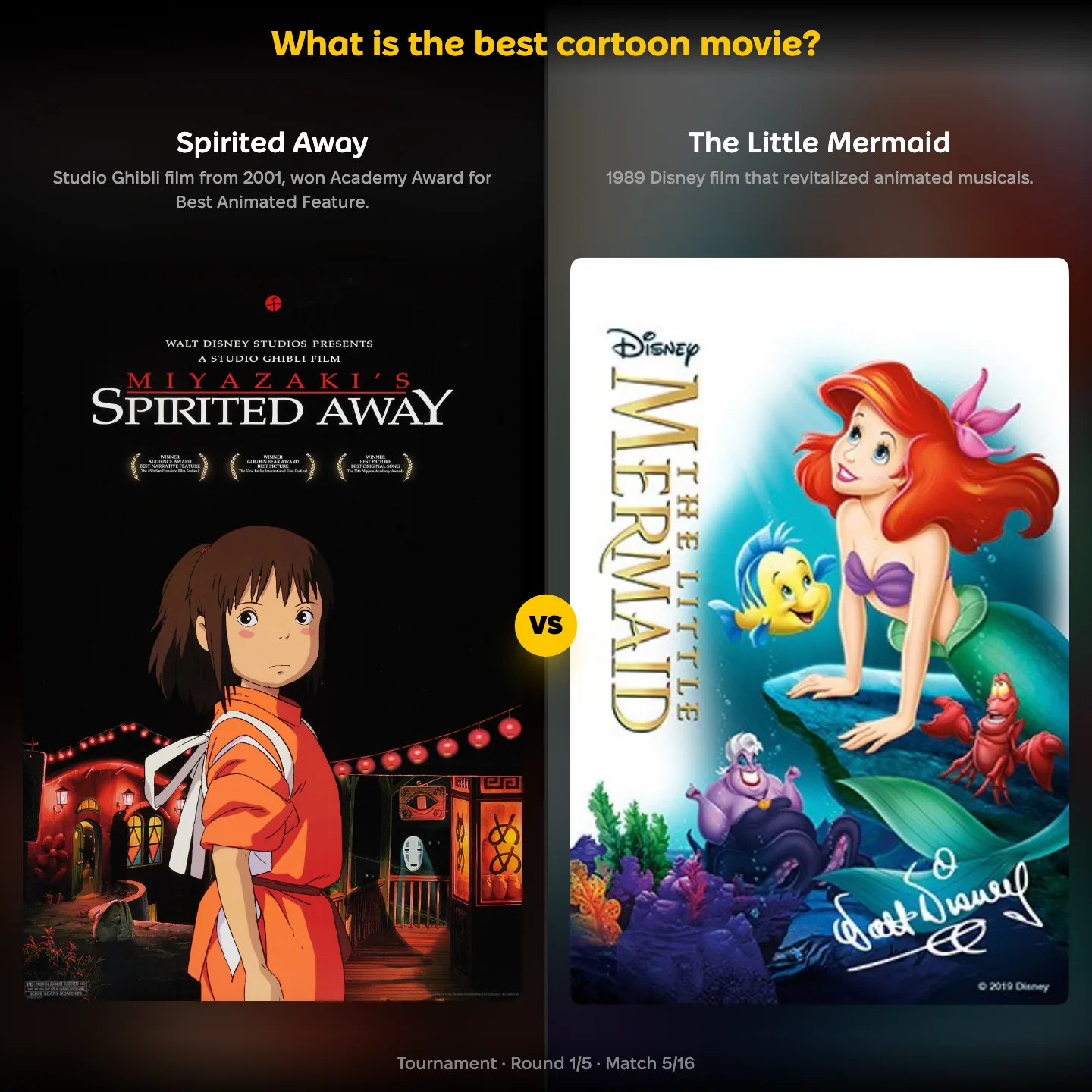
The Academy created Best Animated Feature in 2001, and Studio Ghibli won it at the second attempt. Spirited Away took the award on 23 March 2003 and is still the only hand-drawn film to have won the category.5 Hayao Miyazaki stayed away from the ceremony, citing the American invasion of Iraq.6
He won it again twenty-one years later. The Boy and the Heron took the 2024 award, his second in the category.7
Disney and Pixar supply fifteen of the twenty-five winners on this list, Finding Nemo, Ratatouille, Frozen, Coco and Encanto among them. That is what happens when one company releases three or four animated features a year for two decades.
The two names that complicate it sit at the ends of the run. Shrek won the very first award, and Flow, made by a Latvian team in free software, won in 2025.
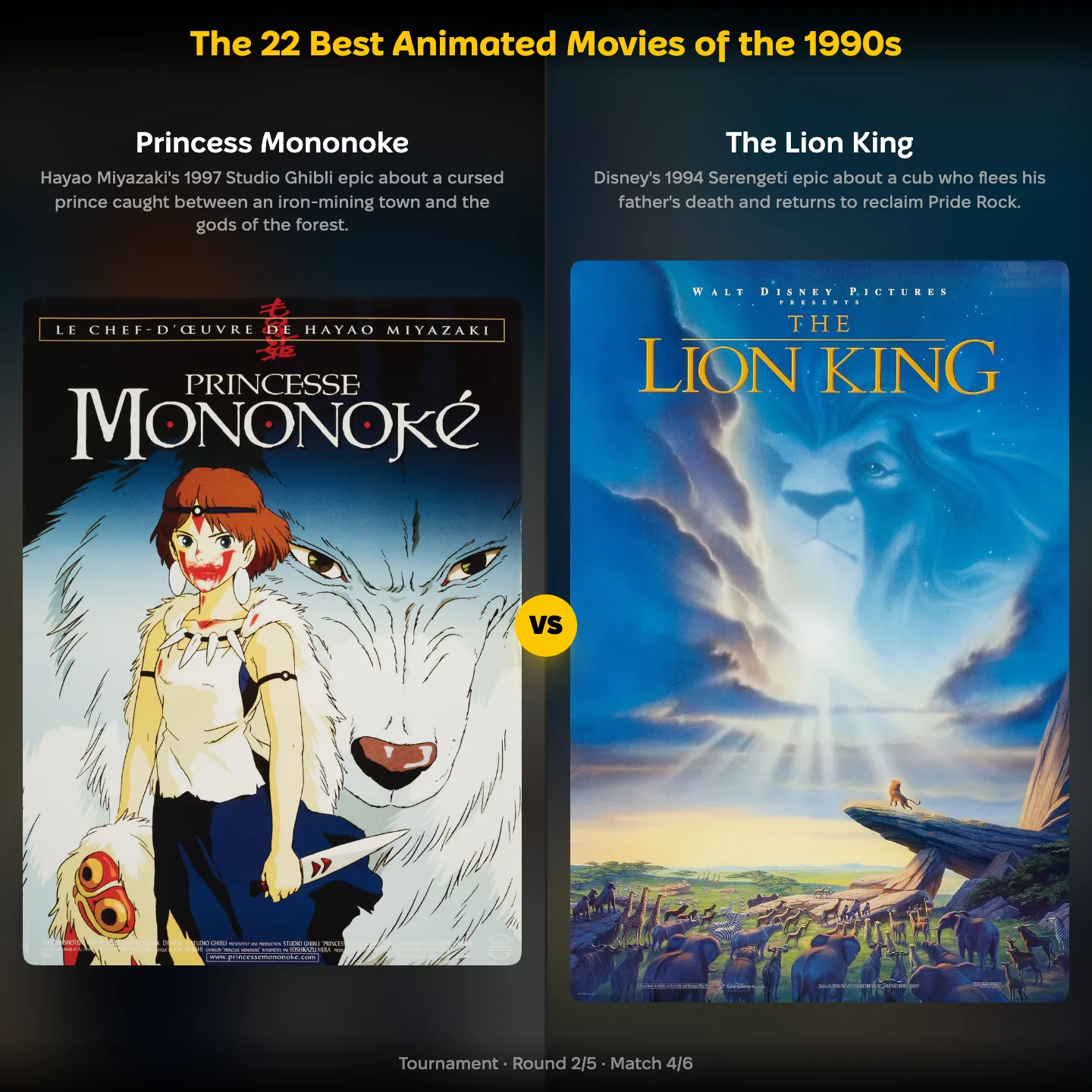
The Lion King vs Princess Mononoke: two very different 1990s
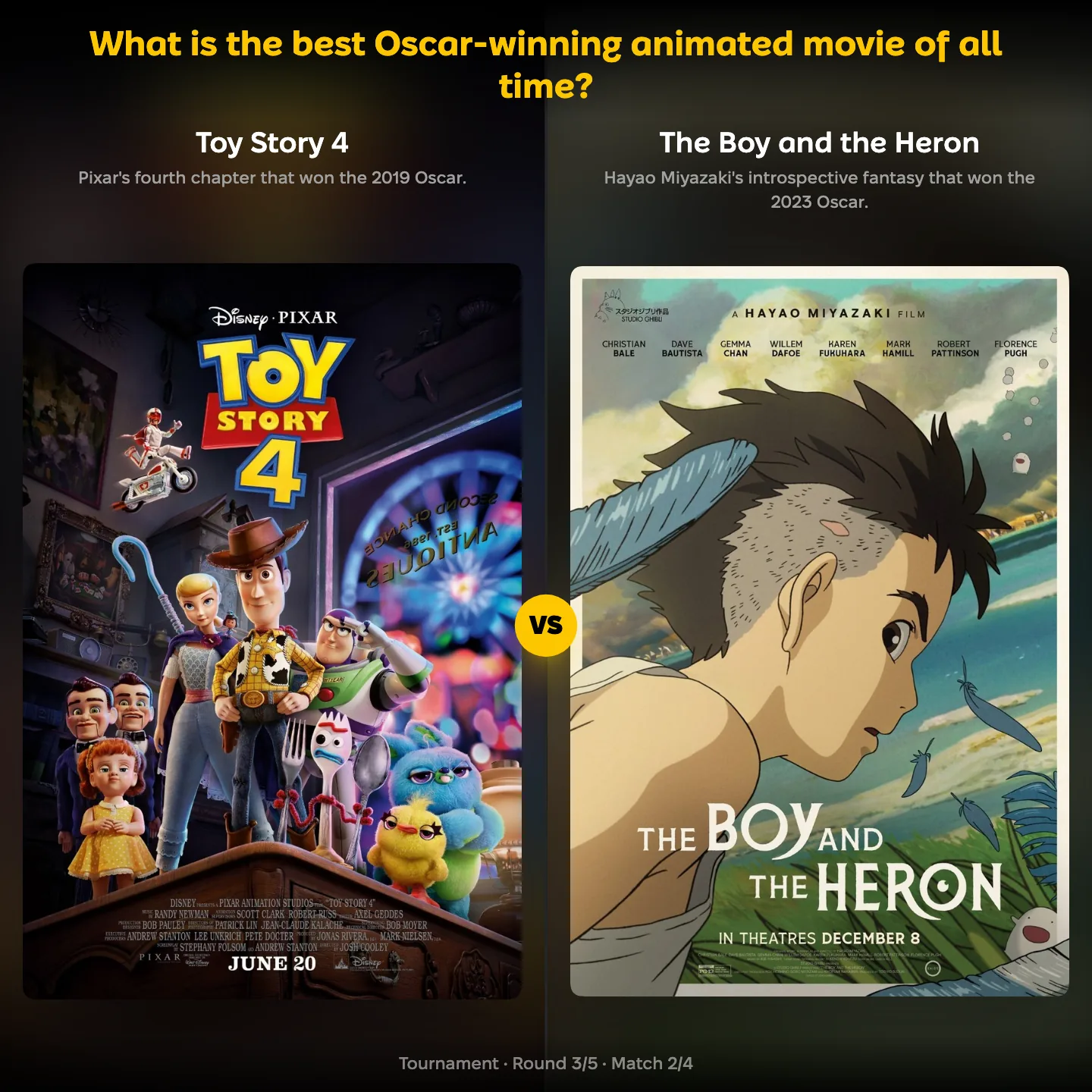
The 1990s list runs to twenty-two films, and the two studios split it unevenly. Disney and Pixar hold nine places, from The Lion King, Beauty and the Beast and Aladdin to Toy Story and A Bug's Life.
Studio Ghibli has three: Princess Mononoke, Porco Rosso and Whisper of the Heart. Two of the three were barely released in the West at the time.
Mononoke reached American cinemas because of Disney. The same 1996 agreement that handed Disney the Ghibli home-video catalogue carried the international theatrical rights to Mononoke, and Miramax put it out in 1999 after Ghibli refused to let it be cut.4
The decade is also why this list needs twenty-two slots. The Iron Giant, Ghost in the Shell, Perfect Blue, The Nightmare Before Christmas and The Prince of Egypt all belong on it, and none of them came from either studio.
Frozen, Inside Out and the decade Ghibli almost missed
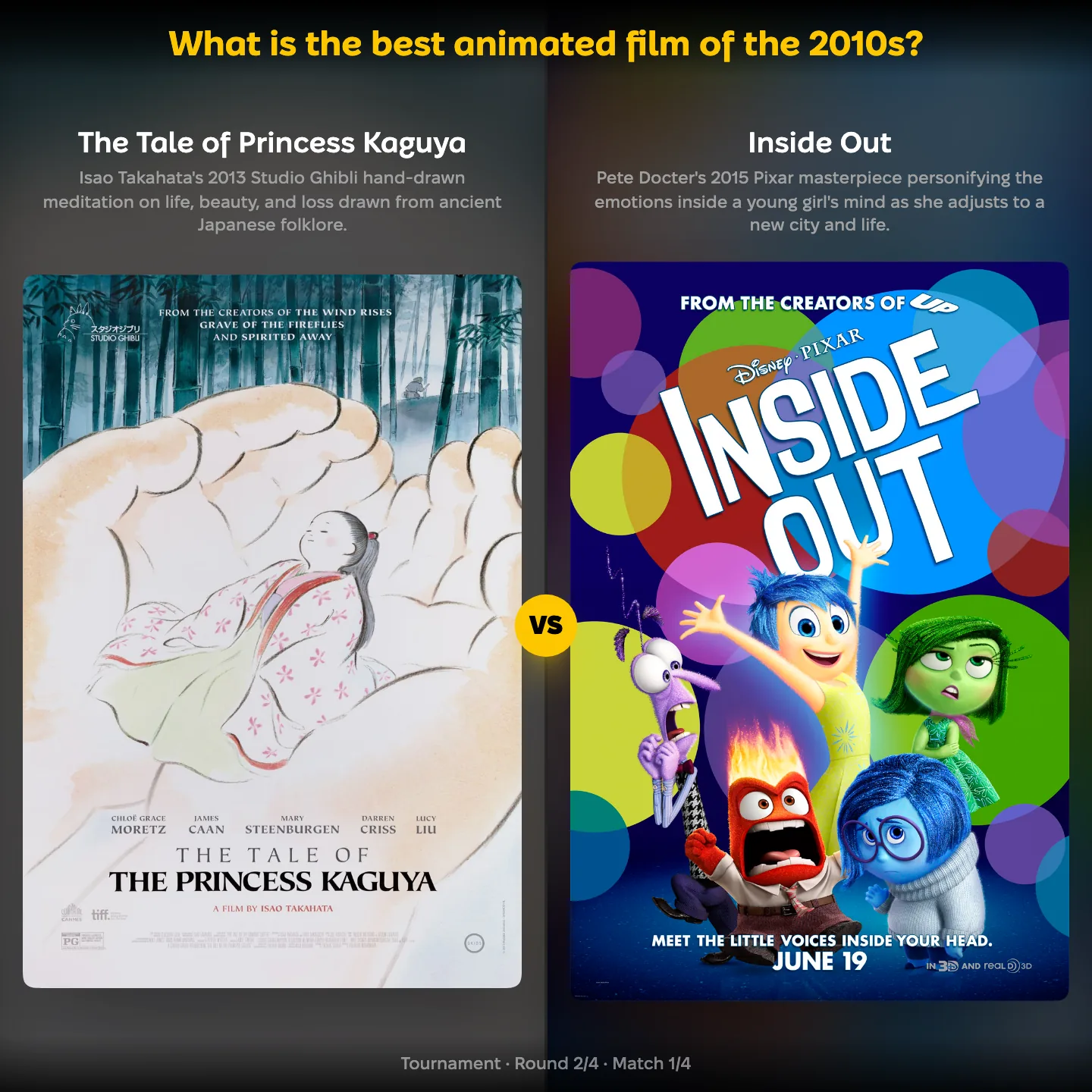
The 2010s list holds thirteen films. Disney and Pixar have six of them: Toy Story 3, Frozen, Inside Out, Zootopia, Moana and Coco.
Studio Ghibli has two, both released in 2013. The Wind Rises was announced as Miyazaki's retirement film, and The Tale of Princess Kaguya was Isao Takahata's last, drawn in charcoal and watercolour lines that leave the paper visible.
Ghibli then released nothing for the rest of the decade. Disney spent the same years rebuilding its animation division and putting out a feature almost every year.
Two outsiders on this list can beat both of them. Makoto Shinkai's Your Name gave Japanese animation a new export hit without any Ghibli involvement, and Into the Spider-Verse changed what a mainstream animated feature is allowed to look like.
The Boy and the Heron vs Inside Out 2: the 2020s so far
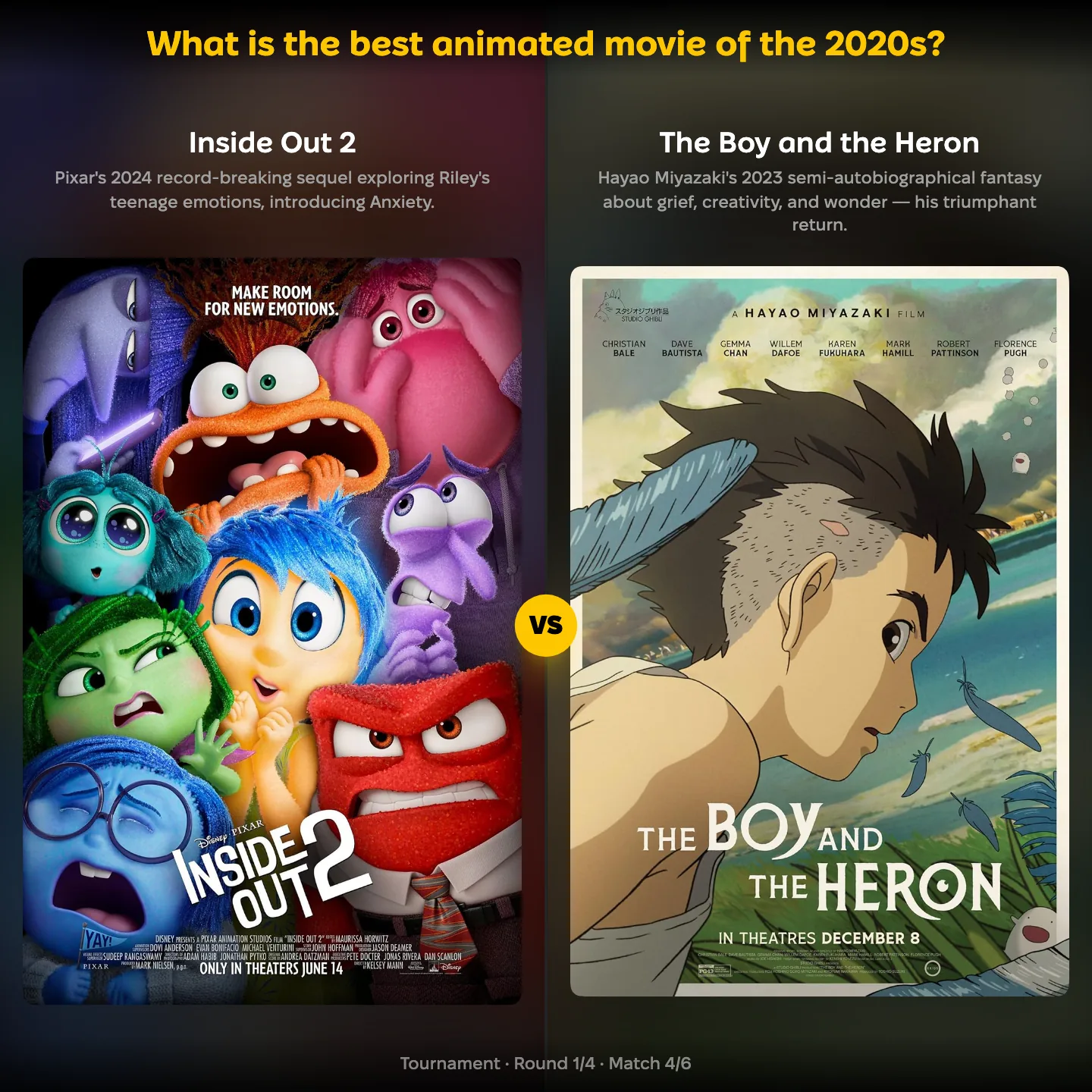
Studio Ghibli has released one feature this decade. Disney and Pixar have five on the same list: Soul, Turning Red, Encanto, Inside Out 2 and Moana 2.
Two of those five are sequels, and the pattern held into 2026. Toy Story 5 opened in June and passed $1.02 billion worldwide.8
Ghibli's entry is The Boy and the Heron, which Miyazaki made after announcing his retirement and released in Japan with no trailer.
Pinocchio vs Howl's Moving Castle: everything here was drawn by hand
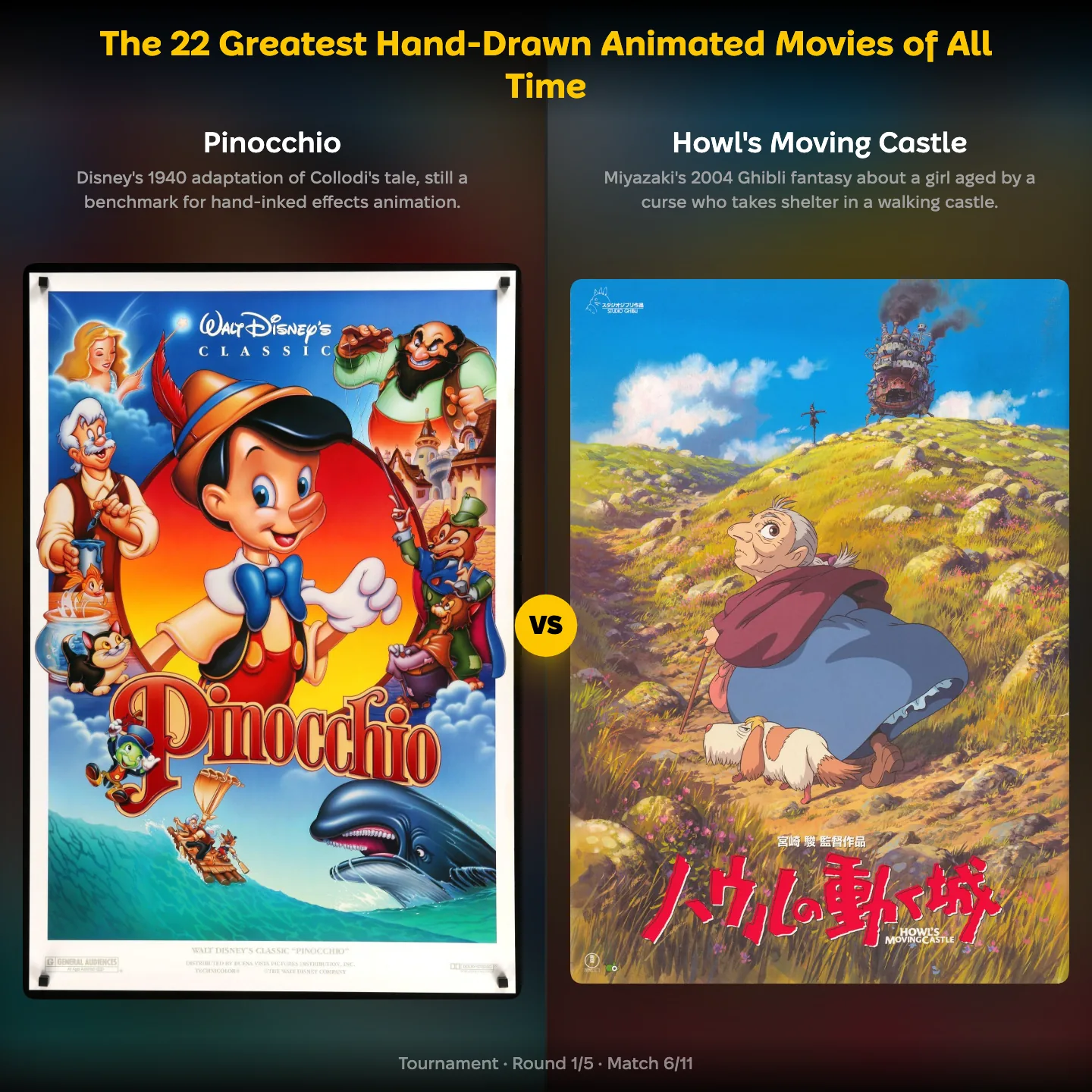
Restrict the question to films drawn by hand and the field changes character. Disney supplies eight of the twenty-two, most of them from before the studio owned a render farm: Snow White, Pinocchio, Fantasia, The Little Mermaid, Beauty and the Beast, Aladdin, The Lion King and The Hunchback of Notre Dame.
Studio Ghibli supplies five, and has never worked any other way. Grave of the Fireflies, Totoro, Mononoke, Howl's Moving Castle and Spirited Away were drawn frame by frame, in a studio that kept doing it after every competitor stopped.
Every Disney film on this list was released between 1937 and 1996. After that the studio kept the technique for occasional returns, the latest being Winnie the Pooh in 2011, made in what Disney still calls its legendary hand-drawn style.9
Nine more films on it make the case against treating this as a two-studio matter: Akira, Persepolis, The Triplets of Belleville, Watership Down, The Secret of Kells and Song of the Sea are all here, drawn by people with far smaller budgets than either.
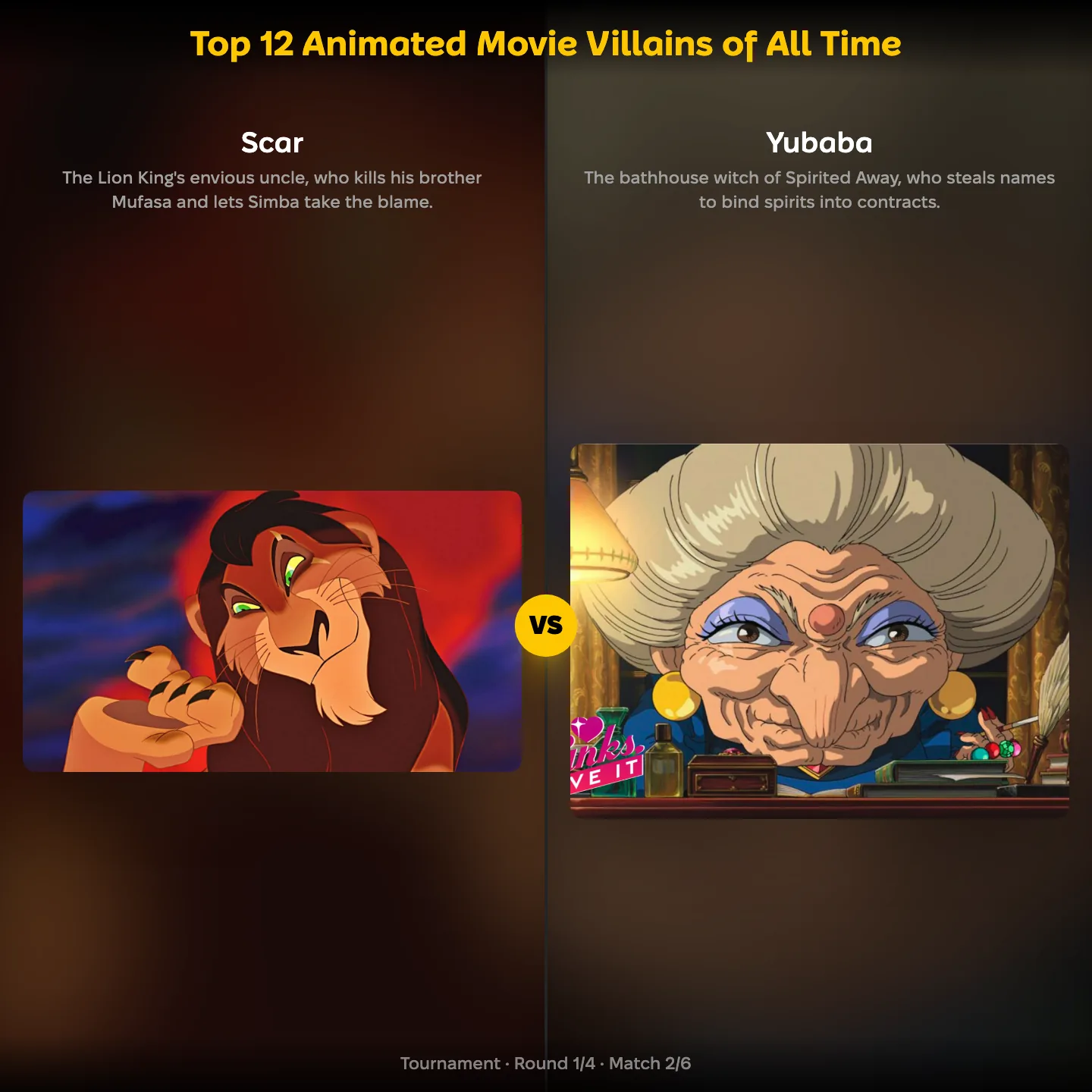
Scar, Ursula and the one Ghibli villain on the list
A villains list is where the comparison stops being close. Seven of the twelve names are Disney's: Scar, Ursula, Jafar, the Evil Queen, Cruella de Vil, Hades and Shere Khan.
Studio Ghibli has one, and she is a strange fit. Yubaba runs the bathhouse in Spirited Away, steals Chihiro's name to bind her to a contract, and then spends the second half of the film behaving like a demanding employer rather than a threat.
The shortage is a house style, not an oversight. Princess Mononoke gives its most destructive character a defensible motive, Howl's Moving Castle turns its witch into a harmless old woman halfway through, and The Wind Rises has no antagonist at all.
The remaining four come from studios that studied Disney closely: Lord Farquaad from Shrek, Mrs. Tweedy from Chicken Run, Feathers McGraw from The Wrong Trousers and Tai Lung from Kung Fu Panda.
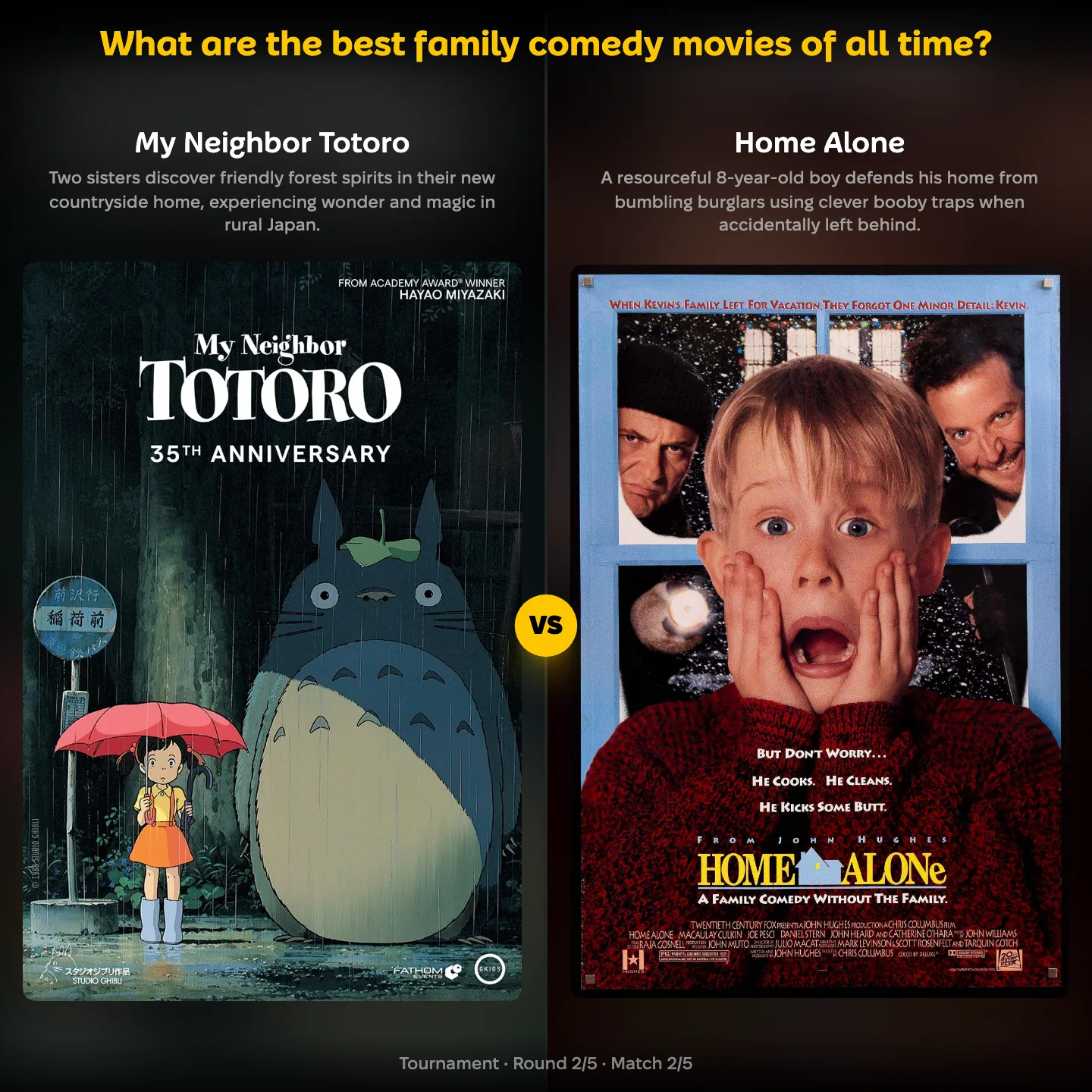
My Neighbor Totoro vs Home Alone: the family-night list
Leave animation behind and both studios share a shelf with Kevin McCallister. The best family comedies list runs to twenty titles, most of them live-action.
Disney and Pixar hold four places: Toy Story, The Lion King, Finding Nemo and Monsters, Inc. All four are built on jokes and a plot that moves.
Studio Ghibli has one, and it is the strangest entry in the list. My Neighbor Totoro has no villain, no chase and barely any story: two girls wait for their mother to come home from hospital and meet a large forest spirit at a bus stop.
It is on a comedy list because of how families use it rather than because of what it is. Disney's four films do not need that defence.
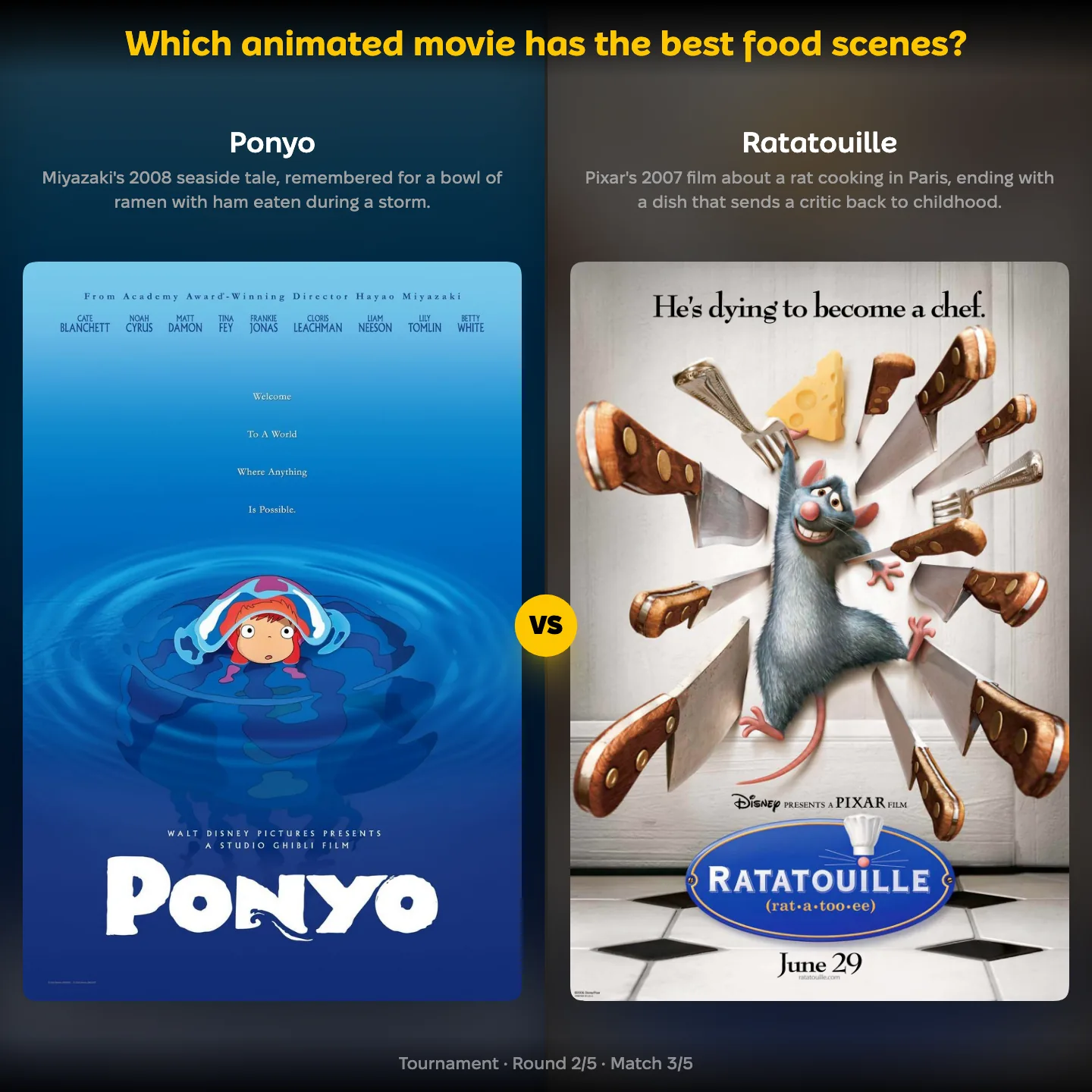
Ratatouille vs Ponyo: the best food in animation
Food is the one category on this page where Studio Ghibli takes more places than Disney's whole group manages against it. Six of the twenty entries are Ghibli films: Spirited Away, Howl's Moving Castle, Ponyo, Kiki's Delivery Service, My Neighbor Totoro and Grave of the Fireflies.
Miyazaki animates eating as work rather than decoration. Howl frying bacon and eggs, the noodles with ham that Ponyo attacks during a storm, the herring pie Kiki delivers in the rain: the scenes take their time, and the cooking is shown step by step.
Disney and Pixar hold eight places, led by the film that made the argument in the other direction. Ratatouille builds a whole plot around one dish, and Coco, Encanto, Luca, Turning Red, The Princess and the Frog, Lady and the Tramp and Beauty and the Beast all get a table scene of their own.
Grave of the Fireflies is on the list for the opposite reason. Its food is the food the children do not have.
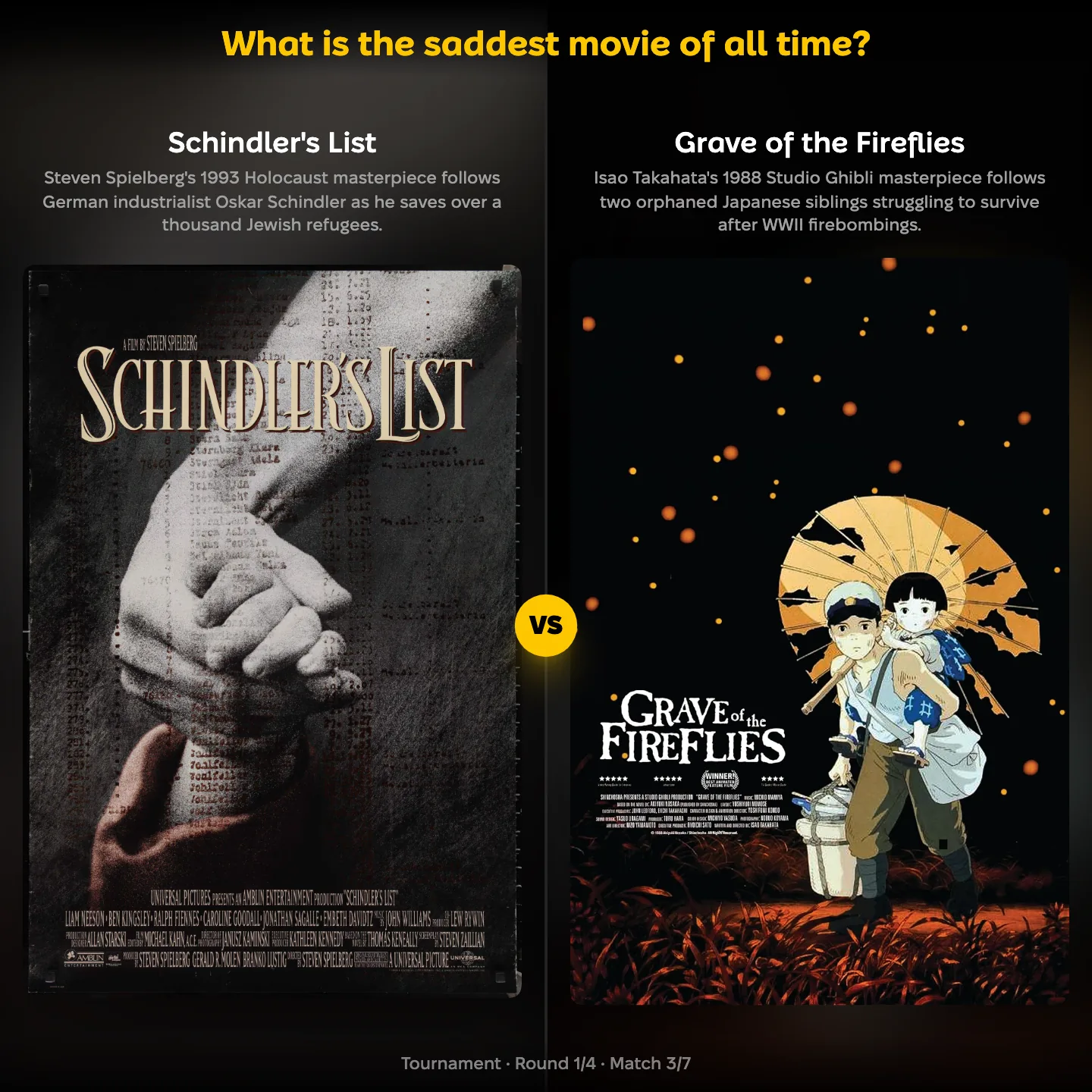
Grave of the Fireflies on a list with Schindler's List
The saddest-film list holds fourteen titles: Schindler's List, Requiem for a Dream, Manchester by the Sea, Amour. Thirteen are live-action.
The exception belongs to Studio Ghibli. Grave of the Fireflies, directed by Isao Takahata in 1988, follows two children through the firebombing of Kobe and spares them nothing.
Disney has no film anywhere on this list. The reason is structural, not a failure of nerve. Bambi's mother and the first ten minutes of Up are devastating scenes inside films that end well; this category asks for something else.
One entry is not a pattern. Ghibli made exactly one film like this, and Takahata spent the rest of his career elsewhere.
Kurosawa vs Miyazaki: the best Japanese film
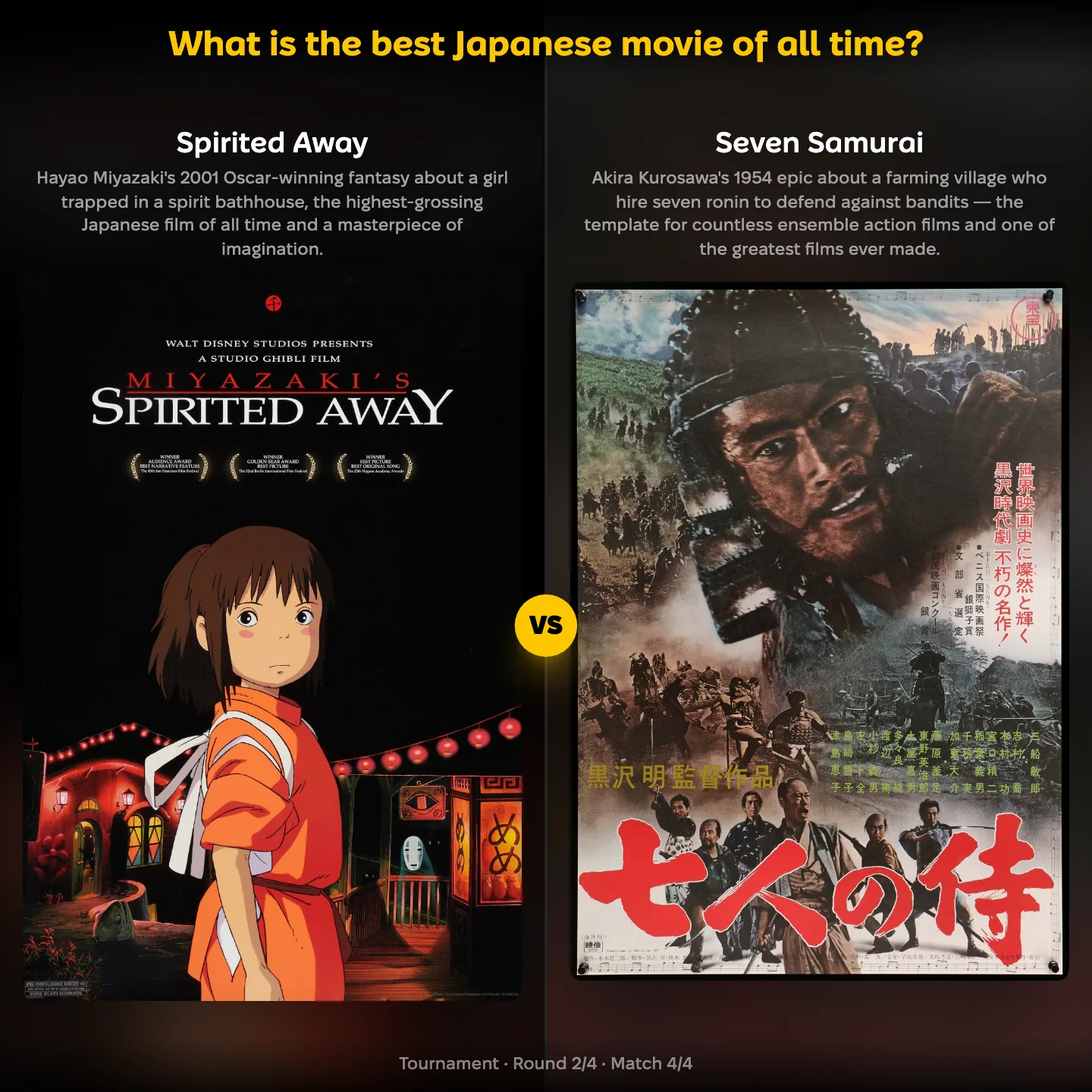
At home the opposition is not Disney at all. The best Japanese film list gives Ghibli three places — Spirited Away, Princess Mononoke and Takahata's wartime film — and sets them against Seven Samurai, Rashomon, Tokyo Story, Harakiri and Ran.
Spirited Away holds the commercial record of the group. It was the highest-grossing film ever released in Japan for nineteen years, until Demon Slayer: Mugen Train passed it in December 2020.10
Akira Kurosawa holds the critical one, and four of his films are here. Yasujirō Ozu and Kenji Mizoguchi take two more places between them.
Disney appears nowhere, which is the ordinary condition of a national canon and still worth noticing: the studio that dominates every other list on this page has nothing to enter.
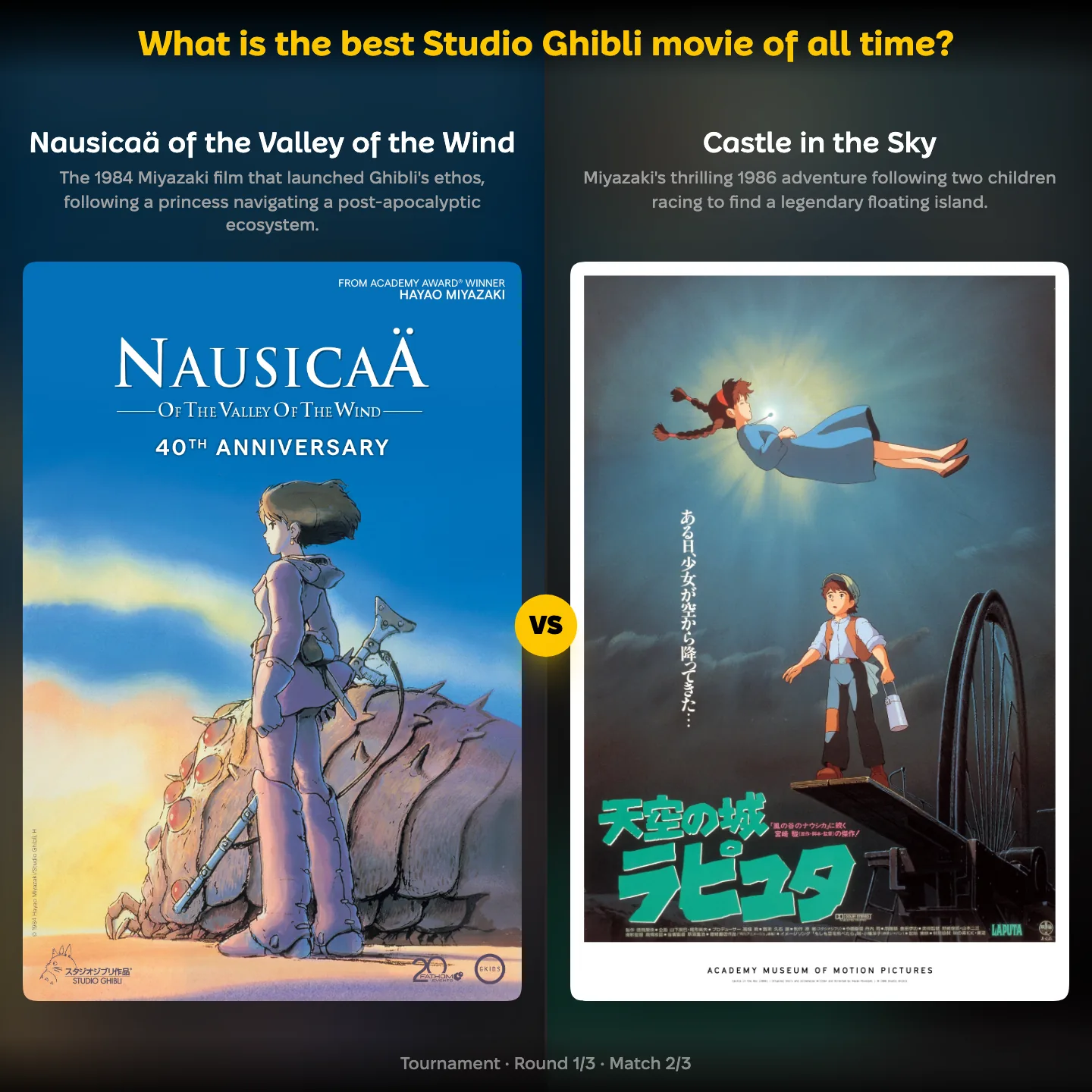
Nausicaä vs Castle in the Sky: the house list
The Studio Ghibli list is six films long and contains no Disney at all.
Nausicaä is on it despite not being a Ghibli film: Miyazaki made it in 1984, a year before the studio existed, and its success paid for the studio to exist. Castle in the Sky, from 1986, was the first film made under the Ghibli name.
Six names cover the whole catalogue's case. Disney's own house list, the next one on this page, needs sixteen.
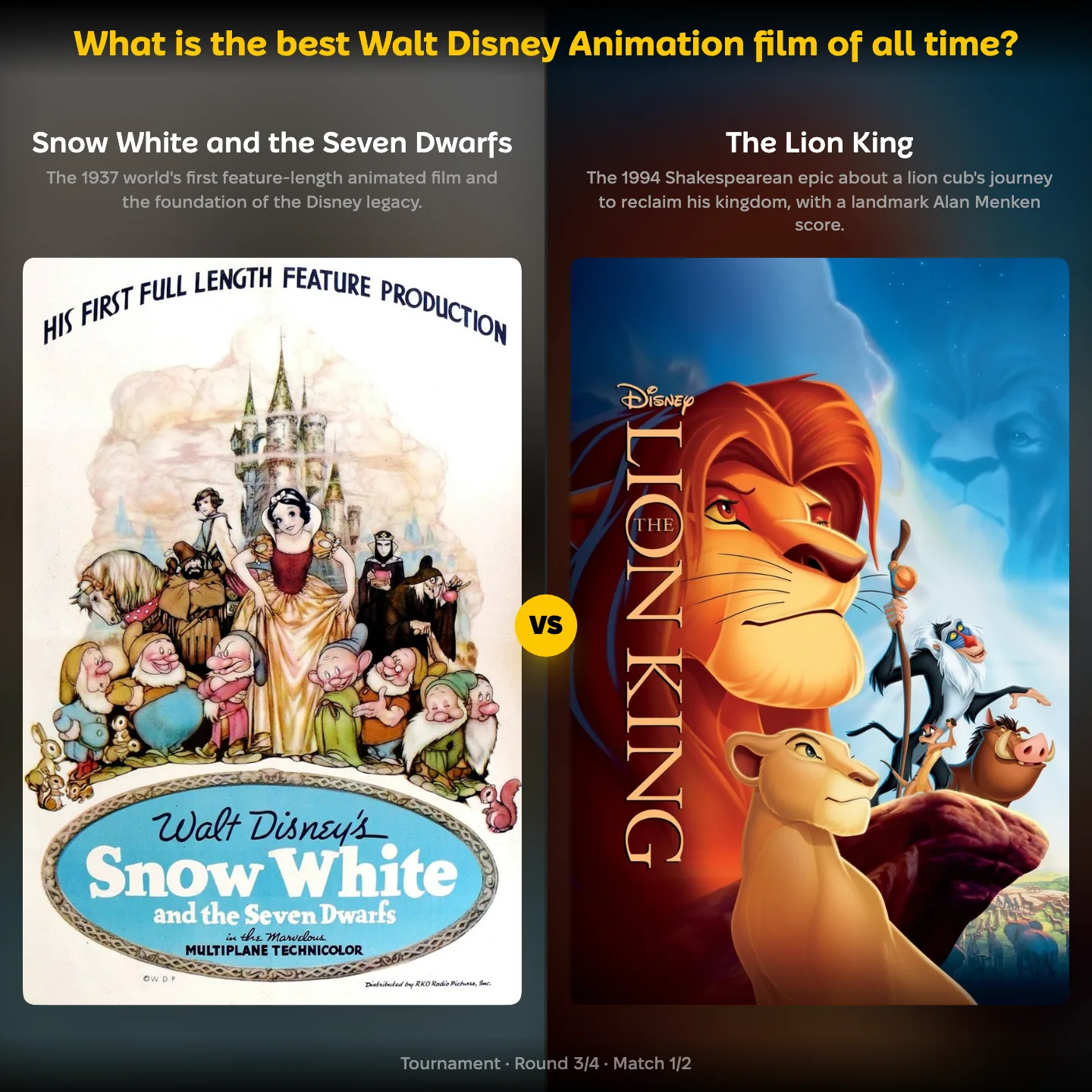
Snow White to Encanto: ninety years in one list
Disney's own house list runs from 1937 to 2021 and holds sixteen films, none of them Ghibli and none of them Pixar. Snow White opens it in 1937 as the first full-length cel-animated feature ever released.
The Lion King is the commercial peak of the group, with $979 million taken worldwide across its releases.11 Fantasia, Bambi and Sleeping Beauty carry the early studio; Frozen, Moana, Zootopia and Encanto carry the modern one.
Studio Ghibli cannot enter this list, and the Ghibli shortlist above it needed six names to cover everything. Disney can leave Pixar out of a sixteen-film shortlist and not miss it.
Scale is a real property of a studio rather than a cheat. It is also the one measure where this comparison stops being interesting.
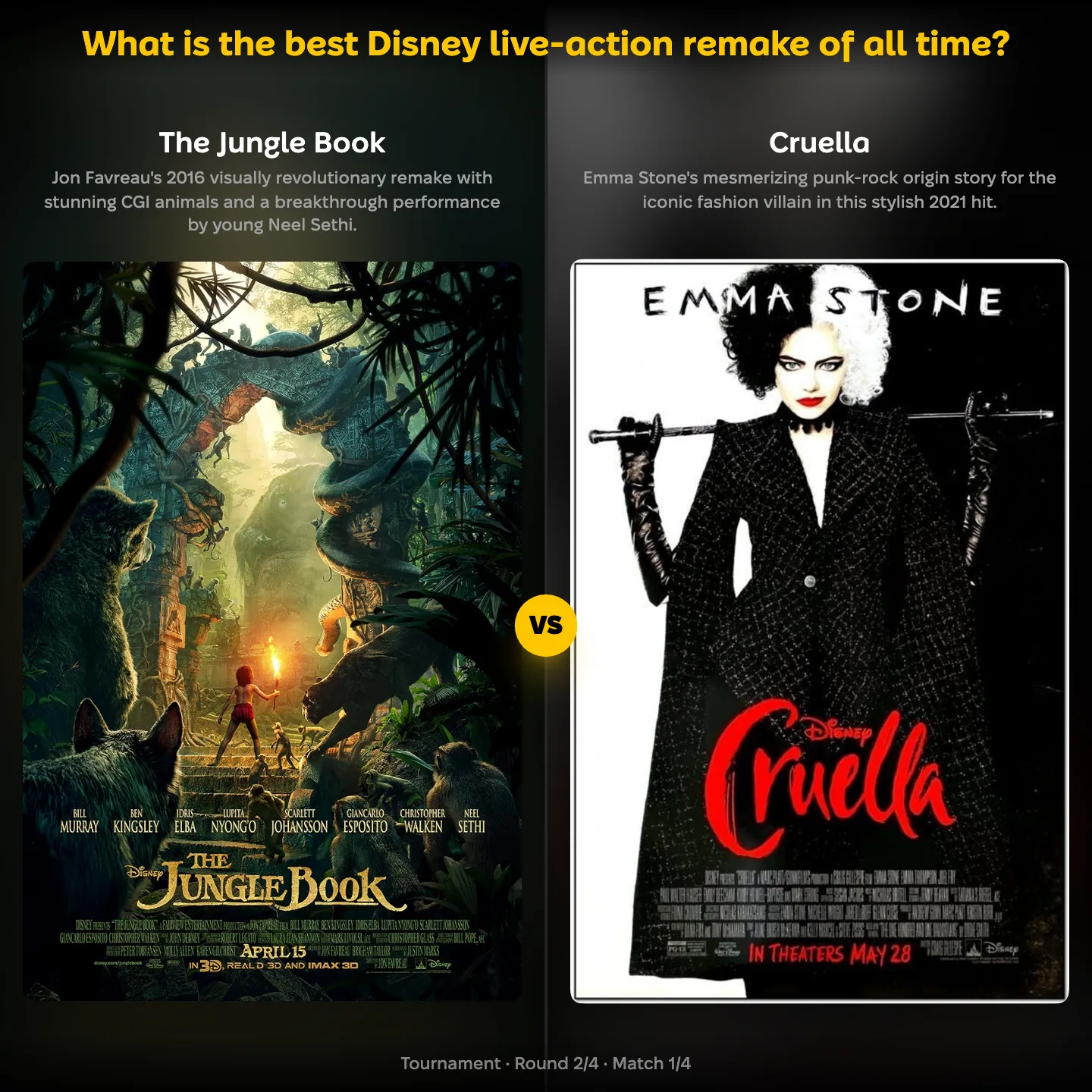
The Jungle Book, Cruella and the business Ghibli never entered
The last list is one only Disney could produce: fifteen live-action remakes of its own animated films. The Jungle Book, Cinderella, Aladdin, Mulan, The Little Mermaid, Cruella, Maleficent, and a 2019 Lion King that was animated too, whatever the category calls it.
The remakes outgross the originals. That Lion King took $1.66 billion worldwide,12 against $979 million for the 1994 film across all of its releases.11
Studio Ghibli has never remade one of its own films. Its back catalogue gets re-released and built at full scale instead: the Valley of Witches area of Ghibli Park is a walk-through Howl's Moving Castle, Kiki's Delivery Service and Earwig and the Witch.2
Whether that is discipline or a business that never had the option is a fair question. The fifteen titles here are the reason Disney had it.
Studio Ghibli and Disney are not competing for the same list
Across fifteen rankings the two studios never stand in the same relationship twice. Ghibli takes three places on a Japanese canon Disney cannot enter; Disney fills a sixteen-film house list that Ghibli's whole catalogue could not fill. Every one of those questions is settled here by comparing two films side by side, and what the comparison measures changes with the wording of the question.
Have a studio, a director or a franchise you think survives any question you throw at it? Write the question that would break it, and see whether it holds.
More rankings, more angles
- One Piece vs Naruto vs Bleach: The Big Three, Ranked — three shonen giants, one shared shelf
- Death Note: Thriller, Shonen, or Best Cartoon Ever? — one anime filed under four genres
- The Simpsons: 800 Episodes, 17 Different Lists — American animation measured by the episode
- Toy Story Is on Every List. Never in the Same Place — five films, and a 1995 that had Se7en
Sources
- Screen Daily — Toy Story 5's $160m North American opening, the biggest of 2026: screendaily.com (checked 2026-08-10)
- Ghibli Park (official) — A Night in the Valley of Witches, screening at Cinema Orion in Ghibli's Grand Warehouse from 8 July 2026: ghibli-park.jp (checked 2026-08-10)
- Box Office Mojo — Spirited Away, $360.8m worldwide: boxofficemojo.com (checked 2026-08-10)
- TIME — the 1996 Disney–Tokuma Shoten agreement covering Ghibli home video and the international release of Princess Mononoke: time.com (checked 2026-08-10)
- The Hollywood Reporter — Spirited Away's 2003 Academy Award and its standing as the only hand-drawn winner of the category: hollywoodreporter.com (checked 2026-08-10)
- Rolling Stone — Miyazaki's absence from the 2003 ceremony and his stated reason: rollingstone.com (checked 2026-08-10)
- The Hollywood Reporter — The Boy and the Heron at the 96th Academy Awards, Miyazaki's second win in the category: hollywoodreporter.com (checked 2026-08-10)
- Variety — Toy Story 5 crossing $1.02bn worldwide, 2026's highest-grossing release: variety.com (checked 2026-08-10)
- Walt Disney Animation Studios (official) — Winnie the Pooh (2011), described by the studio as made in its hand-drawn style: disneyanimation.com (checked 2026-08-10)
- The Hollywood Reporter — Demon Slayer: Mugen Train passing Spirited Away as Japan's highest-grossing release, December 2020: hollywoodreporter.com (checked 2026-08-10)
- Box Office Mojo — The Lion King (1994), $979.2m worldwide across all releases: boxofficemojo.com (checked 2026-08-10)
- Box Office Mojo — The Lion King (2019), $1.662bn worldwide: boxofficemojo.com (checked 2026-08-10)