
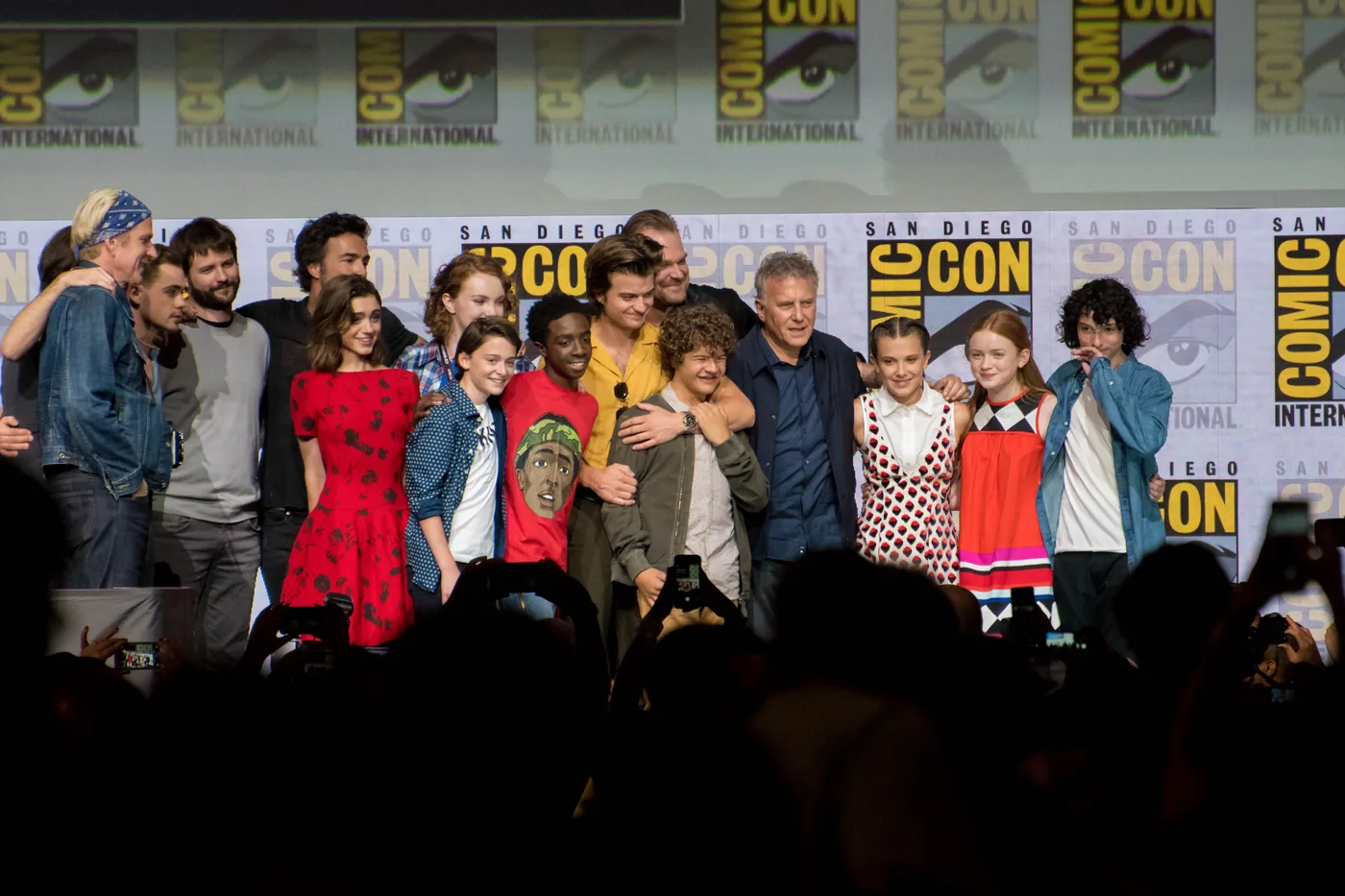
Stranger Things arrived on 15 July 2016 with no stars attached and no campaign behind it, and left on New Year's Eve 2025 with a two-hour finale that also played in cinemas. Its final season opened with 59.6 million views in six days, the biggest premiere week Netflix has ever recorded for an English-language series.1
On 14 September the 78th Primetime Emmy Awards hand out Outstanding Drama Series at the Peacock Theater in Los Angeles, and Stranger Things is not on that ballot.3
Fifteen rankings all find room for Stranger Things. Each is making room for a different show: the horror one, the coming-of-age one, the synth-and-Spielberg one, the subscriber-retention one.
The Sopranos, The Wire, and 62 others
The broadest ranking here sets no limit at all. Every era, every network, every genre, 64 entries.
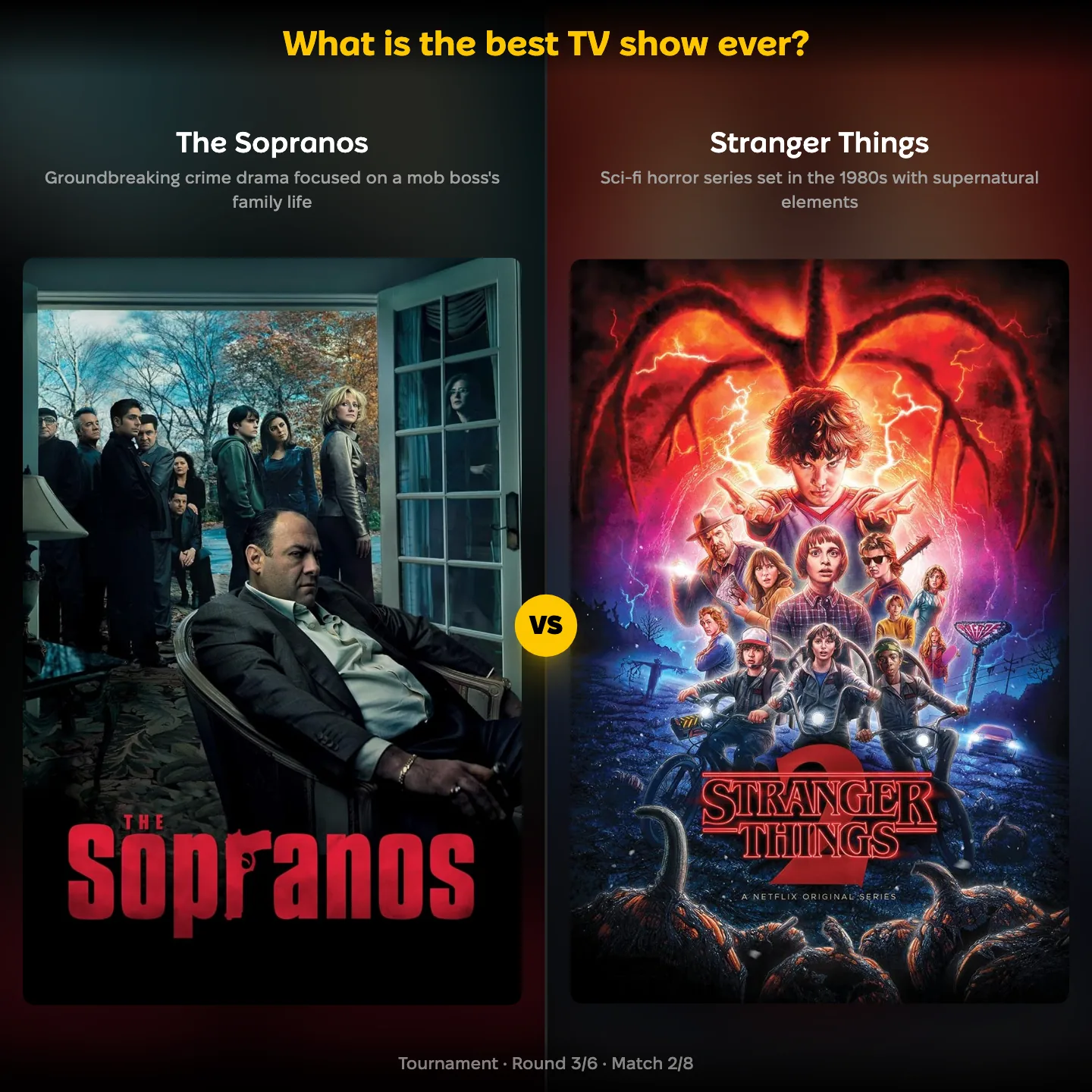
Stranger Things is one of them, and one of the youngest. The field reaches back to MAS*H and Cheers and forward to The Last of Us, so a show of 42 episodes across five seasons5 stands beside series that ran for a decade or more.
Across the frame sits The Sopranos, which is the reason lists like this exist. Six seasons on HBO between 1999 and 2007 gave critics the yardstick they still measure the medium with.
Stranger Things is making its case on audience instead of prestige. That works on a list this wide. It works much less well on the narrower ones further down the page.
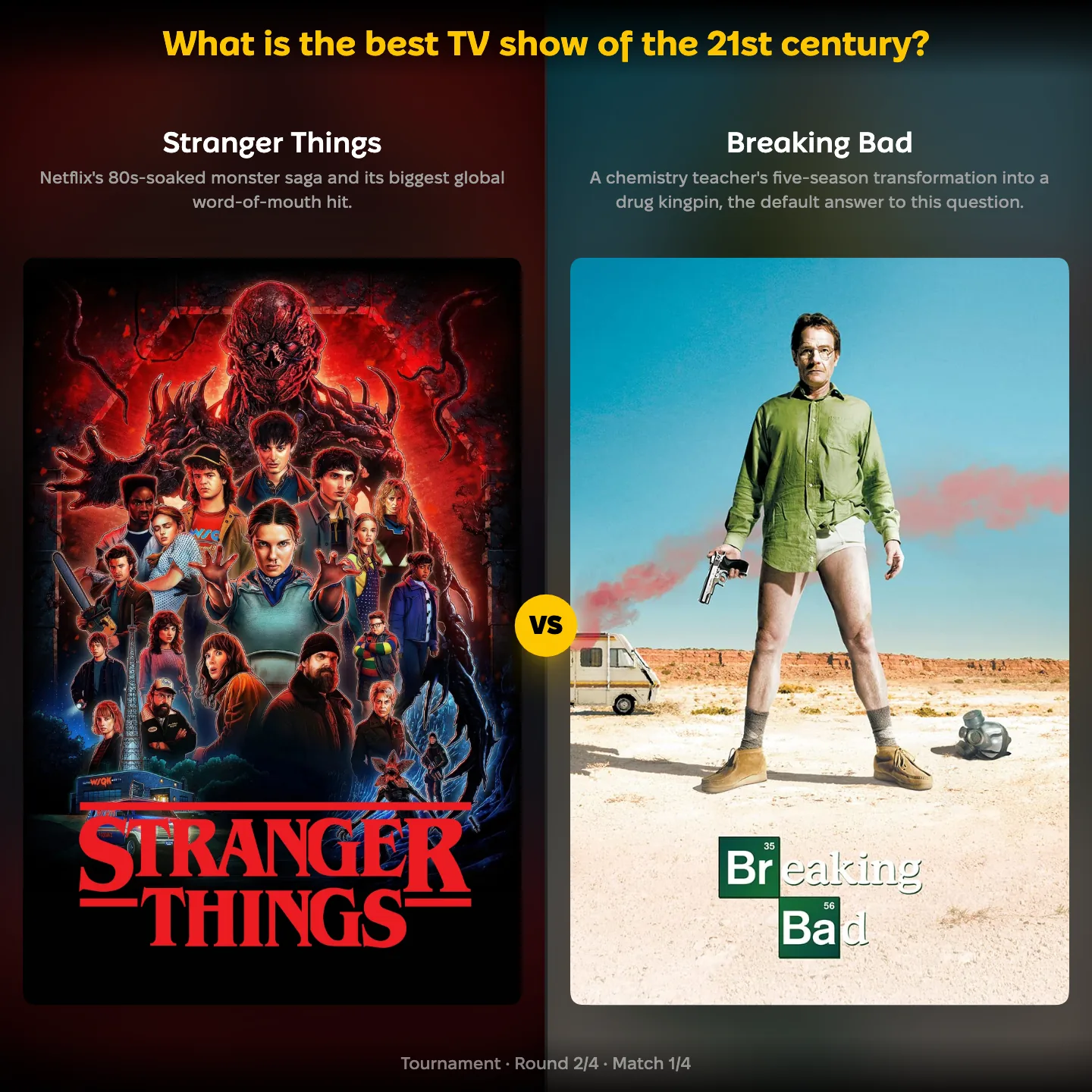
Breaking Bad vs Stranger Things: the century's default answer
Cut the same question down to this century and the field shrinks to fifteen names. Sharper, not kinder.
Breaking Bad is what most people say when they are asked this and do not pause first. Five seasons, one chemistry teacher, nobody quibbling about tone.
Stranger Things is here on reach. Only two premiere weeks in Netflix's history have beaten the opening of its final season, and Squid Game owns both of them.1
The objection is sitting on this month's Emmy ballot. Outstanding Drama Series went to The Diplomat, The Gilded Age, A Knight of the Seven Kingdoms, Paradise, The Pitt, Pluribus, Slow Horses and Your Friends & Neighbors.3 A series can be the most-watched thing of its year and still not be the thing the Academy writes down.
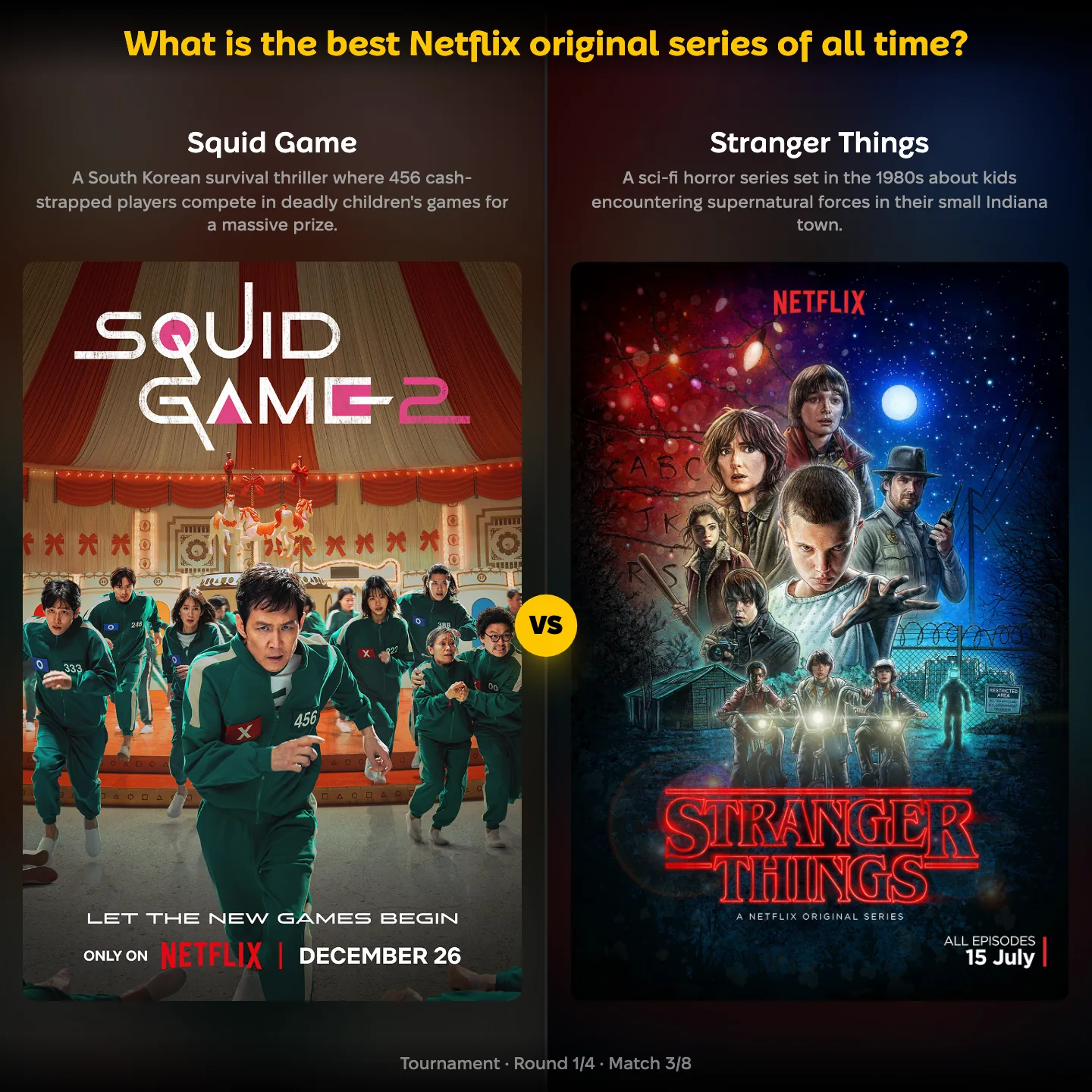
Netflix's own shelf: Stranger Things next to Squid Game
Narrow the question to a single platform and Stranger Things stops being the newcomer. It is the oldest of the sixteen titles here that people still discuss in the present tense.
The numbers support the placing. Season five reached 105.7 million views and entered Netflix's all-time top ten for English-language series at number nine, behind the third season of Bridgerton and ahead of the first of The Night Agent.2
Squid Game complicates that immediately. The Korean series is not English-language, which is precisely how it holds premiere-week records Stranger Things does not.
Netflix's range shows in who else made the cut: The Crown, Arcane, BoJack Horseman, Baby Reindeer. Four series that share a billing page and almost nothing else.
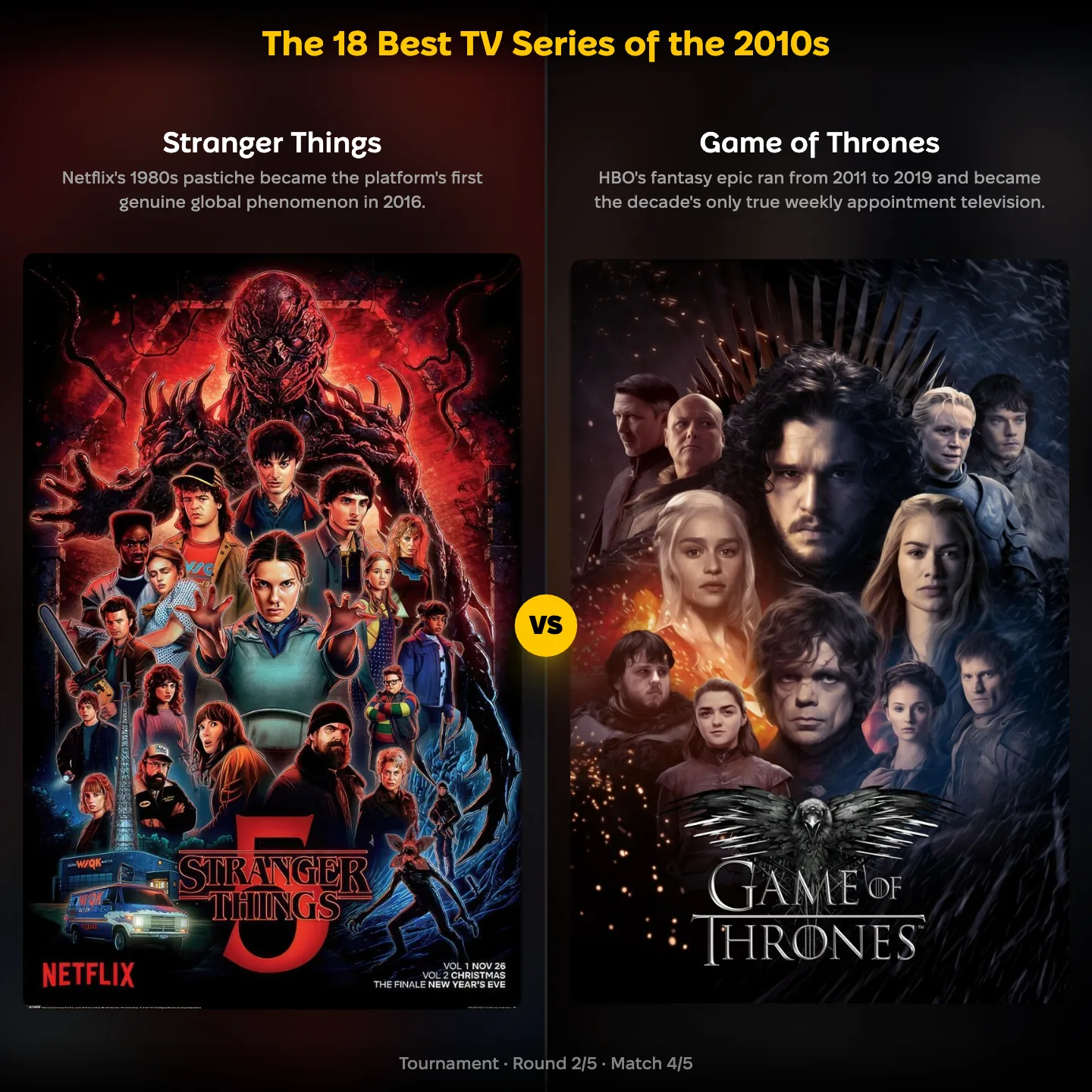
Game of Thrones vs Stranger Things: who owned the 2010s
Fix the decade and let everything else vary. Eighteen series that defined the 2010s, with Stranger Things qualifying on the three seasons that landed inside it.
Nothing else in the 2010s held a weekly audience the way Game of Thrones did. It ran from 2011 to 2019 and made a fantasy adaptation the thing people arranged their Sunday evenings around.
Stranger Things did the reverse. It dropped all at once, got watched in a weekend, and turned a July release from a platform with no reputation for original drama into the first thing Netflix could point at.
Prestige cable fills out most of the field: Breaking Bad, Mad Men, The Americans, Better Call Saul, Fleabag, Atlanta. In that company Stranger Things is the one series that was never trying to be prestigious.
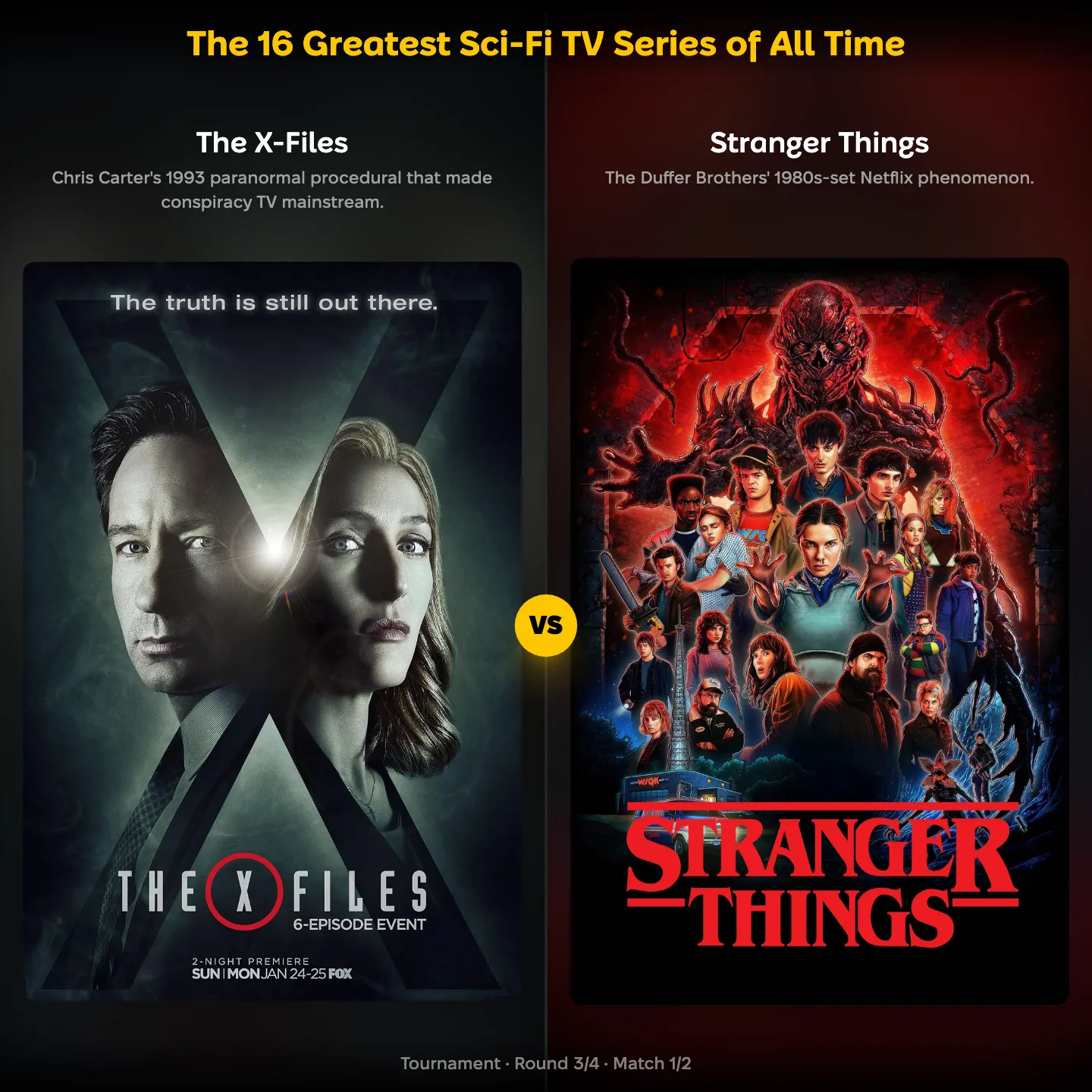
Filed as science fiction, next to The X-Files
The first of four genre labels Stranger Things carries puts it alongside Star Trek: The Next Generation, Doctor Who and The Twilight Zone.
Stranger Things earns the filing on plot mechanics. A government laboratory in Hawkins, Indiana runs experiments on children, one of those children opens a rift into a parallel dimension, and every later season follows from those two sentences.
The X-Files stands opposite. Chris Carter's series began in 1993, ran for nine seasons, and turned conspiracy television from a cult taste into a mainstream format.
The honest counter-case is that the science here is set dressing. The engine is four boys on bikes, which is why the same show also sits on two lists where science fiction never comes up.
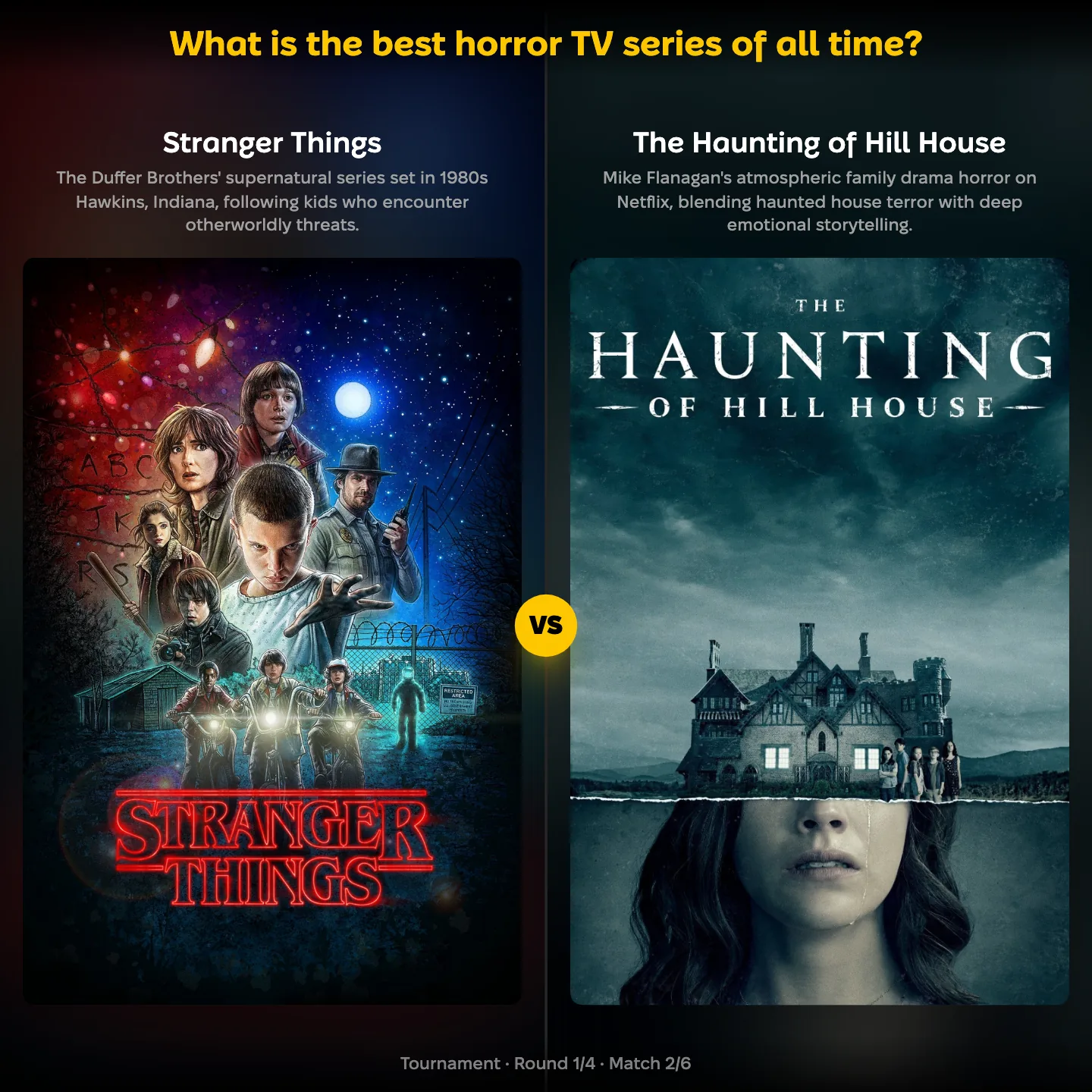
Is it horror? The Haunting of Hill House says no
The second genre label is the contested one. Twelve horror series are on this ranking, and Stranger Things is the only one a twelve-year-old is allowed to watch.
The case sits in the first episode. A boy vanishes on his way home through Hawkins in November 1983, and the show spends five seasons between 1983 and 1989 explaining what took him.5 The Demogorgon and Vecna are horror monsters by construction, not by implication.
The Haunting of Hill House, paired against it here, shows what the label usually means. Mike Flanagan built his series on sustained dread and grief, and nobody in it rides a bike anywhere.
That is the real tension. Stranger Things borrows horror's furniture, the laboratory and the creature and the small town that lies to itself, then uses all of it to tell an adventure story. Whether that qualifies is the whole question the ranking asks.
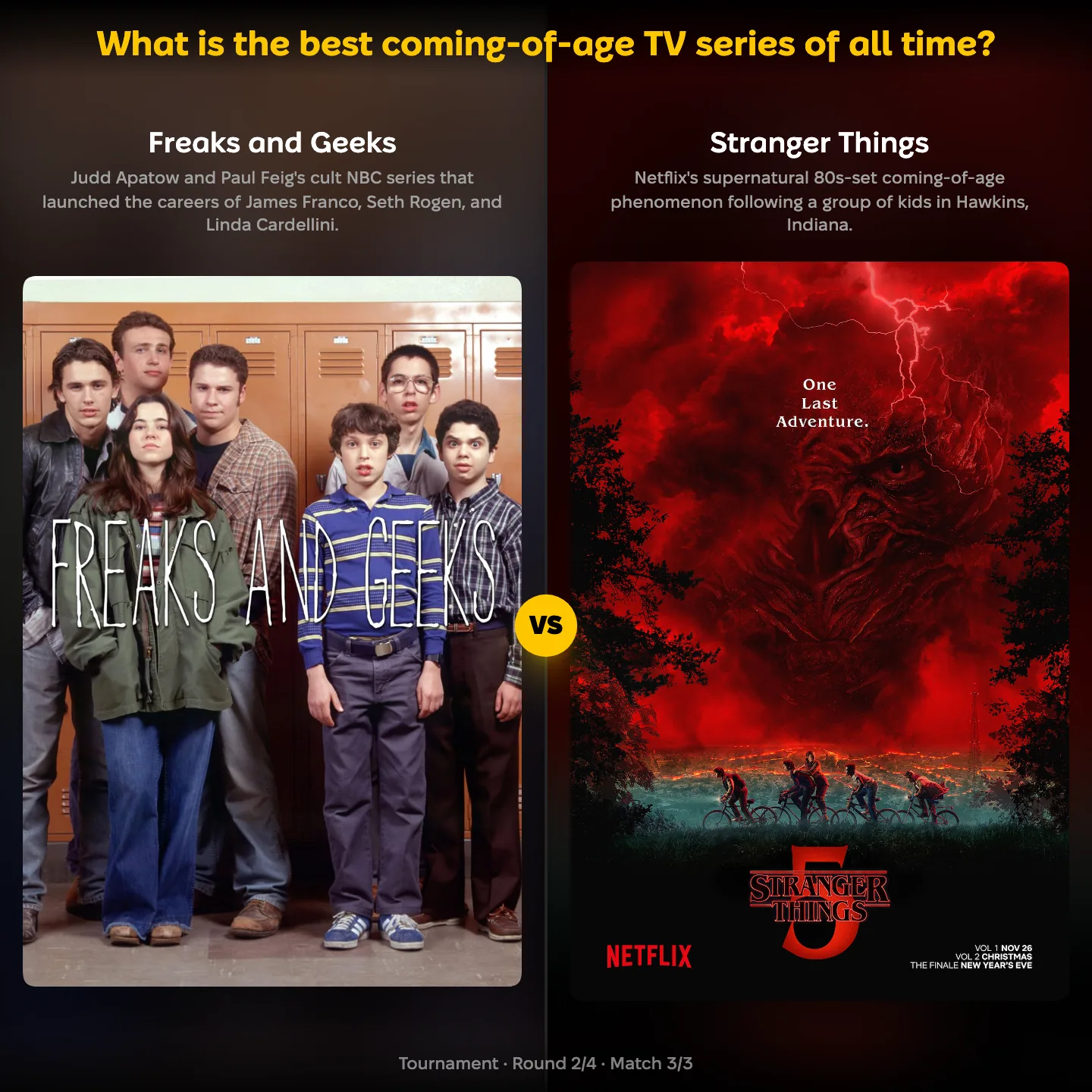
Freaks and Geeks vs Stranger Things: the show under the monsters
Set the government lab and the monster aside and what remains is a series about children growing up. That is what these ten names are competing on.
Stranger Things has an advantage nobody can manufacture. Production ran from 2015 to 2025, so the cast physically grew from middle-schoolers into adults on camera, and the writing had to keep pace with them.
Freaks and Geeks arrives from the opposite direction. Judd Apatow and Paul Feig got a single season out of NBC in 1999, set it in the 1980–81 school year, and launched James Franco, Seth Rogen and Linda Cardellini out of it.
Euphoria, Skins and My So-Called Life are here too, every one of them more interested in the damage than the adventure.
A thriller with a Demogorgon in it
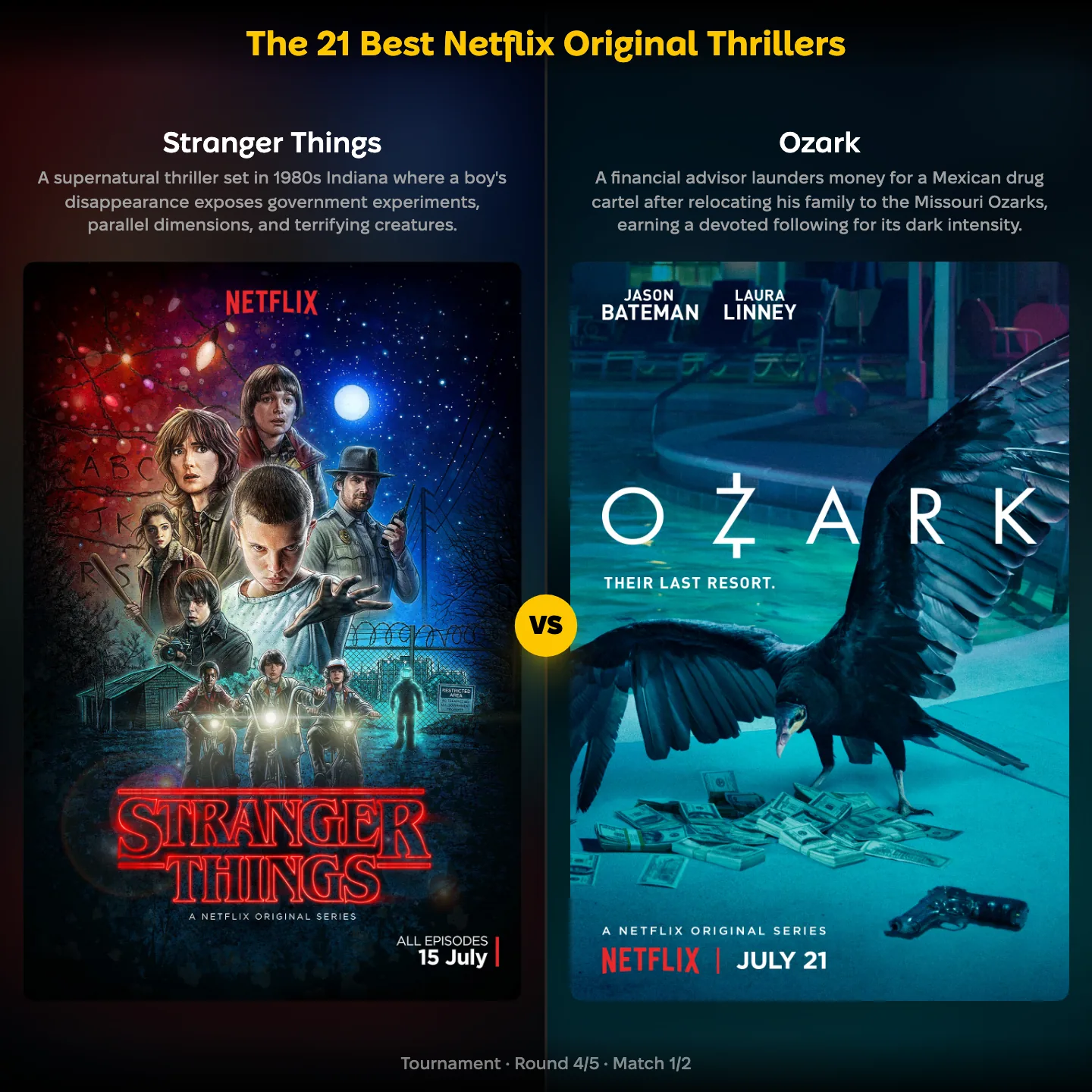
Genre label three lands Stranger Things on a ranking of twenty-one Netflix thrillers. It is the only entry there with a monster.
The mechanics do fit. A child goes missing, a government facility denies everything, a police chief starts pulling a thread, and the town keeps lying to itself. Written down without the creature, that is a thriller plot.
Ozark is what people usually mean by a Netflix thriller: a financial adviser laundering cartel money in the Missouri Ozarks, with no supernatural exit available to anybody in it.
Mindhunter, Dark and Money Heist are close behind. Set against them, Stranger Things resolves its mystery by opening a door into somewhere else, which is either cheating or the point.
Miami Vice vs Stranger Things: the decade lived in and the decade rebuilt
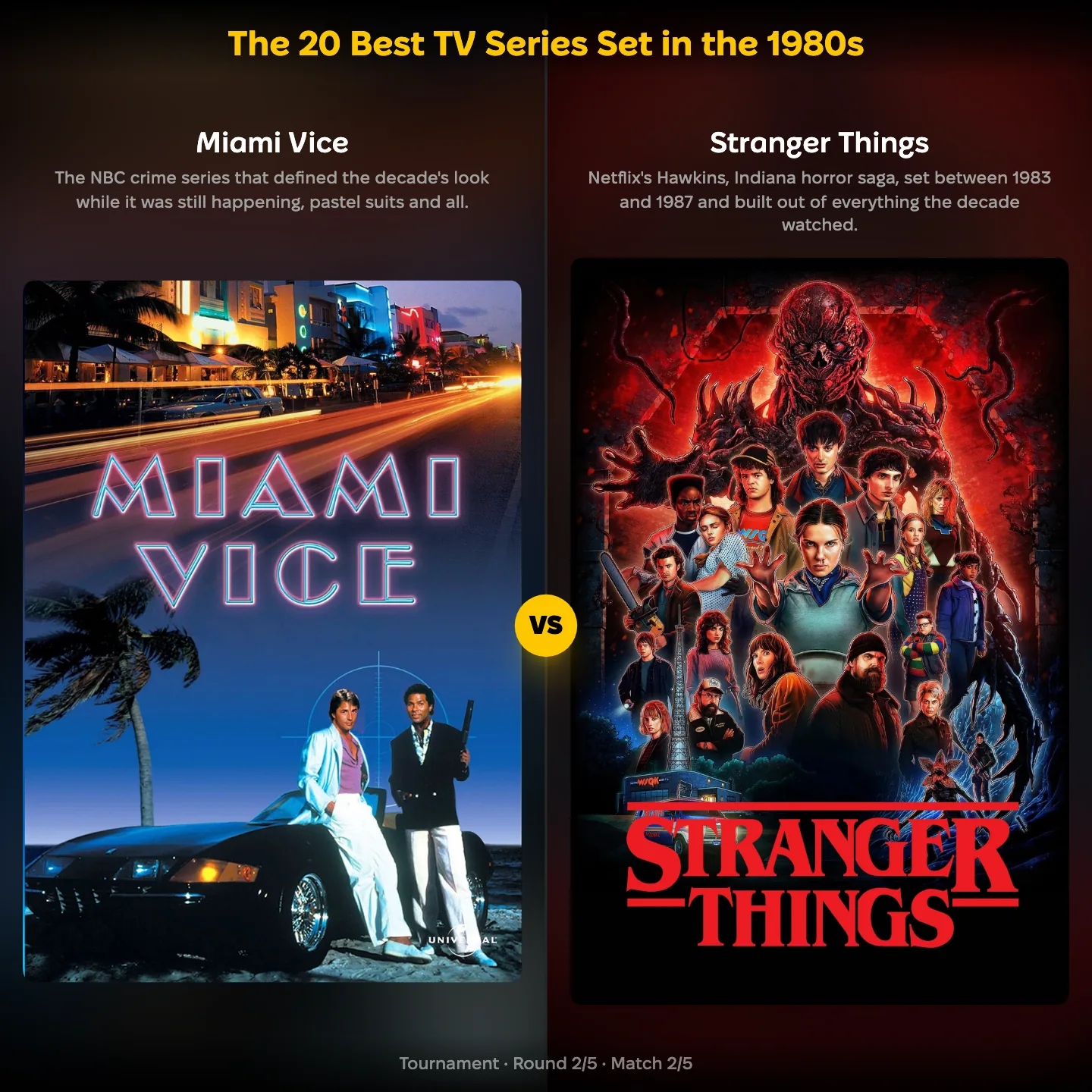
This ranking puts two incompatible kinds of show on one list. Some were filmed while the 1980s were happening. The rest reconstructed the decade afterwards, from outside it.
Stranger Things is the flagship of the second kind. Its Hawkins is assembled out of what the decade watched and played: Spielberg's suburbs, Stephen King's small towns, Dungeons & Dragons, a synthesiser score, a shopping mall.
Miami Vice belongs to the first kind. NBC made it between 1984 and 1989, and it never had to reconstruct the pastel suits, the neon or the soundtrack, because those were simply what the show cost that year.
Both approaches are here at full strength. The Americans works Reagan-era Washington, Chernobyl covers the April 1986 reactor disaster, GLOW takes a 1985 wrestling promotion, Halt and Catch Fire follows the personal-computer boom out of Texas, and Cheers and Family Ties were shot in the middle of it all.
A record of a decade and a memory of it are not the same object. This is the one ranking on the page that forces a reader to decide which of the two they actually value.
Four synth notes against The Fresh Prince of Bel-Air
This ranking ignores everything about a series except the thirty seconds at the front of it.
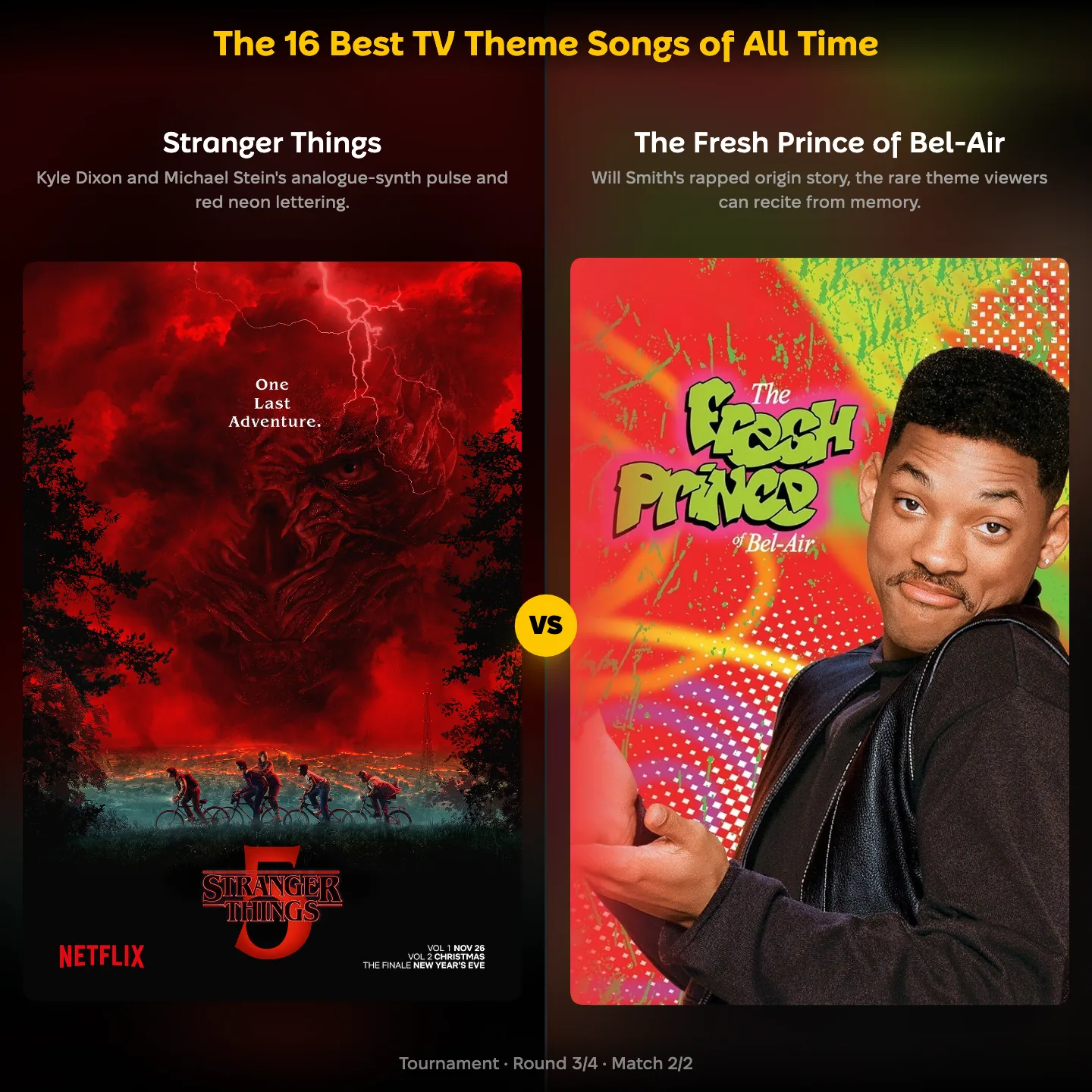
The Stranger Things theme is an arpeggio written by Kyle Dixon and Michael Stein of the band Survive, and it is identifiable from four notes. Very few television themes manage a signature that short.
The Fresh Prince of Bel-Air took the opposite approach. Will Smith's rapped origin story is a theme viewers can still recite word for word decades later.
Sixteen themes are competing, and the split runs down the middle: instrumentals you recognise from the sound, songs you recognise from the words.
Mad Men, Succession, and red letters in the dark
Judge the same thirty seconds of Stranger Things on what it looks like instead of what it sounds like and a different eighteen shows up.
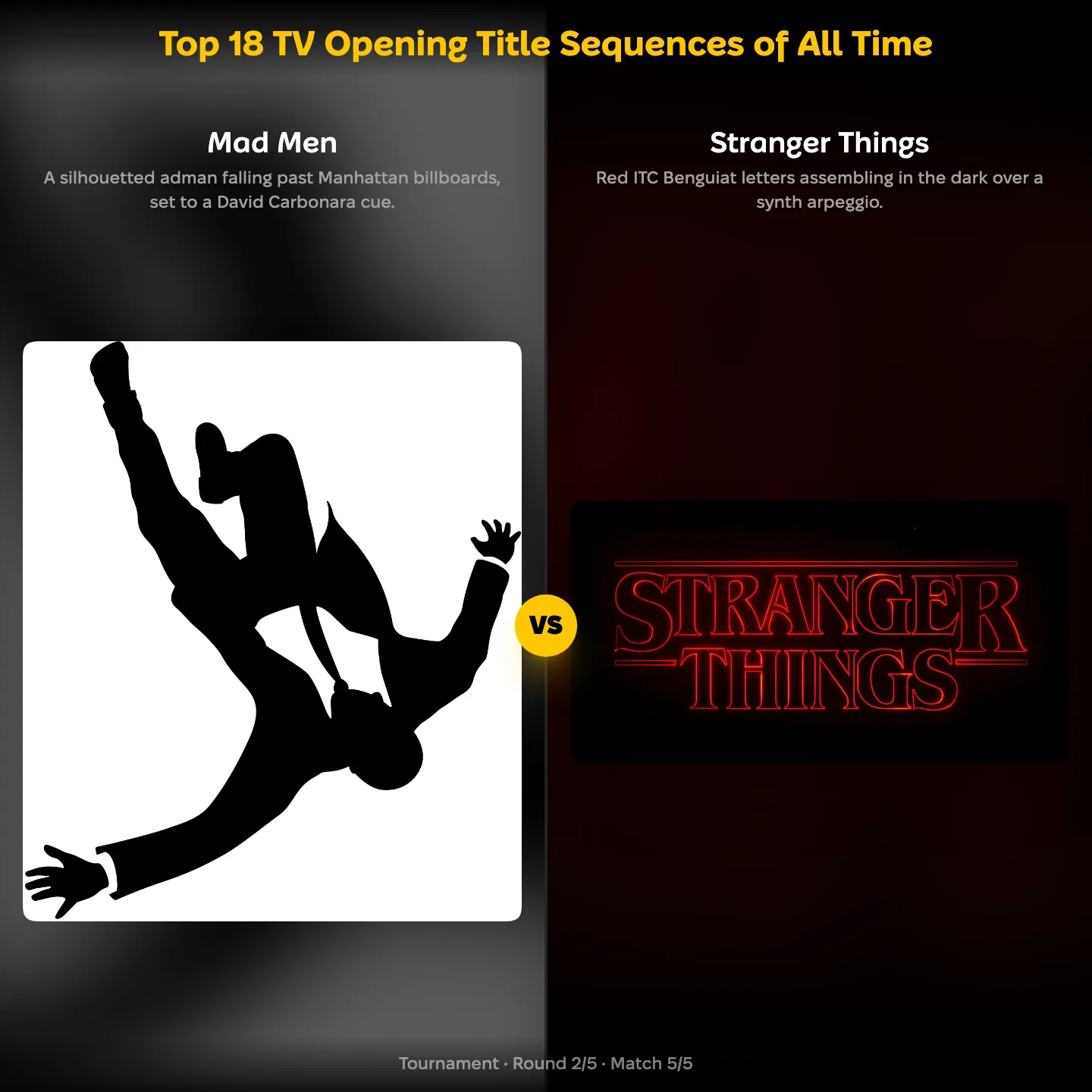
The Stranger Things titles do exactly one thing: red ITC Benguiat letters slide together out of blackness. No footage, no cast, no location.
Mad Men offers a silhouetted adman falling past Manhattan billboards. Succession and Game of Thrones brought real production budgets to theirs.
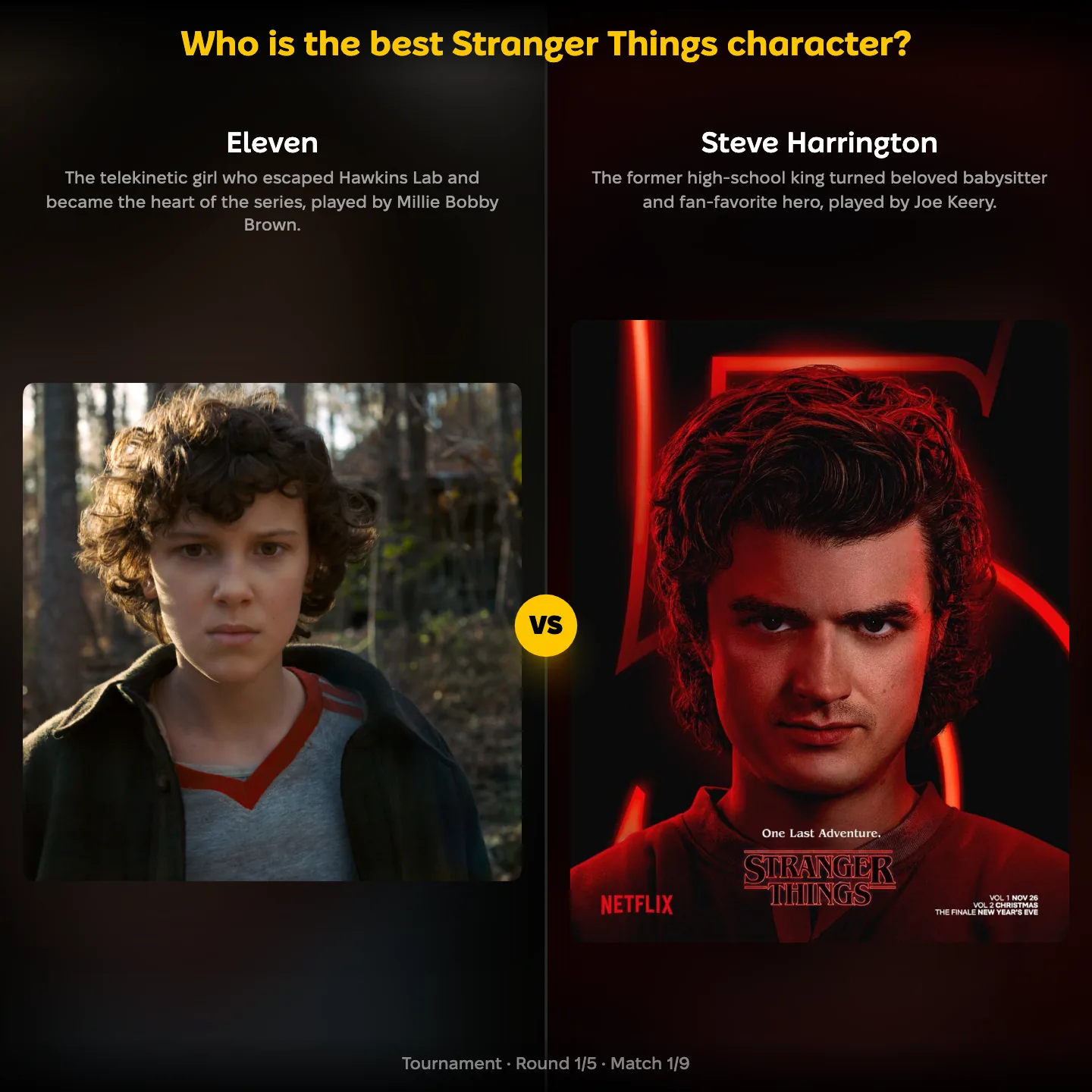
Eleven vs Steve Harrington: the cast list turns on itself
Turn the show inside out and the options stop being series. Eighteen residents of Hawkins are competing, all of them from the same programme, so Stranger Things takes the top place and the bottom one at once.
Eleven holds one side of this matchup. She escapes the laboratory in the first episode, supplies the central mystery and the ending, and is played by Millie Bobby Brown, who was a child when season one was filmed.
Steve Harrington holds the other, and he is the show's best piece of rewriting. Joe Keery was cast as the boyfriend the audience was meant to dislike, and the writers turned him into the person everybody trusts with the children.
The ranking also carries Vecna, Eddie Munson, Dustin, Hopper and Robin Buckley. That is a great many durable characters for a series that opened with four boys and a walkie-talkie.
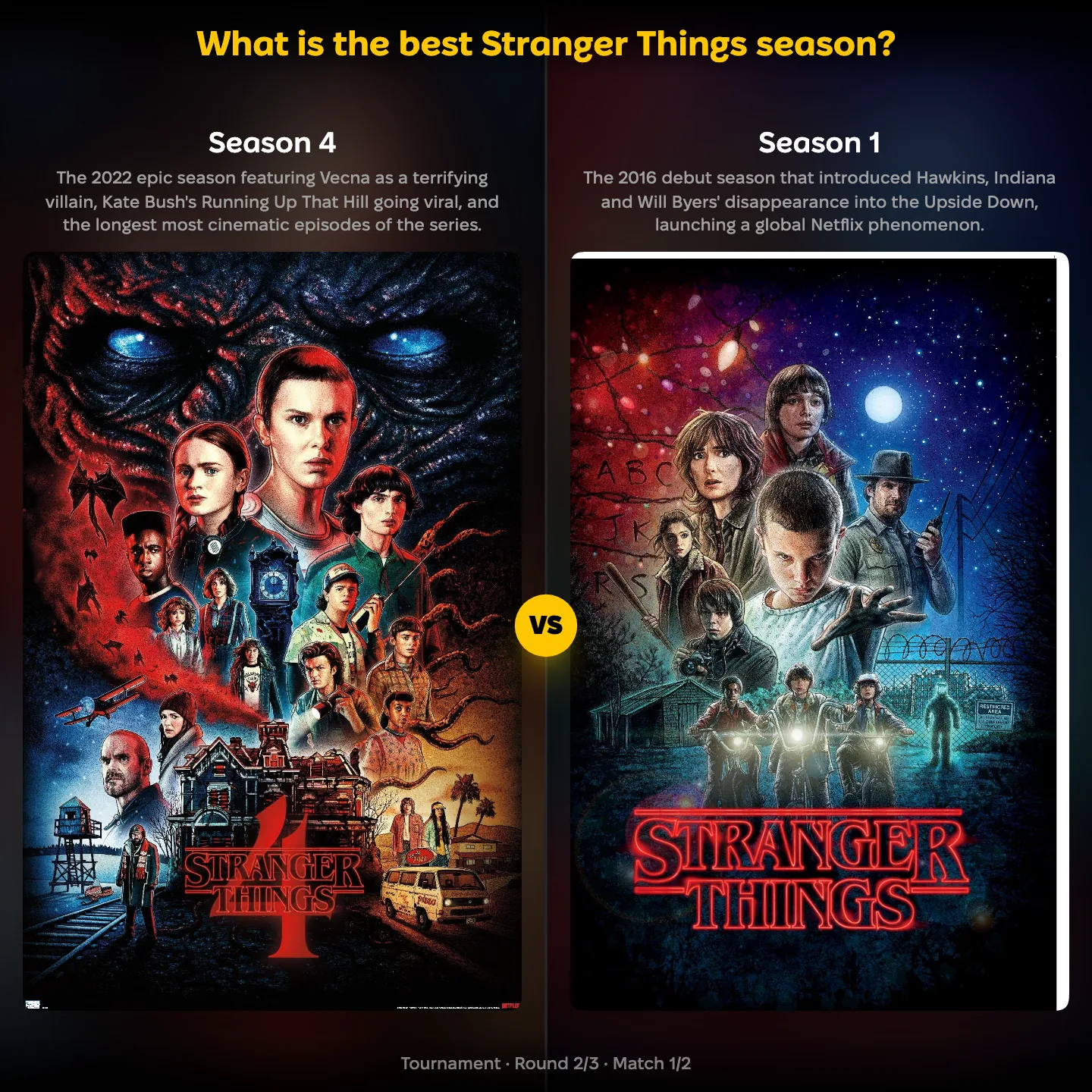
Season 4 vs Season 1: the show against itself
Five options, one per season. Here a fan has to say something uncomfortable out loud.
Season one is the underdog. Eight episodes released in July 2016 with nobody famous attached, and its whole reputation built by viewers telling each other about it.
Season four is the spectacle, and it reached outside television altogether. Its use of Kate Bush's "Running Up That Hill" sent the 1985 single to number one in the UK and to number three on the Billboard Hot 100 in 2022, against an original American peak of number thirty.6
Season five has the viewing figures and the ending. It also arrived in three pieces: four episodes on 26 November 2025, three more on 25 December, and the two-hour finale on New Year's Eve.2
Final seasons get judged on how they land, not on how many people showed up. That is why the show's biggest numbers do it the least good right here.
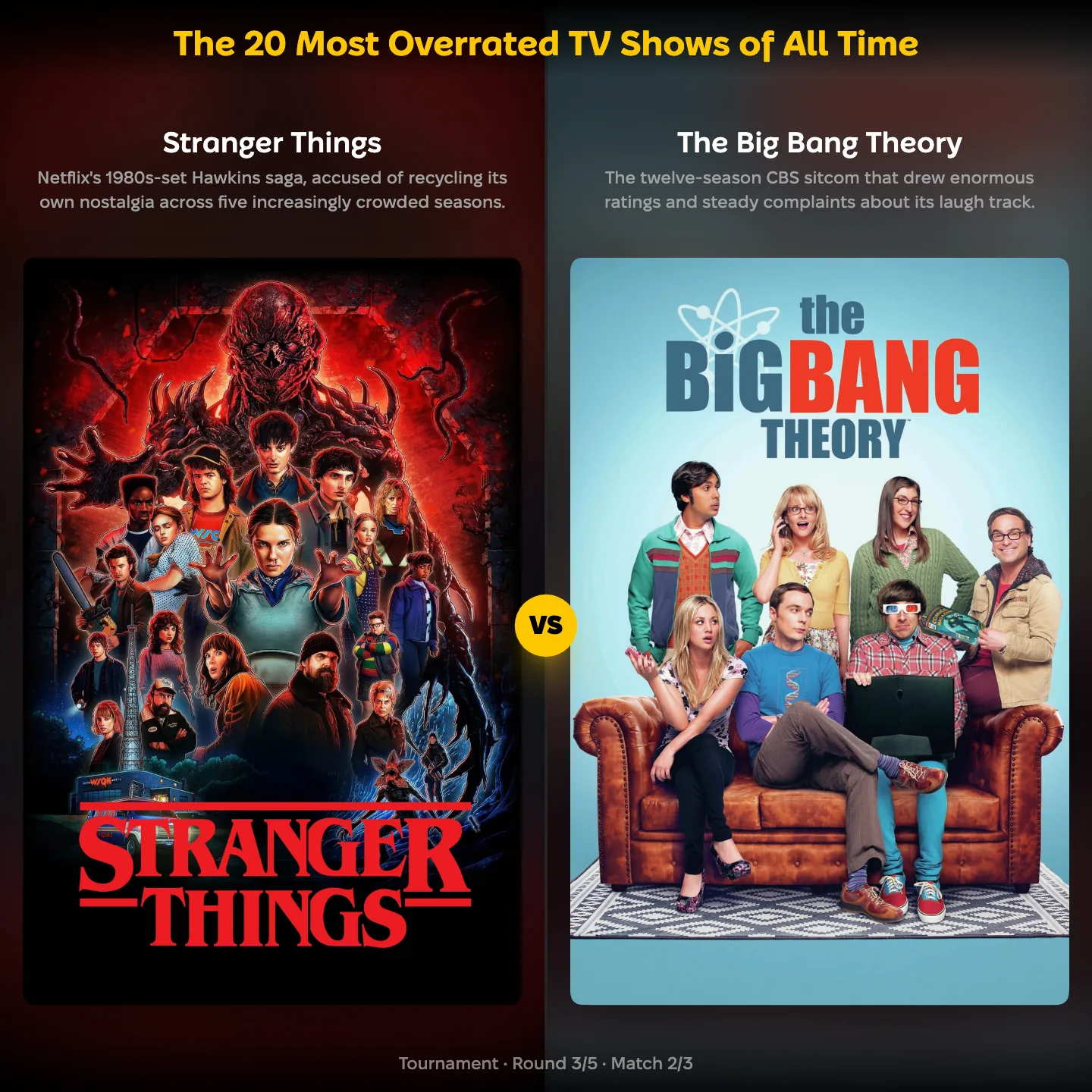
The Big Bang Theory vs Stranger Things: the list nobody wants to win
Every ranking above this one is a compliment. This is twenty shows accused of being smaller than their reputations, and Stranger Things made the cut.
The charge is repetition. Five seasons drawn from the same shelf of 1980s references, a cast that grew with every year, and a habit of splitting one story across volumes released weeks apart.
The Big Bang Theory carries a different complaint into the same matchup. Twelve seasons of enormous CBS ratings, and a laugh track a large part of its own audience has never forgiven.
This is also where the Emmys sting. The A.V. Club noted that every 2026 nomination for the final season sits in a Creative Arts category, with nothing in the main ceremony, and that every earlier season had reached the Outstanding Drama Series ballot.4
The consolation is the company. Game of Thrones, Friends and The Office all made this field, and nothing gets called overrated until it has first been loved.
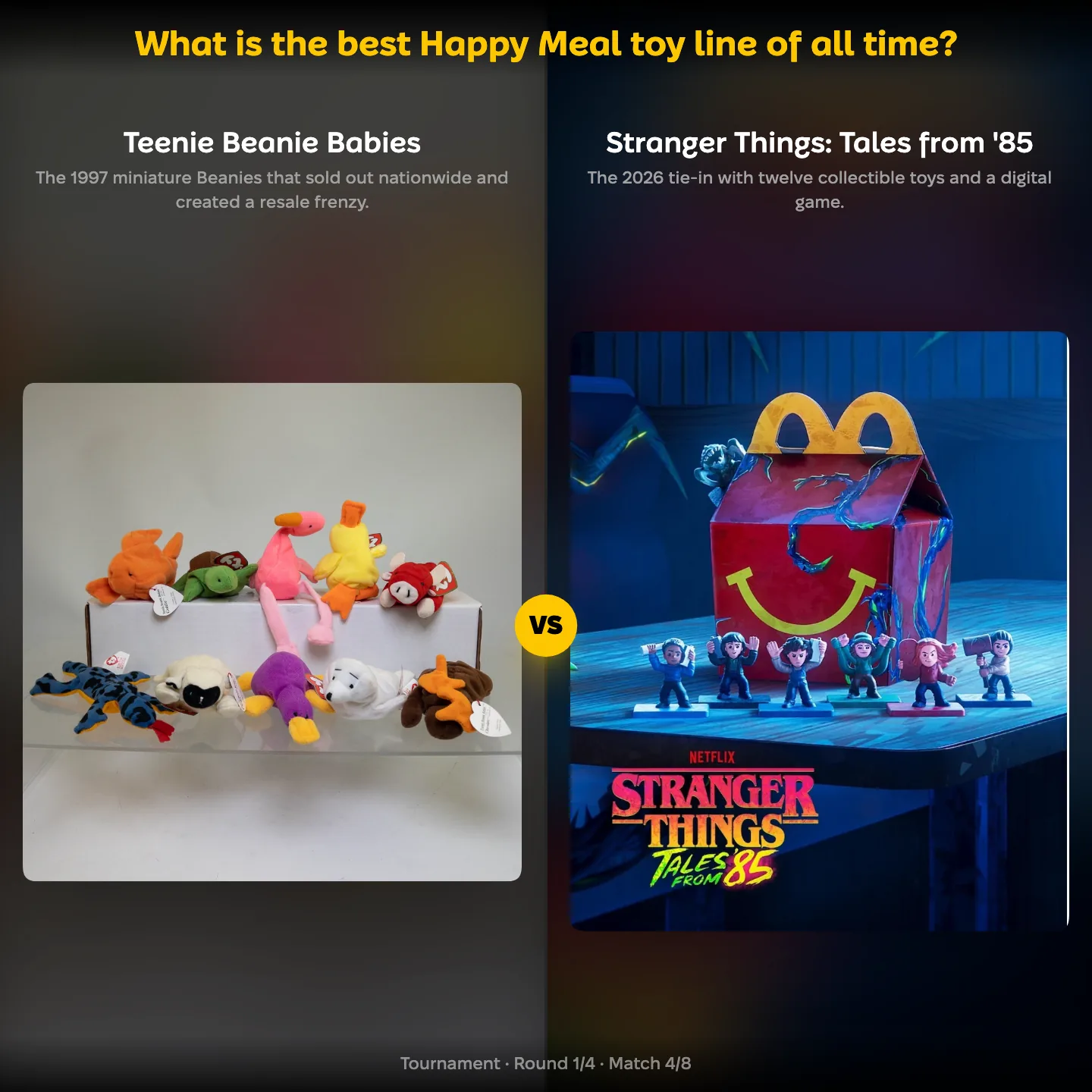
Tales from '85: a Happy Meal box in Hawkins
The last ranking leaves television behind entirely. Sixteen McDonald's Happy Meal toy lines, judged by the children who collected them and the adults who still remember doing it.
Stranger Things qualifies through Tales from '85, the Netflix tie-in box built around a Hawkins storyline. This is the furthest the show has ever travelled from the thing it actually is.
Teenie Beanie Babies come from 1997, when the miniature Beanies sold out nationwide and started a resale market. Pokémon, Hot Wheels and Furby are here too. Between them those three set the bar a streaming tie-in has to clear.
The show ended. The sorting did not
Ten years of production left Stranger Things with four genre labels, a decade it was not made in, a theme song, a typeface and a fast-food promotion. Every one of those is a separate ranking with a separate set of rivals. The Emmy ballot on 14 September settles exactly one of them and leaves the other fourteen where they were.
Every one of the fifteen gets settled by picking between two options over and over. That is how the same show turns into a strong answer for one question and an awkward one for the next.
If there is a series you keep spotting in company it does not deserve, make the ranking and let the voting settle it.
More rankings, more angles
- Breaking Bad vs The Sopranos, Ranked Side by Side — the two shows Stranger Things keeps meeting
- Game of Thrones: 59 Emmys, One Ending Nobody Agrees On — the other 2010s giant with a divisive finale
- Star Trek Turns 60. No Two Lists Agree Where It Belongs — six decades of the same science-fiction dispute
- Halloween: a $325,000 Movie and a $13 Billion Night — the same suburbs, filmed in 1978
Sources
- GamesRadar+, reporting Netflix's premiere-week figures for Stranger Things season 5: 59.6 million views in six days, the biggest English-language premiere week in Netflix's history, and third overall behind two Squid Game seasons: gamesradar.com (checked 2026-09-08)
- TheWrap: the season 5 release schedule (26 November, 25 December and 31 December 2025), the 105.7 million season total and the number-nine placing on Netflix's all-time English-language list, behind Bridgerton season 3 and ahead of The Night Agent season 1: thewrap.com (checked 2026-09-08)
- Wikipedia, 78th Primetime Emmy Awards: the 14 September 2026 ceremony at the Peacock Theater in Los Angeles and the eight Outstanding Drama Series nominees, which do not include Stranger Things: en.wikipedia.org (checked 2026-09-08)
- The A.V. Club: Stranger Things season 5 took only Creative Arts nominations at the 2026 Emmys, with nothing in the main ceremony, breaking a run in which every previous season was nominated for Outstanding Drama Series: avclub.com (checked 2026-09-08)
- Wikipedia, Stranger Things: premiere on 15 July 2016, five seasons and 42 episodes, created by the Duffer Brothers, set in Hawkins, Indiana between 1983 and 1989: en.wikipedia.org (checked 2026-09-08)
- Wikipedia, "Running Up That Hill (A Deal with God)": UK number one and Billboard Hot 100 number three in 2022 after its use in season 4, against an original 1985 US peak of number thirty: en.wikipedia.org (checked 2026-09-08)