
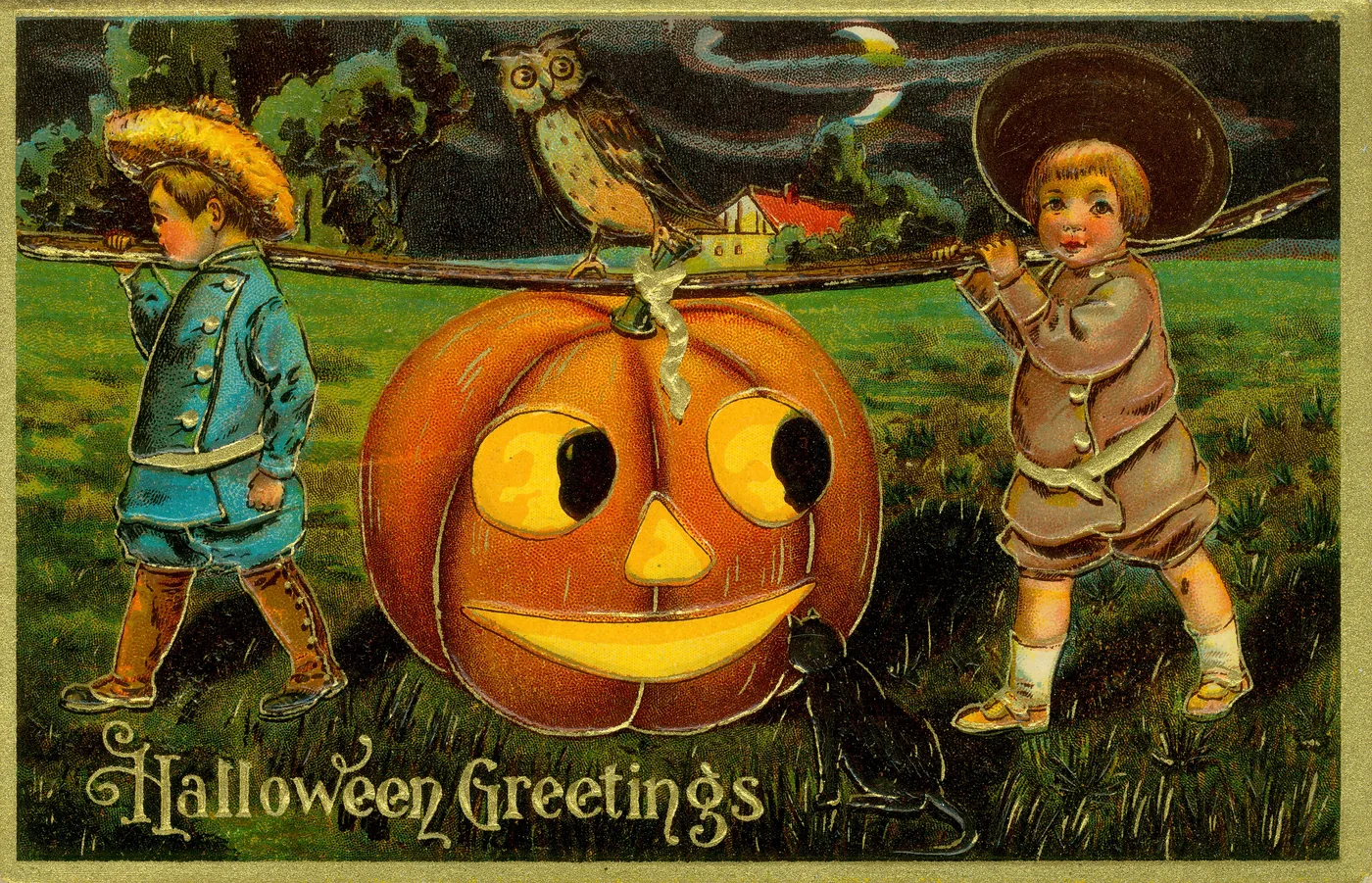
Halloween 2026 falls on a Saturday, and American retailers have been planning around that since spring. This year Americans expect to spend $13.5 billion on the night, $115.14 a head, with 74% of them taking part.1 The same word belongs to a film John Carpenter shot in twenty days for about $325,000.2
Both meanings turn up in rankings, and they are rarely doing the same job.
Halloween competes against itself: the film, the franchise and the night each belong to a different list, and none of them speaks for the others.
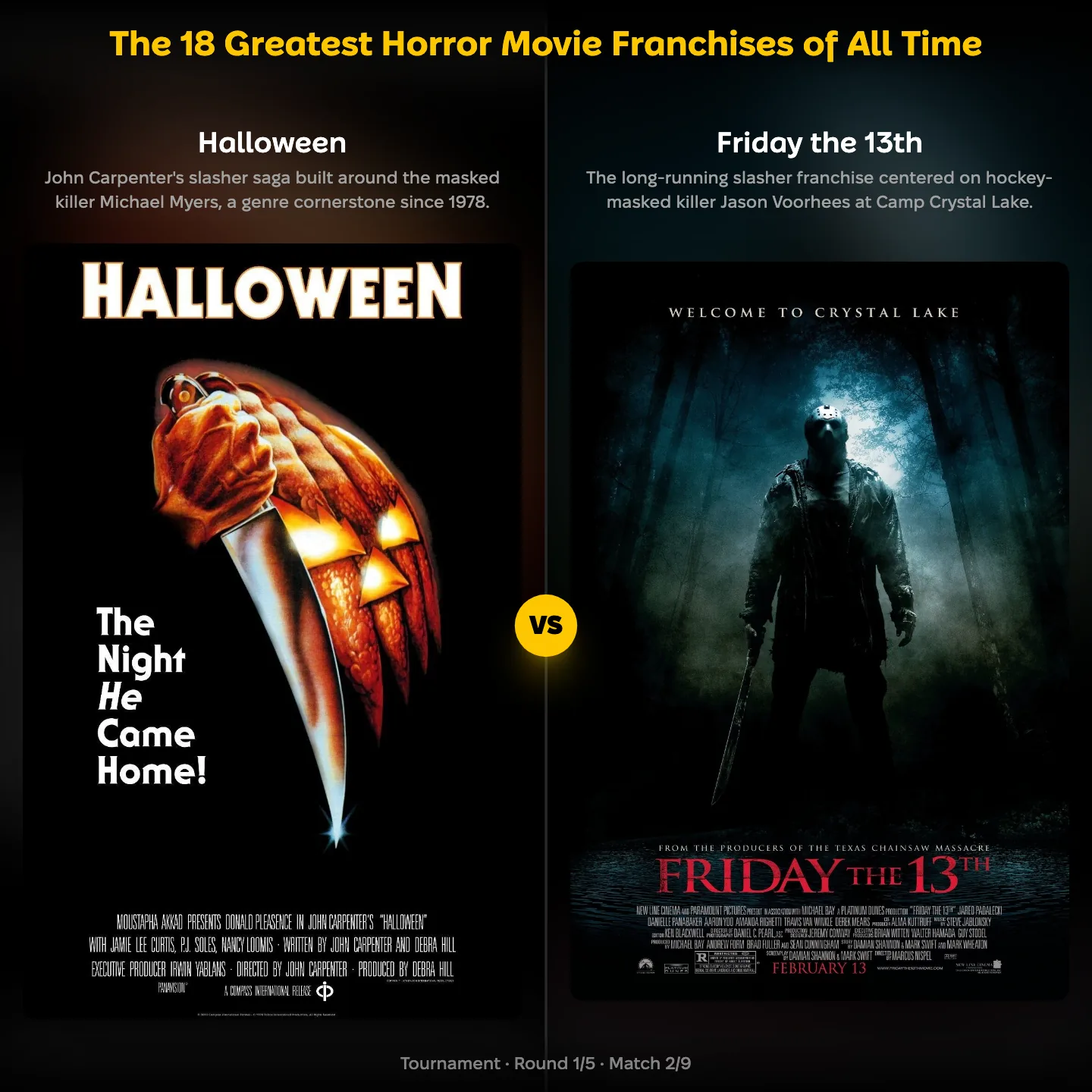
Halloween vs Friday the 13th: thirteen films and one imitator
The 18 Greatest Horror Movie Franchises of All Time asks which horror series earned its sequels, and few of them have produced as many as this one.
Carpenter's original returned $70 million on an independent budget, which put it among the most profitable independent films released to that point.2 Thirteen films later the series has taken $885.97 million worldwide.3
Friday the 13th arrived two years afterwards with the same ingredients: a date for a title, teenagers in a small town, a killer who never speaks.
Alien, The Exorcist and A Nightmare on Elm Street share the page, and each of them holds something this series does not. An Academy Award. A villain with dialogue. A sequel most people rate above the original.
Halloween vs Christmas: one of these is a rounding error
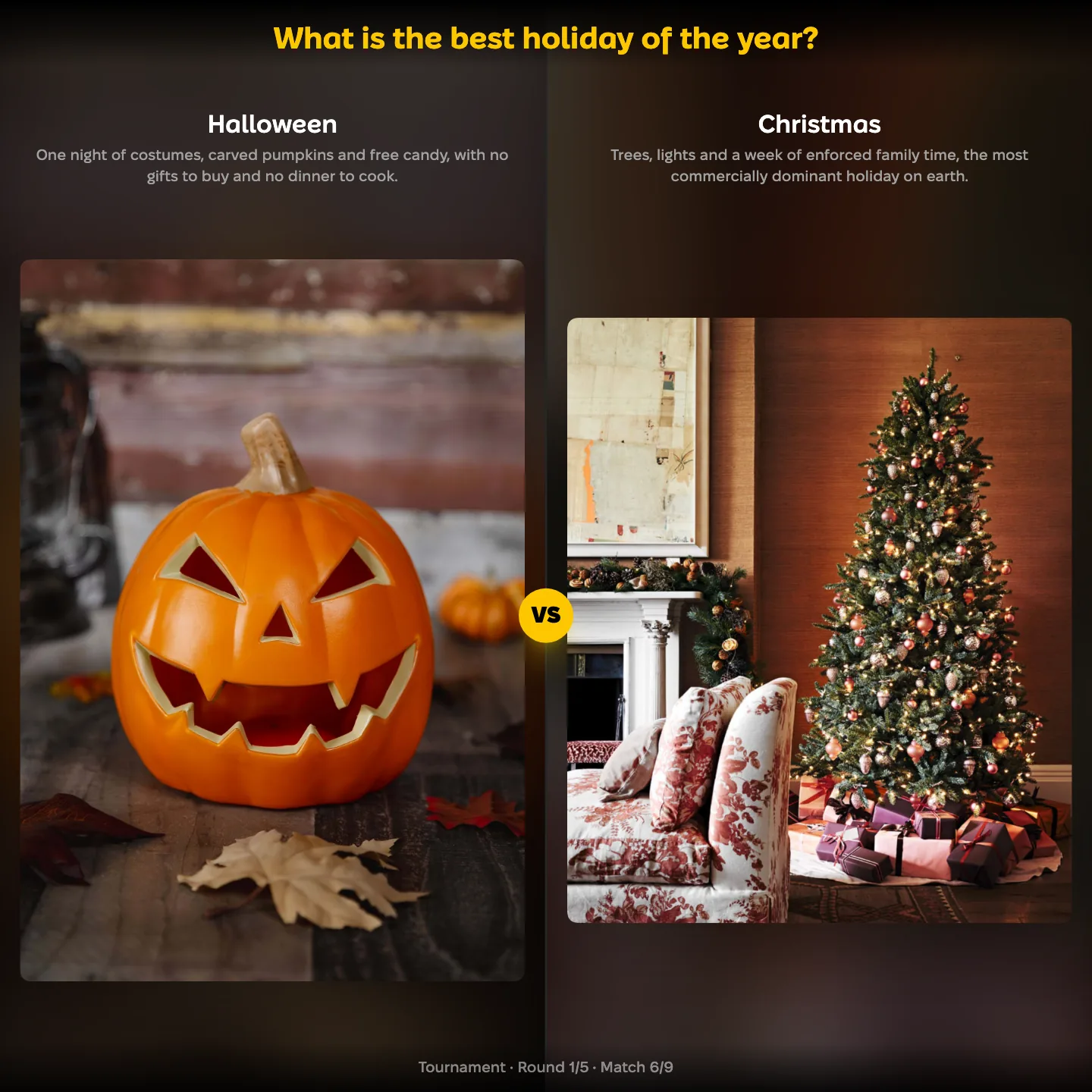
Put Halloween on a list of the year's holidays and it stands next to the days people take time off for.
Christmas wins on money by a margin nobody disputes. The National Retail Federation put November and December retail sales at $1.01 trillion to $1.02 trillion, the first time the winter holidays passed a trillion dollars, at an average of $890.49 a person on gifts, food and decorations.4 Halloween's per-head figure is roughly an eighth of that.
Thanksgiving, the Fourth of July and New Year's Eve each arrive with an obligation attached: a table to sit at, a family to visit, a resolution to make.
Halloween asks for none of it. Nobody flies home for the night and nobody cooks for twelve. The only duty is answering the door, which 61% of celebrants said they intended to do.1
Reese's vs candy corn: the $4.1 billion bowl
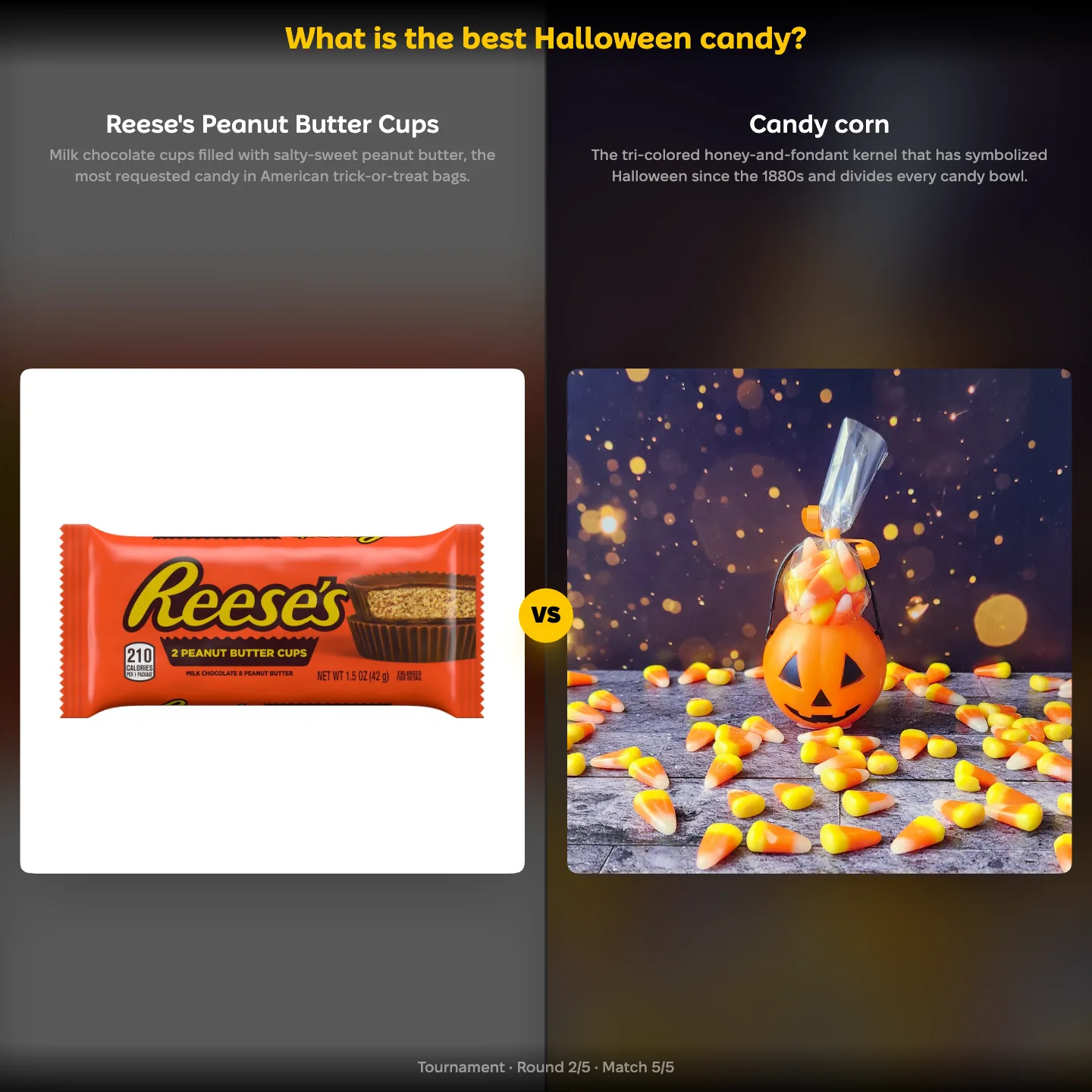
Once a year Americans buy confectionery in bulk for children they have never met. That transaction is the whole premise of the Halloween candy question.
The bill comes to $4.1 billion this year, and 96% of Halloween shoppers buy some of it.1 Almost none of that spending is for the buyer.
Reese's, Snickers, Kit Kats and M&M's form the chocolate bloc. They own the shelf because they survive a warm car and the bottom of a school bag.
Candy corn is the exception on that shelf. It is not chocolate, it has no filling, it tastes of honey and fondant, and Brach's alone turns out about 7 billion pieces of it a year.5
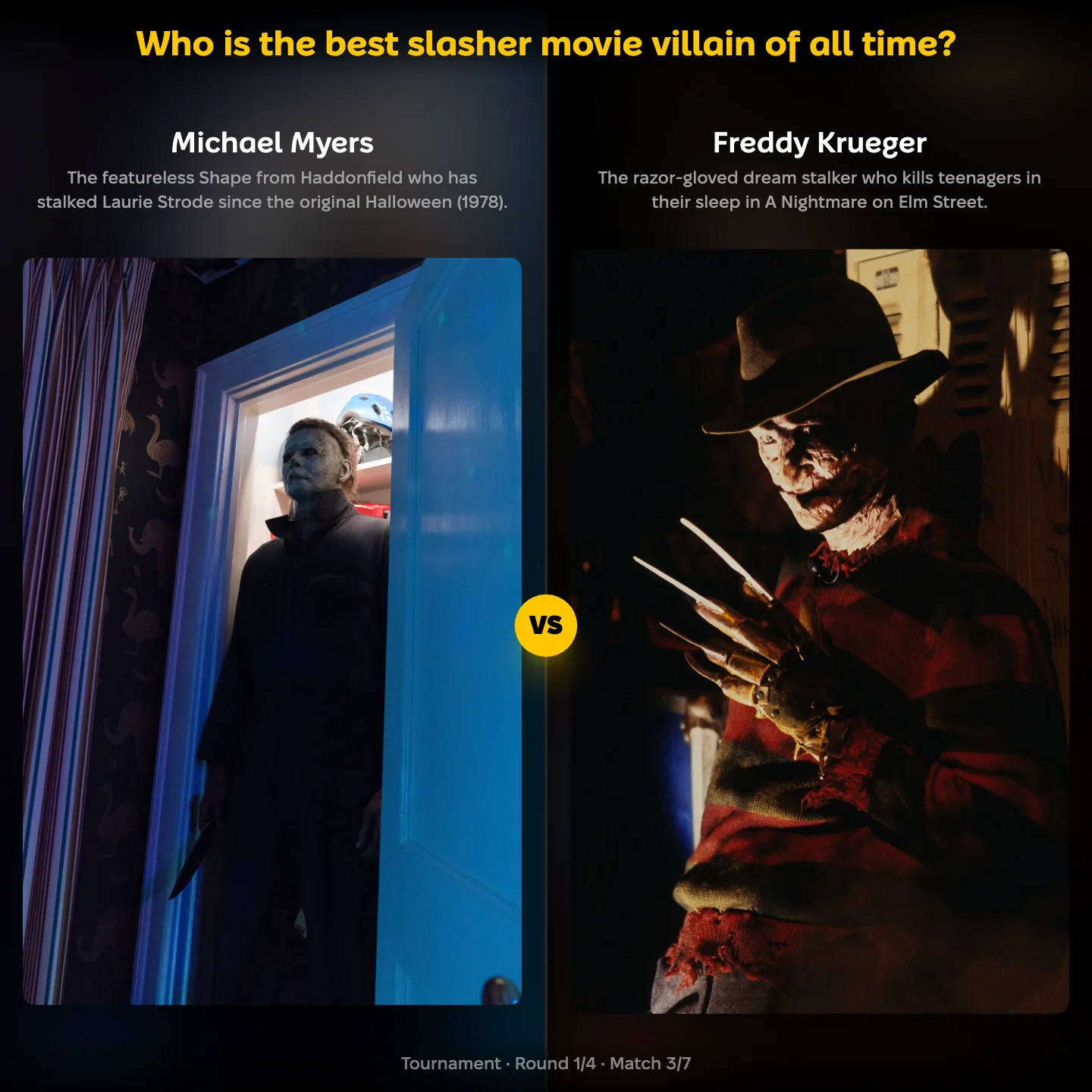
Michael Myers vs Freddy Krueger: the $1.98 mask
Michael Myers shares the slasher-villain page with every masked figure the genre has produced since.
His mask was a $1.98 Captain Kirk mask from a Hollywood Boulevard costume shop. Production designer Tommy Lee Wallace widened the eye holes and sprayed it white, and that blankness is the entire character.2
Freddy Krueger is the opposite proposition. He talks, jokes and works inside dreams, which is why A Nightmare on Elm Street aged into comedy and Halloween did not.
Jason Voorhees, Ghostface, Leatherface and Pinhead fill out the page. Myers came first, in 1978, and the rest of them are replies to him.
Witches, Spider-Men and a $4.4 billion aisle
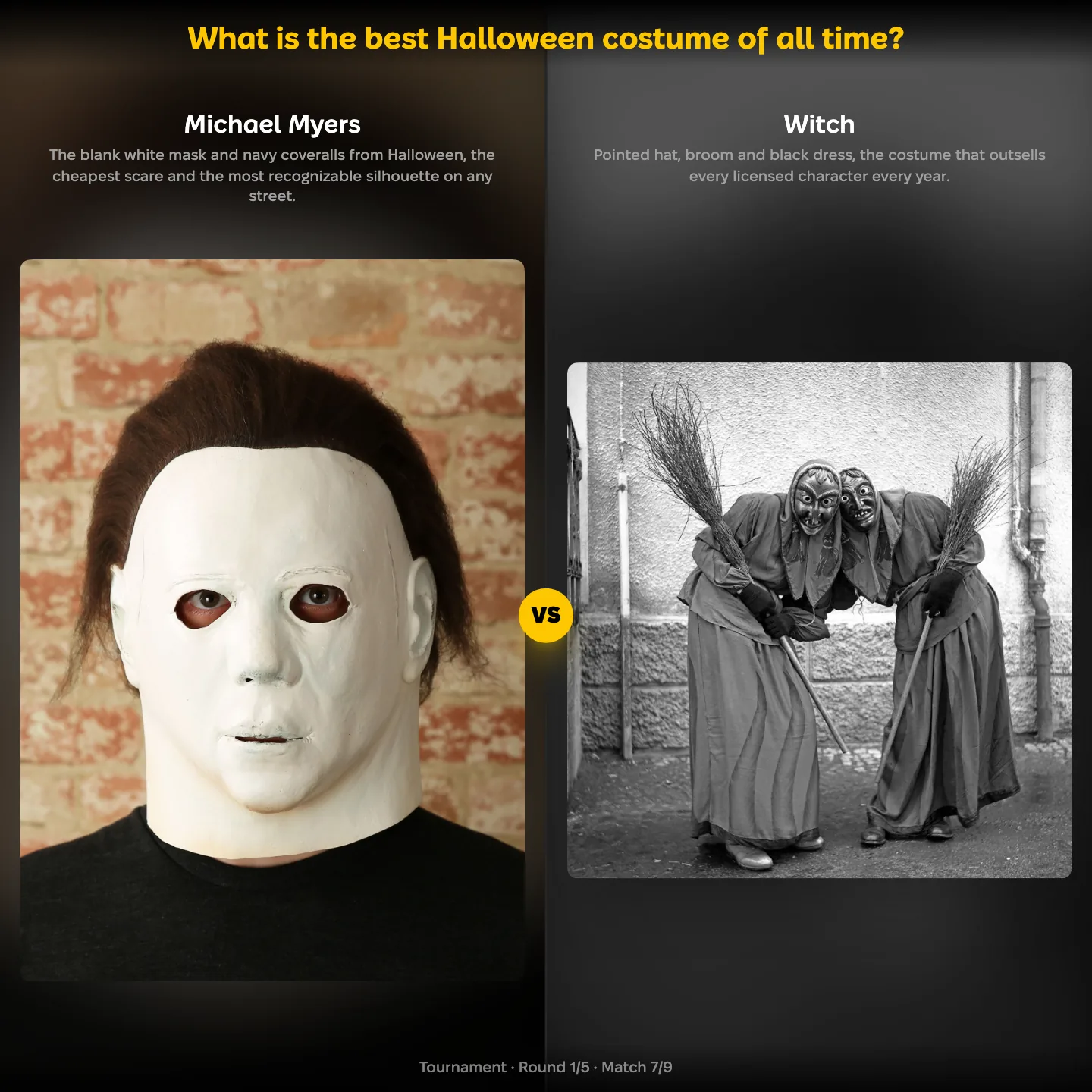
Costumes are the largest line in American Halloween spending, so the costume question has an industry standing behind it.
Americans will put $4.4 billion into costume items this year, and 71% of Halloween shoppers buy one.1
The old ideas hold their ground. The NRF counted 4.8 million adults planning to go as a witch and 4.2 million as a vampire; among children, 4.6 million chose Spider-Man and 2.2 million a princess. Pets have their own table, led by the pumpkin at 11.6%.1
Michael Myers belongs to this ranking as well, and his costume is a boiler suit and a painted rubber face, which is the cheapest thing the franchise ever put on screen.
Monster Mash vs Thriller: two songs that own one month
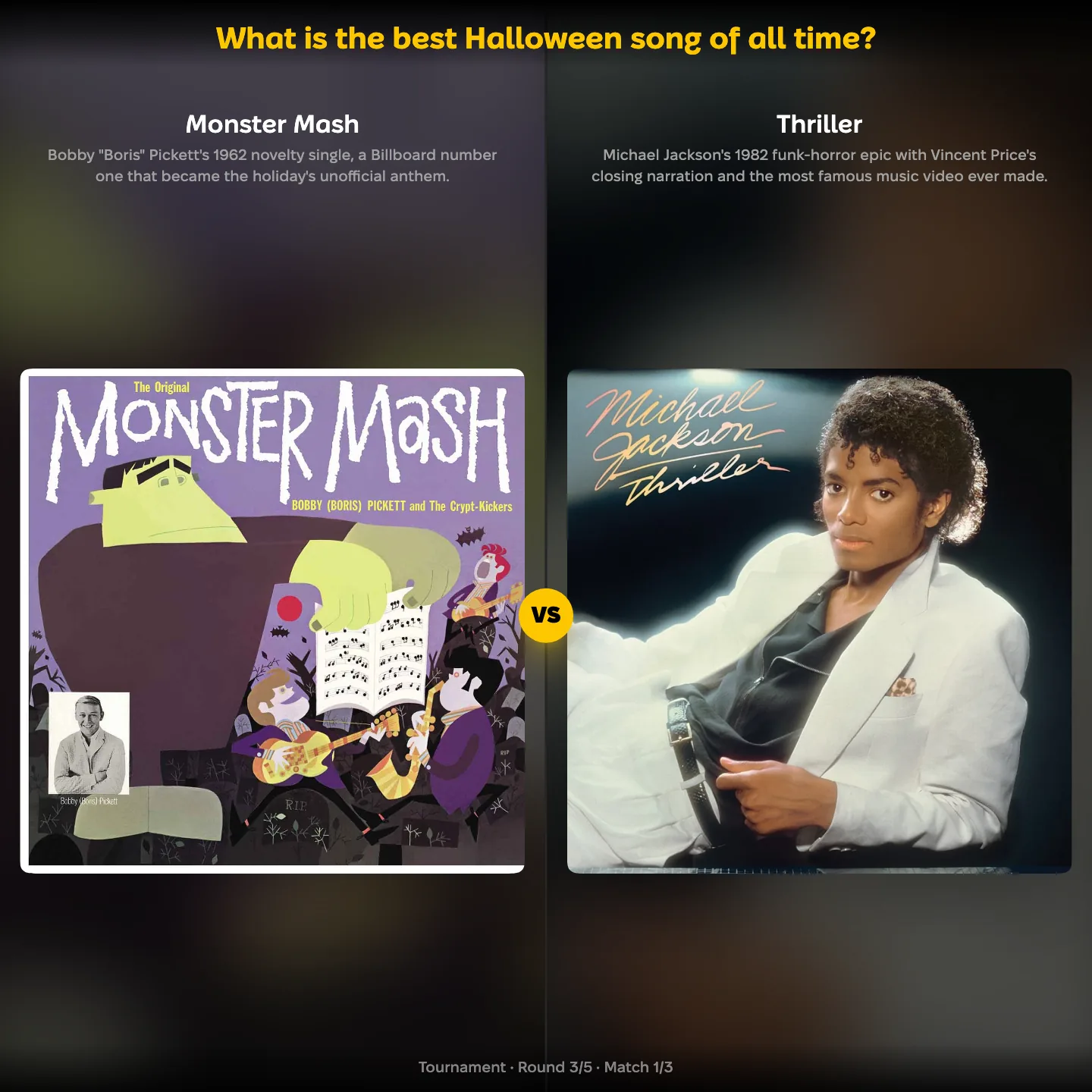
Halloween music is a short genre with two enormous entries, and most of the category is a contest between those two.
"Monster Mash" by Bobby "Boris" Pickett was number one on the Billboard Hot 100 on 20–27 October 1962, the week before the holiday. It returned to number 10 in 1973, re-entered at number 37 in 2021, and by 2023 was generating about $1 million a year in royalties.6
"Thriller" belongs to a different scale of pop music. Michael Jackson's album has sold more than 70 million copies, and the 14-minute video John Landis made for the title track became in 2009 the first music video taken into the Library of Congress's National Film Registry.7
The video was the expensive part. It cost $500,000, roughly ten times the going rate for a music video in 1983, and Epic Records would only put up $100,000 of it. Showtime and MTV covered the rest by treating the thing as a short film and buying the rights separately.8
"This Is Halloween", "Ghostbusters" and "Somebody's Watching Me" are seasonal records that come out of storage each October. The two above are standards that happen to be about monsters.
Trick-or-treating, in print since 1917
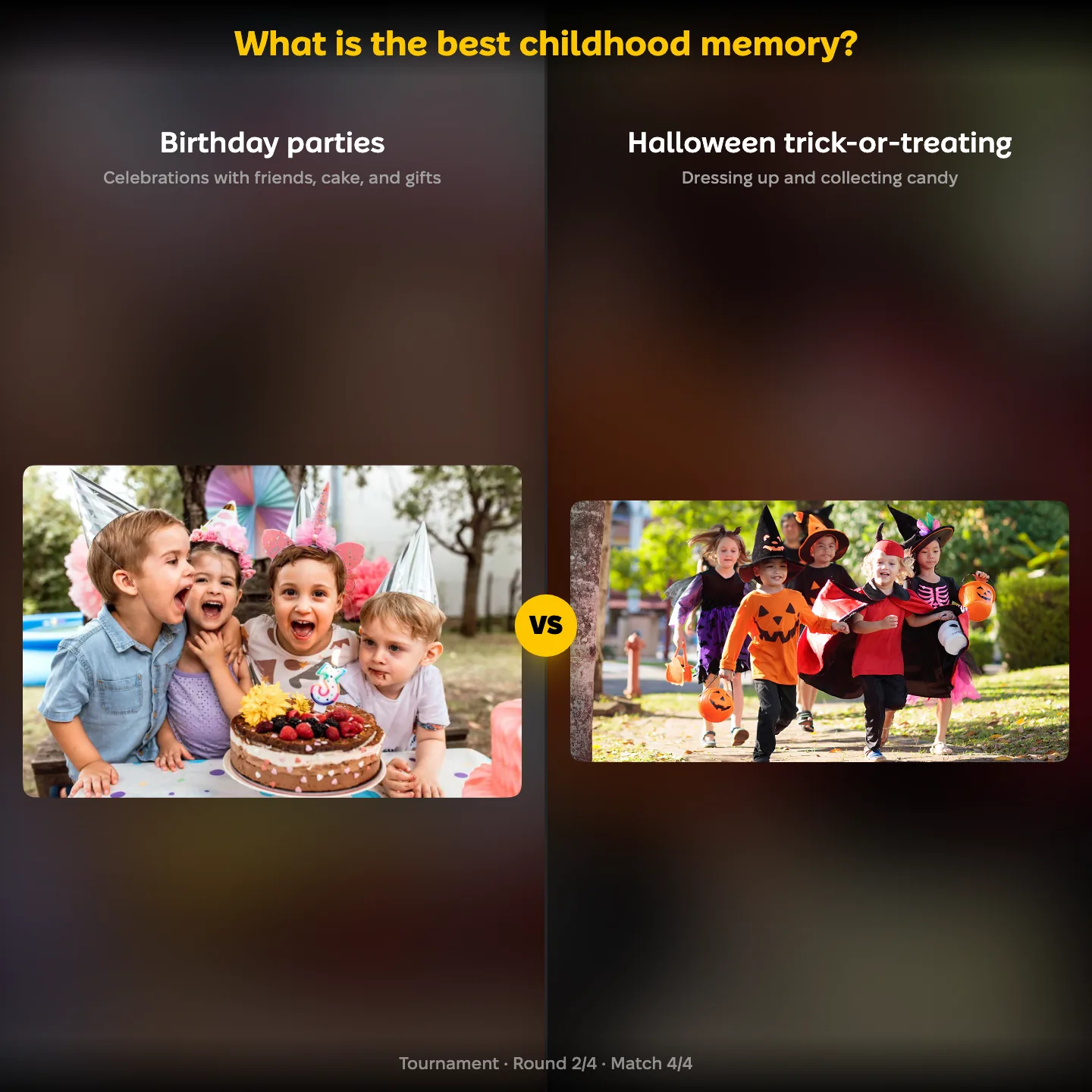
The best childhood memory is a ranking with no film in it anywhere, and Halloween is on it regardless.
The phrase "trick or treat" first appeared in print in a Canadian newspaper in 1917, and the custom only spread across North America in the 1930s.9 The jack-o'-lantern is older still: carved turnips in Ireland and Scotland, traded for pumpkins by Irish immigrants because the American gourd was bigger and easier to cut.9
Birthday parties, snow days, sleepovers and a first pet are the other options, and all of them happen to one child at a time.
Trick-or-treating is the only entry on that page that happens to an entire street on the same evening, which is why the word reaches places a horror franchise never could.
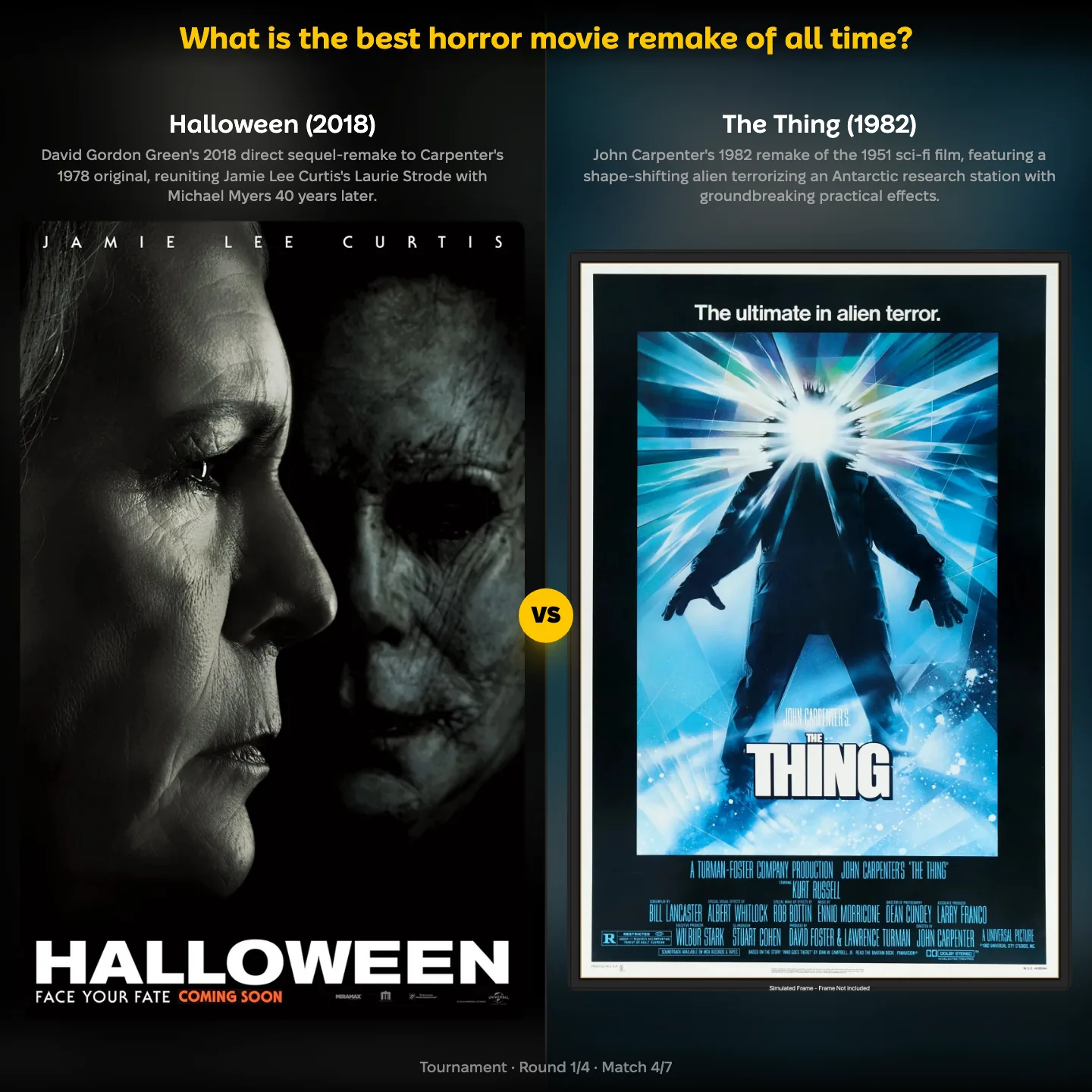
Halloween (2018) vs The Thing: Carpenter remade, Carpenter remaking
Among the best horror remakes, Halloween appears as the thing remade rather than the film doing the remaking.
The 2018 version cost $10 million and opened to $76.2 million, the franchise's biggest debut and, at that point, the strongest opening for a film led by an actress over 55.10 It ignored every sequel and resumed forty years after the first night.
The Thing appears on the same page with the reverse claim. Carpenter built it in 1982 out of a 1951 film, and it was written off on release before turning into the benchmark other remakes are held to.
Two separate Halloween remake lines exist, from 2007 and 2018, which is two more than most horror films get and part of why the series divides even the people who like it.
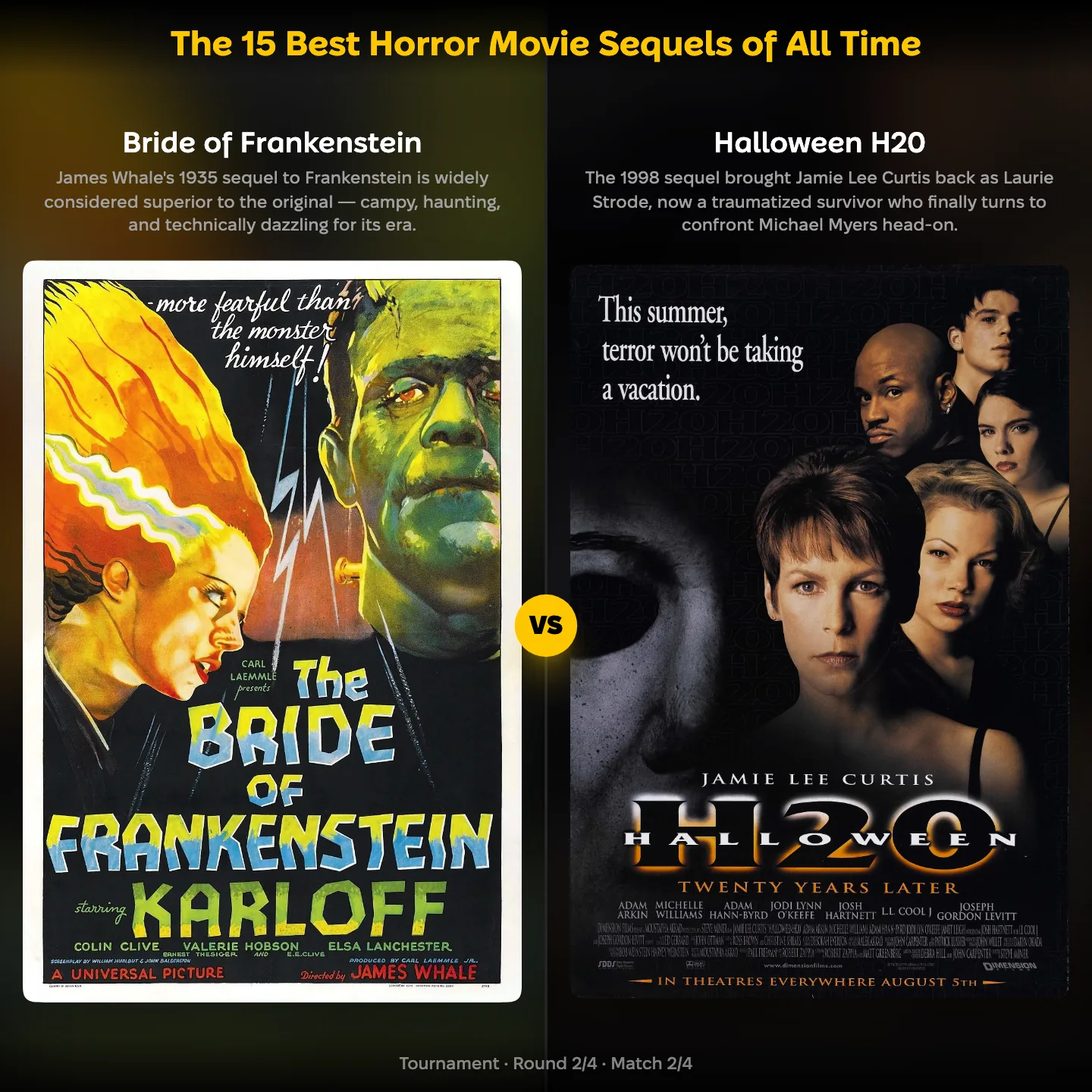
Bride of Frankenstein vs Halloween H20: nine sequels deep
A long franchise pays for its length once anyone starts counting the good horror sequels.
Halloween H20 brought Jamie Lee Curtis back twenty years after the film debut she was paid $8,000 for.2 It is one of two entries from the series on that page, out of nine sequels the franchise has made.
Halloween III: Season of the Witch is the one nobody nominates. Carpenter and Debra Hill agreed to produce it only on condition that Michael Myers stayed out, intending an anthology in the manner of The Twilight Zone. Audiences gave it a D on CinemaScore and it took $14.4 million, the weakest result in the series.11
Bride of Frankenstein has been the answer to this question since 1935, and Aliens, Evil Dead II and Dawn of the Dead are all in the room.
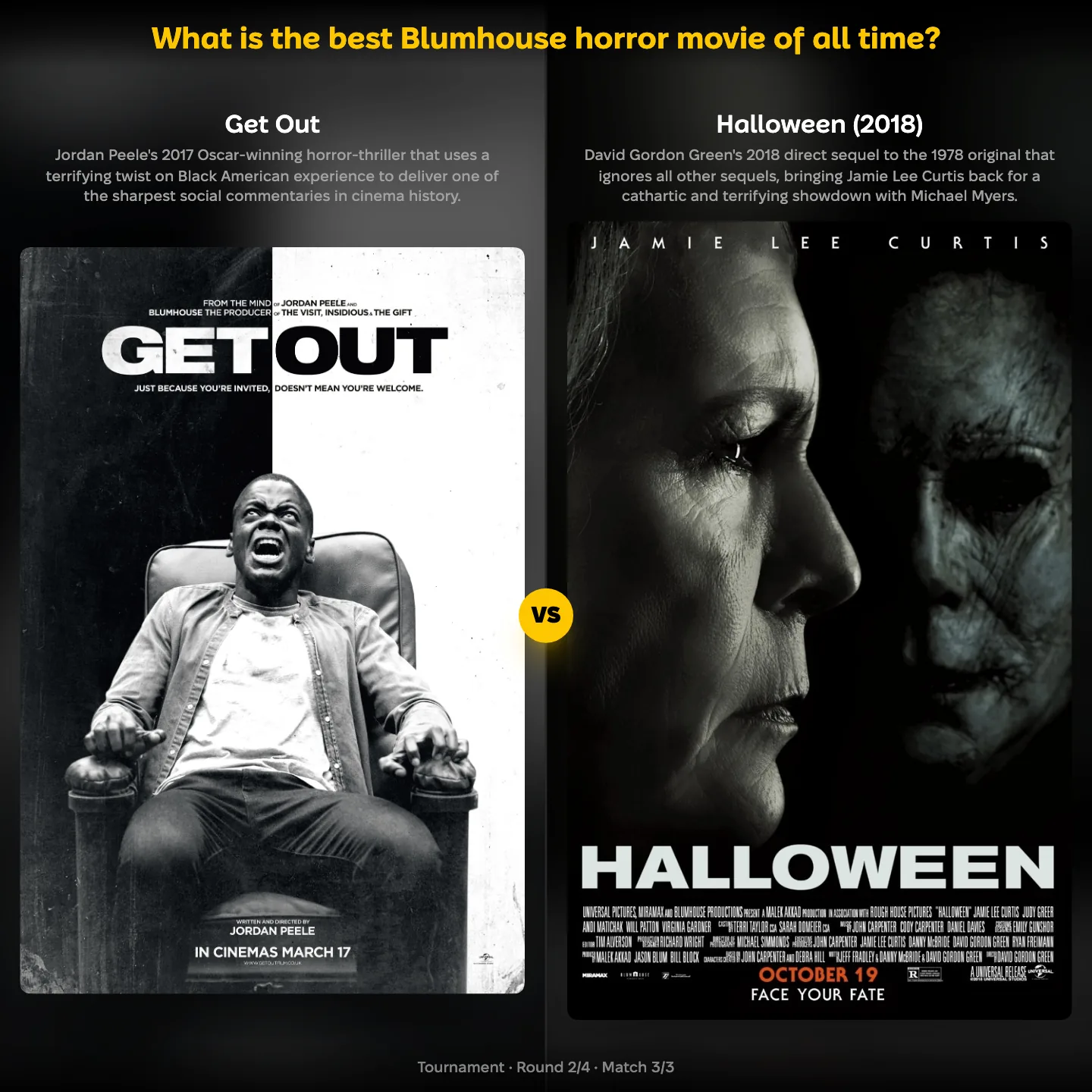
Get Out vs Halloween: the studio that bets $10 million at a time
The Blumhouse page is about a business model rather than a genre.
Blumhouse makes horror for budgets other studios spend on marketing, and the 2018 Halloween is the clearest case of it working: ten million out, $259.9 million back.10
Get Out is the studio's other kind of answer. Jordan Peele's first film took the Academy Award for original screenplay and changed how seriously a cheap horror release could expect to be treated.
Split, Insidious, The Invisible Man and Paranormal Activity round out the page. Halloween is the only title there that arrived with forty years of audience already attached, which is either its advantage or the asterisk beside it.
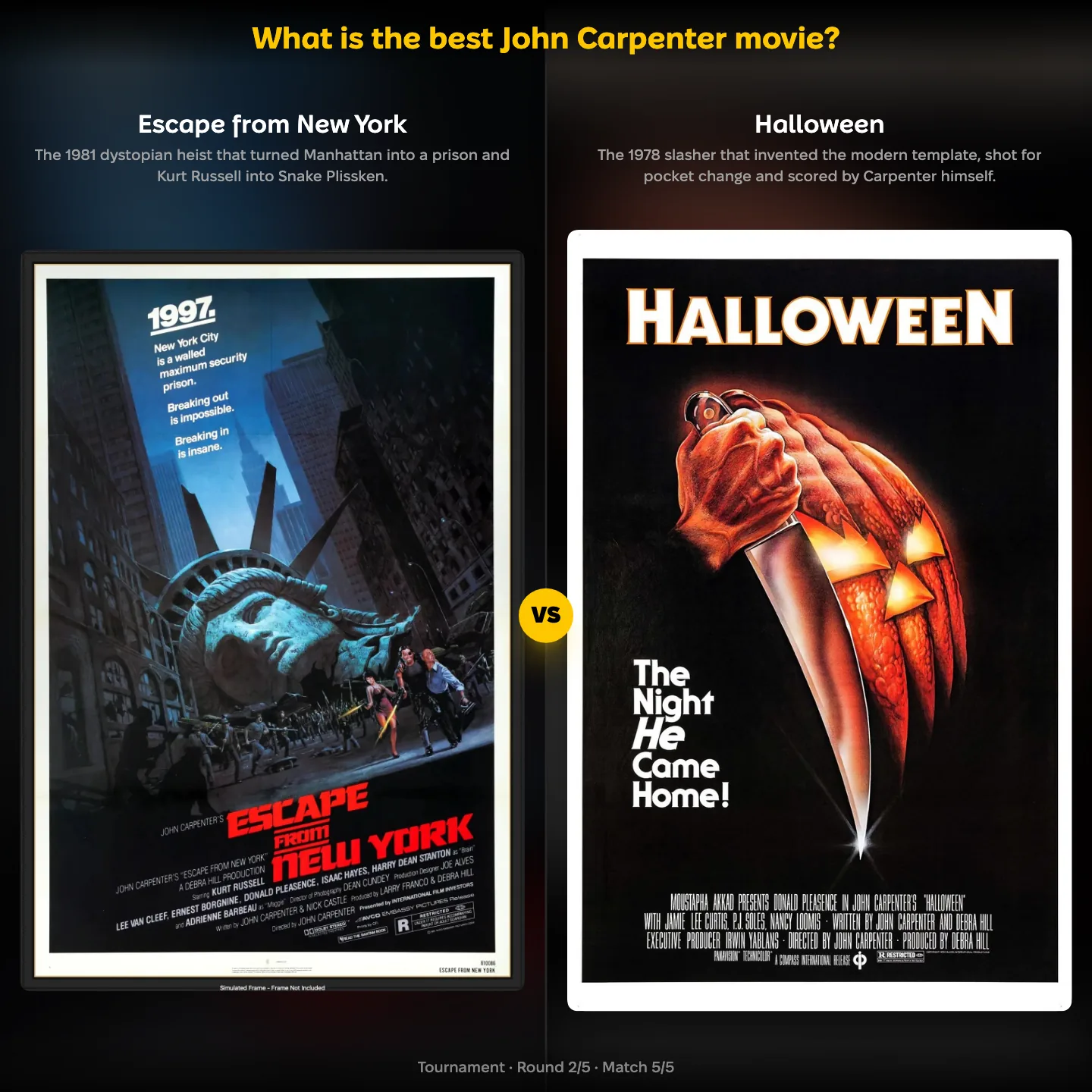
John Carpenter wrote the theme in three days
Inside John Carpenter's own filmography, Halloween is one line rather than the whole subject.
Carpenter scored his own films, and the Halloween theme took him three days. It is in 5/4, which is why it never settles, and a piano figure with no tune worth humming became the most recognisable sound in horror.2
Escape from New York, They Live and Assault on Precinct 13 are the competition, each of them carrying a following that formed years after release.
Halloween paid for the rest. The mask, the theme and the babysitter became a template the genre worked from for a decade.
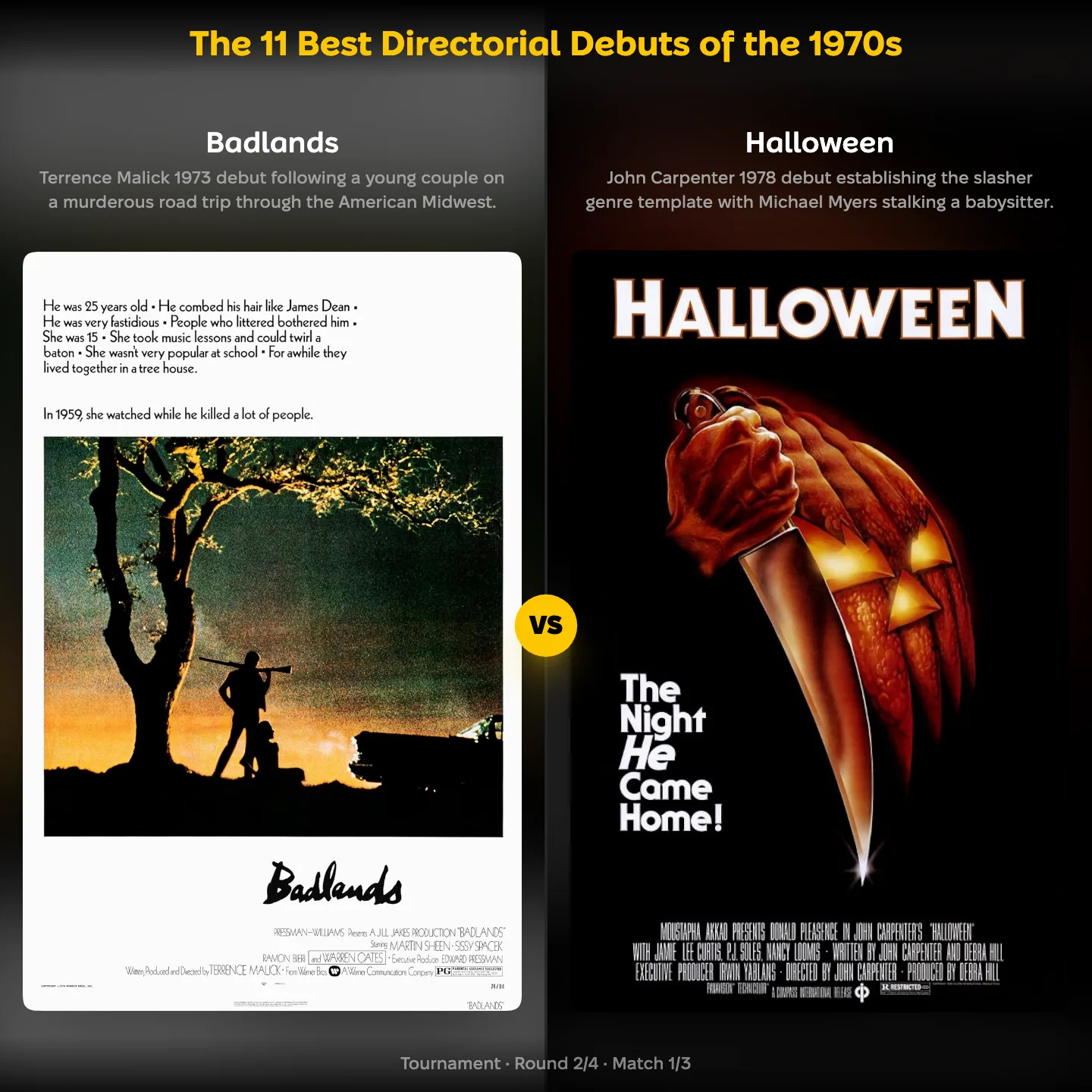
Badlands vs Halloween: two 1970s debuts
The 11 Best Directorial Debuts of the 1970s is where Halloween stops being a horror film and becomes a first feature.
Carpenter shot it over twenty days in South Pasadena, California, standing in for the fictional Haddonfield, Illinois, a town named after the New Jersey one where the producer Debra Hill grew up.2 Scholars file the result among the most restrained horror films ever made: almost nothing is shown.
Terrence Malick's Badlands, David Lynch's Eraserhead and Steven Spielberg's Duel make up the competition, from the strongest decade for first features American cinema has had.
A horror film is the unusual guest at that table, and it is there because everything the genre did for the next ten years copied its camera.
Haddonfield, Illinois: a sidewalk that never existed
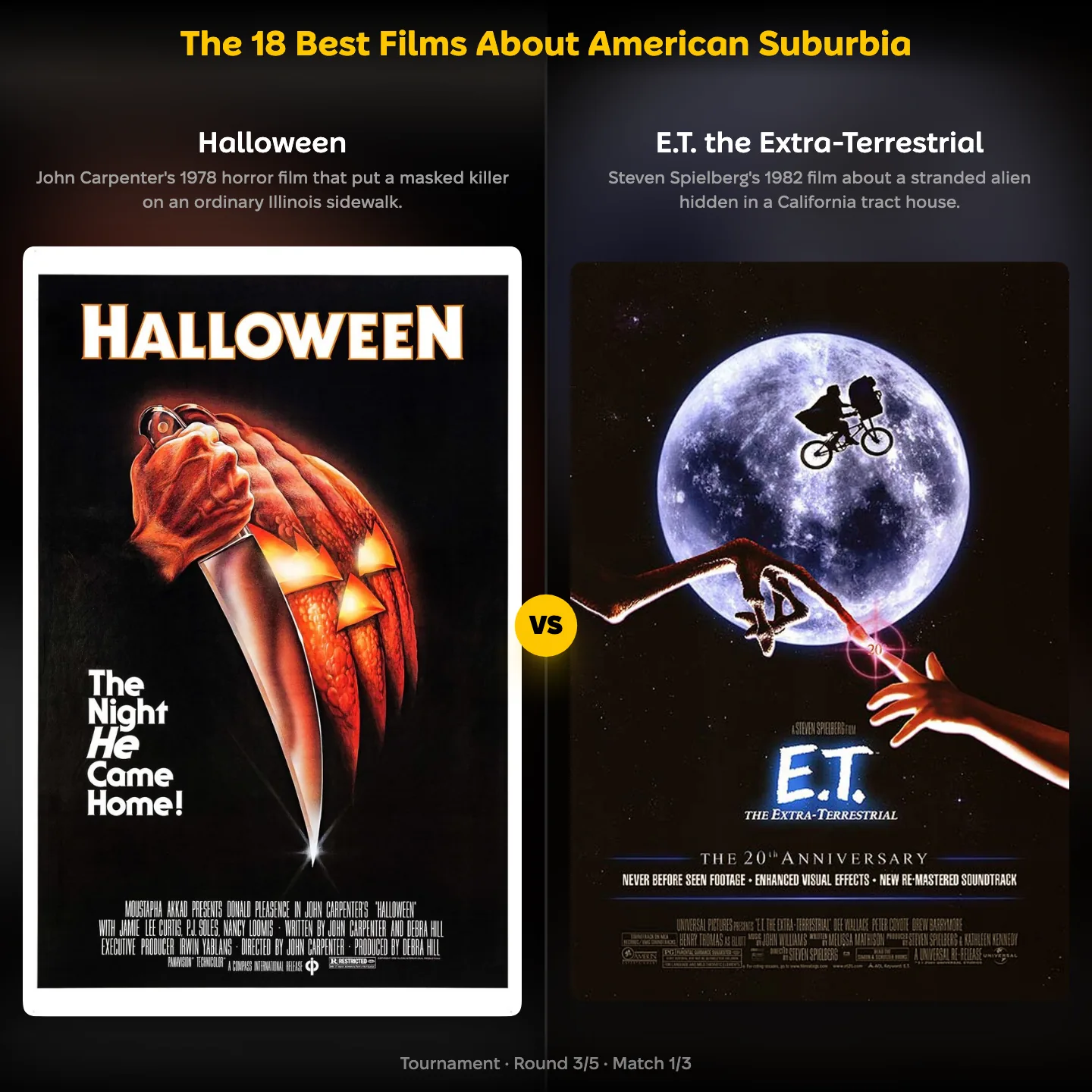
The 18 Best Films About American Suburbia collects films about lawns, driveways and quiet streets, and Halloween is the horror entry among the dramas.
The suburb was shot in May, which is the wrong month for it. The crew reused the same artificial leaves scene after scene and struggled to find pumpkins at all in spring.2
E.T. the Extra-Terrestrial appears on the same page and uses identical geography for the opposite feeling: bicycles, cul-de-sacs, a boy hiding something in a closet.
Carpenter opened the film with a long unbroken shot taken through the eye-holes of a mask, using a Panaglide rig to put the audience behind the killer's face while he walks through an ordinary house.2
American Beauty, Blue Velvet, The Virgin Suicides and Edward Scissorhands are what this ranking is really about, and their subject is disappointment behind a hedge. Halloween's contribution was smaller and has lasted longer. It made an ordinary pavement in daylight the frightening part of the frame, and every suburban horror film since has shot that pavement the same way.
Candy corn has divided people since 1888
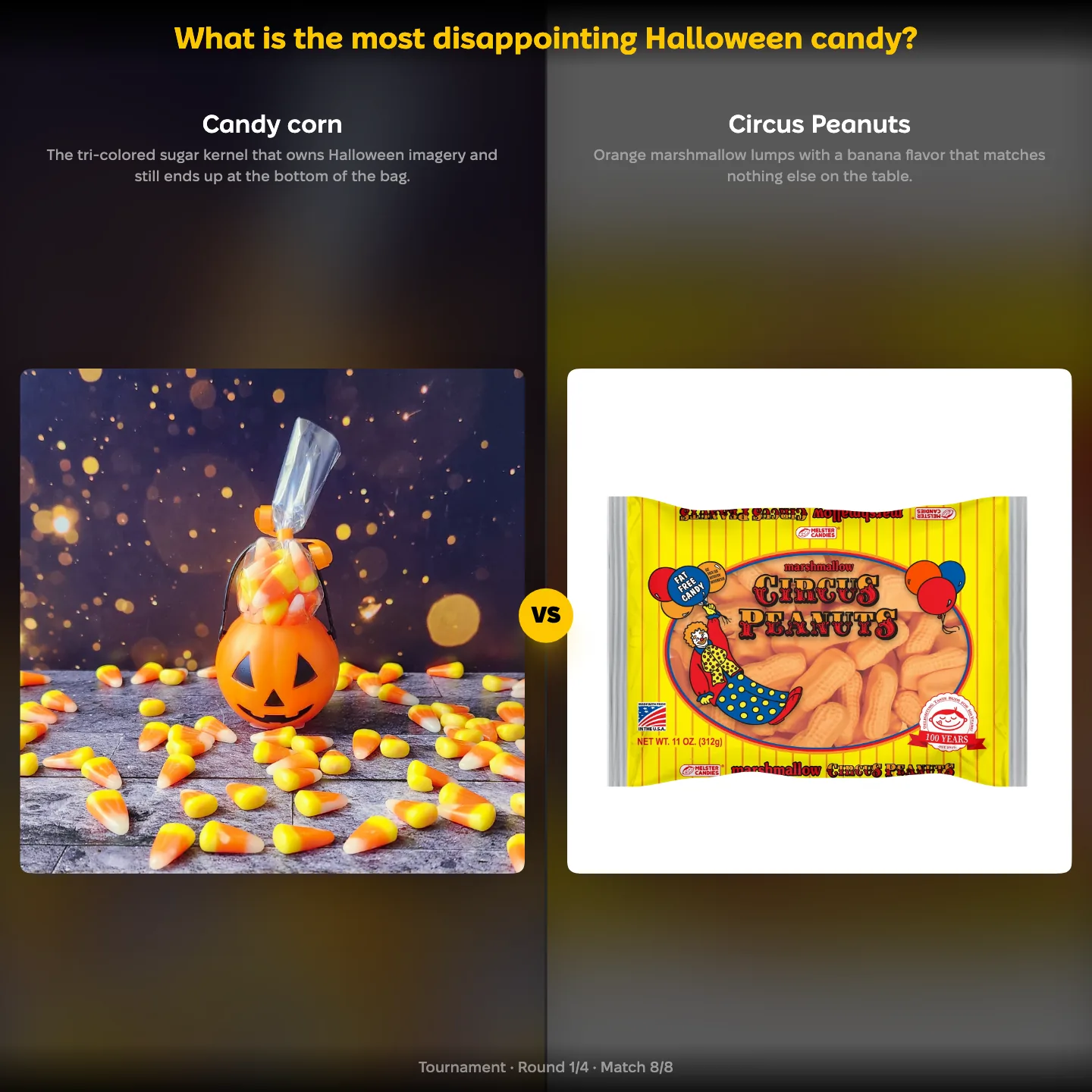
The most disappointing Halloween candy inverts the earlier question, and one sweet keeps answering it.
George Renninger, an employee of the Wunderle Candy Company in Philadelphia, invented candy corn in the 1880s. Wunderle produced it from 1888, under the name Chicken Feed.5
American production has reached 35 million pounds a year, close to 9 billion pieces, with Brach's taking about 85% of Halloween-season sales.5
A sweet nobody admits to liking gets manufactured by the ton every autumn. Either people are lying to pollsters, or Halloween candy is bought for the look of the bowl.
Danny McBride wrote a Halloween movie
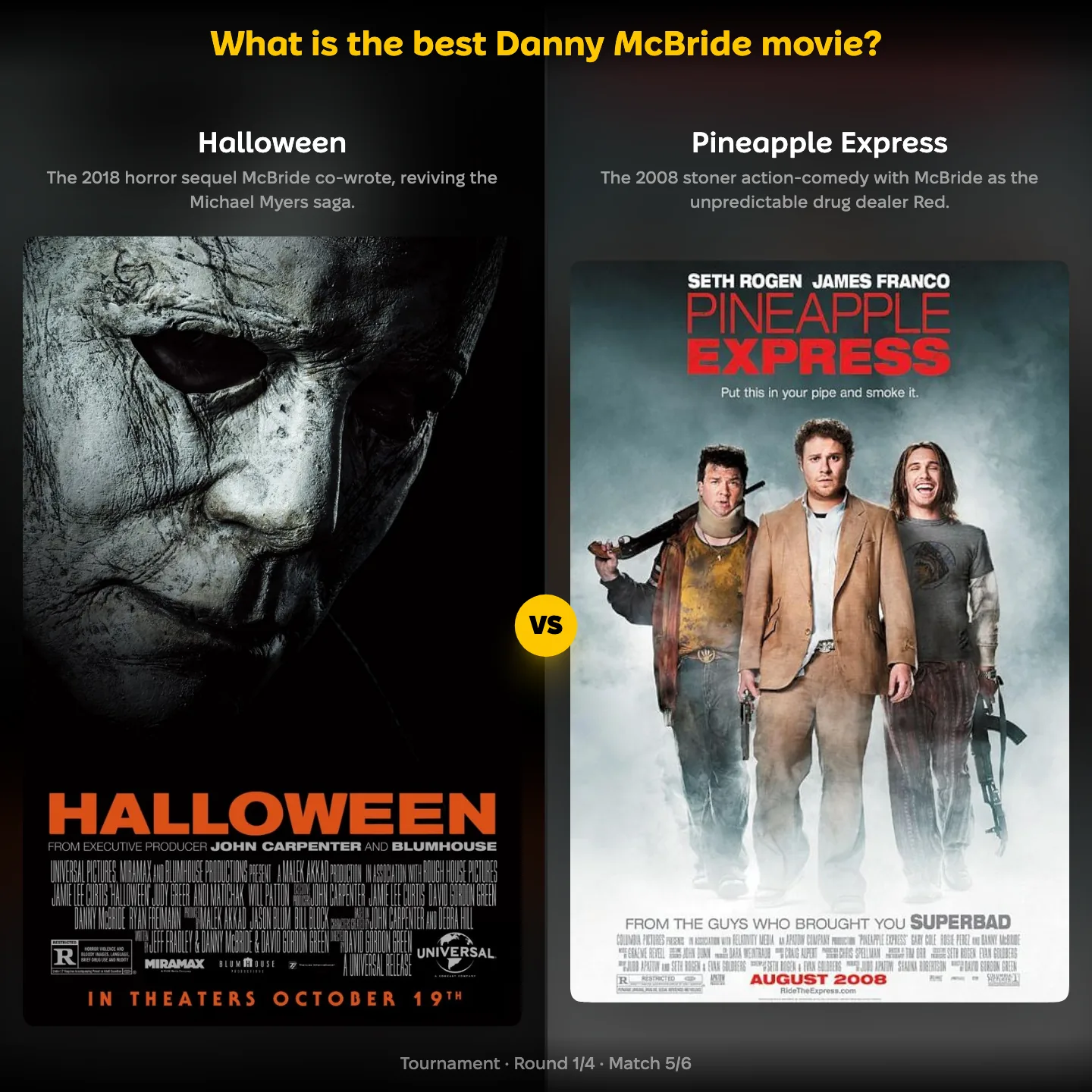
Danny McBride's filmography is broad comedy with one slasher sequel sitting in the middle of it.
McBride co-wrote the 2018 Halloween with David Gordon Green and stayed on for the two sequels. The credit is real work rather than a cameo.
Pineapple Express, Tropic Thunder and This Is the End are what most people would name first, broad comedies from between 2008 and 2013.
Nobody looking for Michael Myers would think to check here.
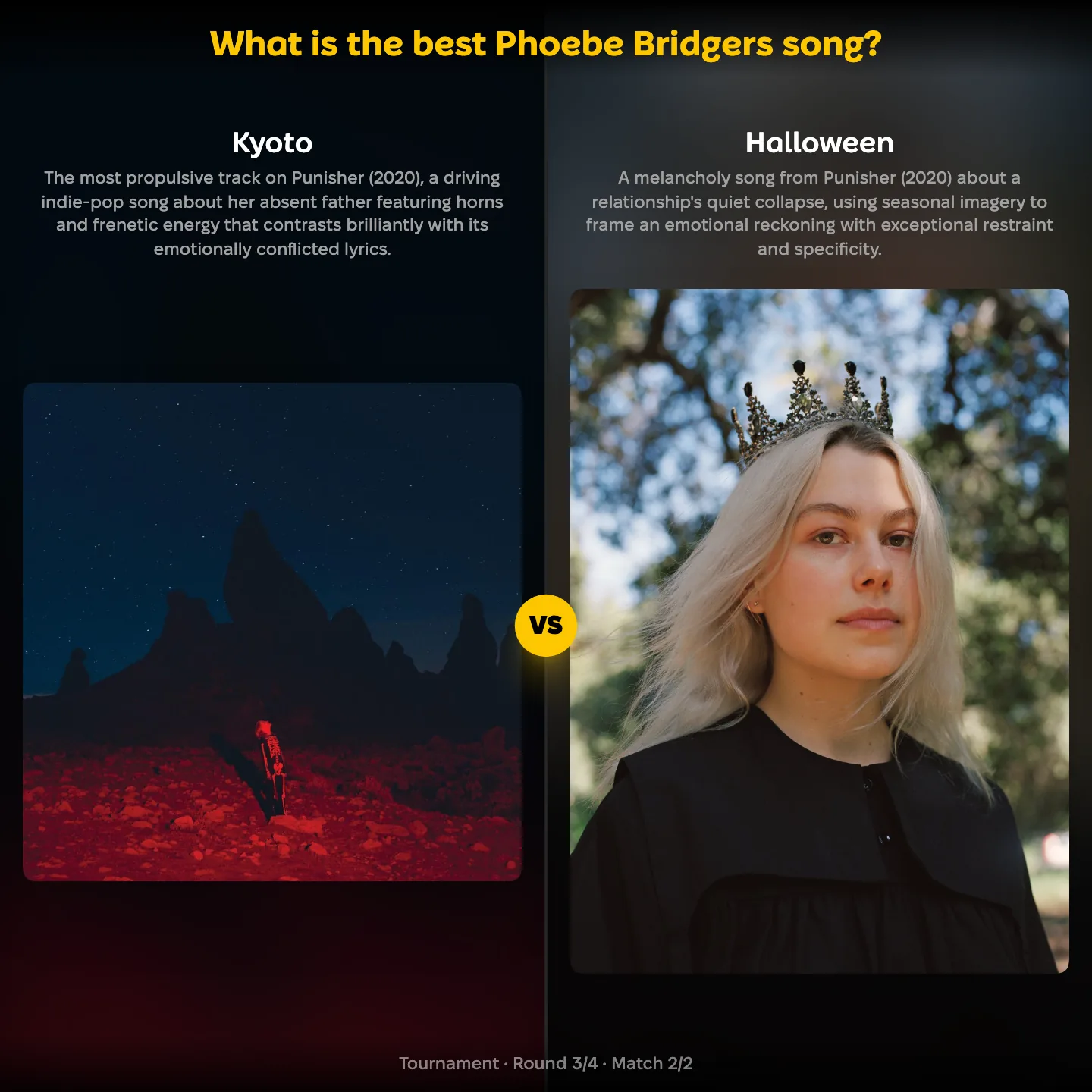
Phoebe Bridgers wrote a song called Halloween
The furthest this word travels from a pumpkin is an indie record released in 2020.
"Halloween" is a track on Punisher, released in 2020, and it concerns a relationship that has quietly ended rather than the night itself. The costume works as a device: two people agreeing to be someone else for an evening because being themselves has stopped working.
"Kyoto", "Motion Sickness" and "I Know the End" are the songs from that record most listeners reach for first.
Four meanings, one word, one night to spend them
A masked figure, a night in October, a costume aisle and a breakup song all answer to the same word, and each list above needed only one of them.
Miramax acquired the television rights in 2023 and a series is in development, which will add another kind of Halloween before it adds a fourteenth film.3
Every one of them was settled by voting two at a time. Results that contradict each other can still all be honest.
If a word in your life carries this much freight, build it a ranking and watch which meaning wins the door.
More rankings, more angles
- Dracula: 538 Films, and Stoker Never Saw Transylvania — a film count no other character comes near
- Stephen King Wrote Horror. The Lists Keep Filing Him Elsewhere — only three of sixteen rankings are horror
- Stranger Things Broke Netflix's Record, Then Missed the Emmys — the same suburbs, forty years later
Sources
- National Retail Federation / Prosper Insights & Analytics — 2026 Halloween consumer survey of 7,889 consumers, released 22 September 2026: $13.5 billion total, $115.14 per person, 74% participation, candy $4.1 billion, costumes $4.4 billion, 61% handing out candy, and the top adult, children's and pet costumes: nrf.com (checked 2026-09-26)
- Wikipedia — Halloween (1978 film): the 20-day shoot, the $300,000–325,000 budget, $70 million gross, Jamie Lee Curtis's $8,000 fee and film debut, the $1.98 Captain Kirk mask, the three-day 5/4 theme, South Pasadena standing in for Haddonfield, and the reused artificial leaves: en.wikipedia.org (checked 2026-09-20)
- Wikipedia — Halloween (franchise): thirteen films, $885.97 million worldwide, and Miramax's 2023 acquisition of the television rights: en.wikipedia.org (checked 2026-09-20)
- National Retail Federation — 2025 winter holiday forecast: November–December retail sales of $1.01–1.02 trillion, the first time above a trillion, and $890.49 per person: nrf.com (checked 2026-09-20)
- Wikipedia — Candy corn: George Renninger and the Wunderle Candy Company, production from 1888, the "Chicken Feed" name, 35 million pounds a year, and Brach's share of Halloween-season sales: en.wikipedia.org (checked 2026-09-20)
- Wikipedia — "Monster Mash": number one on the Billboard Hot 100 on 20–27 October 1962, the 1973 and 2021 chart re-entries, and the annual royalties: en.wikipedia.org (checked 2026-09-20)
- Wikipedia — Thriller (album): more than 70 million copies sold, and the 14-minute John Landis video's 2009 selection for the National Film Registry: en.wikipedia.org (checked 2026-09-20)
- Wikipedia — Thriller (music video): the $500,000 budget, Epic's $100,000 contribution, and the Showtime and MTV rights deals that covered the rest: en.wikipedia.org (checked 2026-09-20)
- Wikipedia — Halloween (holiday): "trick or treat" in print in a Canadian newspaper in 1917, the 1930s spread across North America, and the turnip origin of the jack-o'-lantern: en.wikipedia.org (checked 2026-09-20)
- Wikipedia — Halloween (2018 film): the $10 million budget, $76.2 million opening weekend, $259.9 million worldwide gross, and the opening records it set: en.wikipedia.org (checked 2026-09-20)
- Wikipedia — Halloween III: Season of the Witch: the anthology plan, Carpenter and Hill's condition that Michael Myers stay out, the $14.4 million gross and the D CinemaScore: en.wikipedia.org (checked 2026-09-20)