

Stephen King publishes the last Talisman novel on 6 October 2026.1 The next day, Prime Video releases all eight episodes of Mike Flanagan's Carrie.2 Fifty years after Brian De Palma filmed the same novel, two King properties still land in the same week.
Bookshops file him under Horror. The rankings on this site put him somewhere different almost every time: an actor's filmography, a decade of thriller novels, a shelf of epic fantasy, a list of the saddest films ever made.
Sixteen rankings here carry a Stephen King entry. Three of them are horror lists.
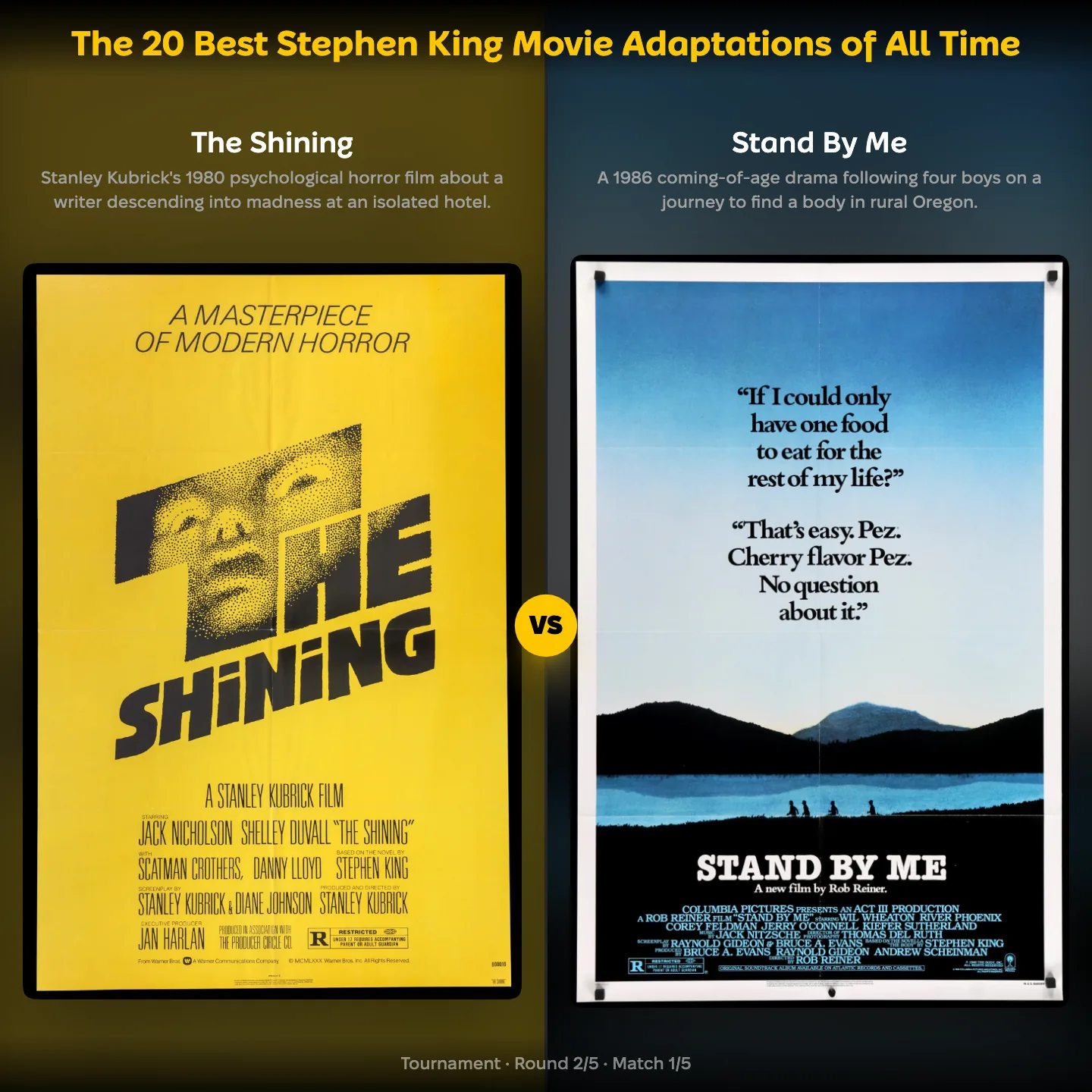
The Shining vs Stand By Me: twenty adaptations, one writer
Carrie reached cinemas on 3 November 1976 and started something that has not stopped. It was the first of more than a hundred film, television and stage productions drawn from King's books.3
The Shining is the title most people picture. Kubrick's 1980 film gave the catalogue its most quoted images, and it did so over the author's loud objections.
Stand By Me has no monster in it at all. Rob Reiner's 1986 film comes from a novella in Different Seasons and follows four boys walking out to find a body in rural Oregon.
Twenty titles sit on this ranking and they refuse to form one genre. Misery, Cujo and Pet Sematary are horror. The Green Mile and Dolores Claiborne are not, and 1408 and Gerald's Game are arguments about where the line falls.
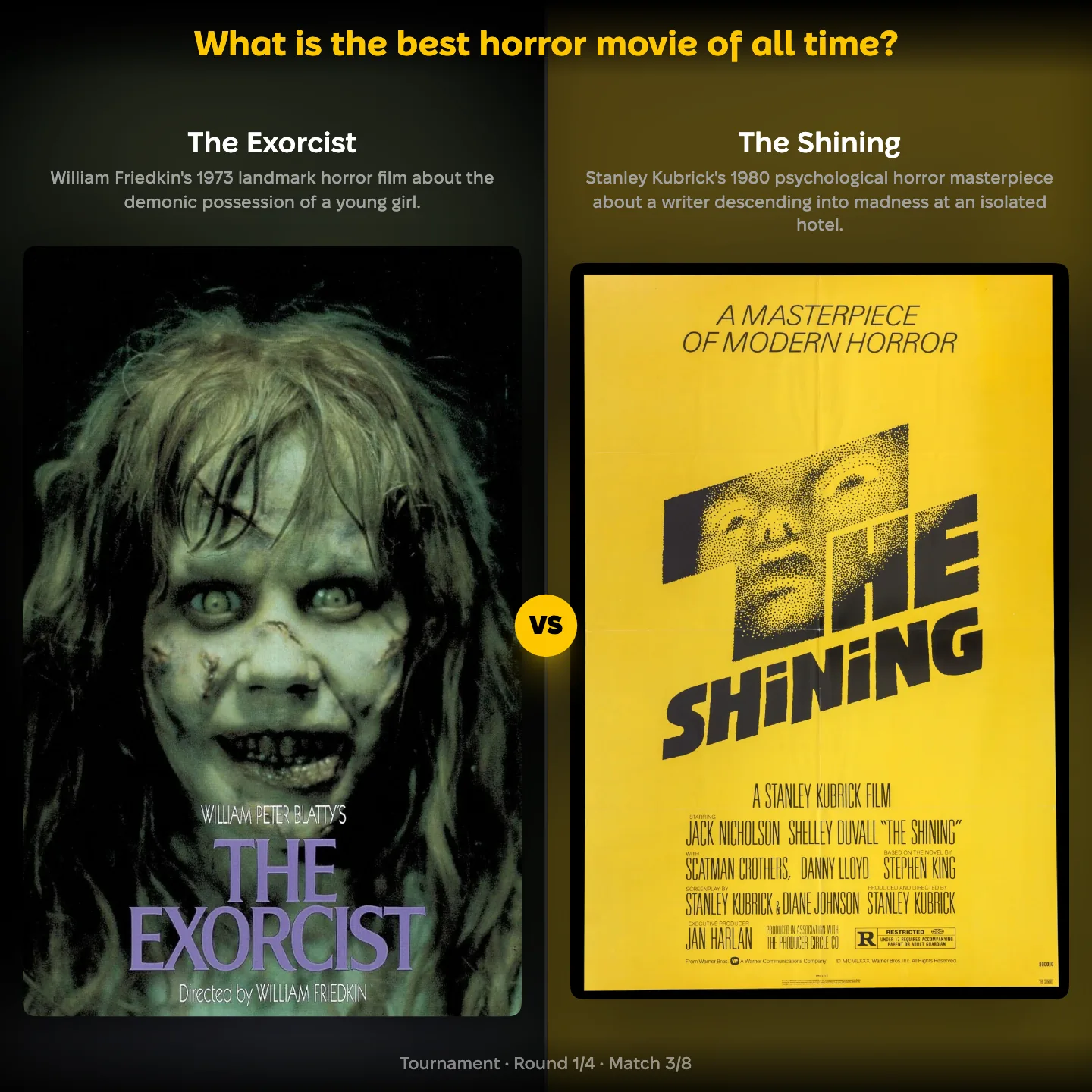
The Shining and The Exorcist: horror's home category
This ranking sets sixteen horror films against each other, and The Shining is the only Stephen King title in the field.
That is a narrower footprint than the catalogue suggests. Carrie, Misery, It, Pet Sematary, Cujo and Doctor Sleep are all films made from King books, and none of them made this list.
The company explains why. The Exorcist, Psycho, Halloween, Alien and The Silence of the Lambs are what horror canons are built from, and the single King entry standing among them is the one Kubrick directed.
For a writer whose surname works as a genre label, one seat at this table is a modest return.
Pennywise vs Freddy Krueger: the villain King invented
This ranking is about characters rather than books or films, and Stephen King has three entries on it.
Pennywise the Dancing Clown came out of It, published in 1986. Freddy Krueger, Michael Myers, Jason Voorhees and Leatherface were all built for the screen first, by people who wrote films.
Jack Torrance and Annie Wilkes are King's other two names here. Both are ordinary people rather than monsters, which is the kind of villain he writes best and the kind horror lists usually undercount.
Three of the fifteen slots on a horror-villain ranking came out of one typewriter. Nobody else on the page has more than one.

Carrie, 1976: the year King reached the screen
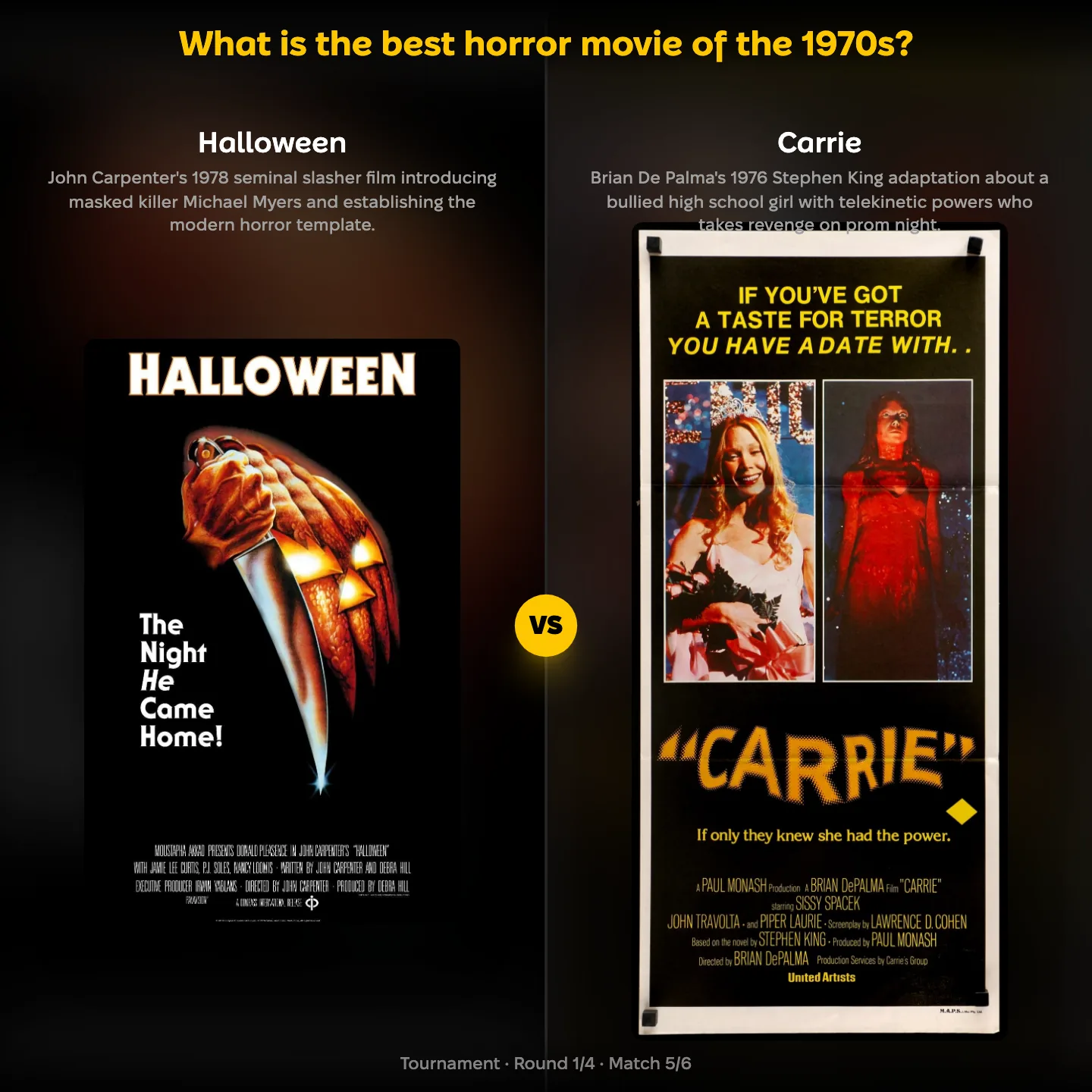
This ranking covers horror films of the 1970s, and Carrie is where Stephen King enters the decade.
De Palma's film opened on 3 November 1976, cost $1.8 million and took $33.8 million. Sissy Spacek was nominated for Best Actress and Piper Laurie for Best Supporting Actress.3
The competition is the 1970s at full strength. The Exorcist, Halloween, Alien, Suspiria, The Omen and The Texas Chain Saw Massacre are all on the page.
Carrie arrived before any of King's other films and has dated least. It is a school story with one supernatural element in it, and most of the cruelty is done by other children.
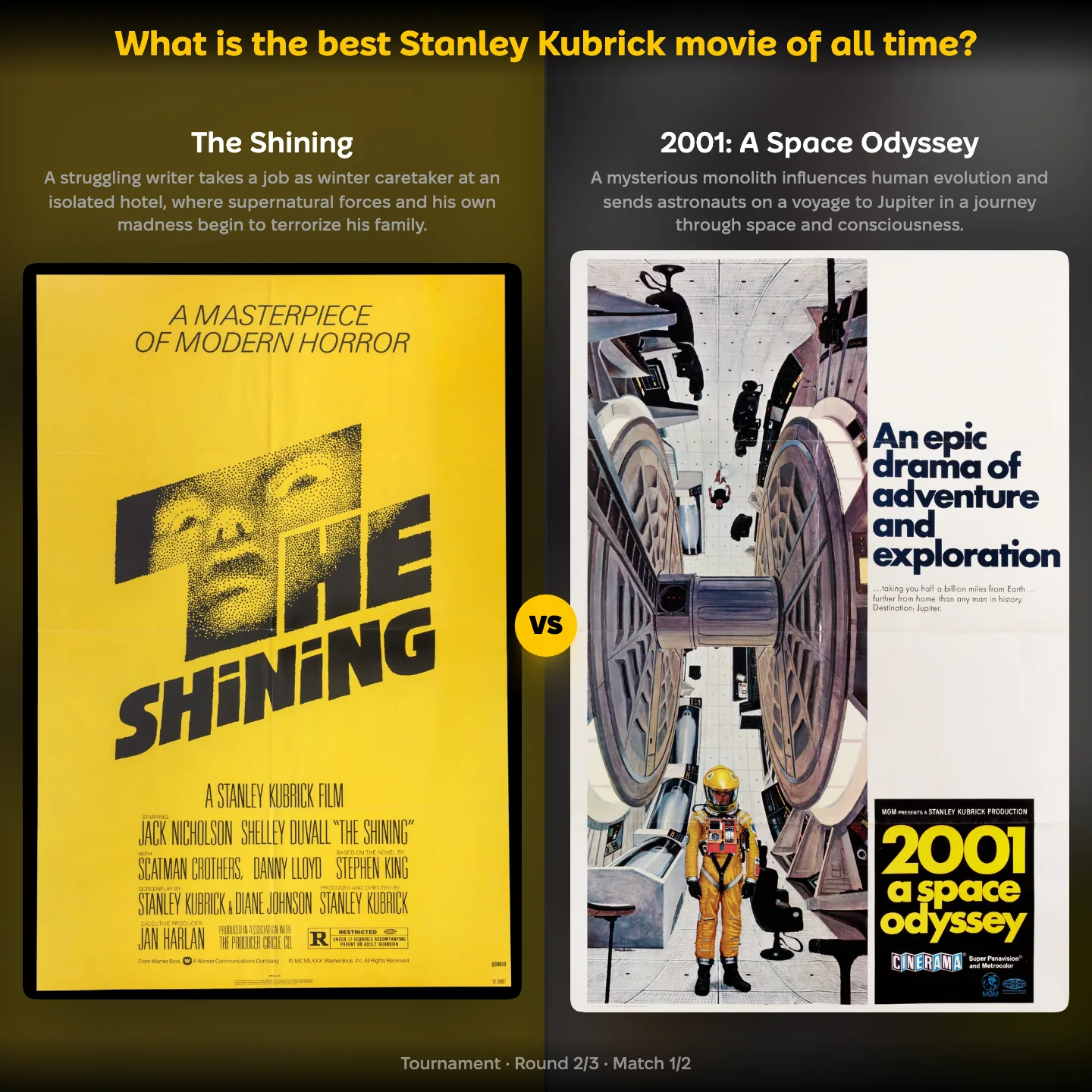
Kubrick's The Shining: the adaptation King disowns
Six Stanley Kubrick films make up this ranking. Exactly one was built from somebody else's novel.
Stephen King has never accepted it. He has called Kubrick's direction good but heartless, complained that the film gives Jack Torrance "no arc in that movie", and said Jack Nicholson read as unstable from his first scene.5
He also went and made his own version. To get the television rights King paid Kubrick $1.5 million and accepted a clause that stopped him criticising the 1980 film in public, a silence he kept until Kubrick died in 1999, and then produced The Shining as an ABC miniseries.5
2001: A Space Odyssey, A Clockwork Orange, Full Metal Jacket, Barry Lyndon and Eyes Wide Shut make up the rest of the field, and every one is Kubrick's own project. The Shining is the only entry where a second author has a claim on the material, and he spent two decades saying so.
Jack Nicholson: the performance that outgrew the book
Fourteen Jack Nicholson performances sit on this ranking, and The Shining is the Stephen King entry among them.
Nicholson's own career is the obstacle. One Flew Over the Cuckoo's Nest and Chinatown are both here, along with The Departed, Terms of Endearment and A Few Good Men.
There is an irony in the pairing. The performance that made the film endlessly quotable is the same performance the author of the novel said had broken his character.
On this page King's book has become a credit rather than a subject.
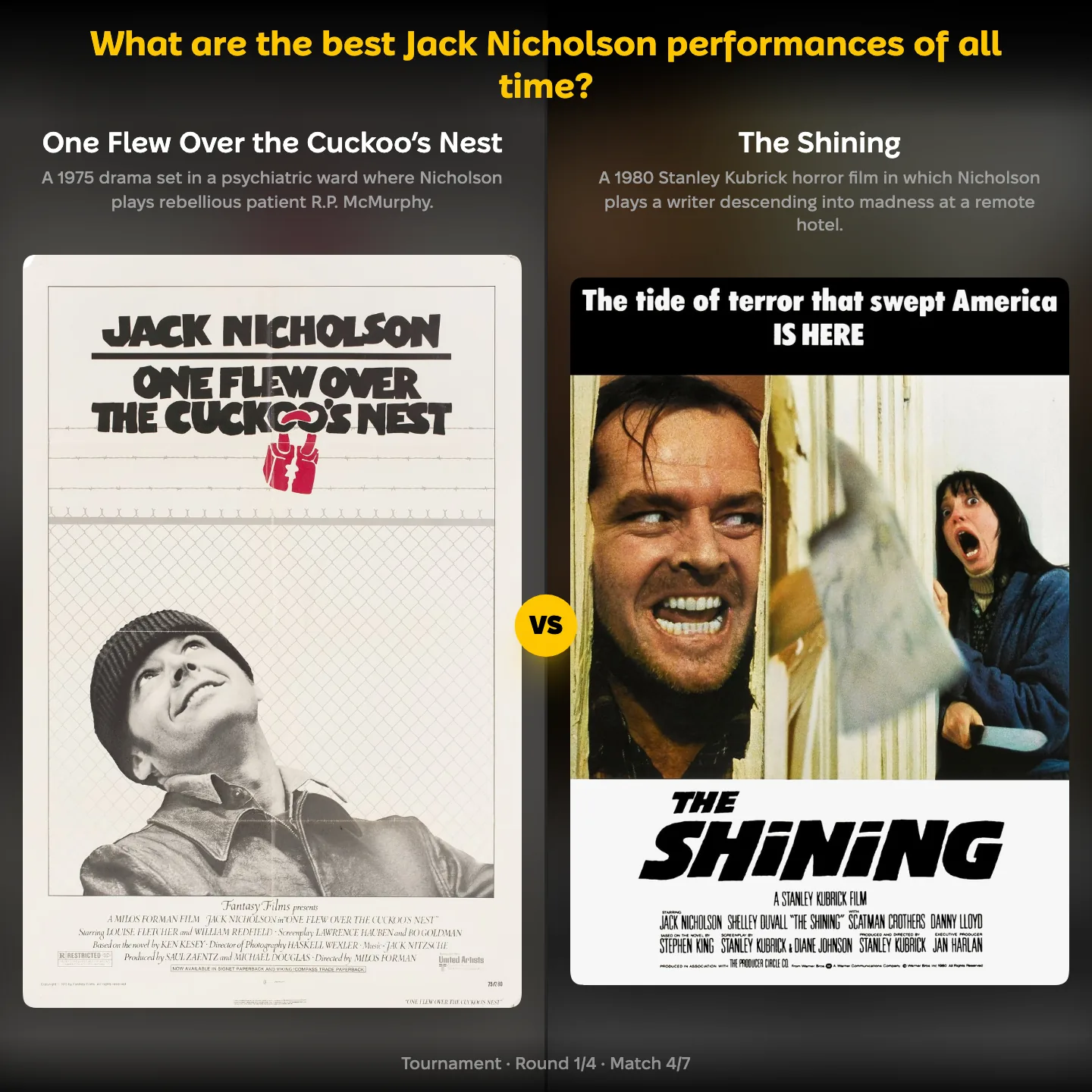
Morgan Freeman and Shawshank: seven nominations, no Oscar
The best-regarded film ever made from a Stephen King book has nothing supernatural in it. The Shawshank Redemption came from Rita Hayworth and Shawshank Redemption, a 1982 novella in Different Seasons.4
Morgan Freeman plays Red, and this ranking is his whole career. Se7en, Million Dollar Baby, Driving Miss Daisy, Glory and Unforgiven are the competition.
The film's record is odd for something so admired. Seven Academy Award nominations produced no statuette at all, and the film made $16 million on its original release against a $25 million budget before video turned it into the film everyone had seen.4
Nothing about it announces King. Frank Darabont's adaptation keeps the prison, the friendship and the escape and drops every trace of the uncanny, which is why readers who know only the horror are routinely surprised he wrote it.
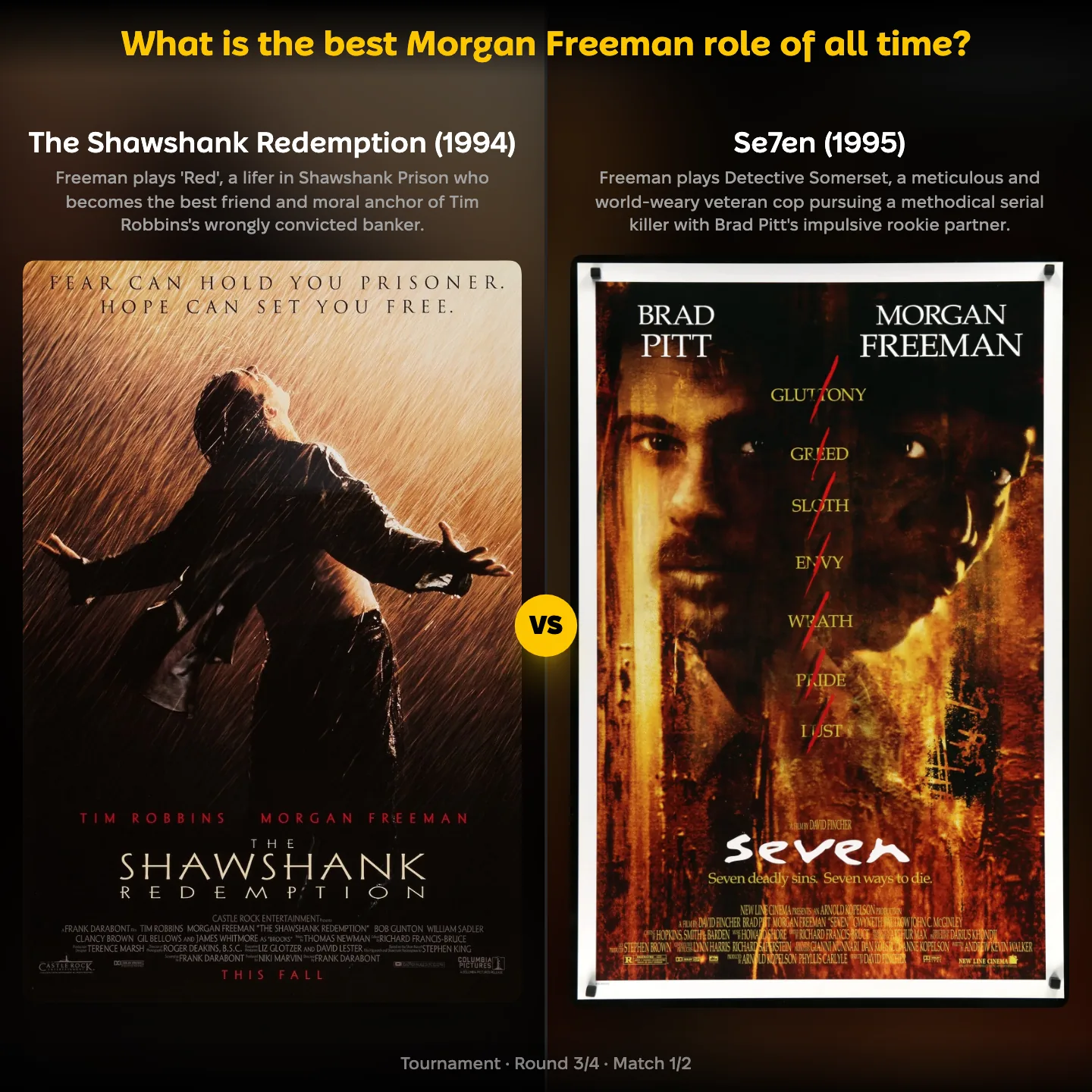
Tom Hanks vs Forrest Gump: the other King prison film
Frank Darabont adapted Stephen King twice, and both films are set in prisons. The Green Mile arrived in 1999 with Tom Hanks as a death-row guard, and took four Academy Award nominations.7
The novel got there by an unusual route. King published it in six paperback instalments between March and August 1996, one a month, a serial format he chose because it forced him to finish the story on a schedule.7
Hanks is the reason it appears on this ranking rather than a King one. Forrest Gump, Saving Private Ryan, Philadelphia, Cast Away and Big fill out the field.
Forrest Gump is the obstacle, and the two films are connected. It won Best Picture in the year Shawshank went home with nothing, and five years later Hanks was carrying the other Darabont adaptation of a King prison story.
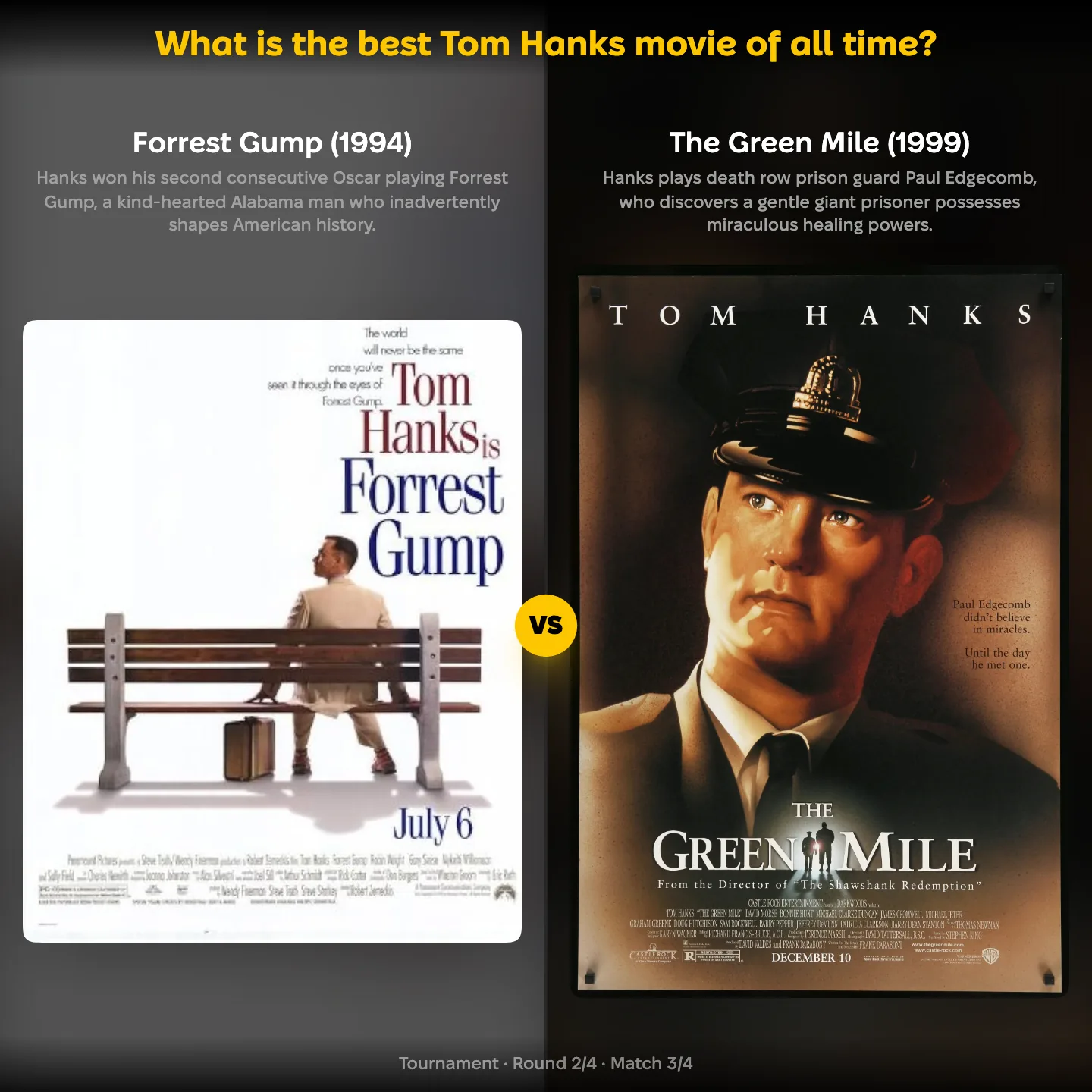
The Green Mile on a list about crying, not screaming
This ranking asks which film is the saddest ever made, and a Stephen King adaptation is on it.
The field is Schindler's List, Grave of the Fireflies, Titanic, Manchester by the Sea and Hachi. Not one of them is horror.
The Green Mile earns its seat because the emotion being measured is grief rather than fear. It is also the only prison film in the field, which is a strange place for a King story to end up and a fair one.
Carrie White, read as a revenge story
Take the supernatural out of Carrie and a revenge plot is what remains, which is how this ranking reads Stephen King's first novel.
The structure supports it. A bullied girl is set up for a public humiliation and destroys everyone responsible, and the powers are the mechanism rather than the point.
Kill Bill, Oldboy, John Wick, Gone Girl and Promising Young Woman are the company. Every one of them invites the audience onto the side of the person doing the damage.
Carrie is the oldest film on the list by nearly twenty years, which makes it the template several of the others are working from.
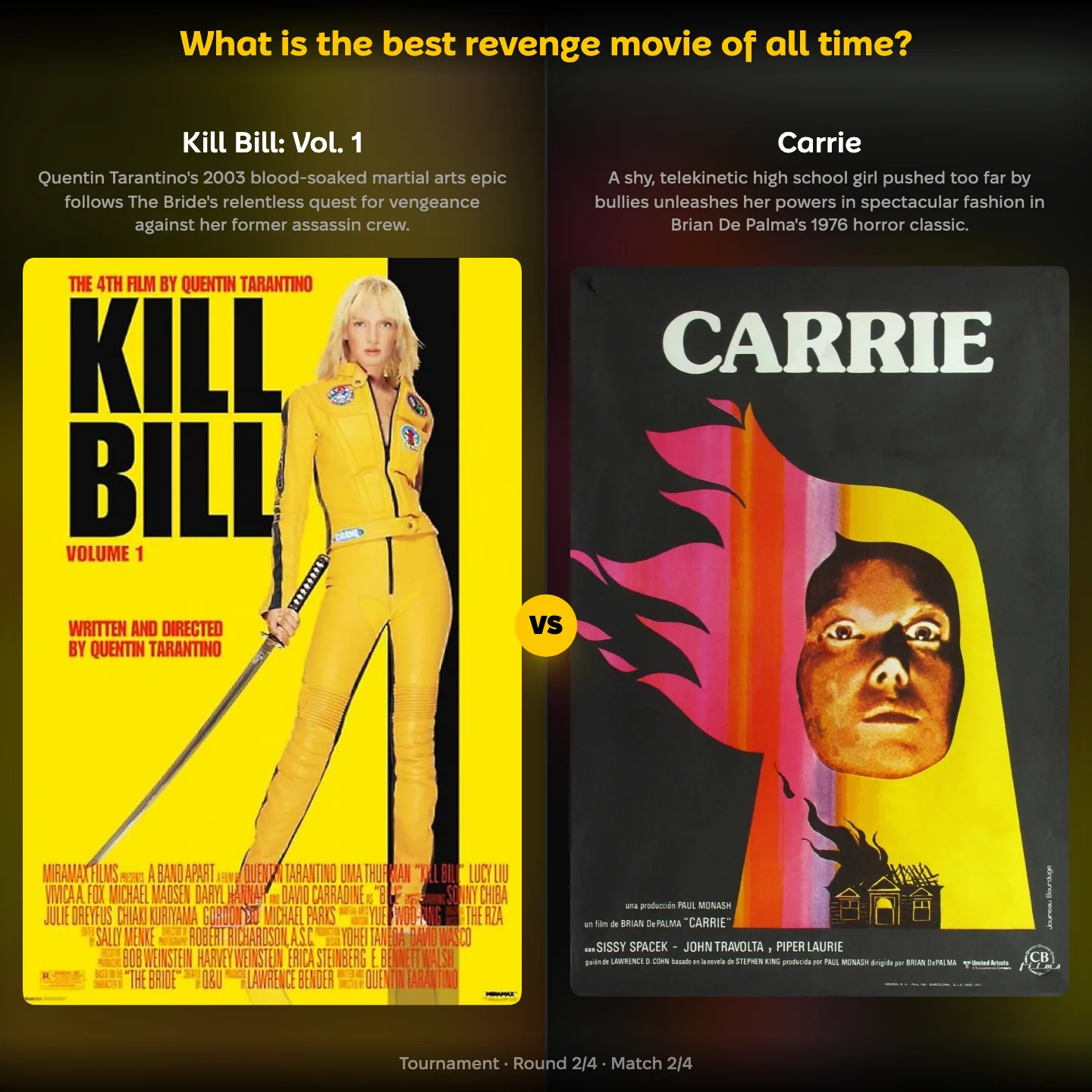
Salem's Lot vs The Day of the Jackal: King on a thriller shelf
This ranking is about novels, and two of the fifteen are Stephen King's: Carrie from 1974 and Salem's Lot from 1975.
Salem's Lot is a vampire novel set in a small Maine town. It sits beside The Day of the Jackal, Marathon Man, The Odessa File and Jaws, which are books about assassins, spies, fugitives and a shark.
Grouping them together is a fair call. Salem's Lot spends most of its length on what a town is hiding before it confirms anything supernatural, and that is the shape of a thriller.
Two entries on a fifteen-book list is the largest share Stephen King holds anywhere in this article.
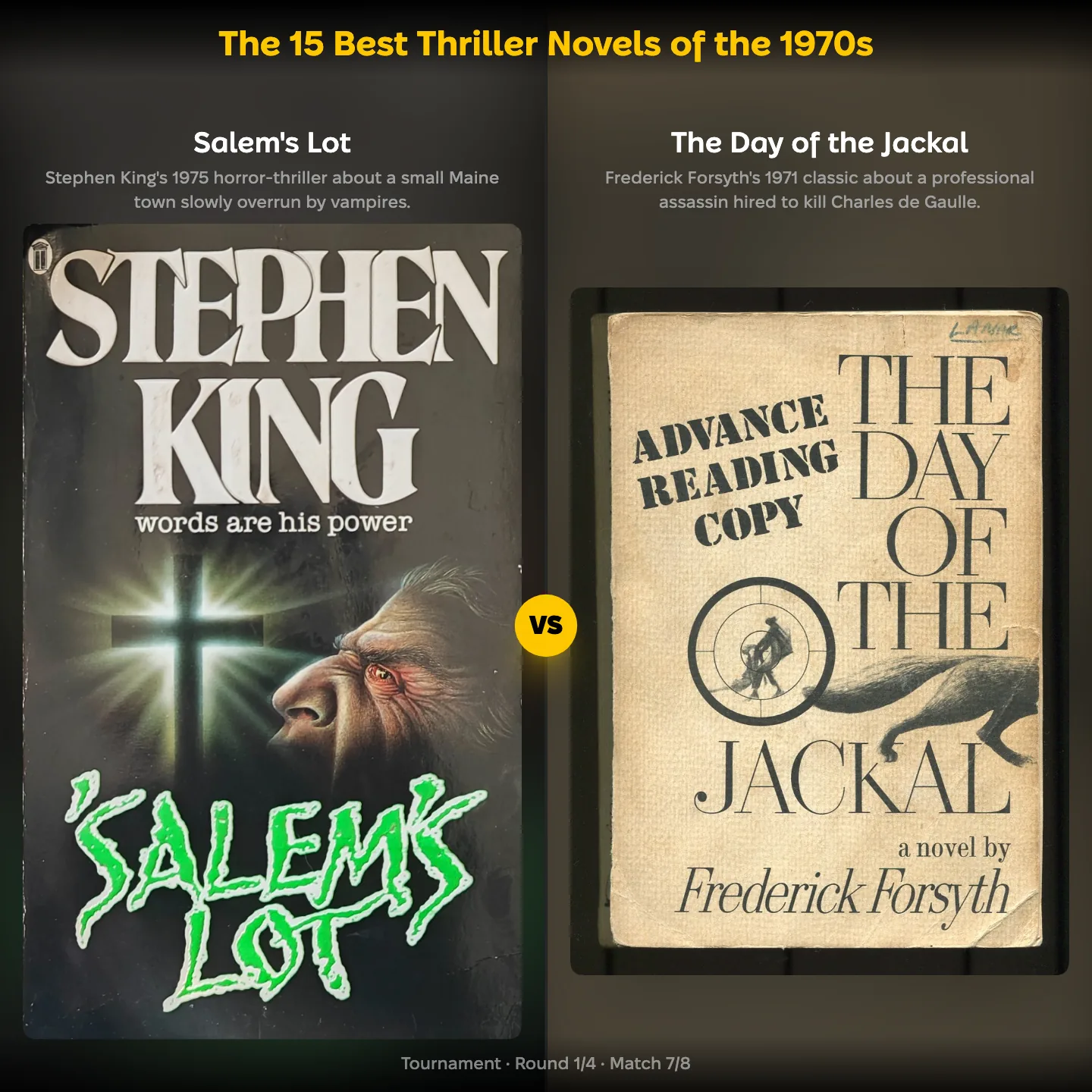
Misery: the novel about being read
The 1980s thriller ranking carries one Stephen King entry, and it is the book about what readers do to writers.
Misery, published in 1987, hands a novelist to a nurse who objects to how he ended a series. Annie Wilkes has no supernatural gift, just a hammer and a firm view about a story.
The Silence of the Lambs, Red Dragon, The Hunt for Red October, The Bourne Identity and The Name of the Rose are what the 1980s otherwise means in this genre.
Misery has almost no locations and no monster. Most of it happens in one bedroom, which is why it also works as a stage play and as a film with two actors in it.
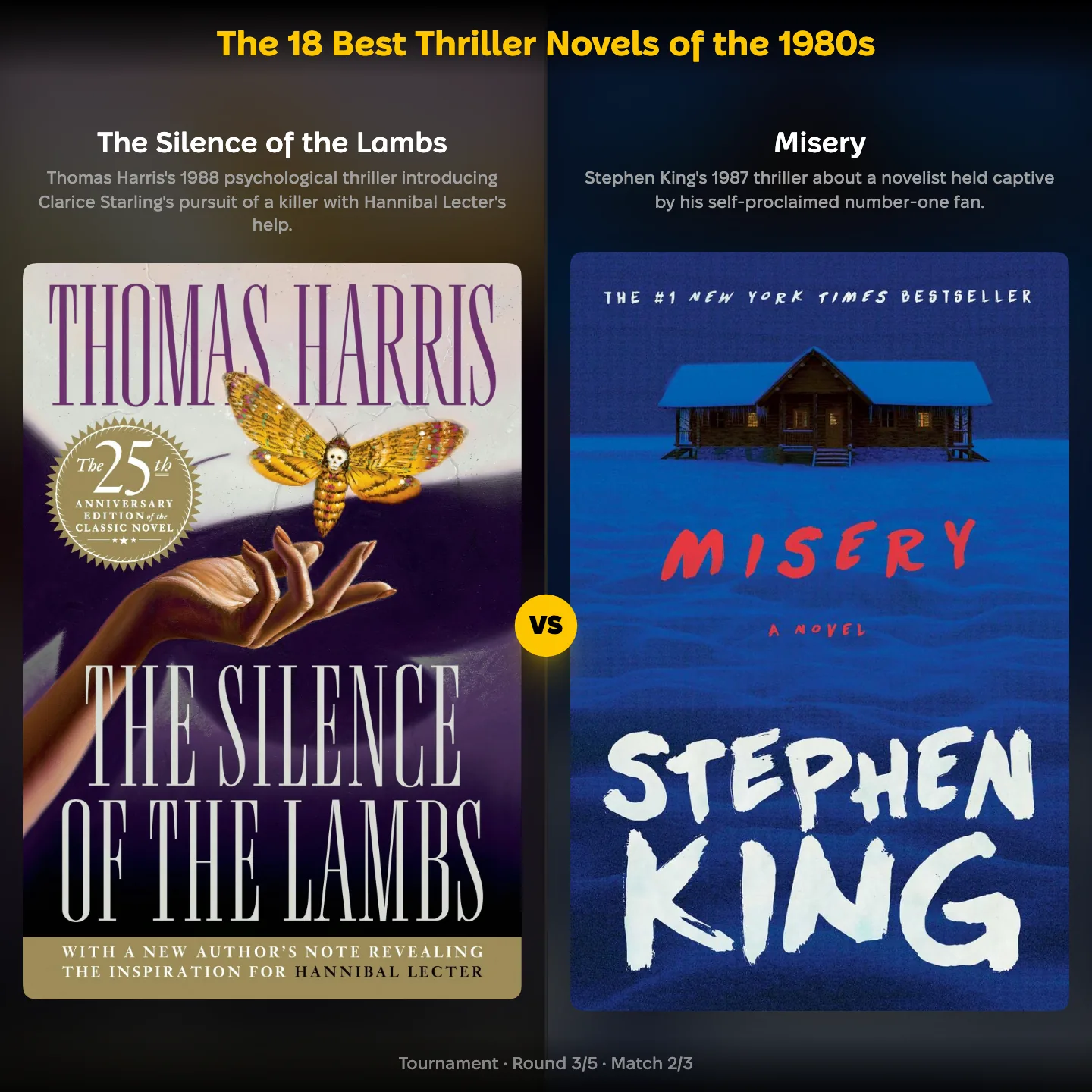
The Dark Tower vs The Lord of the Rings: King as a fantasy writer
Eighteen epic fantasy series fill this ranking, and Stephen King has one of them.
He has been writing The Dark Tower for more than forty years. The main sequence runs to eight books, and the Talisman novels he wrote with Peter Straub feed into the same world; the final volume of those arrives this October.1
Mistborn, The Wheel of Time, The Kingkiller Chronicle, The Stormlight Archive and Tolkien's own trilogy are what epic fantasy means to most readers. The Dark Tower is a western with a gunslinger, a tower and doors into other worlds, and it fits that shelf awkwardly.
Being on the page at all is the surprise. Hardly anyone calls King a fantasy writer, and he started this series before several of the authors beside him had published anything.
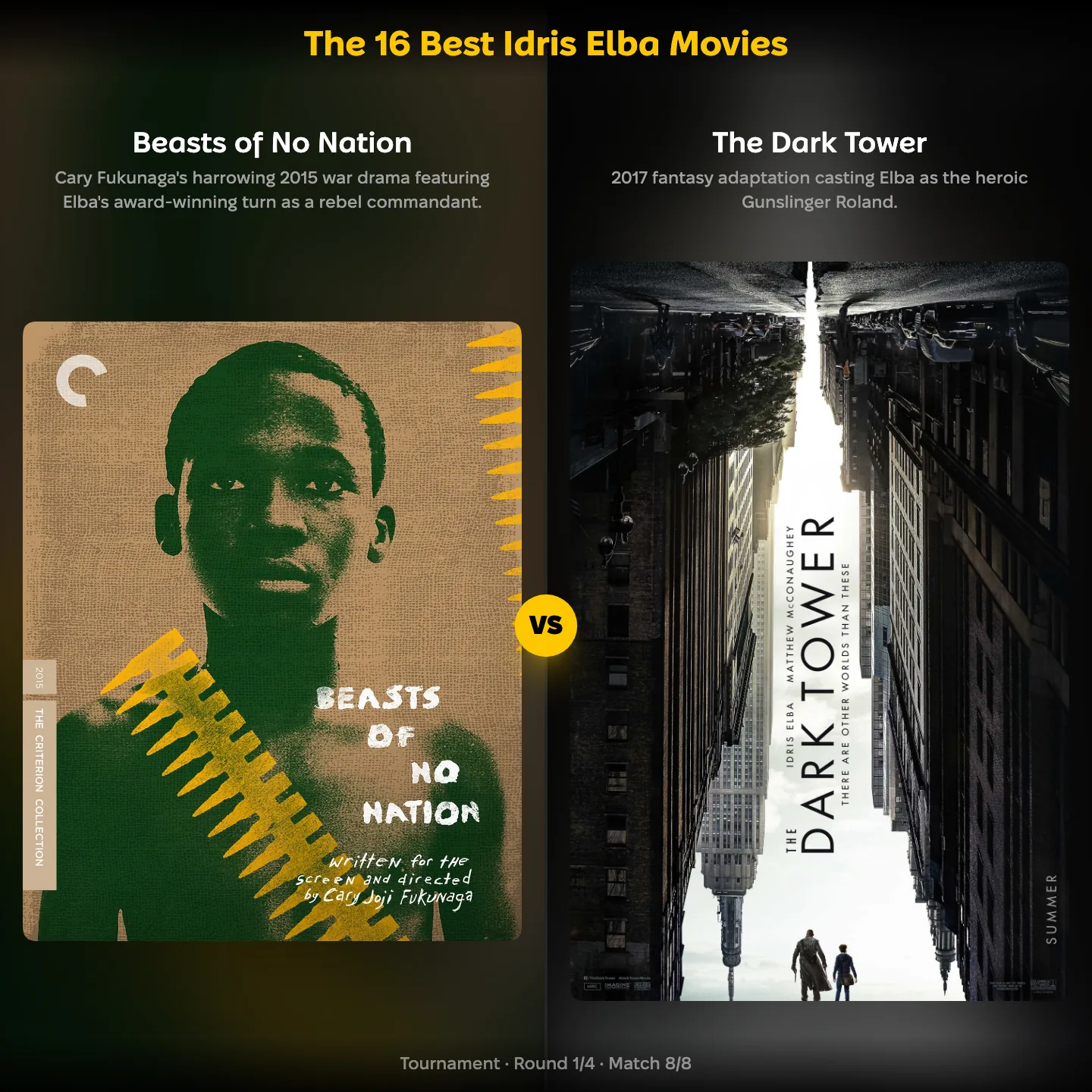
Idris Elba's worst-reviewed film is the Stephen King one
Sixteen Idris Elba films fill this ranking, and the Stephen King adaptation is the one that went wrong.
The Dark Tower reached cinemas in 2017 with Elba as Roland Deschain and Matthew McConaughey as the Man in Black. It holds 16% on Rotten Tomatoes from 278 reviews and took $113.2 million worldwide against a $66 million budget.6
Compression is what critics blamed. Eight books became a 95-minute film, and its director later said the adaptation chased a boy's-own adventure where the source material is horror.6
Beasts of No Nation, Mandela: Long Walk to Freedom, American Gangster and Molly's Game share the page, so the King title has to stand against Elba at his best. Reviewers who disliked the film largely exempted him from the blame, which is the section where the pattern in this article breaks: everywhere else King's name lifts a title, and here it is attached to the weakest entry in an actor's career.
Salem's Lot 1979 to Carrie 2026: the television half
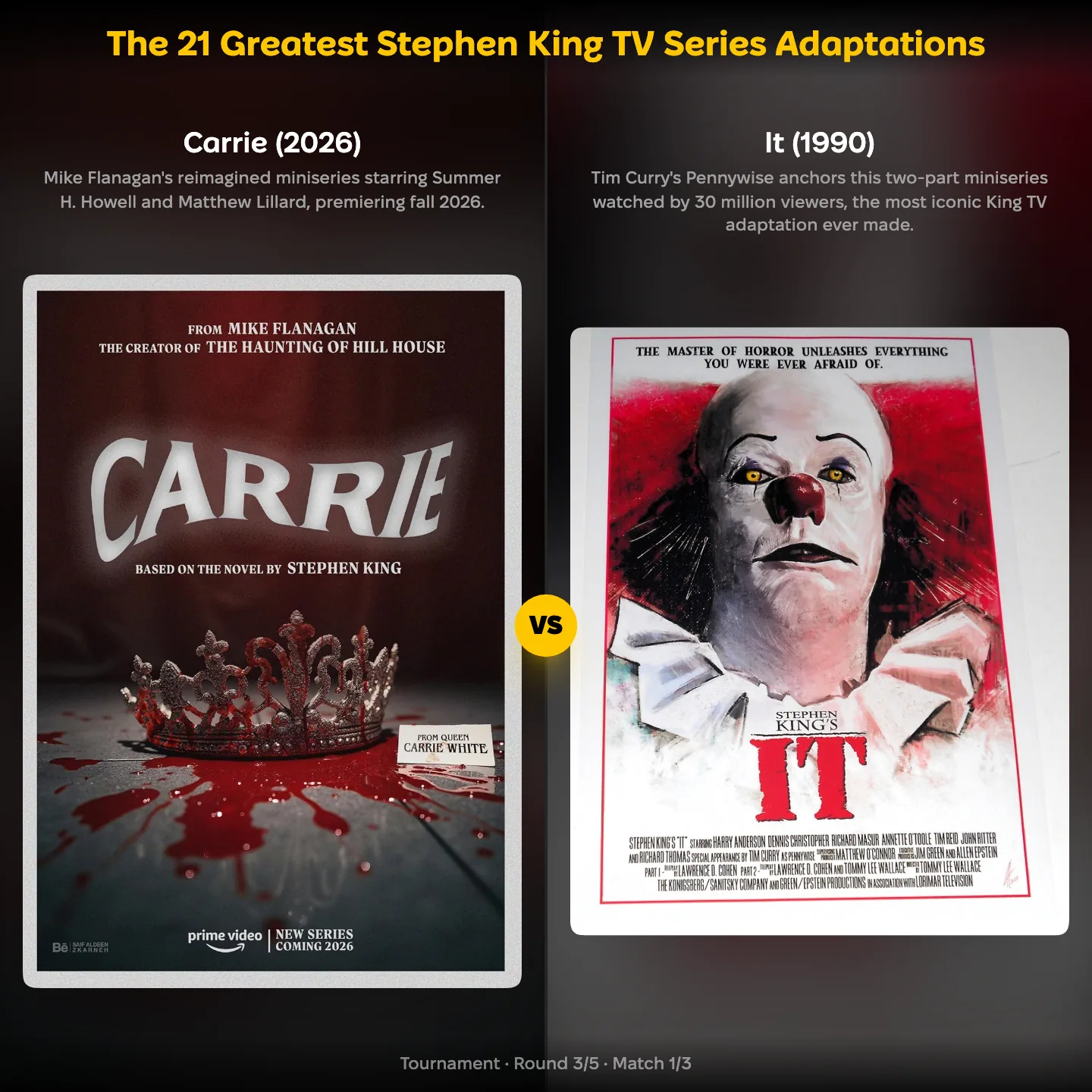
Television has taken more Stephen King than cinema has, and this ranking is twenty-one series' worth of it.
The oldest entry is Tobe Hooper's Salem's Lot from 1979. The newest has not been broadcast: Mike Flanagan's Carrie, eight episodes, arriving on Prime Video on 7 October 2026 with King as an executive producer.2
It is the first time the novel has been made as a series. De Palma filmed it in 1976 and Kimberly Peirce remade it in 2013, both at feature length; Flanagan has eight episodes where each of them had ninety-odd minutes.
What fills the middle of the list is the stranger part of King's screen career: It (1990), The Stand, 11.22.63, Castle Rock, Under the Dome, Haven and Storm of the Century.
Stephen King vs Stan Lee: the author on screen
The sixteenth ranking is about neither a book nor a film. It asks which author gave the best cameo in an adaptation of their own work, and Stephen King is on it as himself.
He has done it repeatedly. He turns up in Creepshow, Pet Sematary and It Chapter Two among others, usually as a small-town figure with a handful of lines.
Stan Lee is the obvious rival and a different proposition. Lee's appearances were a running joke across a film series built from characters he co-created, while King's are one novelist wandering into his own adaptations for four decades.
Clive Barker, Peter Benchley, S.E. Hinton and Stephenie Meyer are also on the page. Nowhere else in these sixteen rankings does Stephen King appear with his own face.

One writer, sixteen shelves
Stephen King shares these pages with Kubrick, Morgan Freeman, Tolkien and Stan Lee. Three of the sixteen are horror lists.
The books have not moved. The categories have, and each ranking works out what a King story is by choosing what to set it beside, which is also the method these rankings run on.
There is a corner of his catalogue you would defend against anybody. Go and build the ranking for it.
More rankings, more angles
- The Lord of the Rings Changes Category From List to List — the series sharing King's epic-fantasy page
- Where Does Harry Potter Actually Rank? — a children's series read as six different genres
- Agatha Christie: 100 Years On, 15 Different Lists — two billion copies and still hard to file
- Hemingway vs Fitzgerald: One Won the Nobel, One Wrote Gatsby — the American shelf King is measured against
Sources
- Stephen King's official site — Other Worlds Than These, publication date, publisher and its place as the final Talisman novel: stephenking.com (checked 2026-08-06)
- About Amazon — Carrie on Prime Video: release date, episode count, showrunner and executive producers: aboutamazon.com (checked 2026-08-06)
- Wikipedia — Carrie (1976 film): release date, budget, gross, Academy Award nominations, and its status as the first of more than 100 productions adapted from King: en.wikipedia.org (checked 2026-08-06)
- Wikipedia — The Shawshank Redemption: seven Academy Award nominations and no wins, budget and box office, and the 1982 novella it adapts: en.wikipedia.org (checked 2026-08-06)
- Senses of Cinema — "King vs. Kubrick: The Origins of Evil": King's recorded objections to the 1980 film, the $1.5 million rights payment and the silence clause, and his own ABC miniseries: sensesofcinema.com (checked 2026-08-06)
- Wikipedia — The Dark Tower (2017 film): Rotten Tomatoes score and review count, budget, worldwide gross, and the director's later comments on the adaptation: en.wikipedia.org (checked 2026-08-06)
- Wikipedia — The Green Mile (novel): the six monthly paperback instalments of 1996, and the 1999 film's four Academy Award nominations: en.wikipedia.org (checked 2026-08-06)