
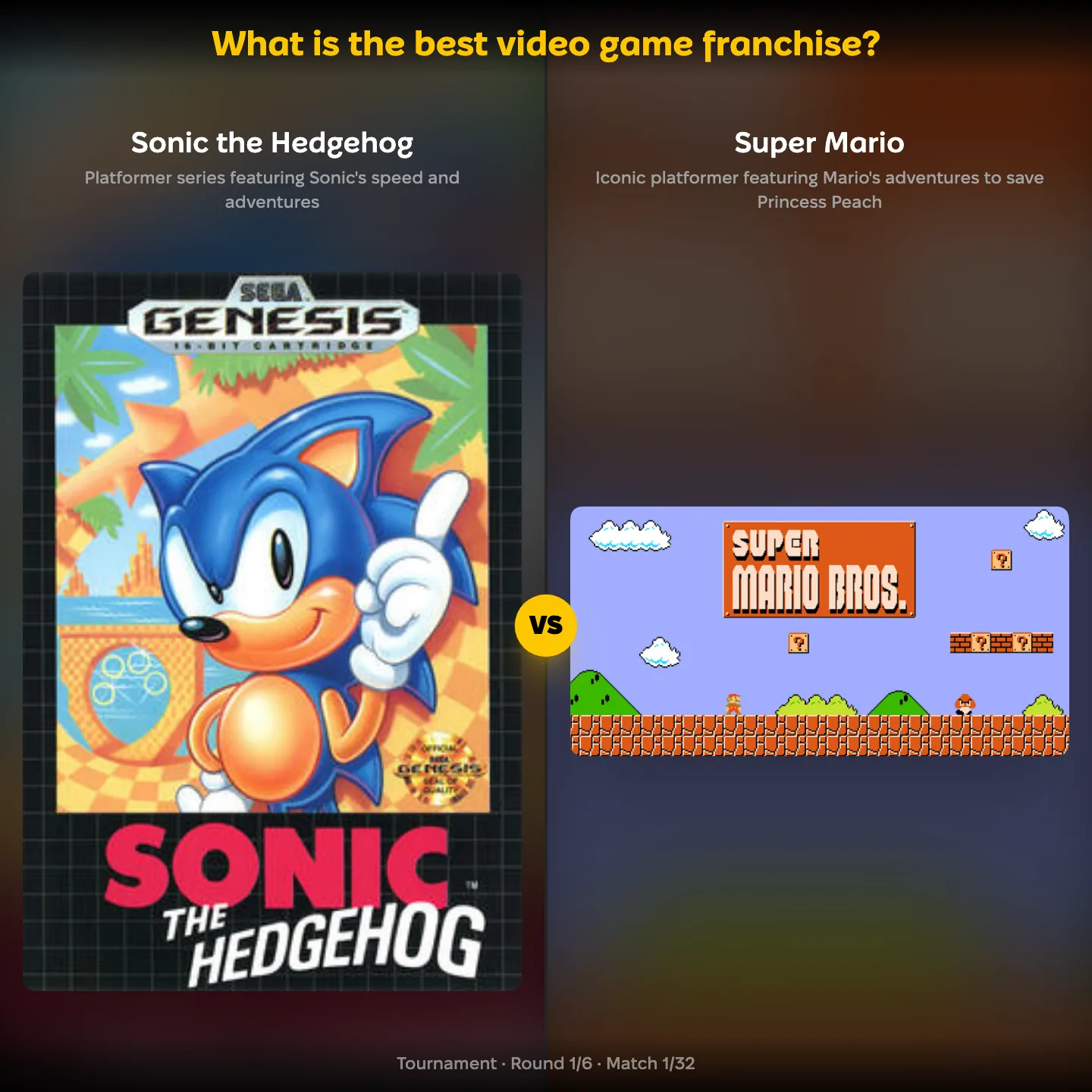
Sega gave Sonic the Hedgehog a birthday livestream on 23 June 2026, his 35th, and spent it announcing a licensed pinball machine, a racing world championship in New York and museum-grade Genesis cartridges of the two games he started with.1
The thirty-five years in between went on reinvention. Sonic has been a 3D adventure hero, a kart driver, a pinball table, a J-pop side project and Jim Carrey's co-star.
Sixteen rankings on this site have him in the field, and they are not asking the same question about him.
Sonic enters the mascot rankings as a triumph and the platformer rankings as a defendant, and both files have been open for thirty-five years.
Sonic Against 64 Franchises, Mario Included
Sixty-four franchises stand in the widest ranking of the sixteen: Pokémon, Grand Theft Auto, Minecraft, Call of Duty, Final Fantasy and Sonic the Hedgehog among them.
Sonic belongs there on stamina. The series has shipped without a gap since 1991, first on Sega's own machines and then, once Sega quit making consoles, on everybody else's.
Super Mario is the intended comparison. Sega commissioned a mascot who could stand opposite Nintendo's plumber, and for one hardware generation the plan held.
Consistency is the counter-argument. Mario has never had a bad decade, and Sonic has.
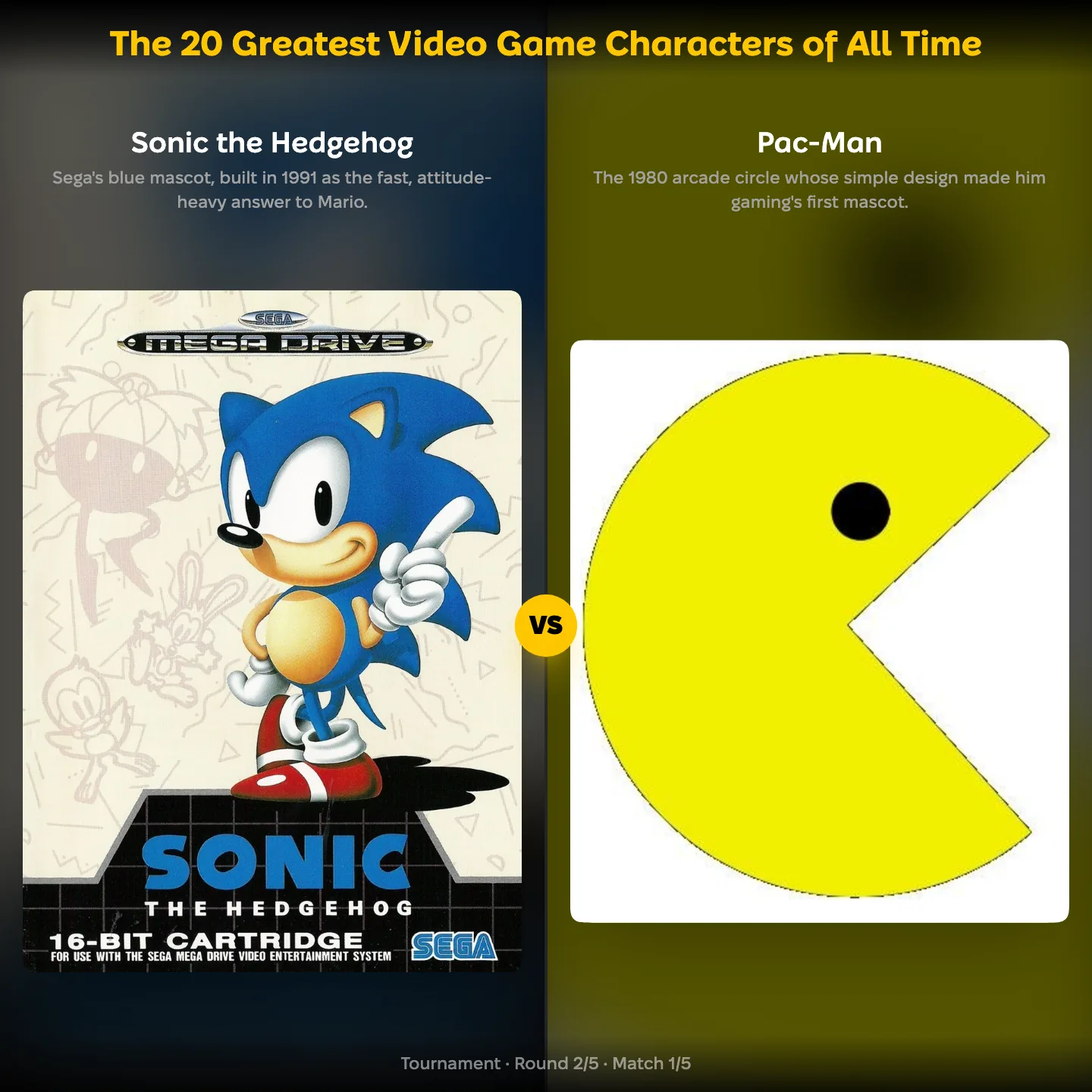
Sonic vs Pac-Man: the Character Came First
Twenty names make up the greatest-video-game-characters ranking: Mario, Link, Pikachu, Master Chief, Lara Croft, Kratos, Samus Aran and Pac-Man among them.
Sonic's claim is that the character existed before the game did. Naoto Ohshima designed both him and Doctor Eggman, and Square Enix was still introducing Ohshima by that credit when it hired him thirty years later.2
Pac-Man is the awkward opponent. He is eleven years older, simpler as a shape, and has the better claim to being the first character non-players could name.
Attitude is the rest of Sonic's case. The 1991 game sold a personality — a hedgehog who tapped his foot when you left him standing — at a point when almost no other game character had one.
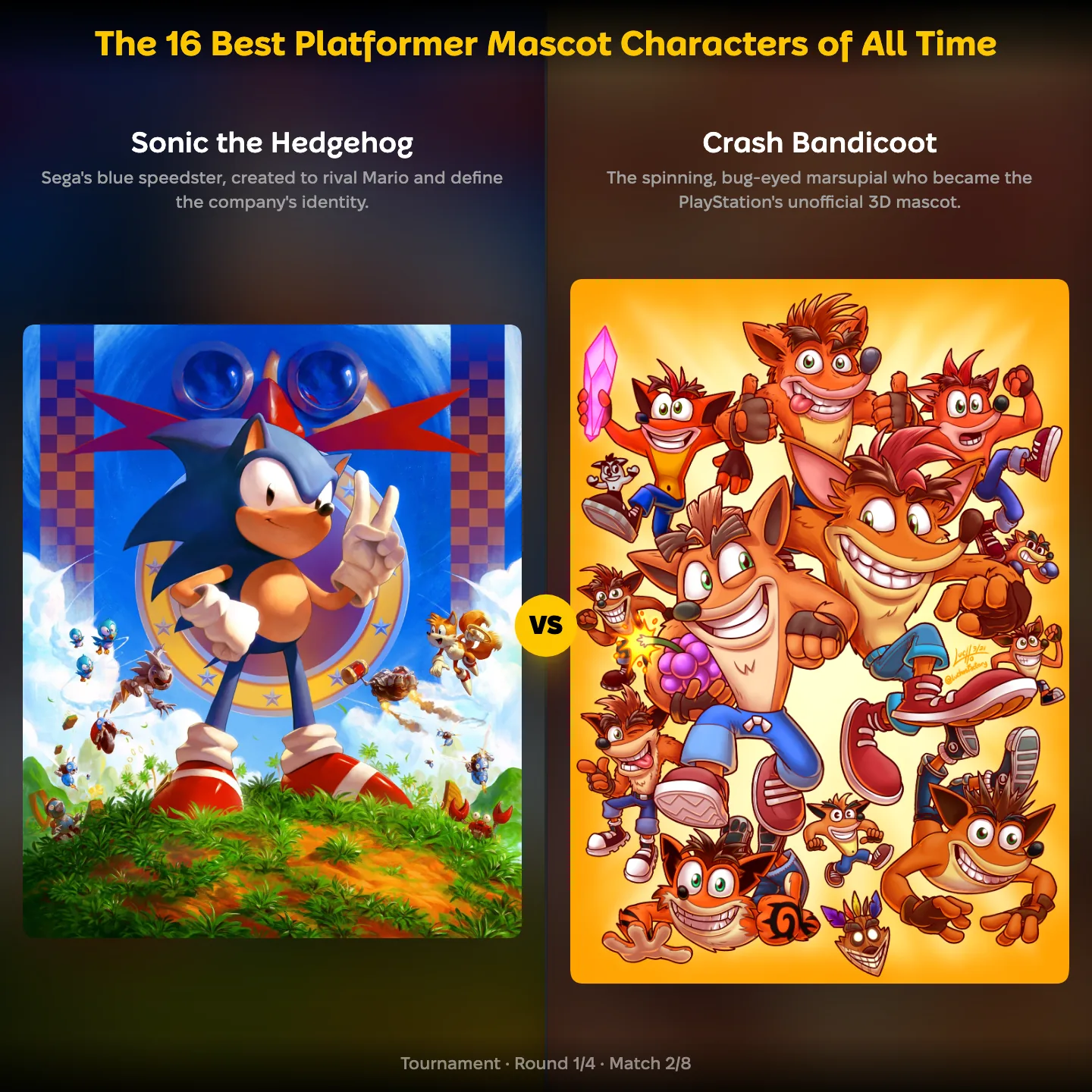
Sonic vs Crash Bandicoot: the Mascot Brief
Narrow the field to platformer mascots and the company changes: Mario, Crash Bandicoot, Kirby, Spyro the Dragon, Rayman, Mega Man, Banjo and Kazooie, Earthworm Jim.
This is the category Sonic was commissioned for. Sega wanted a face to replace Alex Kidd in 1990, and the brief arrived before the character did.
Crash Bandicoot is the nearest successor. Naughty Dog built him in 1996 to do for the first PlayStation what Sonic had done for the Genesis, and Sony treated him as a mascot without ever formally making him one.
Further down, the field gets obscure fast. Klonoa, Conker and Gex were each somebody's mascot too, and most readers will recognise one of the three.
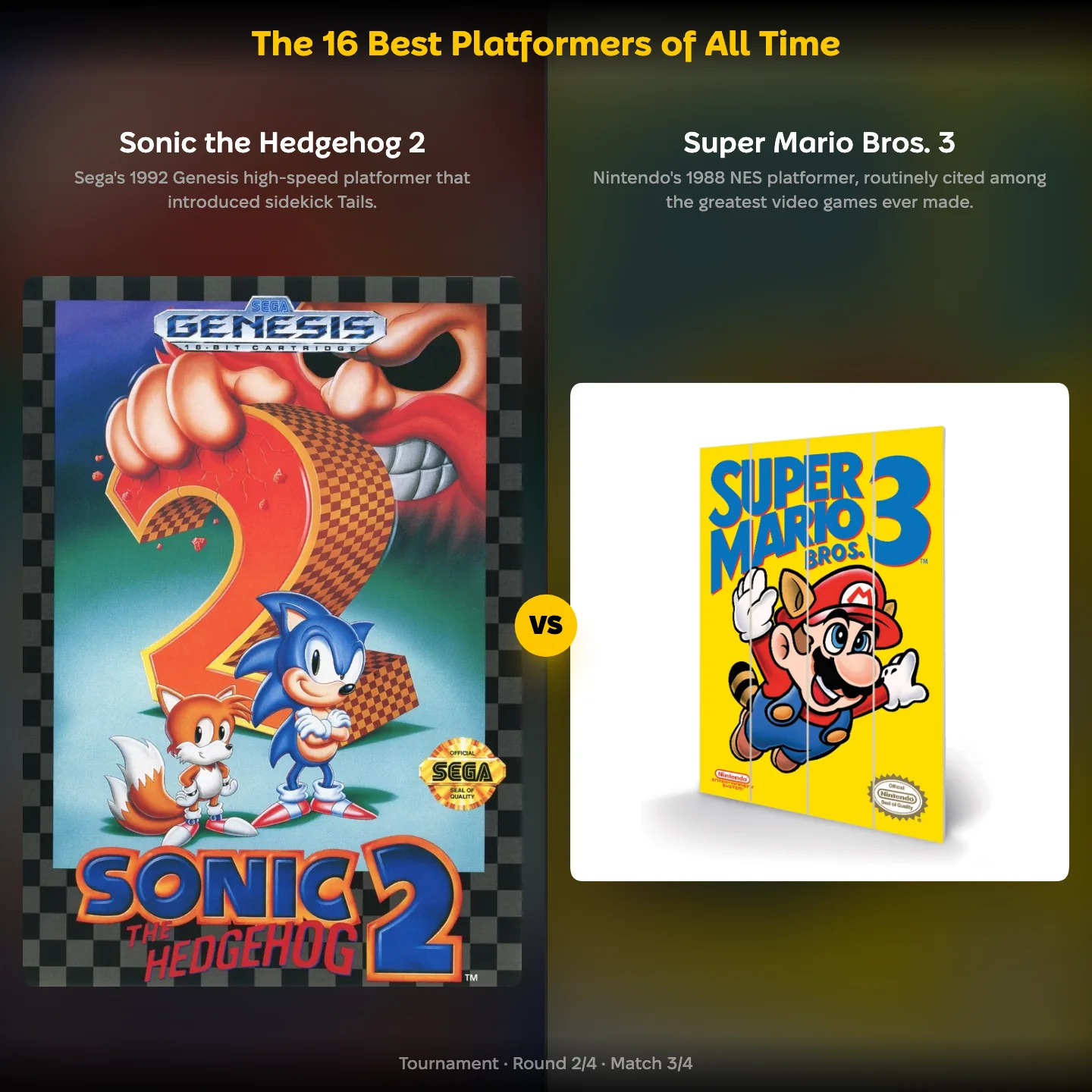
Sonic the Hedgehog 2 Is the Only Sonic Game in the Platformer Canon
Rank the games as games and the sixteen-slot platformer field gives Sonic one seat: Sonic the Hedgehog 2.
Sonic 2 earns it on design. It added Tails, the spin dash and a two-player split screen, and Sega picked it, with the 1991 original, for the museum-grade Genesis cartridges it put on pre-order for the 35th anniversary.1
Super Mario Bros. 3 is the problem here. Nintendo holds five of the sixteen slots, a claim about depth that Sonic has nothing to set against it.
Celeste, Hollow Knight and Cuphead complicate it further. Three of the most admired platformers in the field were made decades later by small teams, long after mascots stopped owning the genre.
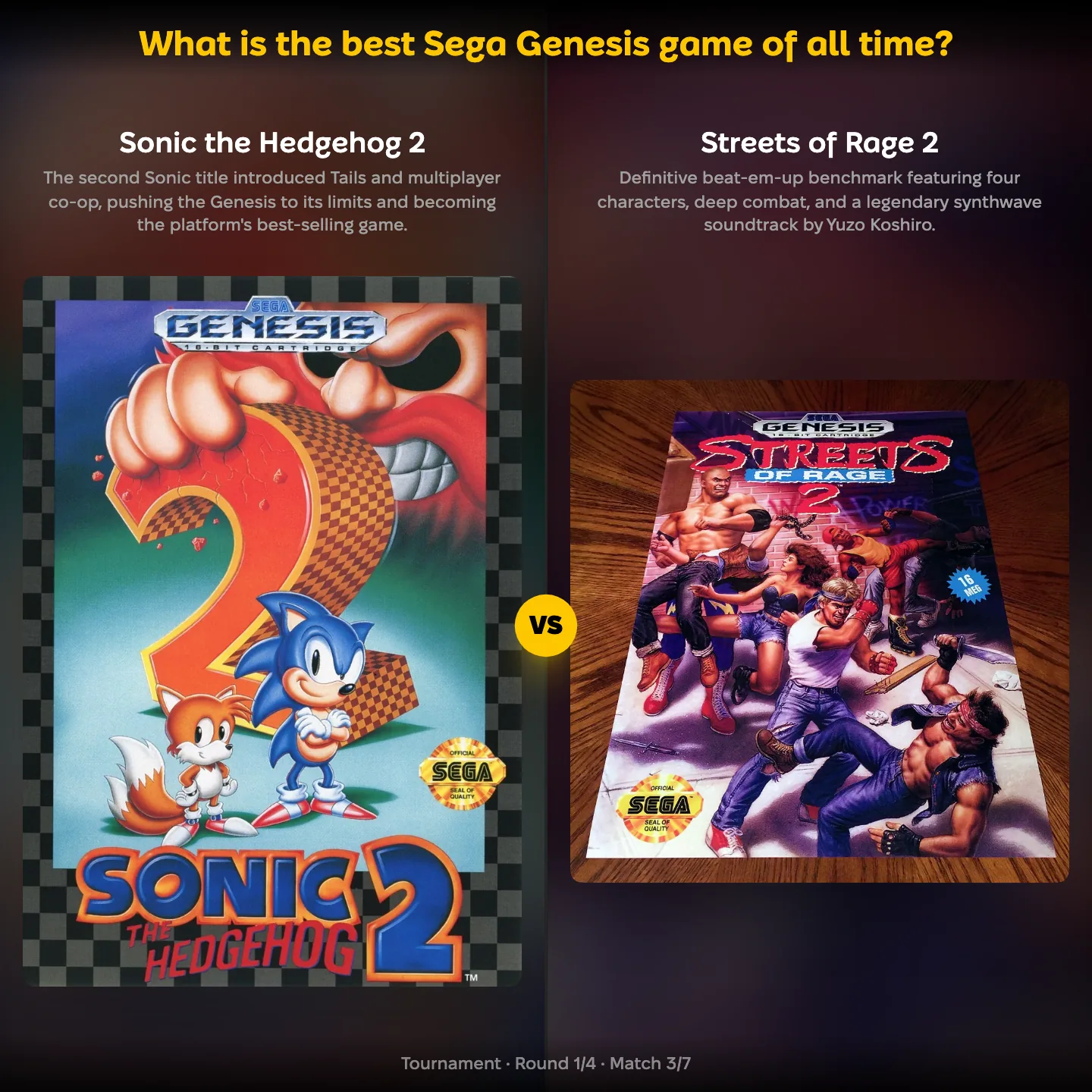
The Sega Genesis List: Sonic 1 and Sonic 2 Against Streets of Rage 2
On the Genesis ranking Sonic stops being one entry among many. Two of the fourteen options are his, the 1991 original and Sonic the Hedgehog 2.
The first game is why the console sold. Sega bundled it with the hardware, and Guinness World Records still lists it as the best-selling game released on any Sega platform, at 13.67 million copies as of September 2013.3
Streets of Rage 2 is the connoisseur's pick, and it has a real case: tighter design, a better soundtrack, none of the marketing.
Golden Axe, Gunstar Heroes, Comix Zone, Phantasy Star IV and Ristar fill out the rest, which is quietly flattering to Sega. The library was deep, and the hedgehog was not carrying it alone.
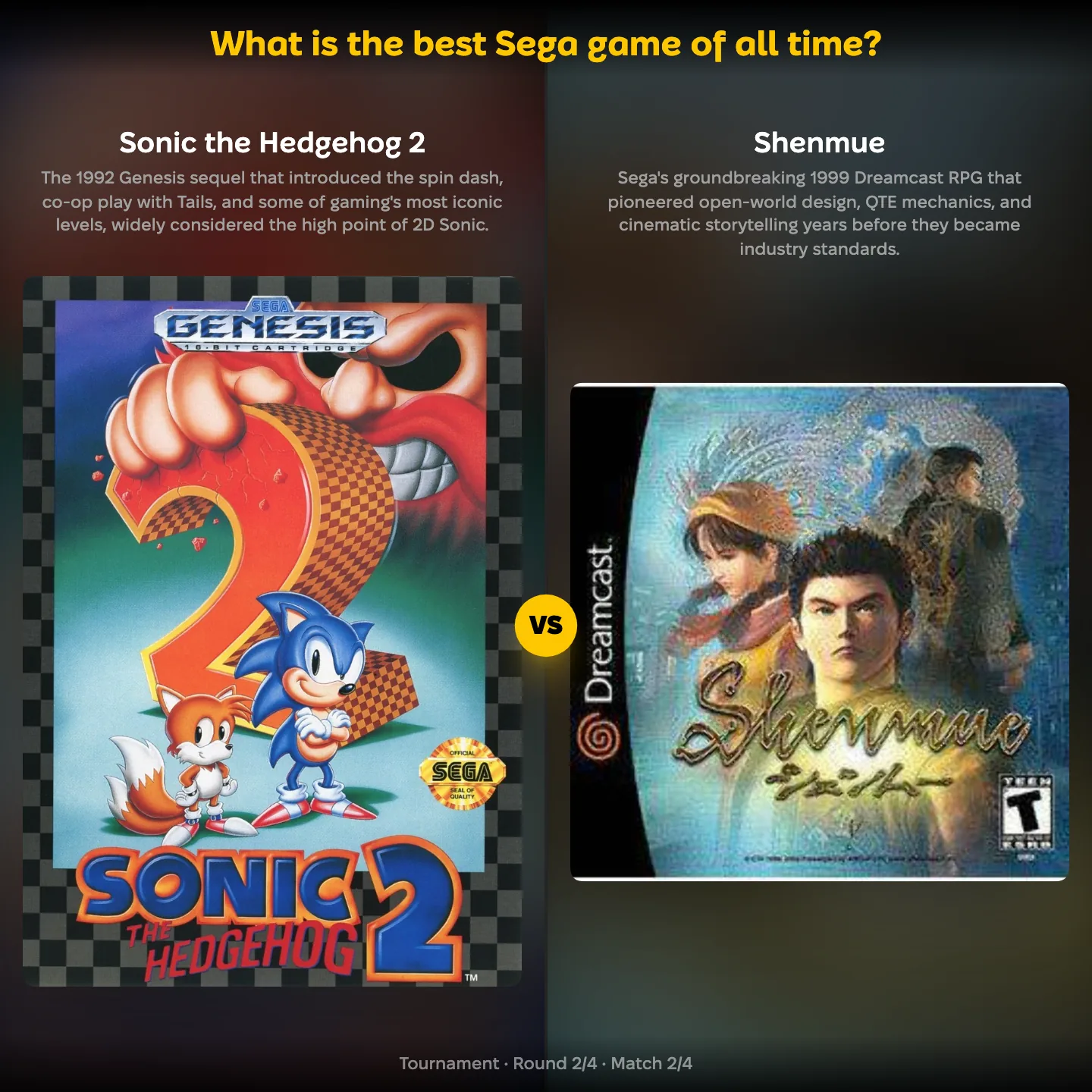
Four of Sega's Fifteen Best-Remembered Games Are Sonic Games
Widen the frame from one console to the whole publisher and Sonic's share goes up. Four of the fifteen options on the best-Sega-game ranking are his: Sonic the Hedgehog 2, Sonic CD, Sonic 3 & Knuckles and Sonic Adventure.
Density is the point. Across arcade cabinets, four home consoles and two decades of publishing for other people's hardware, a quarter of Sega's best-remembered catalogue is one hedgehog.
Shenmue is the prestige counter-pick. Yu Suzuki's 1999 open-world experiment is what Sega historians produce to show the company was ahead of its time rather than merely fast.
Jet Set Radio, Crazy Taxi, Skies of Arcadia and Space Channel 5 make the case from the other end. Sega's reputation rests on strangeness, and Sonic is the least strange thing in the field.
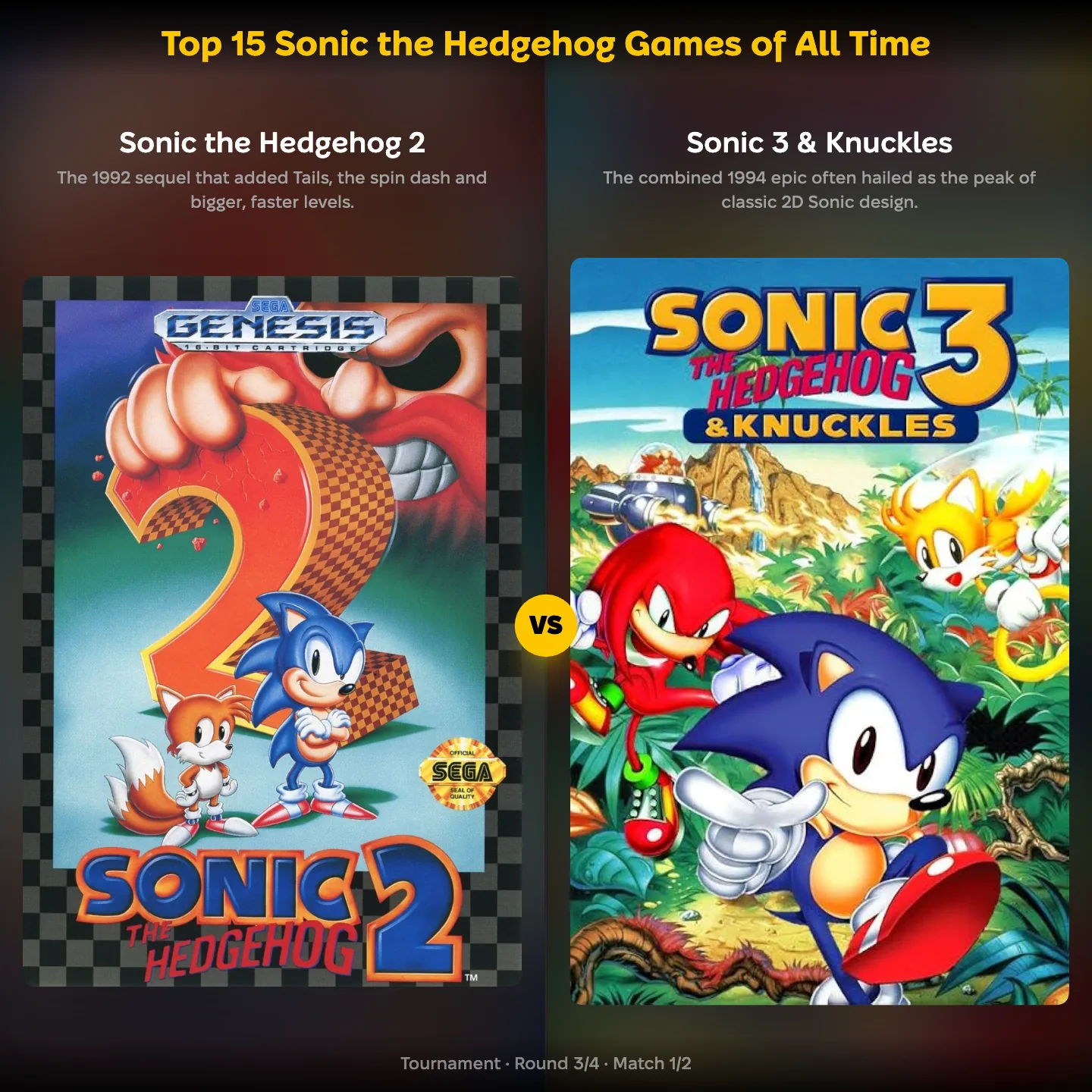
Sonic vs Sonic: Fifteen Games, No Outside Competition
One ranking in the set is all Sonic: fifteen games, the 1991 original at one end and Sonic Superstars at the other, with nothing else to hide behind.
Sonic the Hedgehog 2 and Sonic 3 & Knuckles are where this one usually lands. Sonic 3 & Knuckles is the more ambitious build, with save files, a third playable character and a lock-on cartridge that physically joined two games.
Sonic CD is the wildcard, carrying time travel, two territorial soundtracks and the debut of both Amy Rose and Metal Sonic.
Sonic the Hedgehog (2006) is in the field too, which is the honest part. Sega's own Classic Sonic Collection, due in October 2026, bundles Sonic Origins, Sonic Mania and Sonic Superstars and leaves 2006 exactly where it is.1
Sonic Adventure and the Dreamcast's Two Slots
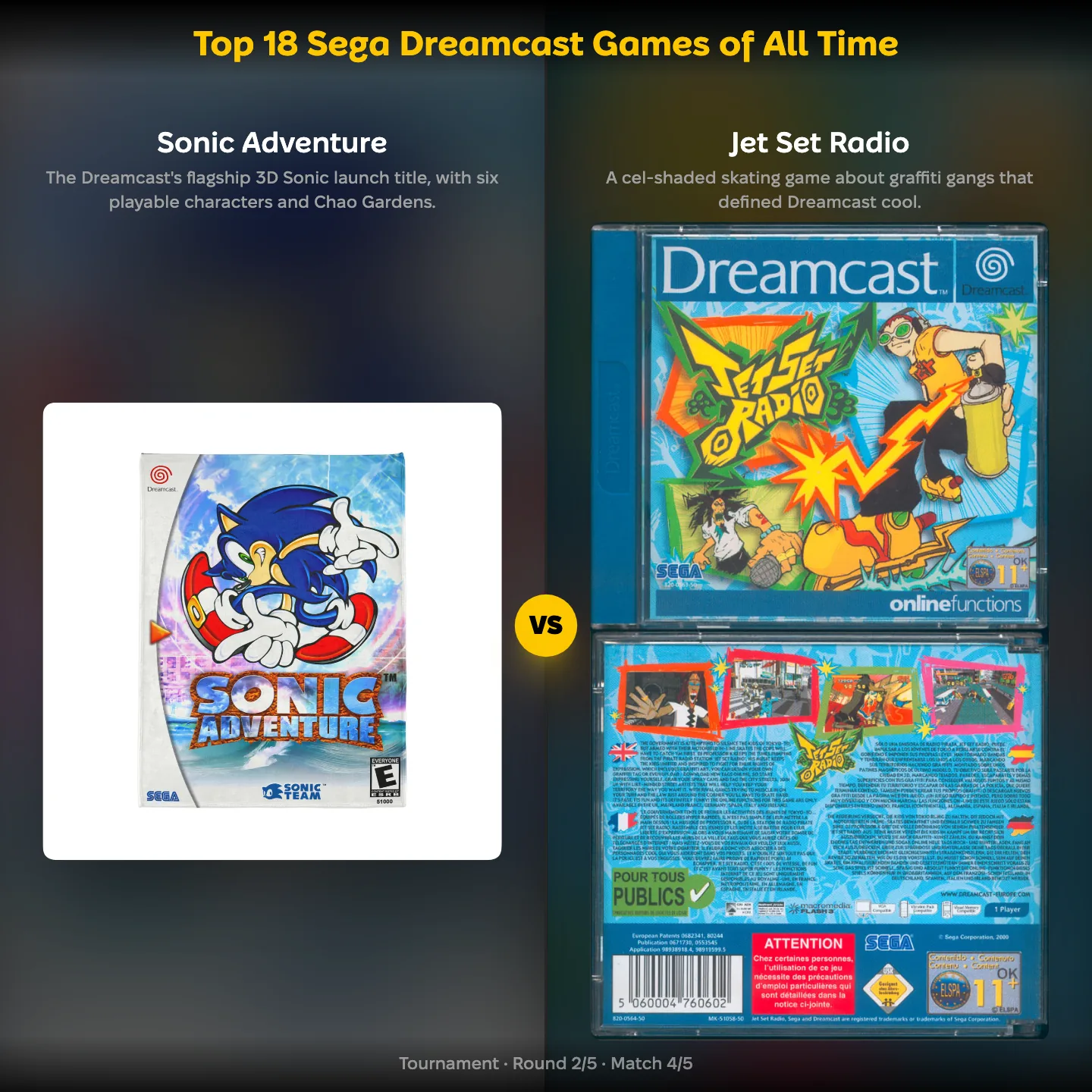
Sega's last console has a ranking of its own, and Sonic takes two of eighteen slots: Sonic Adventure and Sonic Adventure 2.
Sonic Adventure was the hedgehog's first full 3D game and the Dreamcast's headline Western launch title in 1999. It is also where the series picked up the habits it spent the next fifteen years being criticised for: a large talking cast, fishing minigames and levels that stopped being about running.
Jet Set Radio is the machine's better calling card. Cel-shaded, soundtrack-led, and unlike anything that appeared on a PlayStation 2.
Shenmue, Crazy Taxi, Marvel vs. Capcom 2, Rez and Ikaruga round out one of the strongest small libraries in console history. The Dreamcast lasted about two years in the West and still fills eighteen slots.
Sonic 2006, Sonic Boom and Three More on the Disappointment List
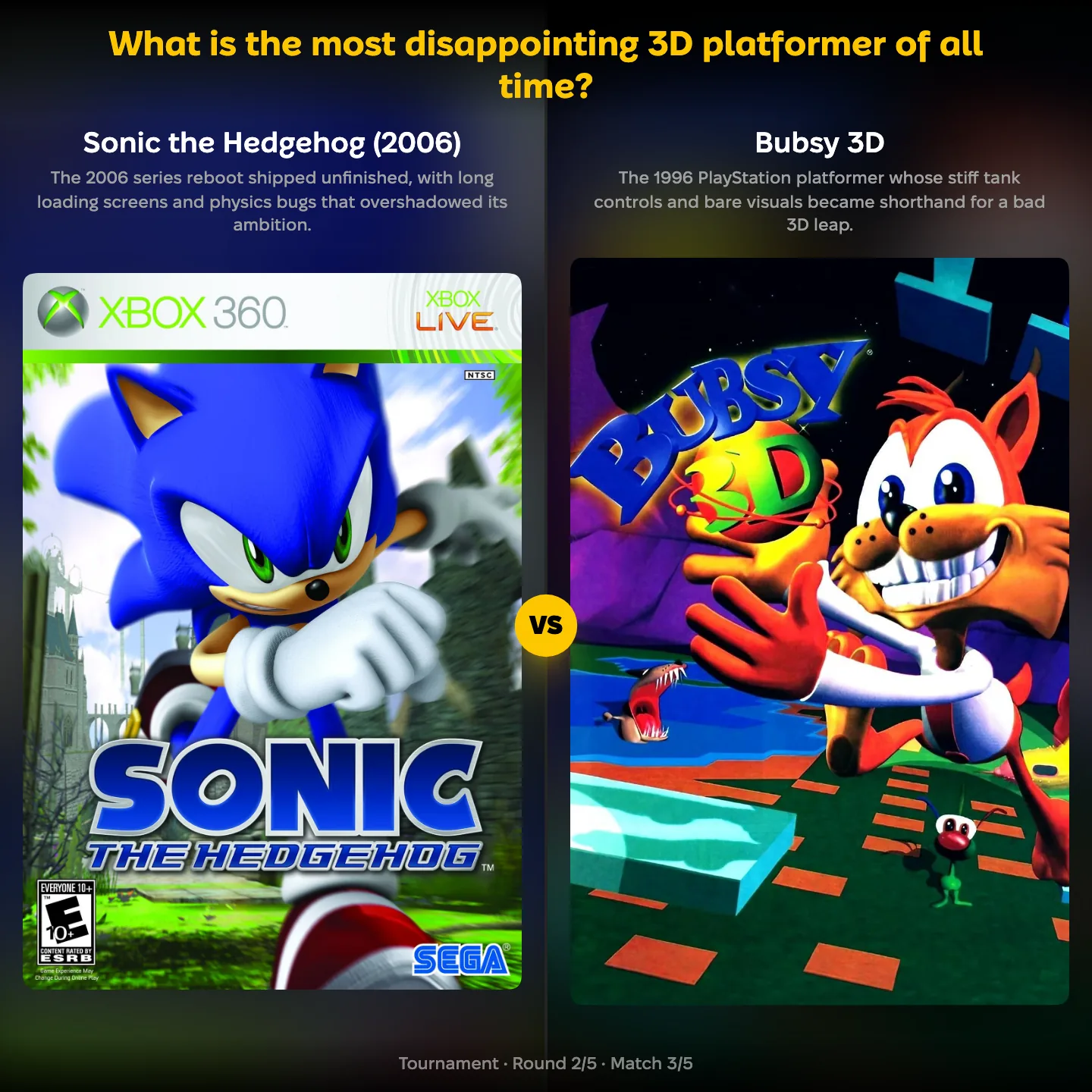
One ranking collects the most disappointing 3D platformers ever made, and Sonic has five of the seventeen names: Sonic the Hedgehog (2006), Sonic Boom: Rise of Lyric, Shadow the Hedgehog, Sonic and the Black Knight and Sonic Lost World.
Sonic the Hedgehog (2006) is the one everybody names first. It shipped in the franchise's fifteenth-anniversary year with long loading screens and physics that fought the player, and it has been shorthand for a broken Sonic game ever since.
Bubsy 3D got there four years earlier. The 1996 PlayStation game is what people point at to describe how badly a 2D mascot could translate.
Balan Wonderworld makes the section sting. Square Enix announced it in 2020 with Yuji Naka directing and Naoto Ohshima designing, billed as the creators of Sonic the Hedgehog on their first collaboration in twenty years; the game landed on 26 March 2021 and it is in this field.2
Masato Nakamura's Genesis Score, Against Ocarina of Time
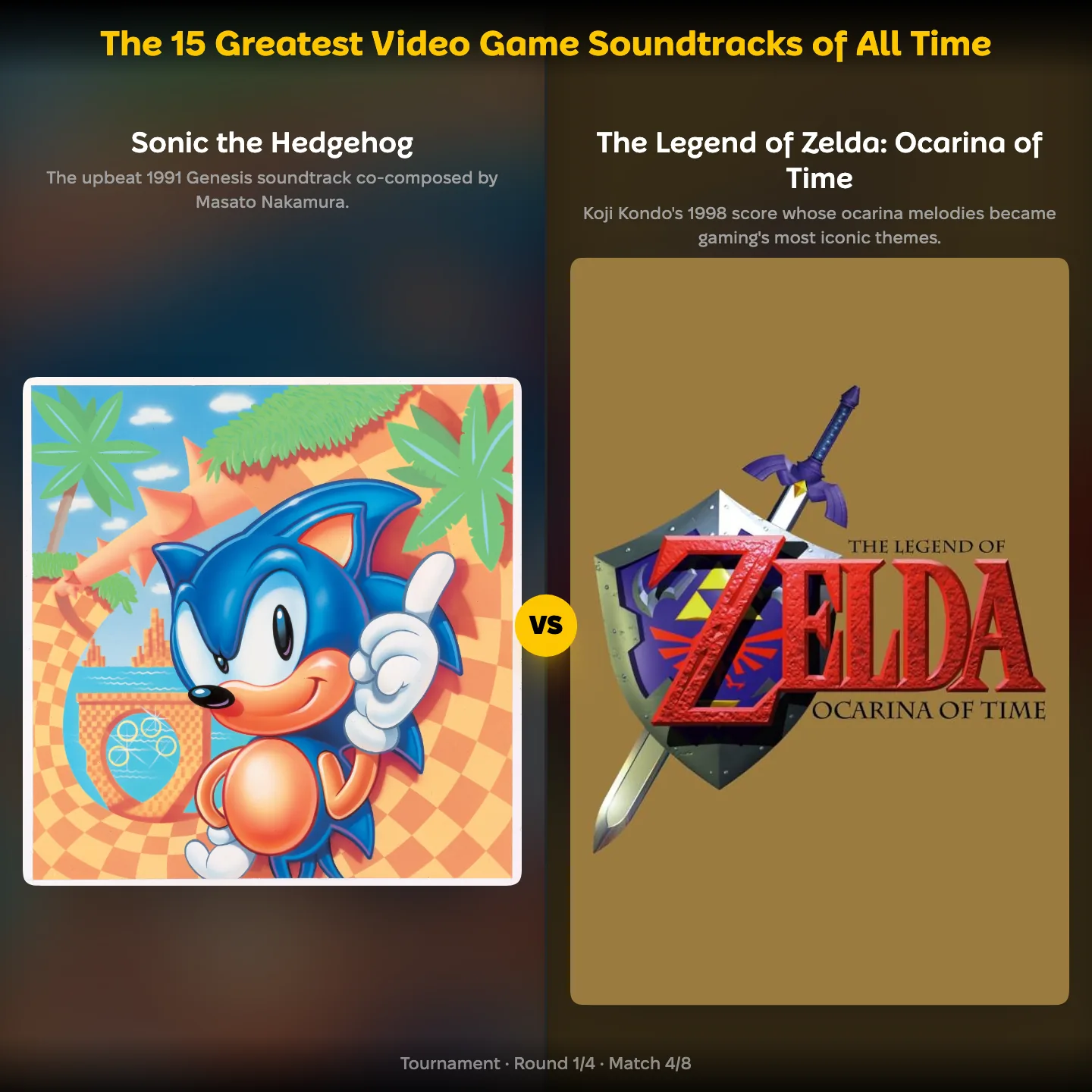
One ranking in the set never asks you to play anything. The fifteen greatest video game soundtracks put Sonic beside Final Fantasy VII, Chrono Trigger, Skyrim, NieR: Automata and Undertale.
Sonic's Genesis music came from outside games. Masato Nakamura, bassist of the J-pop band Dreams Come True, wrote the scores for the first two Sonic games between his own band's albums.
Ocarina of Time is the opponent, and Koji Kondo's score is the answer most people give here without stopping to think.
Sega has the music on tour for the anniversary. Sonic Live In Concert plays the Dolby Theatre in Hollywood on 26 September 2026, with a live ensemble, rock musicians and vocalists on stage.4
Green Hill Zone vs Escape from the City
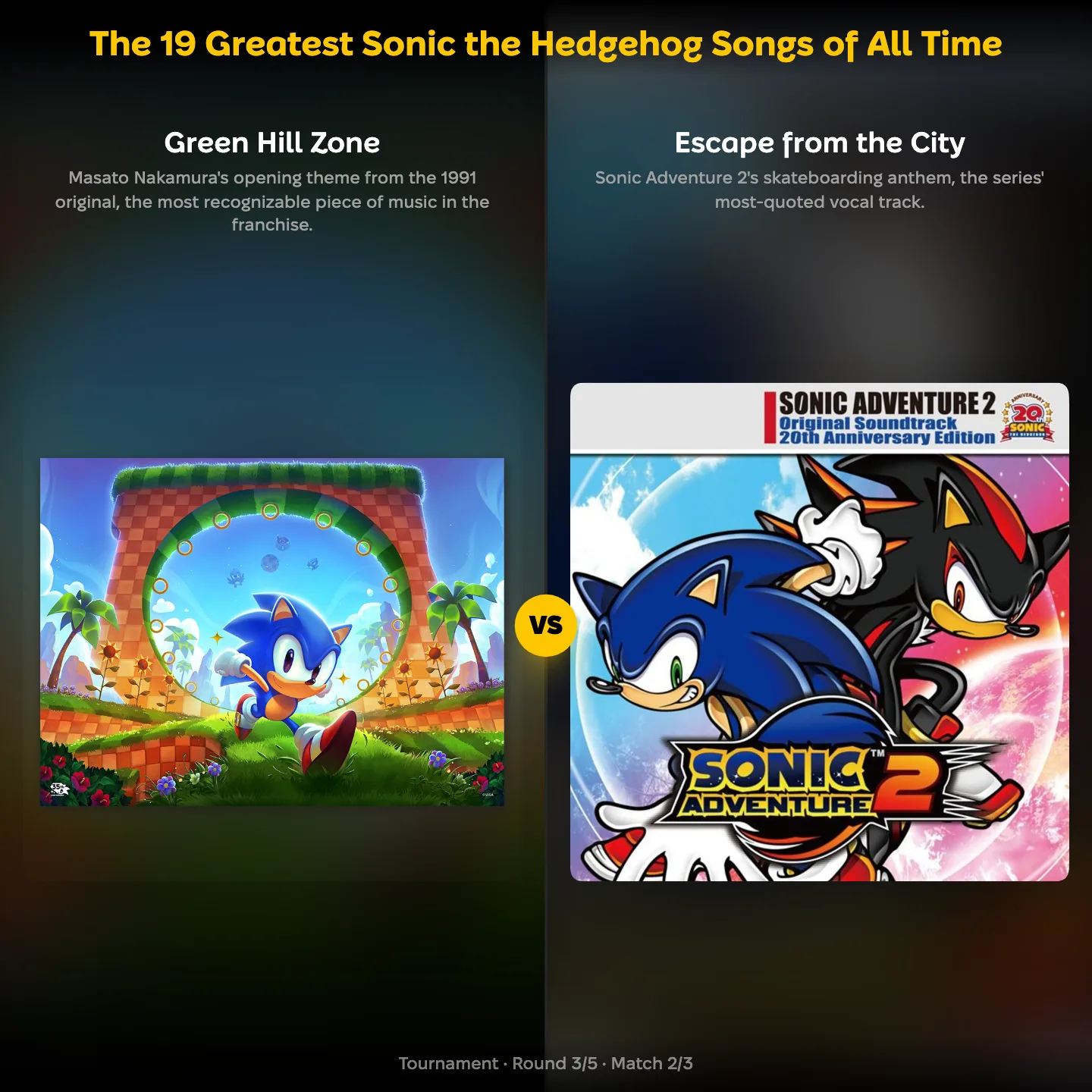
Sonic's own music has a ranking to itself: nineteen tracks from across the franchise, no other series in the field.
Green Hill Zone is the default pick, and it has more than nostalgia behind it. Nakamura wrote it for the 1991 game, and Sega still reaches for it whenever the brand needs four seconds of music.
Escape from the City is the other tradition. It comes from Sonic Adventure 2 in 2001, the point where the series committed to vocal rock, and for a lot of players that, rather than the 16-bit chip music, is what Sonic sounds like.
The concert programme settles the range. Sega bills the show as Green Hill Zone through to Undefeatable, the Sonic Frontiers track, which puts thirty-one years of the franchise in one setlist.4
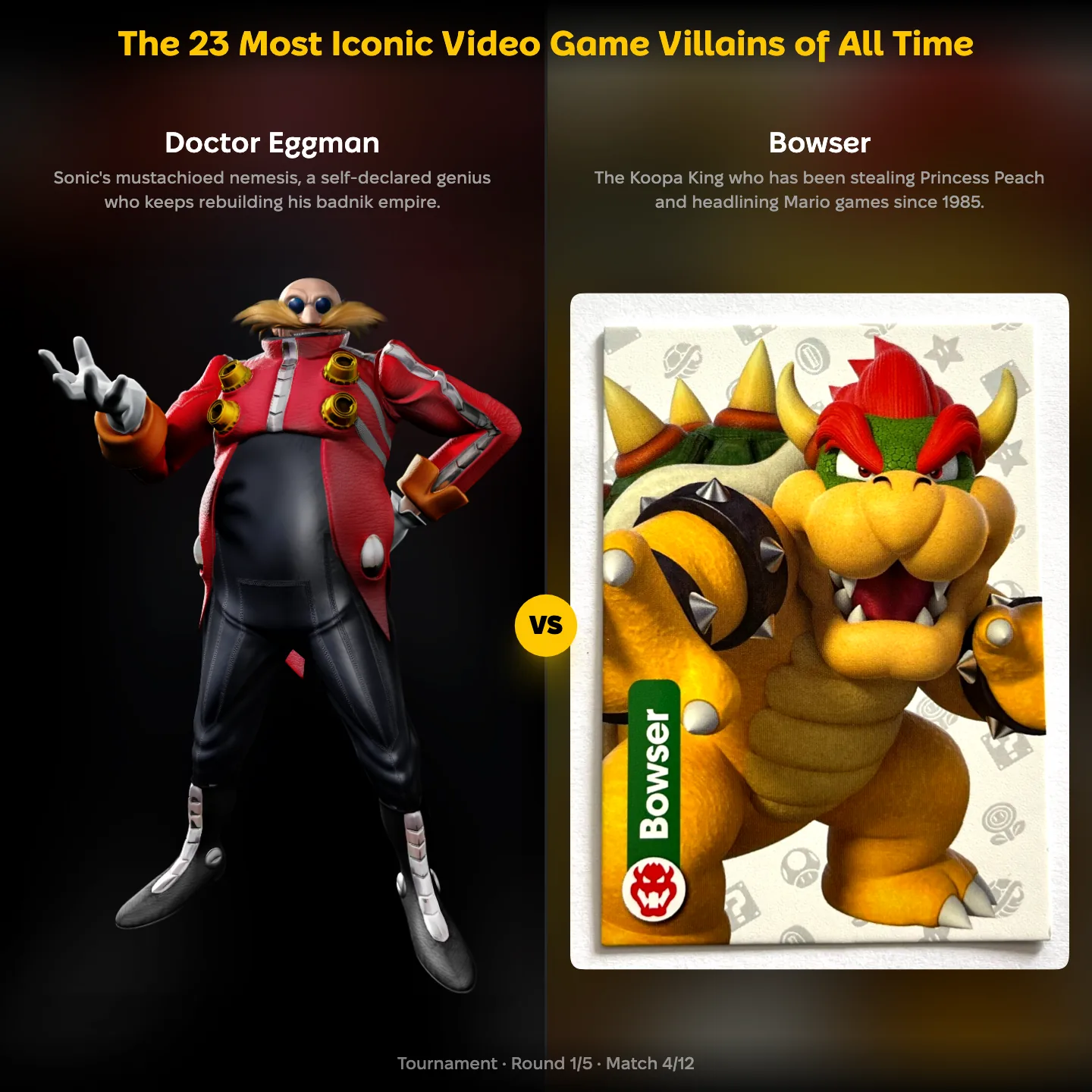
Doctor Eggman Against Bowser
Sonic is not the only name in the franchise with a ranking. Twenty-three iconic video game villains put Doctor Eggman next to Bowser, Ganondorf, Sephiroth, GLaDOS, Albert Wesker and Dracula.
Eggman came off the same drawing board as the hero, since Ohshima designed both. He also answers to two names: Doctor Robotnik in the West, Doctor Eggman in Japan, with the films using the first and the games the second.
Bowser is the harder comparison. Nintendo's villain has fronted a longer and more consistently loved series, and he has been a kart racer, a party-game staple and an RPG protagonist along the way.
Jim Carrey is why Eggman is having a better decade than his games. Carrey has played him in all three live-action Sonic films, and Paramount has a fourth dated for 19 March 2027.5
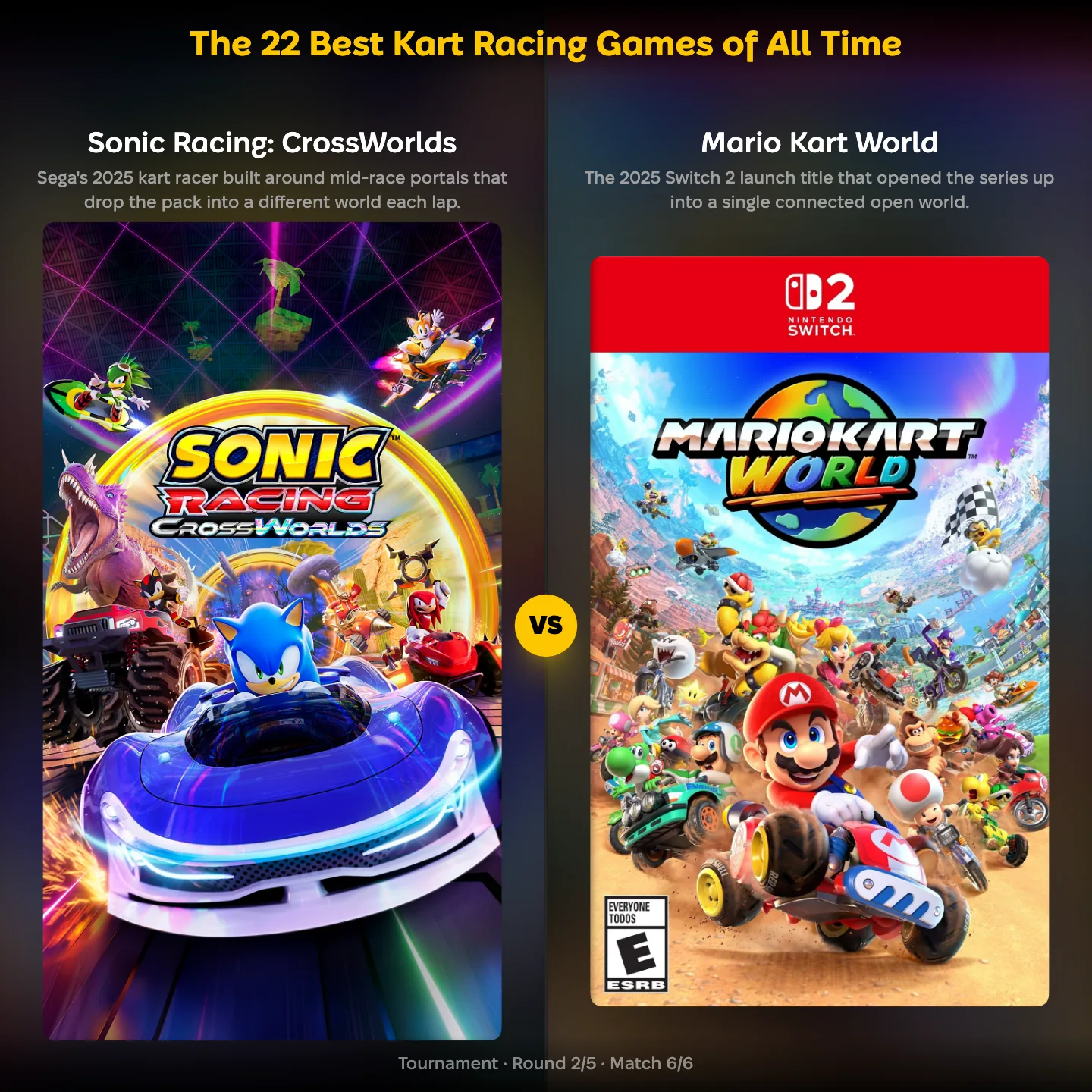
Sonic Racing: CrossWorlds vs Mario Kart World
The kart racing ranking is where the spin-offs earn their keep. Four of the twenty-two options are Sonic: Sonic Racing: CrossWorlds, Team Sonic Racing, Sonic & All-Stars Racing Transformed and Sonic & Sega All-Stars Racing.
CrossWorlds is the strongest thing Sonic Team has shipped in years. Sega released it on 25 September 2025,6 and The Game Awards nominated it for Best Sports/Racing that December.7
Mario Kart World took the award instead. Nintendo's entry arrived on 5 June 2025 alongside the Switch 2,8 and it beat CrossWorlds, EA Sports FC 26, F1 25 and Rematch in the category.7
Six of the twenty-two options are Mario Kart, which is the shape of the genre. Sega's route around it is licensing: the Teenage Mutant Ninja Turtles joined CrossWorlds on 29 July 2026.1
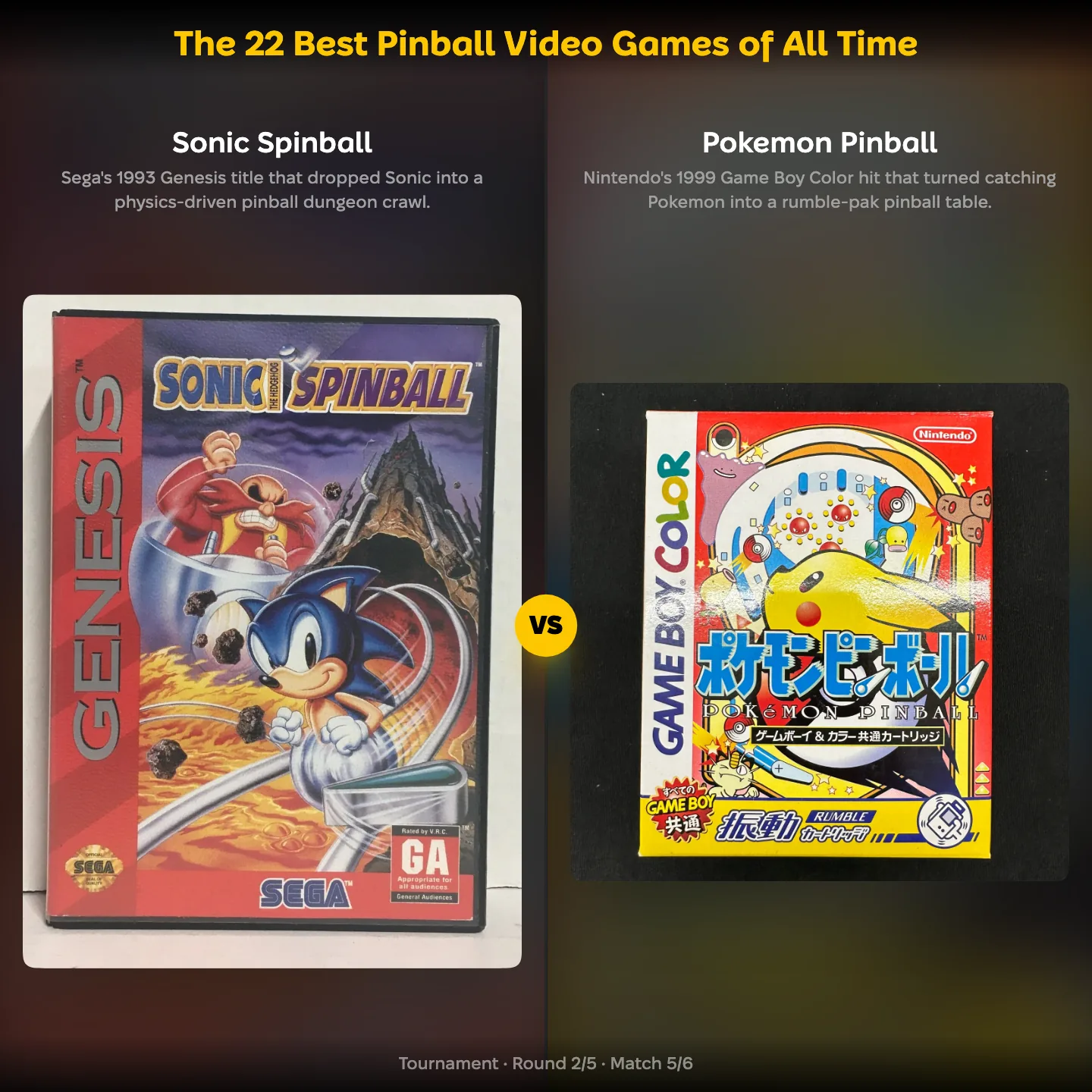
Sonic Spinball, and the Real Pinball Table Sega Finally Licensed
The oddest ranking Sonic qualifies for lists twenty-two pinball video games, and his entry is Sonic Spinball, the 1993 Genesis game that dropped him into a physics-driven pinball dungeon.
Spinball sits on that list the way a B-side sits on a discography. It was built fast, it plays nothing like a Sonic game, and it is the entry most likely to draw an "oh, that one".
Pokémon Pinball is the mascot-pinball opponent, and Nintendo's 1999 Game Boy Color version is the better-loved one, partly because the table was built around catching Pokémon rather than around a licence.
Thirty-three years later there is a physical table. Jersey Jack Pinball builds the official Sonic the Hedgehog machine, signed by designer Steve Ritchie, with a Sonic versus Doctor Eggman battle topper on the $15,000 Collector's Edition.9
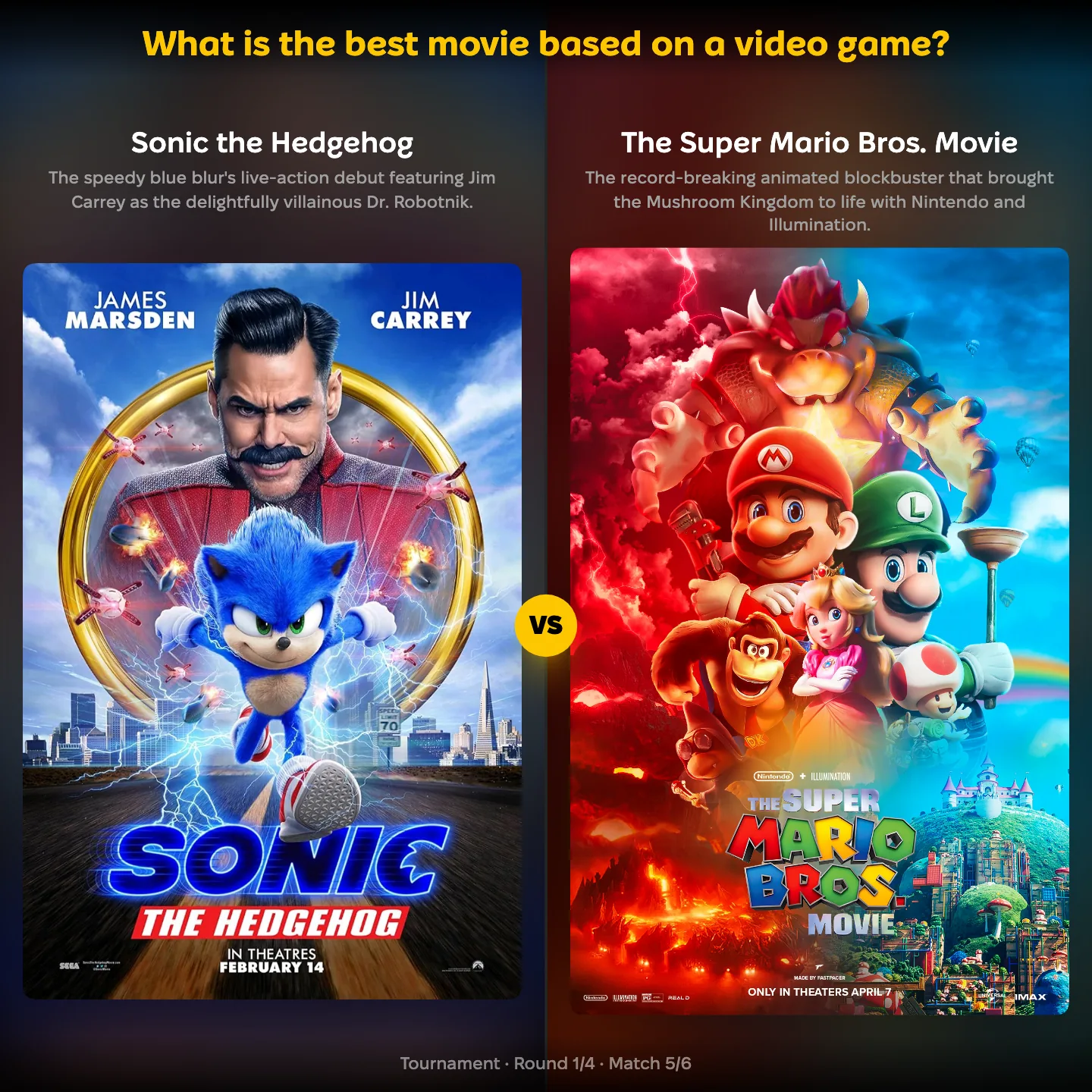
Sonic the Hedgehog 3 Took $492 Million; The Super Mario Bros. Movie Took $1.36 Billion
The best-video-game-movie ranking is where the modern franchise is strongest. Sonic the Hedgehog (2020) stands against The Super Mario Bros. Movie, Detective Pikachu, Uncharted, Mortal Kombat and Warcraft.
The films are the healthiest part of the property. Box Office Mojo puts Sonic the Hedgehog 3, released in December 2024, at $492,162,604 worldwide, the best result of the three.10
The Super Mario Bros. Movie is the number nobody in this field beats. Illumination's 2023 adaptation took $1,360,783,214, which is roughly three Sonic 3s stacked up.11
The redesign is the part worth remembering. Paramount's first trailer in 2019 showed a Sonic with human teeth, the reaction was bad enough that the studio delayed the film and rebuilt the character, and the version that shipped started a trilogy.
The Jim Carrey Ranking: Sonic Between The Mask and Eternal Sunshine
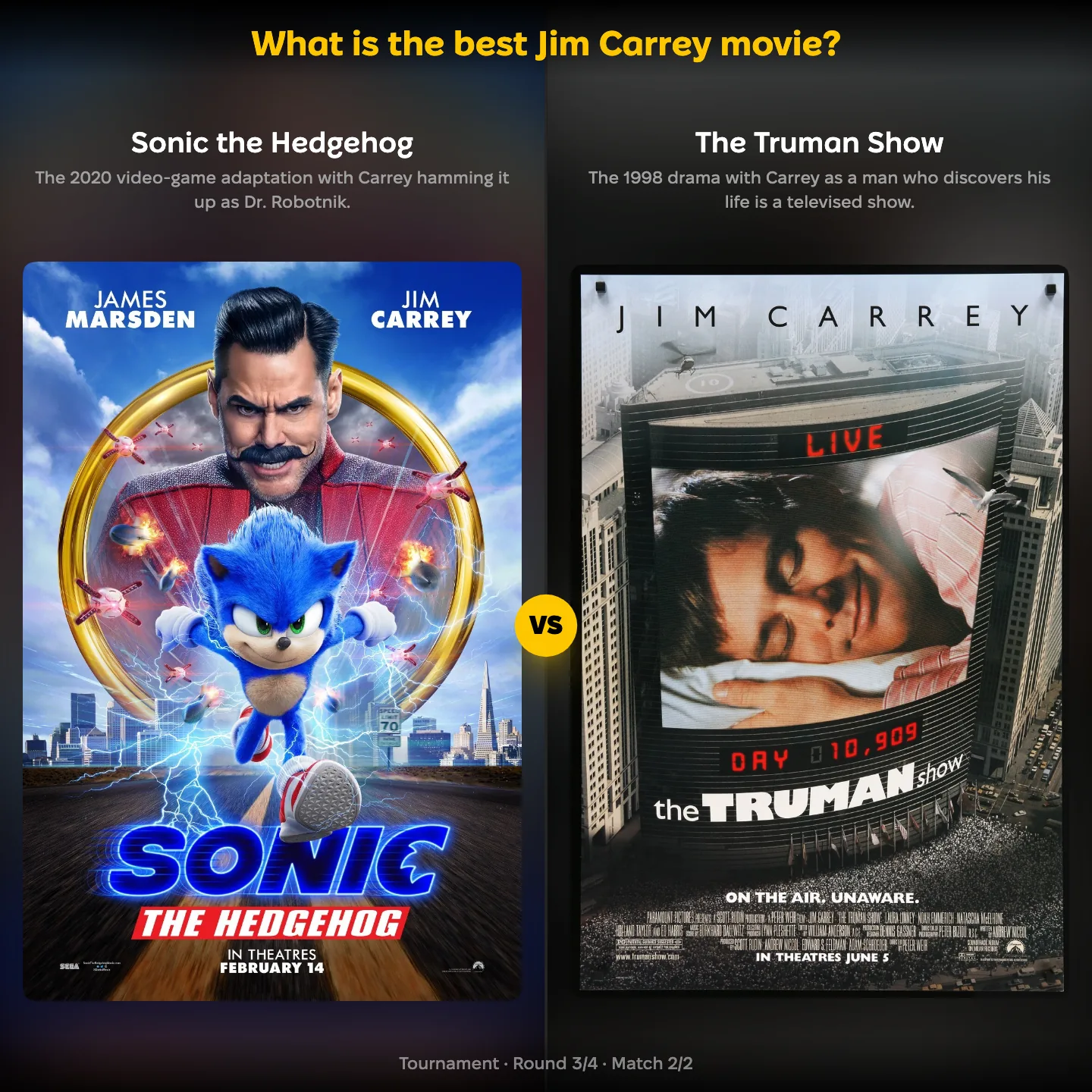
The strangest field Sonic is in belongs to Jim Carrey. It holds Ace Ventura, The Mask, Man on the Moon, Eternal Sunshine of the Spotless Mind, The Truman Show and Sonic the Hedgehog.
Sonic is there because Carrey plays Robotnik, and he plays him the way he played Ace Ventura: full volume, no restraint. It is his only entry here where he is not the main draw on the poster.
The Truman Show is what makes the section funny. Carrey's 1998 performance is the film critics cite when they argue he was a serious actor being spent on comedies.
The box office declines to respect that hierarchy. The Truman Show took $264,118,712 worldwide in 1998;12 the hedgehog film took $319,715,683 twenty-two years later.13
Sonic at 35: the Character Case and the Game Case Never Meet
Sonic keeps two reputations and the sixteen rankings above never merge them. The character survives every field about characters, mascots and music; the games still answer for 2006 wherever they turn up.
Narrow questions are the ones that resolve. "Is Sonic good?" does not resolve. "Is Sonic a better mascot than Crash Bandicoot?" resolves in about a minute, judged in pairs.
Sega's own next test is a bracket: the Sonic Racing: CrossWorlds World Championship finals land in New York City on 9 October 2026.1 Build a ranking for whatever you would rather see settled.
More rankings, more angles
- Super Mario vs The Legend of Zelda: 16 Rankings, One Argument — Nintendo's two flagships, judged head to head
- Resident Evil: One Franchise, 14 Different Verdicts — seventeen games and eight horror films
- Final Fantasy Is a Different Genre on Every List — numbered entries that share almost nothing
- Pokémon Turns 30 and Still Won't Sit in One Category — cards, Game Boy and a Ryan Reynolds comedy
Sources
- SEGA — "Sonic is celebrating his 35th anniversary", 23 June 2026: the birthday livestream, the Sonic the Hedgehog 1 & 2 Legacy Cartridges published by iam8bit as museum-grade archival editions, the Classic Sonic Collection (Sonic Origins, Sonic Mania, Sonic Superstars) launching October 2026, the Teenage Mutant Ninja Turtles pack for Sonic Racing: CrossWorlds on 29 July 2026, and the CrossWorlds World Championship finals in New York City on 9 October 2026: sega.com (checked 2026-08-03)
- Square Enix press release, 17 September 2020 — Balan Wonderworld dated 26 March 2021, with director Yuji Naka credited as "Sonic the Hedgehog Franchise Creator, Sonic Team Co-Founder" and character designer Naoto Ohshima as "(Sonic the Hedgehog, Doctor Eggman, Sonic Team Co-Founder)" on their first collaboration in 20 years: press.na.square-enix.com (checked 2026-08-03)
- Guinness World Records — best-selling SEGA platforms videogame: Sonic the Hedgehog (1991), more than 13.67 million units as of September 2013: guinnessworldrecords.com (checked 2026-08-03)
- Sonic Live In Concert (official site, ©SEGA) — the 35th-anniversary concert run, the Dolby Theatre in Hollywood on 26 September 2026, the live ensemble, rock musicians and vocalists, and the show billed from Green Hill Zone through to "Undefeatable": sonicliveinconcert.com (checked 2026-08-03)
- Paramount Pictures and Sega of America — official Sonic the Hedgehog 4 site, in cinemas 19 March 2027: sonicthehedgehogmovie.com (checked 2026-08-03)
- Steam — Sonic Racing: CrossWorlds store page: released 25 September 2025, developed by Sonic Team, published by SEGA: store.steampowered.com (checked 2026-08-03)
- The Game Awards — Best Sports/Racing 2025: Mario Kart World the winner, with Sonic Racing: CrossWorlds, EA Sports FC 26, F1 25 and Rematch nominated: thegameawards.com (checked 2026-08-03)
- Nintendo — Mario Kart World store page: released 5 June 2025, published by Nintendo: nintendo.com (checked 2026-08-03)
- Jersey Jack Pinball — official Sonic the Hedgehog pinball machine, Collector's Edition at $15,000 with the Sonic vs Dr. Eggman mechanical battle topper and the "Jersey Jack" Guarnieri and Steve Ritchie signature plaque: jerseyjackpinball.com (checked 2026-08-03)
- Box Office Mojo — Sonic the Hedgehog 3: $492,162,604 worldwide ($236,115,100 domestic), released 20 December 2024: boxofficemojo.com (checked 2026-08-03)
- Box Office Mojo — The Super Mario Bros. Movie: $1,360,783,214 worldwide, released 5 April 2023: boxofficemojo.com (checked 2026-08-03)
- Box Office Mojo — The Truman Show: $264,118,712 worldwide, released 5 June 1998: boxofficemojo.com (checked 2026-08-03)
- Box Office Mojo — Sonic the Hedgehog (2020): $319,715,683 worldwide, released 14 February 2020: boxofficemojo.com (checked 2026-08-03)