
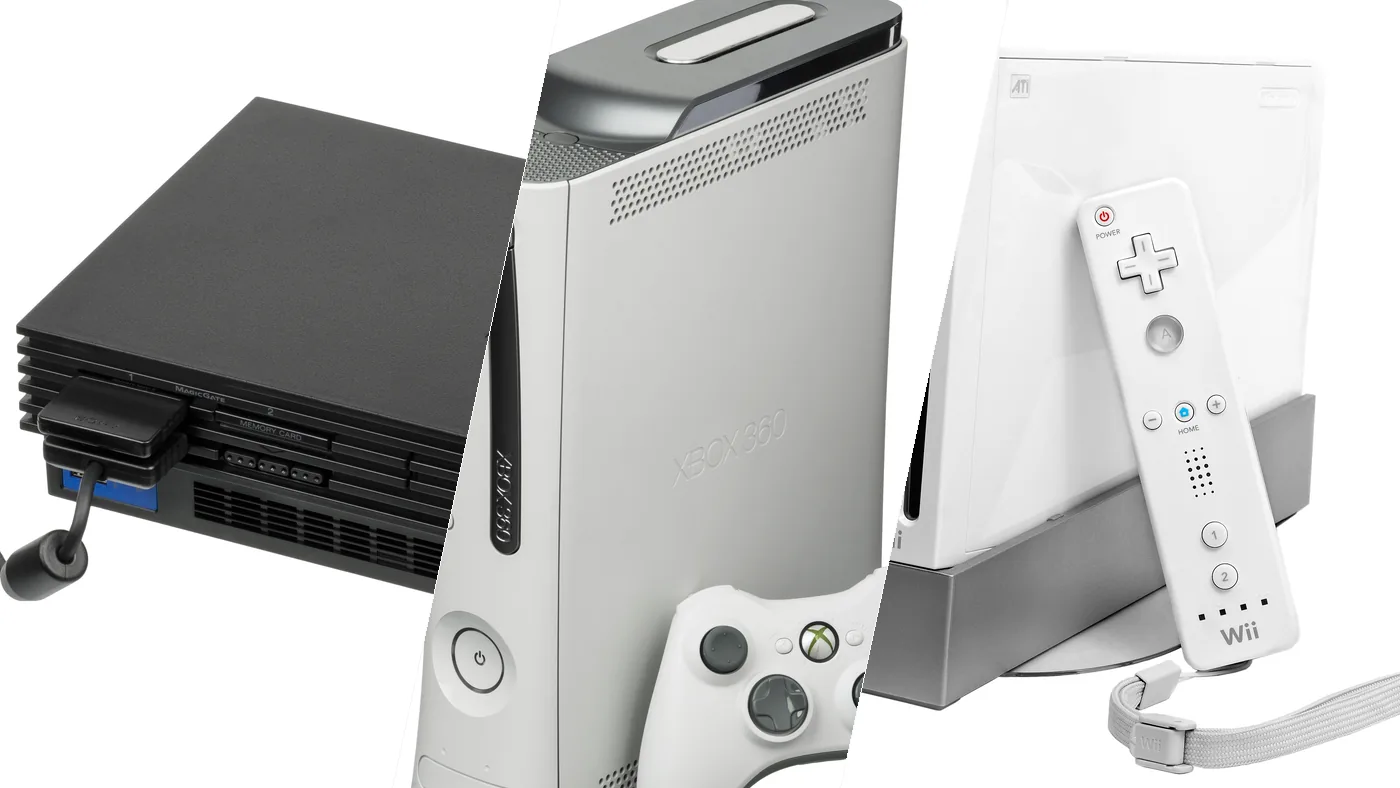
On 28 July 2026 a Halo campaign shipped on a PlayStation for the first time, and the oldest argument in gaming lost its cleanest dividing line.3 PlayStation, Xbox and Nintendo have spent twenty-five years selling the same object to the same people, and for most of that time you could tell them apart by what you could only play on each one.
Nintendo moved 19.86 million Switch 2s in ten months.2 Sony reports its PlayStation 5 shipments every quarter. Microsoft will not say.
Ask what a console is actually for and the comparison breaks down: Sony sells the most machines, Nintendo sells the most portable ones, and Microsoft has stopped treating machines as the point at all.
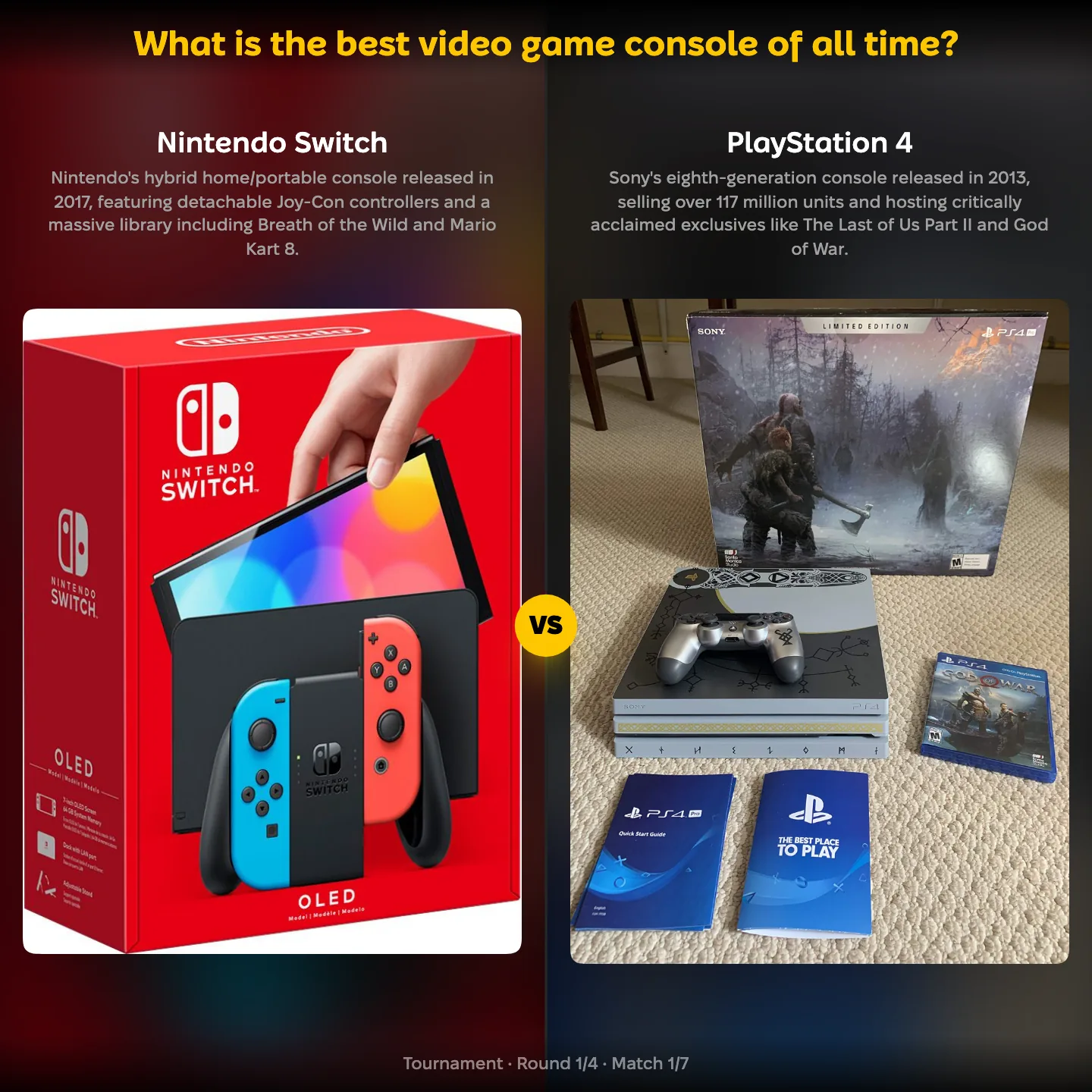
Nintendo Switch vs PlayStation 4: the best console ever made
An all-time console list has to weigh things that were never trying to be the same product. Thirteen machines are on this one, and all three companies are in it.
Sony's case is arithmetic. The PlayStation 2 passed 160 million units, the PlayStation 4 more than 117 million, and no other home console has come close to either figure.1
Nintendo's case is that the Switch does something none of the others do. At 155.92 million units it comes within a few million of the PS2 while also being a handheld.2
Xbox arrives here with the 360, a machine remembered less for how many it sold than for making online multiplayer and a friends list feel normal on a television.
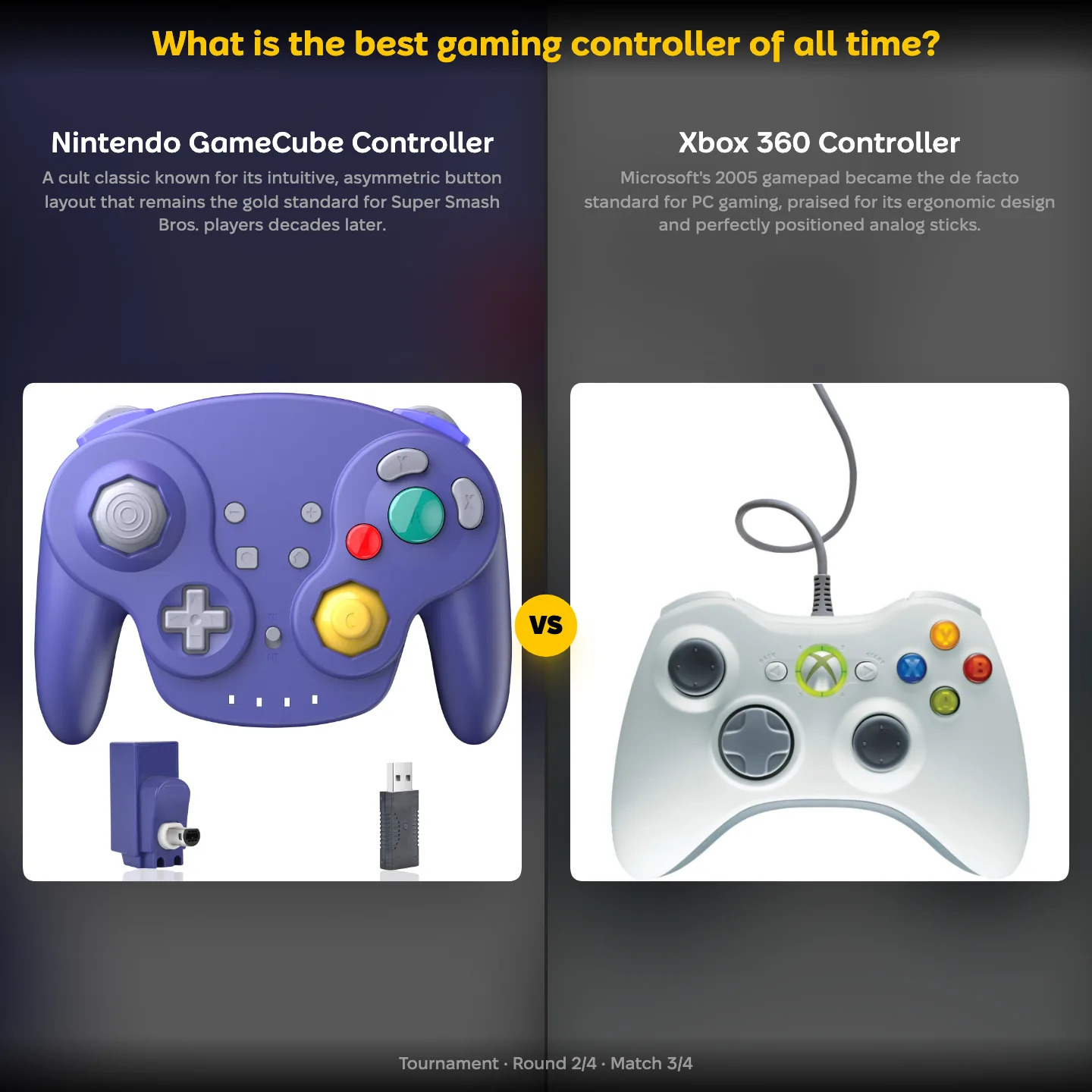
The Xbox 360 pad became the default shape
Controllers are the one category where Xbox has a claim nobody disputes much. The 360 pad's offset stick layout became what PC games assume you are holding.
Nintendo appears here four separate times, which no other company manages: the GameCube pad, the SNES pad, the Nintendo 64 trident and the Switch Joy-Con. Sony's answer is continuity, since the DualShock silhouette has barely moved since 1997.
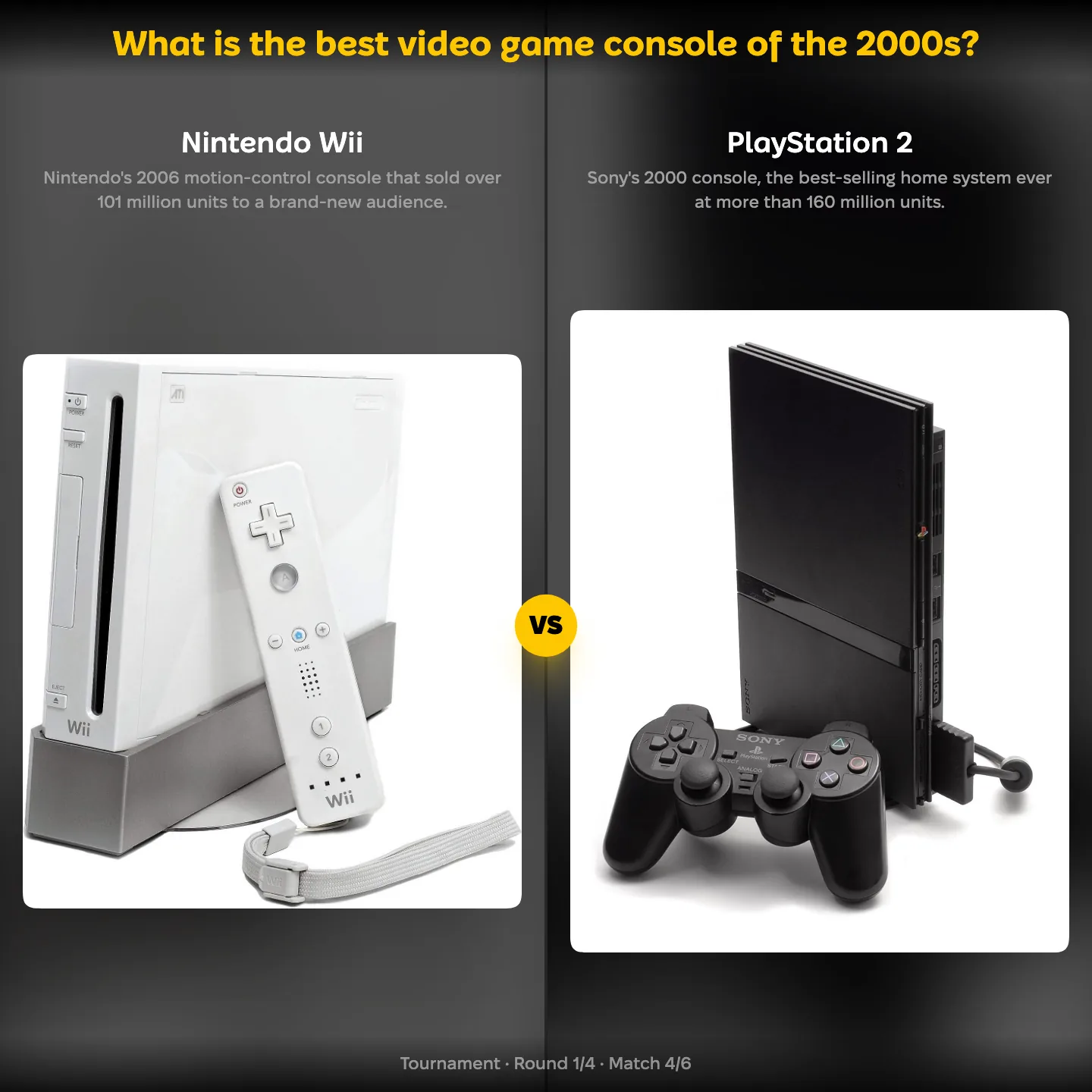
The 2000s: PlayStation 2 against the Wii and the 360
One decade had all three companies fighting on the same ground at the same time, with no clear split between what each was for.
The PlayStation 2 opened it and never really let go. Microsoft entered the market from nothing in 2001 and had the 360 out first in 2005, a full year ahead of Sony and Nintendo.
Nintendo's move was to leave the specification race entirely. The Wii reached 101.63 million units by selling motion controls to people who had never owned a console.2
The decade also holds the Nintendo DS, the PSP and the GameCube, which is why a straight three-way comparison breaks down: two of these are handhelds and one is a cube with a handle.
Nine PlayStations, and the argument still stops at the PS2
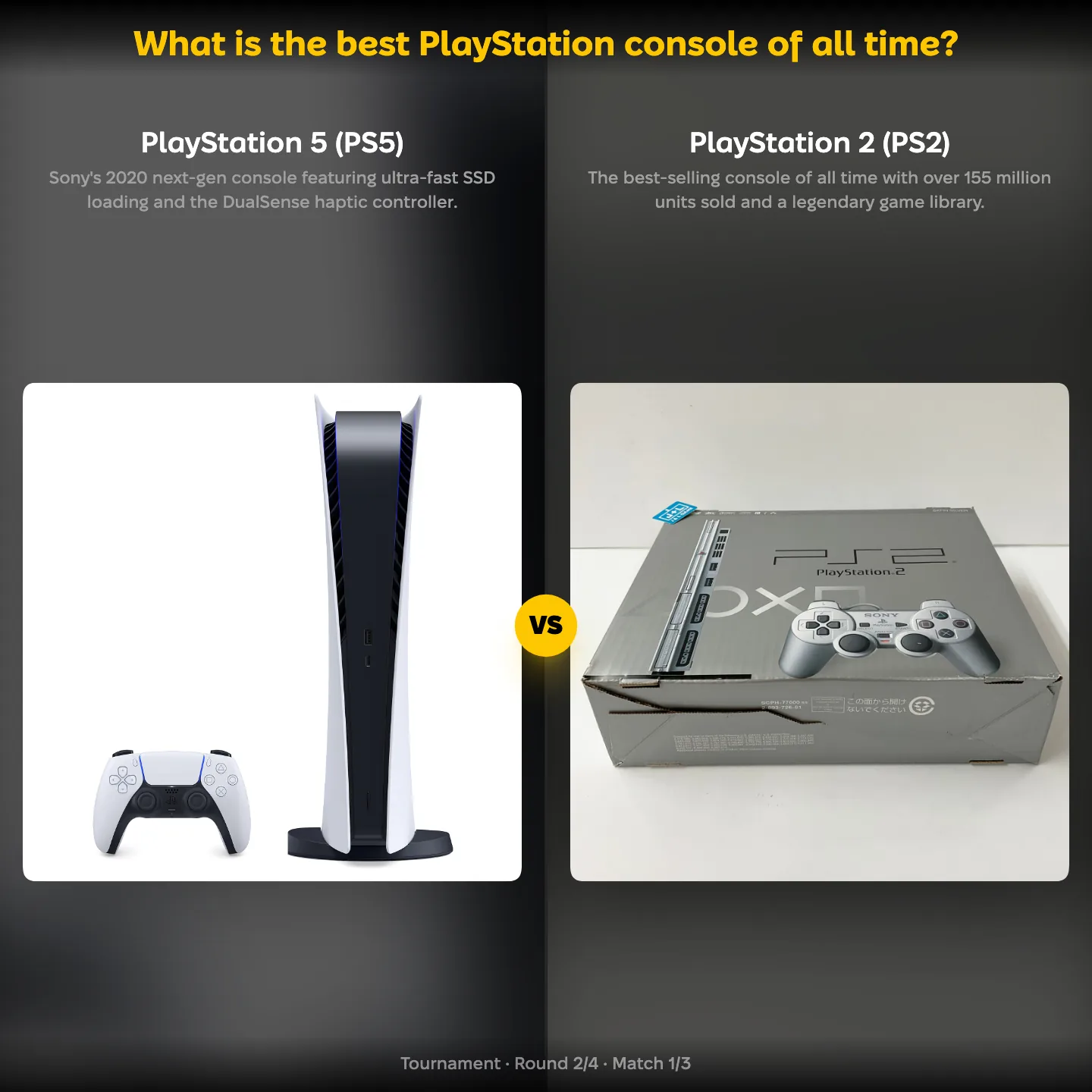
Strip Xbox and Nintendo out and the PlayStation family has its own internal fight, nine machines deep, from the 1994 original to the PS5 Pro.
The PS2 remains the reference point three decades on, because 160 million units and a library holding both Gran Turismo and Shadow of the Colossus is a hard thing to follow.1
The PS5's counter-case is that it is the current machine and still growing: more than 95 million shipped, and 125 million people using the PlayStation platform every month as of June 2026.1
Then there is the PS3, which launched at $599 and spent two years being the punchline before its exclusives arrived.
Microsoft stopped counting
Sony publishes PlayStation shipments every quarter. Nintendo publishes a lifetime figure for every machine it has ever sold, back to the Famicom. Microsoft publishes nothing.
Xbox's chief financial officer Tim Stuart explained the policy at the Wells Fargo TMT Summit in 2023: unit numbers, he argued, do not show how the brand is performing, because Xbox is measured on content and services rather than hardware.4 The last figure Microsoft confirmed was for the Xbox 360, a generation ago.
This is the strangest asymmetry between the three. Two of them treat hardware as the scoreboard; the third has decided the scoreboard is the wrong shape, which makes any comparison of Xbox against PlayStation or Nintendo partly an estimate.
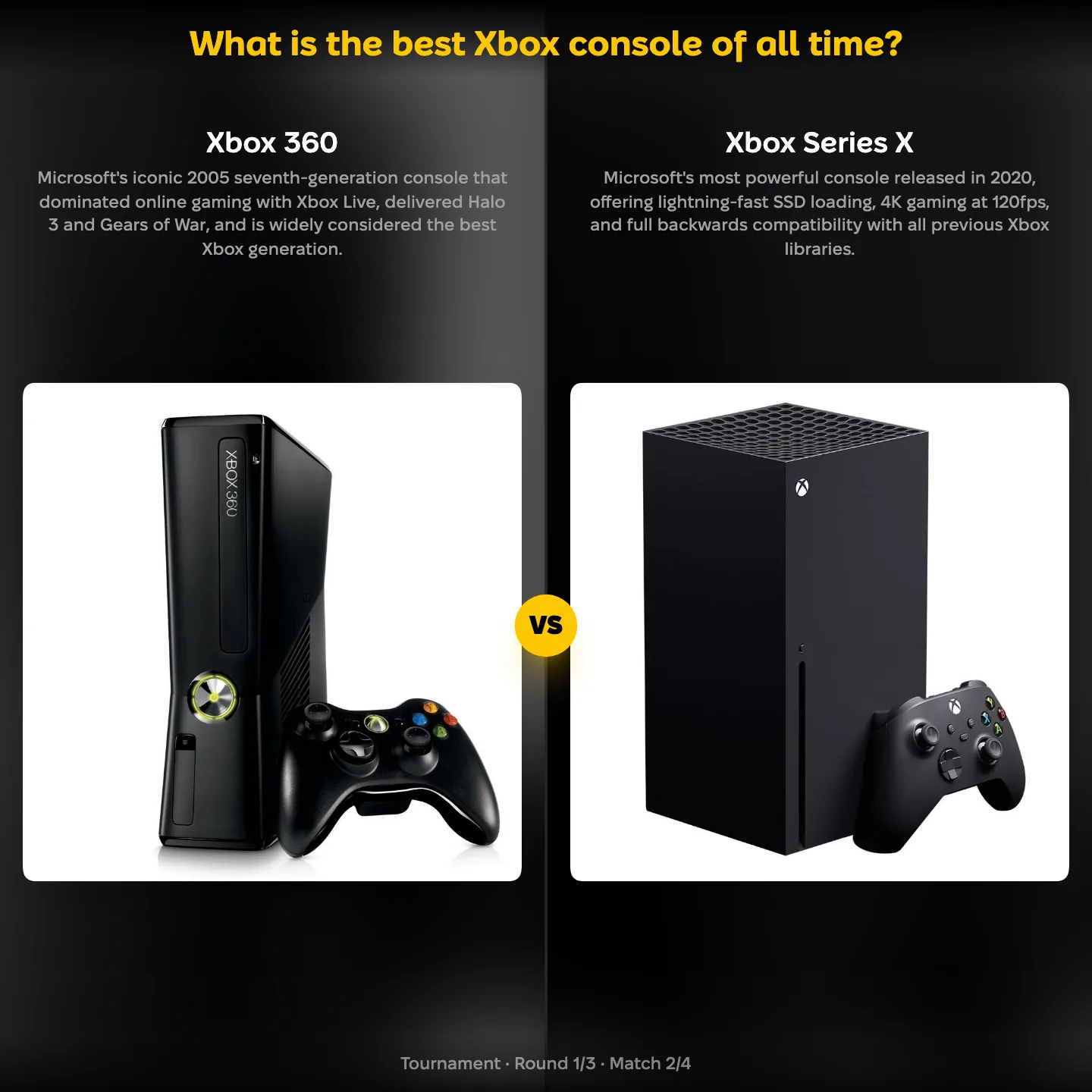
Inside its own seven machines the ranking is cleaner. The 360 is the sentimental pick and the Series X is the powerful one, and the Xbox One carries the damage from its own announcement.
Super Nintendo vs Nintendo Switch, thirty years apart
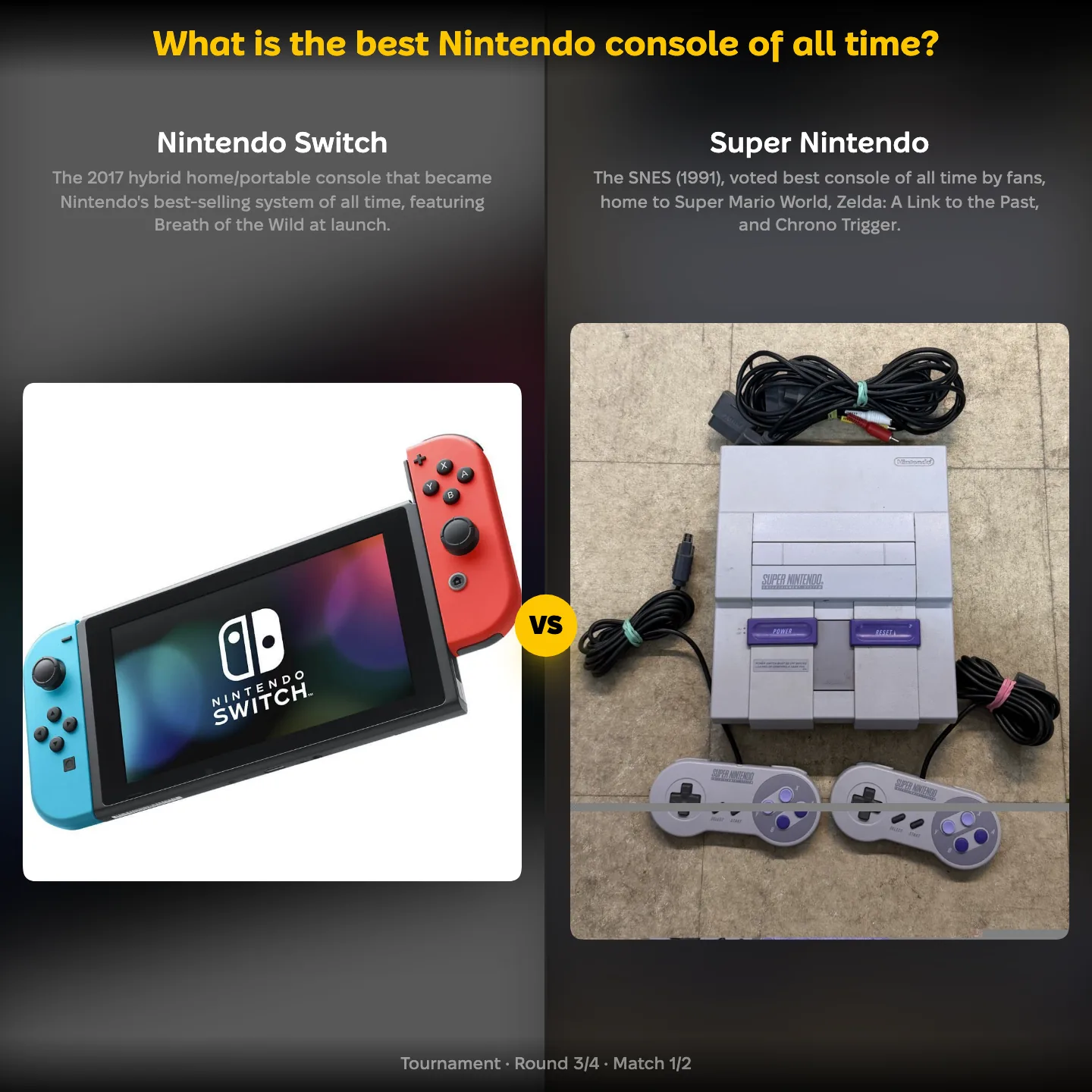
Nintendo's own list runs twelve machines and covers the widest range of outcomes of any of the three companies.
The Super Nintendo sold 49.10 million and the Nintendo 64 only 32.93 million, both a fraction of the Switch's 155.92 million, and neither number tracks how fondly either machine is remembered.2
The list also includes the Wii U, which is the reason a Nintendo ranking is more interesting than a PlayStation or Xbox one. Neither Sony nor Microsoft has a failure of that size sitting in the middle of its own back catalogue.
Xbox has never made a handheld
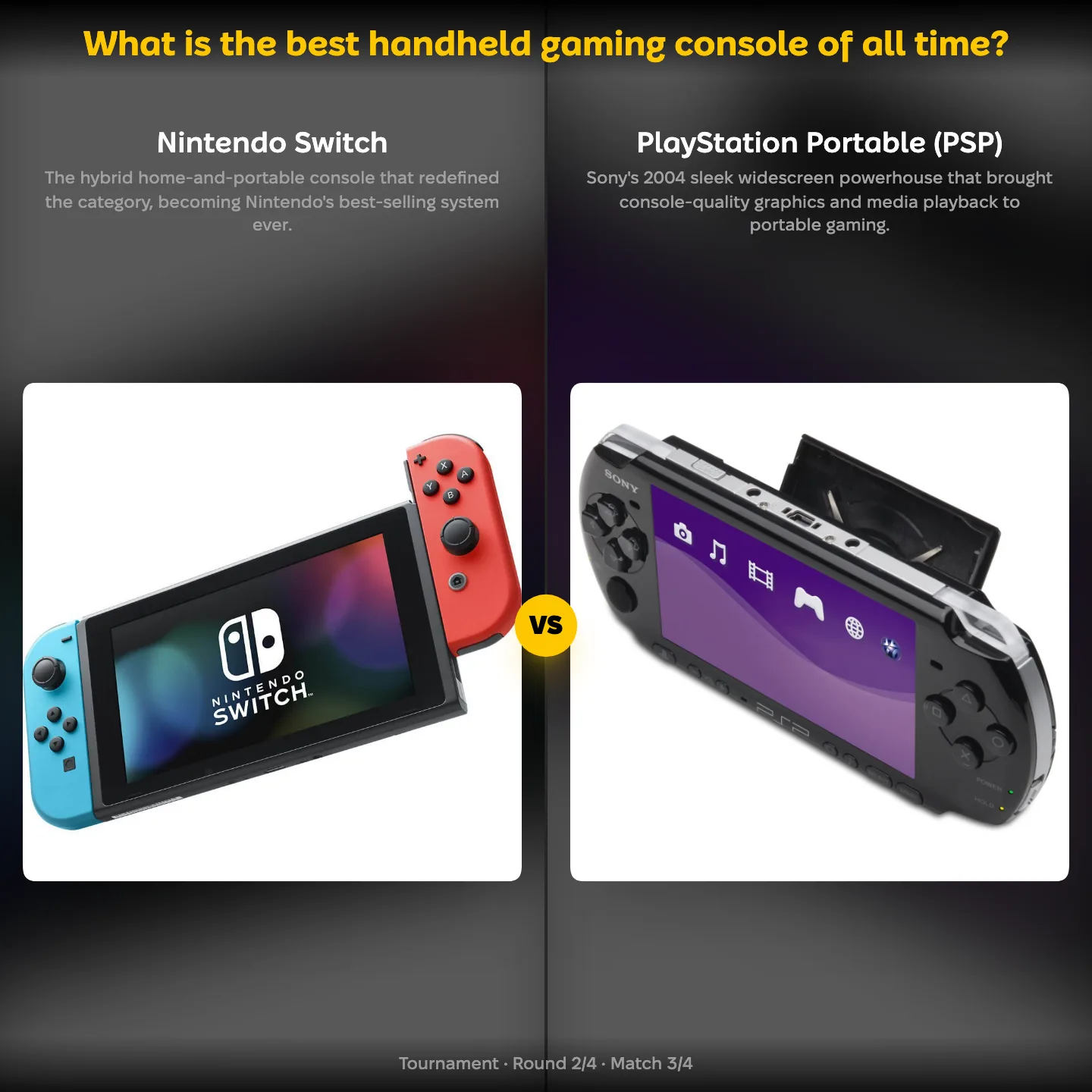
Fourteen handhelds are on this list and not one of them is an Xbox. In twenty-five years Microsoft has never shipped a portable console, and the absence is the most revealing thing in the whole comparison.
Nintendo has effectively owned the category since 1989. The Game Boy sold 118.69 million, the DS 154.02 million, and the DS on its own outsold every home console Nintendo has ever made except the Switch.2
Sony did compete, seriously and twice. The PSP put near-console visuals in a pocket in 2004, and the Vita that followed was better hardware with almost no first-party support behind it.
So the honest reading is that this is a two-company category that Nintendo dominates, Sony contested and lost, and Xbox declined to enter. Steam Deck and the ROG Ally now occupy the space Microsoft left, running Windows.
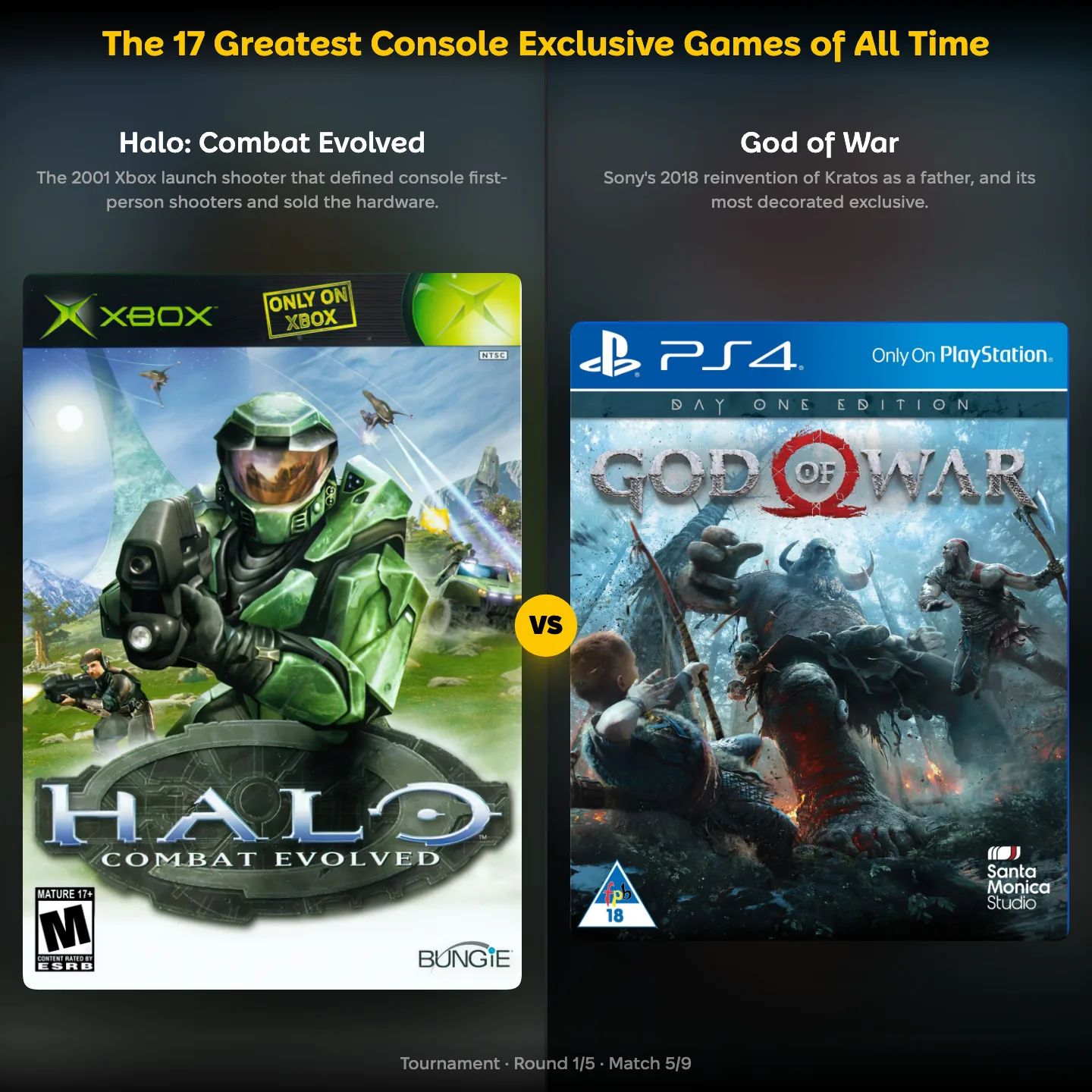
Halo vs God of War: the exclusive that stopped being one
Exclusive games are what the console war was actually fought over, and this is the list that changed while it was being written.
Halo: Combat Evolved sold the original Xbox in 2001 to people who had never bought a Microsoft product. On 28 July 2026 its remake, Halo: Campaign Evolved, launched on Xbox Series X and S, Windows, Steam and PlayStation 5 at once, with cross-play and shared progression across all four.3
Sony's entries are still exclusive and still the reason people buy the hardware: God of War, The Last of Us, Bloodborne, Ghost of Tsushima, Marvel's Spider-Man. Nintendo's are the oldest and the least negotiable, because Breath of the Wild, Super Mario 64 and Metroid Prime have never appeared anywhere else and almost certainly never will.
That is the split worth noticing. Nintendo treats exclusivity as identity, Sony treats it as a sales tool, and Microsoft has decided a dormant audience on a rival machine is worth more than a locked door.
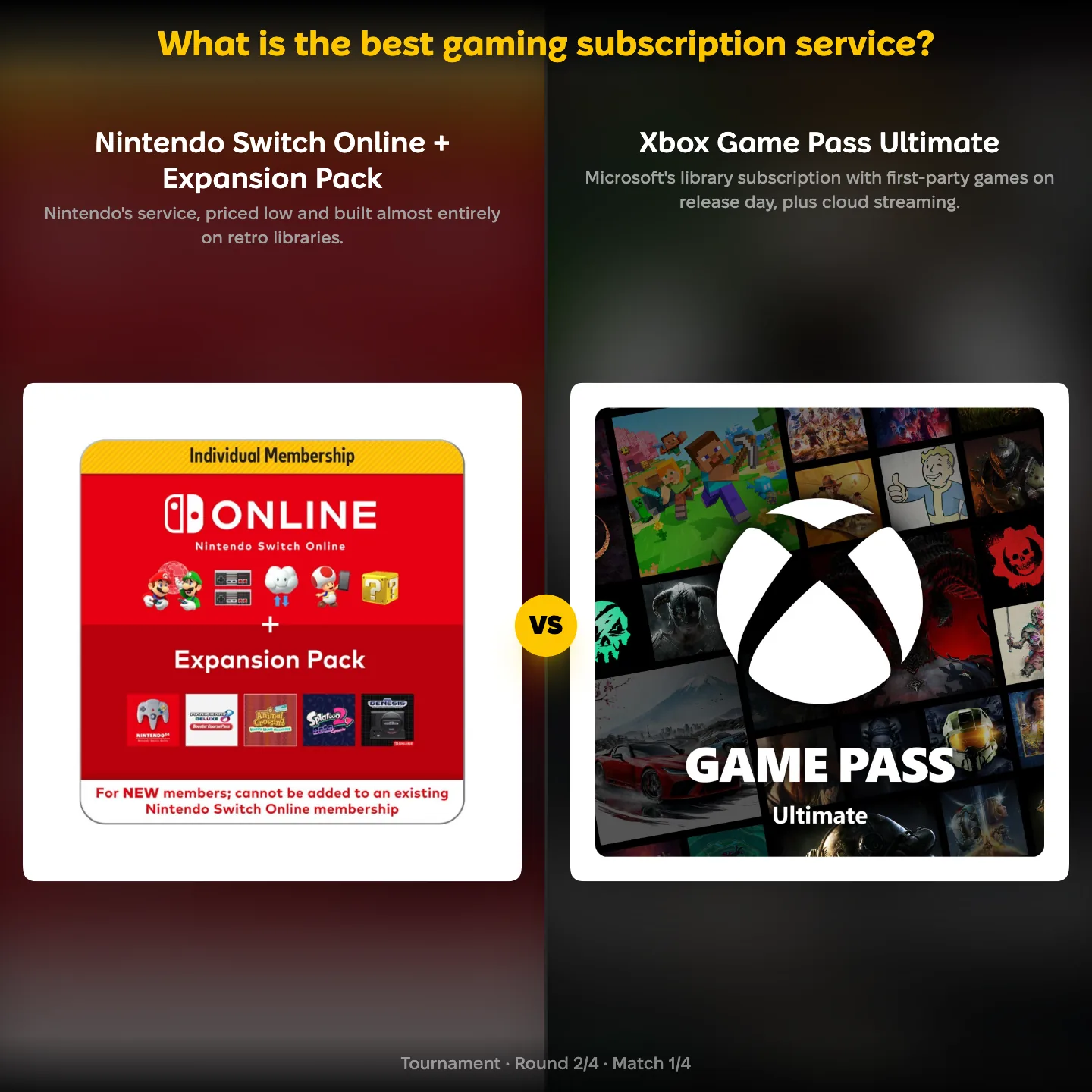
Game Pass, PS Plus and the cheapest of the three
The same fight moved to monthly billing, and this is the one category where the console you own matters least.
Xbox Game Pass Ultimate is the most aggressive offer of the three, putting Microsoft's own new releases in the library on the day they come out. That policy is also why Halo could appear on a PlayStation without Microsoft feeling it had lost anything.
PlayStation Plus Premium answers with back catalogue, reaching to the PS1 era across its top tier. Nintendo Switch Online is the cheapest and the narrowest, built almost entirely on retro libraries plus the online play a Switch needs to function.
The list runs wider than the three of them: EA Play, Ubisoft+, Apple Arcade, GeForce NOW and Amazon Luna are all in it, and two of those stream games you already own rather than lending you a library.
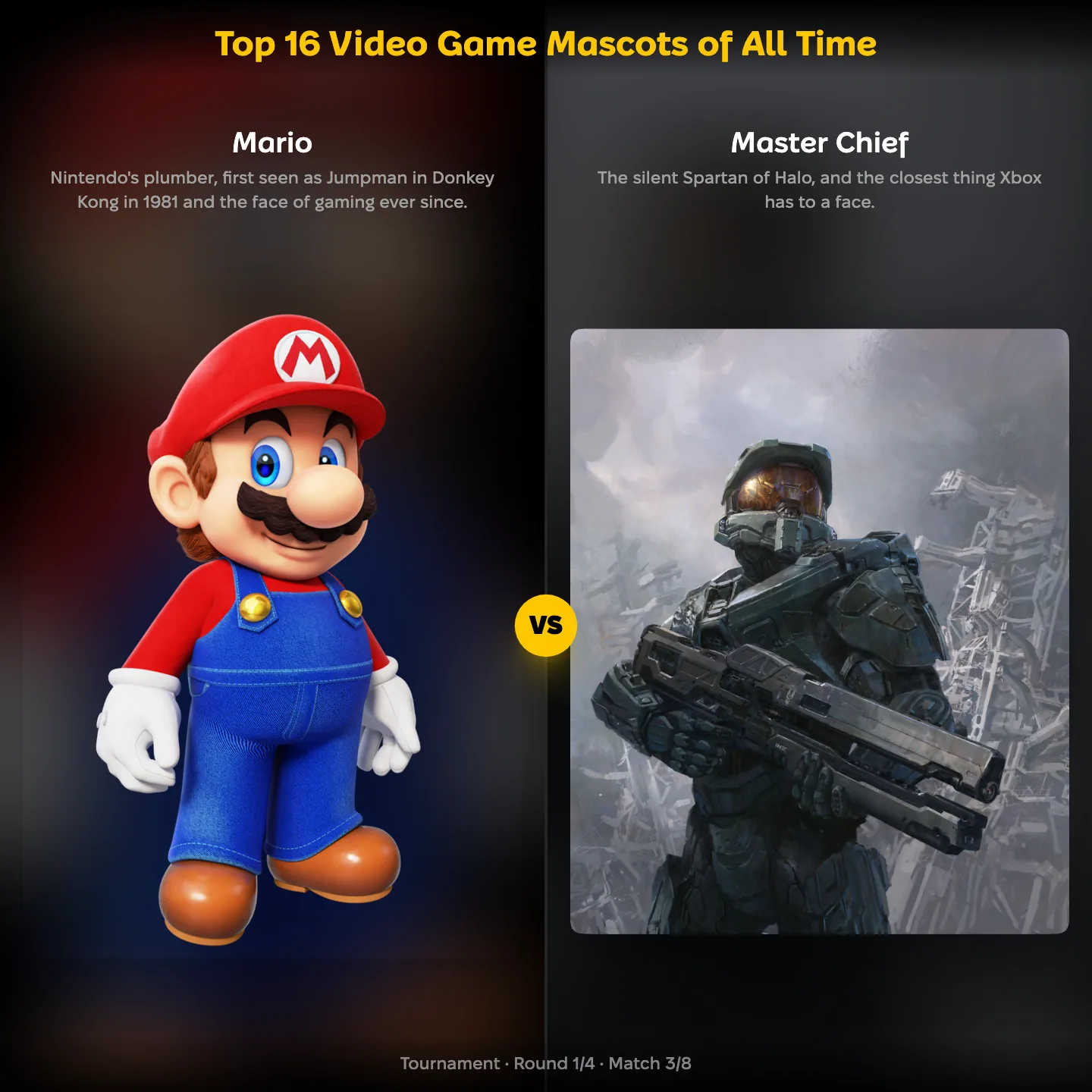
Mario vs Master Chief
Every console company wants a face, and only one of the three has had the same one since 1985.
Mario started as Jumpman in Donkey Kong in 1981 and has been Nintendo's front door ever since. Master Chief is Xbox's closest equivalent, though he arrived in 2001 and spends every appearance behind a visor.
PlayStation's history here is a series of tenants rather than an owner. Crash Bandicoot held the job in the 1990s, Kratos took over in 2005, and Astro Bot has it now.
The list is sixteen deep and the three companies do not own most of it. Sonic, Pikachu, Pac-Man and Lara Croft are all in there, and two of them belong to companies that no longer make consoles at all.
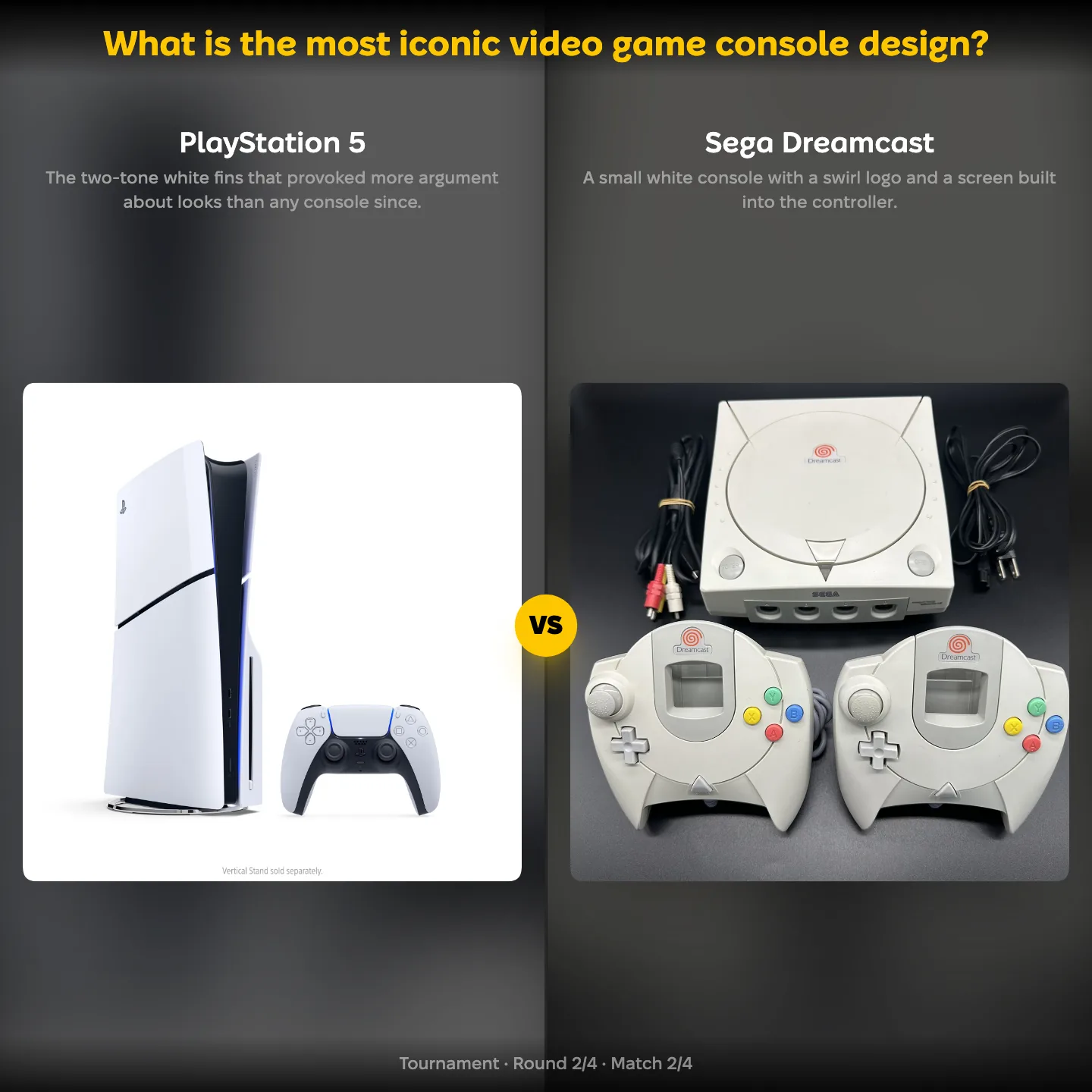
Judged on looks, the Dreamcast is still in the argument
Take the games away and rank the objects. Fifteen machines are here and the criteria stop being technical.
Nintendo's designs are the least apologetic: a purple cube with a carrying handle, a grey brick with a green screen, a tablet that comes apart. Sony's PlayStation 5 is the most divisive shape any of the three has shipped, and the PlayStation 2 the most quietly copied.
Sega belongs in this section more than in any other. The Dreamcast lasted barely two years and is still one of the best-looking consoles ever built, which is a reminder that industrial design and commercial survival are unrelated skills.
Naughty Dog, 343 Industries and who actually makes the games
Behind every exclusive is a building full of people, and the reputations in here swing much wider than the review scores of the games do.
Nintendo's development division built Mario, Zelda, Splatoon and Animal Crossing, and it is the only studio on this list whose output has stayed consistent for four decades. Retro Studios, Game Freak and Monolith Soft fill in the rest of the Nintendo column.
PlayStation's approach was to buy or grow specialists: Naughty Dog, Santa Monica Studio, Insomniac Games, Guerrilla and Sucker Punch, each with its own series. 343 Industries carries a heavier load than any of them, because it was created in 2007 specifically to take Halo over from Bungie and has been judged against Bungie ever since.
Xbox's other route was acquisition, which is how id Software, Bethesda and Obsidian ended up in the same column as Playground Games and Turn 10.

The Wii U, the Vita and a reveal that lost a generation
This is the only question here where all three companies have something to lose. Their failures are not the same kind.
Nintendo has the worst hardware disaster in the group and it is not the Wii U. The Virtual Boy sold 770,000 units, arrived in July 1995 and was discontinued in Japan by that December.5 The Wii U merely sold 13.6 million and confused everyone about what the second screen was for.
Sony's entry is the PlayStation Vita, which had a bright screen, proprietary memory cards nobody wanted to buy and a first-party pipeline that dried up within two years.
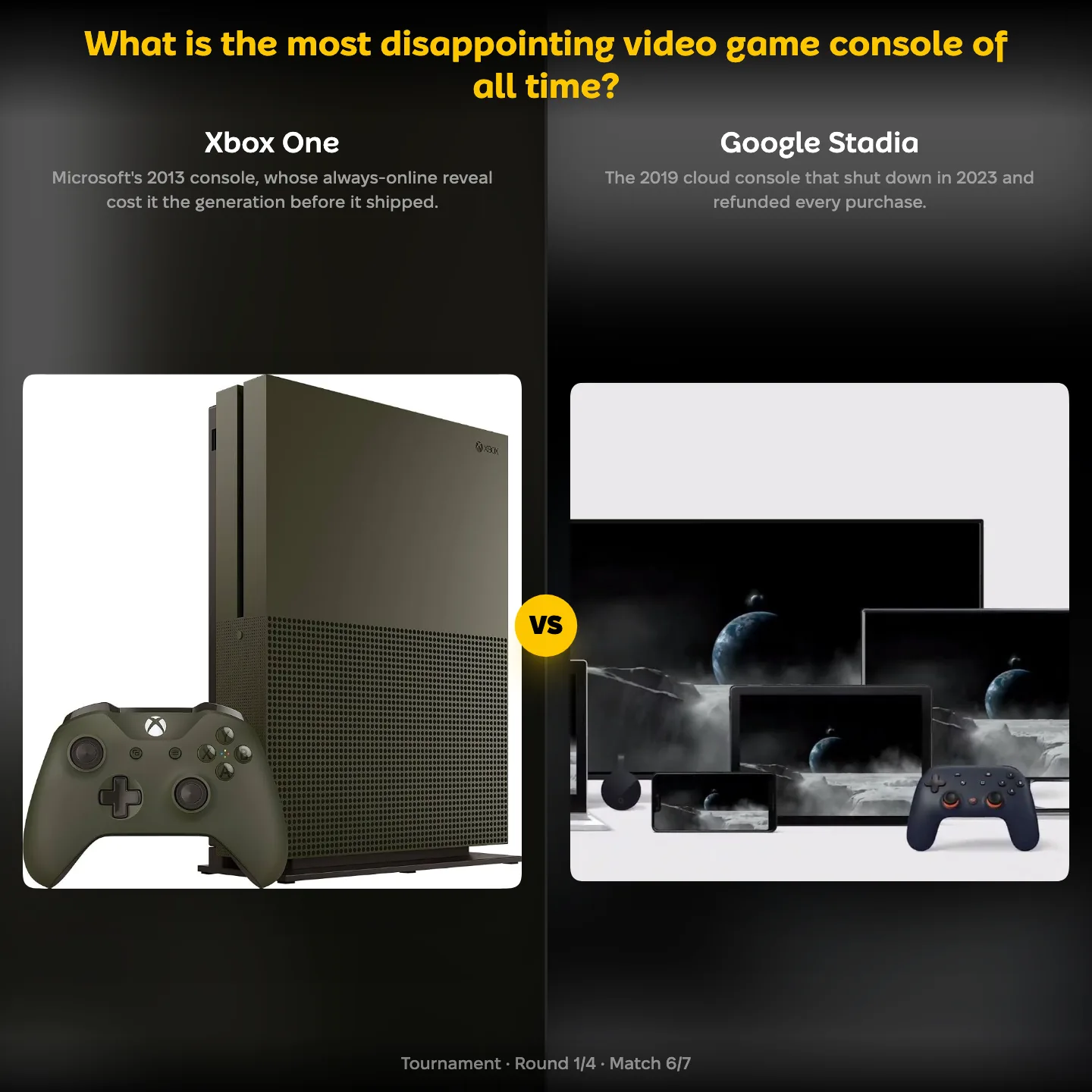
Xbox's entry is different in kind, because the Xbox One was not a bad machine. Its 2013 announcement, built around always-online checks and restrictions on used games, cost Microsoft the generation before the console reached a shop.
Everything else here is a graveyard of other people's ambition: the Sega Saturn, the Atari Jaguar, the 3DO at $699, the Ouya, the N-Gage and Google Stadia, which shut down in 2023 and refunded every purchase.
Put all three next to LEGO
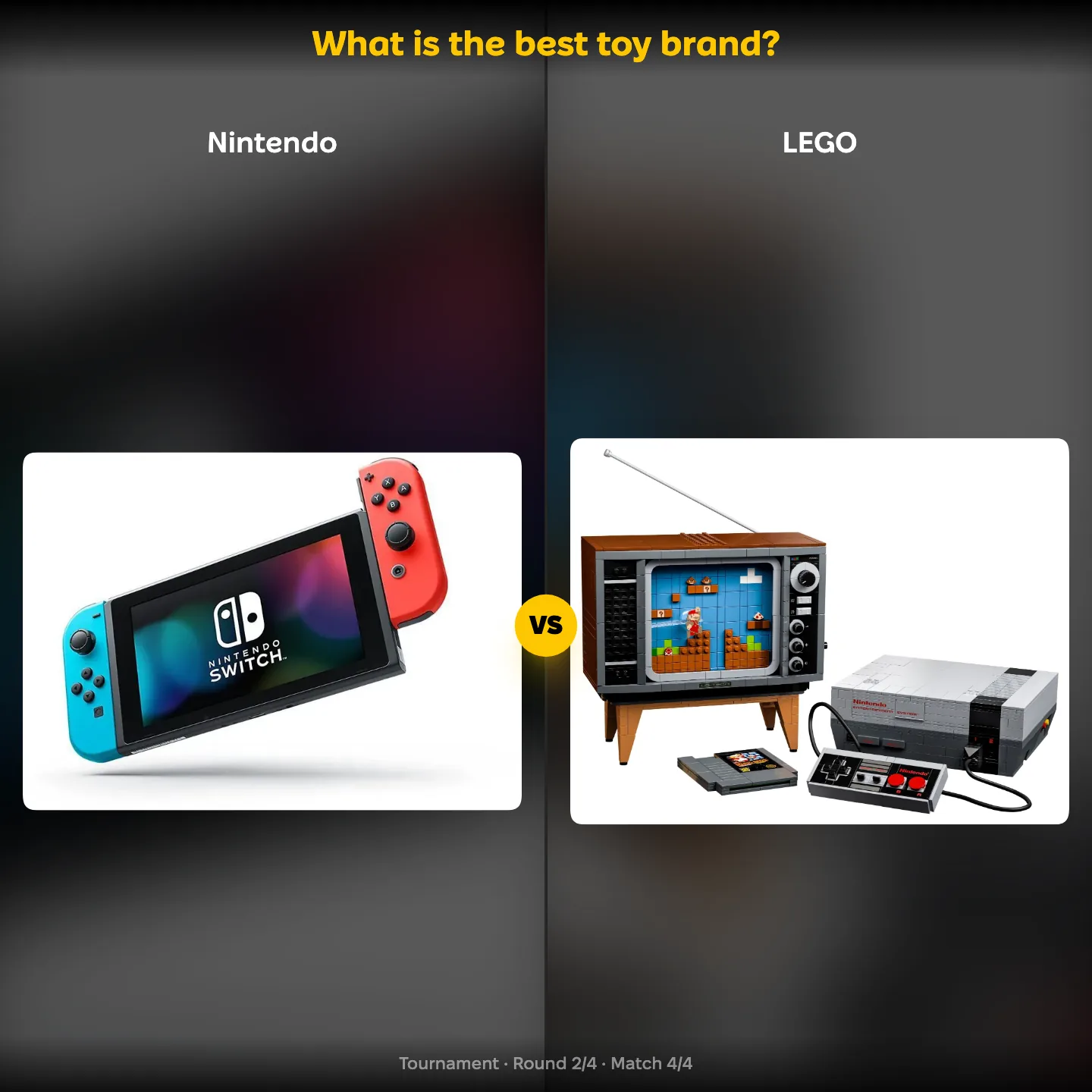
Step outside gaming and PlayStation, Xbox and Nintendo stop being rivals. They become three brands on a shelf, up against LEGO, Barbie, Hot Wheels, Nerf and Disney.
It is the least serious question in this article and the most clarifying one. Against a company that has been selling plastic bricks since 1949, twenty-five years of console war looks like a recent disagreement between neighbours.
Three companies, three different jobs
The rivalry has a founding grudge, which is the part most people have forgotten. At CES in 1991 Sony unveiled a SNES-compatible CD console called the Play Station, and Nintendo announced a competing deal with Philips the next day. Sony cut ties in May 1992 and shipped its own console in December 1994.6
Thirty-five years later PlayStation, Xbox and Nintendo are not really selling the same thing. Fourteen lists is enough to show why: the company with the most units, the company with the most portable ones and the company that no longer counts units are being judged on axes that barely overlap. Each of these rankings is settled the same way, one head-to-head at a time, which is what makes a spread like this visible at all.
Disagree with where any of them belongs? The fastest way to make that case is to build the list yourself.
More rankings, more angles
- Super Mario vs The Legend of Zelda: 16 Rankings, One Argument — the games, not the hardware that ran them
- Resident Evil: One Franchise, 14 Different Verdicts — thirty years of a series that changed genre twice
- Halo, Ranked 14 Different Ways — the shooter that shipped with the console
- Grand Theft Auto Is on Every List. Never in the Same Place — eight games, three cities, one long wait
Sources
- Sony Interactive Entertainment — corporate data on PlayStation 5, PlayStation 4 and PlayStation 2 lifetime sales and monthly active users: sonyinteractive.com (checked 2026-08-05)
- Nintendo — investor relations, dedicated video game hardware and software sales units for every Nintendo system: nintendo.co.jp (checked 2026-08-05)
- Xbox Wire — Halo: Campaign Evolved launch date and platform list, including PlayStation 5, cross-play and cross-progression: news.xbox.com (checked 2026-08-05)
- Pure Xbox — Xbox CFO Tim Stuart at the Wells Fargo TMT Summit on why Microsoft no longer reveals console sales: purexbox.com (checked 2026-08-05)
- Wikipedia — Virtual Boy unit sales, release and discontinuation dates: en.wikipedia.org (checked 2026-08-05)
- Wikipedia — Super NES CD-ROM, the 1991 CES announcements and Sony's split from Nintendo: en.wikipedia.org (checked 2026-08-05)