
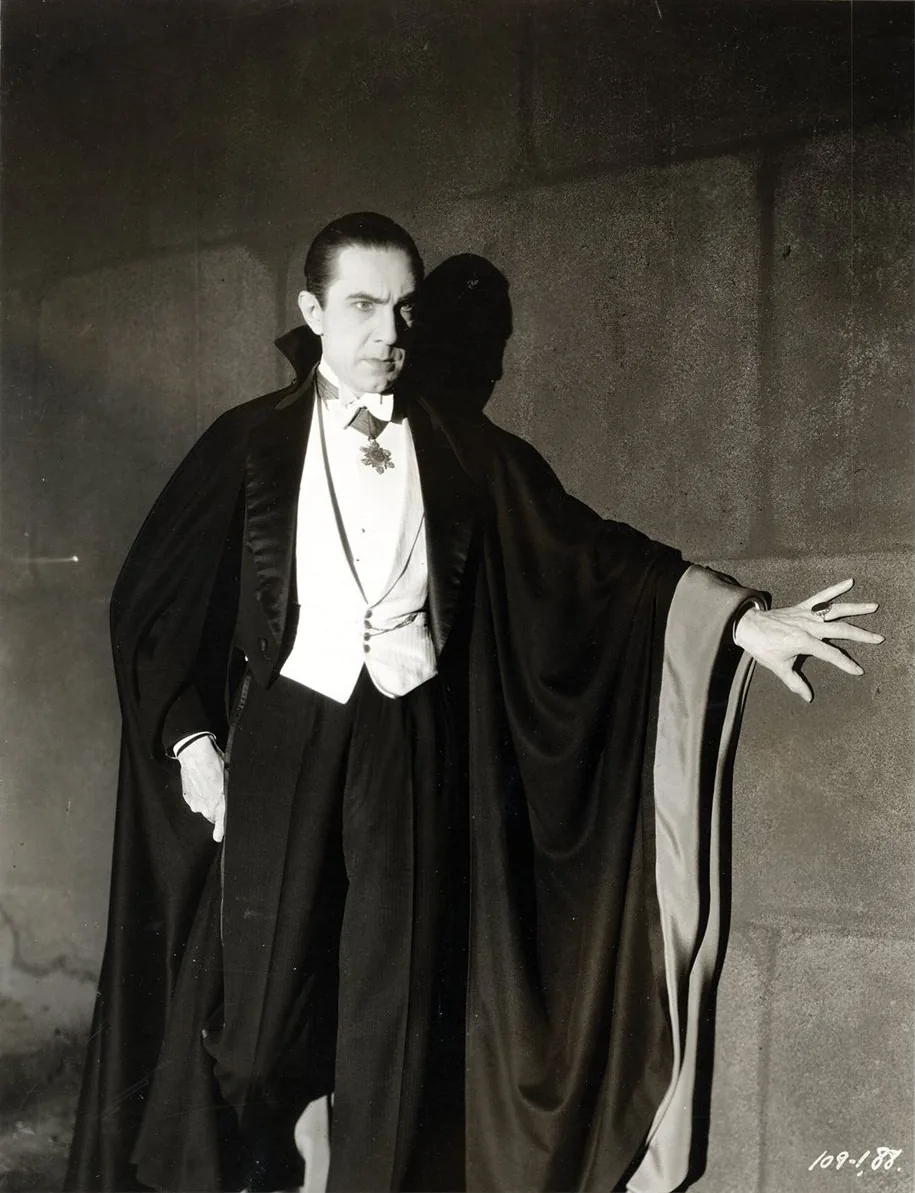
On 1 October 2026 Audible releases a full-cast Dracula in seven languages, with Jonathan Bailey as the Count and Maggie Gyllenhaal as Van Helsing.8 It joins a queue. Guinness World Records counted 538 films carrying Bram Stoker's Count, against 299 for Sherlock Holmes, and that tally was taken in 2015.1
Twelve rankings on this site hold him. In most of them the list is about somebody else.
Dracula is the most-filmed character in fiction and almost never the point of the list he is on.
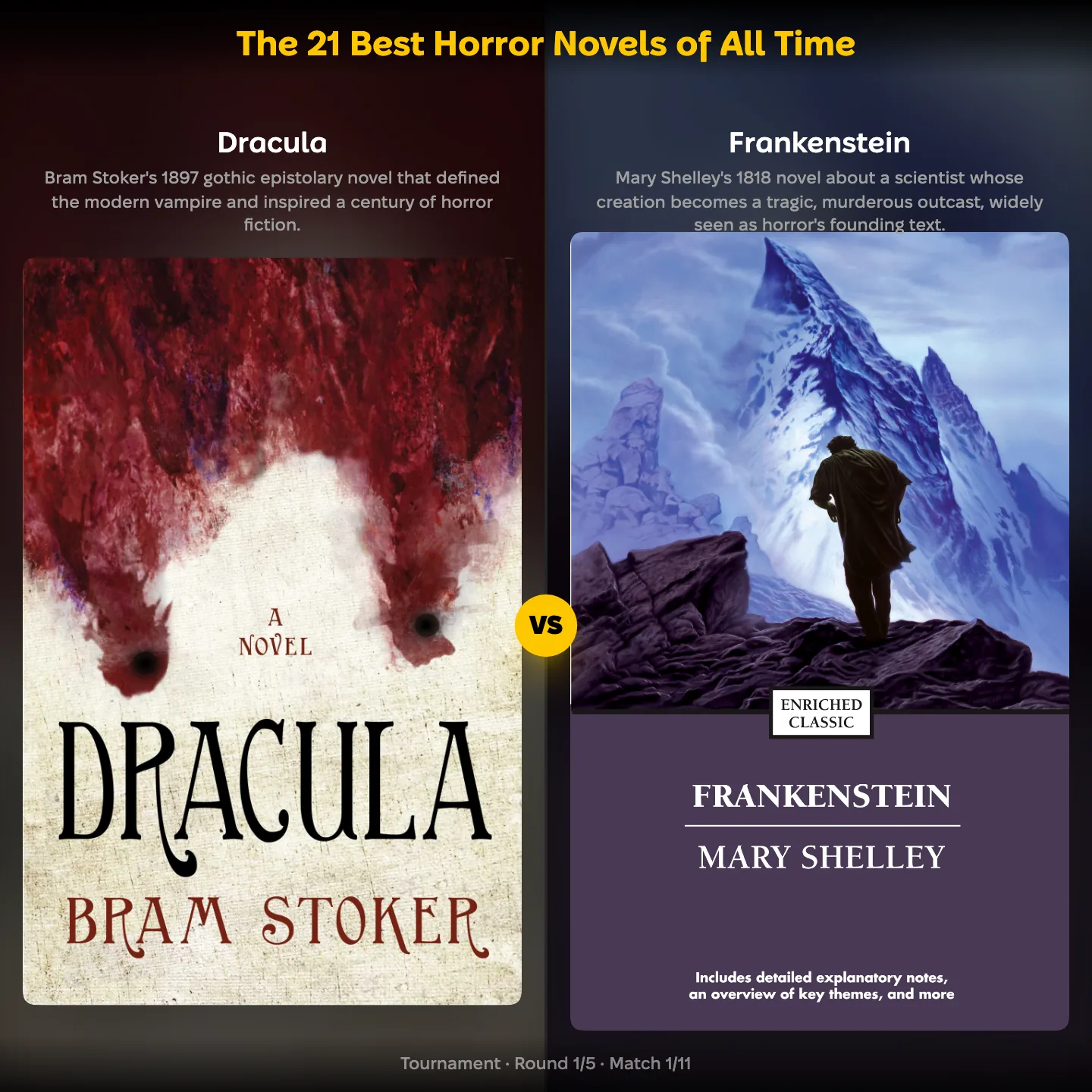
Dracula vs Frankenstein: 1897 against 1818
This ranking asks which horror novel is the best ever written, and it starts with the two books everyone names.
Stoker's novel came out in May 1897 through Archibald Constable and Company. He spent three years on it and earned nothing on the first thousand copies sold.2
Mary Shelley got there seventy-nine years earlier with a scientist and a creature, and the field has never really decided which book founded the genre. Shelley wrote about what people build. Stoker wrote about what visits.
Everything else here is mostly twentieth century: Shirley Jackson, Stephen King twice over, Thomas Harris, Ira Levin. Two Victorian survivors among them is the surprise. The case against Stoker is that his novel is a stack of letters and diary entries rather than a story anybody tells straight.
The oldest monster on a list of slashers
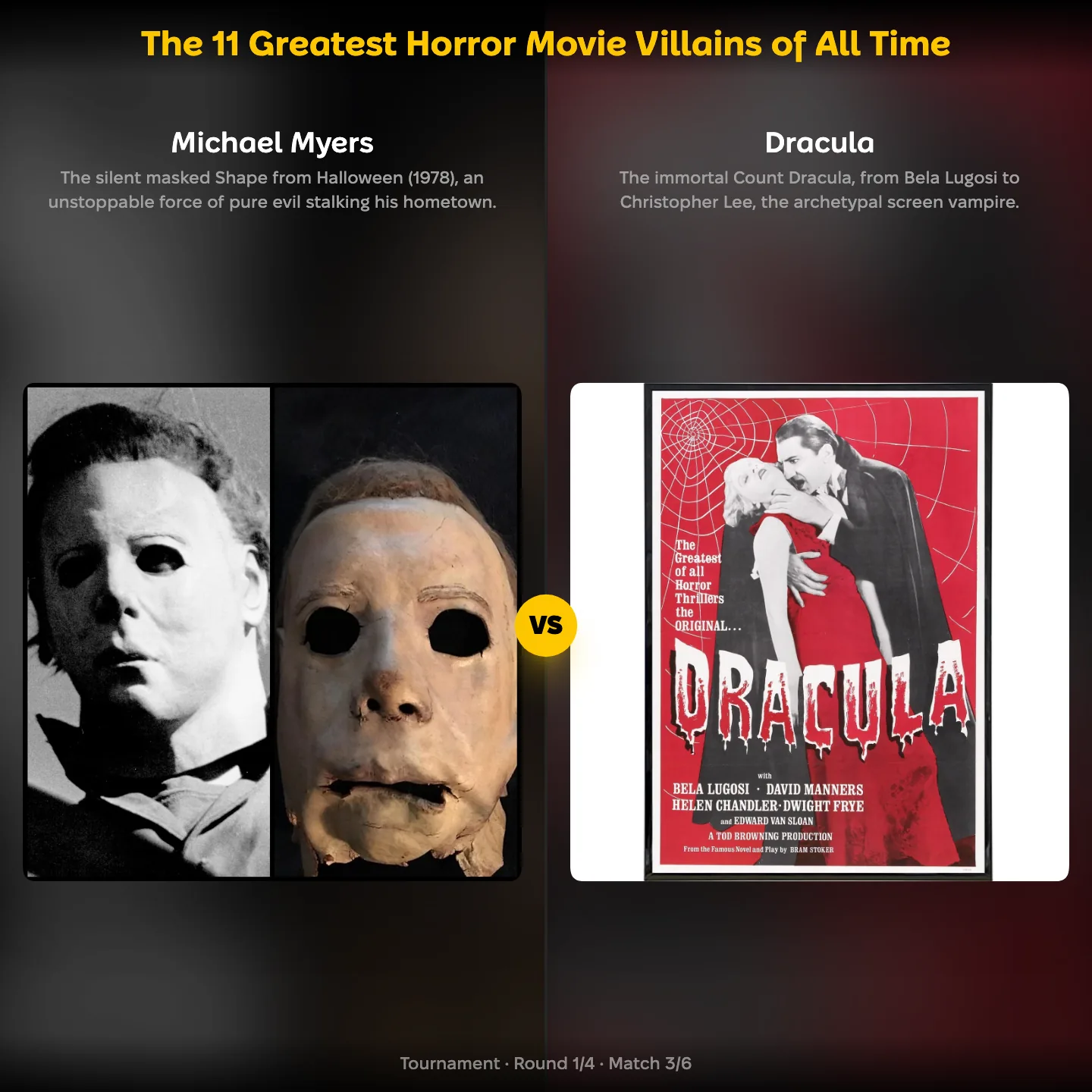
Ten of the eleven names in this ranking of horror villains come from films made after 1960. Dracula is the eleventh.
That gap shows up in what the character is asked to do. Leatherface, Jason Voorhees and Michael Myers arrive, kill and leave. Dracula talks, travels, buys property in London and employs a solicitor.
The screen history is also stranger than the others. Bela Lugosi was paid $3,500 for seven weeks of work in 1931, never escaped the typecasting, and was buried in the cape by his widow and son, who decided it for him.5 Christopher Lee, who took the role over for Hammer, has no dialogue at all in Dracula: Prince of Darkness. Lee said the lines were unspeakable and he refused them; screenwriter Jimmy Sangster said he never wrote any, because vampires do not chat.6
Against Hannibal Lecter and Norman Bates, both of whom people find frightening because they are plausible, the Count is the one villain on the list nobody has to believe in.
Bram Stoker's Dracula, on a list with The Godfather
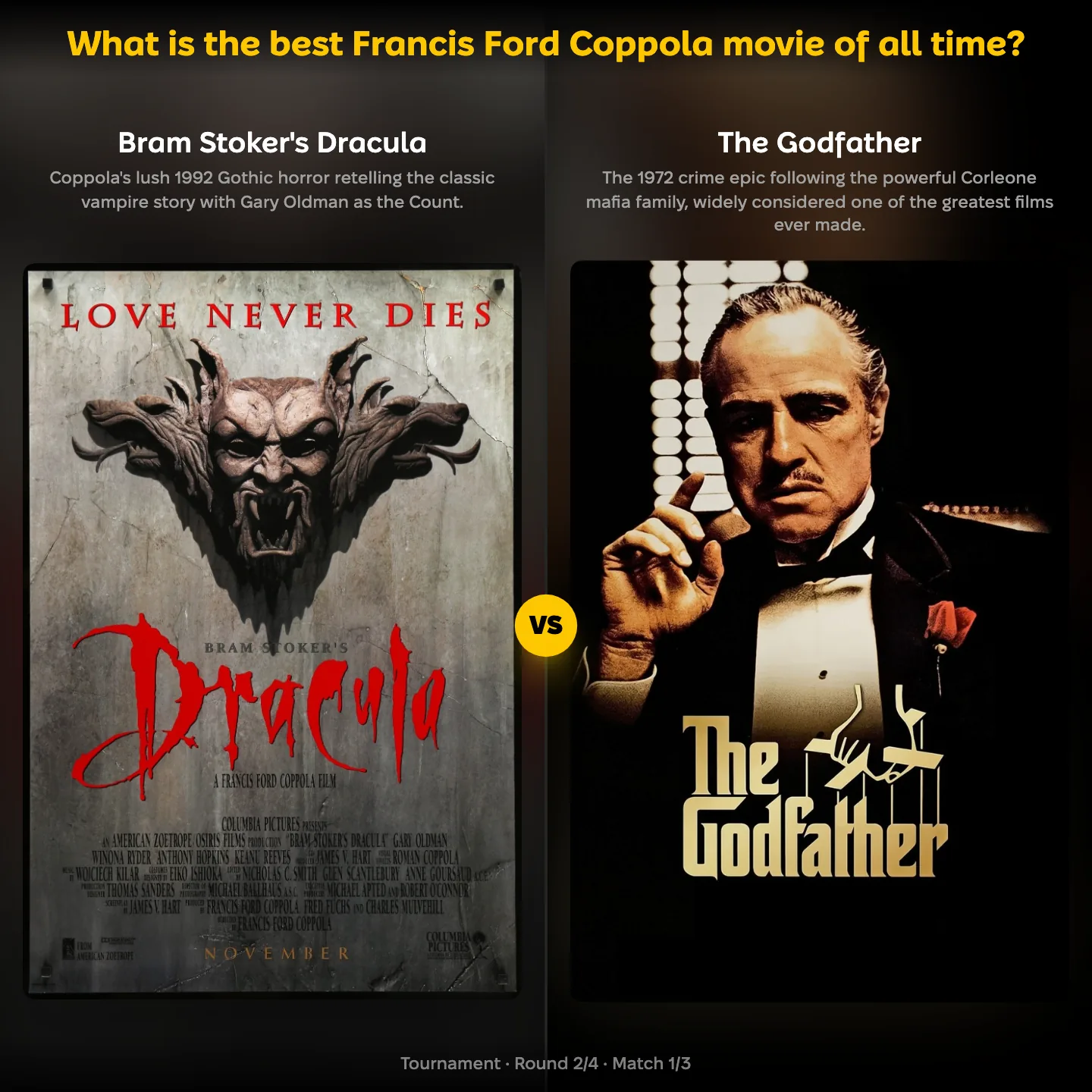
Francis Ford Coppola's Dracula opened on 13 November 1992 and did very well. It took four Academy Award nominations and won three, for costume design, sound editing and makeup, and grossed $215.9 million against a $40 million budget.4
Then this ranking puts it next to Apocalypse Now, The Conversation and both parts of The Godfather.
Three Oscars is a strong record almost anywhere else. On a shortlist of nine Coppola films it is the fifth-best-known entry, and the film most people remember it for is Gary Oldman's performance and Keanu Reeves' English accent, in that order.
The scale is worth holding on to. Luc Besson made the most recent theatrical Dracula, released in France in July 2025 and across North America on 6 February 2026 with a Danny Elfman score, and it took $42.4 million on a $52 million budget.9 Coppola's version remains the one that made money, and its cast was assembled the way studios assemble a prestige picture: Oldman, Anthony Hopkins, Winona Ryder, Tom Waits as Renfield.
Eiko Ishioka's costume design won one of those three Oscars, and it is the reason the film still gets watched. Her Count wears red armour in the prologue and a wolf-pelt coat in London, neither of which owes anything to the cape Lugosi wore. Coppola treated the novel as a costume epic rather than as horror, which is also the argument against it.
On television the vampire hunters get top billing
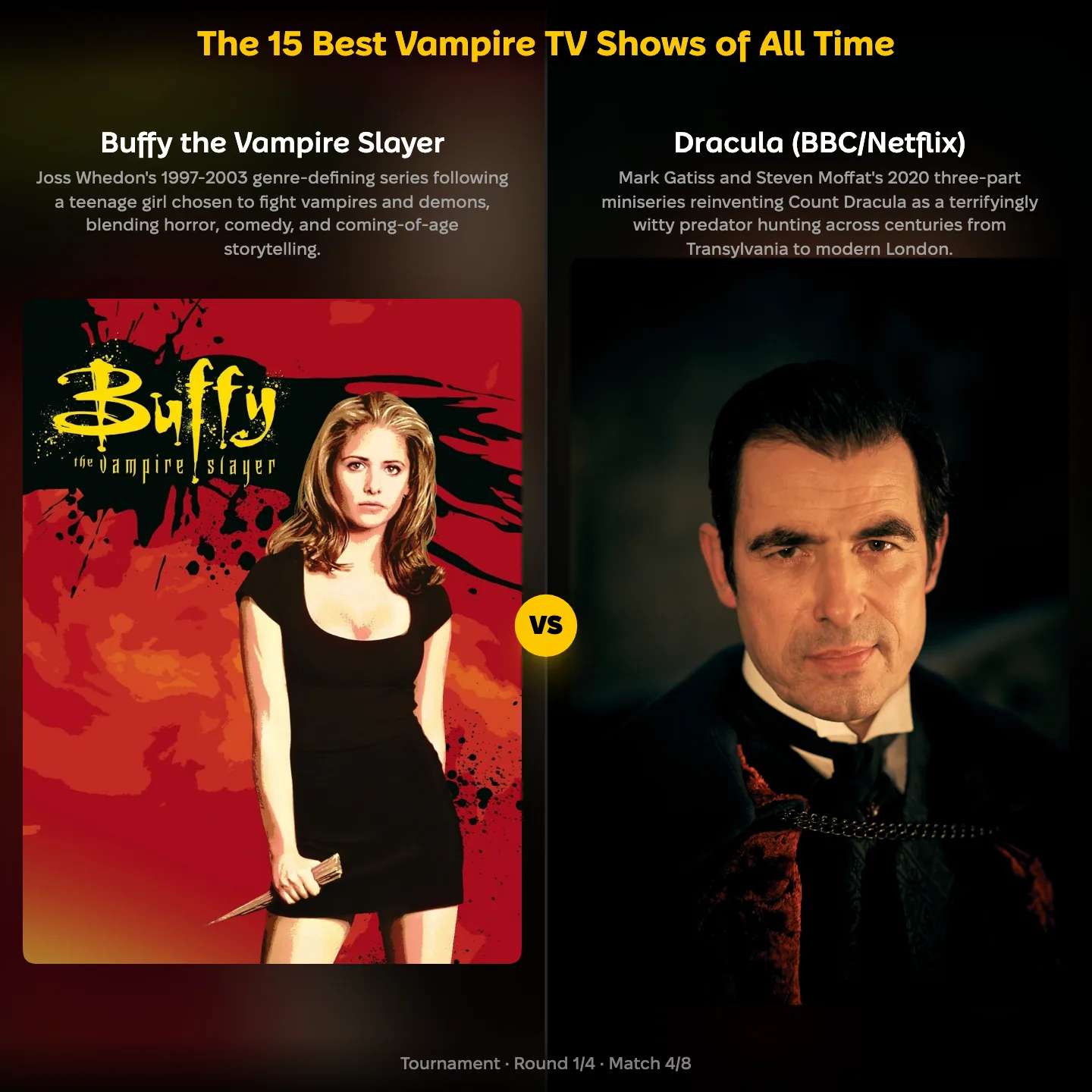
This ranking collects vampire television, and Dracula is on it through the 2020 BBC and Netflix miniseries written by Mark Gatiss and Steven Moffat.
Almost everything else on the list belongs to the people invented to fight him. Buffy the Vampire Slayer ran for seven seasons. Angel got five. Van Helsing's descendants have carried more hours of television than the Count ever has.
Dracula's own television adaptations tend to be short. The 2020 version runs to three feature-length episodes; the BBC's 1977 Count Dracula with Louis Jourdan was a single 155-minute film.10 Nobody has managed to build a returning series around him, because the plot ends when he does.
Interview with the Vampire and True Blood describe vampires who live somewhere and stay. Dracula travels to England, gets hunted and dies, and that shape has never stretched to a fourth season.
Nosferatu: the Dracula film a court ordered destroyed
The next four rankings hold Dracula under a different name, so it is worth saying why. F. W. Murnau filmed the novel in 1922 without buying the rights, changed the Count's name to Orlok and released it as Nosferatu. Florence Stoker, the author's widow, sued. The court agreed with her and ordered every print destroyed. Several survived, and the film entered the public domain worldwide in 2019.3
So when a ranking of the best German films ever made includes Nosferatu, it is including Dracula. The estate proved as much in a courtroom.
Around it sits Weimar cinema at full stretch: Metropolis, M, The Cabinet of Dr. Caligari, with Das Boot and Downfall arriving decades later. Robert Wiene's Caligari beat Murnau to the screen by two years and invented most of the visual grammar Nosferatu then used.
Murnau's contribution was to put the monster in daylight and in real Baltic streets. Wismar still runs Nosferatu tours of the locations, which is not something Caligari's painted sets can offer.
Anthony Hopkins played Van Helsing and Hannibal Lecter
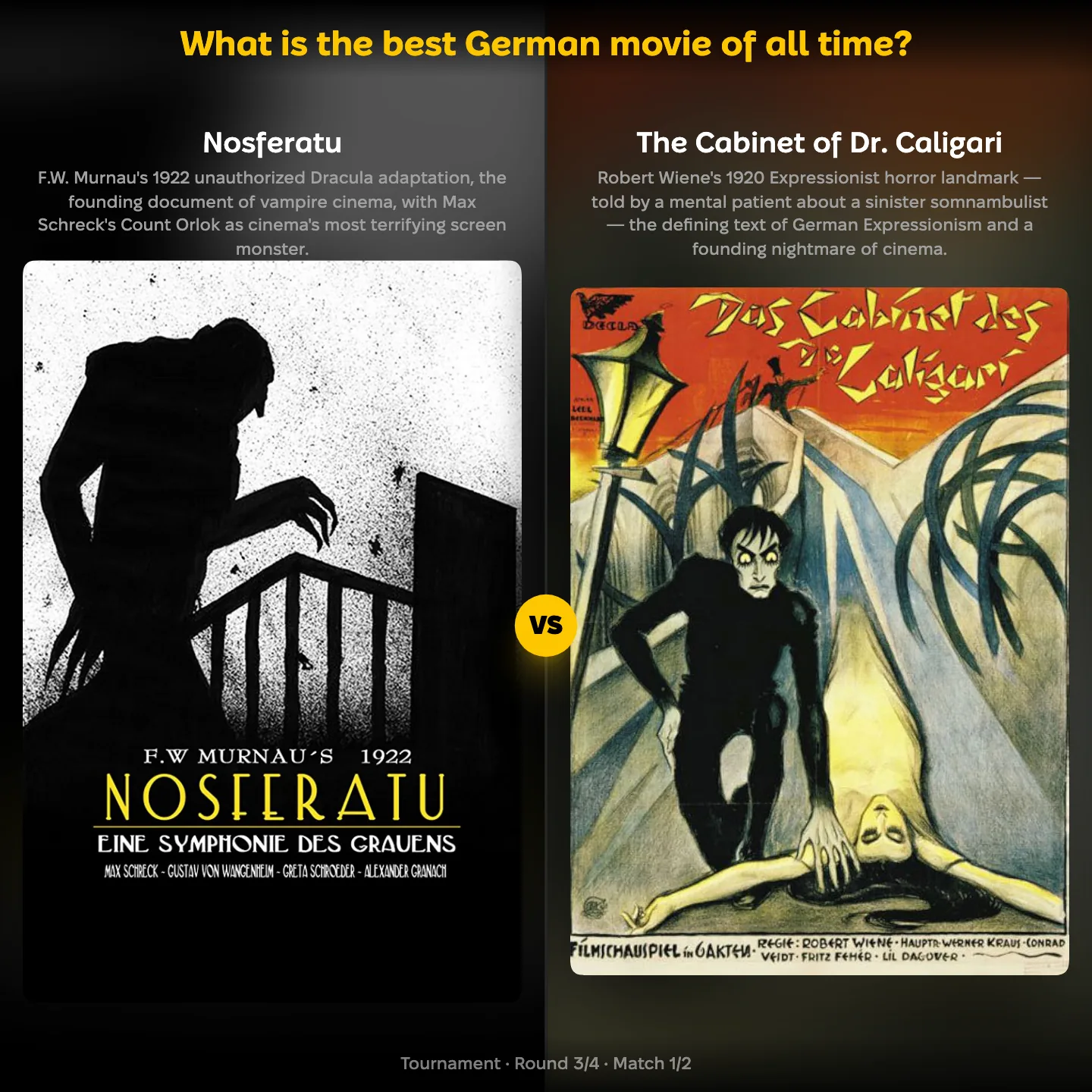
Coppola's Dracula appears again here, on a list of twenty-four Anthony Hopkins films, because Hopkins played Van Helsing in it.
The Silence of the Lambs came out the year before and brought him the Best Actor Oscar. So one career holds the most famous vampire hunter on film and the most famous cannibal, twelve months apart.
Hopkins plays Van Helsing as a man enjoying himself, which is not how the part is usually done. He shouts, he laughs at funerals, he explains the rules of vampirism to men who do not want to hear them.
Further down the list sit The Remains of the Day, The Elephant Man and The Father, which won him a second Oscar at 83. Against those, a supporting turn in a horror film is a footnote in the career of the actor everybody remembers from it.
A silent decade of comedians, and one Count
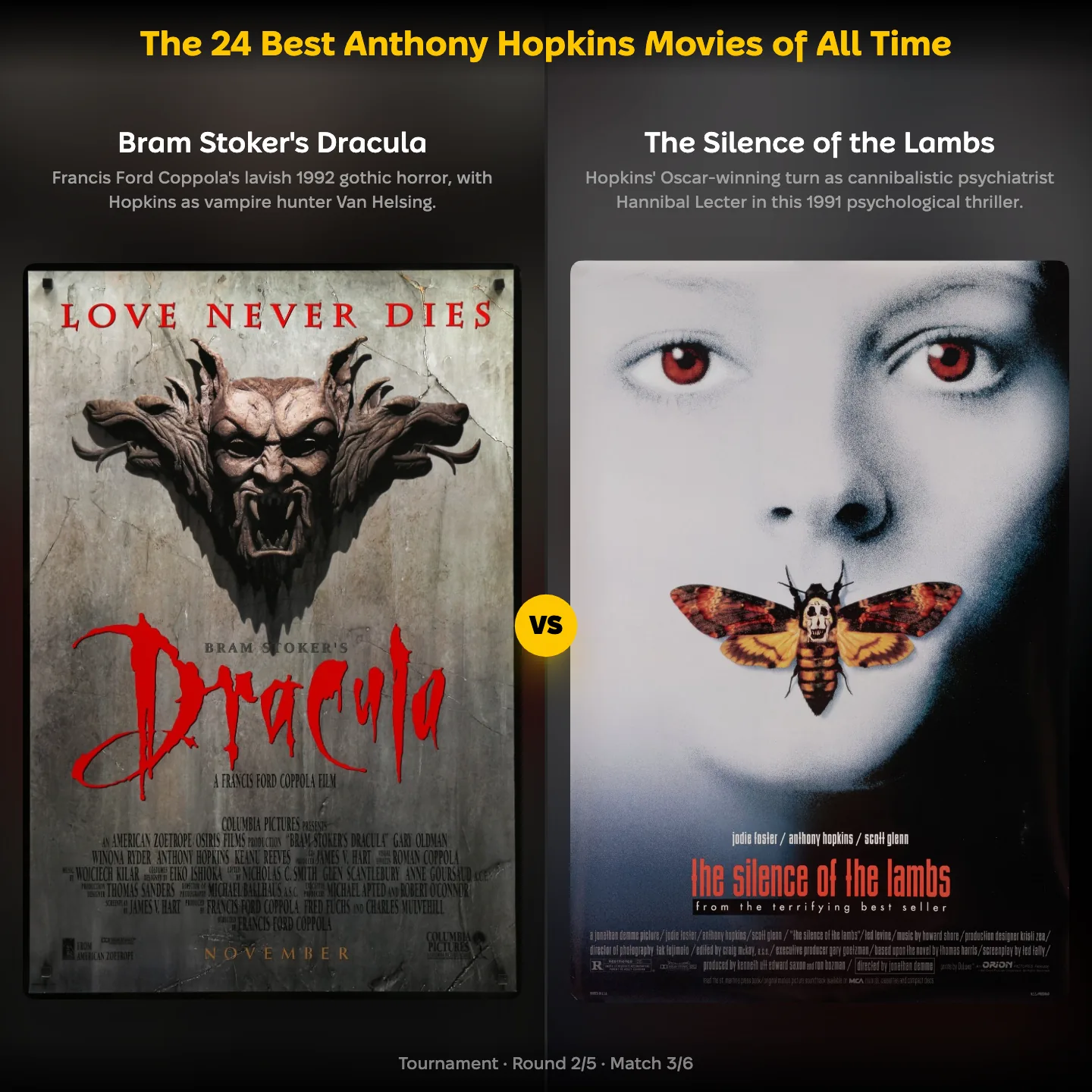
This ranking covers black-and-white films of the 1920s, and it is dominated by people being funny. Buster Keaton has two entries, Charlie Chaplin two more, Harold Lloyd one.
Nosferatu is the horror film in that company, made under the legal cloud that would eventually cost its producers everything.3 Set beside The General and Sherlock Jr., it is doing something the decade had not tried: asking an audience to be afraid of a man walking up a staircase.
Battleship Potemkin, The Passion of Joan of Arc and Sunrise all have better claims to being important. Murnau's images still work on people who have never watched a silent film.
Focus Features made Brokeback Mountain and a vampire film
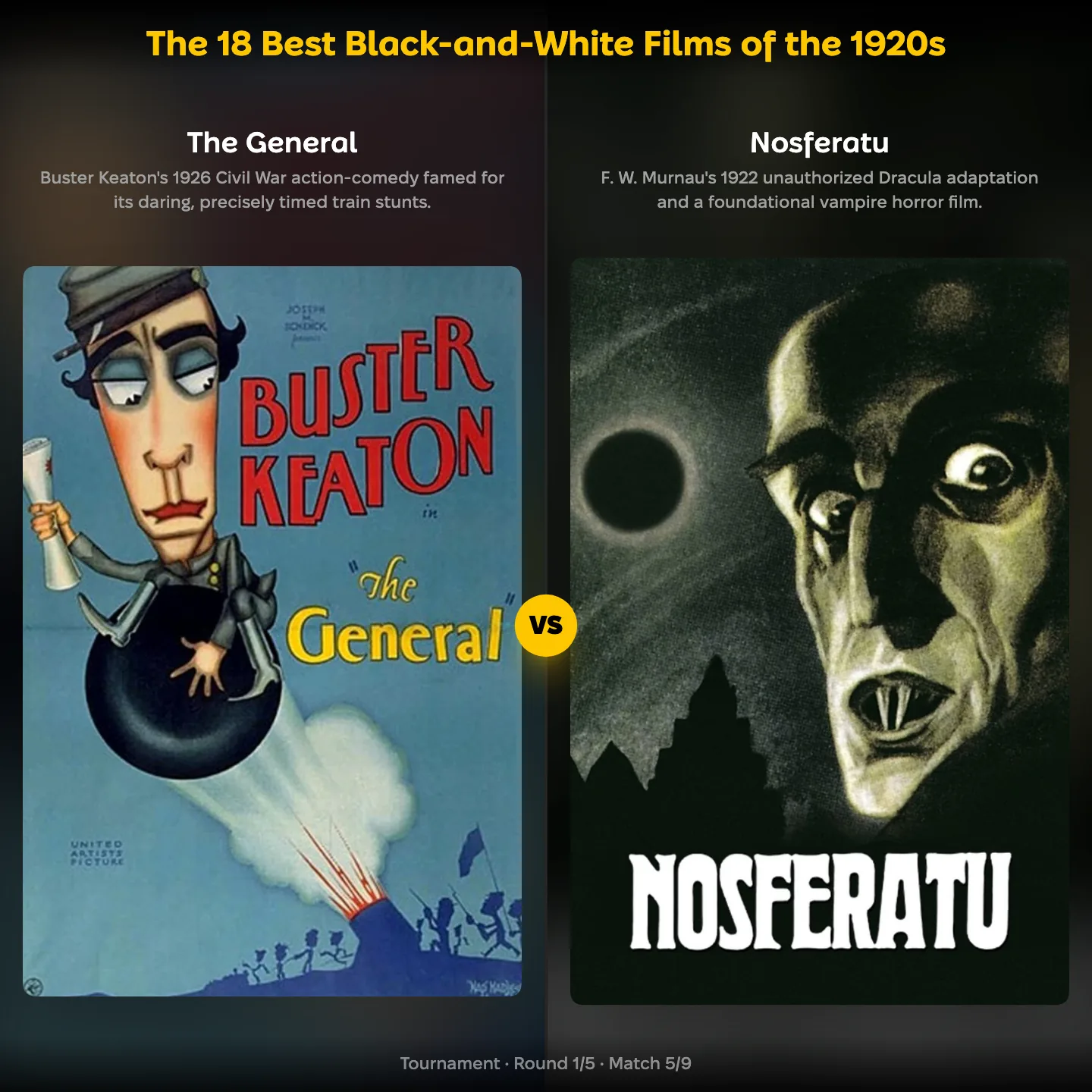
Focus Features is a prestige-drama label: Brokeback Mountain, Lost in Translation, Atonement, The Favourite, Spotlight. Then in 2024 it released Robert Eggers' Nosferatu.
Eggers went back to the 1922 title rather than to Stoker's, which is how Dracula reaches this ranking as somebody else again.
The film is the studio's highest-grossing horror release, and it works because Eggers treats the material as period drama with a monster in it. Bill Skarsgård's Orlok is buried under prosthetics and a Romanian accent; the film's real subject is Lily-Rose Depp's Ellen and what she has agreed to.
Next to Pride & Prejudice and Still Alice, a vampire film reads as the outlier here. No other entry begins with a 1920s copyright ruling.
Willem Dafoe has been in this story twice
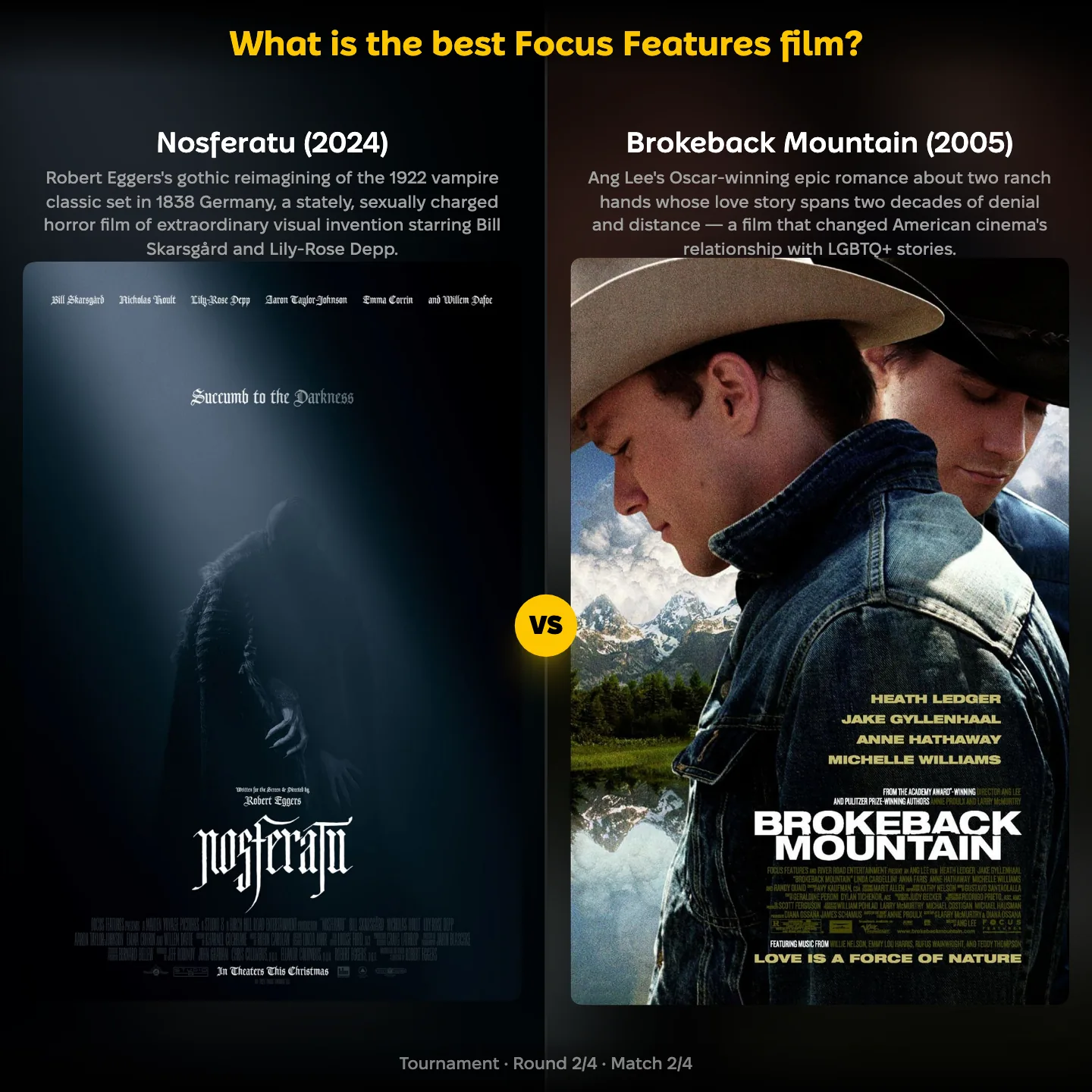
Two entries on this list of Willem Dafoe films belong to the same story, and the ranking has them competing.
Shadow of the Vampire, from 2000, is a fiction about the making of Nosferatu in which Dafoe plays Max Schreck as a real vampire whom Murnau has hired. It earned him an Academy Award nomination for Best Supporting Actor. Twenty-four years later he appeared in Eggers' Nosferatu as the occultist who works out what is happening.
Dafoe has therefore played the monster of the 1922 film and the man who diagnoses it in the 2024 one. Platoon, The Last Temptation of Christ and The Lighthouse also appear here, an honest measure of how deep the career runs.
Monica Bellucci's English-language debut was a Dracula bride
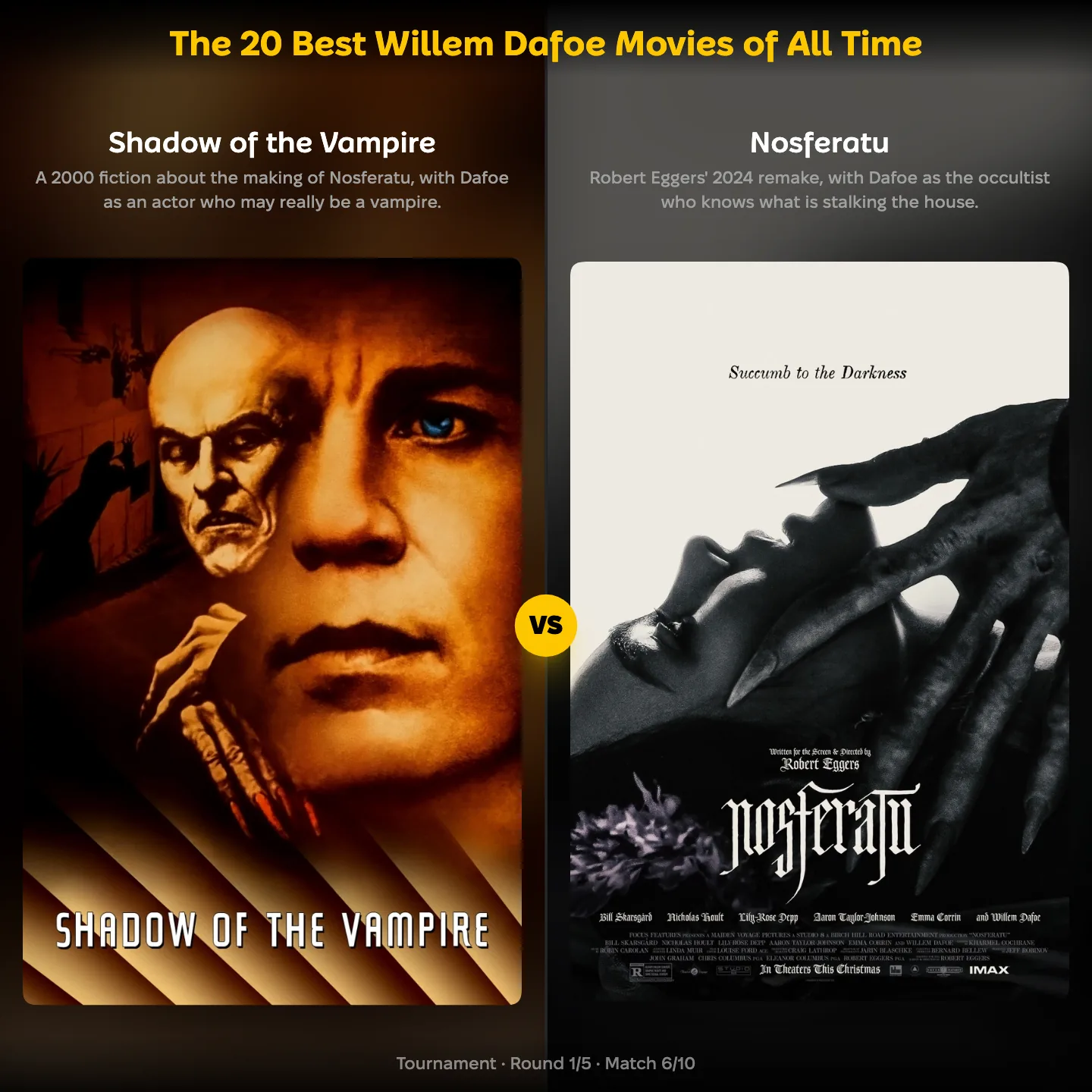
Bellucci's first English-speaking role was one of Dracula's three brides in Coppola's 1992 version, credited and barely spoken.
This ranking of her films opens with Malèna, Irréversible and The Passion of the Christ. Two Matrix sequels are on it, and Spectre, in which she became the oldest actress cast as a Bond love interest at 50.
Most Dracula adaptations treat the brides as scenery. Coppola's is a rare case where one of them went on to a thirty-year career.
Castlevania: forty years of killing the same Count
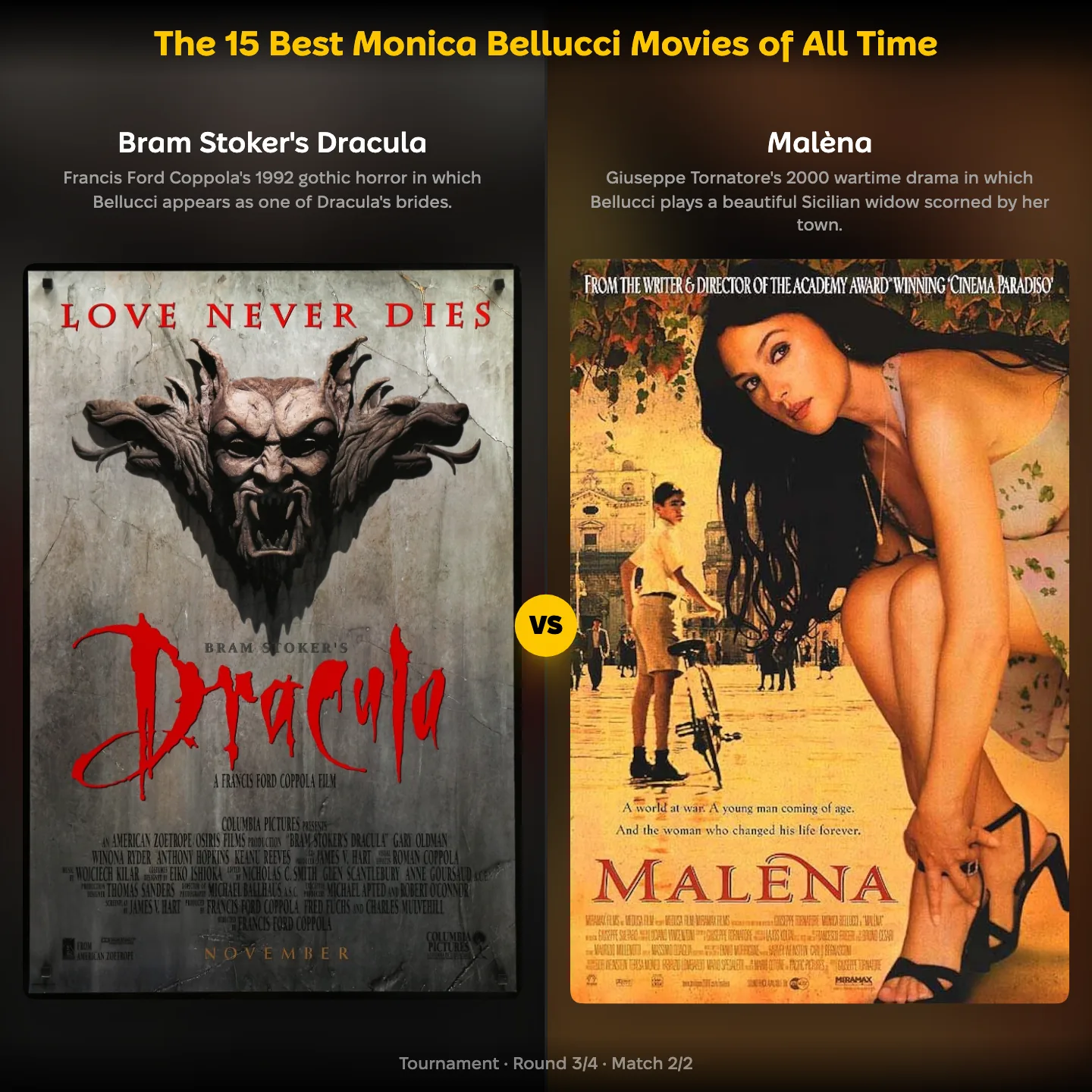
Konami has been shipping games about killing Dracula since 1986, and this ranking sorts twelve of them.
The Count is the reason the series exists. Castlevania III carries his name in the subtitle, Dracula's Curse, and the plot of nearly every entry is a Belmont walking through his house toward him. He is beaten, he comes back a century later, another Belmont sets off.
Symphony of the Night, from 1997, changed what the games were by handing the player Alucard, Dracula's son, and letting him explore instead of march. That structure got named after the series, and the whole Metroidvania genre now traces back to a game about the Count's own child turning on him.
The 1986 original states the idea most plainly and is much the hardest to finish. What the newer entries gained in exploration they gave up in the sense that the castle wants you dead.
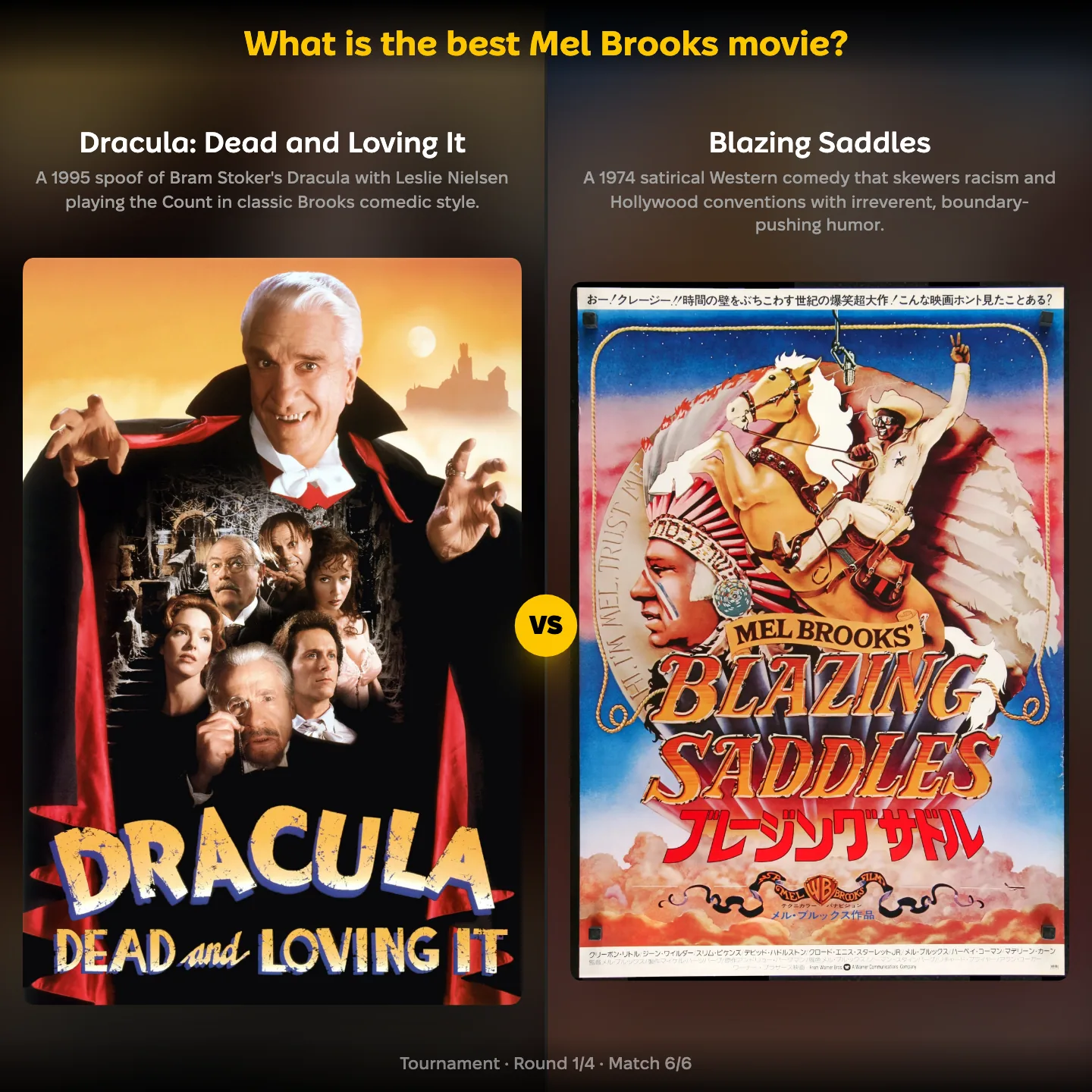
Mel Brooks directed one last film, and it was Dracula
Dracula: Dead and Loving It reached cinemas on 22 December 1995 with Leslie Nielsen as the Count. It took $10.7 million against a $30 million budget, holds 11% on Rotten Tomatoes, and is the last film Mel Brooks has directed.7
That is the unkind end of this article. The character with more screen credits than any other in fiction also closed out one of the great comedy careers.
Brooks had done this before and done it well. Young Frankenstein, from 1974, appears further up the same ranking and is widely held to be among the best parodies ever made. That is what makes the Dracula attempt hard to explain: same director, same genre, same affection for the source, twenty-one years apart.
Blazing Saddles, Spaceballs and The Producers are all here too. Against them, the Count is the entry that ended the run.
A hundred and thirty years of being somebody else's best role
Stoker never went to Transylvania. He found the name in an 1820 English history of Wallachia, thought it meant devil, and scholars now call the link to Vlad the Impaler tenuous at best.2 A man who invented a country he had not visited produced the most-filmed character there is, and that character then spent a century making other people's work legible: Lugosi's, Lee's, Coppola's, Hopkins', Dafoe's, Konami's.
Twelve rankings here hold him and eleven of them are about somebody else. That is the shape of his fame, and the reason it lasted: a character adaptable enough to be a footnote in almost any story is a character nobody ever has to retire.
All twelve of these questions come down to the same mechanic: one pair, then the next pair, all the way down the field. Know a character who keeps appearing on lists about other people? Build that ranking and see where they land.
More rankings, more angles
- Frankenstein Won Three Oscars and Bombed in the Same Month — Universal's other 1931 monster, and Mary Shelley's novel
- Stephen King Wrote Horror. The Lists Keep Filing Him Elsewhere — the modern writer with the same problem
- Agatha Christie: 100 Years On, 15 Different Lists — a Victorian-born novelist filmed almost as often
- Halloween: a $325,000 Movie and a $13 Billion Night — the other monster that became a season
Sources
- Guinness World Records — most portrayed literary character in film, 538 films as of 1 August 2015, ahead of Sherlock Holmes on 299: guinnessworldrecords.com (checked 2026-08-28)
- Wikipedia — Dracula: May 1897 publication by Archibald Constable and Company, three years of writing, no royalties on the first thousand copies, the name taken from William Wilkinson's 1820 history of Wallachia, and the disputed Vlad the Impaler link: en.wikipedia.org (checked 2026-08-28)
- Wikipedia — Nosferatu (1922 film): the unauthorised adaptation, Florence Stoker's lawsuit, the court order to destroy every print, and the film's worldwide entry into the public domain in 2019: en.wikipedia.org (checked 2026-08-28)
- Wikipedia — Bram Stoker's Dracula (1992): four Academy Award nominations and three wins for costume design, sound editing and makeup, and $215.9 million worldwide on a $40 million budget: en.wikipedia.org (checked 2026-08-28)
- Wikipedia — Bela Lugosi: the $3,500 fee for seven weeks on Dracula (1931), the typecasting that followed, and the burial in the cape decided by his widow and son: en.wikipedia.org (checked 2026-08-28)
- SlashFilm — why Christopher Lee has no dialogue in Dracula: Prince of Darkness, and Jimmy Sangster's contradicting account: slashfilm.com (checked 2026-08-28)
- Wikipedia — Dracula: Dead and Loving It: released 22 December 1995, $10.7 million against a $30 million budget, 11% on Rotten Tomatoes, and Mel Brooks' last film as director: en.wikipedia.org (checked 2026-08-28)
- Collider — Audible's full-cast Dracula, released 1 October 2026 in seven languages with Jonathan Bailey as the Count and Maggie Gyllenhaal as Van Helsing, directed by Mary Lambert: collider.com (checked 2026-08-28)
- Wikipedia — Count Dracula (1977): the BBC's 155-minute single television film with Louis Jourdan, first broadcast on BBC 2 on 22 December 1977: en.wikipedia.org (checked 2026-08-28)
- Wikipedia — Dracula (2025 French film): Luc Besson's adaptation, French release 30 July 2025 and North American release 6 February 2026, Danny Elfman score, $42.4 million worldwide on a $52 million budget: en.wikipedia.org (checked 2026-08-28)