
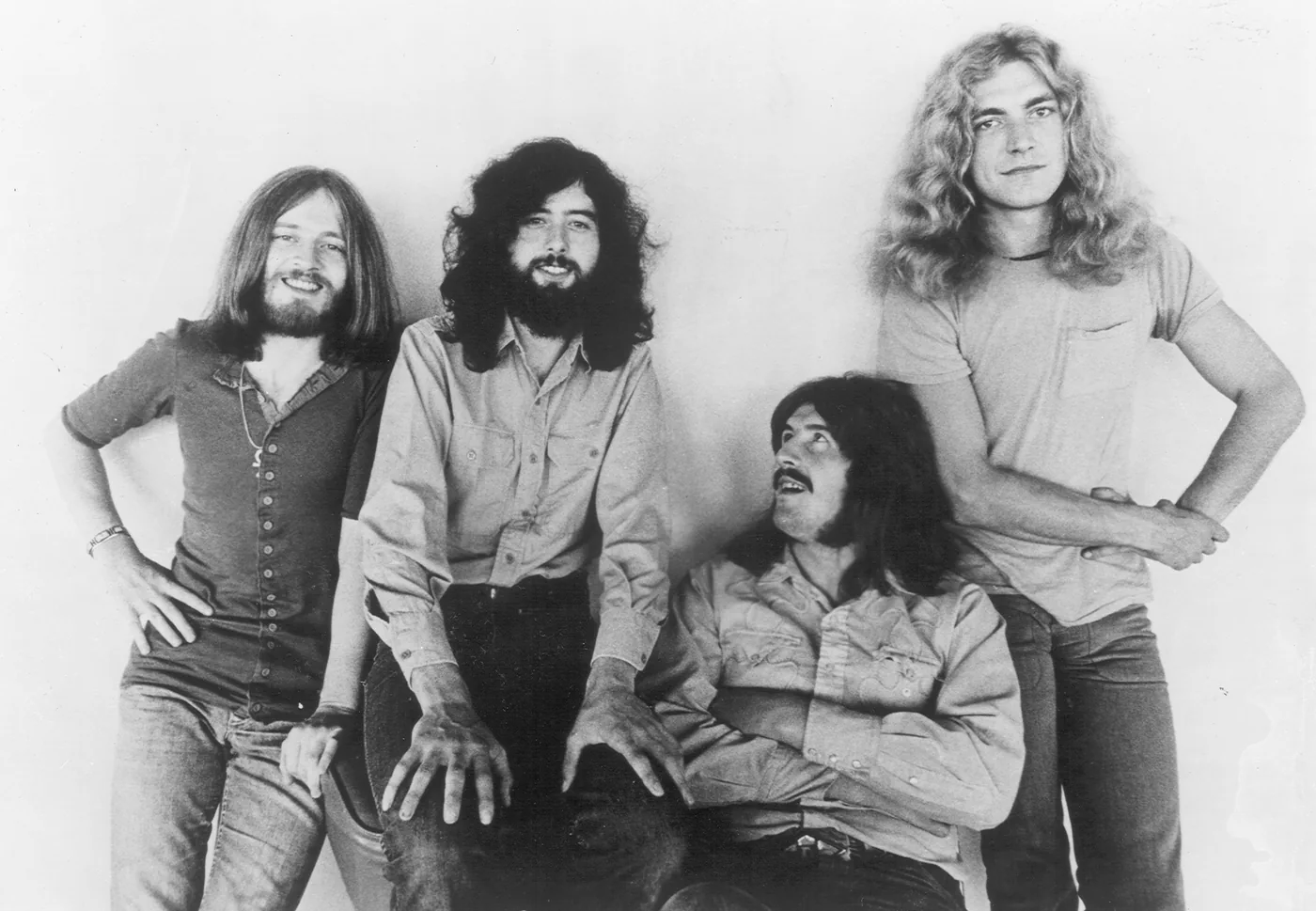
Robert Plant opens a sixteen-date American tour on 18 September 2026, in St. Louis, with a folk band called Saving Grace and a set that leaves out most of Led Zeppelin.1 That is roughly how the band has always handled its own catalogue. Their manager Peter Grant refused to release a single in Britain for the whole of their career; when Atlantic asked for an edited "Whole Lotta Love" in 1969, Grant and Jimmy Page said no.2 Their best-selling record went out with no title and no band name on the sleeve, just four symbols.
A dozen of the rankings here feature Led Zeppelin, one of their records, or one of the four men. Each one puts a different question to them.
Led Zeppelin withheld the singles, the title and most of the interviews, and twelve lists have since put them on twelve different shelves: the debut, the riff, the drummer, the overrated pile.
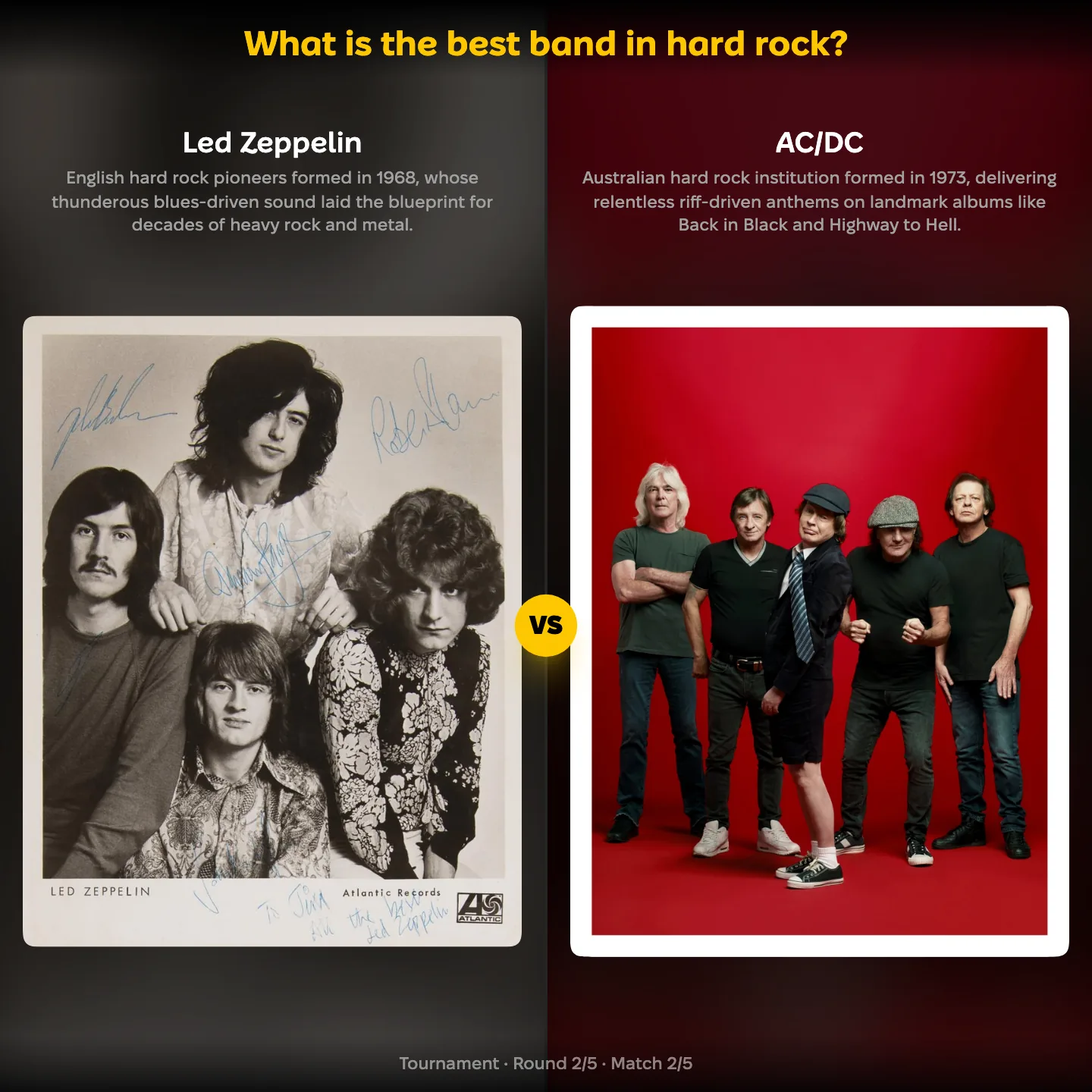
Led Zeppelin vs AC/DC: the genre they are supposed to own
Hard rock is the category Led Zeppelin are usually said to have invented, so this is the friendliest question they face all article.
The band formed in 1968 from the remains of the Yardbirds, with Page on guitar, Plant singing, John Paul Jones arranging and John Bonham on drums. Within four years they were filling arenas on album sales alone, without a British single to their name.
AC/DC arrived in 1973 with a narrower and more durable idea: the same riff, played harder, for fifty years.
Guns N' Roses, Van Halen and Deep Purple crowd the same field. None of them is imaginable without the template the four men above built.
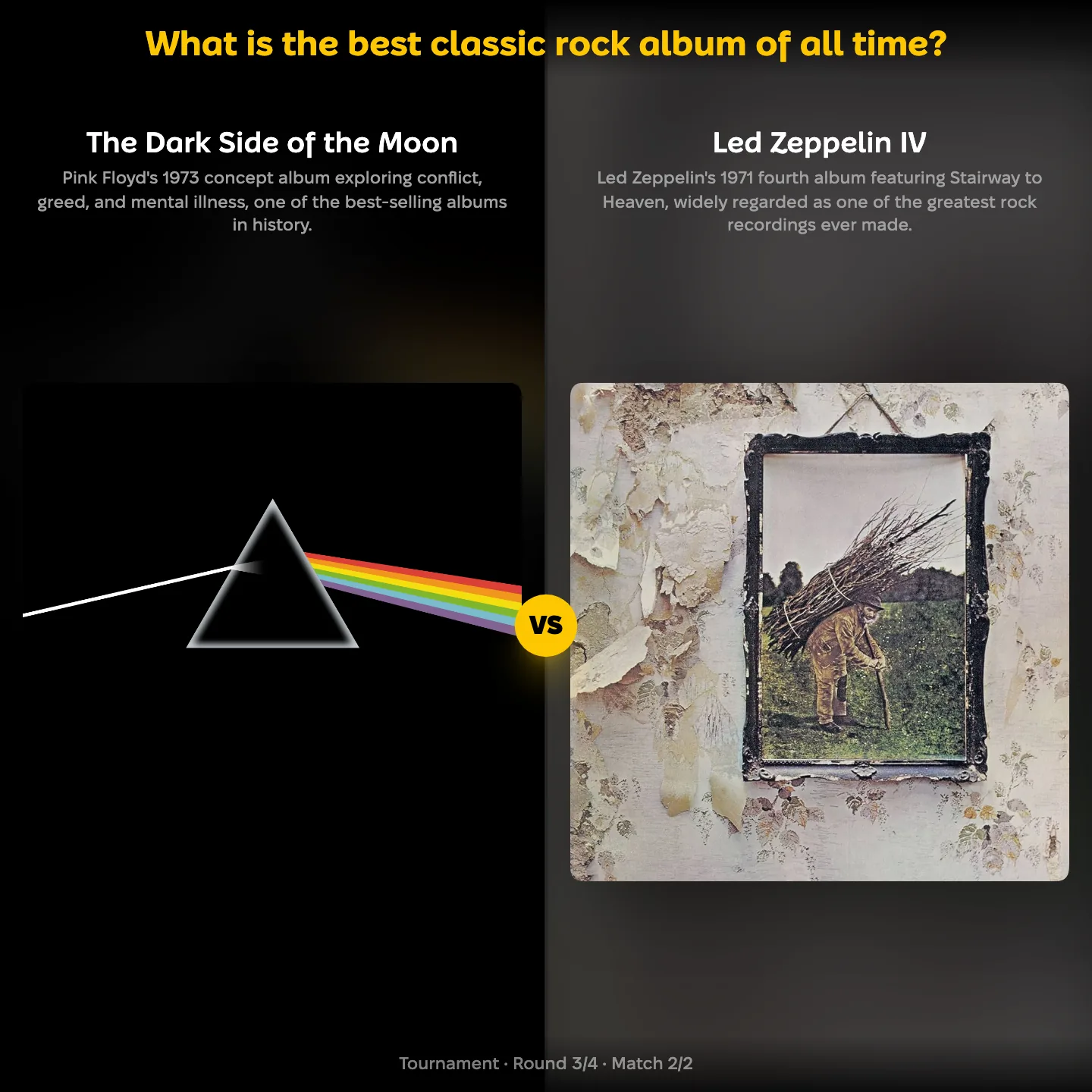
Led Zeppelin IV vs Dark Side of the Moon: the album with no name
The fourth Led Zeppelin album was released in November 1971 with no title, no band name and no text on the front cover. Atlantic argued against it and lost.
The RIAA has certified it 24× platinum, more than any other record the band made.3 The eight tracks include "Black Dog", "Rock and Roll", "When the Levee Breaks" and the song nobody in this article can avoid.
Pink Floyd's Dark Side of the Moon, from 1973, usually stands opposite it on a classic rock shelf: a concept album about money, pressure and death, recorded at Abbey Road with a cash register for a rhythm track.
Rumours, Hotel California, Abbey Road and Wish You Were Here fill out the rest. "Classic rock album" is a category with maybe fifteen serious entrants and no agreed order among them.
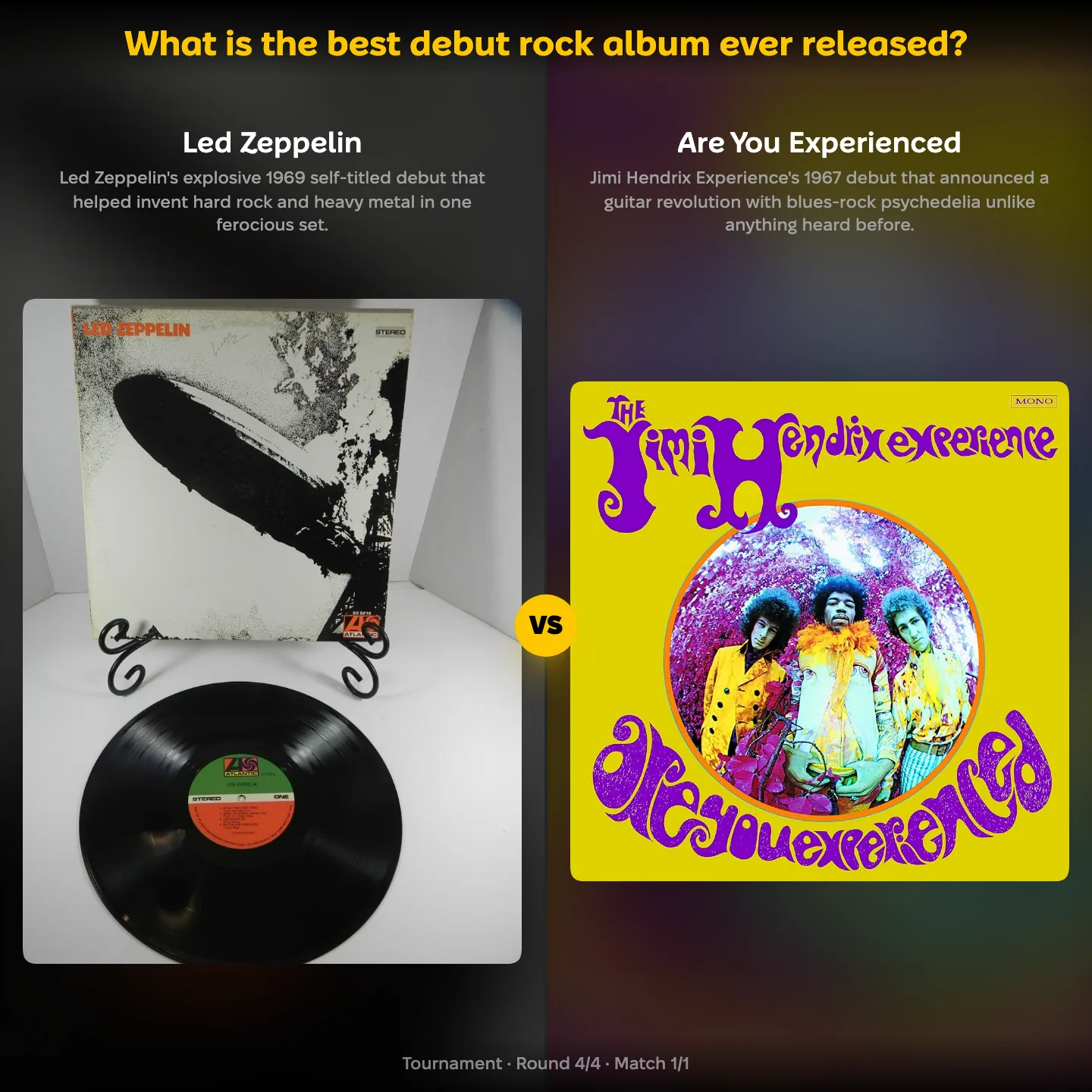
36 hours at Olympic Studios: the debut Jimmy Page paid for himself
Led Zeppelin had no record contract when they made their first album, so Page and Peter Grant paid for the sessions out of their own pockets.
The recording took 36 hours of studio time at Olympic Studios in London, starting at 11pm on 25 September 1968, and the bill came to £1,782.4 Page then walked the finished tape into Atlantic rather than asking them to fund it, which is why the label had no say over the cover, the running order or the singles policy.
What came out was a blues record played at volume: "Good Times Bad Times", "Communication Breakdown", "Dazed and Confused" and an eight-and-a-half-minute "How Many More Times" that early pressings listed on the sleeve as 3:30.4
Jimi Hendrix's Are You Experienced got there eighteen months earlier and did something similar to the guitar. Appetite for Destruction, Ten and the first Ramones album turn up alongside them, spanning thirty years of first records, none of them made the same way.
John Bonham vs Keith Moon: the drummer the band stopped for
John Bonham died on 25 September 1980. In December the three survivors announced they could not continue, and Led Zeppelin ended after twelve years rather than replace him.
No other band in this article did that. The Who carried on after Keith Moon died in 1978 and toured for another forty years. AC/DC replaced Bon Scott within months and made their biggest album. Led Zeppelin's decision is the strongest single piece of evidence for Bonham's standing, and it was made by the people best placed to judge.
Moon is the other pole: chaos as a musical idea, the drummer who played lead. Bonham played behind the beat with a sound engineers spent the next forty years trying to reproduce.
Neil Peart, Ginger Baker, Stewart Copeland and Dave Grohl round out the thirteen. Grohl has spent much of his career saying, in public and at length, that Bonham is the reason he plays.
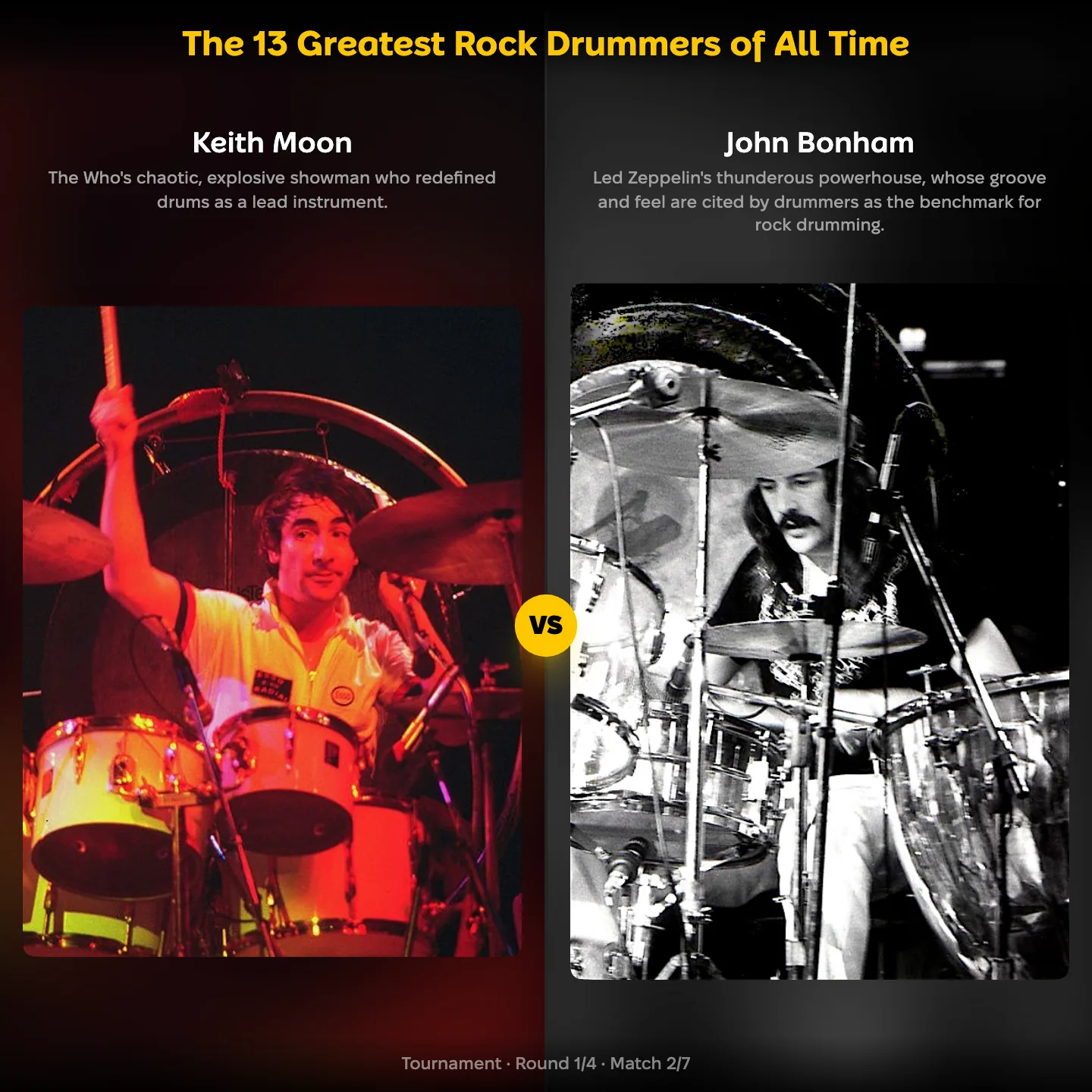
Robert Plant vs Freddie Mercury: the singer on an American stage this month
Robert Plant is 78 and currently touring the United States, which makes him the one member of this article you can still buy a ticket to see.
He is also the reason the frontman question gets complicated. Plant sang blues phrasing at a register nobody had used in a rock band before, and a generation of imitators made the sound unbearable before he had finished with it. He has spent the decades since 1980 avoiding the role: folk records, two albums with Alison Krauss, and now Saving Grace.
Freddie Mercury made the opposite case. Queen's singer built a stadium act out of call and response, and his 1985 Live Aid set is still the reference point for what a frontman is supposed to do with an audience.
Mick Jagger, Bruce Springsteen, Janis Joplin and Debbie Harry crowd in behind them. The question is really two questions: who sang best, and who ran a room best.
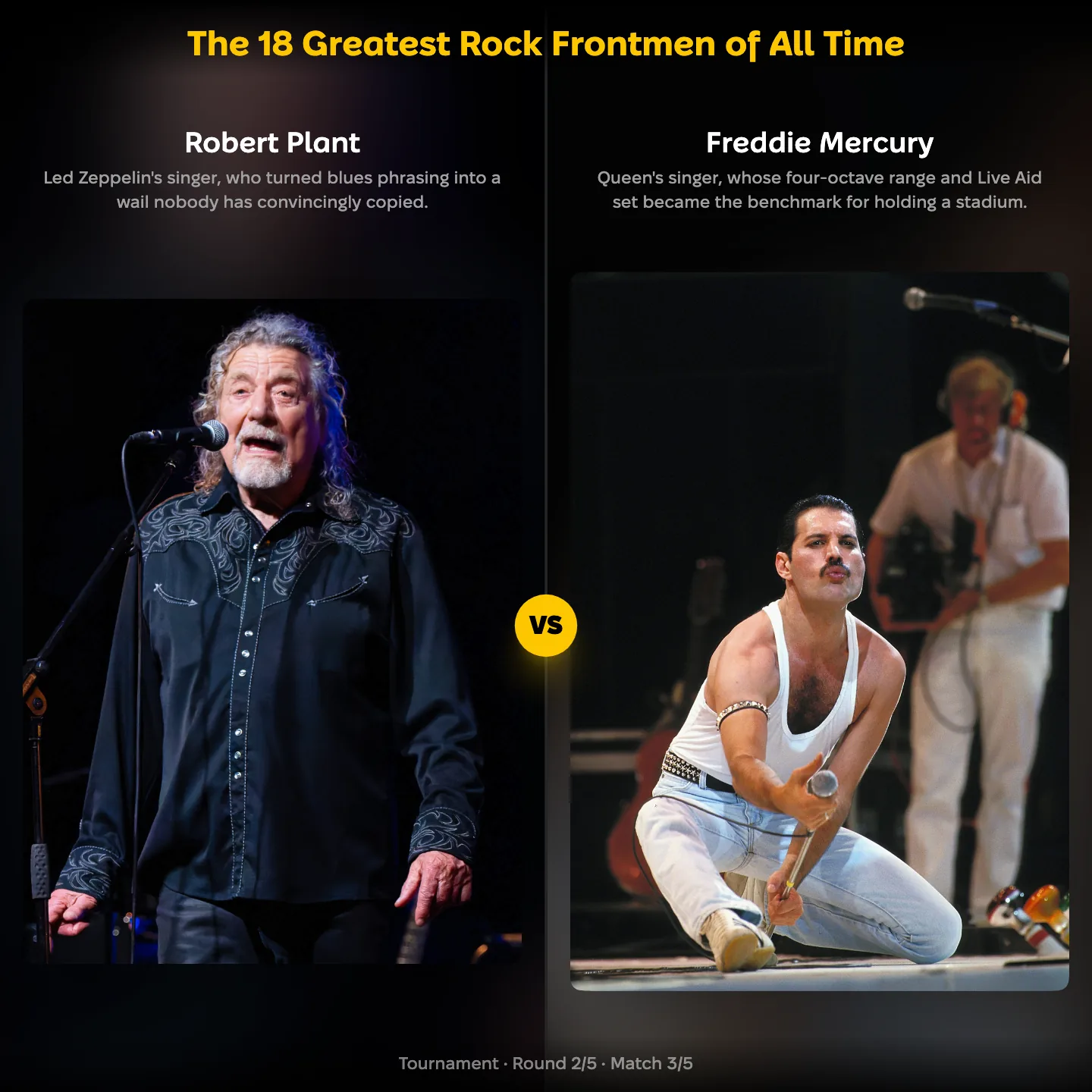
Stairway to Heaven vs Eruption: the solo that went to the Ninth Circuit
Jimmy Page's solo on "Stairway to Heaven" is the one piece of Led Zeppelin that has been examined in a federal courtroom.
The estate of Randy Wolfe sued in 2014, claiming the song's opening took its descending figure from Spirit's 1968 instrumental "Taurus". A jury cleared the band in 2016, the Ninth Circuit upheld that sitting en banc in March 2020, and the Supreme Court declined the appeal that October.5 Six years of litigation ended with the solo, and the song around it, intact.
Eddie Van Halen's "Eruption" is the technical answer to it: one minute and 42 seconds recorded in 1978 that made two-handed tapping standard equipment and dated every guitarist who could not do it.
"Comfortably Numb", "All Along the Watchtower", "Free Bird" and "Sultans of Swing" are in the same company. Page's is the only entry a federal court has listened to bar by bar.
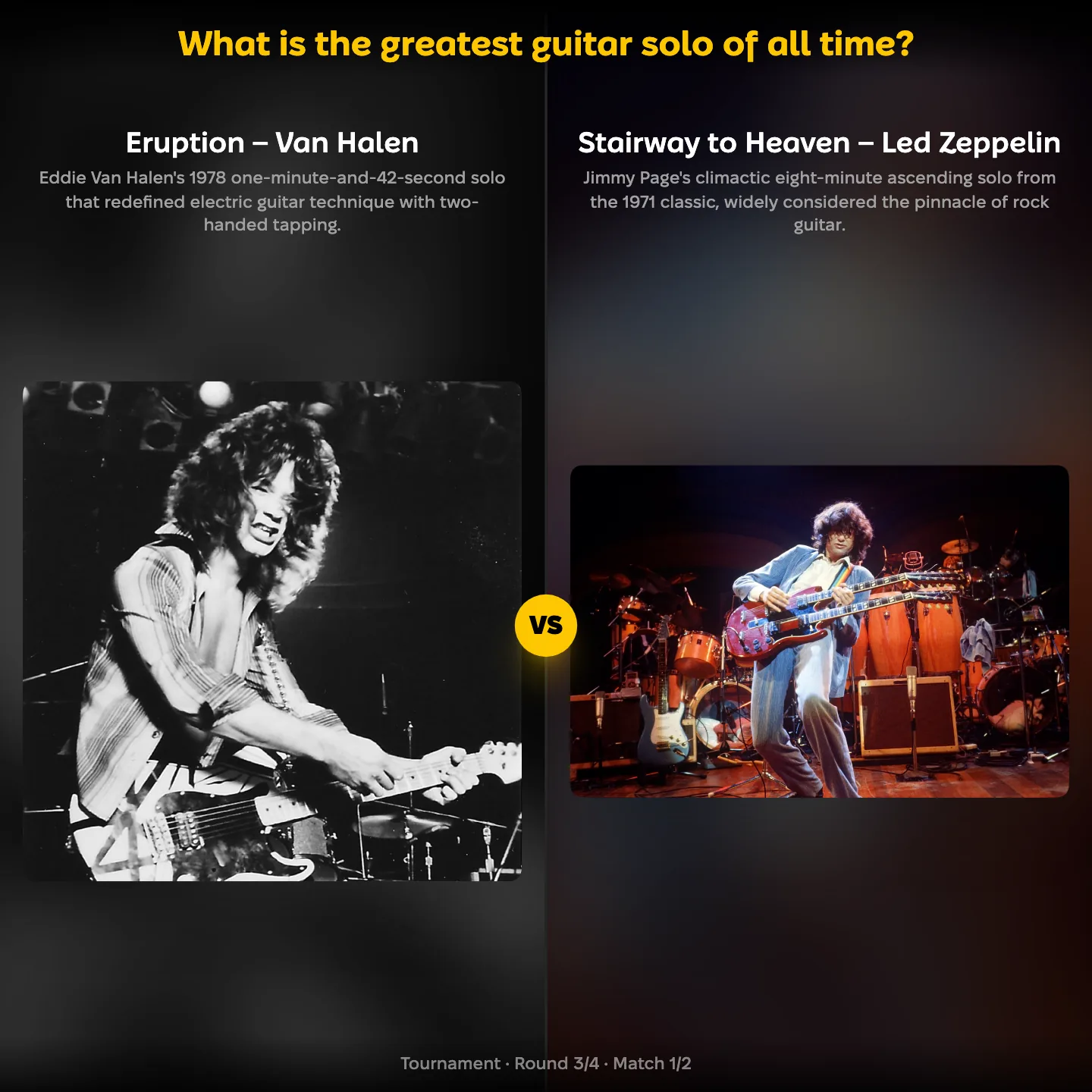
Led Zeppelin vs Cream: where the riffs actually came from
The first Led Zeppelin album is a blues record, and the band spent a long time being vague about how much of it was theirs.
"You Shook Me" and "I Can't Quit You Baby" are Willie Dixon songs. "Whole Lotta Love" borrows Dixon's "You Need Love" closely enough that he was added to the credits after suing in 1985. "Dazed and Confused" came from Jake Holmes. Put on the debut with that in mind and the achievement is not the writing, it is the volume and the space around the drums.
Cream got to the same place first, and more honestly. Clapton, Jack Bruce and Ginger Baker turned the blues trio into an improvising unit in 1966 and burned out inside three years.
The Rolling Stones named themselves after a Muddy Waters record, the Yardbirds employed Clapton, Jeff Beck and Page in turn, and the Allman Brothers took the form to Georgia. Led Zeppelin's contribution was making it heavy enough to need a new word.
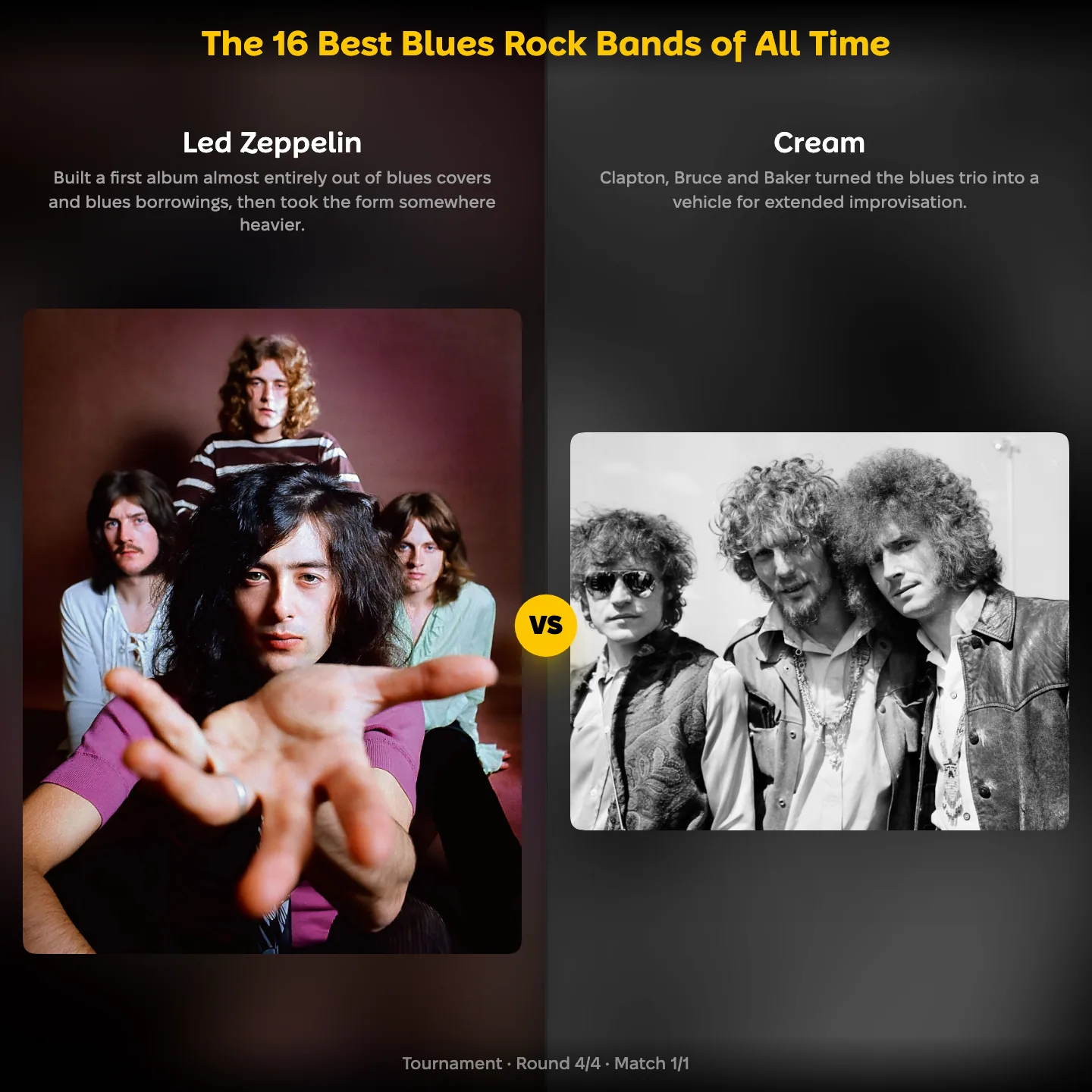
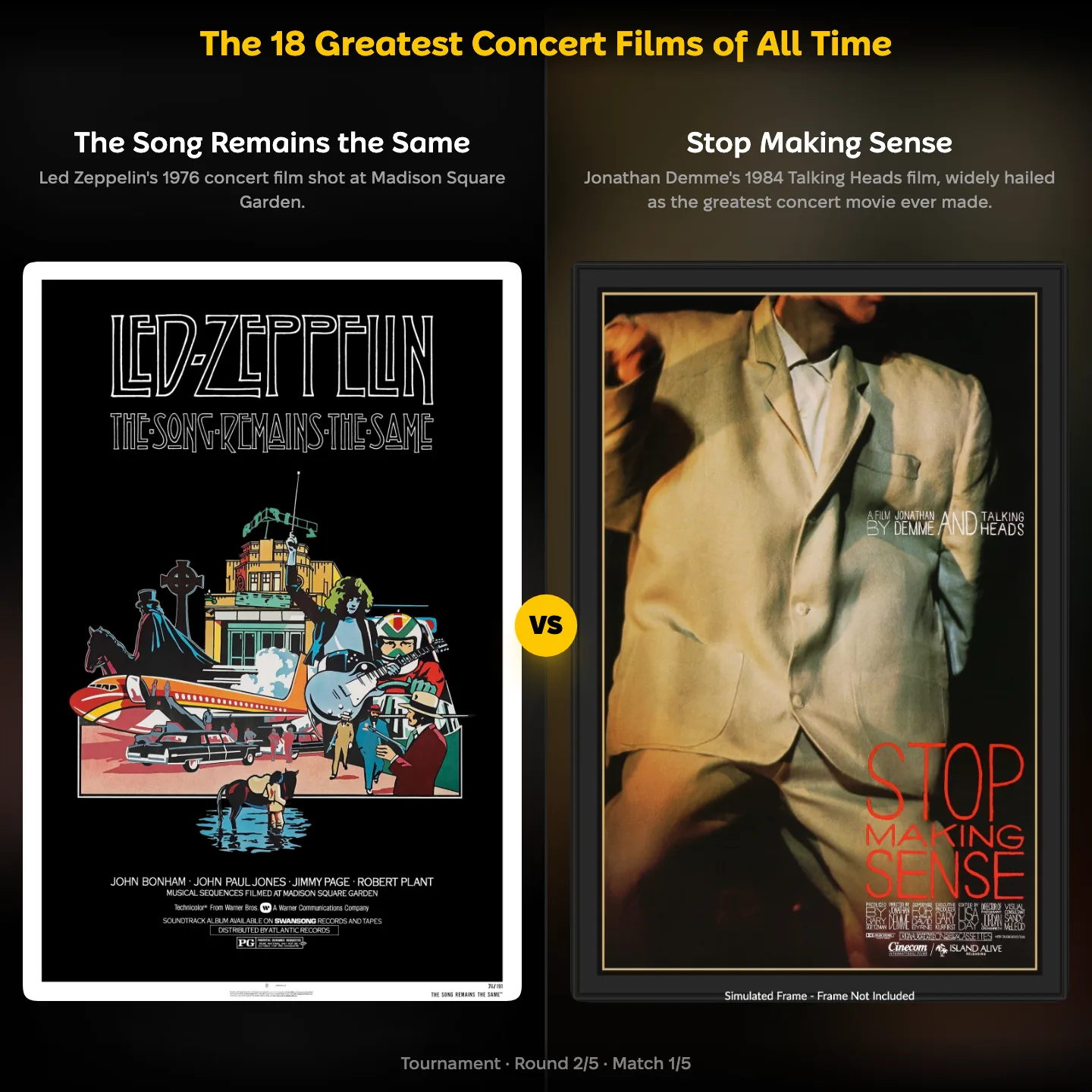
The Song Remains the Same vs Stop Making Sense: the film of a band you had to see
Led Zeppelin's reputation rests on the live show, and the film of the live show is the weakest thing they ever released.
The Song Remains the Same was shot over three nights at Madison Square Garden in July 1973 and came out in 1976, padded with fantasy sequences in which each member acts out a private daydream. Page as a hermit on a mountainside is the one people remember, and not kindly.
Stop Making Sense is what the form looks like when a director gets it right. Jonathan Demme filmed Talking Heads over three December nights at Hollywood's Pantages Theatre in 1983, with the stage built up piece by piece, no audience shots until the end, and no daydreams at all.
Woodstock, The Last Waltz, Gimme Shelter and Pink Floyd at Pompeii are on this list. Led Zeppelin's entry is the one where a great live band left behind a bad record of it.
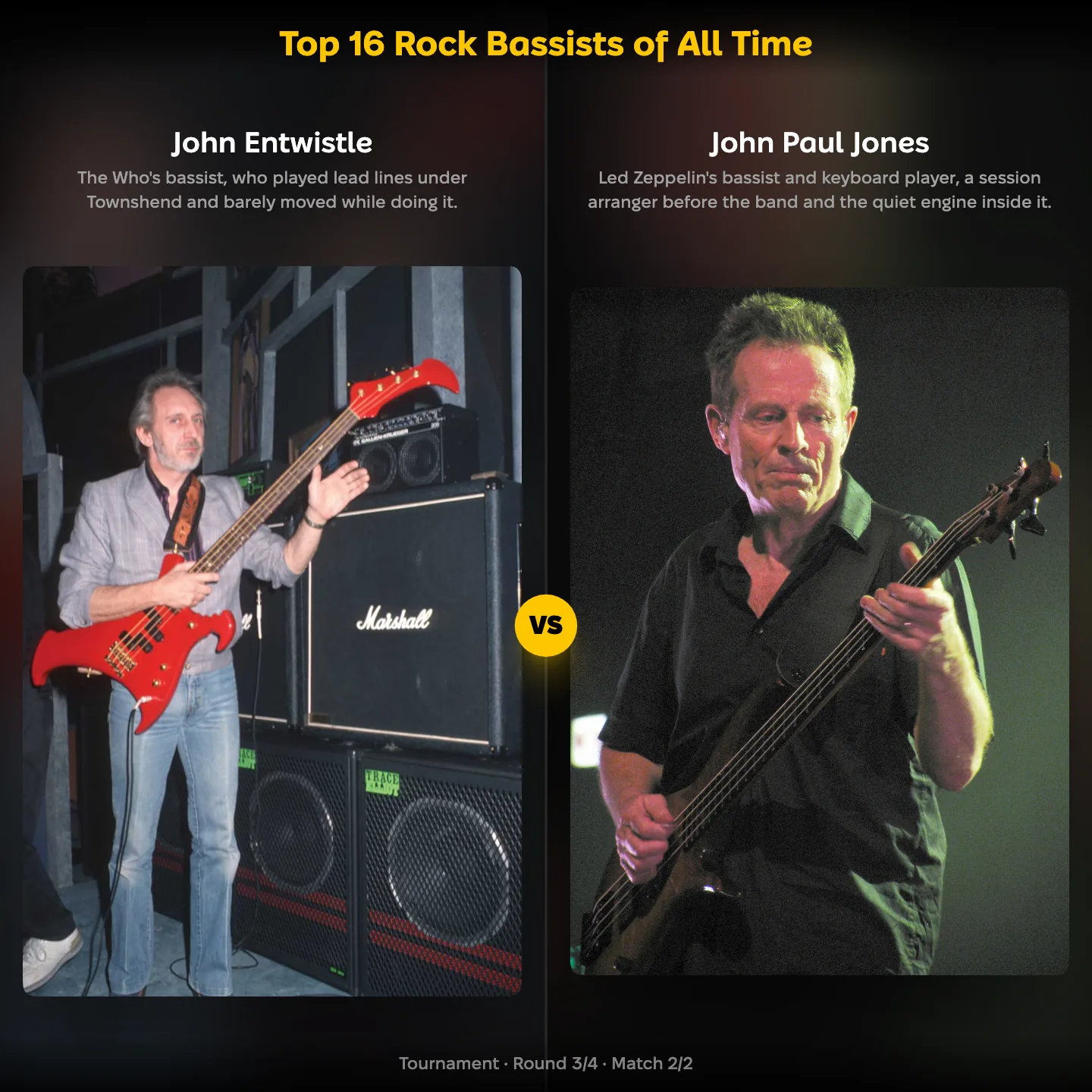
John Paul Jones vs John Entwistle: the arranger nobody photographs
John Paul Jones worked as a session arranger before Led Zeppelin existed, which made him the rare rock bassist who could also score for strings.
He played bass, organ, mellotron, mandolin and the recorder on "Stairway to Heaven". He arranged the horns on "Trampled Under Foot" and wrote the riff. He is also the member the press ignored for twelve years, and the one who kept working steadily afterwards, producing Diamanda Galás and later forming Them Crooked Vultures with Dave Grohl.
John Entwistle got famous the opposite way: the Who's lead lines, played at a volume that made him the loudest man on stage while standing perfectly still.
Paul McCartney, Flea, Geddy Lee, Cliff Burton and Jaco Pastorius stand alongside him. Here, almost uniquely in this article, the Led Zeppelin name is the least conspicuous one in the room.
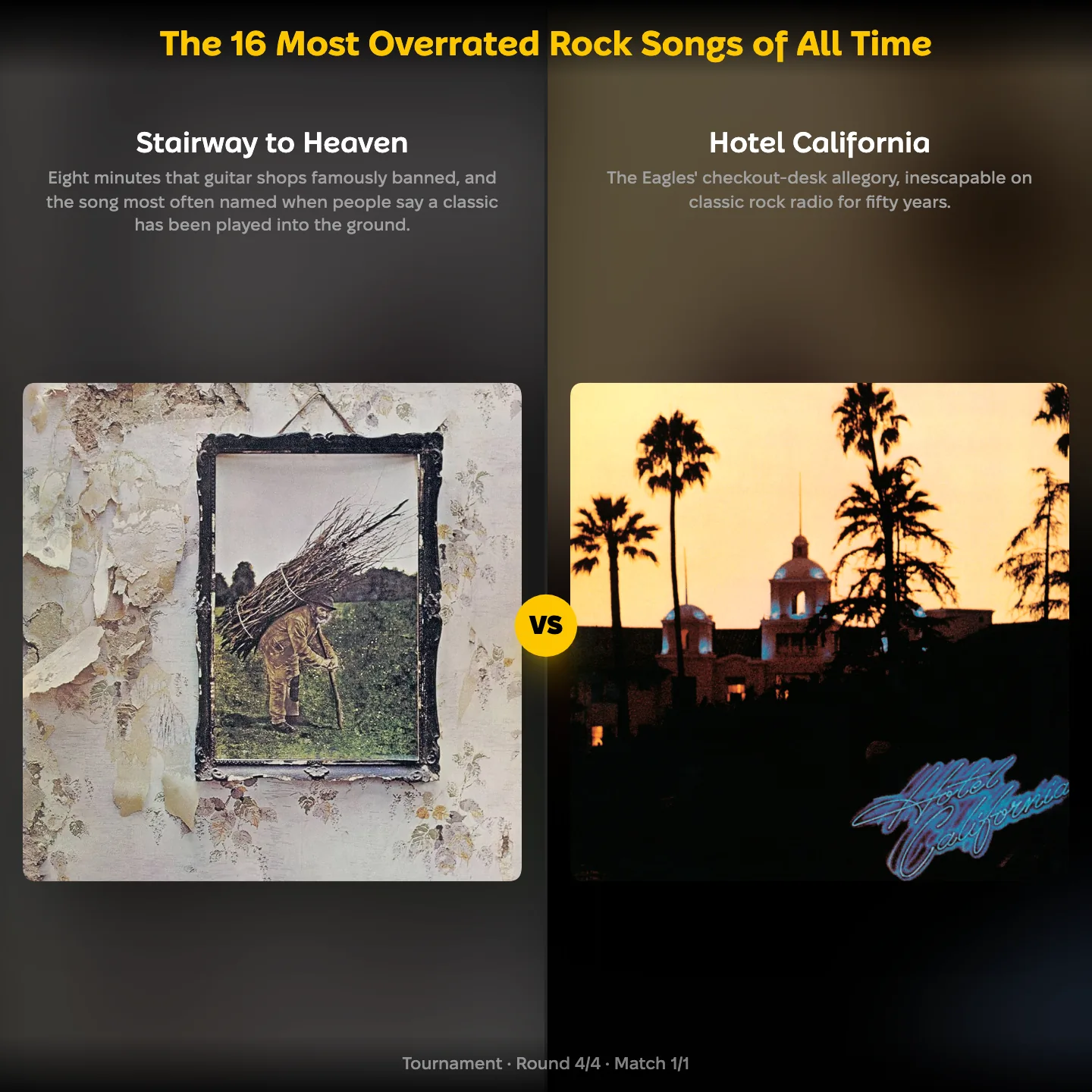
Stairway to Heaven vs Hotel California: the list you do not want to be on
There is a ranking where being famous works against you, and Led Zeppelin's entry in it is the song everybody can hum.
"Stairway to Heaven" was never sold as a single in Britain or America, which did not stop it becoming the most requested song on American FM radio and the one guitar shops posted signs about. Eight minutes, three tempos and a lyric about a lady buying a stairway have been played back at the band for fifty-four years.
The Eagles' "Hotel California" is its only real rival for radio saturation, and it suffers in exactly the same way: a genuinely strange song nobody can hear properly any more.
"Bohemian Rhapsody", "Smells Like Teen Spirit", "Wonderwall" and "Free Bird" keep it company. Overexposure is the charge here, not incompetence, and the two get easy to confuse after the four-thousandth play.
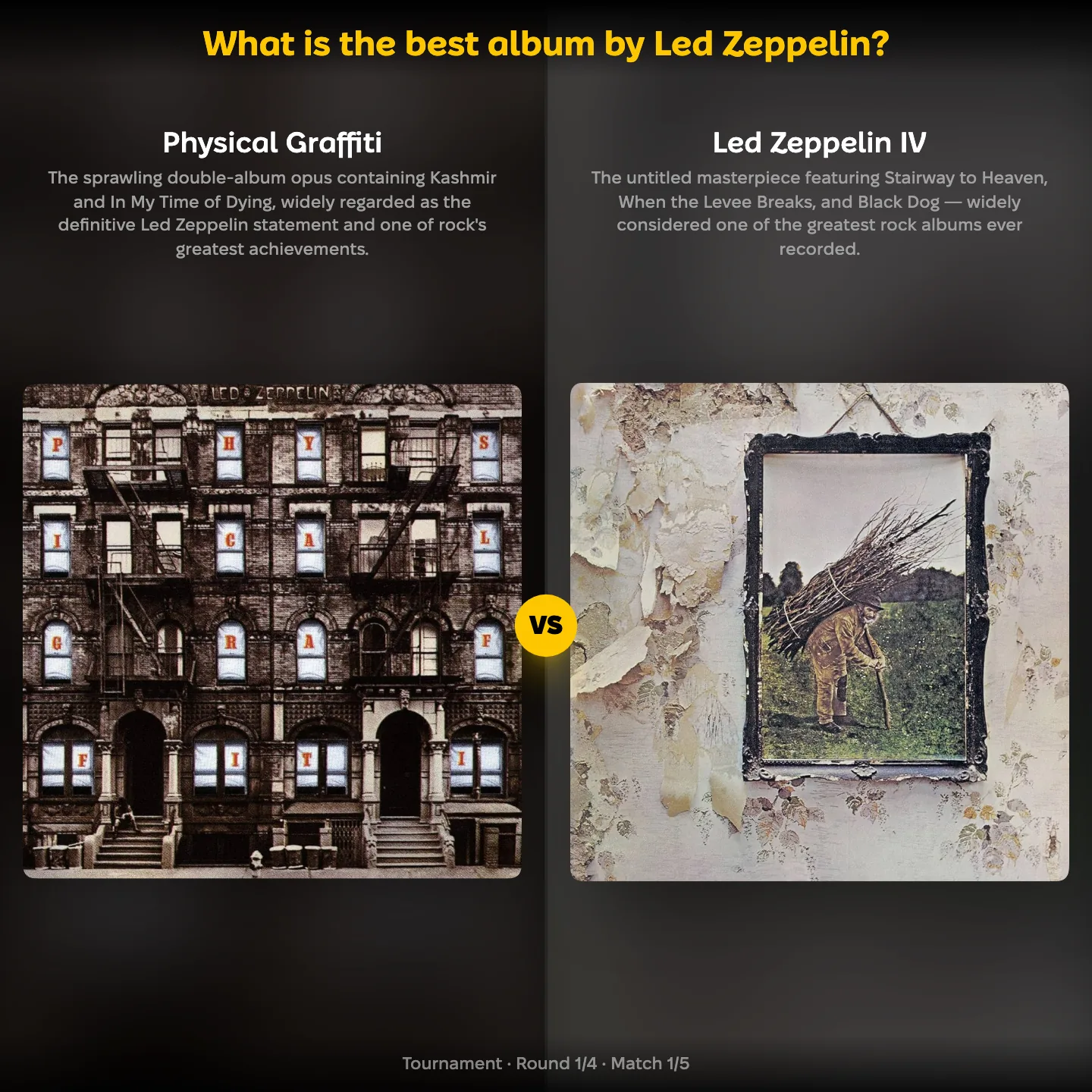
Led Zeppelin IV vs Physical Graffiti: choosing between their own
Led Zeppelin made nine albums, and their fans have been sorting them against each other since 1975.
Physical Graffiti is the double album from that year, fifteen tracks covering everything they could do, from "Kashmir" to "Ten Years Gone". Its RIAA certification stands at 16× platinum.3
The untitled fourth album is the tighter case: eight tracks and nothing spare.
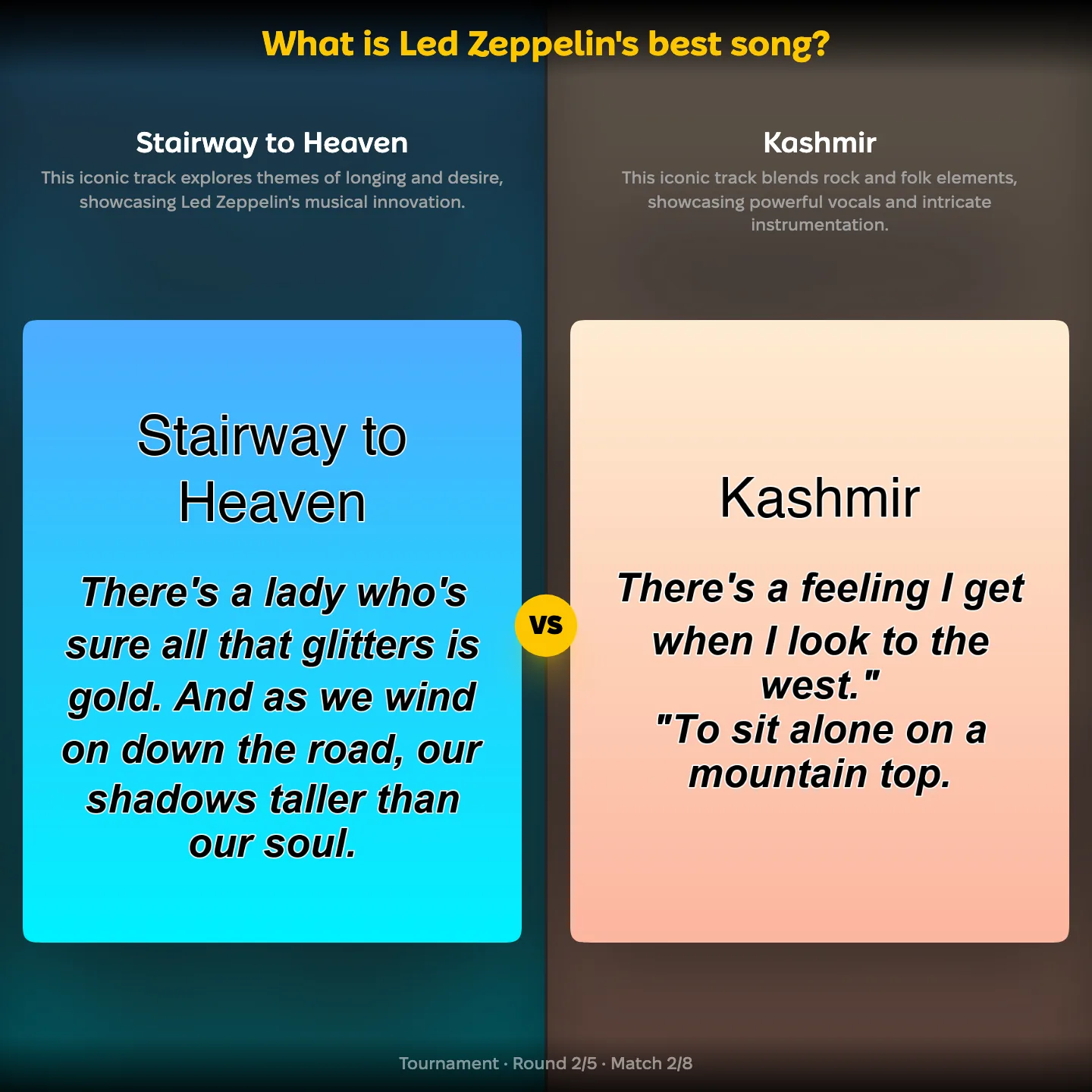
Stairway to Heaven vs Kashmir: the song the band would rather you named
Page and Plant have both said, repeatedly and in public, that "Kashmir" is the track they are proudest of. Almost nobody outside the band names it first.
"Kashmir" was written on a drive through southern Morocco, runs on a descending riff in an odd meter, and carries an orchestral arrangement by John Paul Jones that took the band somewhere no blues band had been. Plant has called it the definitive Led Zeppelin song.
The song that got the radio, the guitar shops and the courtroom was the other one, and the band spent the next fifty years being slightly embarrassed about it.
"Whole Lotta Love", "Black Dog", "When the Levee Breaks", "Achilles Last Stand" and 27 more are lined up behind them. The band itself never had to settle this one in public.
The band that would not be summarised
Twelve rankings, and Led Zeppelin are a different thing in each: the hard rock template, a self-funded first album, a drummer worth ending a band for, an arranger nobody photographed, and a song that has been played too many times to hear. The four symbols they put on the fourth album in place of a title were a refusal to be summed up in a word, and fifty-five years later the lists are still failing to do it.
Twelve questions, twelve different Led Zeppelins, every one of them sorted in pairs, using the head-to-head method this site runs on.
If you have a band that changes shape depending on the question, put the question up and let people sort it.
More rankings, more angles
- Metallica: 20 Million Copies, One Snare Nobody Forgives — the band whose snare sound still starts fights
- The Beatles vs The Rolling Stones: 16 Lists That Can't Agree — the other British rivalry nobody settles
- Miles Davis vs John Coltrane: Who Wins Which List? — two men who reshaped a genre twice each
Sources
- Nonesuch Records (Robert Plant's label) and Consequence — Robert Plant and Saving Grace, 2026 US tour dates: nonesuch.com, consequence.net (checked 2026-09-16)
- Record Collector — Peter Grant's no-UK-singles rule and the rejected "Whole Lotta Love" edit: recordcollectormag.com (checked 2026-09-16)
- RIAA Gold & Platinum database — Led Zeppelin IV certified 24× platinum (8 November 2021) and Physical Graffiti 16× platinum (30 January 2006): riaa.com (checked 2026-09-16)
- Wikipedia — Led Zeppelin (album): 36 hours of studio time at Olympic Studios from 25 September 1968, £1,782 in costs paid by Jimmy Page and Peter Grant: en.wikipedia.org (checked 2026-09-16)
- United States Court of Appeals for the Ninth Circuit, Skidmore v. Led Zeppelin, No. 16-56057 (9 March 2020), and Variety on the Supreme Court declining the appeal in October 2020: law.justia.com, variety.com (checked 2026-09-16)