
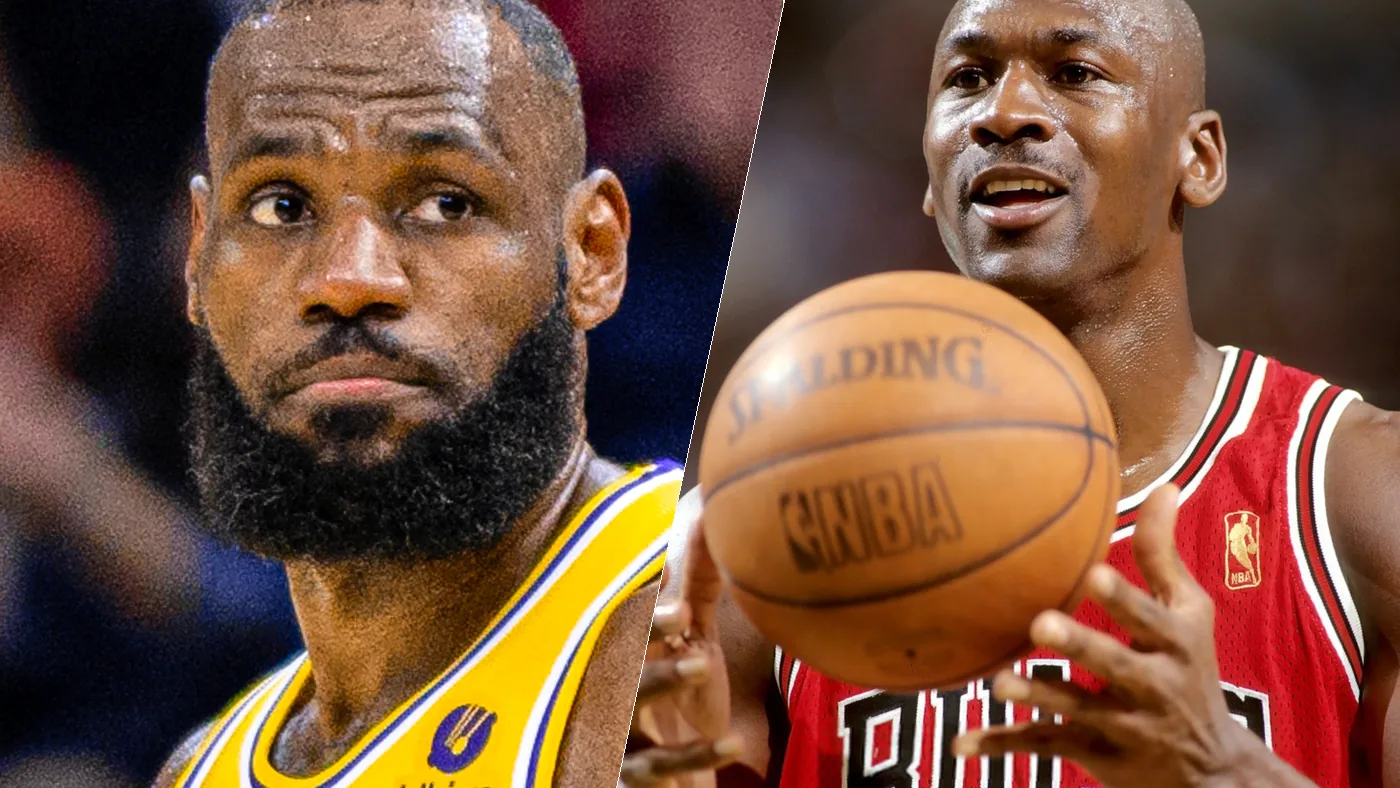
Michael Jordan's last professional game was on 16 April 2003, in Philadelphia, where Washington lost 107-87 and he scored 15 points.1 Cleveland drafted LeBron James ten weeks later, and on 26 July 2026 James signed with the Philadelphia 76ers for two more seasons, which sets his twenty-fourth year in the city where Jordan's fifteenth finished.2 The two have never shared a court for a single minute. Sixteen rankings below put the two careers in one frame anyway, each of them drawing on different material.
Jordan's half of this case was closed and cannot move; James keeps adding to his, now in a 76ers jersey.
Michael Jordan vs LeBron James: the plainest version
Fourteen players are on the greatest-of-all-time list, and the pair at the centre of it are why anyone opens the page.
Jordan reached the Finals six times and won all six, taking the Finals MVP award on every occasion.3 No series defeat appears anywhere in that half of his record. He was a fourteen-time All-Star and in the Hall of Fame by 2009, six years after the Philadelphia afternoon.4
James has four championships with three franchises, 125 triple-doubles and twenty-one All-NBA selections — a total nobody else in the league's history has reached.2 Abdul-Jabbar, next on that particular list, has fifteen.
Bill Russell is the fact both cases have to survive: eleven championships in thirteen seasons and five MVP awards.5 The James-Jordan debate is usually conducted as though Boston in the 1960s were a rumour.
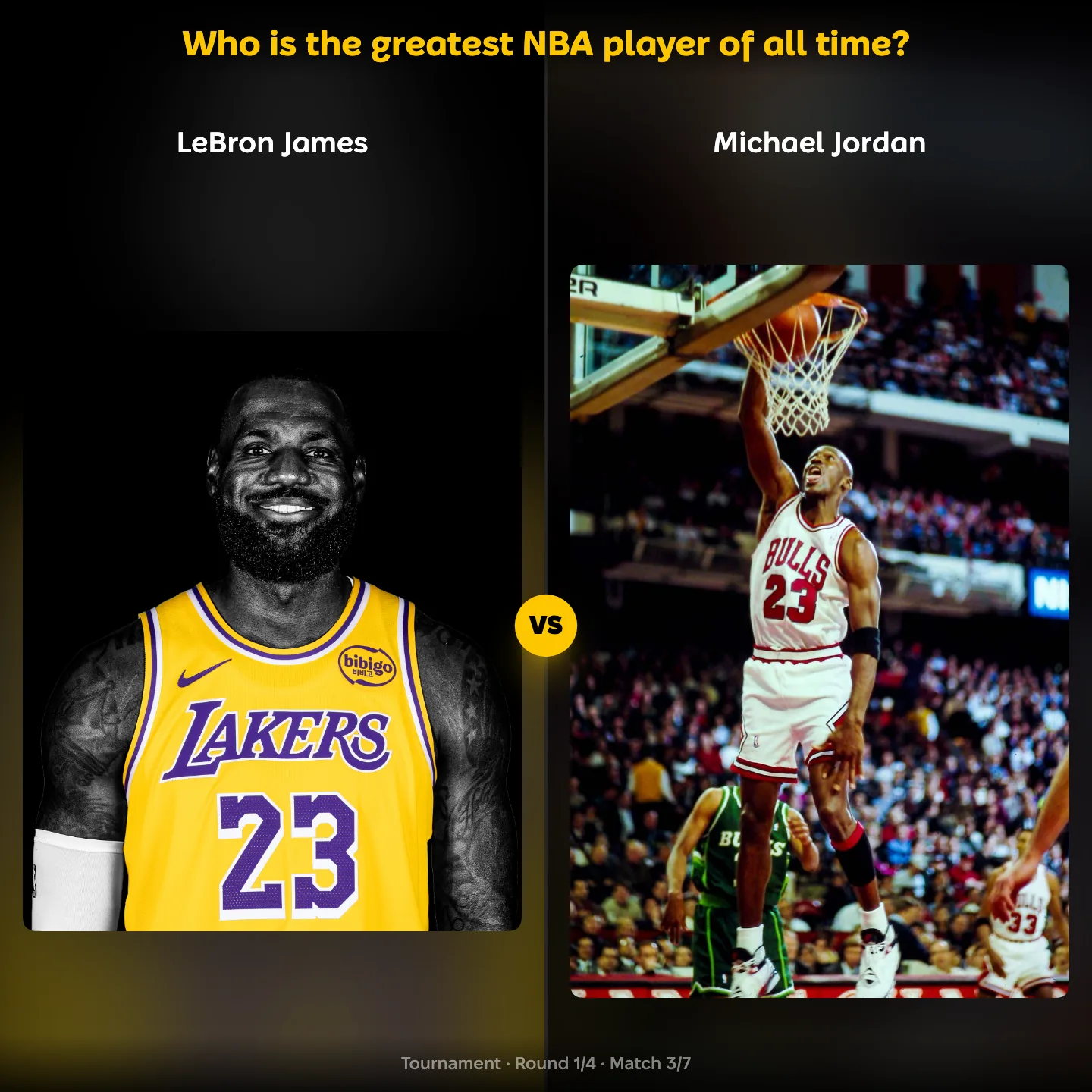
Top 32: room for Wilt Chamberlain's 50.4
Thirty-two places hold the whole history of the sport, so James and Jordan arrive as two entries rather than as the subject.
Chamberlain averaged 50.4 points a game across the 1961-62 season, led the league in scoring seven times, and finished with 31,419 points and 22.9 rebounds a game across 1,045 appearances.6
Abdul-Jabbar's 38,387 points were the record from 1984 until James went past them on 7 February 2023: four decades of one number holding.7
Jerry West and Victor Wembanyama are on the same list, one of them retired in 1974 and the other still adding seasons, which is the span a top-32 has to absorb.
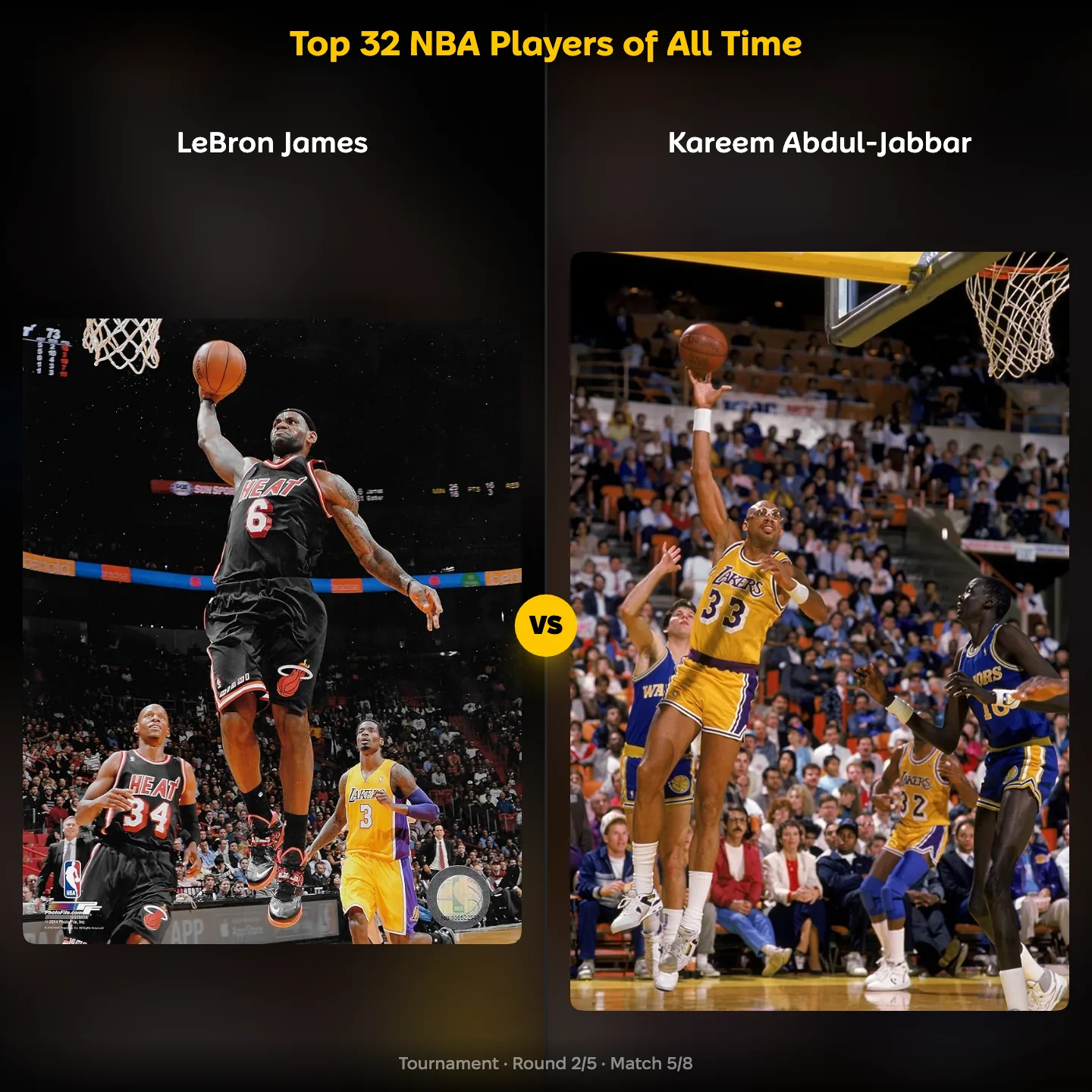
The MVP award: five for Jordan, four for James
Restrict the field to regular-season MVP winners and the count runs the wrong way for James.
Jordan won five, the first in 1988 and the last in 1998. James has four, and two of them arrived in Cleveland years before he had won anything at all.
Abdul-Jabbar is the ceiling on this ranking with six, collected across three different decades.8
So the trophy that supposedly settles the debate puts a third man above Jordan and James both, which is roughly what happens in every award category here.
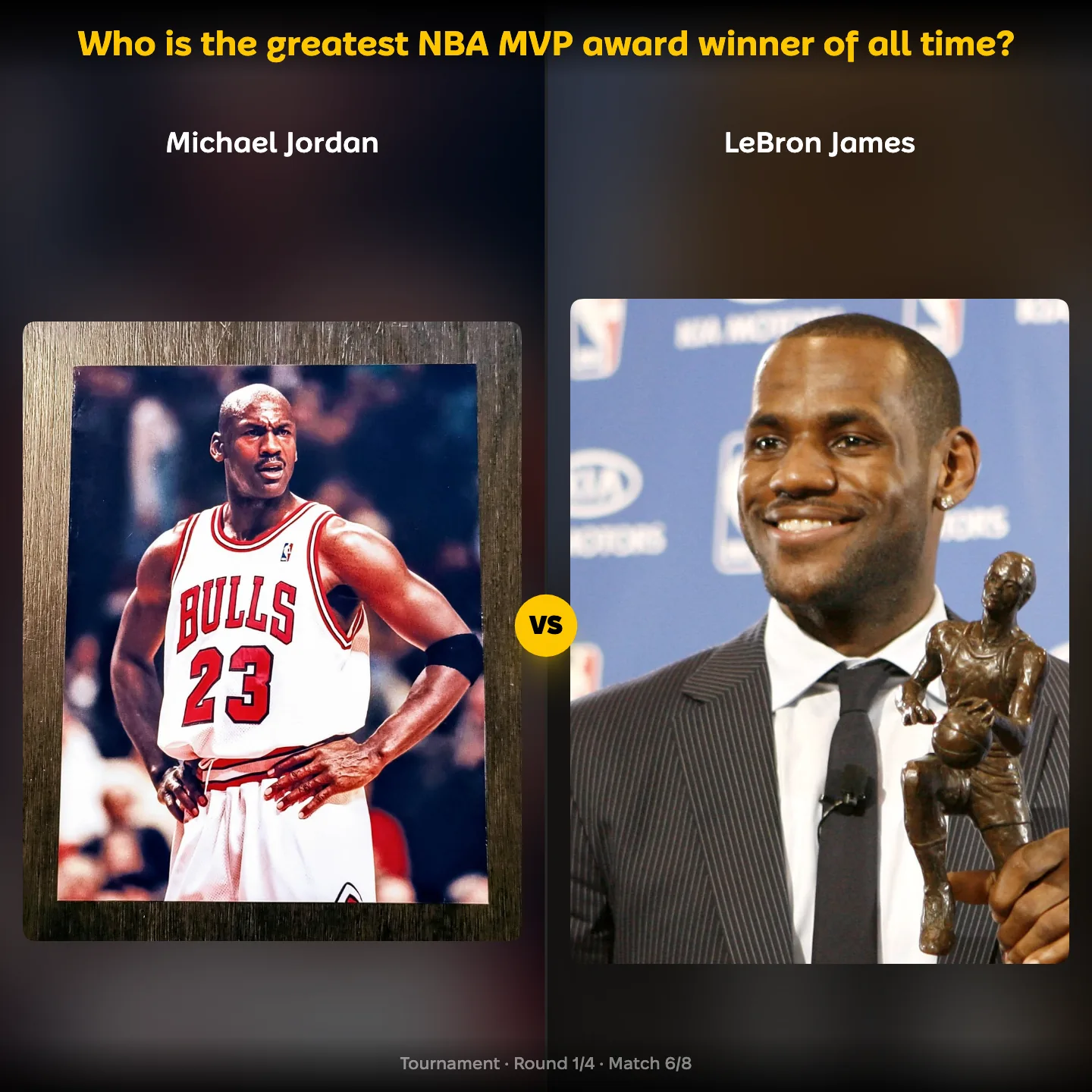
James vs Jordan: the total against the average
Both men hold a scoring record, and neither record disturbs the other.
James finished the 2025-26 season with 43,440 points from 1,622 games and 61,030 minutes. He has been the league's leading scorer exactly once, in 2007-08, which is the statistic his critics reach for first.2
Jordan scored 32,292 in 1,072 games and 41,011 minutes, an average of 30.1 that only Chamberlain has finished a career alongside. He led the league in scoring ten times, seven of them consecutively.4
The two records therefore rest on different quantities. James played 550 games more than Jordan managed in total, and twenty thousand more minutes, which is where a record of accumulation comes from.
Karl Malone sits between them with 36,928 points and no scoring title across nineteen seasons — the James method run for longer at a lower altitude.7
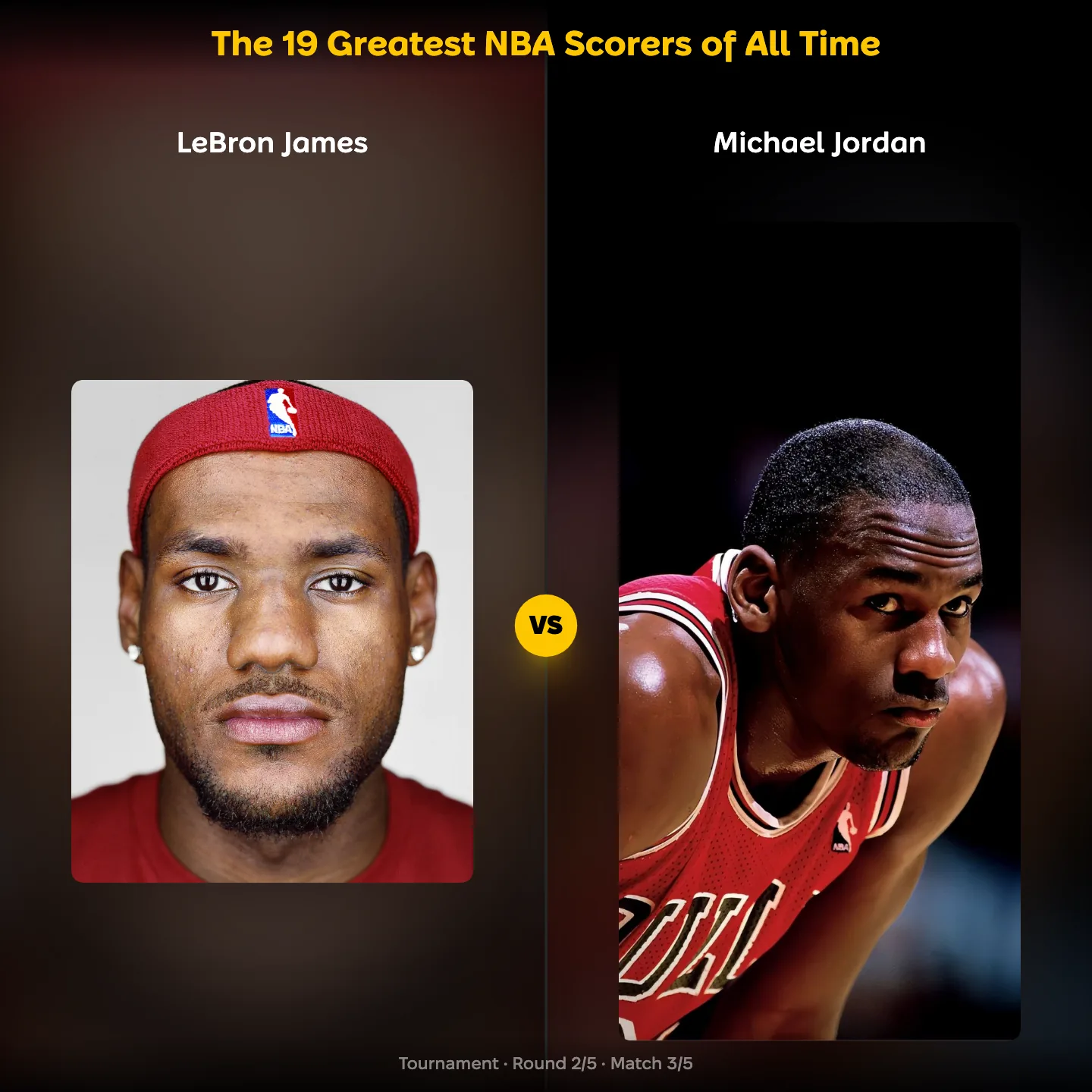
Finals MVP: six from six, and Jerry West's 1969
The Finals MVP list is the one place Jordan's record has no soft edges.
He won the award in 1991, 1992, 1993, 1996, 1997 and 1998, the last of them at thirty-four on 33.5 points a game. James has four, and he needed ten trips to the Finals to collect them, so six series defeats sit on the same page as the trophies.3
Magic Johnson, Shaquille O'Neal and Tim Duncan have three each, and Magic's first came at twenty, in a title-clinching game he played at centre.
The strangest name belongs to Jerry West, who averaged 37.9 points across the 1969 series and took the award while Boston took the championship.9
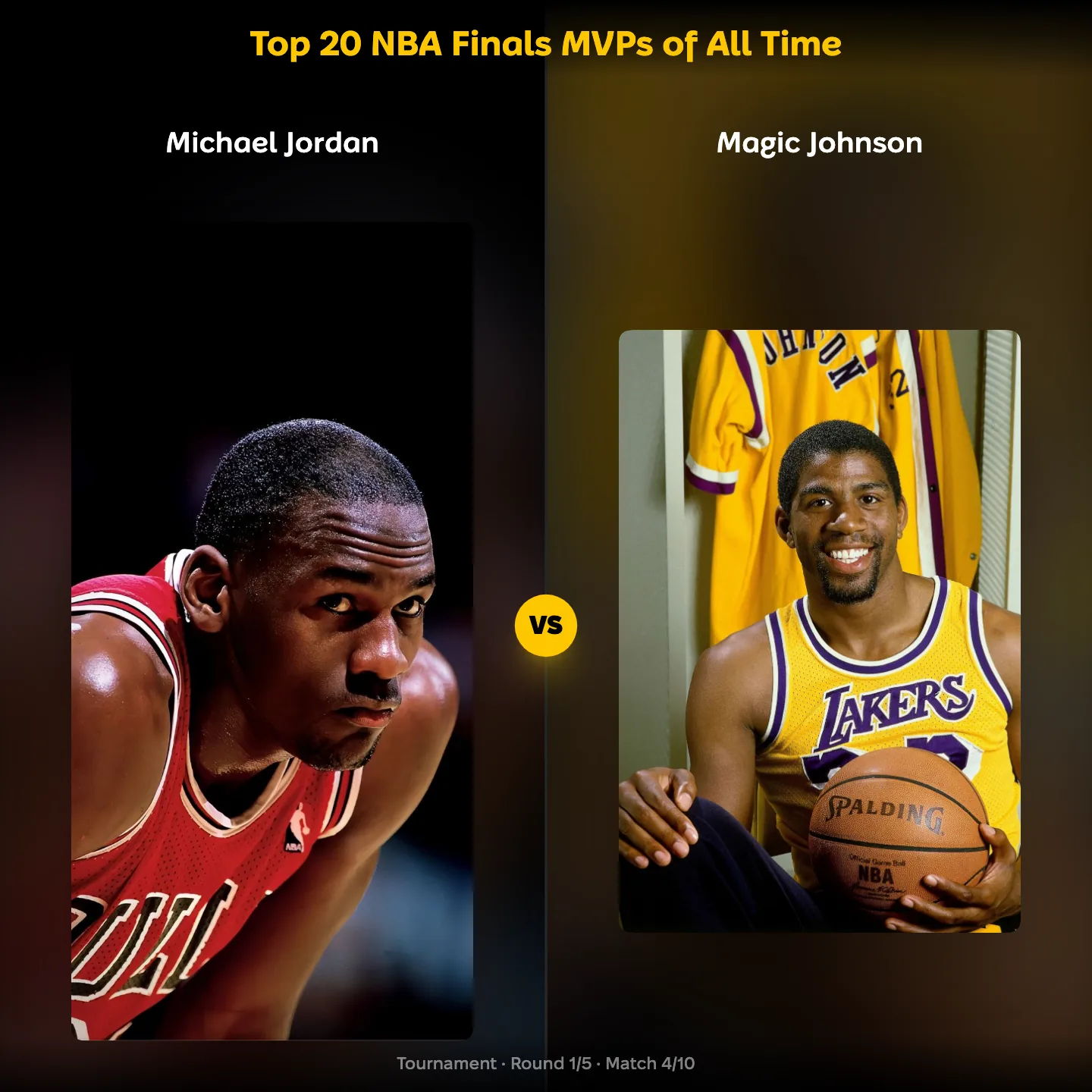
The 1997 Flu Game against Game 7 in 2016
This ranking shrinks the frame to one night, and both men have an entry in the ten.
Jordan scored 38 points in Salt Lake City on 11 June 1997, in the Game 5 that basketball has called the Flu Game ever since, and Scottie Pippen carried his weight off the floor afterwards.10
James arrived at Game 7 on 19 June 2016 with Cleveland having lost three of the first four games to a Golden State side that had gone 73-9 in the regular season.11 He finished with 27 points, 11 rebounds, 11 assists and three blocks, one of them the chase-down on Andre Iguodala that the whole series was later reduced to.12
Magic Johnson's 1980 Game 6 is on the list as well. So is Jordan's 1993 Finals, where he averaged 41.0 points across six games3 — a career answer smuggled into a question about single nights.
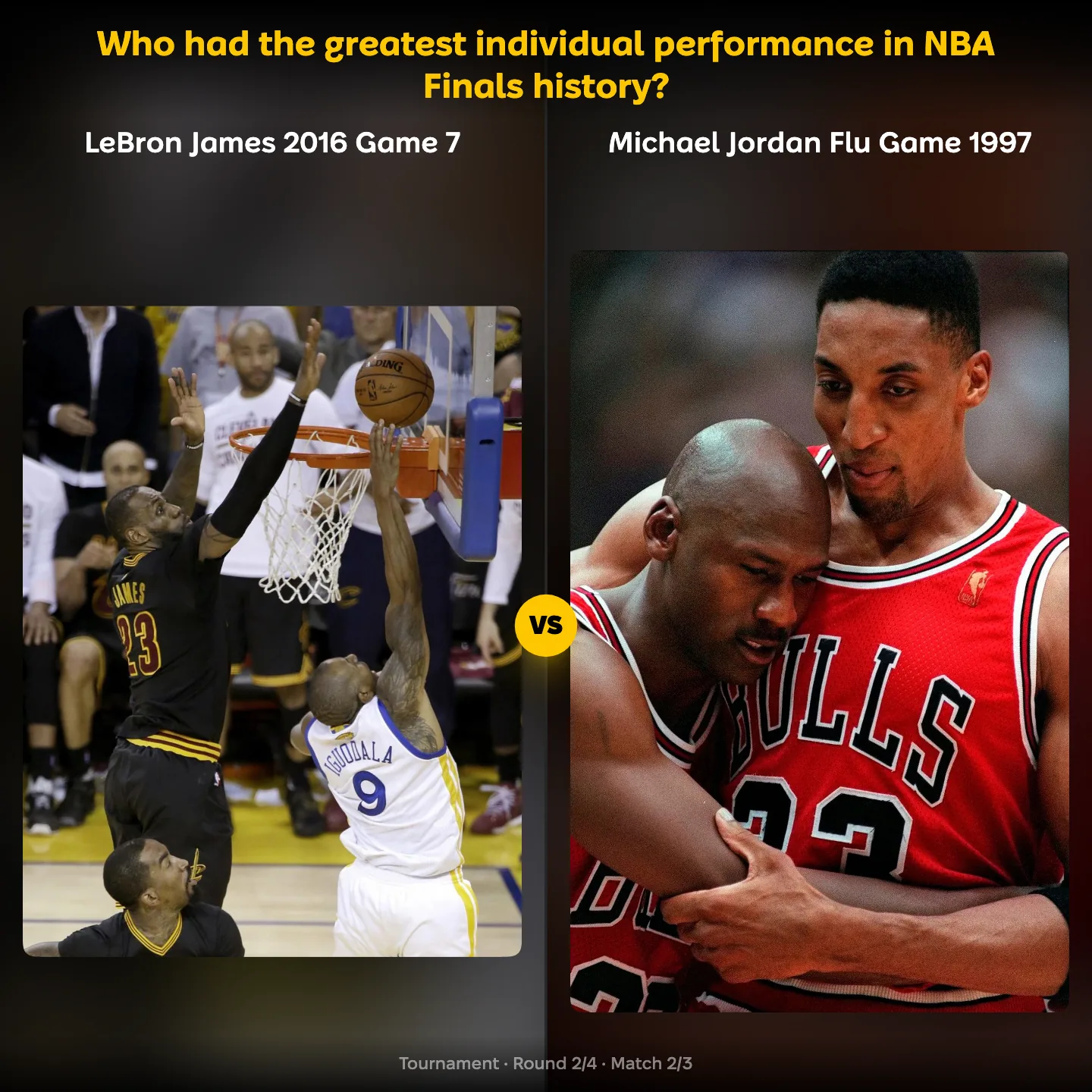
Team USA: the Dream Team against the Redeem Team
Olympic basketball is the one setting James and Jordan genuinely share, four decades apart.
Jordan won gold in 1984 as a college player and again in Barcelona in 1992, where the United States went 8-0 and he contributed 14.9 points a game and a team-high 4.6 steals. Across seven USA Basketball teams his record was 39-4.13
James has gold from 2008, 2012 and 2024 plus a bronze from Athens in 2004, and he was named most valuable player of the Paris tournament at thirty-nine. Twenty-nine Olympic games have left him first in the American men's record book for assists, with 139, and second for points, with 358.14
That Athens bronze is the reason the 2008 squad was christened the Redeem Team, so James is on this list partly for the one tournament he would rather not discuss.
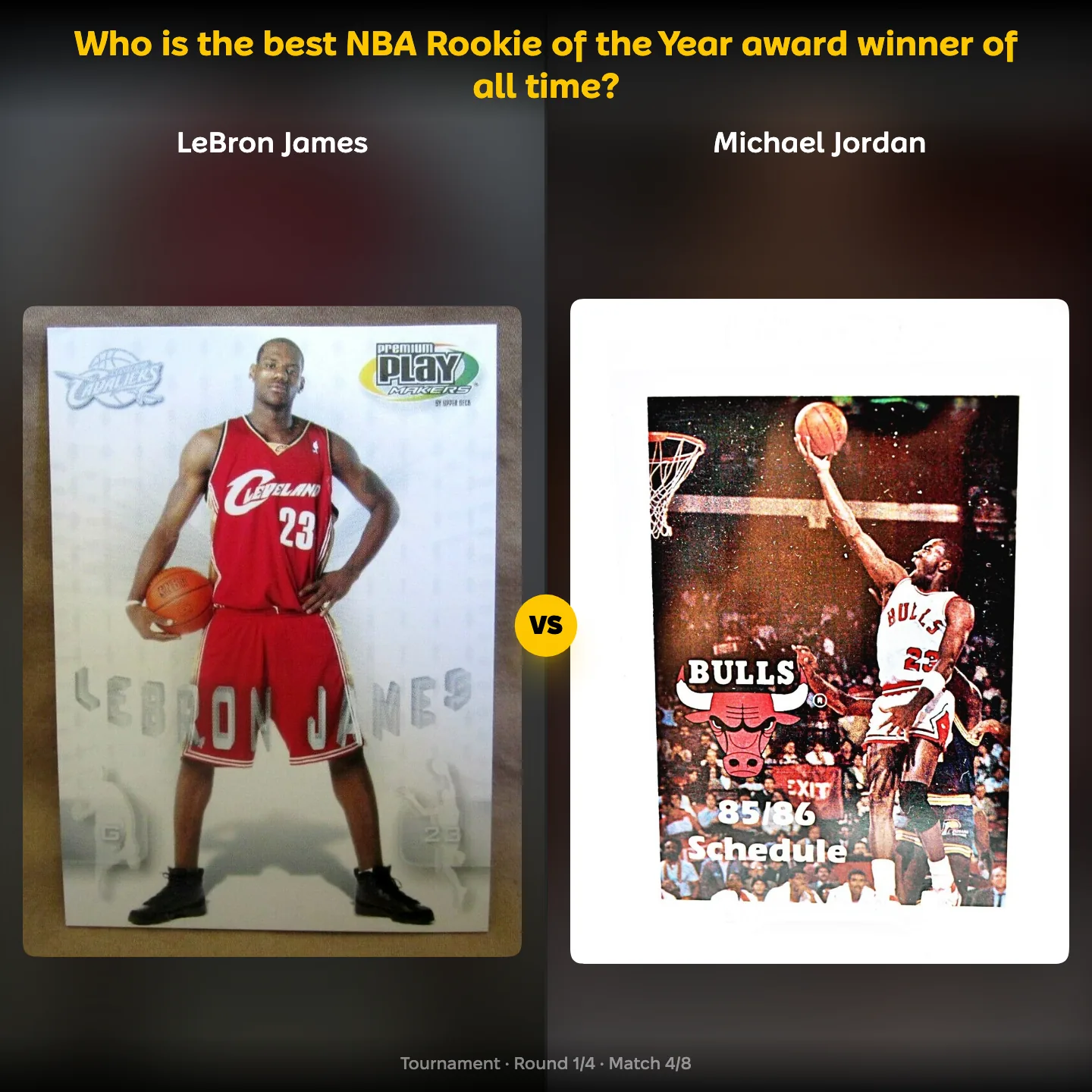
Rookie of the Year, 1985 and 2004
Both men won this award, nineteen years apart.
Jordan's first season was the louder one in the box score: 28.2 points a game for a Chicago team that had missed the playoffs, after Houston and Portland spent the picks ahead of him on Hakeem Olajuwon and Sam Bowie.4
James came out of high school and averaged 20.9 points at nineteen, having been introduced as a generational player before he had played a professional minute.
Chamberlain then settles the ranking rudely: 37.6 points and 27.0 rebounds a game as a rookie in 1959-60, with the MVP award in the same season.
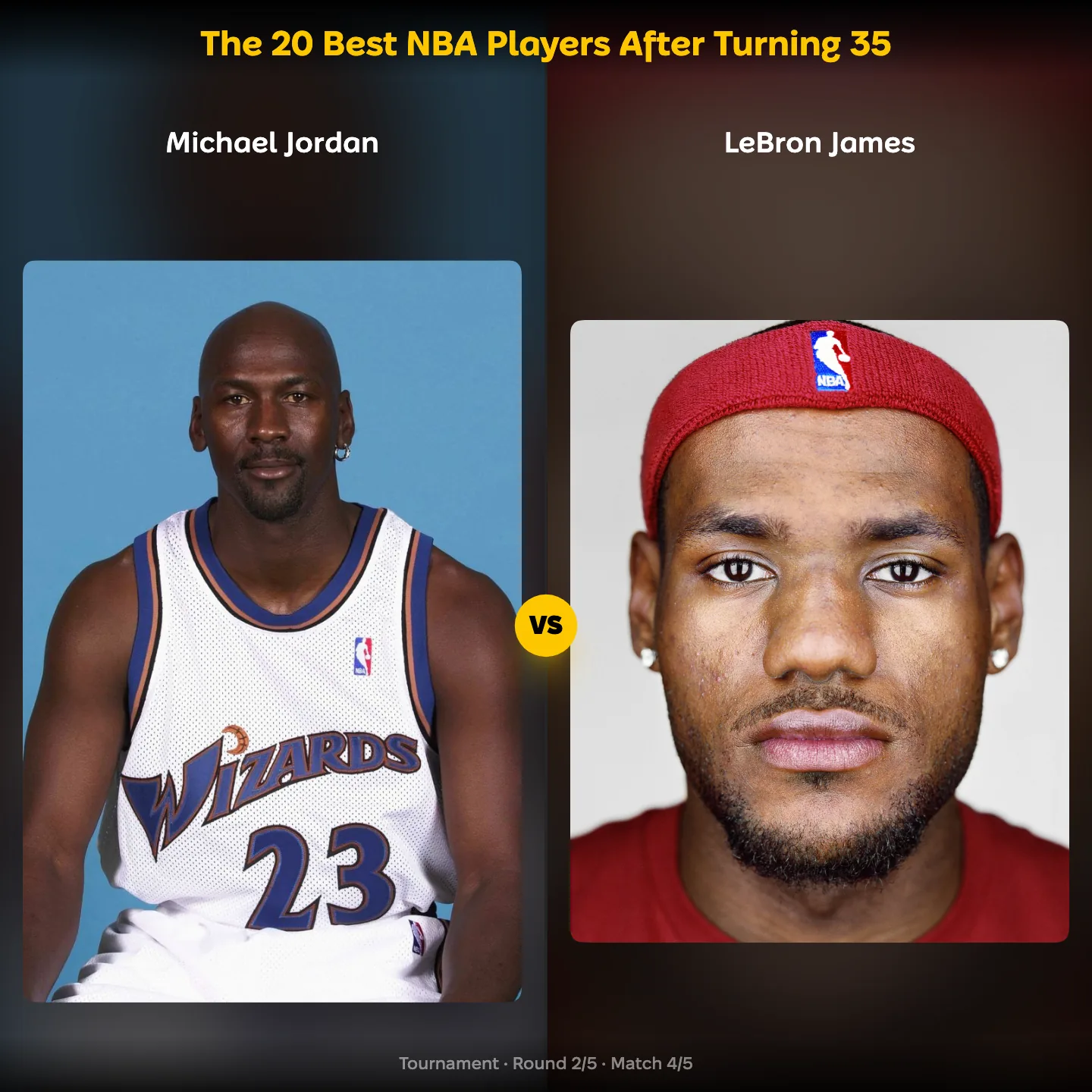
After 35: Jordan in Washington, James in Philadelphia
Age is where the two careers stop having the same shape at all.
Jordan's late chapter ran two seasons and 142 games. He came back at thirty-eight with Washington and averaged 22.9 points, then played all 82 games in the season he turned forty, which the team finished 37-45.1
James turned forty-one in December 2025, played sixty regular-season games at that age and has two more years under contract in Philadelphia. The comparison is between a two-season epilogue and something closer to a second career.
Abdul-Jabbar is the benchmark neither has passed. He played twenty seasons, won the Finals MVP award two months after his thirty-eighth birthday, and was still on the floor at forty-two.
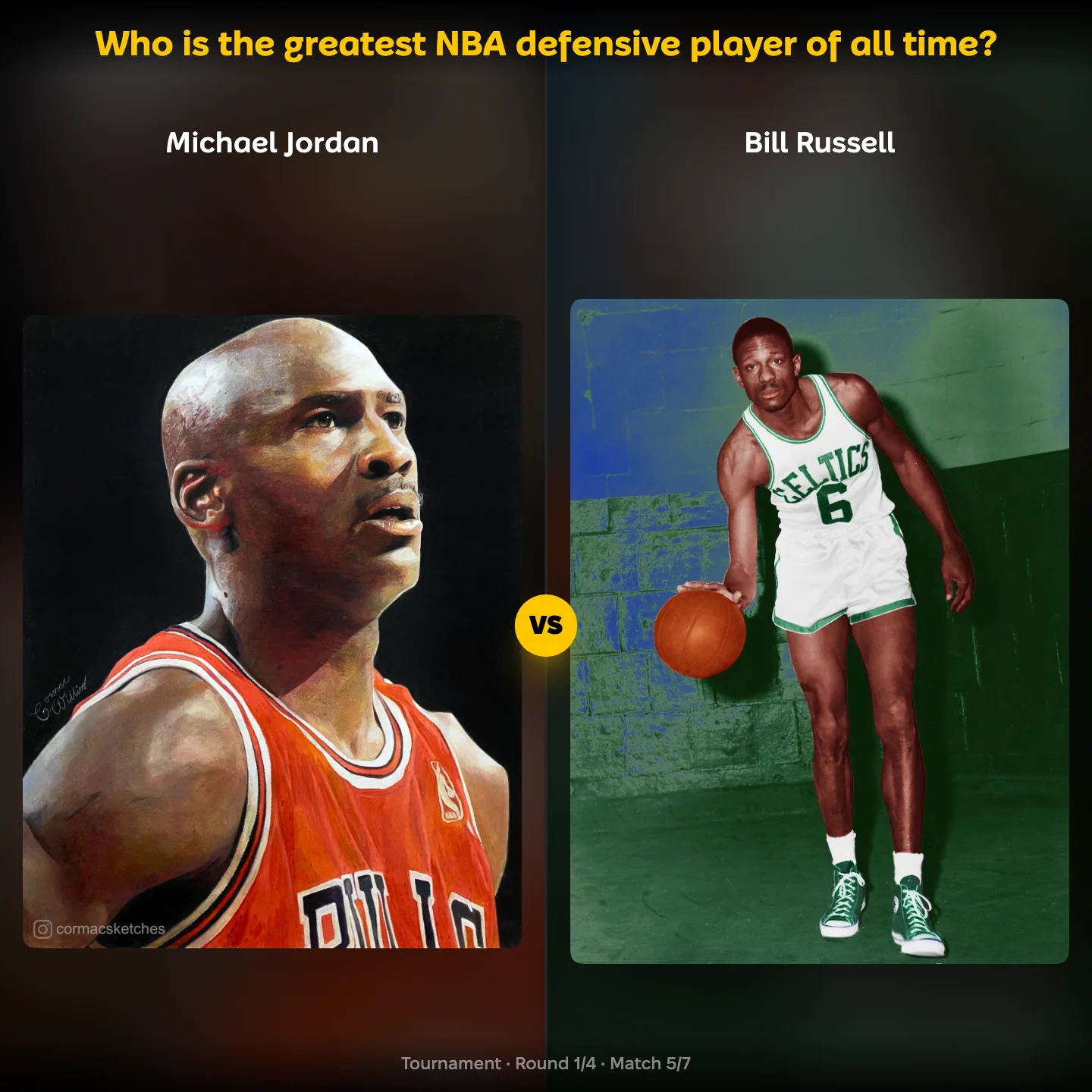
Defensive Player of the Year: Jordan is on this list, James is not
Defence is where the symmetry breaks — Jordan is one of thirteen options here and James does not appear on the ranking at all.
Jordan was named to nine All-Defensive first teams and won Defensive Player of the Year in 1988, the season he also led the league in scoring at 35.0 a game and in steals at 3.2.4
James has six All-Defensive selections of his own, which is a strong record and not the record of a man remembered for guarding people.
Russell and Hakeem Olajuwon carry most versions of this ranking, both of them centres, because what a team concedes has always been the number defensive reputations are built from.
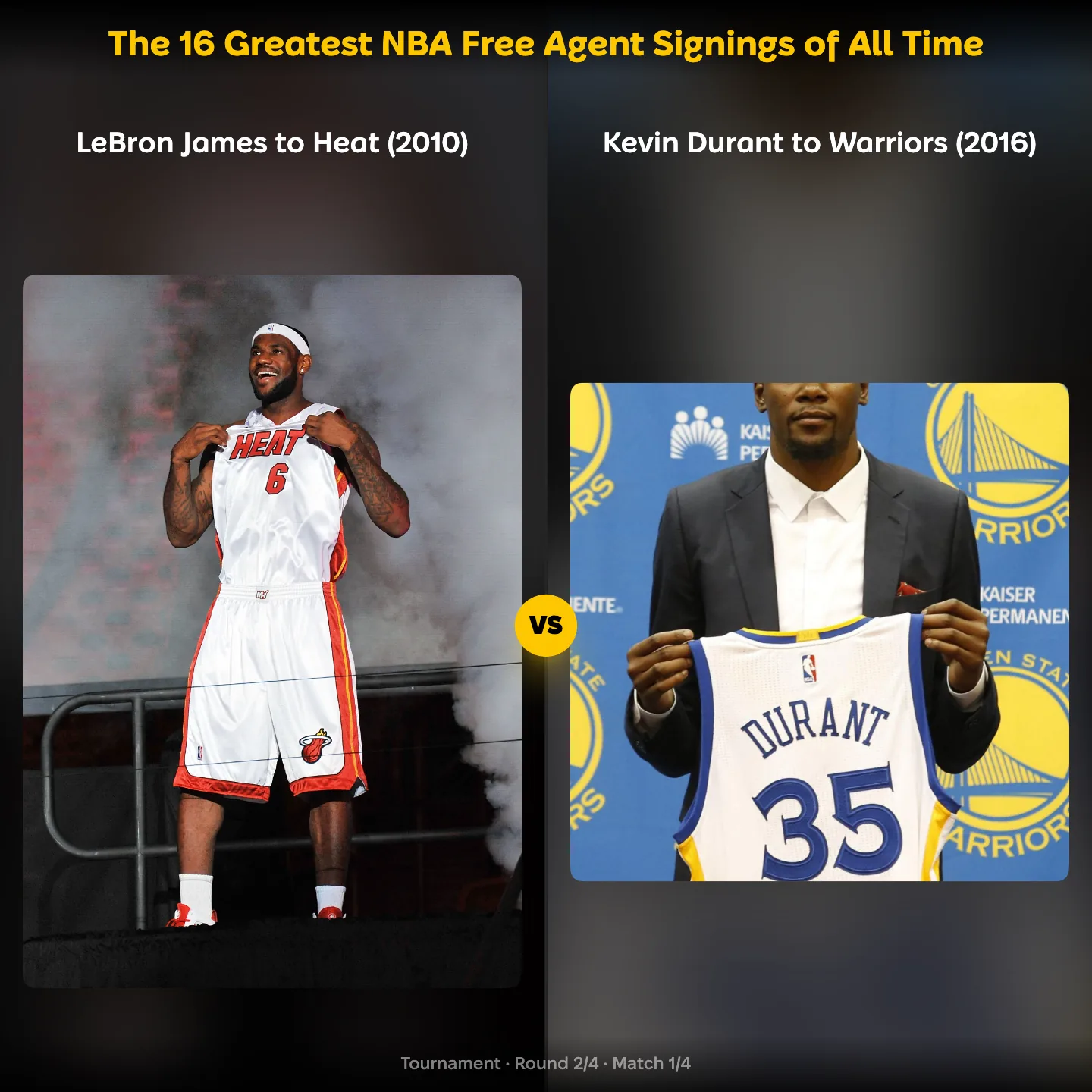
The Decision, 2010: a category James owns twice
Free agency gives James two of the sixteen entries: the 2010 move to Miami and the 2014 return to Cleveland.
The Miami decision, announced live on television, produced four straight Finals appearances and a template every star since has either copied or loudly refused.
Jordan has no entry, for a plain reason. He played 930 of his 1,072 games in a Chicago shirt and never once used free agency to move while he was at his peak.
Kevin Durant's 2016 move to Golden State is the only other entry that redrew a title race this thoroughly. James has now done the paperwork a fourth time, at forty-one, for $3,876,529 next season and $4,070,355 the year after, having been paid $52,627,153 by the Lakers in 2025-26.2
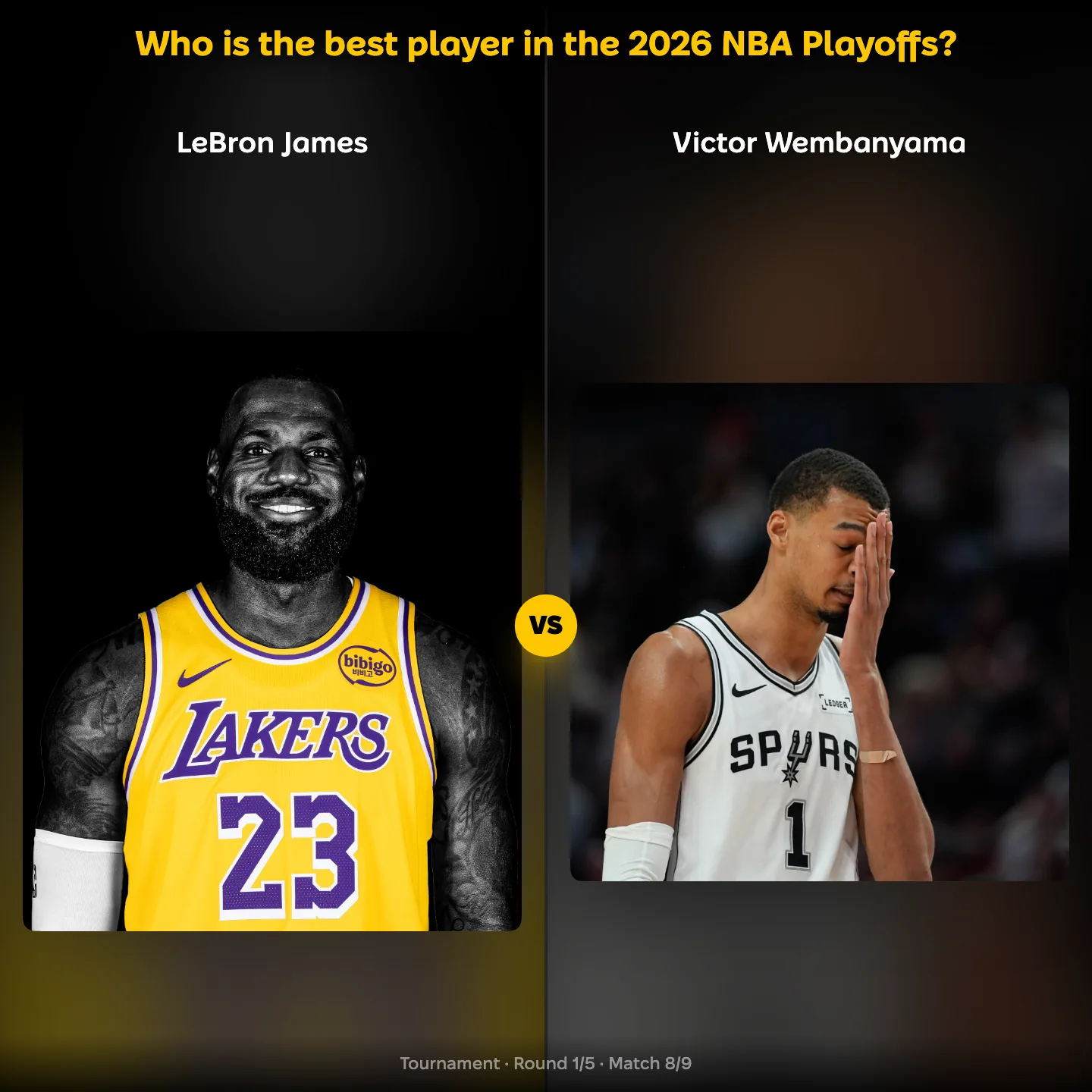
The 2026 playoffs: Wembanyama, Jokić and a 41-year-old
Some rankings take only the present tense, and that rules Jordan out on a technicality he cannot dispute: his last playoff game was in 1998.
James is among the seventeen names because he played ten playoff games in the spring of 2026, in his twenty-third season, which took his postseason career to 302 games across nineteen different springs at 28.2 points a game.2
Victor Wembanyama, Nikola Jokić and Shai Gilgeous-Alexander are what the ranking is really about: the generation that arrived while James declined to leave.
Every list about the current season is a list Jordan cannot enter, however firmly he holds the ones about the 1990s.
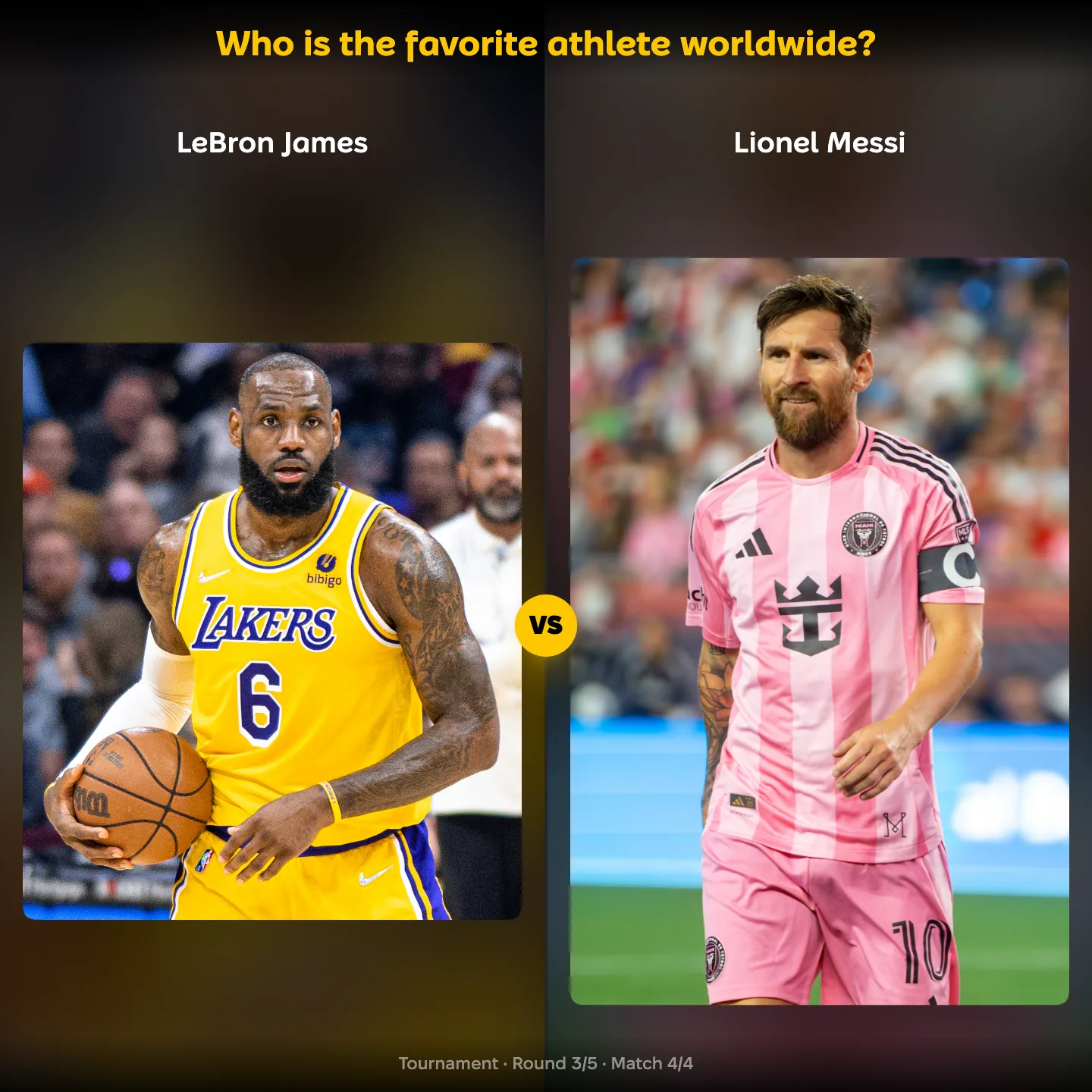
Lionel Messi, Cristiano Ronaldo and the ceiling on basketball fame
Thirty-two athletes from every sport are on this ranking, and James and Jordan are two of the thirty-two.
Messi and Ronaldo are the obstacle. Football's global audience is the larger one, and the pair of them spent twenty years at the middle of it.
Jordan's reach is the strongest card either American holds here. His sneaker line has kept the name in shops for all twenty-three years since that afternoon in Philadelphia, which is a longer run than his playing career.
Muhammad Ali, Usain Bolt and Serena Williams share the list, and being loved is measured differently from being good at basketball, which is why James's scoring record buys him very little in this company.
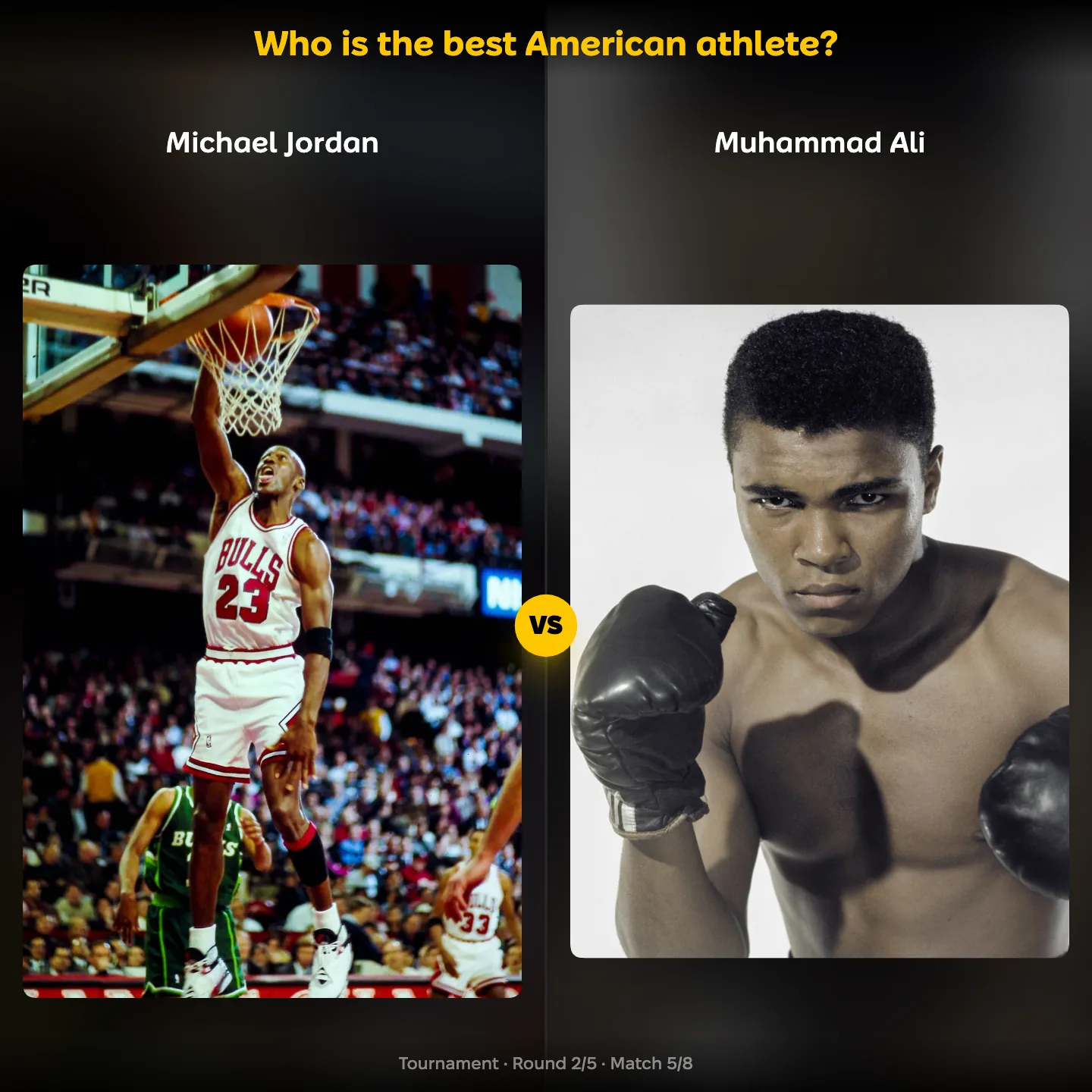
Muhammad Ali and the best-American-athlete question
One country, every sport: this ranking sets James and Jordan beside thirty-one names from baseball, boxing, athletics, football and swimming.
Ali is the entry that makes basketball's internal quarrel look parochial. He was stripped of the heavyweight title for refusing the draft and won it back afterwards, and his fame was never contained by sport.
Babe Ruth, Jesse Owens, Jackie Robinson, Michael Phelps and Serena Williams are options too.
Several of them changed something outside the arena, which is a test neither James nor Jordan is set on any of the other fifteen lists here.
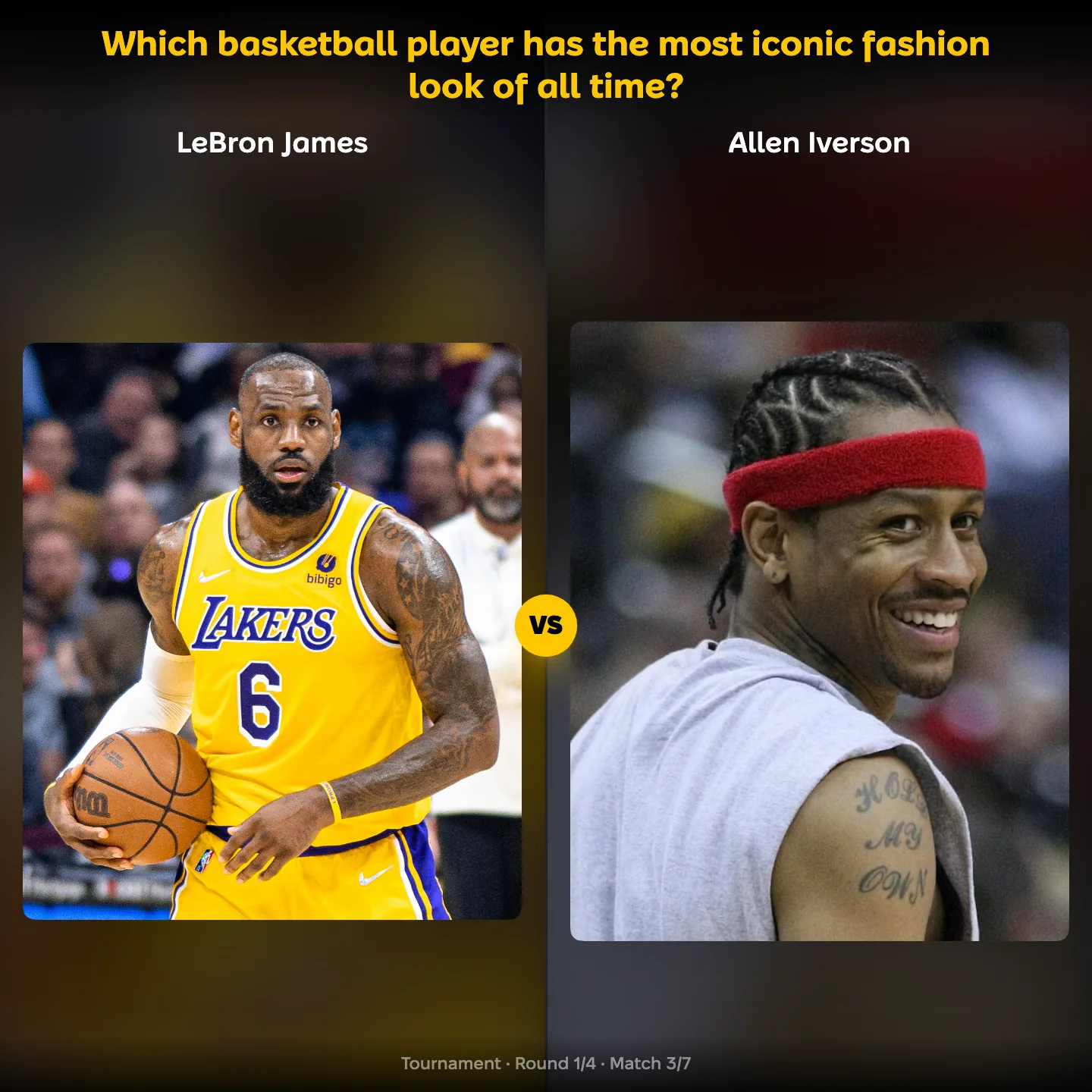
Allen Iverson's cornrows against Jordan's suits
Thirteen players are on a ranking about clothes, and the two men in this article are among them.
Iverson is the reason the category exists: cornrows, chains and throwback jerseys, worn through the years the league decided its players needed a dress code.
Jordan's contribution ran the opposite way, in tailored suits and the only sneaker line named after a person. James made the pre-game tunnel a photographed event, and Dennis Rodman and Russell Westbrook took that somewhere else entirely.
Two men with ten championships between them, judged on tailoring.
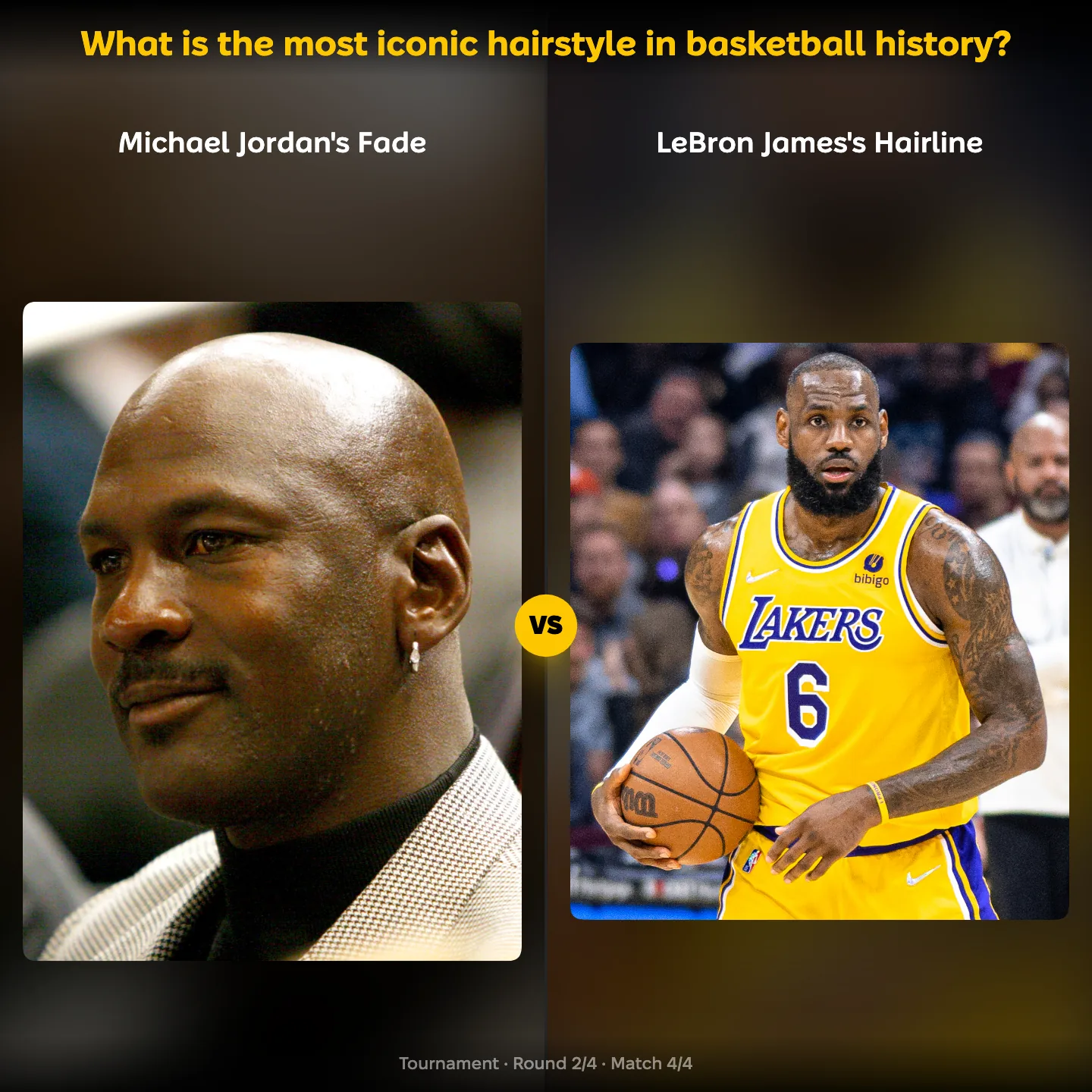
Jordan's fade against James's hairline
The last ranking is the one neither would have chosen: Jordan's shaved head and James's hairline are both options on a list about basketball haircuts.
Jordan's was a deliberate style a generation of players copied. James's is a commentary he never asked for.
Rodman's dyed hair, Iverson's cornrows and Julius Erving's afro are the serious entries here.
One record book, two closing dates
Jordan's fifteen seasons are finished material. Every ranking above that asks about the 1990s has him in it, and none of them can be altered now.
James is still supplying evidence. His 76ers deal runs through the 2027-28 season, when he will turn forty-three during the schedule,2 so at least two of these sixteen questions will read differently by the time it expires.
Sixteen questions about the same two players, each one settled a pair at a time, and no two of them drawing on the same evidence.
If one of these lists is missing a name you would have picked, the shortest route is to build the version you would actually defend.
More rankings, more angles
- Wilt Chamberlain vs Bill Russell: 100 Points, 11 Rings — 143 meetings, and the rivalry that came first
- Magic Johnson vs Larry Bird: 47 Years of the Same Argument — the rivalry that saved the league first
- Kobe Bryant's Records Keep Falling. The Lists Keep Him. — 81 points, and what happened to the record
- Shaquille O'Neal: Six Teams, Four Rings, 16 Lists — four rings, and one very bad genie film
Sources
- Basketball Reference — Michael Jordan 2002-03 game log, his final game on 16 April 2003 at Philadelphia (15 points, 87-107) and Washington's 37-45 finish: basketball-reference.com (checked 2026-08-03)
- Basketball Reference — LeBron James career page: 43,440 points in 1,622 games across 23 seasons, 4 MVP and 4 Finals MVP awards, 21 All-NBA and 6 All-Defensive selections, the 2007-08 scoring title, 125 triple-doubles, 61,030 minutes, 20.9 points as a rookie, ten Finals series, 302 playoff games at 28.2 points a game including ten in 2025-26, a $52,627,153 Lakers salary in 2025-26, and the two-year Philadelphia 76ers contract signed 26 July 2026 at $3,876,529 and $4,070,355: basketball-reference.com (checked 2026-08-03)
- Basketball Reference — NBA Finals MVP winners: Jordan 6 (33.5 points a game in 1998), James 4, Magic Johnson, O'Neal and Duncan 3 each, Johnson's 1980 award at age 20, and Jordan's 41.0 points a game in the 1993 Finals: basketball-reference.com (checked 2026-08-03)
- Basketball Reference — Michael Jordan career page: 32,292 points in 1,072 games at 30.1 a game over 15 seasons, ten scoring titles, 5 MVP awards, 9 All-Defensive selections, the 1988 Defensive Player of the Year award alongside 35.0 points and 3.2 steals a game, 28.2 points as a rookie, 22.9 points at 38 in Washington, 41,011 career minutes, 930 of his 1,072 games in Chicago, 14 All-Star selections, and Hall of Fame induction in 2009: basketball-reference.com (checked 2026-08-03)
- Basketball Reference — Bill Russell career page: 11 championships in 13 seasons and 5 MVP awards: basketball-reference.com (checked 2026-08-03)
- Basketball Reference — Wilt Chamberlain career page: 50.4 points a game in 1961-62, seven scoring titles, and 37.6 points with the MVP award as a rookie in 1959-60: basketball-reference.com (checked 2026-08-03)
- NBA.com — "LeBron James surpasses Kareem Abdul-Jabbar for NBA career scoring record", 7 February 2023, with the all-time list showing Abdul-Jabbar's 38,387 set in 1984 and Karl Malone's 36,928: nba.com (checked 2026-08-03)
- Basketball Reference — Kareem Abdul-Jabbar career page: 38,387 points, 6 MVP awards, 15 All-NBA selections, 20 seasons to age 42, and the 1985 Finals MVP award: basketball-reference.com (checked 2026-08-03)
- Basketball Reference — 1969 NBA Finals: Boston Celtics champions, Jerry West named Finals MVP with 37.9 points a game: basketball-reference.com (checked 2026-08-03)
- Basketball Reference — 1997 NBA Finals Game 5 box score, 11 June 1997 at Utah: Jordan 38 points: basketball-reference.com (checked 2026-08-03)
- Basketball Reference — 2015-16 Golden State Warriors, 73-9 regular-season record: basketball-reference.com (checked 2026-08-03)
- Basketball Reference — 2016 NBA Finals Game 7 box score, 19 June 2016 at Golden State: James 27 points, 11 rebounds, 11 assists, 3 blocks: basketball-reference.com (checked 2026-08-03)
- USA Basketball — Michael Jordan player page: Olympic gold in 1984 and 1992, the 1992 team's 8-0 record, his 14.9 points and team-high 4.6 steals a game in Barcelona, and a 39-4 record across seven USA Basketball teams: usab.com (checked 2026-08-03)
- USA Basketball — LeBron James player page: Olympic gold in 2008, 2012 and 2024, bronze in 2004, Paris 2024 MVP, 29 Olympic games, and first place for assists (139) and second for points (358) in the US Olympic men's record book: usab.com (checked 2026-08-03)