
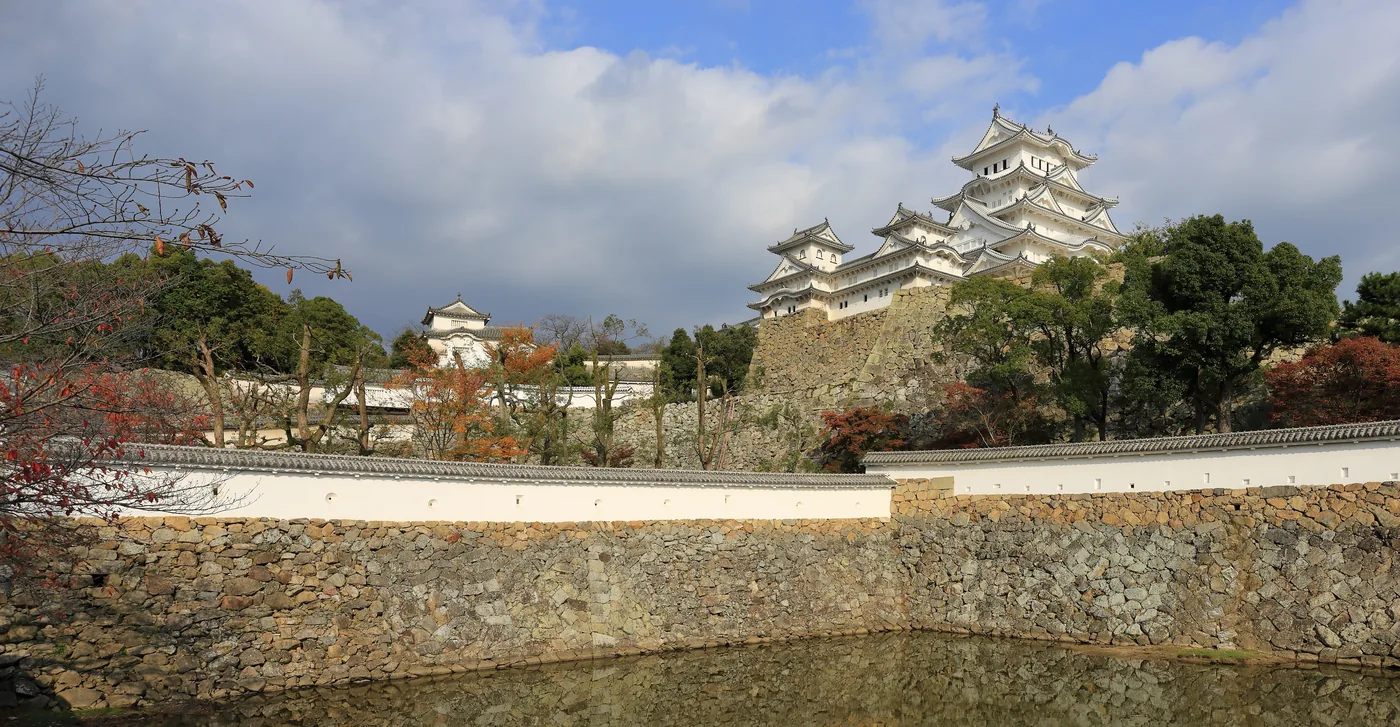
Japan drew 42,683,600 foreign visitors in 2025, 15.8 per cent up on the year before and the biggest count the Japan National Tourism Organization has ever published.1 On 26 July 2026 the World Heritage Committee, sitting in Busan, added the Ancient Capitals of Asuka and Fujiwara in Nara to the World Heritage List.2 A month before that the national football team went out of the World Cup in the Round of 32. Sixteen rankings below judge the same country as a cuisine, a garment, a mountain, a circuit, a record sleeve and a squad.
No other country on these lists shows up as a plate of sushi, a silk robe, a volcano and a Deep Purple album sleeve.
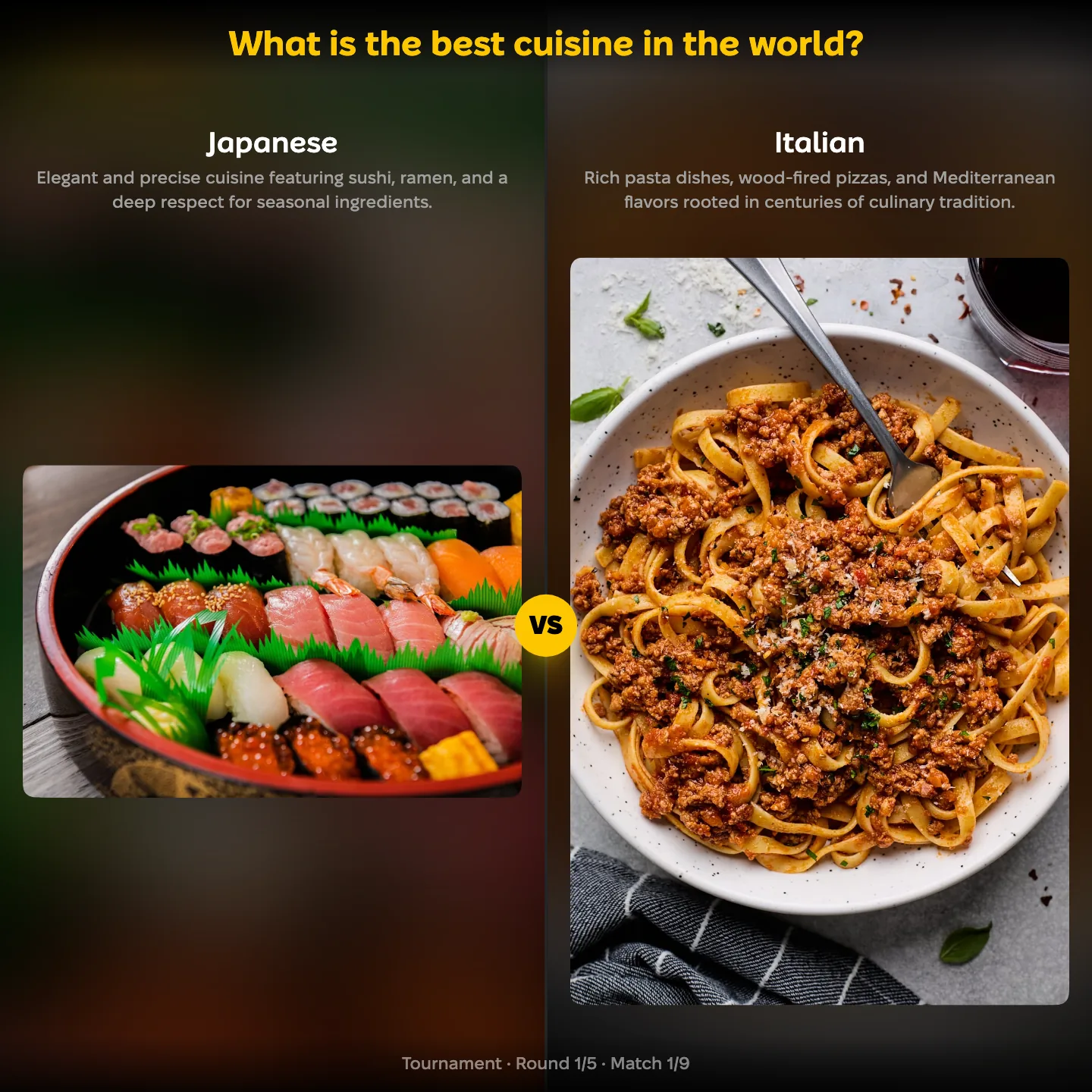
Washoku vs Italian: the cuisine that came with paperwork
Nineteen national cuisines compete here, and Japanese food arrives with a credential the others mostly lack. UNESCO put washoku, its term for the traditional dietary cultures of the Japanese, on the Representative List of Intangible Cultural Heritage in 2013.3
Tokyo's restaurant count is harder to argue with than taste is. The 2026 MICHELIN Guide lists twelve restaurants in the city holding three stars, twenty-six holding two and 122 holding one, and Michelin calls Tokyo the city with the highest number of starred restaurants in the world.4
Italian food makes the opposite case. It holds no Michelin monopoly and needs none — it is the cuisine most of the planet has already eaten this week.
French, Mexican, Chinese, Thai and Korean sit in the same nineteen, and not one of them needed a certificate to get there.
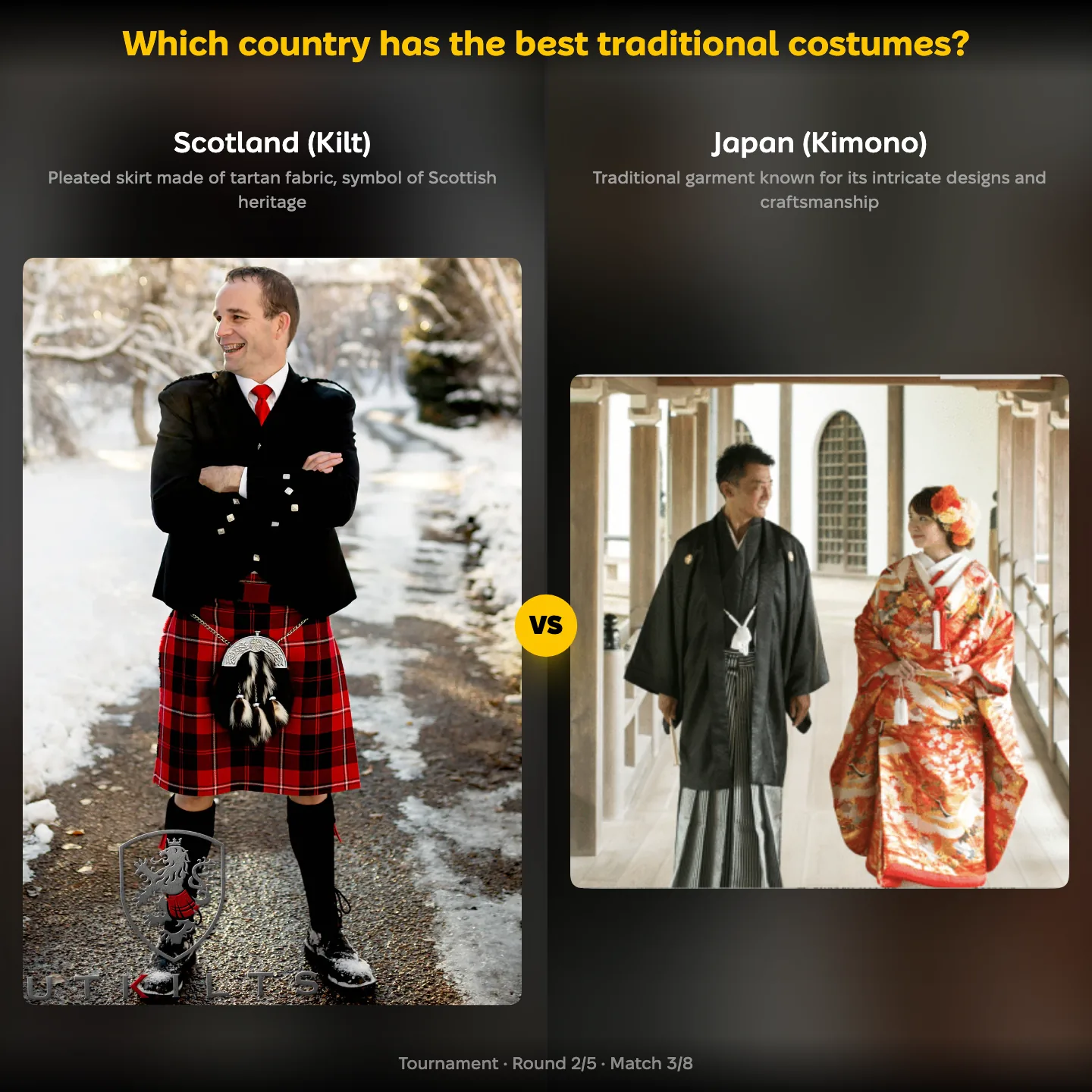
The kimono against Scotland's kilt
Thirty-two countries appear here as a single piece of clothing, and Japan is entered as the kimono. That puts the country up for judgement on silk rather than on food, cities or football.
The kimono is mostly ceremonial now. Japanese people wear it to weddings, to graduations and to Coming of Age Day in January, and the lighter cotton yukata to summer festivals and fireworks, rather than on a Tuesday.
Kyoto's Nishijin district has woven kimono silk for centuries, and its workshops have been contracting for decades — a decline a ranking about beauty has no way to show.
Scotland's kilt sits on the list with the same problem and the same solution, a garment kept alive by occasions. India's sari is the entry people genuinely still put on daily.
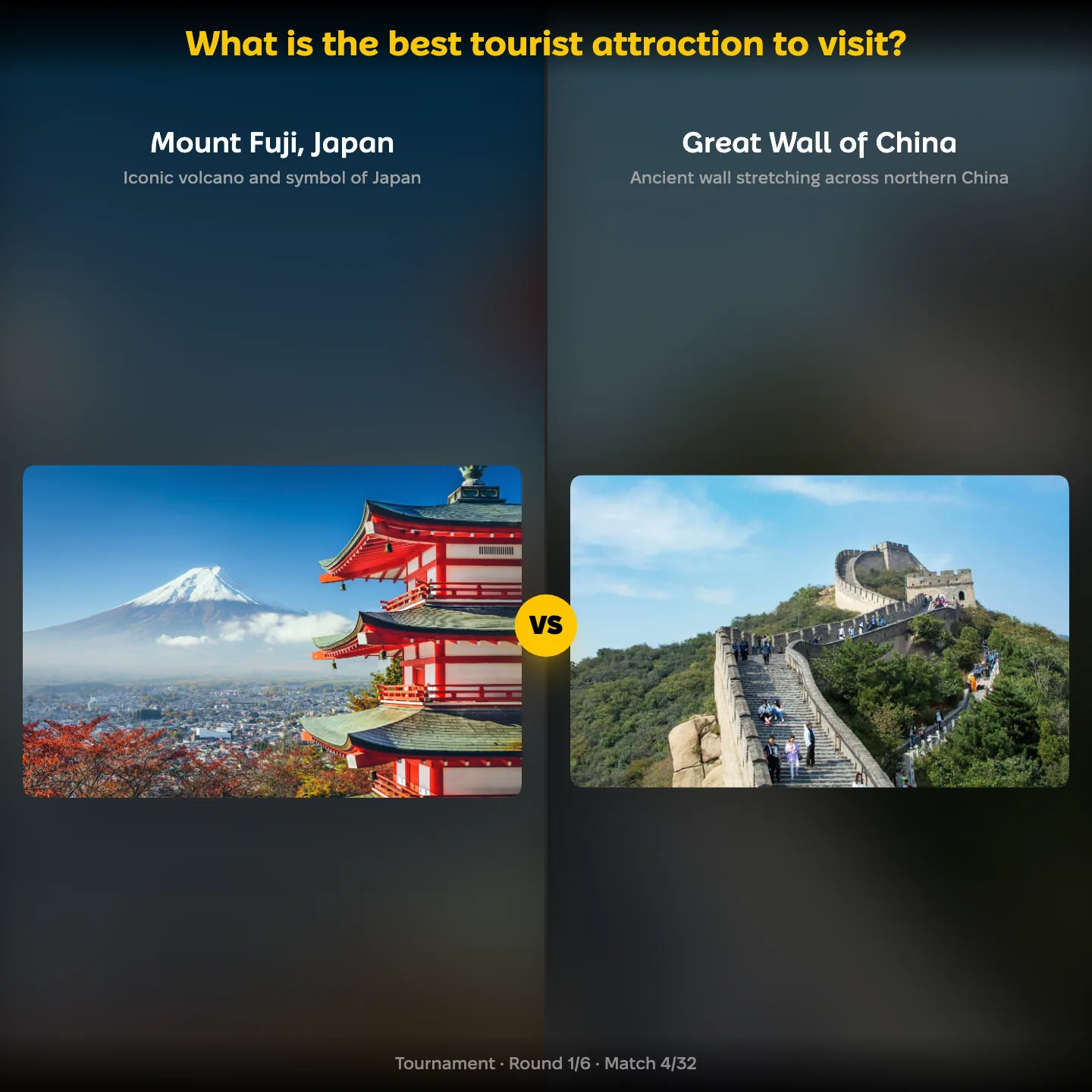
Mount Fuji vs the Great Wall: a mountain among things people built
Sixty-four attractions make up the widest field in this article, and Japan enters it as Mount Fuji.
Climbing the mountain now comes with a price list and a curfew. The official climbing site run by the prefectures at its base puts the summit at 3,776 metres, charges a ¥4,000 hiking fee on all four trails, and bars anyone without a mountain-hut booking from starting up between 2pm and 3am.5
The Great Wall of China makes the comparison awkward, because it is the one structure here that is longer than most countries are wide.
The Pyramids of Giza, Machu Picchu, Angkor Wat and Petra are in the same sixty-four, and against them being a volcano is a real disadvantage — everything else on the list was put there on purpose.
Tokyo vs Lisbon: judged on rent, wifi and visas
Thirty-two cities compete on what remote workers actually care about, and Japan fields Tokyo. Temples and sushi count for nothing in this one. Internet speed, cost of living and the legal right to stay are the whole test.
Japan opened that door in March 2024, and the Foreign Ministry's own page sets the terms: six months of stay with no extension granted, documents proving an annual income of ¥10 million or more, and insurance covering at least ¥10 million of medical treatment.6
Lisbon is the entry built for this ranking — rent decides more of these comparisons than culture does.
Bali, Chiang Mai, Medellín and Tbilisi are on the list too, every one of them cheaper than the city Japan is fielding.
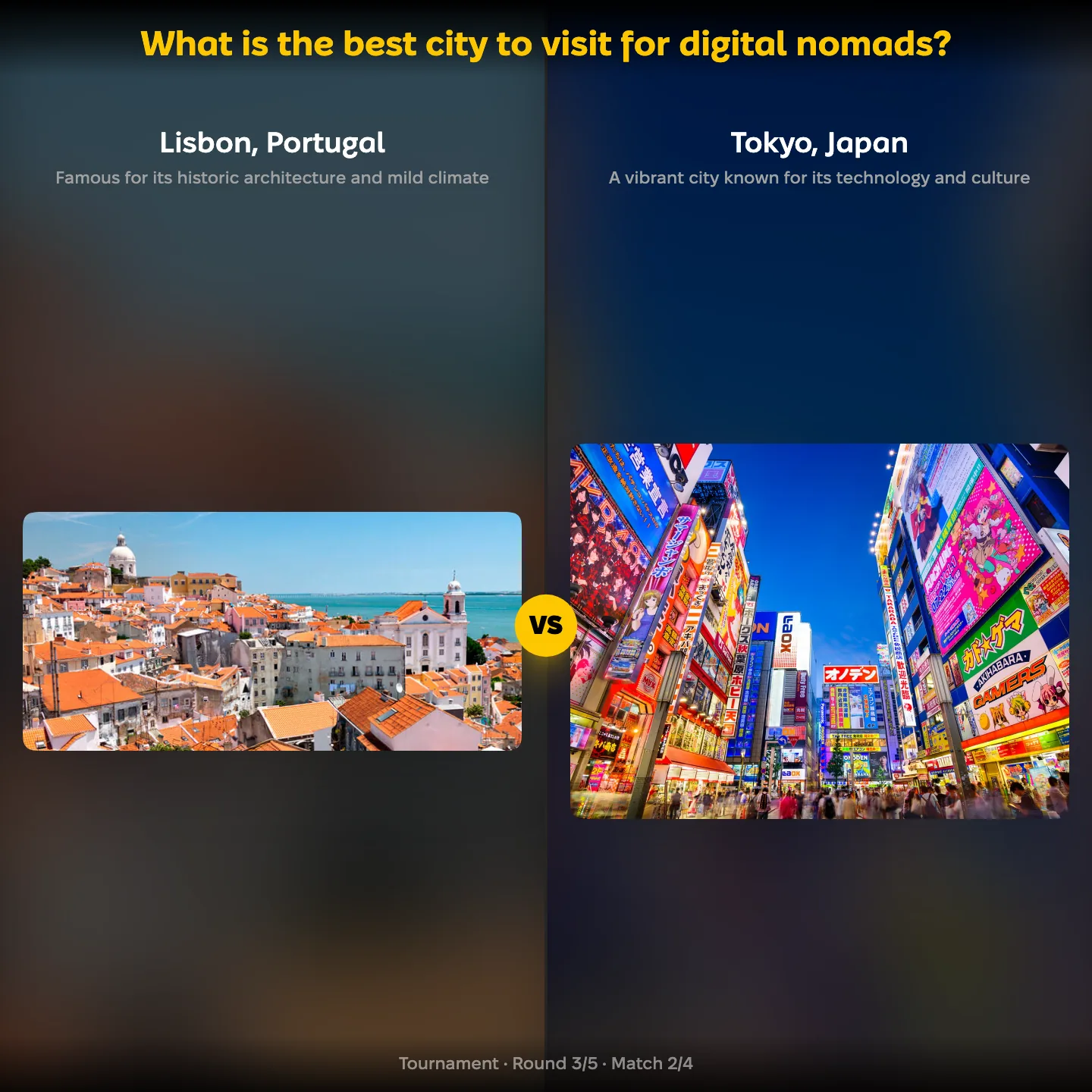
Universal Studios Japan and Tokyo Disneyland, in the same sixteen
Sixteen theme parks, two of them Japanese: Universal Studios Japan in Osaka and Tokyo Disneyland in Urayasu, which meet each other before anyone else is involved.
Tokyo Disneyland has the paperwork. Oriental Land signed its contract with Disney in April 1979, covering both the construction and the operation of the park, and the gates opened on a rainy 15 April 1983.7 The place looks American and is owned in Chiba Prefecture, which is why it behaves like neither.
Universal Studios Japan has Osaka, and Osaka is nobody's suburb. The two parks share one country and split its audience down the middle, Kansai against Kanto, long before any comparison with Florida starts.
Walt Disney World settles the scale question anyway: four parks on land the size of a small city, against one park each.
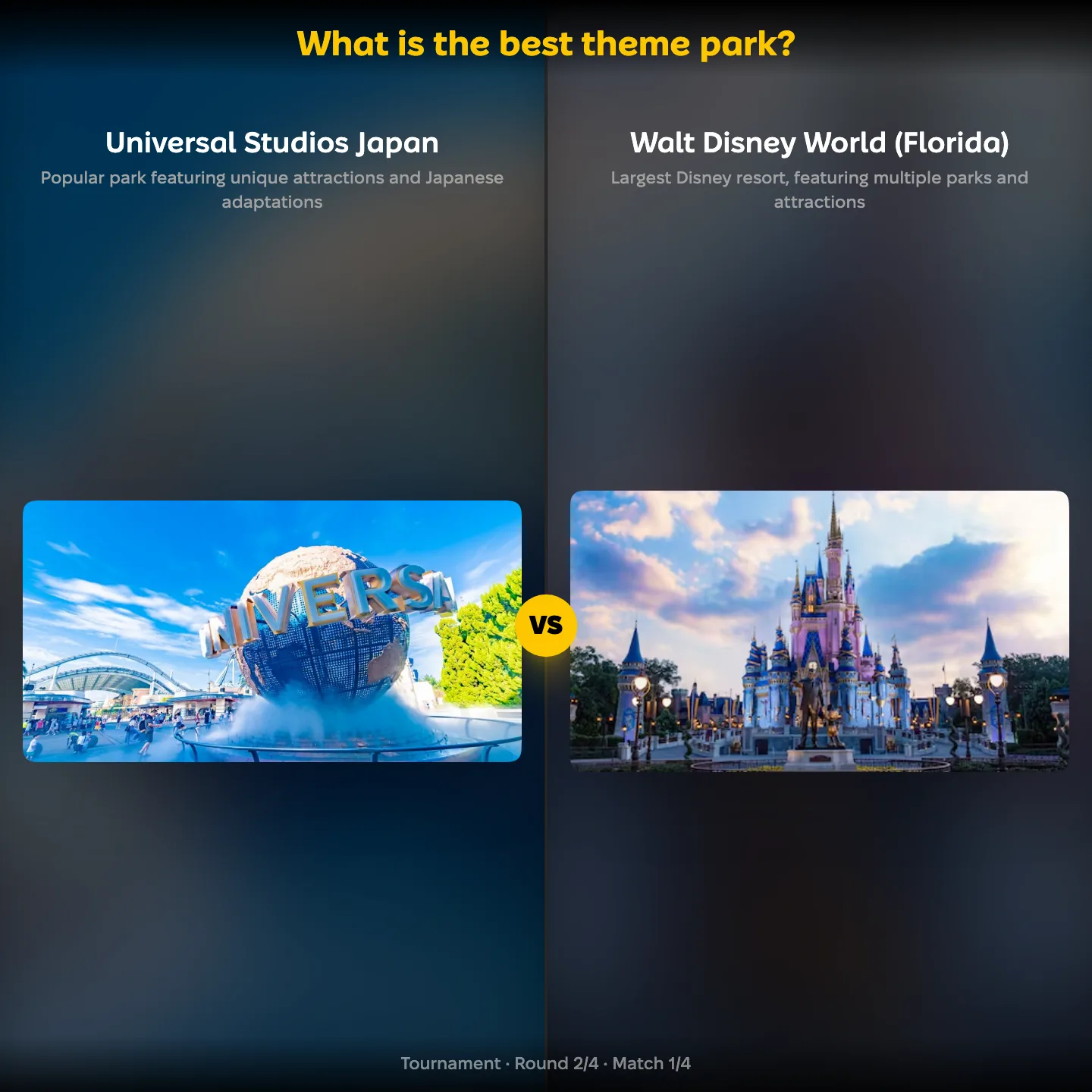
Hōryū-ji: the oldest wooden buildings on earth against Brutalism
Thirty-two architectural styles compete here, and Japan appears as "Japanese Traditional": timber frames, sliding screens, deep eaves, no nails where a joint will do.
The credentials are unusually specific. UNESCO counts around 48 Buddhist monuments in the Hōryū-ji area of Nara Prefecture, eleven of them standing since the late seventh or eighth century, which makes those eleven some of the oldest surviving wooden buildings anywhere; the property joined the World Heritage List in 1993.8
Brutalism shows how differently these styles get judged. It is barely seventy years old, it is made of the least forgiving material available, and no other style on the list gets campaigned against and campaigned for with equal energy.
Renaissance, Bauhaus, Art Deco and Byzantine round out the field, four European answers to a question Japan answered in wood.
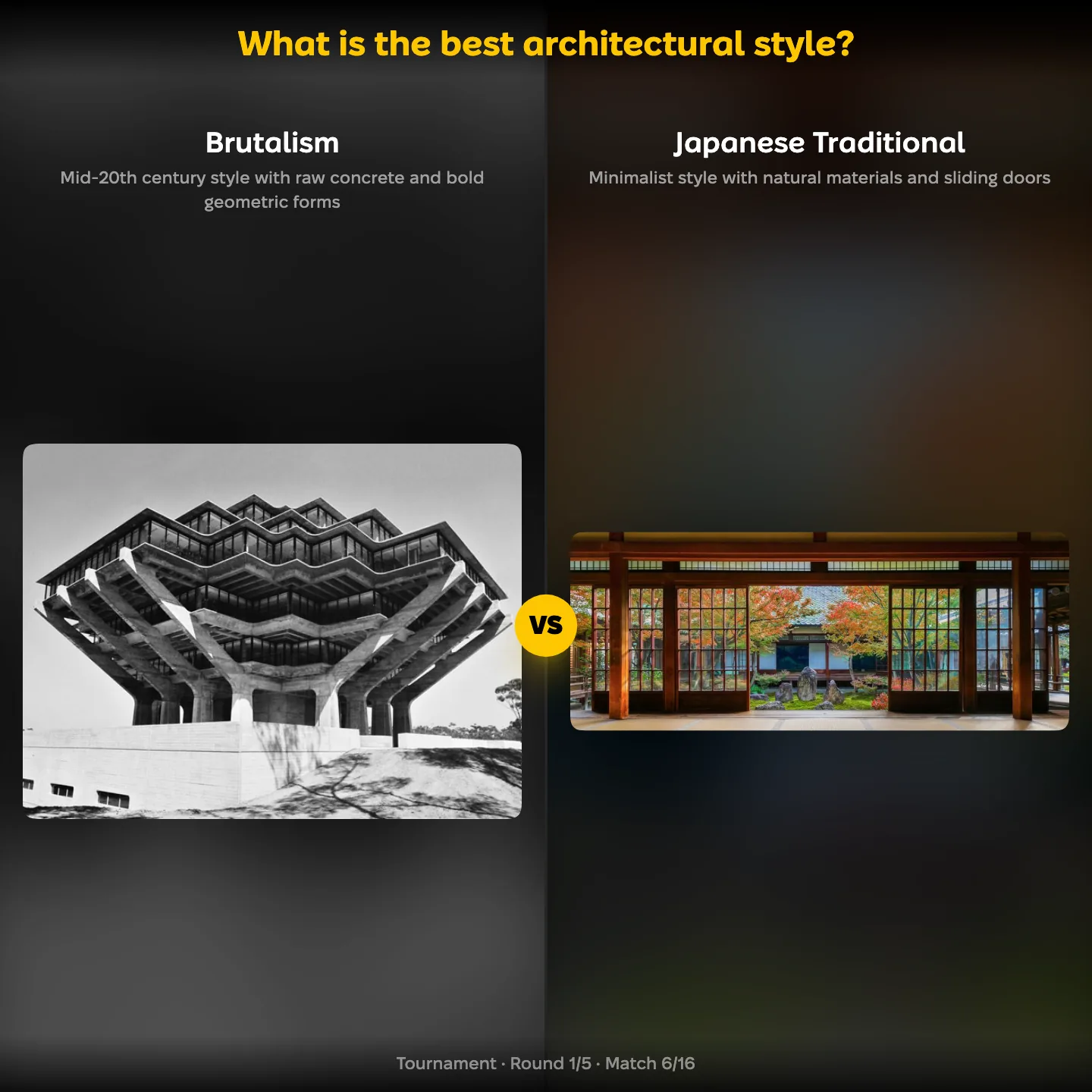
Deep Purple's Made in Japan: a country as a record sleeve
Twelve live rock albums, and Japan is on the list without a Japanese musician playing a note.
Deep Purple named the record after the place it was taped, and the request came chiefly from their Japanese label, which wanted a document of the live show. Four of the seven tracks were recorded at Festival Hall in Osaka on 16 August 1972, one the night before, and the last two at Tokyo's Budokan.9
The album then climbed to No. 6 in the United States and went gold inside two months, and Deep Purple have never been that high on the American album chart since.9
The Who's Live at Leeds, taped in a university refectory in February 1970, owns the other half of this comparison. Cheap Trick's At Budokan is in the same twelve, which puts two of these records in Tokyo, the second by a band bigger in Japan than at home.
X Japan, B'z and the sixteen acts of J-pop
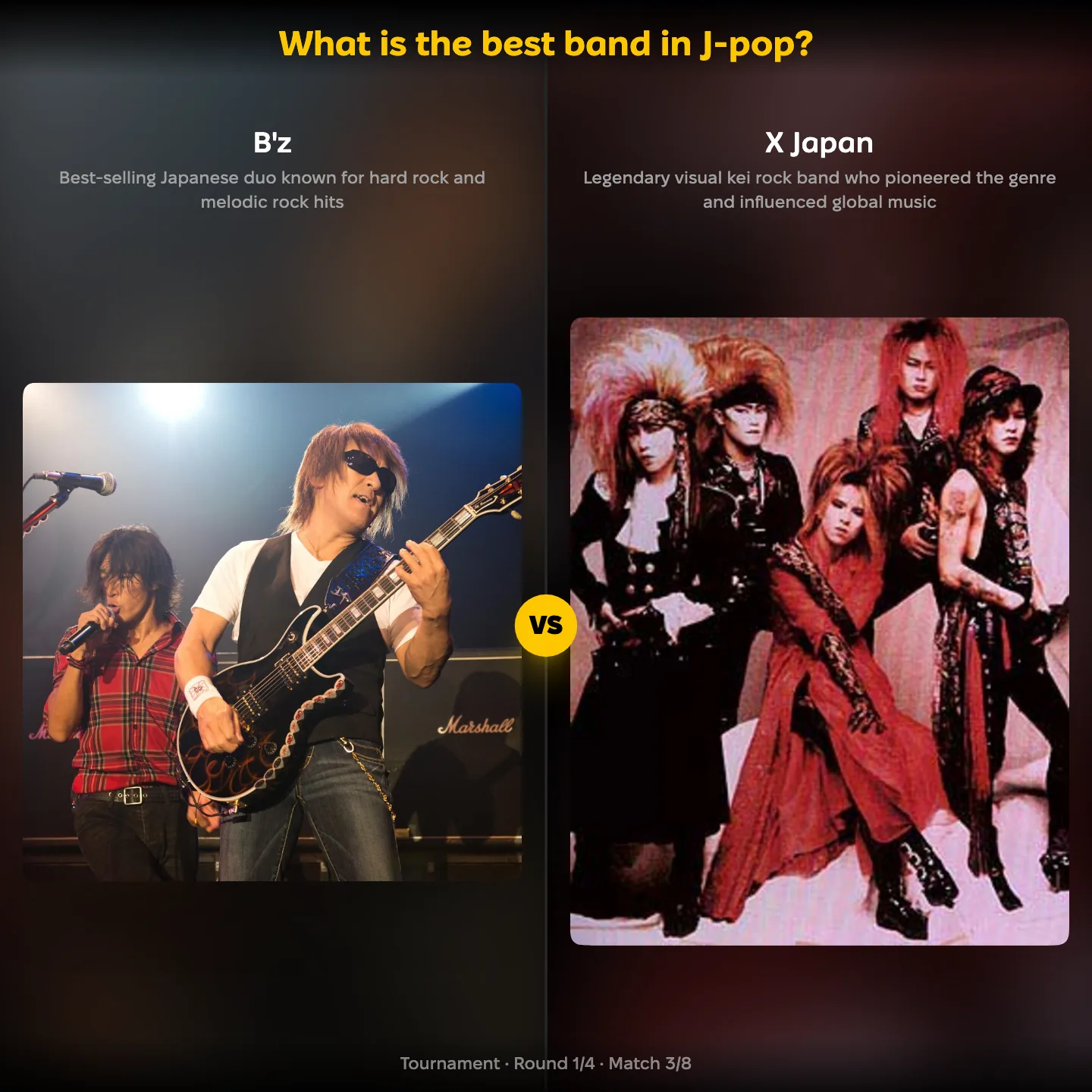
Sixteen acts, all Japanese, and one of them is called X Japan. The band formed in 1982 and built visual kei, heavy metal played in couture and two feet of hairspray, into a genre the rest of Asia then copied.
X Japan's story is why the genre carries weight rather than kitsch. They filled the Tokyo Dome repeatedly, split in 1997, lost guitarist hide months later, and reunited a decade after that.
B'z sell the records. Guinness World Records lists the duo of Tak Matsumoto and Koshi Inaba as the best-selling album act in Japan, with more than 42 million albums sold by 2008 on top of 34 million singles.10
AKB48, Arashi, Perfume, GLAY and Dir en grey fill out the same sixteen, which is how one list ends up holding an idol group with dozens of members and an experimental metal band.
Kurosawa vs Miyazaki: where Japan becomes the whole question
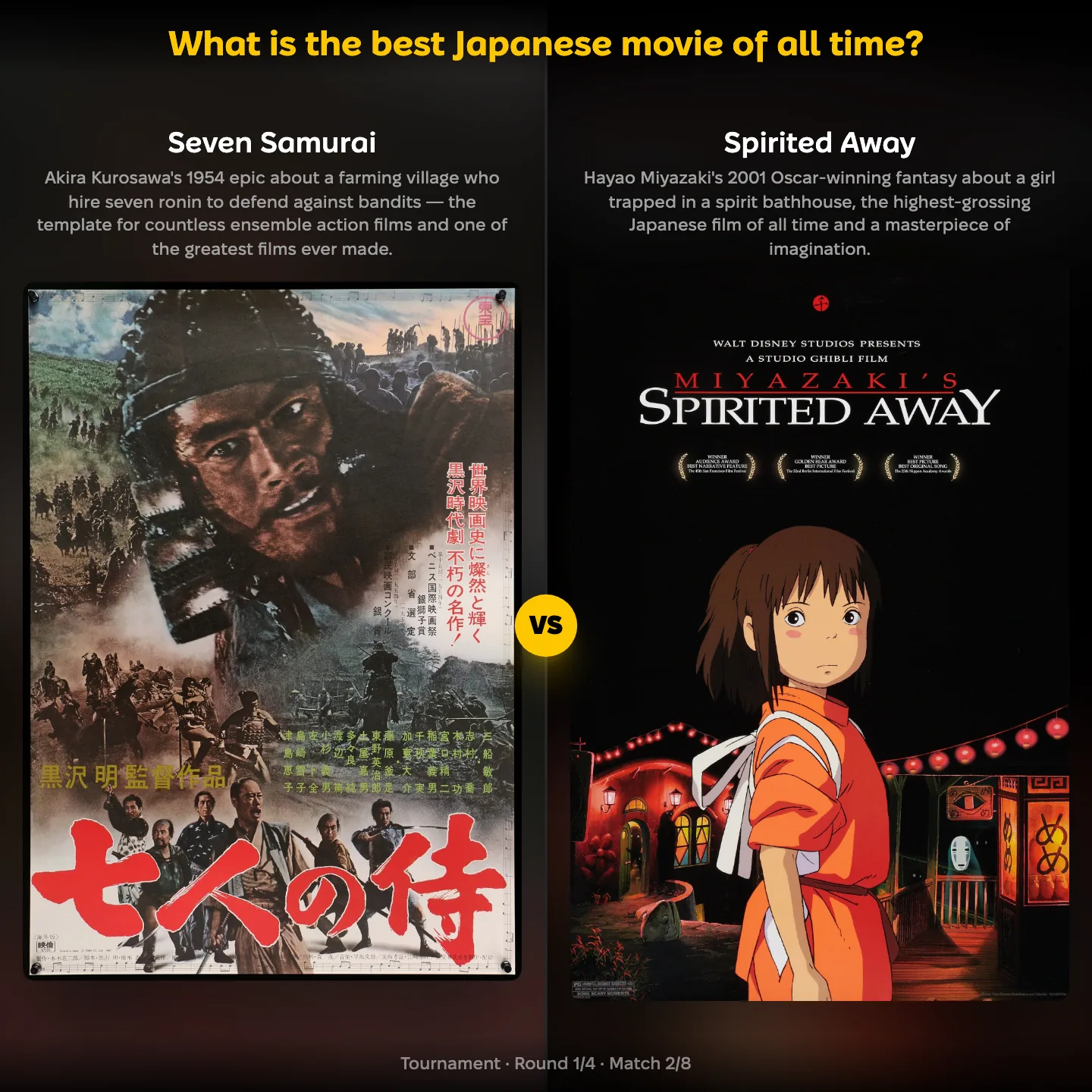
The ranking turns inward here. Japan stops being one option among thirty-two and becomes the subject itself, with fifteen of its own films arguing it out.
Akira Kurosawa's Seven Samurai exported the country's cinema. Its structure, recruit specialists and defend a village and lose some of them along the way, was rebuilt as The Magnificent Seven and then as most ensemble action films since.
Spirited Away is the commercial monument. Hayao Miyazaki collected the Animated Feature prize for it at the 75th Academy Awards on 23 March 2003, and the film held the Japanese box-office record for years afterwards.11
Rashomon, Tokyo Story, Grave of the Fireflies, Ran and Ringu fill out the fifteen, five separate ideas about what the country's best film even means.
The Tale of Genji vs Norwegian Wood: a thousand years apart
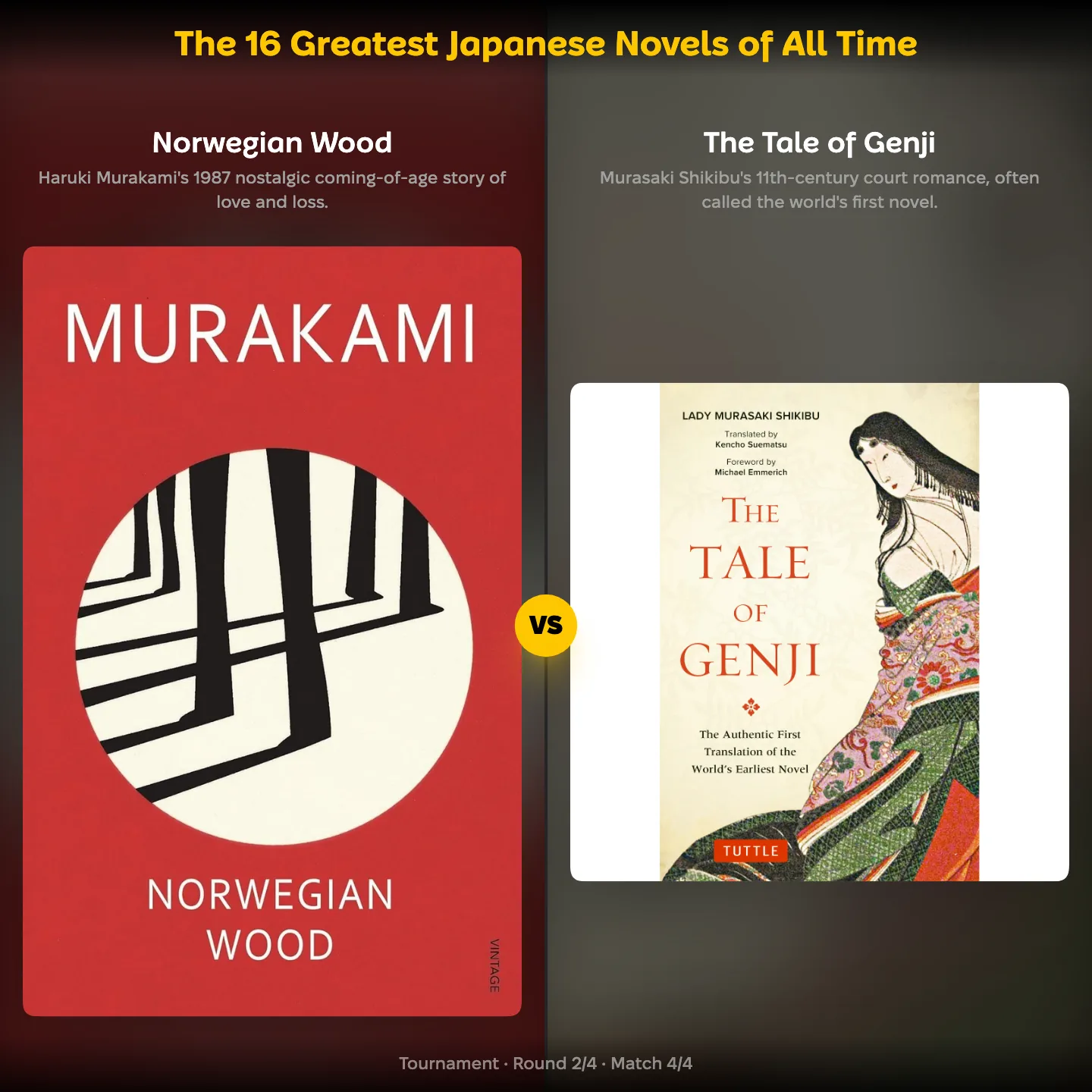
Sixteen novels, all Japanese, with a millennium between the oldest and the newest.
The Tale of Genji is the outlier by ten centuries. Murasaki Shikibu, a noblewoman at the Heian court, finished it in the early eleventh century, and it is widely called the world's first novel.
Haruki Murakami's Norwegian Wood is the modern extreme — the book most readers outside Japan meet the country's fiction through, and the one that turned its author into a celebrity he did not want to be.
Yasunari Kawabata's Snow Country and The Sound of the Mountain are on the same shelf, alongside Kenzaburō Ōe's A Personal Matter. Both men won the Nobel Prize in Literature, so this is the only ranking in the article with two laureates inside it.
Japan at the 2026 World Cup: still waiting on a knockout win
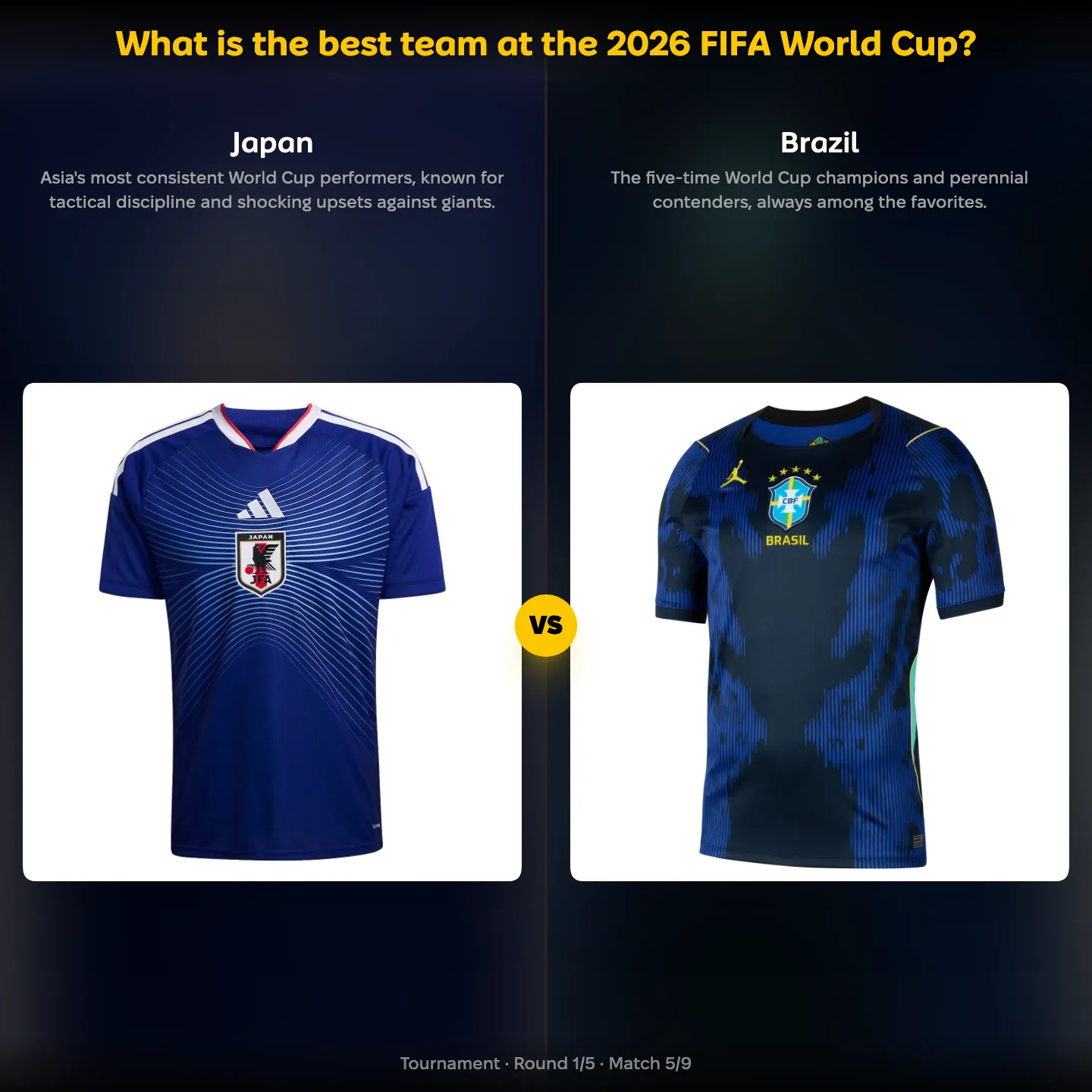
Eighteen national teams from the 2026 World Cup are in this ranking, and Japan's case is the thinnest of the eighteen.
Japan led Brazil in Houston on 29 June, through Kaishu Sano's strike in the 29th minute.
Brazil turned it round with Casemiro's header in the 56th and Gabriel Martinelli's finish in the fifth minute of stoppage time, and FIFA's report on the match described a first ever World Cup knockout-round win slipping out of Japan's hands. "It's a big regret for our tournament to end here," said the Japan coach Hajime Moriyasu, "but the players really gave it their all."12
Argentina, France, Brazil, England, Spain and Germany sit in the same eighteen. Each of those six has already won the thing.
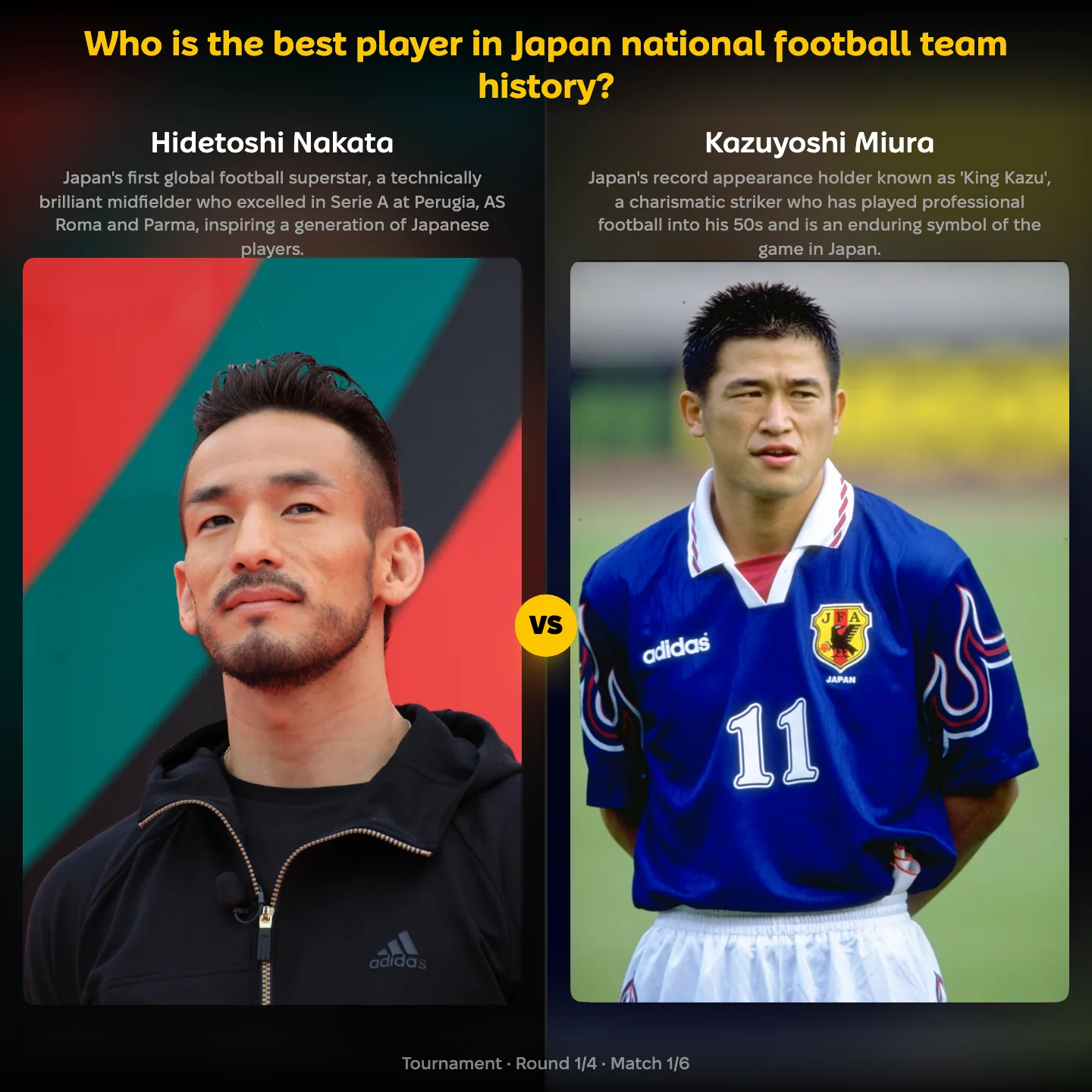
Nakata and Miura: twelve players, one shirt
Twelve players, one shirt — and the question stops being about countries at all.
Hidetoshi Nakata went first. He left for Perugia straight after the 1998 World Cup, won a Serie A title with Roma, later played for Parma and Bolton, and retired at 29 immediately after the 2006 tournament, early enough that the exit reads as a statement rather than a decline.
Kazuyoshi Miura never stopped. King Kazu is still a registered professional forward, at Fukushima United in the third tier, four decades after he signed his first contract in Brazil.
Shunsuke Nakamura, Keisuke Honda, Shinji Kagawa and Takefusa Kubo are on the same twelve, the generation that made a Japanese player in a European first team unremarkable.
Korea/Japan 2002: Japan as a venue rather than a competitor
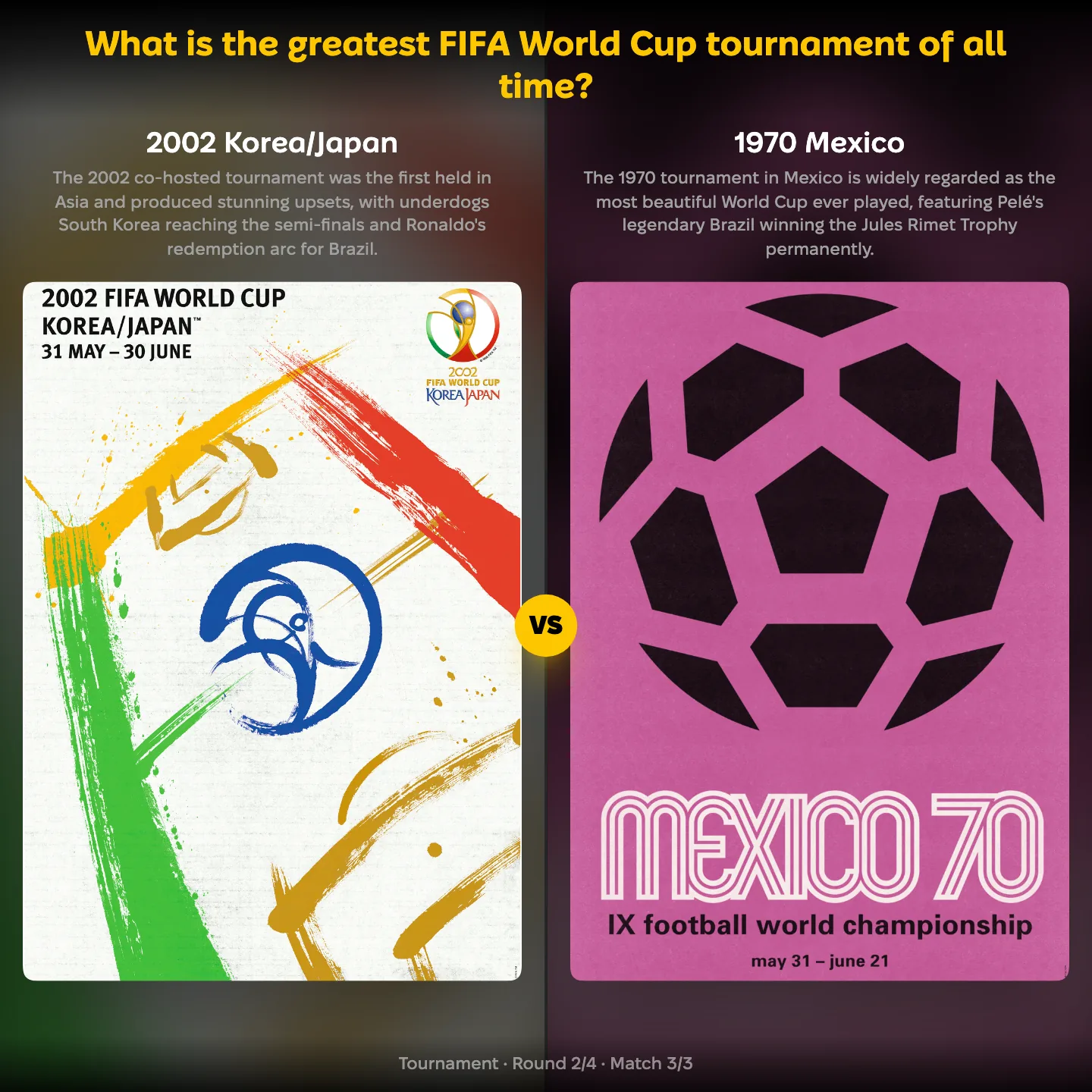
Twelve World Cups compete here, and Japan hosted one of them.
Korea/Japan 2002 was the first World Cup held in Asia and the only one ever shared by two countries. South Korea supplied the story people remember, reaching the semi-finals; Japan got out of its group and lost in the first knockout round, at home.
Mexico 1970 is the tournament most histories open with, and it earns that on one team sheet: Pelé, Jairzinho, Tostão, Rivelino and Carlos Alberto in the same Brazil side.
Suzuka: thirteen races and a figure of eight
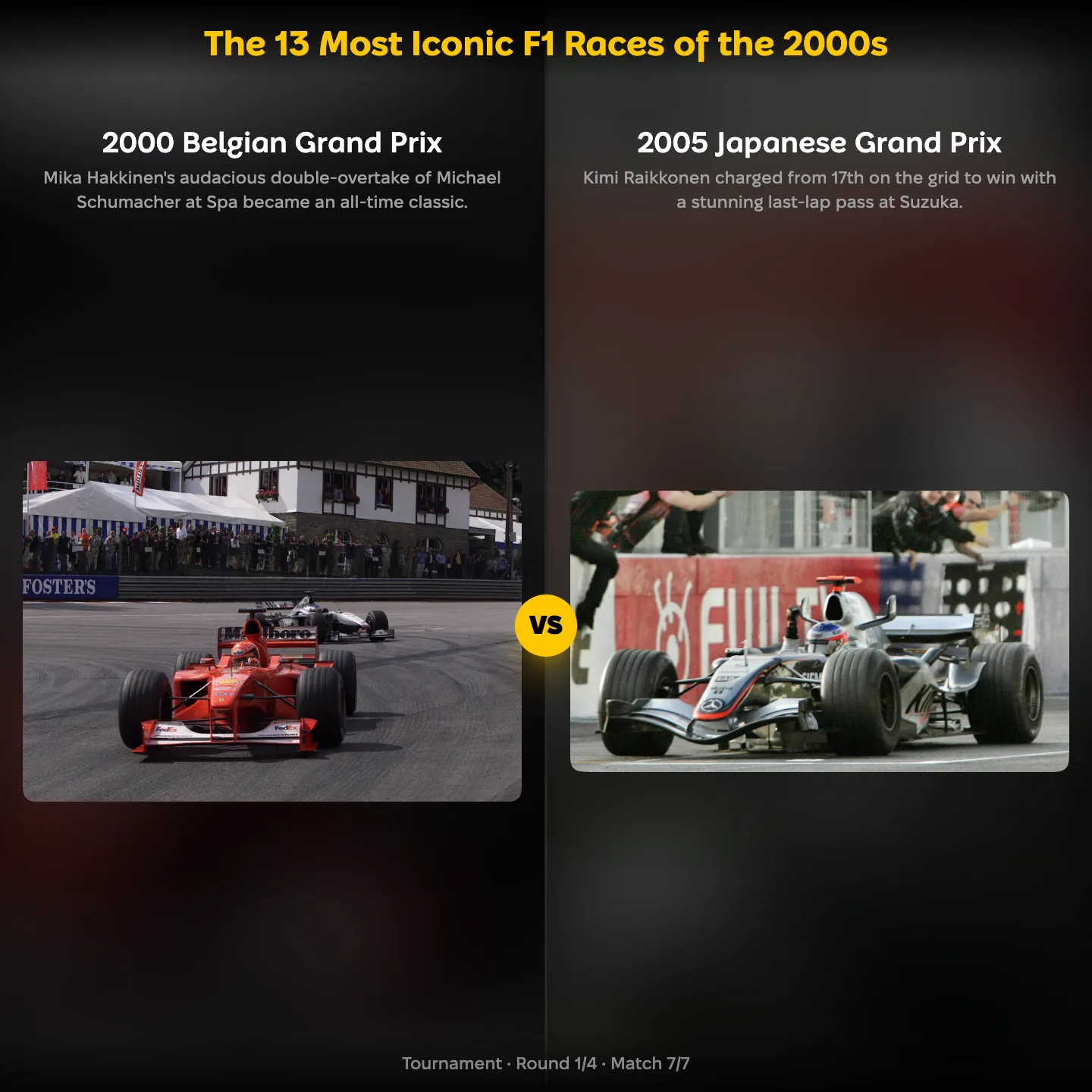
Thirteen individual Formula 1 races make up this ranking. Two are Japanese Grands Prix, the 2005 and 2006 editions, both at Suzuka.
The circuit explains a lot of that. Honda opened Suzuka in 1962 as Japan's first full-scale international racing course, built on Soichiro Honda's conviction that "without racing, cars will not improve", and it is still the only figure-of-eight layout in the sport, with a crossover section where the track passes over itself.13
2005 is the race people mean. Kimi Räikkönen qualified in the rain, started from the back half of the grid, worked forward all afternoon and took Giancarlo Fisichella on the last lap — the final overtake of the race.
The 2000 Belgian Grand Prix is the entry with the same shape and a bigger name. Mika Häkkinen passed Michael Schumacher and a backmarker at once at Les Combes, in the middle of a title fight he then lost.
Keiichi Tsuchiya and the motorsport Japan invented
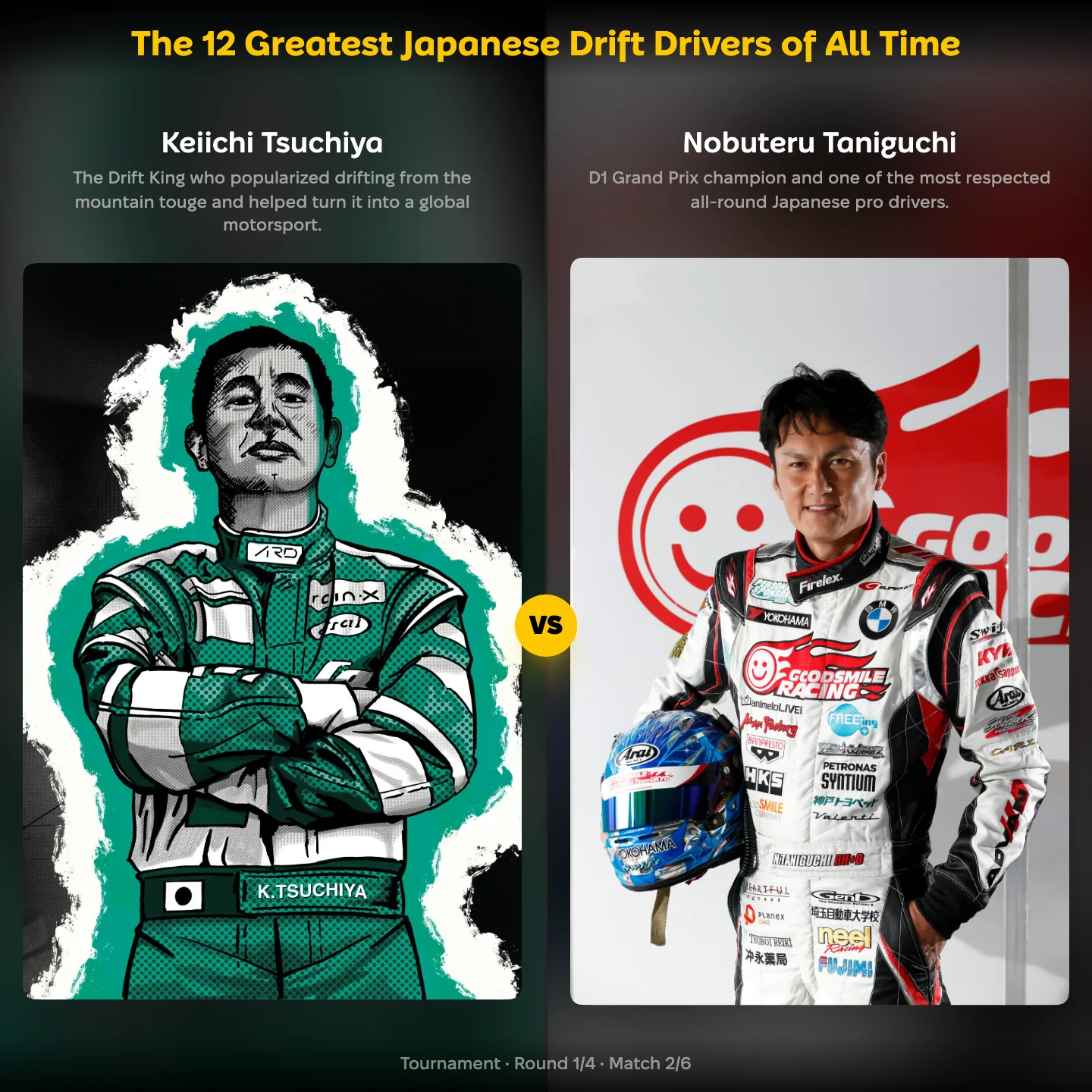
Twelve drivers, all Japanese, in a discipline that started on Japanese mountain roads. Drifting came out of touge, the passes where street drivers slid production cars through corners for the sake of it, and turned into a judged motorsport.
Keiichi Tsuchiya is the reason it is a sport at all. The Drift King carried the technique from the mountains into circuit racing, then supervised the Initial D anime that sold the whole idea to a generation outside Japan.
Nobuteru Taniguchi is the counter-case: a professional racing driver with titles behind him rather than a founding myth.
Daigo Saito, Masato Kawabata and Naoki Nakamura are on the same twelve, and their careers were made in a sport that now runs in the United States, Europe and the Middle East.
Neymar's nine goals against Japan
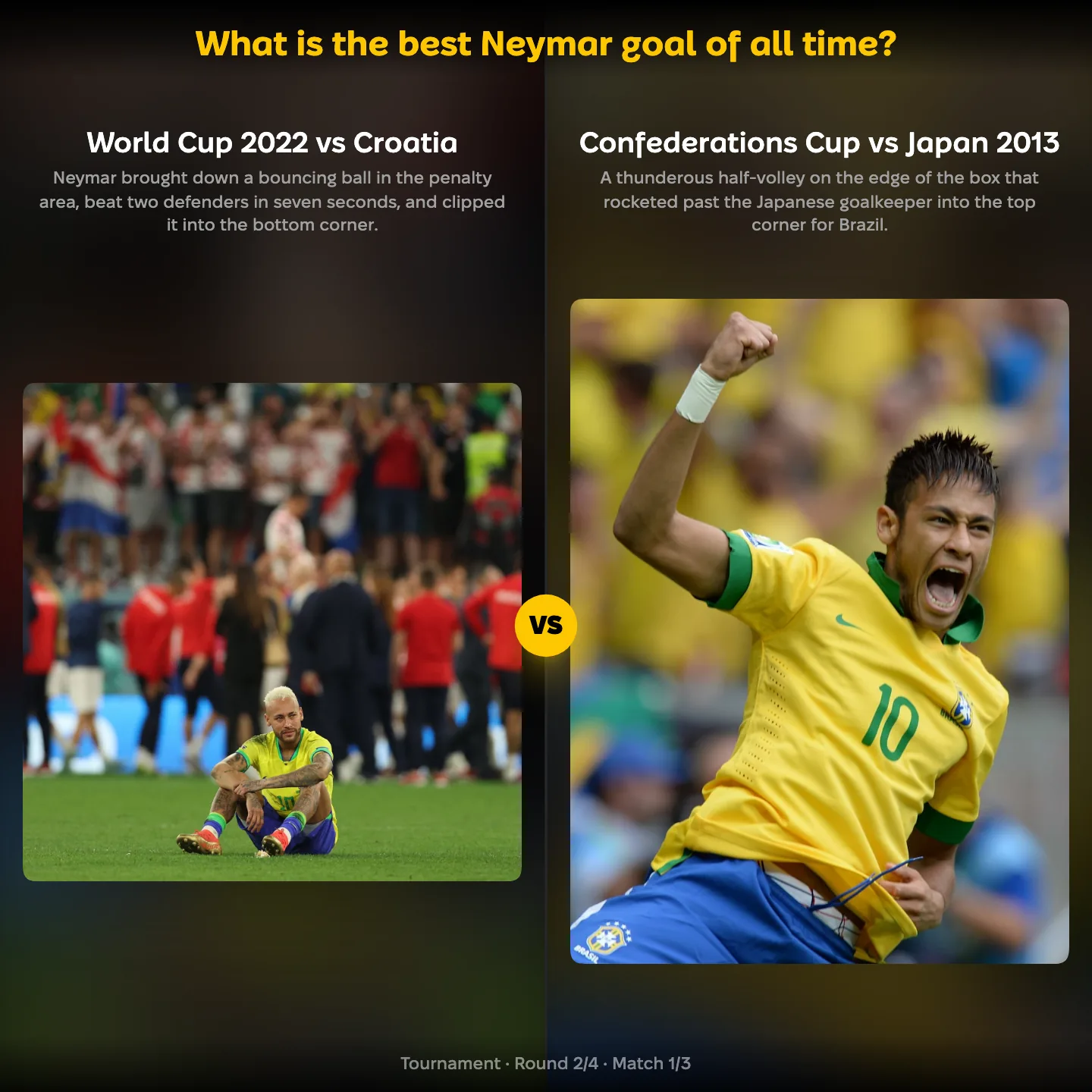
Ten Neymar goals make up this ranking, and one of them has Japan in the title. Japan is neither the subject nor the setting of this list. Japan is the team the ball went past.
FIFA counts nine Neymar goals against Japan, more than he has scored against any other country, and the one on this list opened the 2013 Confederations Cup in Brasília on 15 June, a volley from outside the box after three minutes that a 2020 Globo Esporte poll picked as his best in a Brazil shirt.14
The 2022 World Cup entry is the other end of the same career, a goal against Croatia in a quarter-final Brazil then lost on penalties.
Also in the ten: the free kick in Barcelona's comeback against Paris Saint-Germain in 2017 and the penalty that decided the 2016 Olympic final. Japan's part in all of it was to stand in the way once.
Sixteen questions, sixteen Japans
Across these lists Japan is food, cloth, rock, concrete, vinyl, celluloid, paper, eleven men in blue and one corner of a racetrack, and it is a different subject in each of them. What the sixteen share is the method rather than the subject: every order here is settled two options at a time.
If you have a question about the country that none of these sixteen asks, that ranking does not exist yet. Build it.
More rankings, more angles
- Italy Hosted the Winter Olympics and Missed the World Cup — the other country that owns a food ranking
- New York City Is on Every List. Never in the Same Place — a city judged as a pizza, a cocktail and a skyline
- Chicago Is on Every List. Never in the Same Place — the city that invented the skyscraper
- Paris vs London: Two Hours Apart on the Same Lists — the food ranking Japan takes off both of them
Sources
- Japan National Tourism Organization — visitor arrivals press release of 21 January 2026, giving 42,683,600 arrivals for 2025 against 36,870,148 in 2024, up 15.8%: jnto.go.jp (checked 2026-08-03)
- Ministry of Foreign Affairs of Japan — press release of 26 July 2026 on the 48th Session of the UNESCO World Heritage Committee in Busan inscribing "Ancient Capitals of Asuka and Fujiwara": mofa.go.jp (checked 2026-08-03)
- UNESCO Intangible Cultural Heritage — "Washoku, traditional dietary cultures of the Japanese", inscribed on the Representative List in 2013: ich.unesco.org (checked 2026-08-03)
- Michelin — The MICHELIN Guide Tokyo 2026 selection: 12 restaurants with Three Stars, 26 with Two Stars, 122 with One Star, and Tokyo as the city with the highest number of Starred restaurants worldwide: michelin.com (checked 2026-08-03)
- Official Website for Mt. Fuji Climbing (Yamanashi and Shizuoka prefectures) — Mt. Fuji at 3,776m, the ¥4,000 hiking fee, the four trails, and the 2pm–3am entry restriction for climbers without a mountain-hut booking: fujisan-climb.jp (checked 2026-08-03)
- Ministry of Foreign Affairs of Japan — Digital Nomad specified visa, published 31 March 2024: six months with no extension, annual income of JPY 10 million or more, and insurance covering JPY 10 million of medical treatment: mofa.go.jp (checked 2026-08-03)
- Oriental Land Co., Ltd. — corporate history: the April 1979 "Contract on Construction and Operations of Tokyo Disneyland" and the park opening on a rainy 15 April 1983: olc.co.jp (checked 2026-08-03)
- UNESCO World Heritage Centre — Buddhist Monuments in the Horyu-ji Area: around 48 monuments in Nara Prefecture, eleven structures from the late 7th or 8th century among the oldest surviving wooden buildings in the world, date of inscription 1993: whc.unesco.org (checked 2026-08-03)
- uDiscover Music (Universal Music) — Deep Purple's Made in Japan: four tracks from Festival Hall, Osaka on 16 August 1972, one from the night before, two from Tokyo's Budokan, the album made chiefly at the request of the band's Japanese label, and its US peak of No. 6 with gold certification within two months: udiscovermusic.com (checked 2026-08-03)
- Guinness World Records — best-selling album act in Japan: B'z, more than 42 million albums by 2008 and over 34 million singles: guinnessworldrecords.com (checked 2026-08-03)
- Academy of Motion Picture Arts and Sciences — 75th Academy Awards, Sunday 23 March 2003: Animated Feature won by Spirited Away, Hayao Miyazaki: oscars.org (checked 2026-08-03)
- FIFA — Japan's Round of 32 exit at the 2026 World Cup: the 2-1 defeat by Brazil in Houston, Kaishu Sano's 29th-minute goal, Casemiro's header in the 56th, Gabriel Martinelli's finish, a first ever World Cup knockout-round win missed, and Hajime Moriyasu's reaction: fifa.com (checked 2026-08-03)
- Honda — Suzuka Circuit: opened in 1962 as Japan's first full-scale, international-level racing course, the figure-eight layout with its crossover section, and Soichiro Honda's "Without racing, cars will not improve": global.honda (checked 2026-08-03)
- FIFA — Neymar's record against Japan: nine goals, more than against any other nation, and the three-minute volley from outside the box in the 2013 Confederations Cup opener in Brasília on 15 June, voted his finest Brazil goal in a 2020 Globo Esporte poll: fifa.com (checked 2026-08-03)