
In February 2026 Italy hosted the Winter Olympics across fifteen venues in Milan, Cortina and the mountains between them, and came third on gold medals behind Norway and the United States.1 Seven weeks later its footballers lost a World Cup playoff in Zenica and stayed home for a third tournament running.2
Both of those happened to the same country in the same spring. It is the sort of range that puts Italy into rankings with nothing else in common: wine regions, carnivals, pasta shapes, Formula 1 drivers, Renaissance painters, and a list of places where the sea glows at night.
Italy supplies the entire field on some of these fifteen lists and a single line on others. The country that invented the opera house still has to queue behind Bordeaux.
Rome, Venice and the Rest of Europe
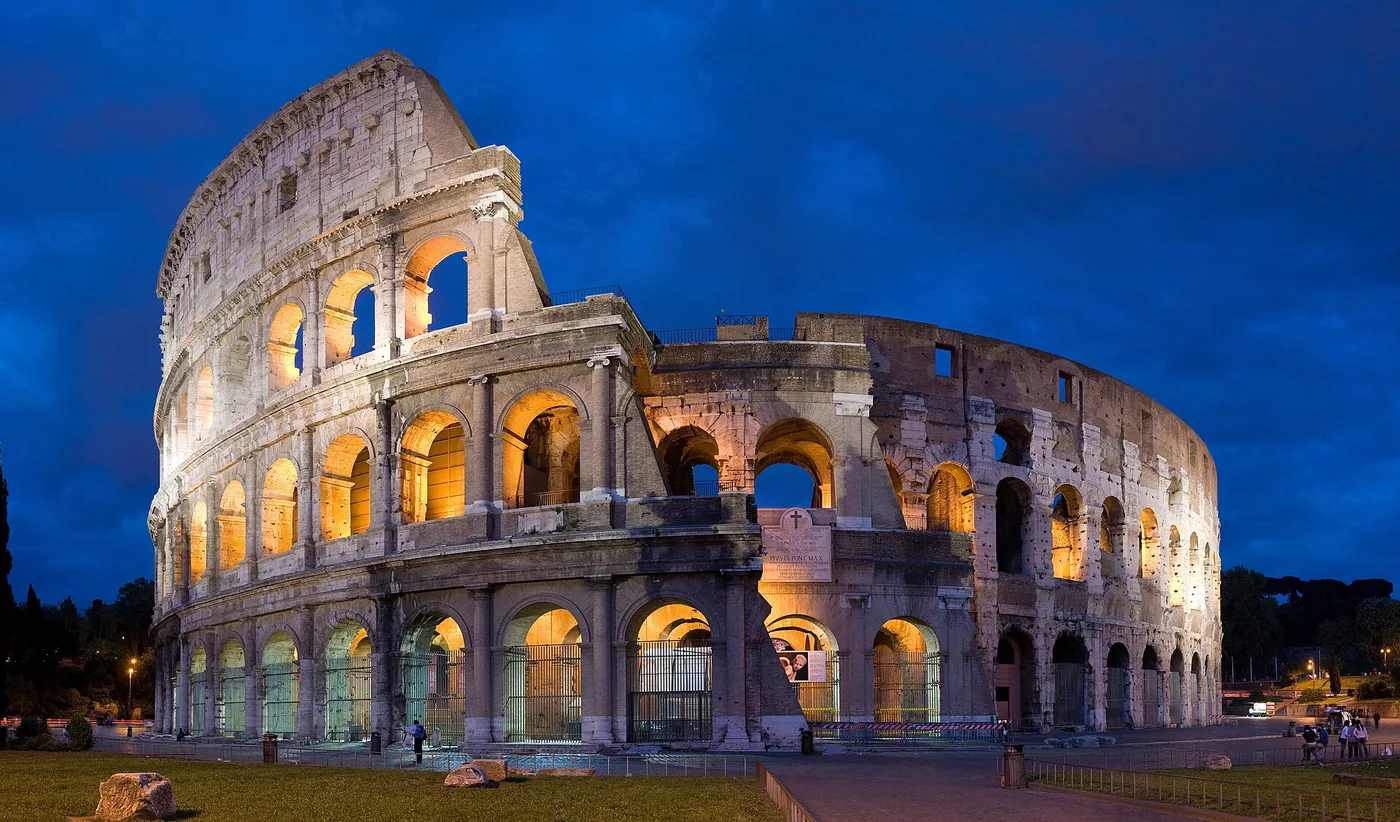
Thirty-two cities make Europe's shortlist here, and four of them are Italian: Rome, Venice, Florence and Milan.
Rome's case is density. Ruins, a sovereign papal state and a river of restaurants sit inside one walkable centre, and Italy holds 62 UNESCO World Heritage Sites, the largest tally anywhere; China has 61 and France 56.3
Paris is the obstacle, and it meets Rome directly below. It has the museum, the tower and the shorthand.
Venice, Florence and Milan then divide whatever Italian support is left over, which is the quiet cost of a country with four cities worth the flight.
Italy's Four World Cups, and the Three It Missed
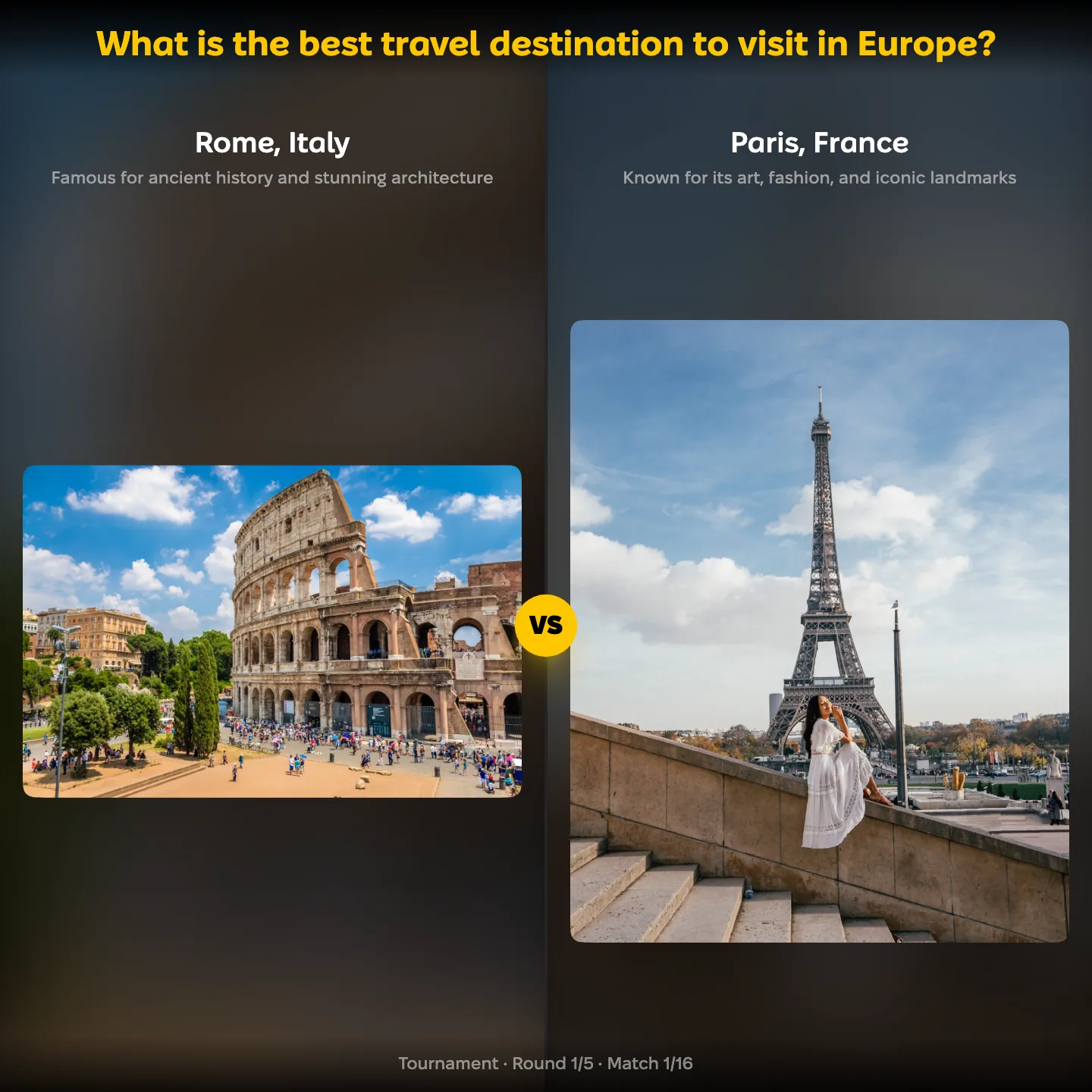
Fourteen national teams are on this list. Italy has won the tournament four times, in 1934, 1938, 1982 and 2006.4
Brazil is the ceiling here, with five titles and a claim on the football people replay for pleasure rather than for the result.
Italy's strongest evidence is Berlin in 2006, settled 5–3 on penalties after a 1–1 draw and a red card for Zinedine Zidane. The 1934 and 1938 sides had already become the first to defend the trophy.4
The record stopped growing a decade ago. Italy failed to qualify for 2018, 2022 and 2026, its longest absence from the competition,4 and the last attempt ended on penalties against Bosnia and Herzegovina on 31 March 2026, after which Gennaro Gattuso resigned.2
Carbonara vs Lasagna: a list with no outsiders
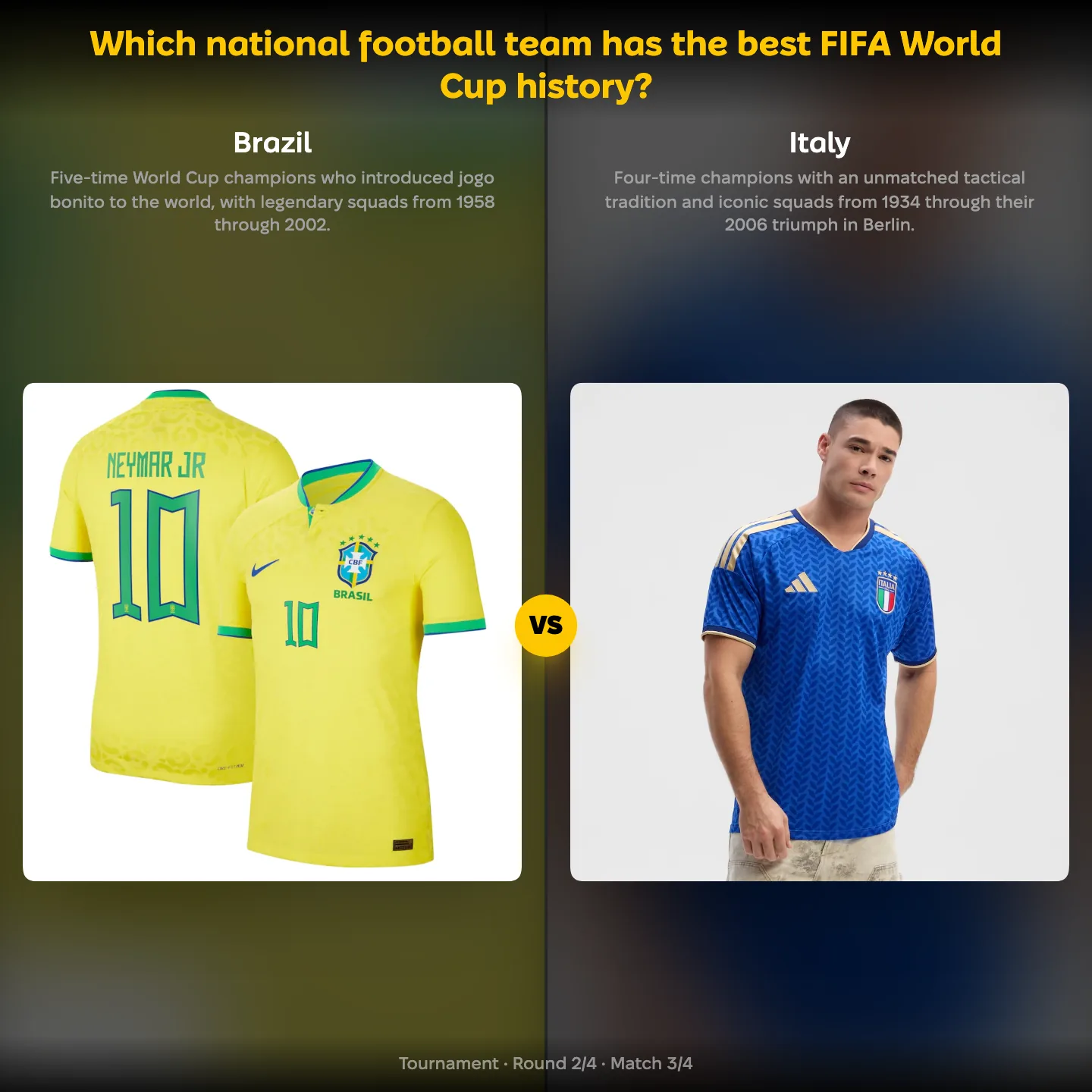
Fifteen pasta dishes, every one of them Italian. No other country gets in.
Carbonara is four ingredients and a permanent fight about whether cream belongs anywhere near it. Lasagna alla Bolognese is the opposite proposition: hours of ragù, then layers.
Behind those two sit cacio e pepe, amatriciana, pesto and spaghetti alle vongole, which is a map of Italy by region rather than a list of recipes.
Tuscany and Piedmont Against Bordeaux
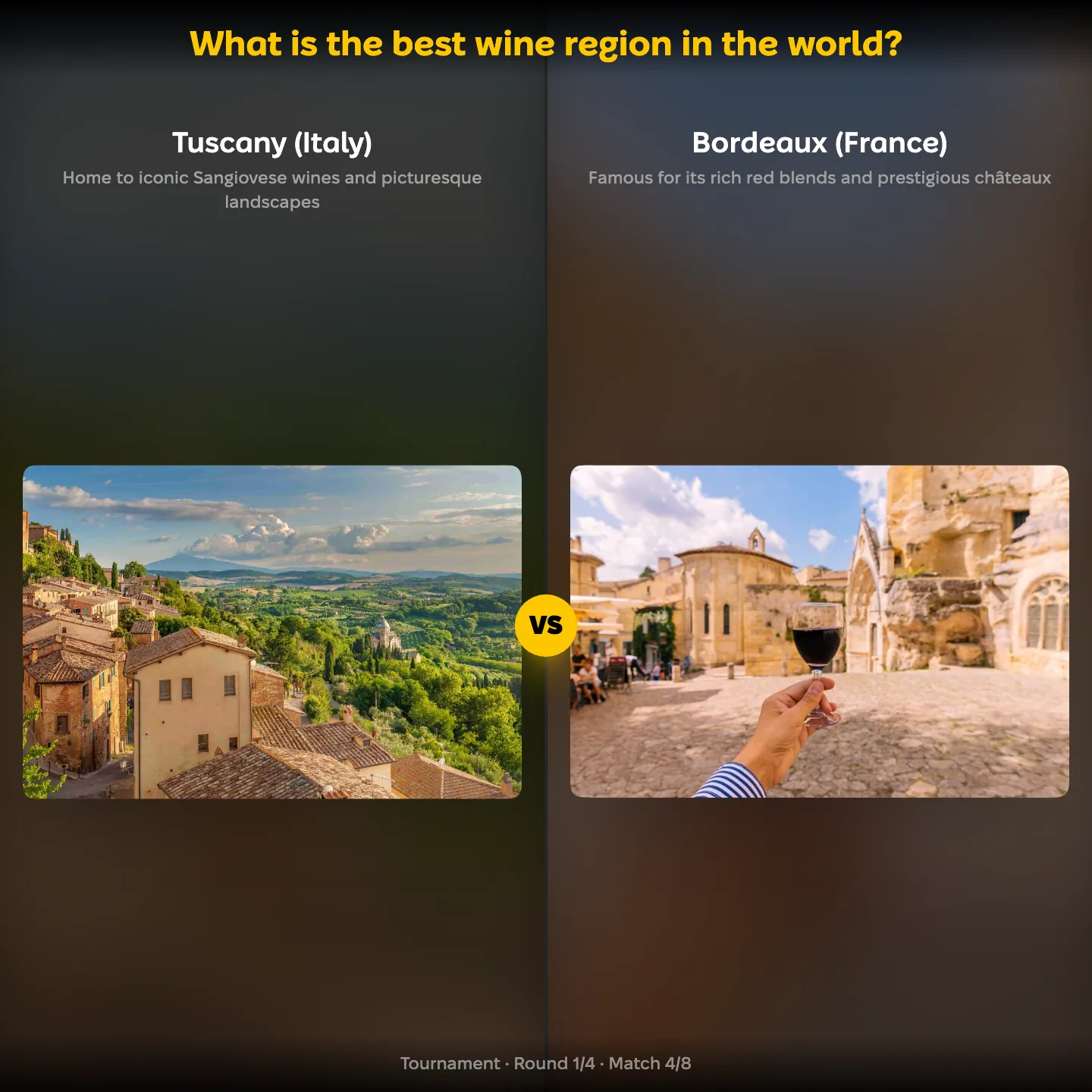
Sixteen wine regions from ten countries, and two of them are Italian.
Italy made more wine than anybody else in 2025: about 47.4 million hectolitres, against France on 35.9 and Spain on 29.4.5 Volume is not prestige, and this ranking is about prestige.
Bordeaux, Burgundy and Champagne set the price of the whole category, and Bordeaux is the name Tuscany runs into below.
Piedmont's answer is Barolo and Barbaresco, both made from one grape, nebbiolo, grown on a strip of hills a few dozen kilometres across.
The Amalfi Coast on a Global Beach List
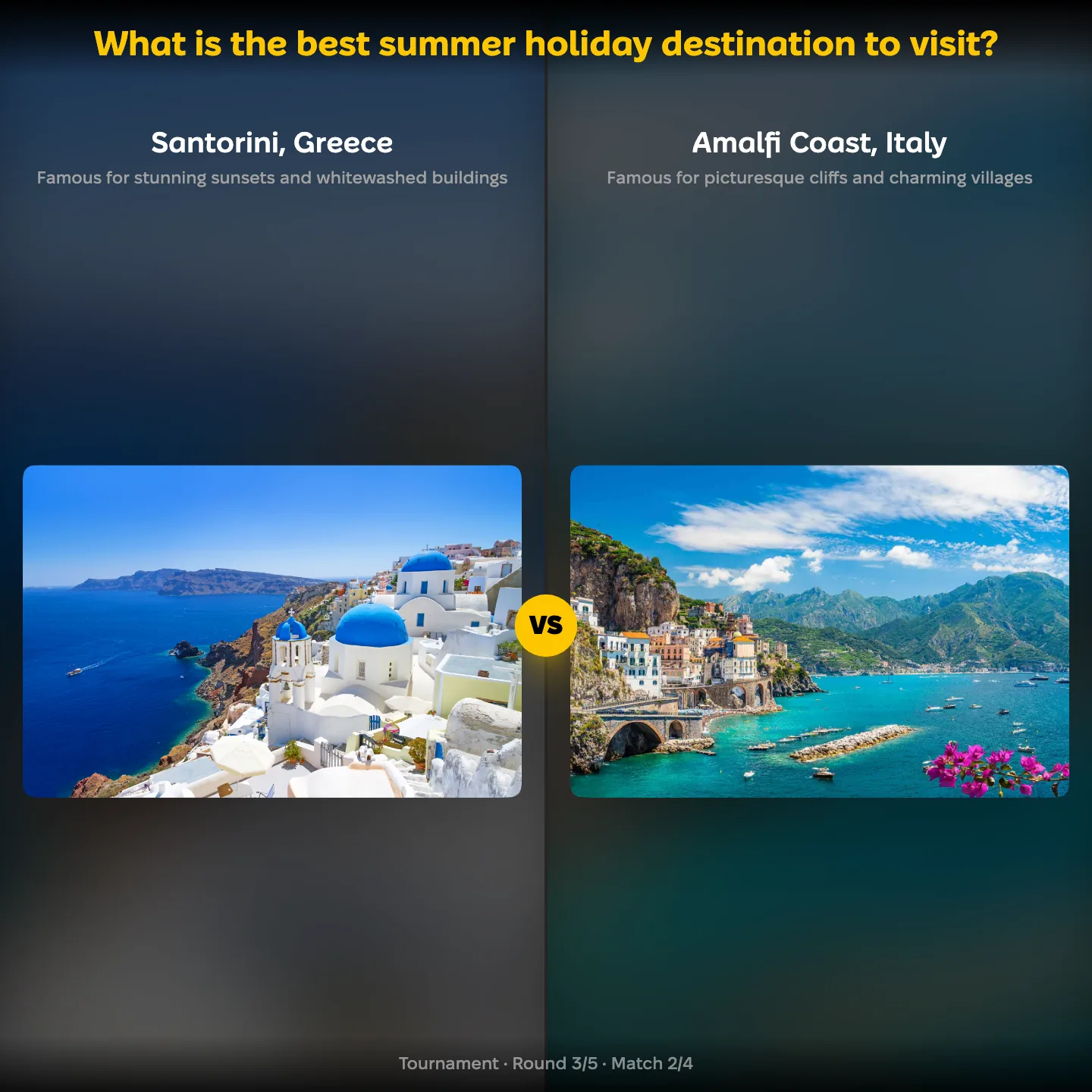
This ranking leaves Europe. Thirty-two summer destinations, with Bali, the Maldives and Cabo San Lucas among them.
Italy's single entry is the Amalfi Coast: a cliff road between Sorrento and Salerno with Positano and Ravello hanging off it.
Santorini is the direct comparison. The two sell the same photograph: a vertical town above blue water.
Set against Bali, Bora Bora and the Seychelles, though, Amalfi is the one entry whose main attraction is a road.
1970 and 2006: Italy in Two Finals People Still Replay
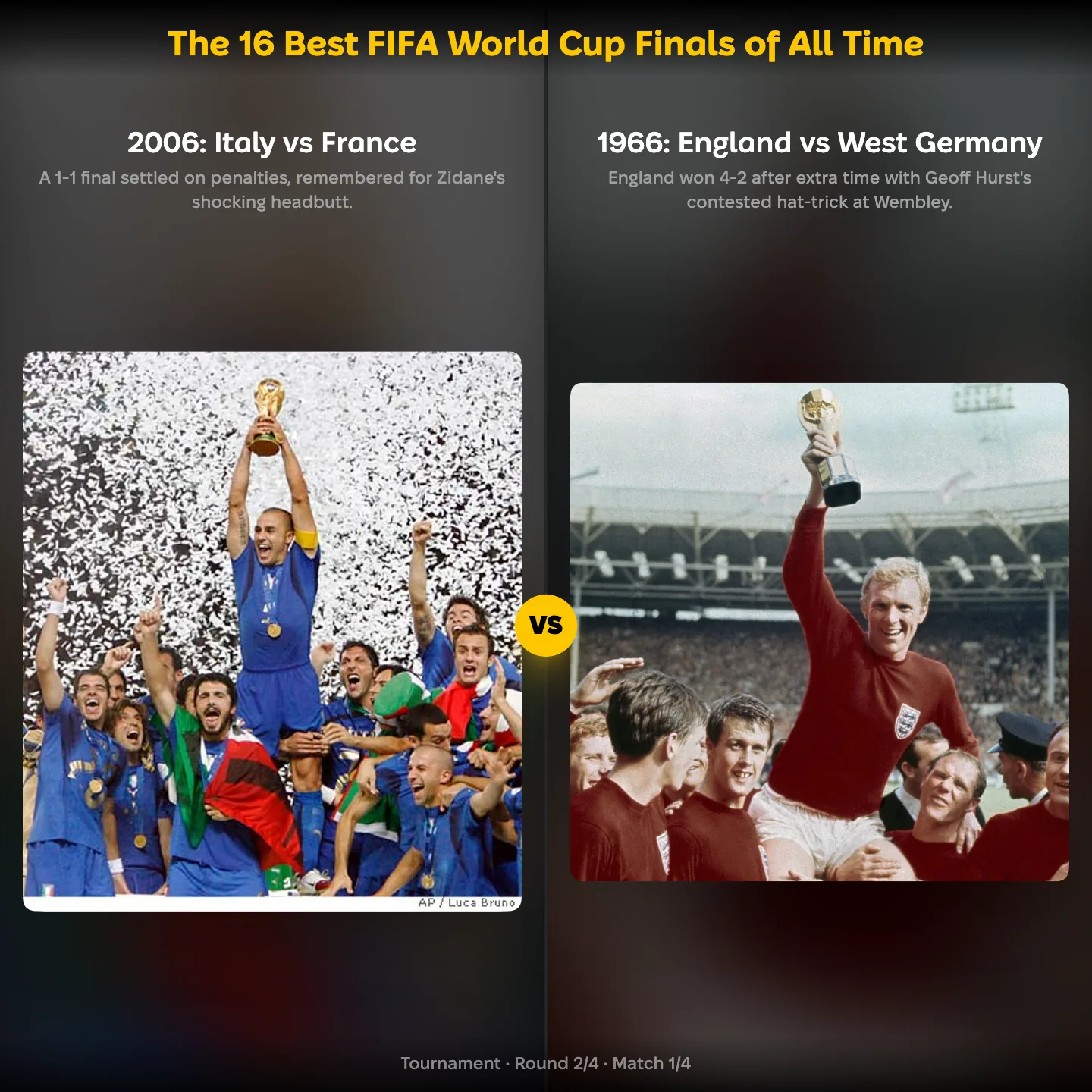
Sixteen World Cup finals make this list, and Italy played in four of them: 1970, 1982, 1994 and 2006.
The 1970 final in Mexico City is the one watched for Brazil. Italy lost it 4–1, having arrived through the 4–3 semi-final against West Germany that Mexico still calls the Game of the Century.
2006 is the other kind of memory, and the reason Italy has a fourth star on the shirt.4
England's 1966 win over West Germany makes the pairing below, which puts two very different ideas about extra time side by side.
Bicycle Thieves, La Dolce Vita and 14 Oscars
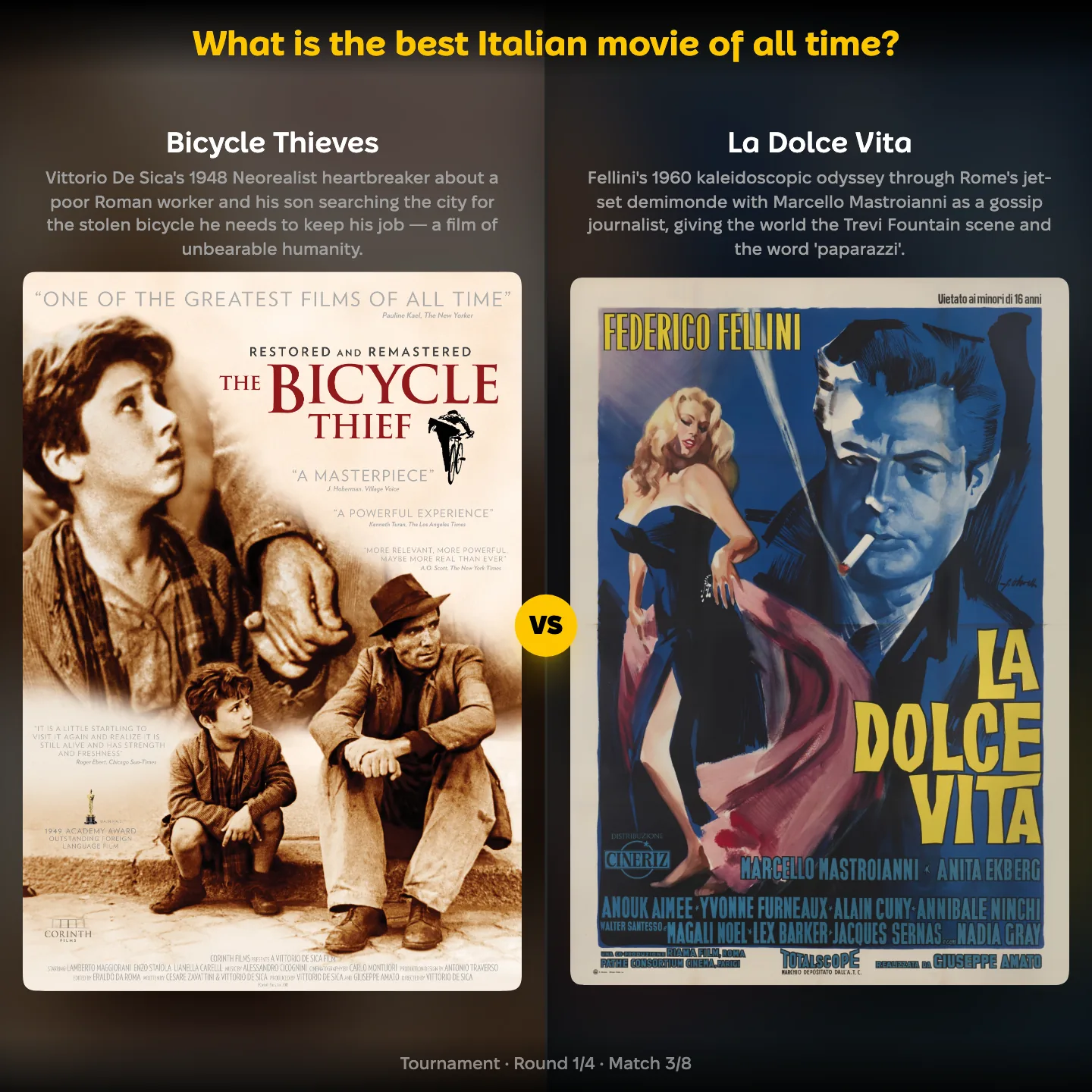
Italy has won more Academy Awards for a foreign-language or international feature than any other country: 14, ahead of France on 12.6 This ranking is where those films have to compete with each other.
Bicycle Thieves is the founding text. Vittorio De Sica shot it in 1948 with non-professional actors on Roman streets, and neorealism became Italian cinema's export.
La Dolce Vita is the reply, built twelve years later out of the opposite material: money, nightlife and boredom. Federico Fellini directed four winners of that Oscar, a record no other director has matched.6
Sergio Leone complicates the whole list from a third direction. The Good, the Bad and the Ugly and Once Upon a Time in America are Italian films about America, so the ranking never settles into one idea of what Italian cinema is.
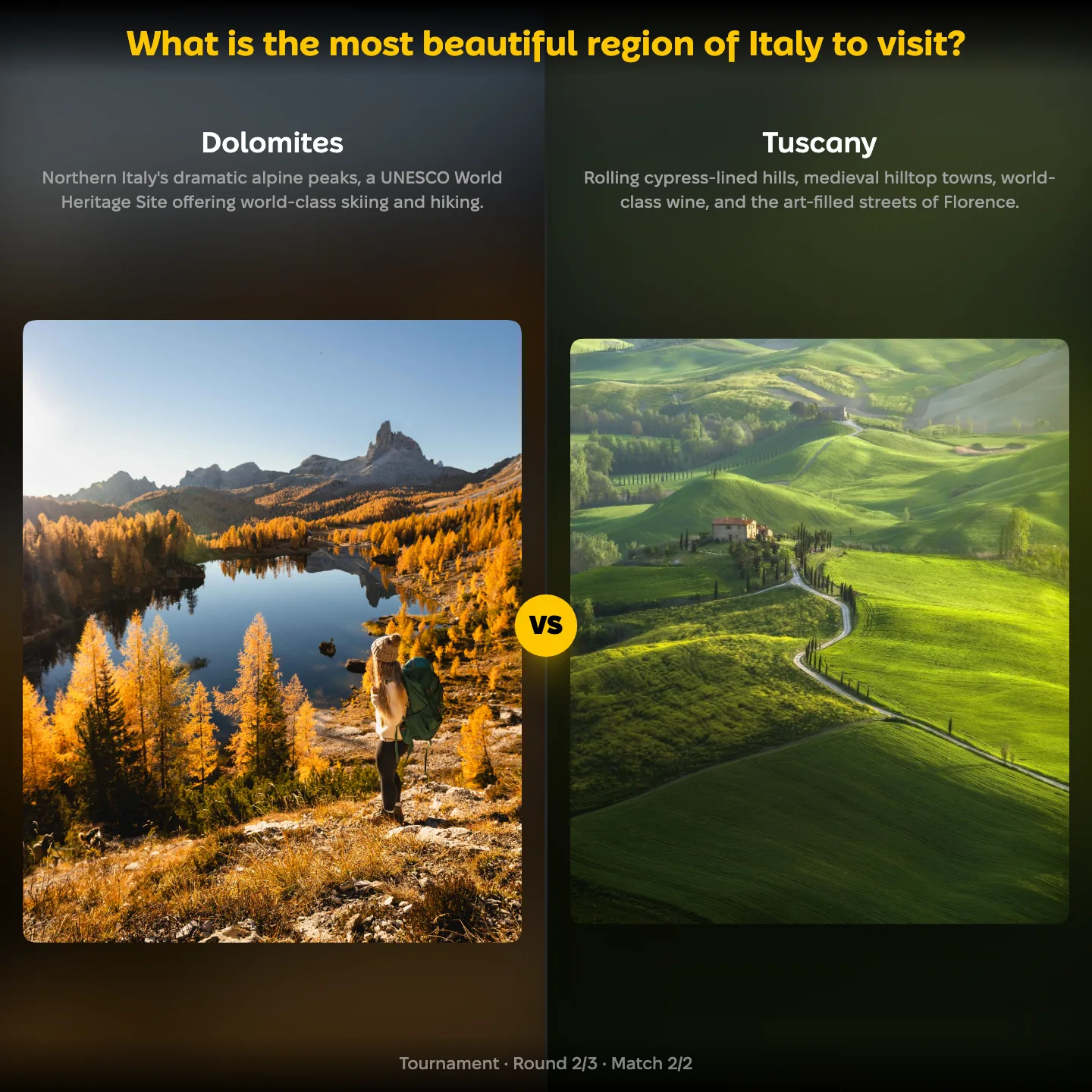
Which Italy Is the Beautiful One: the Dolomites or Tuscany
Seven regions, all Italian, and no two of them look alike: Venice, Cinque Terre, Tuscany, Puglia, the Amalfi Coast, the Dolomites and Lake Como.
The Dolomites are the outlier. They are pale limestone mountains in the far north, nearer to Innsbruck than to Rome, and nothing about them says Mediterranean.
Tuscany is the postcard the rest of the world means by Italy: hills, cypresses, Florence and Siena.
Seven is a short list because seven is already more than most countries could fill.
Venice and Ivrea Against Rio
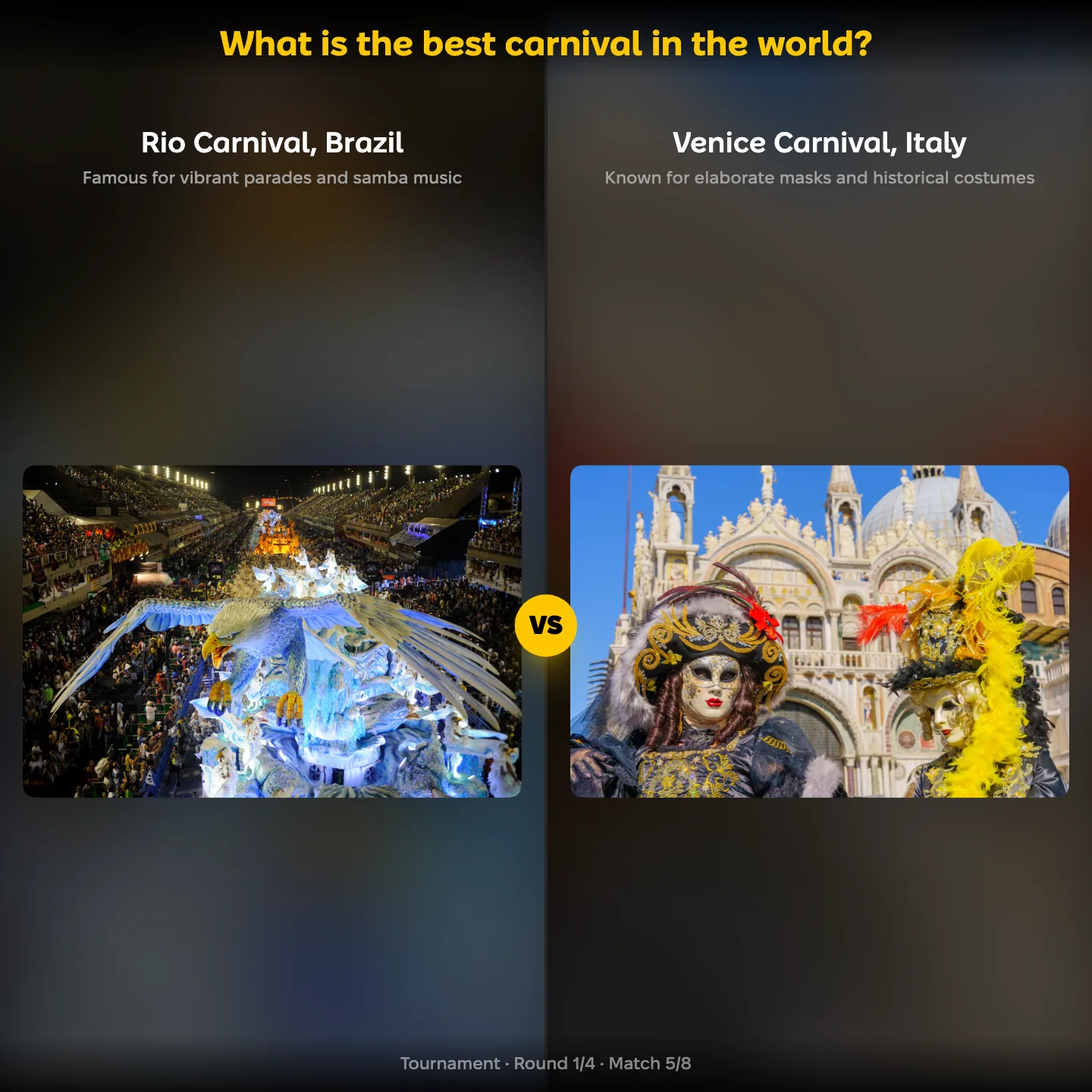
Sixteen carnivals, three of them Italian: Venice, Ivrea and Viareggio.
Rio is the one that defines the word, with a purpose-built Sambadrome and a scale nothing in Europe matches. Venice offers masks, canals and a season that runs into Lent.
Ivrea is the strangest entry on the list. A small Piedmontese town spends three days throwing oranges at each other in organised teams, re-enacting a medieval revolt against a tyrant.
New Orleans, Cologne, Nice and Trinidad round out a field where Italy has more entries than anyone else and no single candidate.
Tiramisu vs Gelato
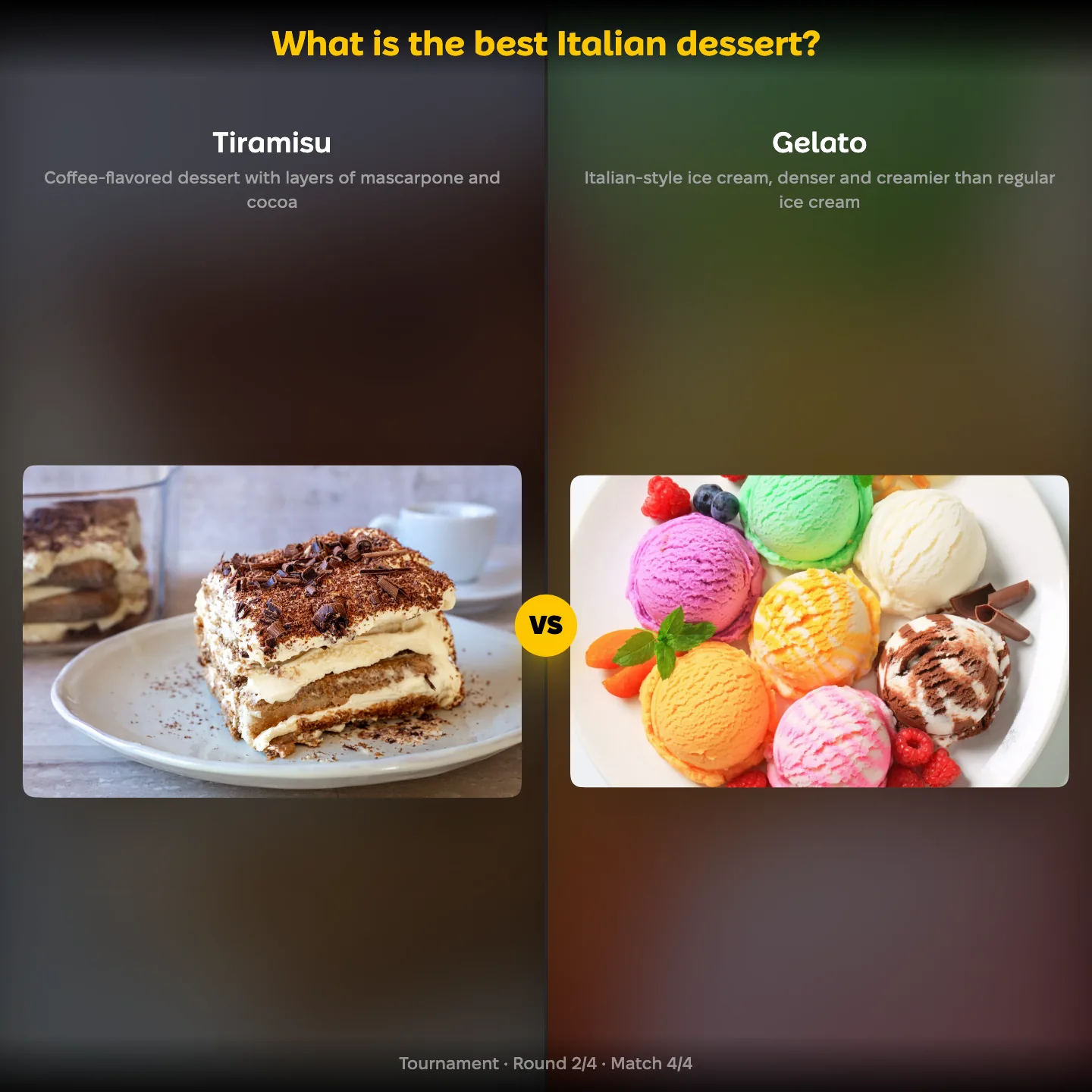
Sixteen Italian desserts and no foreign competition, so the question becomes a regional one.
Tiramisu is the modern entry. It surfaced in the Veneto in the 1960s or 1970s depending on which restaurant tells the story, and it travelled faster than anything else here.
Gelato is the older and odder answer. It barely qualifies as a dessert: it is a category with its own shops, its own churning speed and less air whipped into it than ice cream.
Michelangelo, Leonardo and Twelve More
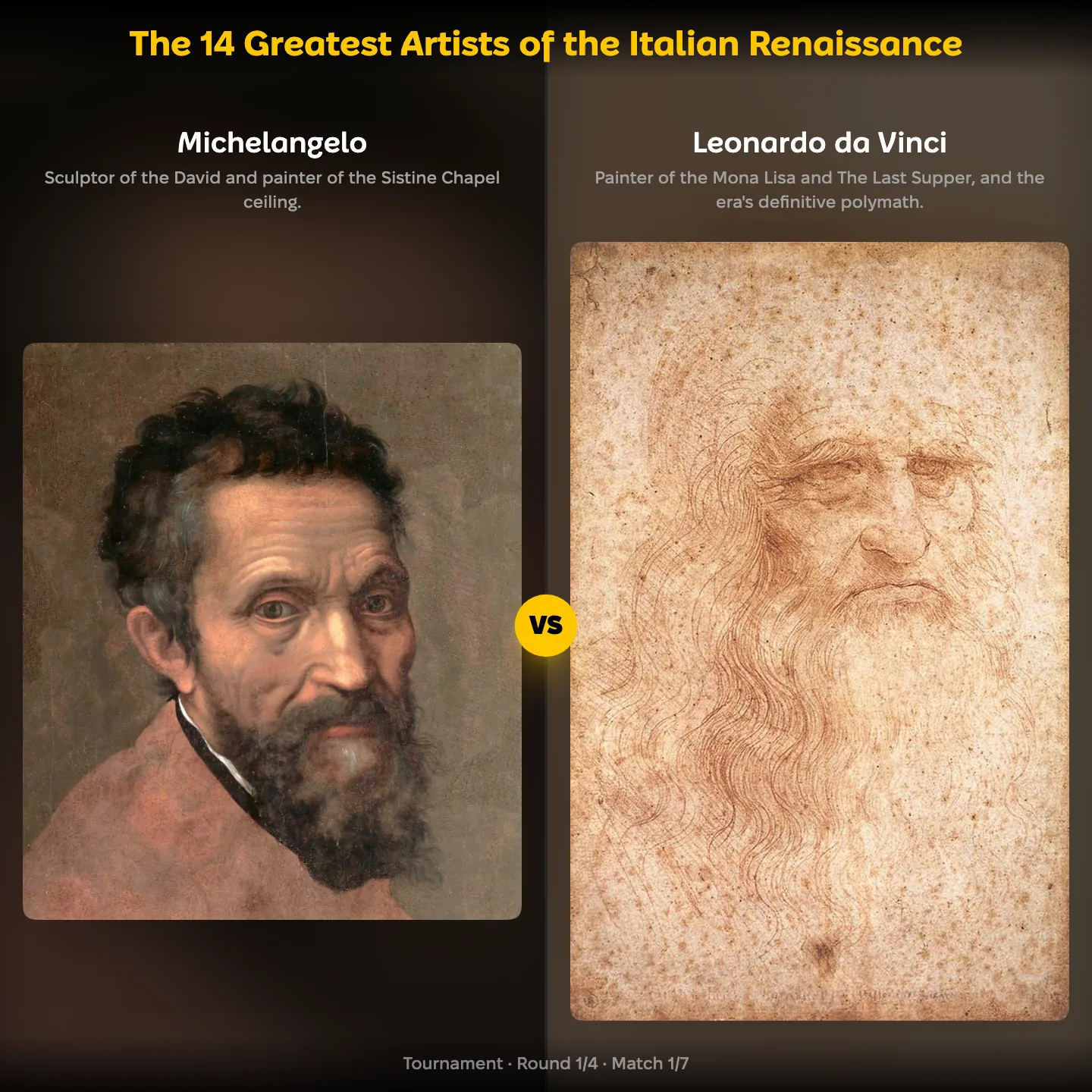
Fourteen artists, all Italian, all working between roughly 1400 and 1580. Italy has no competitors on this one because the period is named after what happened there.
Leonardo da Vinci is the name that travels outside the discipline. He finished very few paintings and left notebooks that made him a scientist as much as a painter.
Michelangelo went the other way. He called himself a sculptor, then gave four years to the Sistine Chapel ceiling and another five, decades later, to the Last Judgement behind the altar.
Raphael, Titian, Donatello and Botticelli keep the field genuinely contested, and Brunelleschi is on it for a dome rather than a canvas: the one entry you have to visit instead of look at.
Alberto Ascari Won in 1952 and 1953. No Italian Has Since
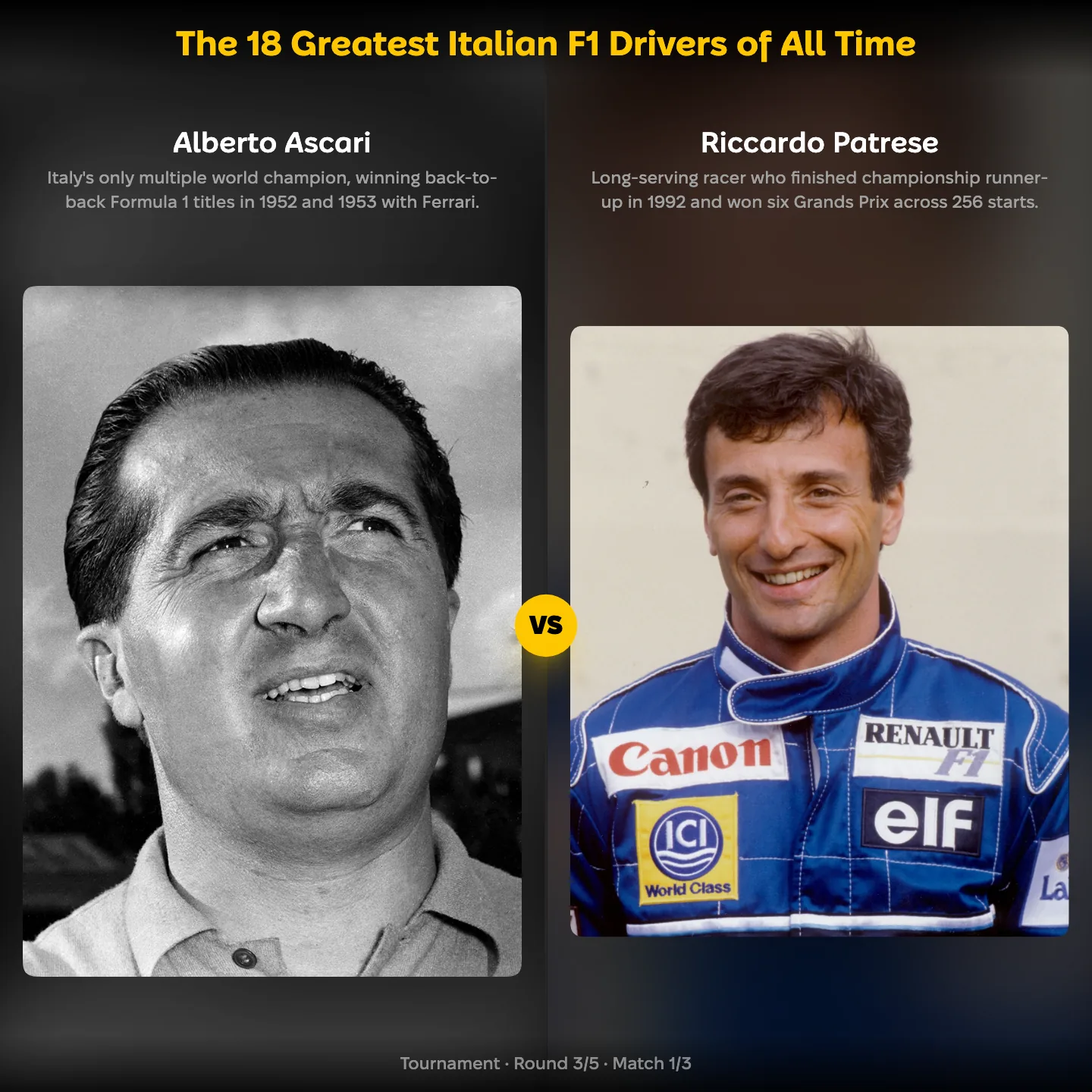
Eighteen Italian drivers, two of them world champions. Nino Farina took the first title ever awarded, in 1950 with Alfa Romeo, and Alberto Ascari won the next two Italy has, in 1952 and 1953, both with Ferrari.7
No Italian has won the drivers' championship since Ascari.7 Every other name here is being measured against a gap.
Riccardo Patrese is the long-service case, with six wins and a runner-up season in 1992 across seventeen years of racing.
Michele Alboreto, Elio de Angelis and Lorenzo Bandini all drove for Ferrari without a title, which is the odd shape of a country that builds the cars other people win in.
Sardinia, and Eight Other Ways to Spend October
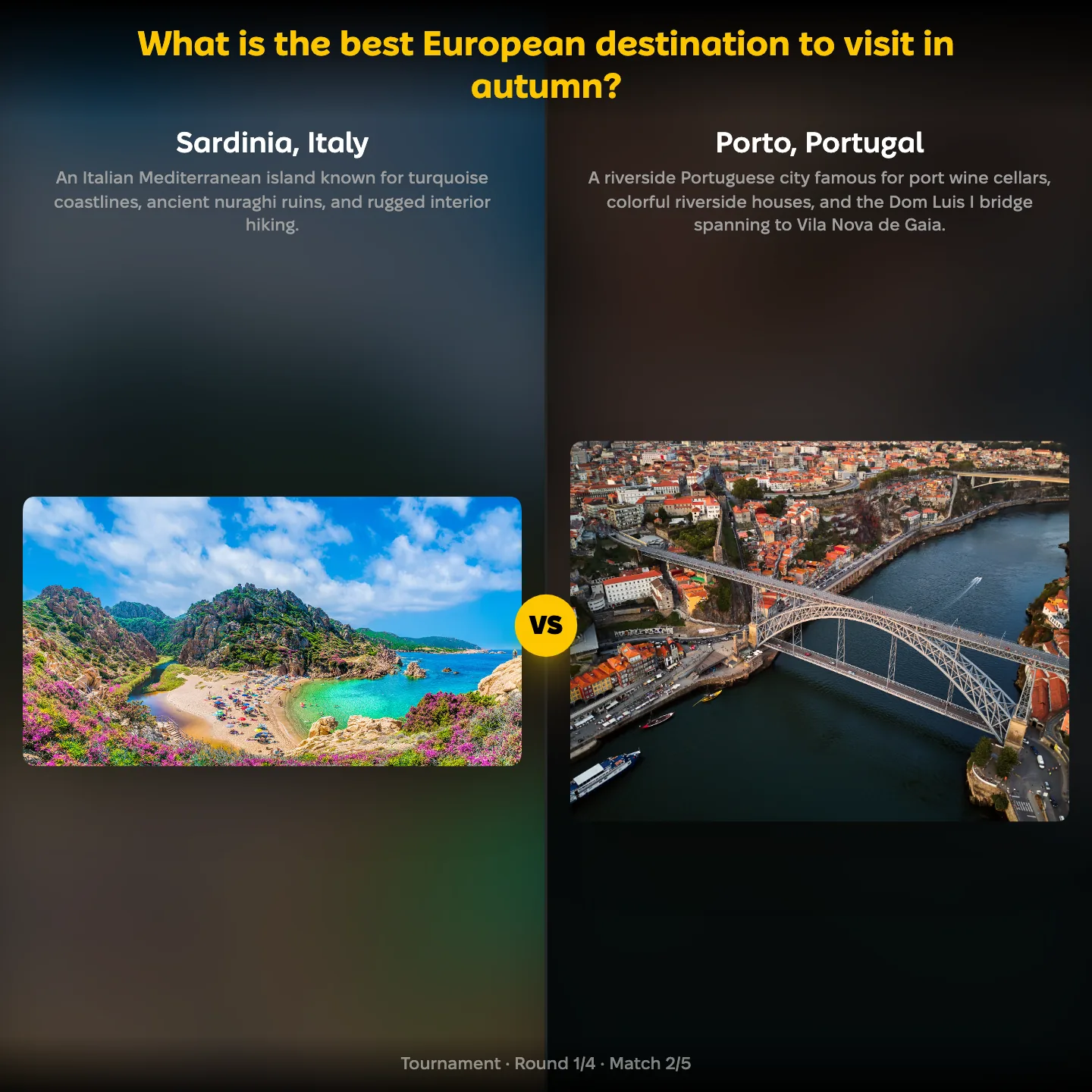
Nine destinations, the smallest field in this article, and Sardinia is Italy's only entry.
The logic is water temperature. The Mediterranean holds its summer heat well into October, so Sardinian beaches stay usable for weeks after the crowds have gone home.
Porto offers the reverse: port houses, a river and rain.
Madeira, Lanzarote and the Faroe Islands push the list further still from the idea that autumn travel has to mean warmth.
La Scala, La Fenice and the Arena di Verona
The question says opera and the eight entries are opera houses, which is a fair slip. In Italy the building is the institution.
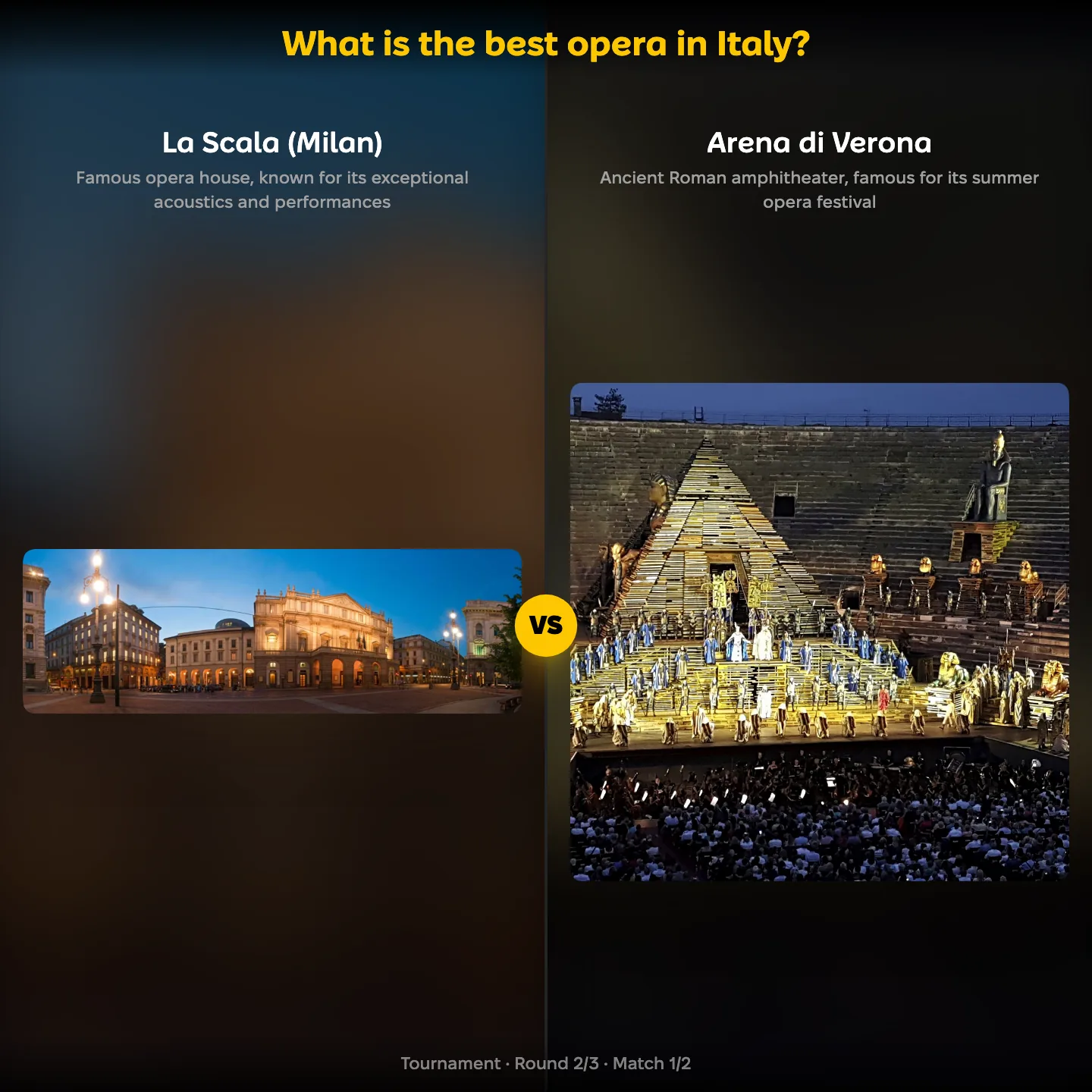
La Scala opened in Milan on 3 August 1778 with Salieri's Europa riconosciuta, and it is the address that made composers' careers: Verdi premiered Nabucco, Otello and Falstaff there, Puccini premiered Madama Butterfly and Turandot, and the season still opens every 7 December.8
The Arena di Verona is the other extreme. It is a Roman amphitheatre with no roof, running opera through the summer to audiences that would not fit in most theatres twice over.
Naples, Rome, Turin, Palermo, Venice and Genoa take the remaining six places, which is more world-class opera houses than most continents manage.
Torre Guaceto: Italy on a List of Glowing Water
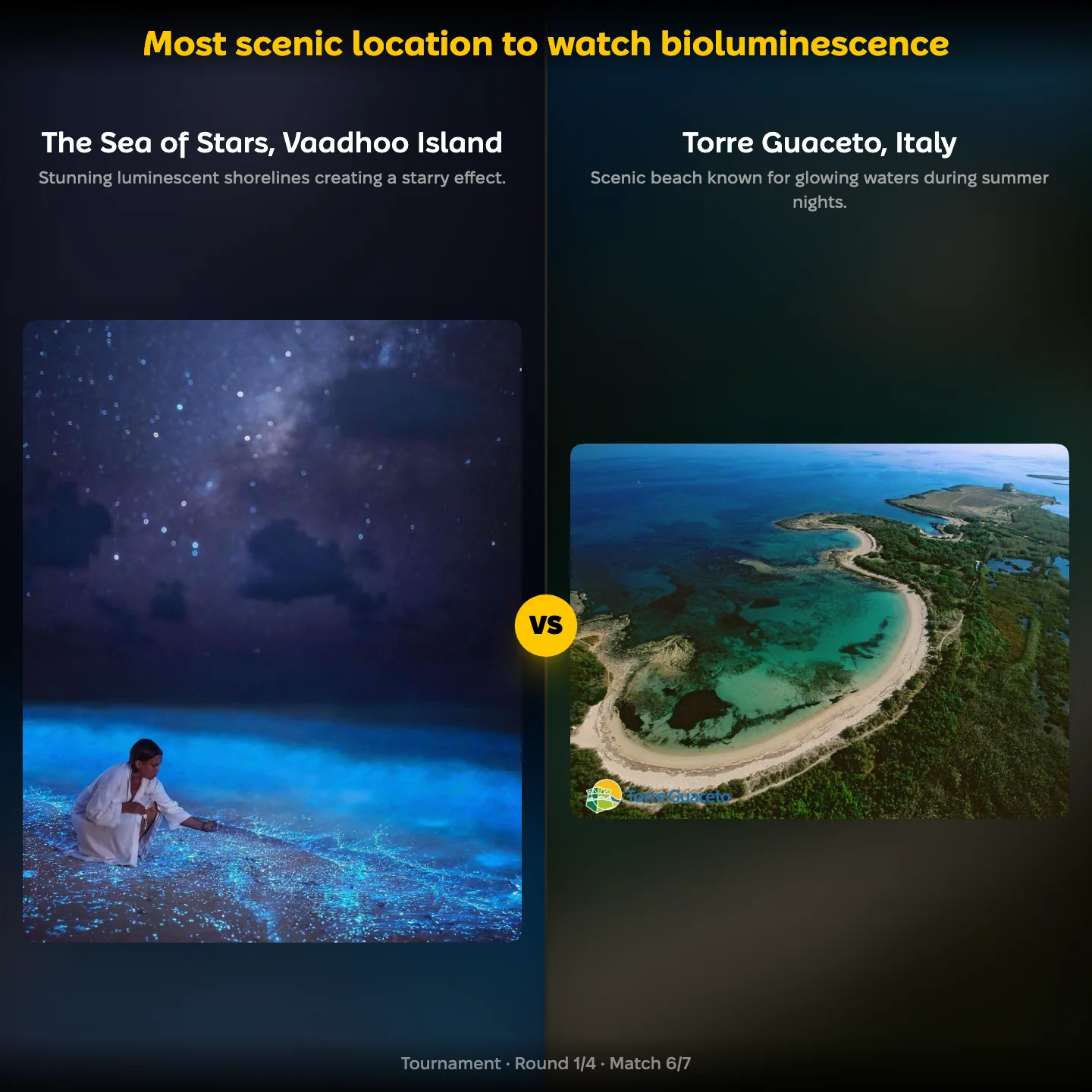
Nobody expects Italy on this one. Fourteen places where the water glows at night, most of them tropical: Vieques, Palau, Halong Bay, the Maldives.
Torre Guaceto is a protected marine reserve on the Adriatic coast of Puglia, north of Brindisi, and it is the only Mediterranean name in the field.
The Sea of Stars at Vaadhoo Island is the version of this phenomenon that sells the postcards.
Italy arrives on this list the way it arrives on most of them: not obviously, and then obviously.
The country is too big for one question
Across these lists Italy changes size constantly: it supplies the entire field in seven of them, one name out of thirty-two in another, and an unexpected entry on a ranking about glowing seawater. A country that produced both the Renaissance and the Battle of the Oranges was never going to fit inside a single question.
All of them get settled the same way, one pair at a time, by the head-to-head method rather than a show of hands.
If these lists miss a version of Italy, nobody has built the ranking for it. That is an opening.
More rankings, more angles
- What Is Japan Best At? Depends Which List You Read — another country across sixteen unrelated lists
- Paris vs London: Two Hours Apart on the Same Lists — Michelin stars, museums and metro systems
- New York City Is on Every List. Never in the Same Place — pizza, cocktails, baseball and fashion week
- Stonehenge vs the Pyramids: Which Is Older? 12 Lists Where They Meet — two wonders older than the Colosseum
Sources
- 2026 Winter Olympics medal table — Italy's 10 golds and 30 medals as host, and the 6–22 February dates: wikipedia.org (checked 2026-09-01)
- Al Jazeera — Italy's 2026 World Cup playoff defeat to Bosnia and Herzegovina and Gennaro Gattuso's departure: aljazeera.com (checked 2026-09-01)
- List of World Heritage Sites in Italy — 62 sites, ahead of China on 61 and France on 56: wikipedia.org (checked 2026-09-01)
- Italy national football team — four World Cup titles, the 2006 final and the 2018–2026 absences: wikipedia.org (checked 2026-09-01)
- Gambero Rosso International, reporting OIV first estimates — Italy's 2025 output of about 47.4 million hectolitres against France and Spain: gamberorossointernational.com (checked 2026-09-01)
- Academy Award for Best International Feature Film — Italy's 14 wins and Fellini's four: wikipedia.org (checked 2026-09-01)
- List of Formula One World Drivers' Champions — Farina in 1950, Ascari in 1952 and 1953, and no Italian champion since: wikipedia.org (checked 2026-09-01)
- La Scala — the 1778 opening with Salieri's Europa riconosciuta, the Verdi and Puccini premieres and the 7 December season opening: wikipedia.org (checked 2026-09-01)