

Harry Potter is seven novels, eight films, 600 million books sold in 85 languages, and more than $9.5 billion at the box office. It is also a franchise that collected twelve Academy Award nominations and won none of them.
Sixteen rankings below take it on: novels, film scores, LEGO games, witches out of folklore. Each asks a narrower question than the last. The timing is not accidental: all eight films return to cinemas worldwide from 27 August to 3 September 2026 for the first film's 25th anniversary, and HBO's new series premieres on Christmas Day 2026 with an entirely new cast.
One list treats Harry Potter as literature, the next as a LEGO tie-in. The name survives the change of category; the verdict does not.
Against every other movie franchise
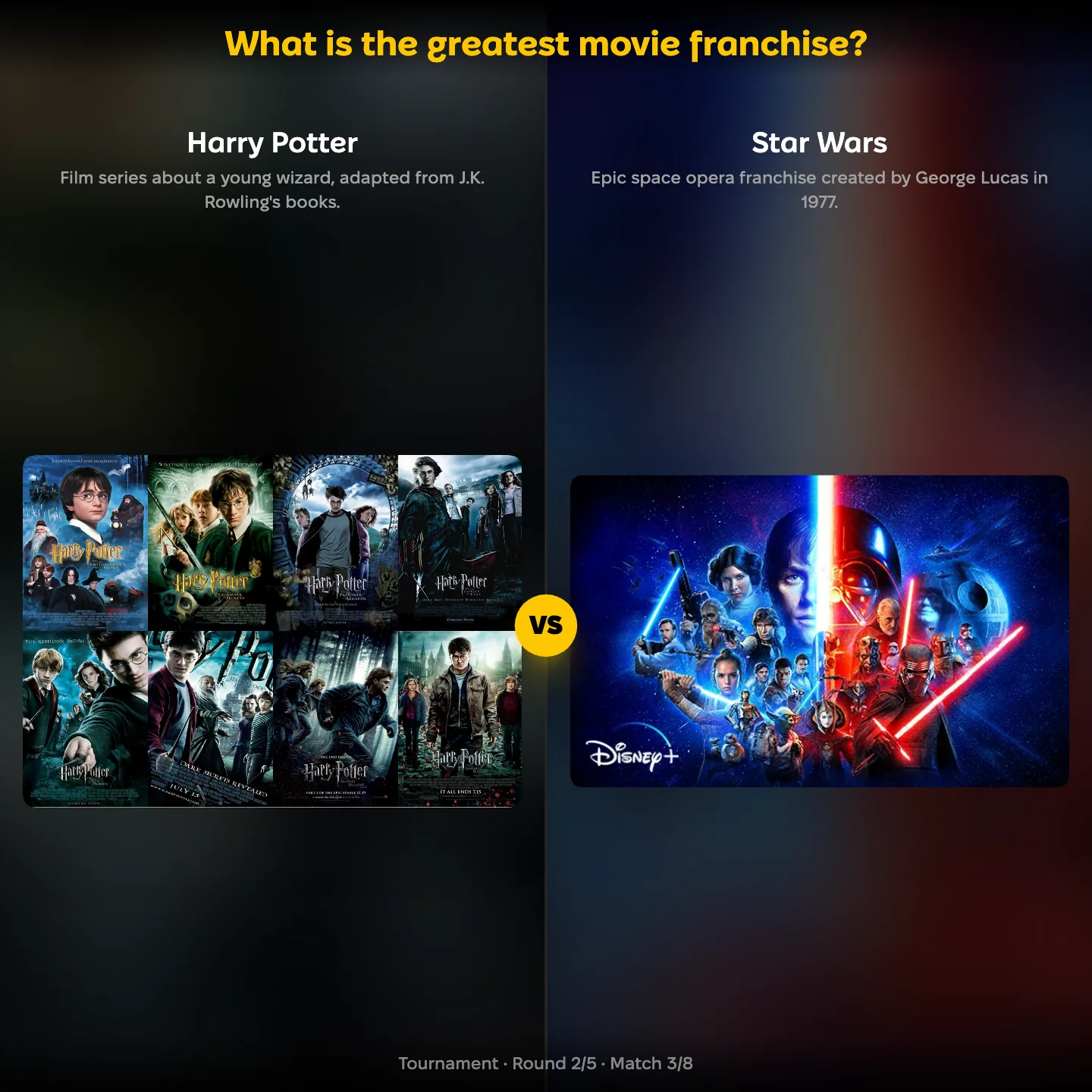
The broadest version of the question puts Harry Potter next to thirty-one other film series and asks which one is the greatest. Eleven Wizarding World films have grossed over $9.5 billion, the fourth biggest total in cinema history.
Scale is not the argument, though. Star Wars, the Marvel Cinematic Universe, James Bond and The Lord of the Rings are all on the same list, and each of them has a claim Harry Potter cannot make — a genre invented, a studio rescued, sixty years of continuous output, eleven Oscars for one trilogy.
What Harry Potter has instead is completeness. Eight films released between 2001 and 2011 adapted seven books with the same three lead actors growing up on camera, which no other franchise on the list attempted.
The counter-argument is that completeness is a production achievement, not a cinematic one.
Against the fantasy series that came first
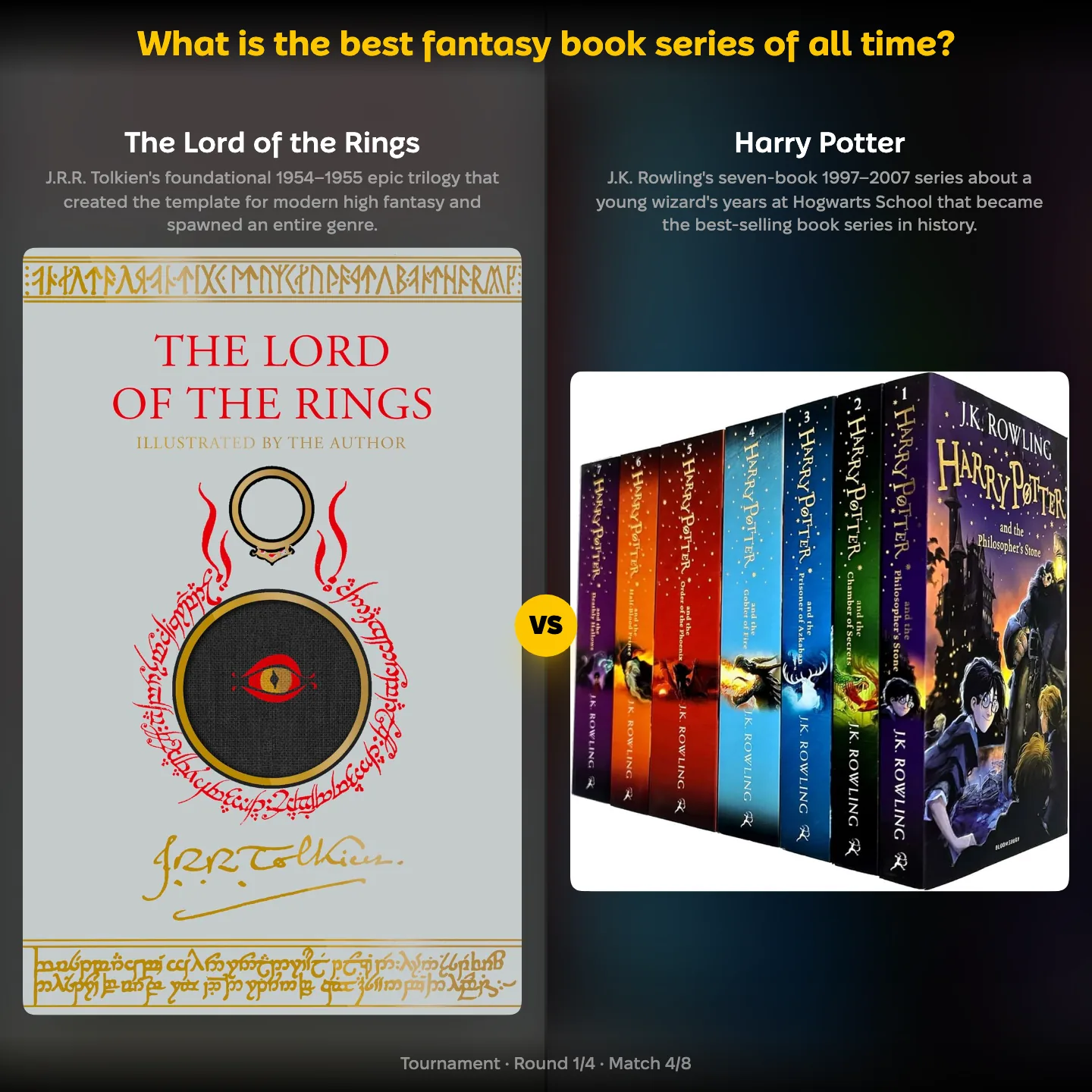
Narrow the field to fantasy book series and Harry Potter is on home turf against fifteen rivals — but the rival that matters is the one directly above it in the genre's history.
J.R.R. Tolkien published The Lord of the Rings in 1954 and 1955 and built the template every fantasy series since has either used or deliberately broken. Rowling published seven novels between 1997 and 2007 and sold more copies than any book series ever has.
That is the shape of the argument: influence against reach. Tolkien wrote the grammar; Rowling got a generation to read.
The list also holds The Wheel of Time, A Song of Ice and Fire, Discworld and The Chronicles of Narnia, and readers who have finished all of them tend to argue that Harry Potter's real distinction is being the one you read at eleven rather than the one you read best.
On a list of the greatest books ever written
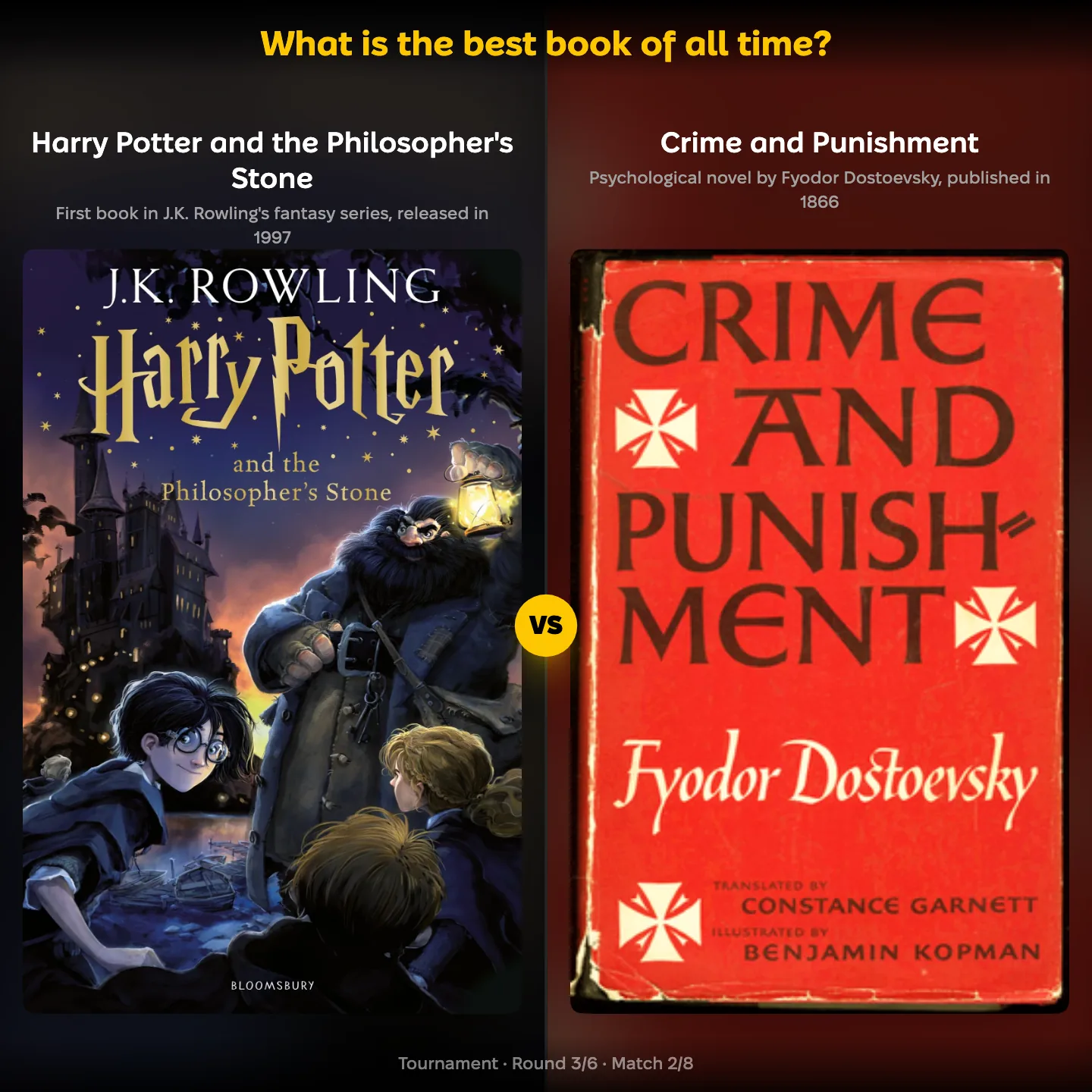
Drop the genre filter and Harry Potter and the Philosopher's Stone lands among sixty-four books: Crime and Punishment, the Odyssey, Ulysses, Don Quixote, 1984.
Bloomsbury published it on 26 June 1997 in a hardback print run of 500 copies, three hundred of which went to libraries. It has since sold 120 million copies, one of the highest totals any single volume has reached.
Sales are the weakest possible case on a list like this one. What the comparison exposes is more interesting: measuring a 1997 children's novel against Dostoevsky is a category error people make cheerfully and constantly.
The defence is that the canon on this list was also once new, popular and suspected of being lightweight — Dickens sold in instalments to people who read for fun.
Which Harry Potter film is the Harry Potter film
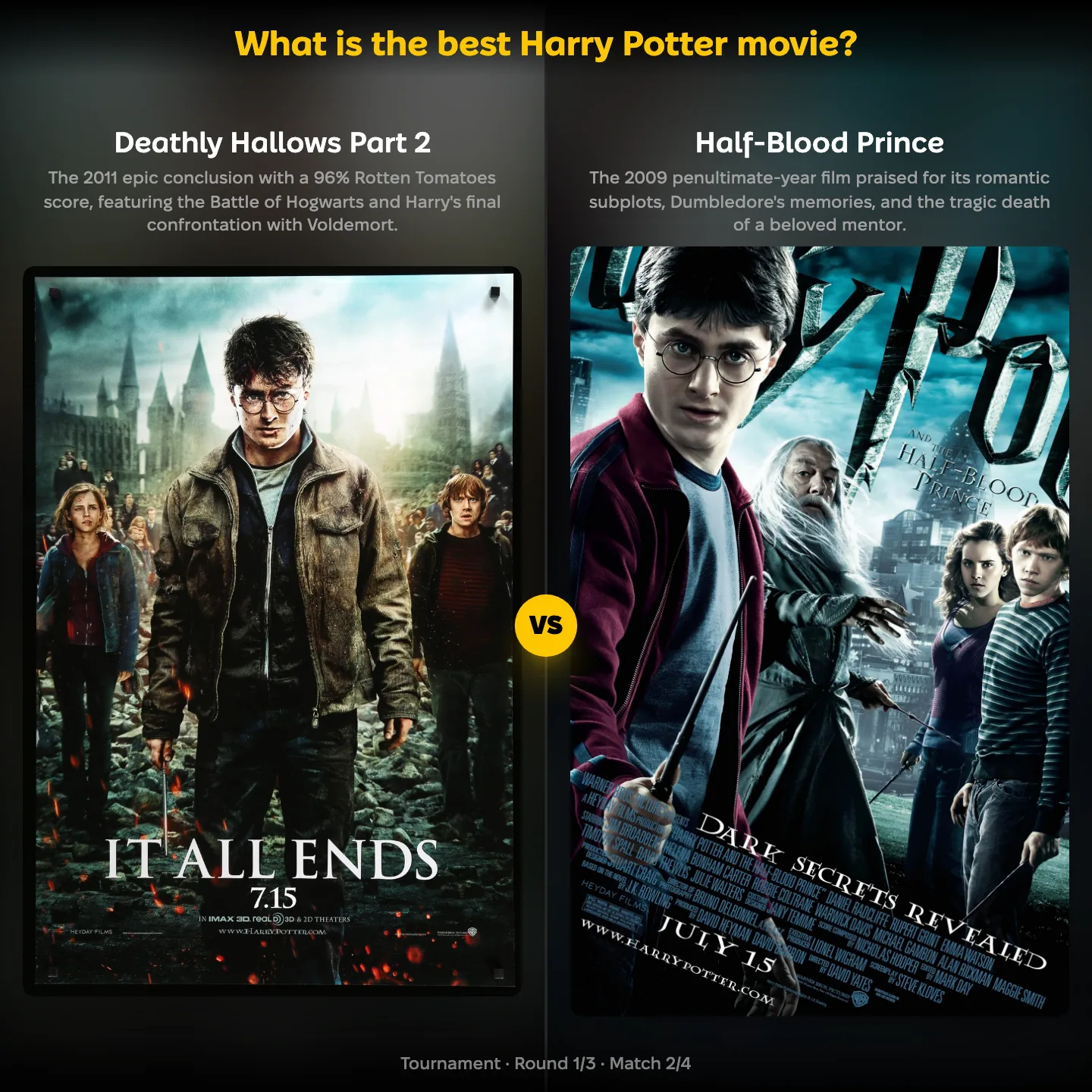
One ranking removes the outside world entirely: all eight options are Harry Potter films, so the franchise can neither win nor lose it.
Two films dominate the argument. Deathly Hallows: Part 2 took $1.343 billion in 2011, the highest of the eight and the franchise's only billion-dollar entry. Prisoner of Azkaban took $796 million in 2004, the lowest of the eight, and is the one critics and fans reach for first.
The gap between those two facts is the whole debate — money and regard pointing in opposite directions inside a single series.
Two of the eight, Chamber of Secrets and Order of the Phoenix, drew no Oscar nominations at all, and almost nobody names either as their favourite.
Which of the seven books
The same trick works on the novels, and it produces a different argument, because the books do not divide the way the films do.
Philosopher's Stone is the one everybody read and the shortest of the seven. Goblet of Fire, published in 2000, is where the series changes register: a tournament, a resurrection and a death, in a book more than twice the length of the first.
Length matters here. Rowling's later volumes are longer, darker and structurally messier, so the choice is between the book that worked perfectly and the books that tried more.
Deathly Hallows closed the series in 2007 and has the hardest job of any of them — ending something 600 million copies deep.
Just the 2000s, just fantasy novels
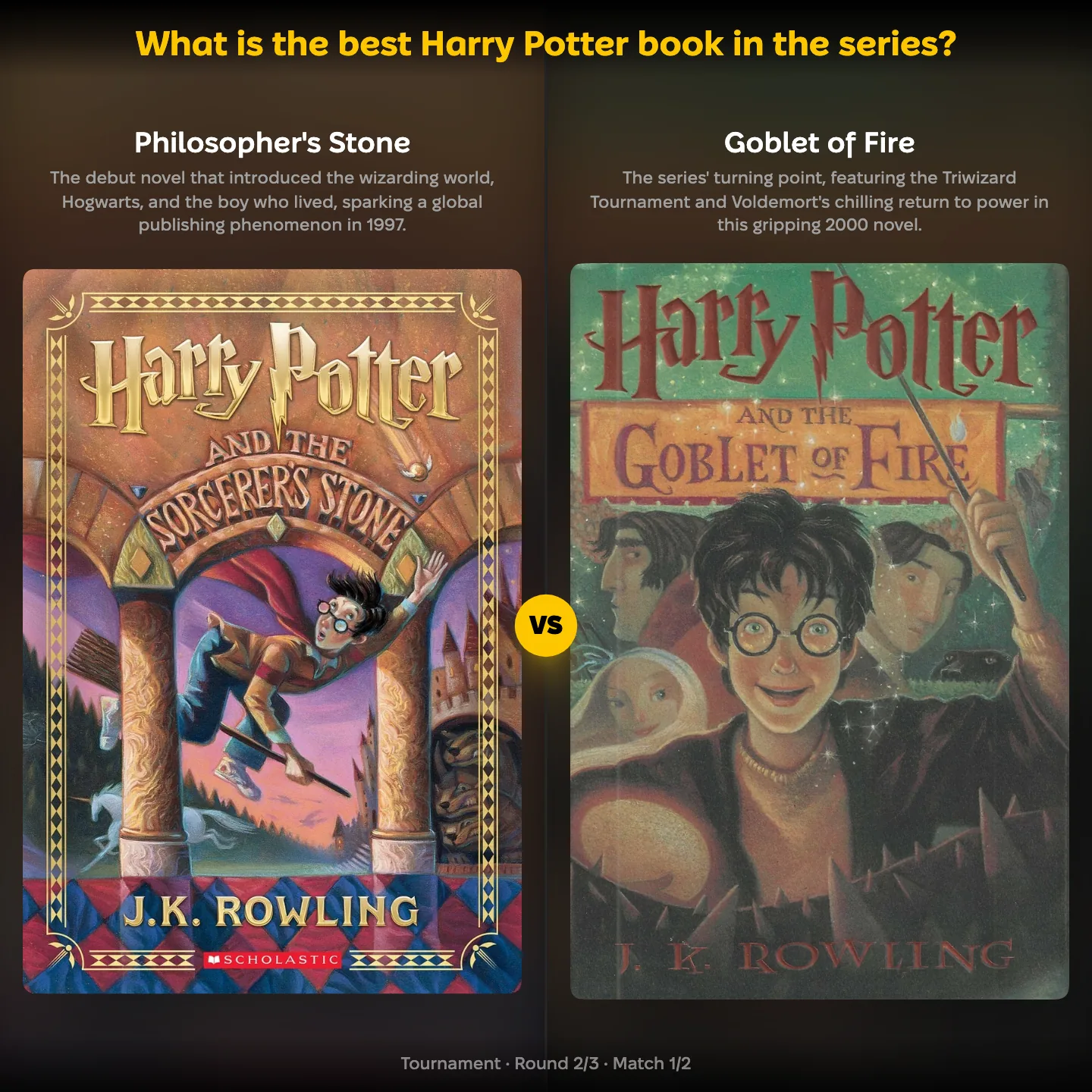
Cut the timeline to a single decade and Harry Potter and the Deathly Hallows meets the books that fantasy readers hand you instead of Harry Potter.
Deathly Hallows arrived in 2007 as the end of the biggest publishing event of the decade. It is also, on this list, a finale competing against openings — books whose job was to hook a reader rather than satisfy one who had waited ten years.
The company is serious. A Storm of Swords, The Name of the Wind, American Gods, Jonathan Strange & Mr Norrell and Mistborn all belong to the same ten years, and every one of them was written for adults.
That is the useful thing about an era filter: it strips away the sales figures and the childhood memory and leaves the novel to argue for itself.
As a sequel, not a film
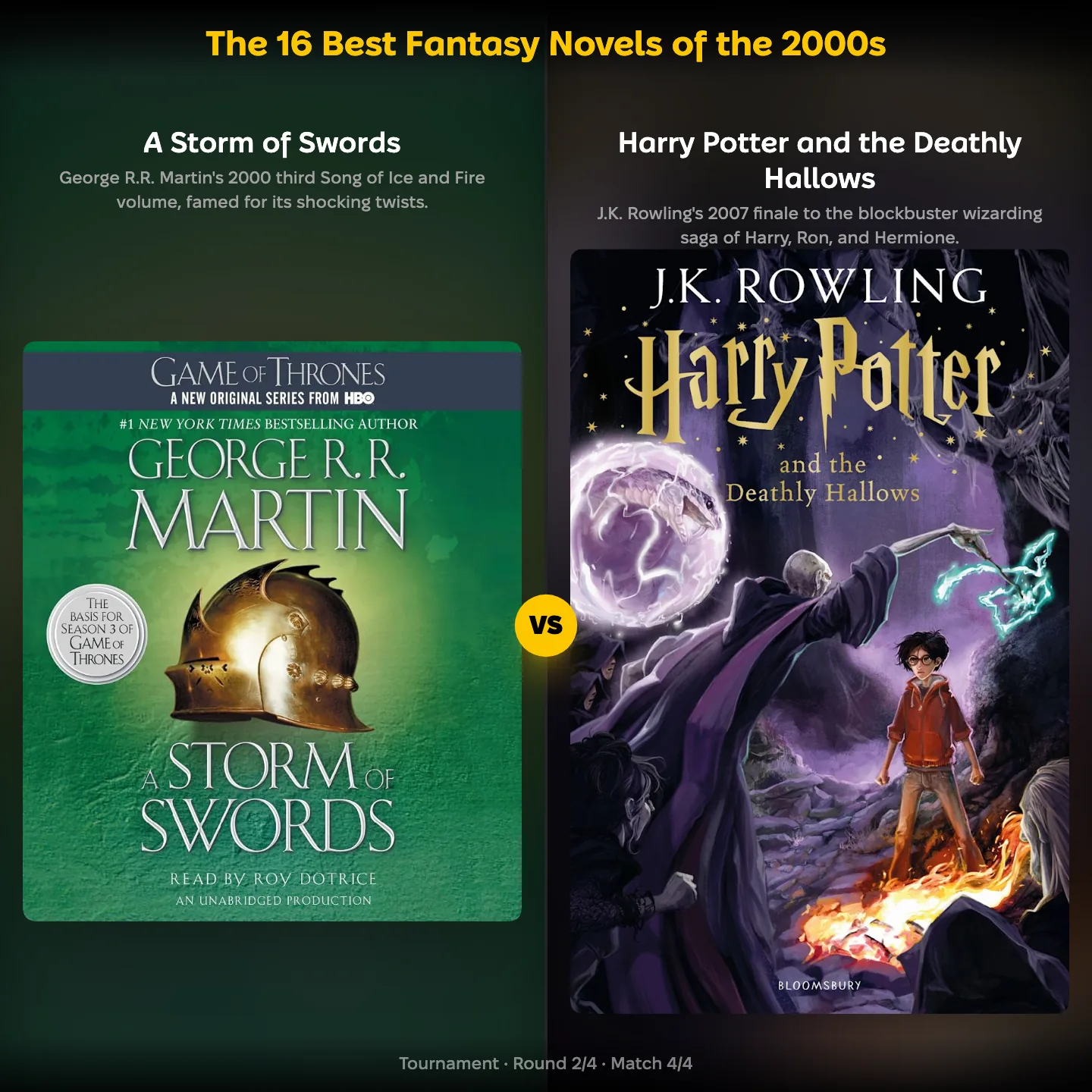
Reframe the films as sequels and Harry Potter and the Prisoner of Azkaban joins a list of twenty where the standard is brutal.
The Godfather Part II is the only sequel ever to win the Academy Award for Best Picture. The Empire Strikes Back, Terminator 2, The Dark Knight and Aliens are all here too, and all of them are widely held to improve on the film before them.
Azkaban has exactly that claim. Alfonso Cuarón took over from Chris Columbus in 2004, cut the runtime, dropped the storybook lighting and made the third film look like it belonged to a different series.
It is also the lowest-grossing of the eight, and the Harry Potter films took twelve Oscar nominations across a decade without converting one — the kind of record that makes a case for the film harder to press on a list like this.
On John Williams' own list
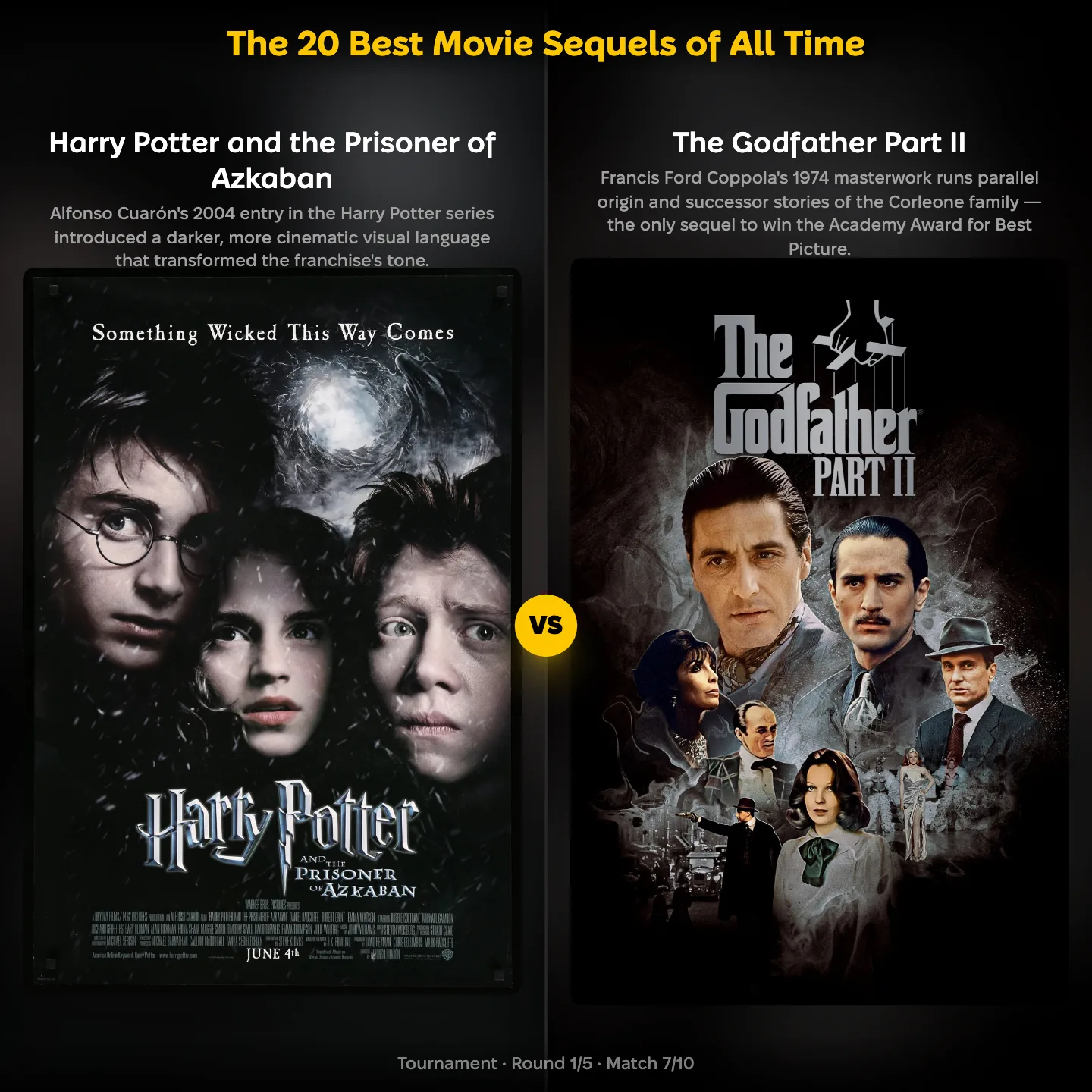
Hedwig's Theme is one of the most recognisable pieces of film music written this century. John Williams composed it for Harry Potter and the Sorcerer's Stone in 2001 and scored the first three films.
The competition on this list is also John Williams. Star Wars, Jaws, E.T., Raiders of the Lost Ark, Schindler's List, Jurassic Park and Superman are all his, and all on the page.
Williams was nominated for an Academy Award for the Sorcerer's Stone score and did not win it. He has five Oscars from more than fifty nominations, and none of them is for Harry Potter.
Being outclassed by the same composer is a strange kind of compliment: it means the Potter theme belongs in a conversation almost no other film music reaches.
On Alexandre Desplat's list, the odds change
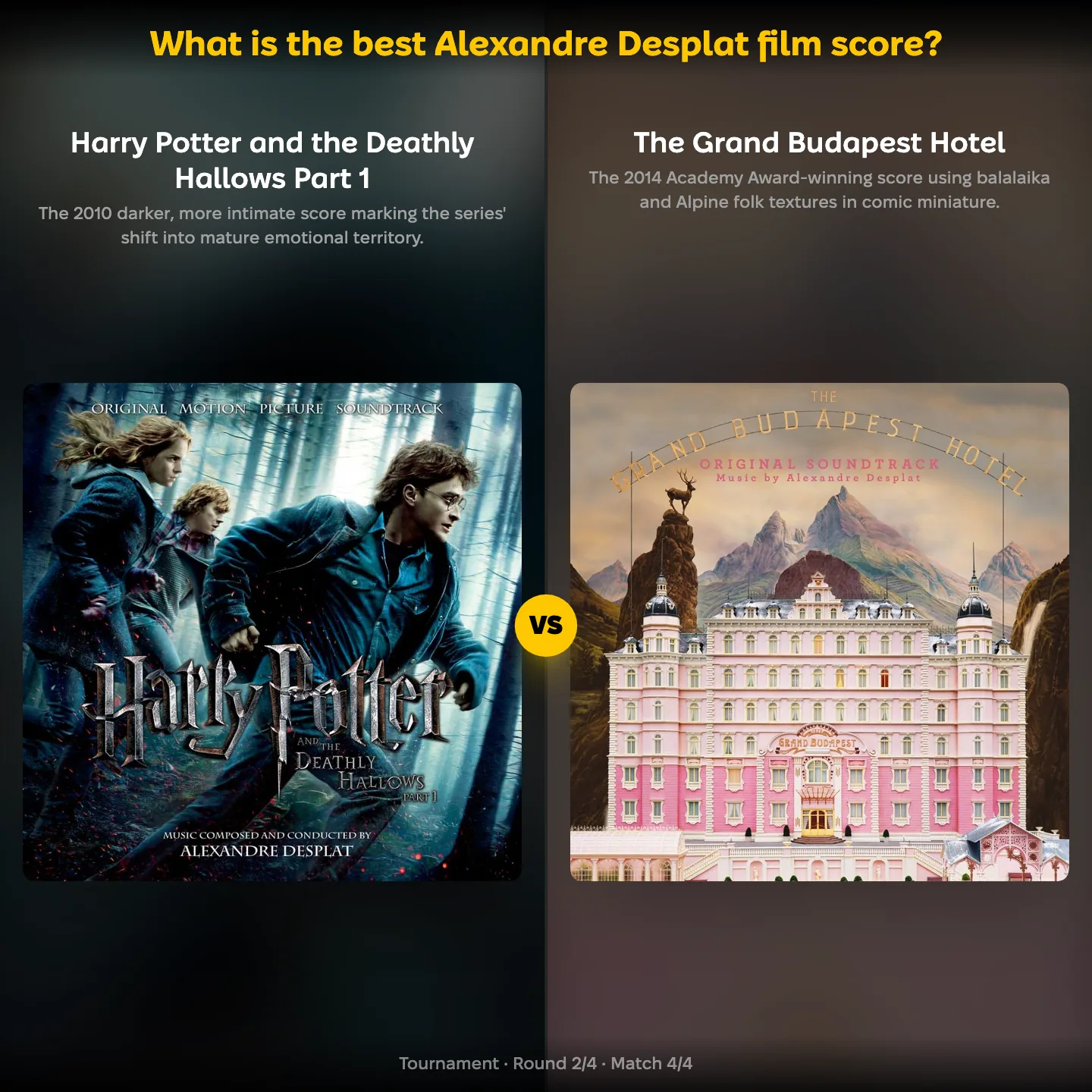
Change composer and Harry Potter gets a far friendlier field. Alexandre Desplat scored both parts of Deathly Hallows, in 2010 and 2011, taking over the series for its ending.
Desplat is a heavyweight — two Academy Awards, for The Grand Budapest Hotel in 2014 and The Shape of Water in 2017 — but his catalogue is built from precise, small-scale scores rather than fanfares people can hum.
That difference is the section. Against Williams, Harry Potter is one great theme among several immortal ones. Against Desplat, it is the biggest canvas he has worked on.
The counter is that scale is not quality, and Desplat's Oscars came from the miniatures.
As an Alfonso Cuarón film
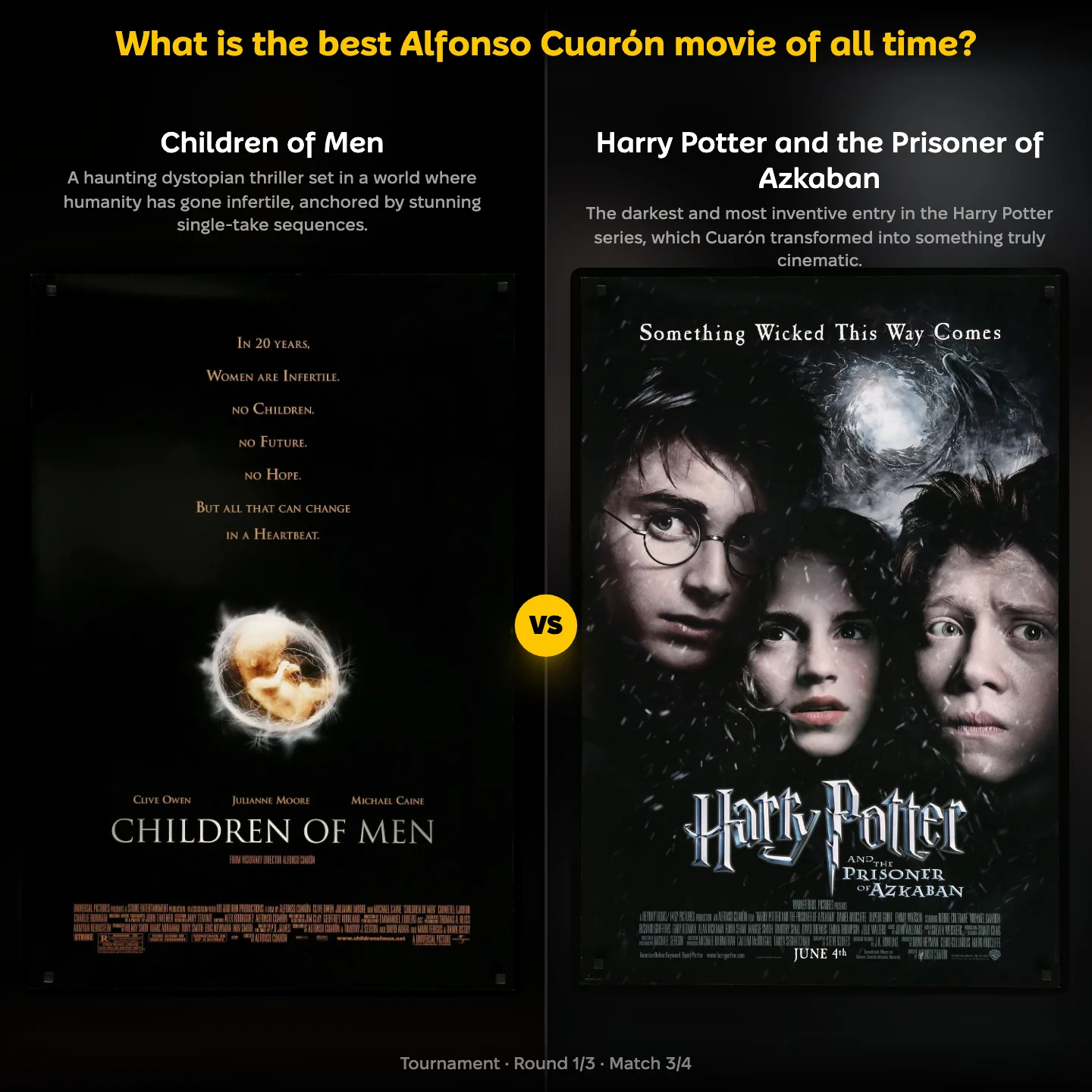
Alfonso Cuarón directed one Harry Potter film, Prisoner of Azkaban, in 2004, and Potter fans routinely call it the best of the eight. On a list of Cuarón's own work that praise stops being decisive.
Cuarón has won the Academy Award for Best Director twice, for Gravity in 2013 and Roma in 2018, and Roma also took Best Foreign Language Film. Children of Men, from 2006, is the film other directors talk about.
The harder question is not whether Azkaban is good. It is whether the best film in a franchise can outrank the personal work of the man who made it — a studio job against three films he chose.
For Cuarón, Azkaban was also the proof of concept: a director from Mexican independent cinema handed a $130 million tentpole, delivering the entry that changed how the rest of the series looked.
As Ralph Fiennes' best-known face
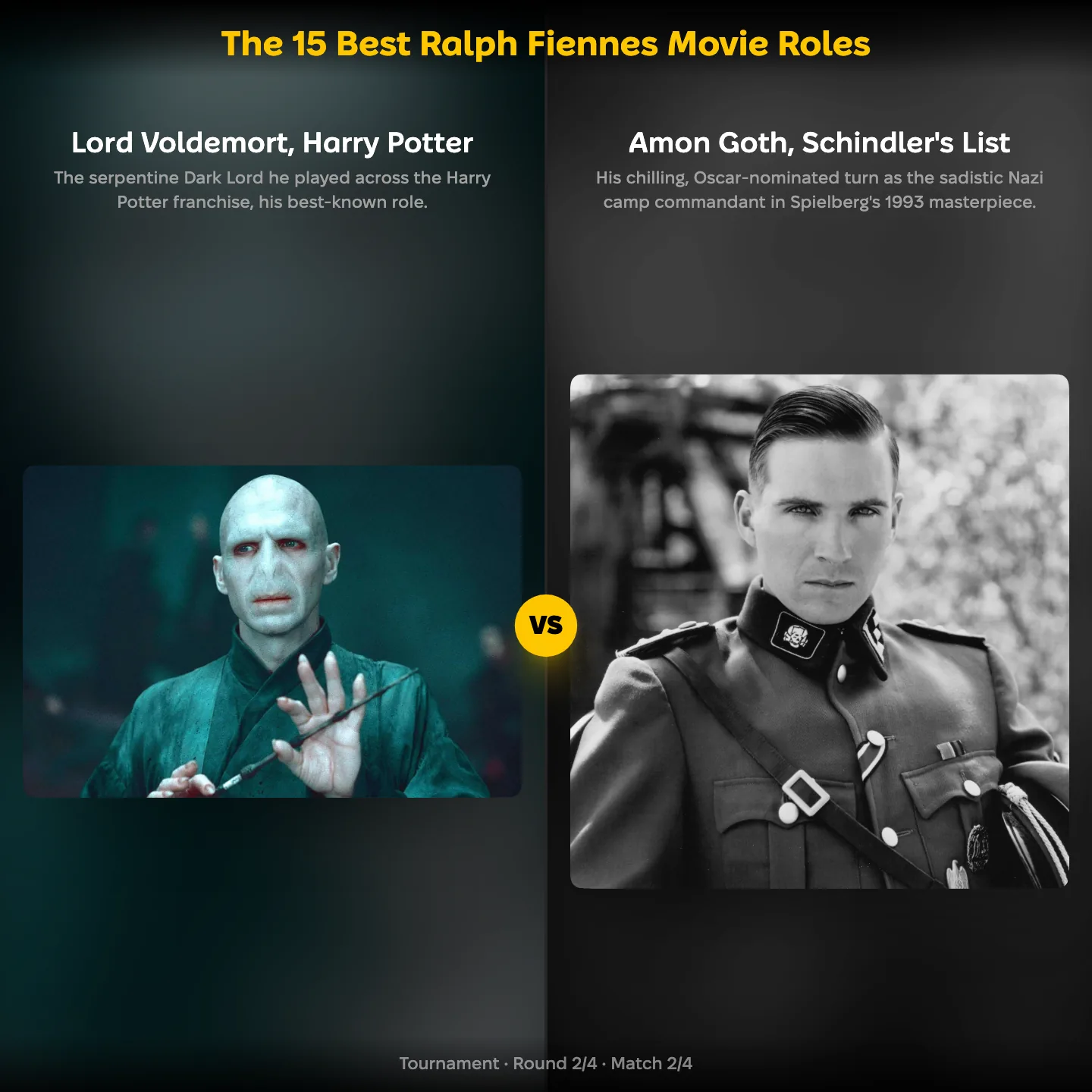
Lord Voldemort is the most widely seen thing Ralph Fiennes has ever done. He played the character across five Harry Potter films, from Goblet of Fire in 2005 to Deathly Hallows: Part 2 in 2011, under prosthetics that removed his nose and most of his face.
The list of fifteen roles beside it is a reminder of how strange that is. Fiennes was nominated for an Academy Award for Amon Göth in Schindler's List in 1993 and again for The English Patient in 1996, played M in the James Bond films from Skyfall onwards, and was nominated for Best Actor for Conclave.
Voldemort's case is reach, not craft: no other performance of his has been watched by as many people, and none is as instantly identifiable.
Fiennes has never won an Academy Award, which means the roles that came closest are all on this page — and none of them is the wizard.
As Maggie Smith's other great role
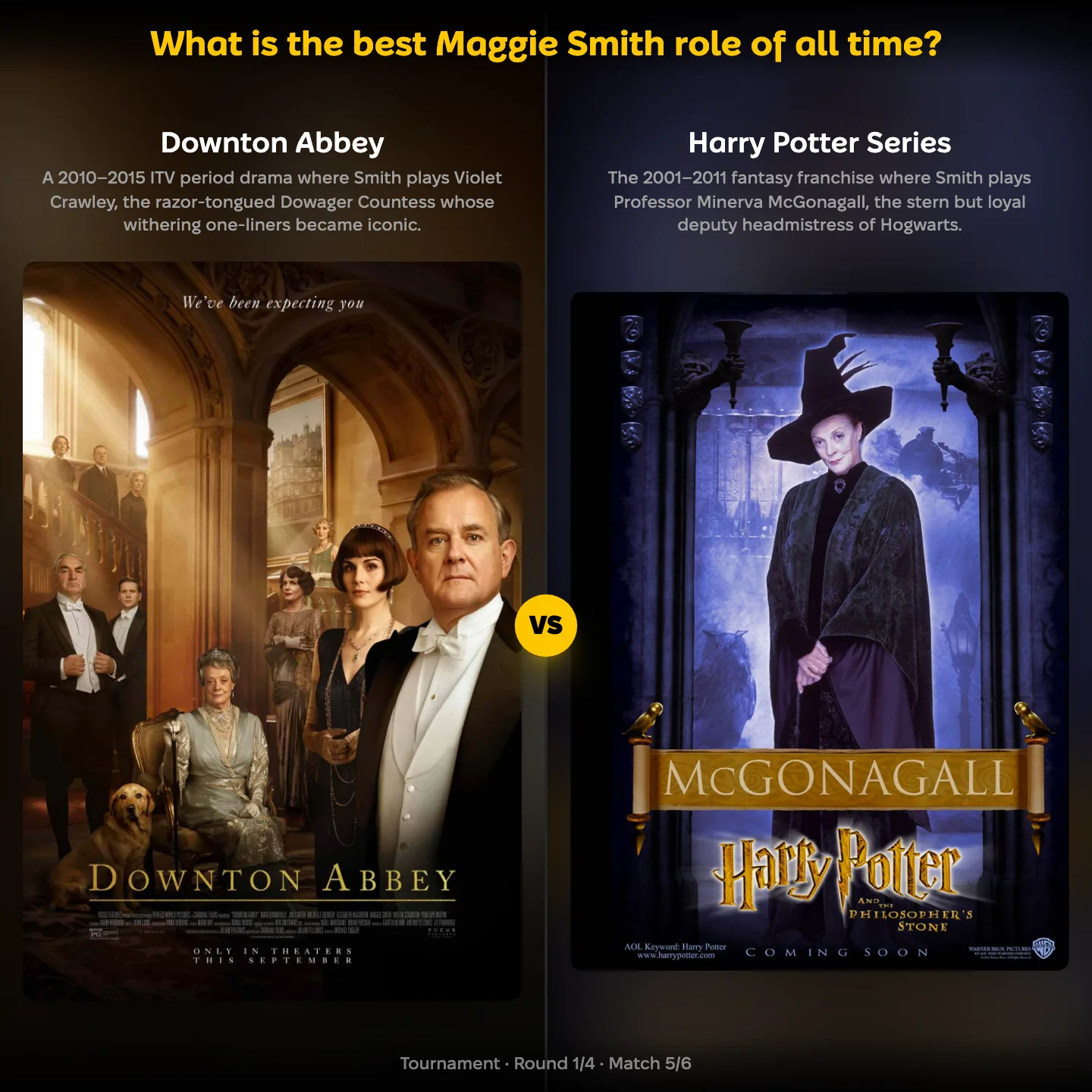
For anyone born after 1990, Maggie Smith is Professor McGonagall. She played her in all eight Harry Potter films, from 2001 to 2011, and it is the role that introduced her to a global audience in her late sixties.
Her own list makes that framing look small. Smith won two Academy Awards — The Prime of Miss Jean Brodie in 1969 and California Suite in 1978 — and then spent 2010 to 2015 as the Dowager Countess in Downton Abbey, winning three Emmys for it.
McGonagall's argument is not the writing, which gives her a handful of scenes per film. It is that Smith made a supporting part in a children's fantasy feel like it had sixty years of stage behind it, because it did.
Smith died in September 2024 at 89. The obituaries led with Jean Brodie and Downton Abbey, and reached Hogwarts third.
As one film of Kenneth Branagh's career
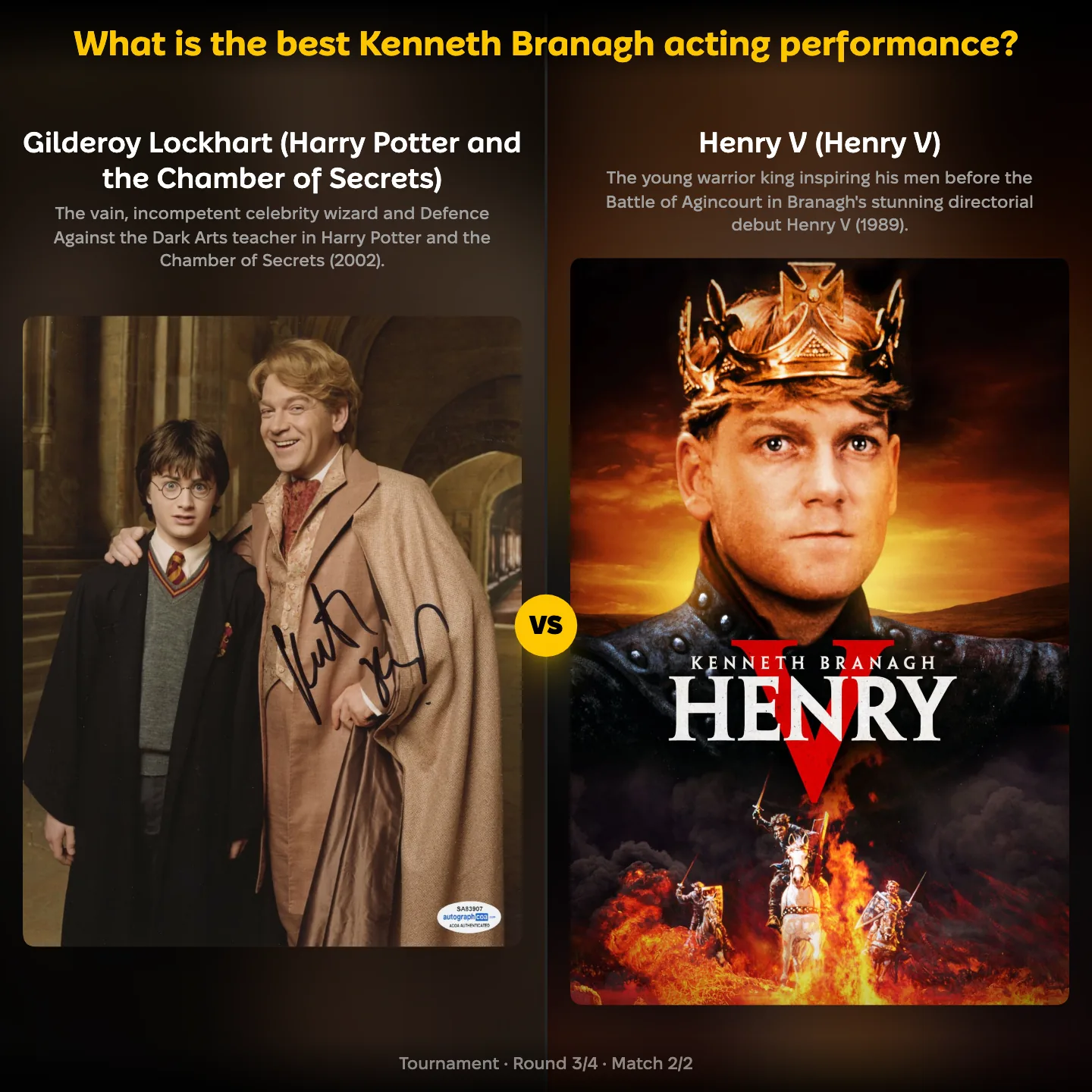
This is the list where Harry Potter is a footnote. Kenneth Branagh appeared in one film of the series, Chamber of Secrets in 2002, as Gilderoy Lockhart — a vain, fraudulent celebrity wizard who turns out to have stolen every story he published.
Branagh's other options are the reason. He was nominated for two Academy Awards for Henry V in 1989, as director and as lead actor, at 29. He has also played Hamlet, Iago and Benedick on film, and won the Oscar for Best Original Screenplay for Belfast in 2021.
Lockhart is a comic turn in a single children's film, set against Shakespeare's kings. On the merits there is no contest.
The defence is the joke. A Shakespearean actor playing a fraud who takes credit for other people's work is sharper than a children's film needed, and Branagh plays it that way.
As the role Robert Pattinson had before Batman
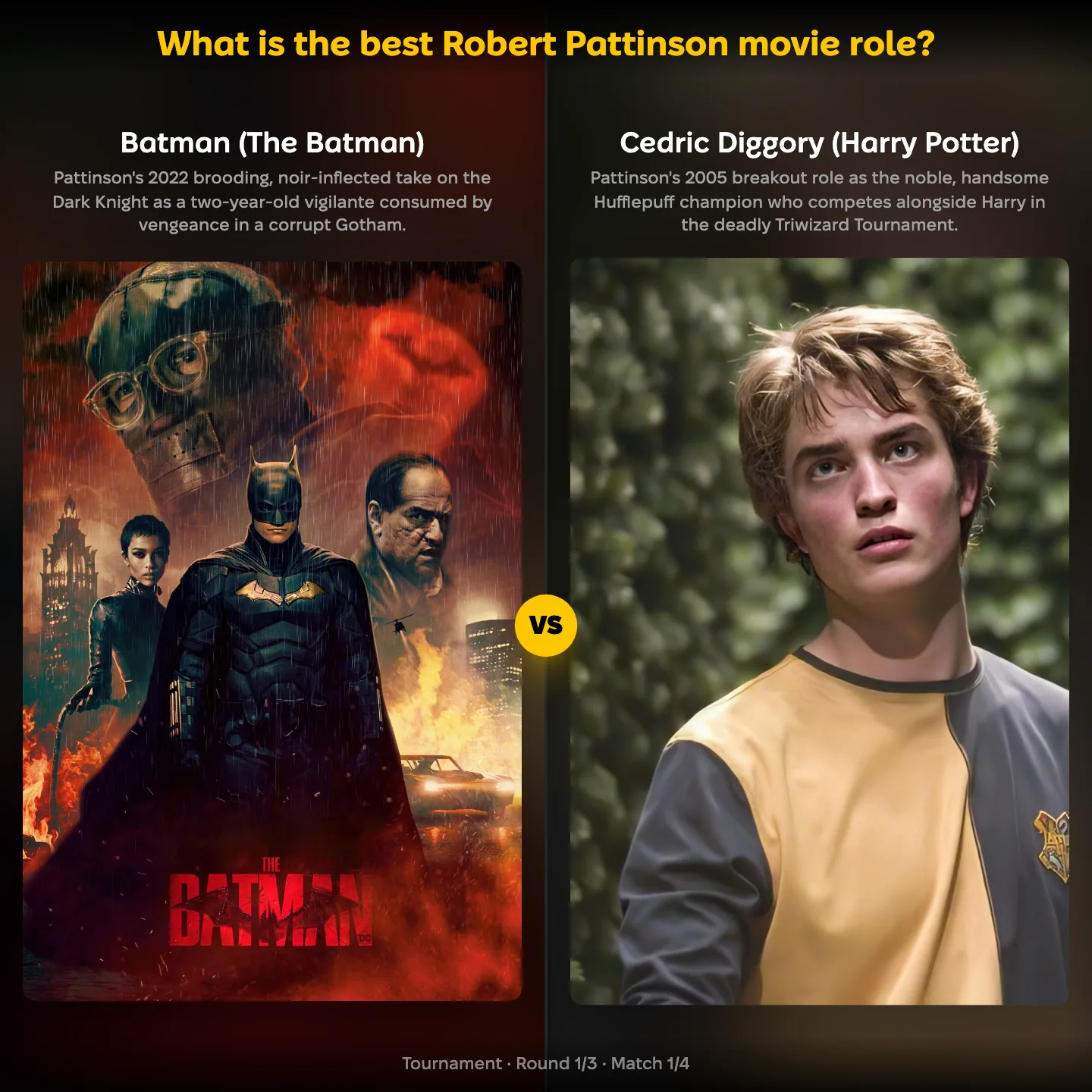
Harry Potter gave Robert Pattinson his first significant screen role. He played Cedric Diggory in Goblet of Fire in 2005, at 19, and the part ends with Cedric killed in a graveyard in the film's final act.
Everything on his list came after. Twilight made him famous from 2008, The Lighthouse and Good Time made him respected, Tenet put him in a Christopher Nolan blockbuster, and The Batman took $772 million in 2022 and reset how the industry saw him.
Cedric's claim is narrow but real: without the Triwizard Tournament there is probably no Twilight casting, and without Twilight no twenty-year run to Gotham.
Twenty years later the same actor is on a list with Batman at one end and a Hufflepuff prefect at the other, which is a decent summary of what a franchise does to a career.
As a LEGO game
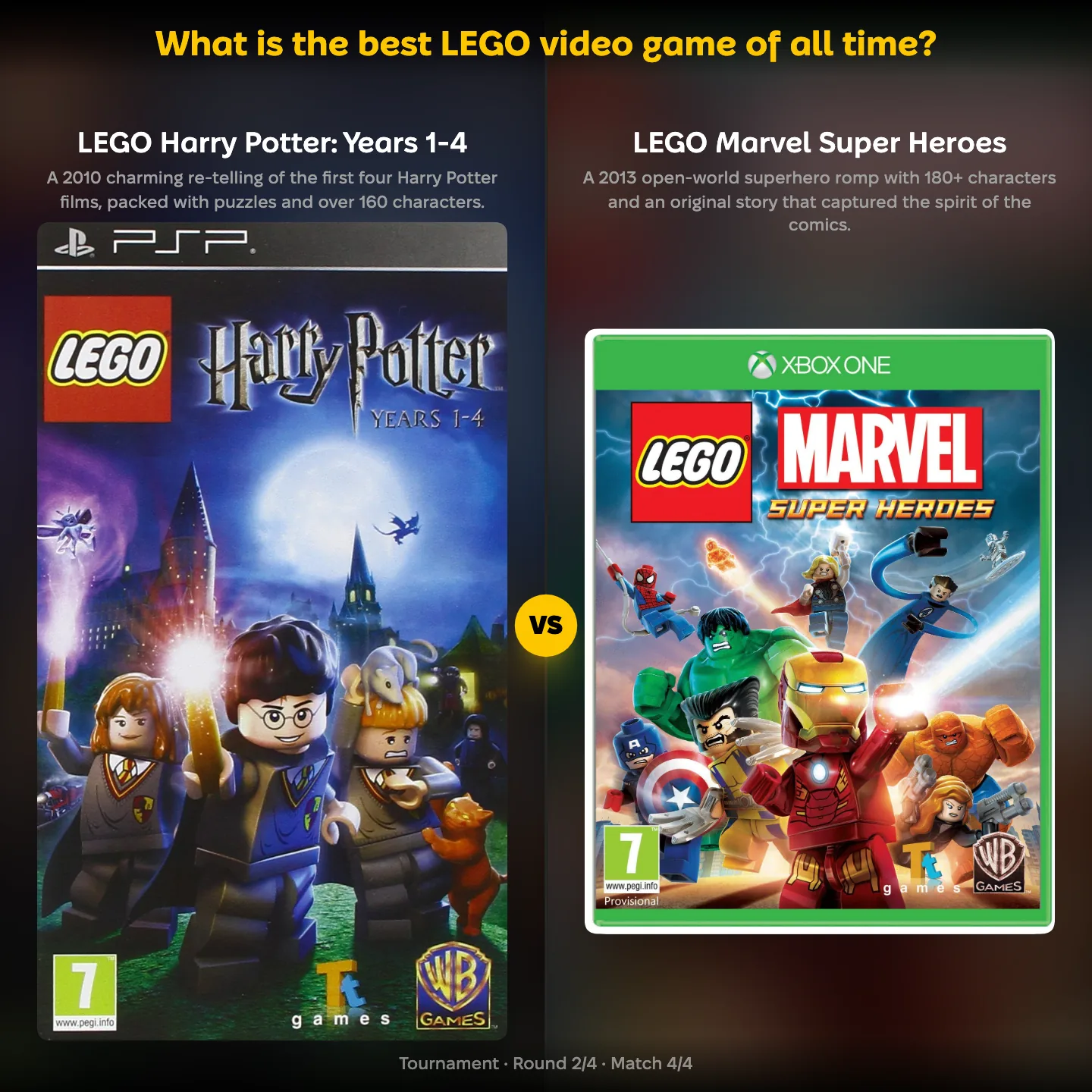
Harry Potter also exists as plastic bricks. LEGO Harry Potter: Years 1-4 came out in 2010 and Years 5-7 in 2011, both from Traveller's Tales, and both are options on a list of fourteen LEGO games.
Two entries out of fourteen is unusual — most franchises here get one. The Potter games had an advantage the others lacked: Hogwarts is a building, so a game about wandering a castle and solving small puzzles fits the source material rather than fighting it.
The competition is heavy. LEGO Star Wars: The Complete Saga from 2007 is the game that made the whole studio's formula work, and LEGO Marvel Super Heroes from 2013 put 180 characters in an open New York.
This is the section where Harry Potter is no longer a story at all. It is a licence, sitting alongside Batman, Indiana Jones and Jurassic World, judged on whether the puzzles were any good.
As folklore
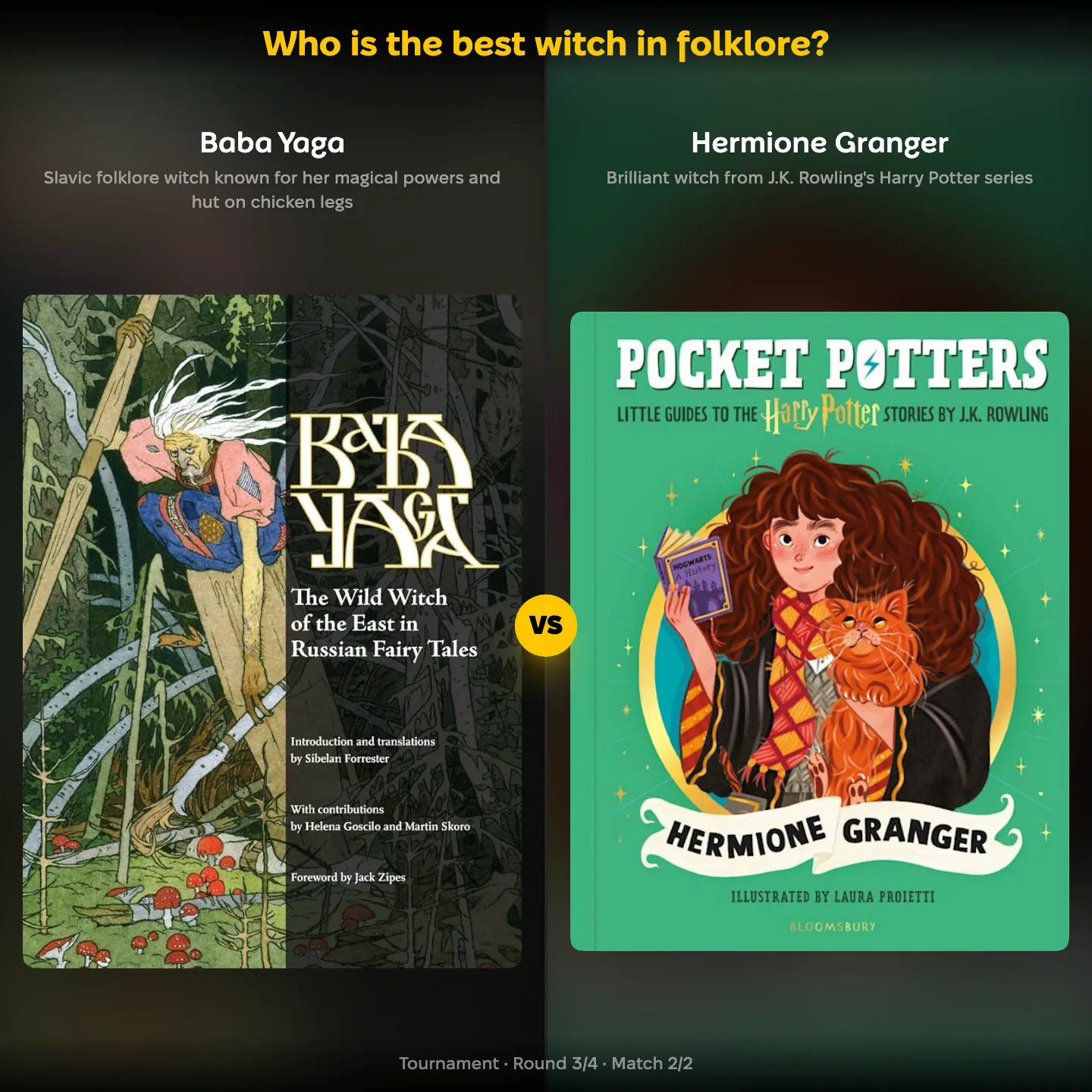
The last stop is the strangest. A ranking of sixteen witches from folklore — Baba Yaga, Circe, Medea, Morgan le Fay, the Wicked Witch of the West — contains two characters invented by J.K. Rowling in the 1990s: Hermione Granger and Minerva McGonagall.
Everything else on the list has centuries behind it. Circe appears in the Odyssey, Morgan le Fay in Arthurian romance, Baba Yaga across Slavic tradition, and even the newest of the old guard, Baum's Wicked Witch, dates to 1900.
Two Hogwarts witches on a folklore list is the clearest measure of what Harry Potter did in thirty years. Hermione is in all seven novels and McGonagall in all eight films, and both are now filed with figures nobody can date or attribute.
Either that is the highest compliment Harry Potter collects anywhere on this page, or the list is being generous. Every ranking above asks a version of the same thing.
Sixteen questions, sixteen different Harry Potters
A canonical novel, a genre-defining series, a studio job, a licence, a folklore figure, a footnote in a Shakespearean's career. All sixteen rankings describe the same seven books and eight films, and none of them describes the same thing.
That is not a flaw in the lists. That is what happens when something gets big enough to be measured from sixteen directions at once. Every order here is built from a run of two-way votes.
Take the corner of this series you know best and build the ranking nobody has argued about yet.
More rankings, more angles
- The Lord of the Rings Changes Category From List to List — the other fantasy series, measured every way
- 16 Rankings, One Batman — a franchise across film, games and comics
- Stephen King Wrote Horror. The Lists Keep Filing Him Elsewhere — the horror label that keeps slipping
- Agatha Christie: 100 Years On, 15 Different Lists — Poirot, the Orient Express and the West End