
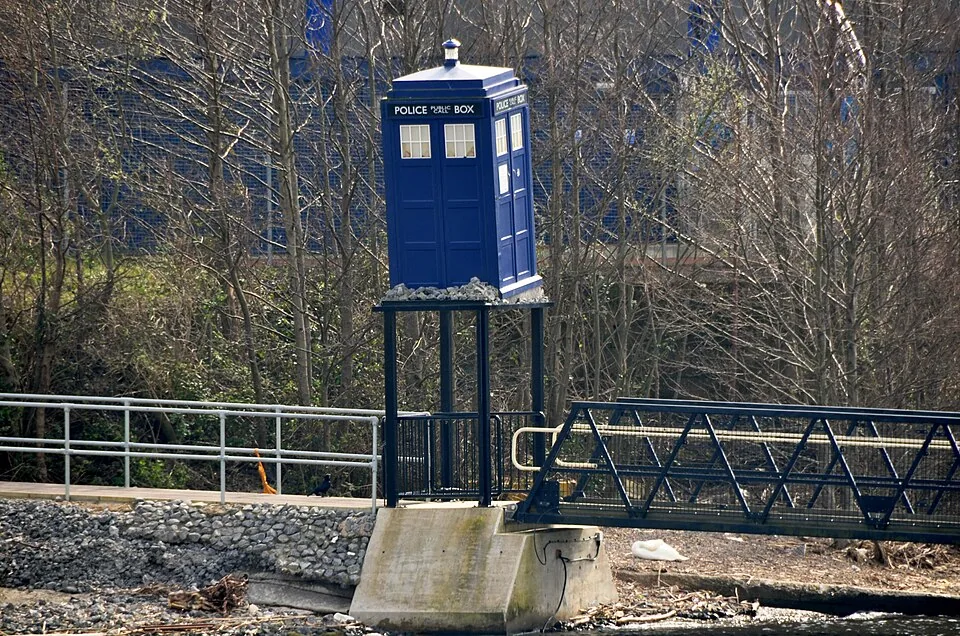
Doctor Who turns 63 on 23 November, the date fans now keep as Doctor Who Day, and this year cinemas are marking it with an extended cut of a Tenth Doctor story.1 The birthday falls in an uncertain year. In June the BBC cancelled the 2026 Christmas special, Russell T Davies and Bad Wolf left the series, and the show went out to tender for a new production company.2
So where does the programme stand while it waits? Doctor Who is on thirteen lists here, from the best TV show ever down to its own episode guide, and the lists are not all measuring the same show.
Doctor Who holds a place on all thirteen lists by being a different programme on each: a 1963 teatime serial, a 2005 comeback, a Steven Moffat puzzle box. The lists rarely agree which one they mean.
Breaking Bad, The Wire and a show with no ending
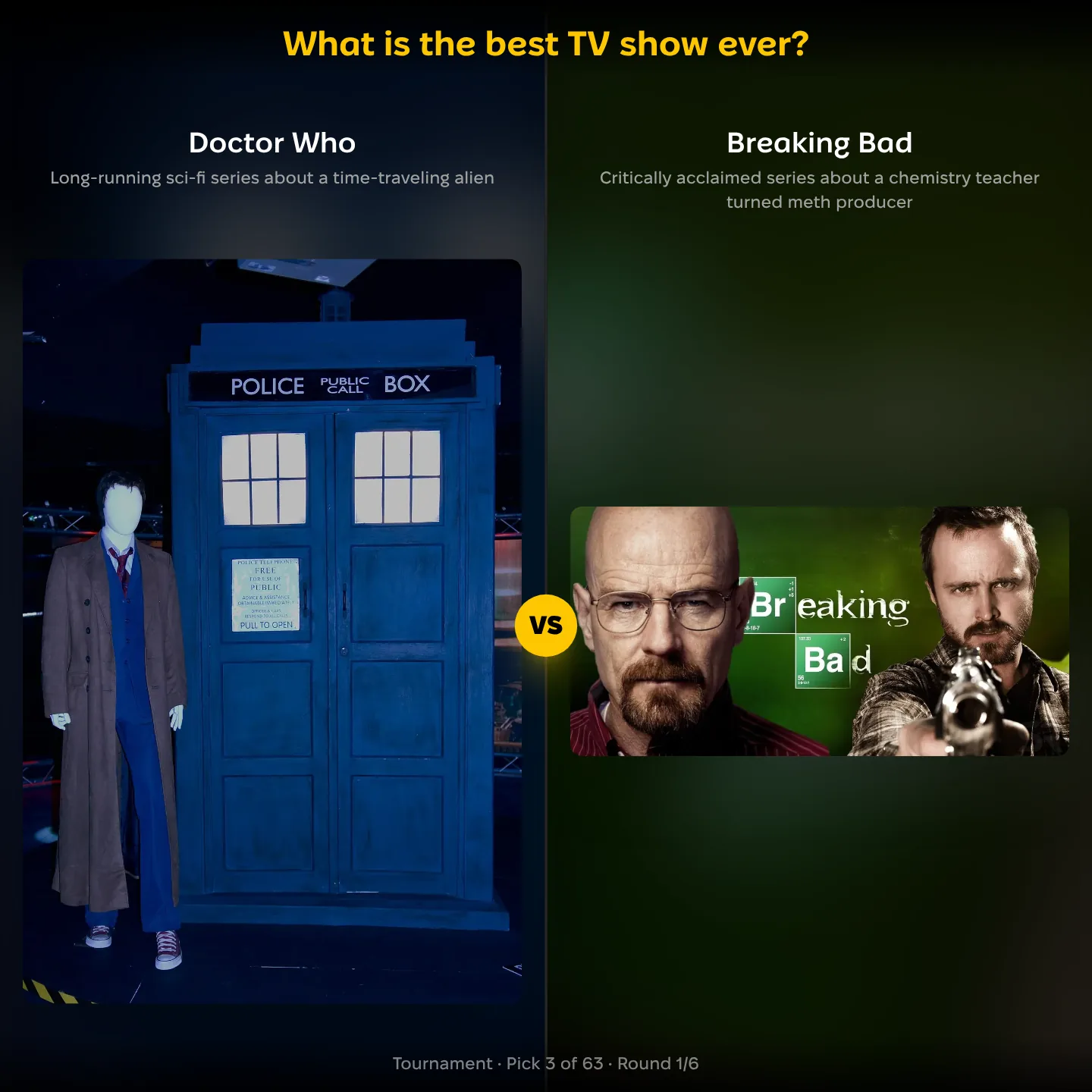
More than sixty series compete in the widest ranking here, the best TV show ever. Doctor Who is in it with Breaking Bad, The Wire and The Sopranos, the dramas critics usually put first.
Those shows ran five or six seasons and ended when their makers chose. Doctor Who has no such shape. It is a format with a replaceable lead, which is how it outlived every one of them.
The case against it here is consistency. A list of the best show ever rewards a flawless run, and a programme that has made episodes in seven different decades has weak stretches by definition. Breaking Bad never had to survive a recast.
Doctor Who vs Star Trek: the greatest sci-fi series
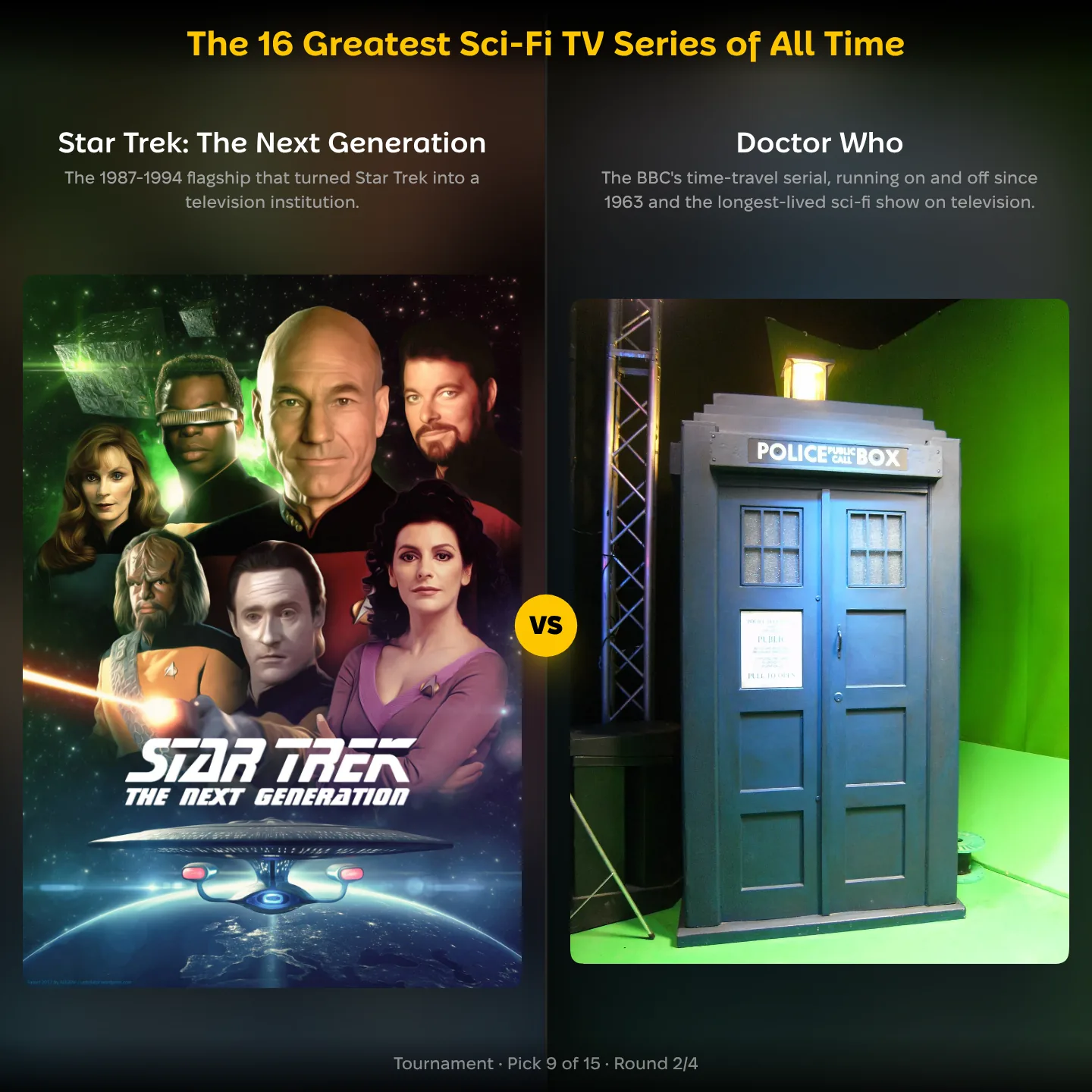
This is the list the article's title asks about: the 16 greatest science-fiction series. Doctor Who shares it with three Star Trek shows, The X-Files, The Twilight Zone and newer arrivals such as Severance and The Expanse.
Guinness World Records has taken a side. It calls Doctor Who the most successful science-fiction programme on television, judged on longevity, DVD sales, iPlayer views and books, and names the original Star Trek as the series it eclipses.3 The original run alone aired 694 consecutive episodes across 26 seasons.4
Star Trek fans answer that the spin-offs count. Star Trek: The Next Generation, the opponent in this frame, ran from 1987 to 1994 and is the version many Americans grew up with. Guinness treats it as a separate show, and Trek fans do not.
Fawlty Towers to Planet Earth: the best British TV
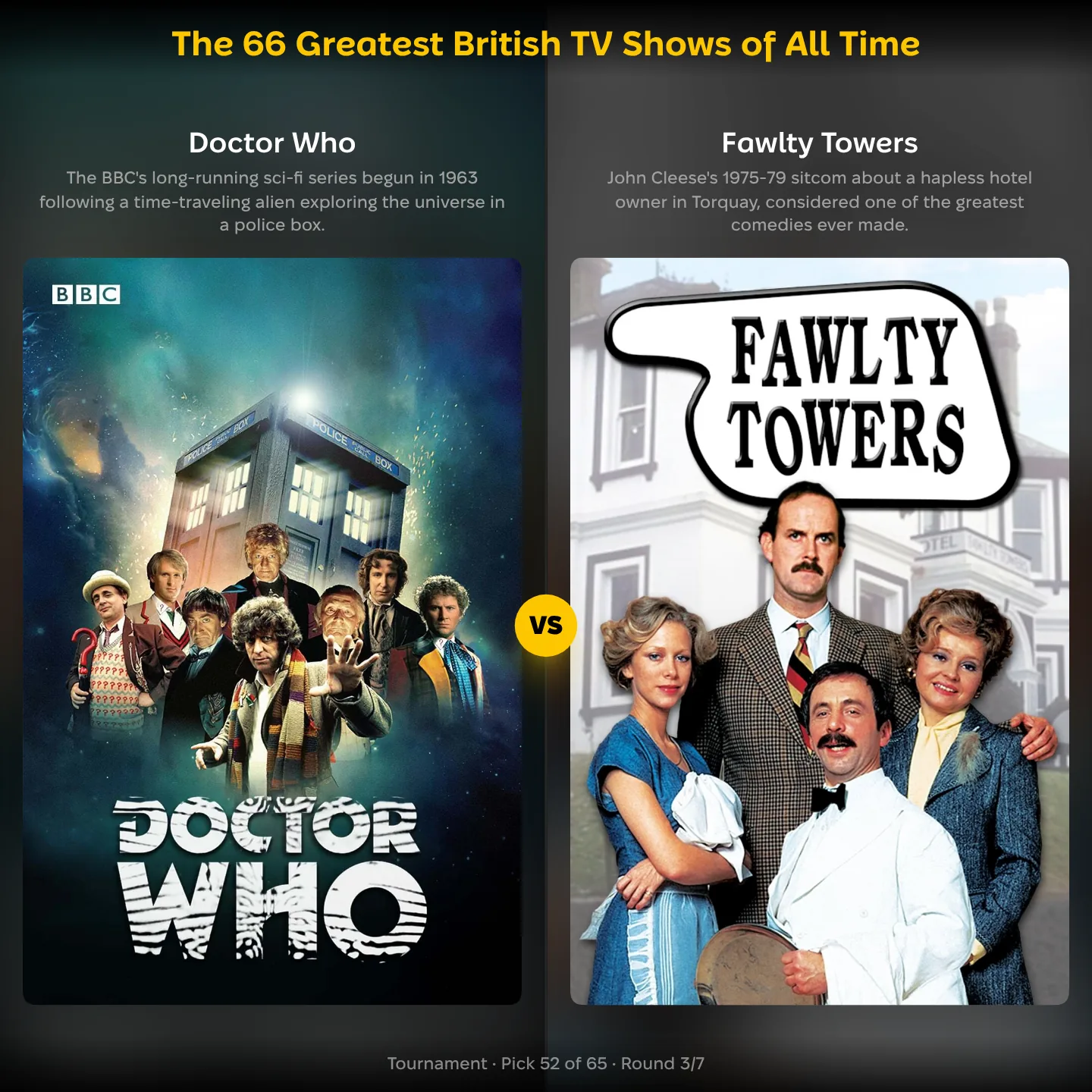
Among the 66 greatest British TV shows, Doctor Who appears beside Fawlty Towers, Blackadder, Only Fools and Horses and Planet Earth. Most of the comedies on that list never travelled far beyond the UK.
Doctor Who did. Its 50th-anniversary special, The Day of the Doctor, went out in 94 countries at once in November 2013, which Guinness recorded as the largest simulcast of a TV drama.5
Fawlty Towers makes the opposite case for greatness. John Cleese made twelve episodes over two series and stopped, and British comedy fans still treat that restraint as the point. Coronation Street, also on the list, has been running even longer than Doctor Who.
Doctor Who vs Quantum Leap: best time travel show
Time travel is the genre Doctor Who could claim to have built on television, and a ranking of 18 time-travel series is its home ground. The TARDIS goes anywhere in time and space, while most rivals pick one rule and live inside it.
Quantum Leap is the purest of those rivals. Scott Bakula's Sam Beckett jumps into strangers' lives for five NBC seasons, mostly within his own lifetime, with no ship and no way home.
Dark and 12 Monkeys take the puzzle route, where every loop has to close. Doctor Who rarely worries whether its loops close, which is either its charm or the reason a Dark fan would put it lower.
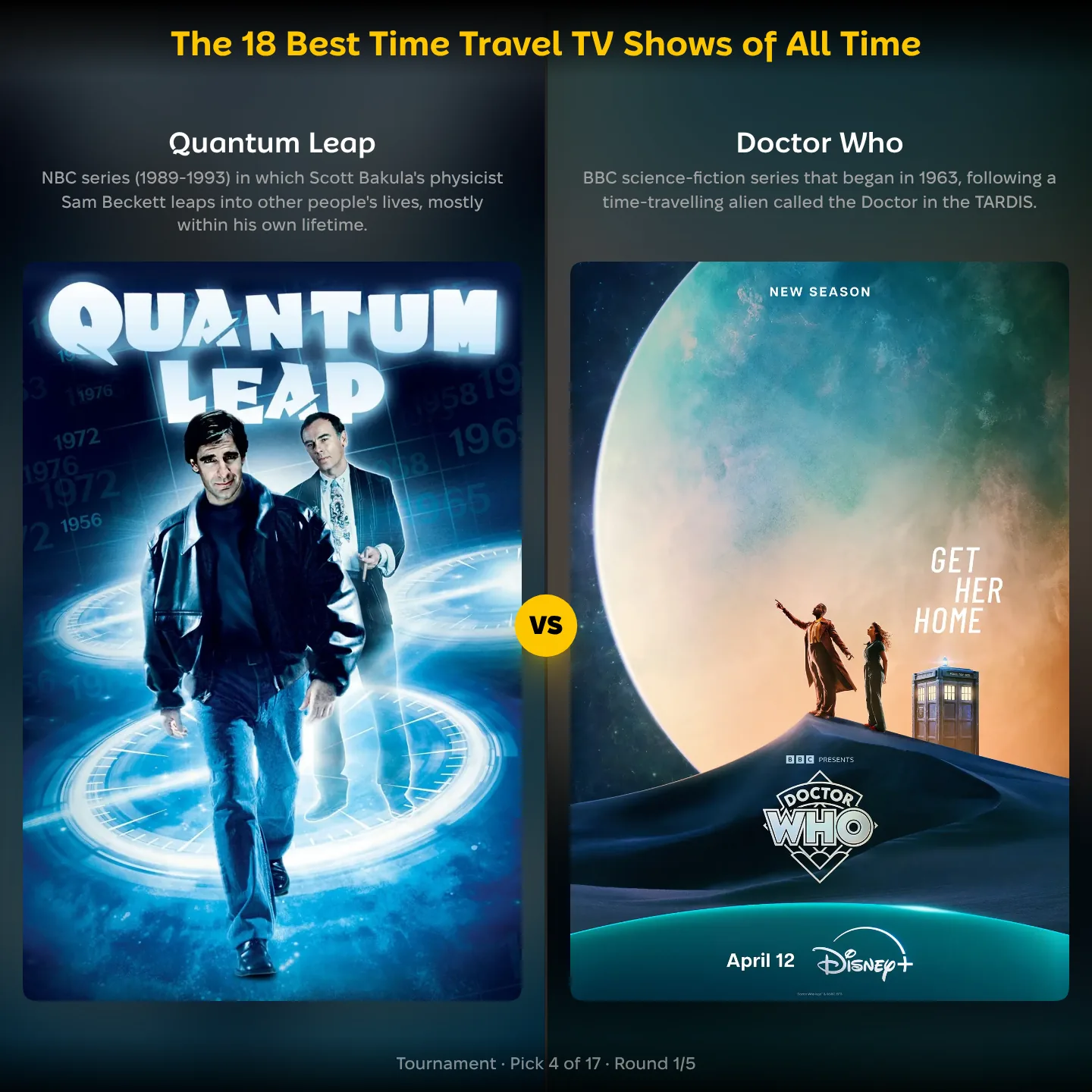
The Twilight Zone, Star Trek and a 1963 debut
The best science-fiction show of the 1960s has two famous American answers. The Twilight Zone ran on CBS from 1959 to 1964 and Star Trek on NBC from 1966 to 1969, and both are on this ranking of 13 shows from the decade.
Doctor Who started between them, with William Hartnell as a crotchety exile and the Daleks arriving in its second story. Patrick Troughton took over in 1966, the first time the lead was recast inside the fiction, and the idea of regeneration was born out of a casting problem.
The decade is also where Doctor Who is hardest to judge. The BBC later wiped many of its 1960s tapes, and a large share of the Hartnell and Troughton episodes survive only as audio recorded off air by fans.
ITV's side of British television has its own entries. The Prisoner and Thunderbirds can still be watched complete, which helps them on a list like this.
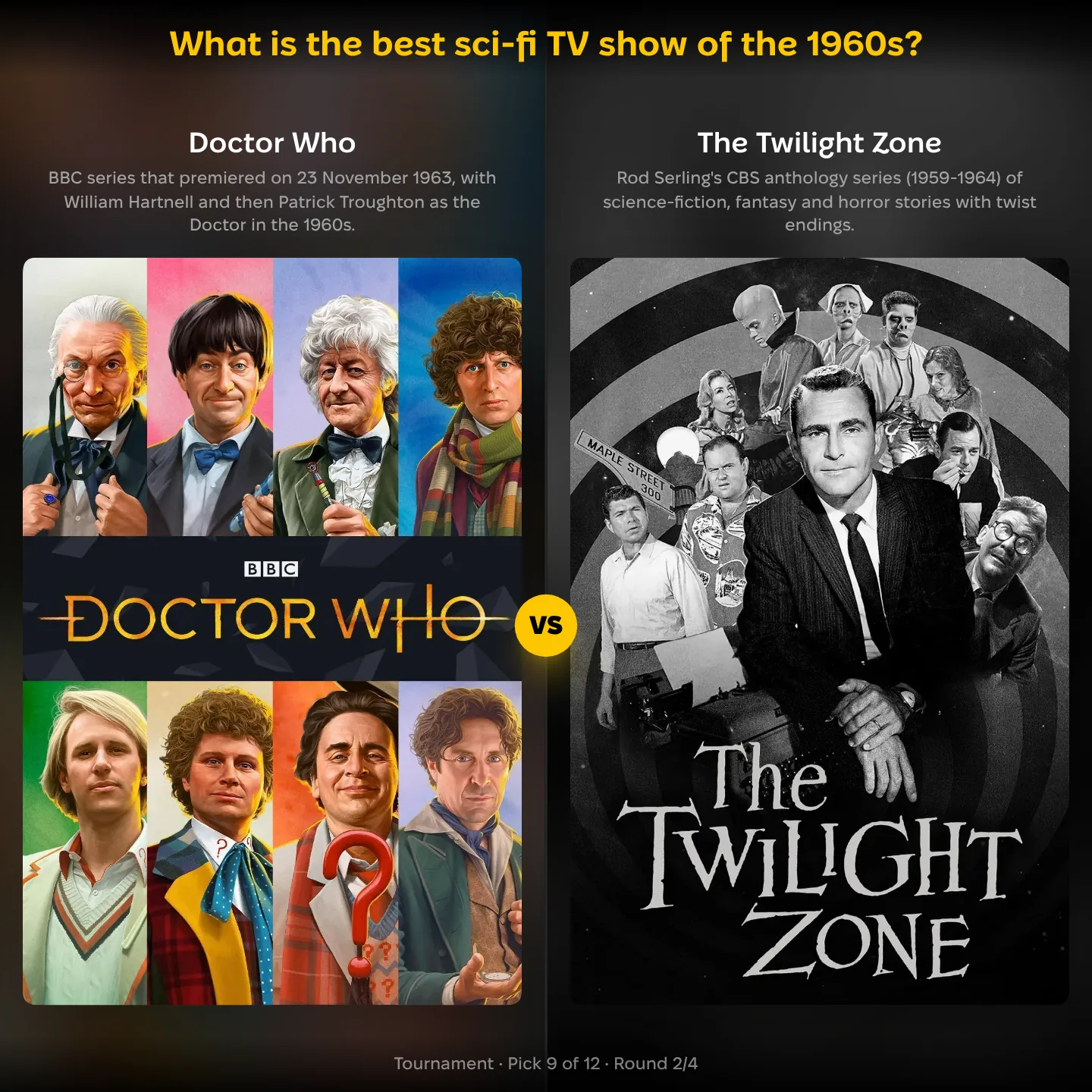
Delia Derbyshire's tape loops: the best TV theme
Ron Grainer wrote the Doctor Who theme, but its sound came from Delia Derbyshire at the BBC Radiophonic Workshop, who assembled it in 1963 from cut tape, filtered noise and oscillators. The University of Manchester, which now looks after her archive, describes her as the composer who created the original theme.6
That makes it one of two electronic pieces among the 16 best TV theme songs. The other is Mark Snow's whistling motif for The X-Files, made on a synthesiser thirty years later.
The rest of the field leans on conventional instruments: the Hawaii Five-O brass, the Cheers piano, the Friends guitar. Stranger Things has a synth opening too, though it sounds closer to a 1980s John Carpenter score than to the Radiophonic Workshop.
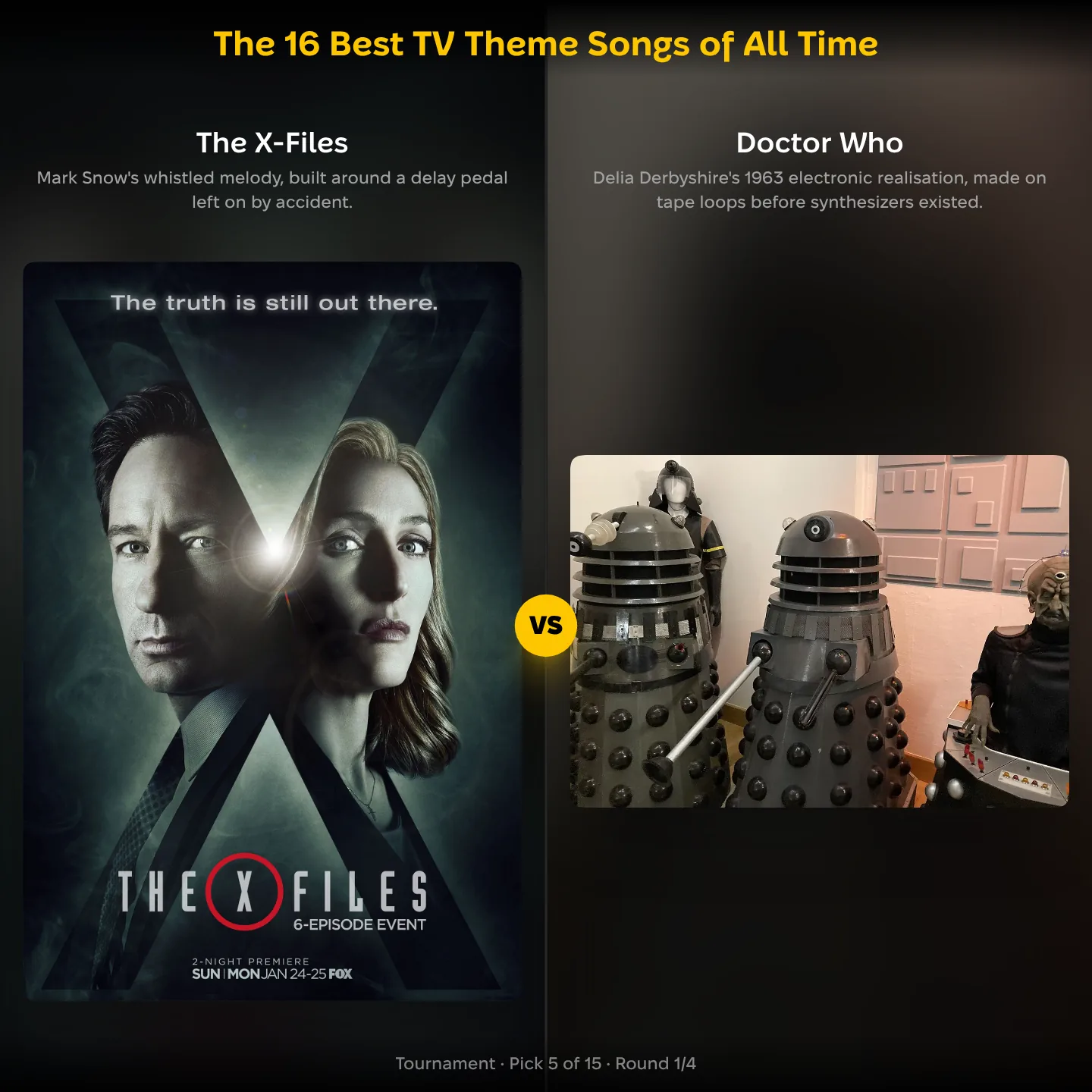
TARDIS vs Millennium Falcon
The TARDIS is the only entry among the 16 most iconic spaceships that looks like street furniture. It is a London police call box, bigger on the inside, parked next to the USS Enterprise, the Nostromo and the Millennium Falcon.
Han Solo's ship is famous for speed. Doctor Who's is famous for being stuck: its camouflage circuit jammed in the first episode, so the box has looked the same through every Doctor since.
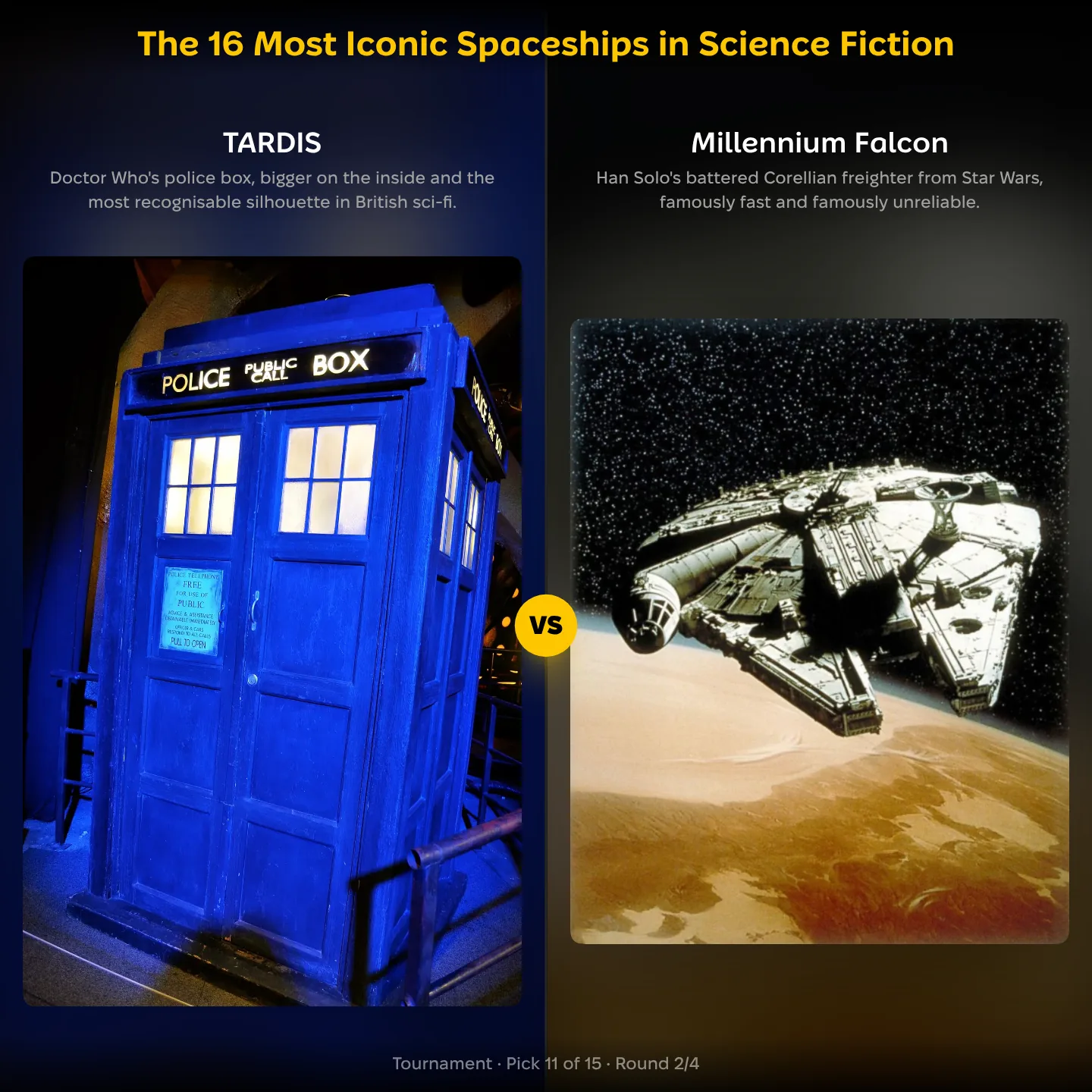
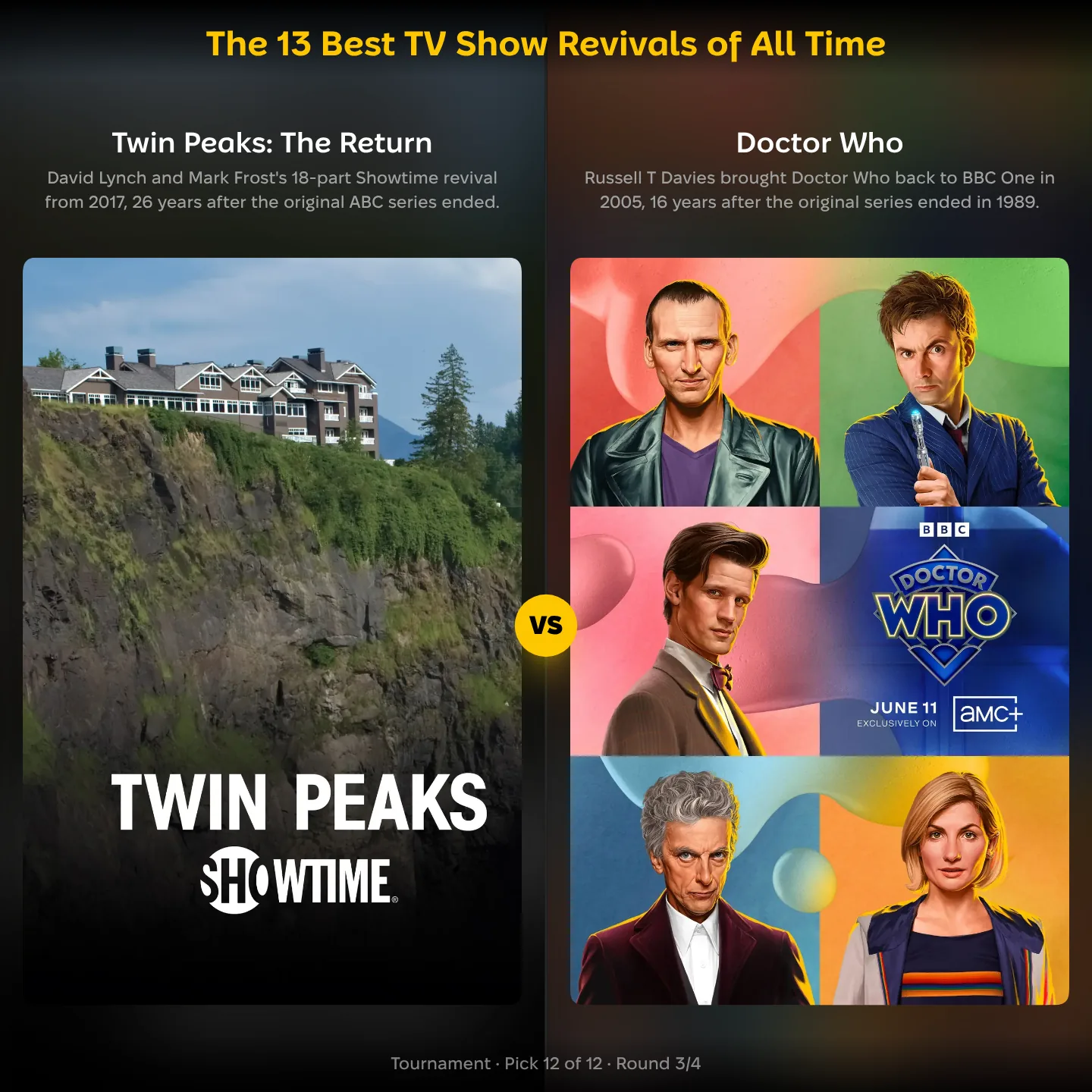
Twin Peaks, Futurama and a 16-year gap: TV revivals
Doctor Who's original run ended on 6 December 1989 without an announcement that it was over.4 A 1996 TV movie with Paul McGann failed to launch an American series, and the show stayed off air until Russell T Davies brought it back on BBC One in March 2005.
That gap puts it on a ranking of 13 TV revivals with Twin Peaks: The Return, which arrived 26 years after the original series ended, and Futurama, revived twice after Fox let it go.
Most revivals on the list ran a season or two on nostalgia, and Fuller House and Heroes Reborn show how that can go. Doctor Who's comeback outgrew the nostalgia: it ran for two decades, found viewers who had never seen the original and produced spin-offs of its own.
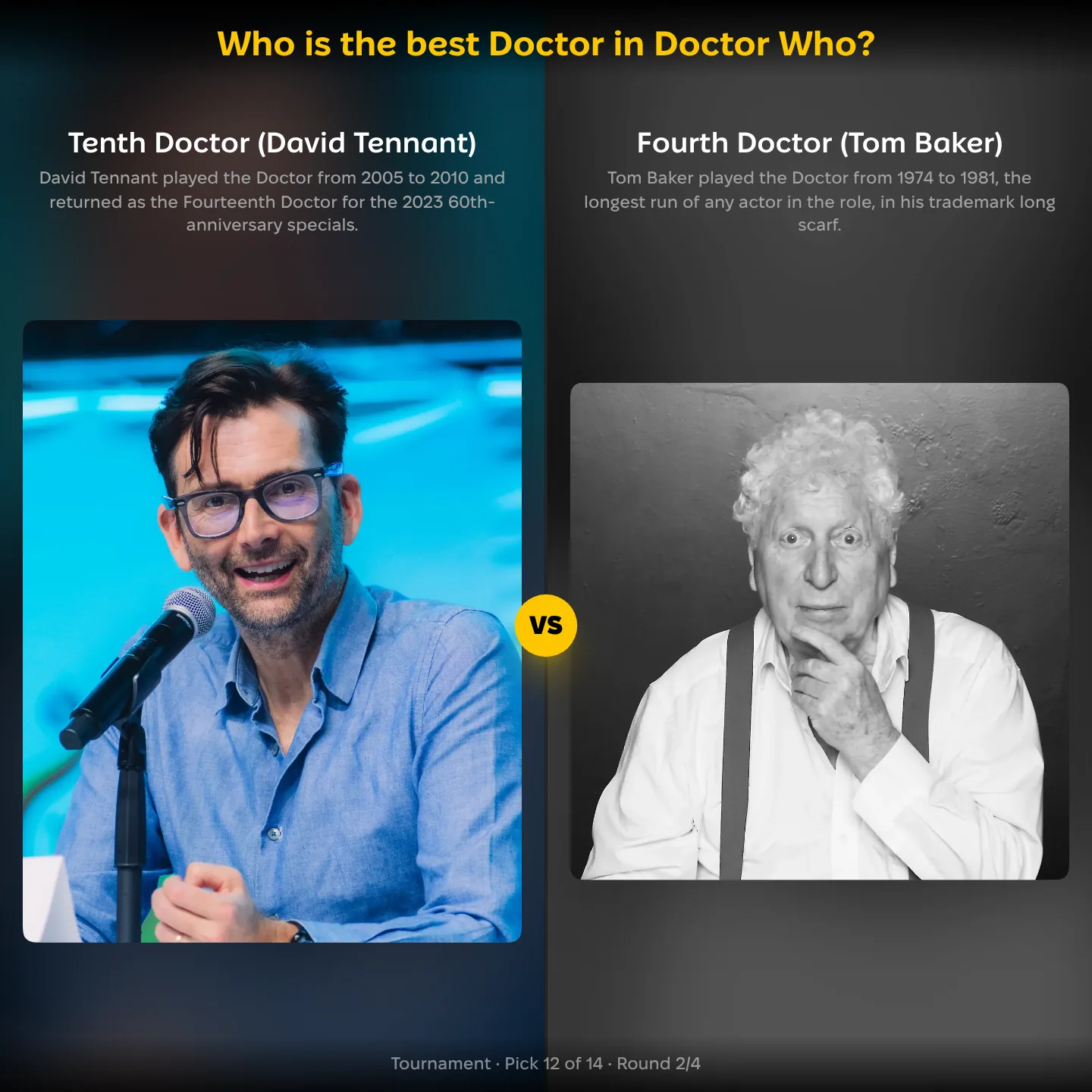
Tom Baker vs David Tennant: the best Doctor
Fourteen actors have played the lead in Doctor Who, and this ranking adds John Hurt's War Doctor for fifteen choices. The frame shows the pairing fans argue about most: David Tennant's Tenth Doctor against Tom Baker's Fourth.
Tom Baker holds the volume record, with 173 episodes across seasons 12 to 18, more than any other actor in the part.7 Tennant's claim is reach. He led the revival's biggest years from 2005 to 2010 and came back for the 60th-anniversary specials in 2023.
The list also holds the extremes. Matt Smith was 26 when he filmed his first scenes, the youngest Doctor, while Paul McGann's Eighth Doctor got one TV movie and a seven-minute mini-episode.
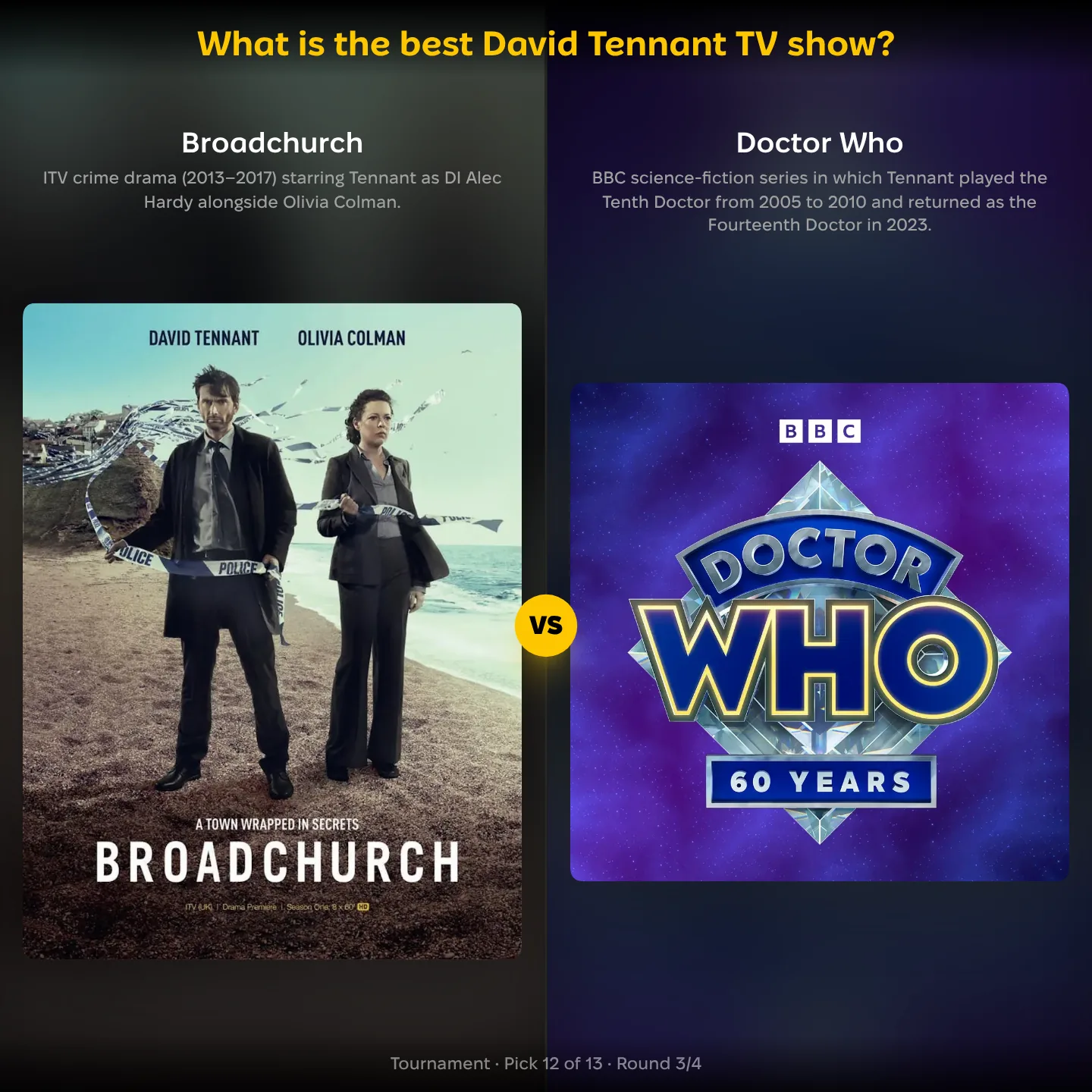
David Tennant beyond the TARDIS: Broadchurch vs Doctor Who
David Tennant's best-known role is the Doctor, and his TV career has kept growing around it. This ranking also holds Broadchurch, Good Omens, Des and Staged.
Broadchurch, the ITV murder drama he led with Olivia Colman, is the part British viewers usually name next. American viewers may answer Jessica Jones, where he played the villain Kilgrave. Des, the 2020 ITV drama, cast him as the serial killer Dennis Nilsen.
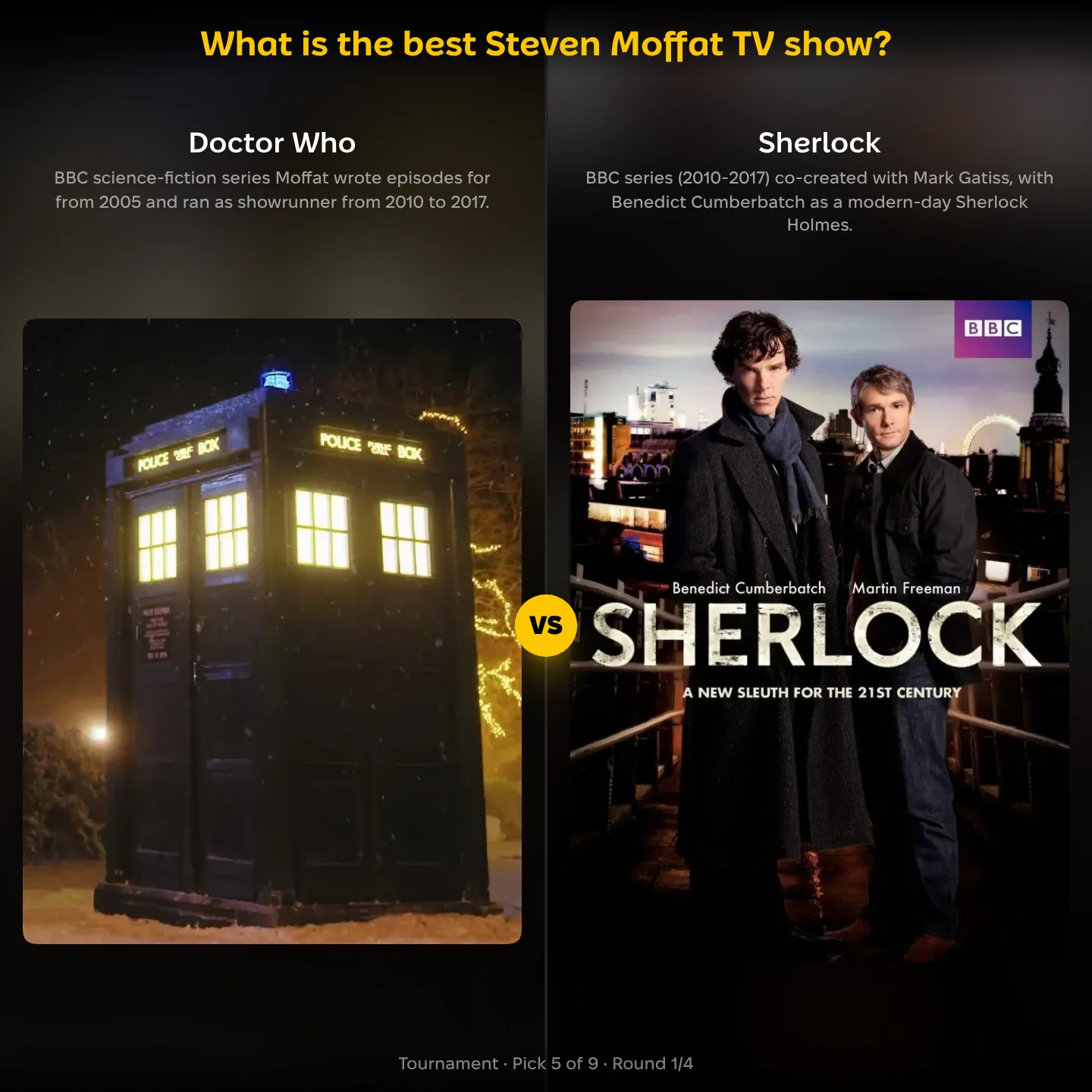
Doctor Who vs Sherlock: Steven Moffat's two shows
Steven Moffat wrote some of the revival's most praised episodes before running Doctor Who from 2010 to 2017. For most of those years he was also making Sherlock with Mark Gatiss, so this ranking of his TV work comes down to two shows he ran side by side.
Blink is the strongest evidence for Doctor Who. His 2007 episode about the Weeping Angels won the Hugo Award for best short dramatic presentation in 2008.8
Sherlock's case is concentration: four series and a special against Doctor Who's sprawl. Further down sit Coupling, his dating sitcom, and Press Gang, the children's newspaper drama where he started.
The End of Time among sci-fi finales
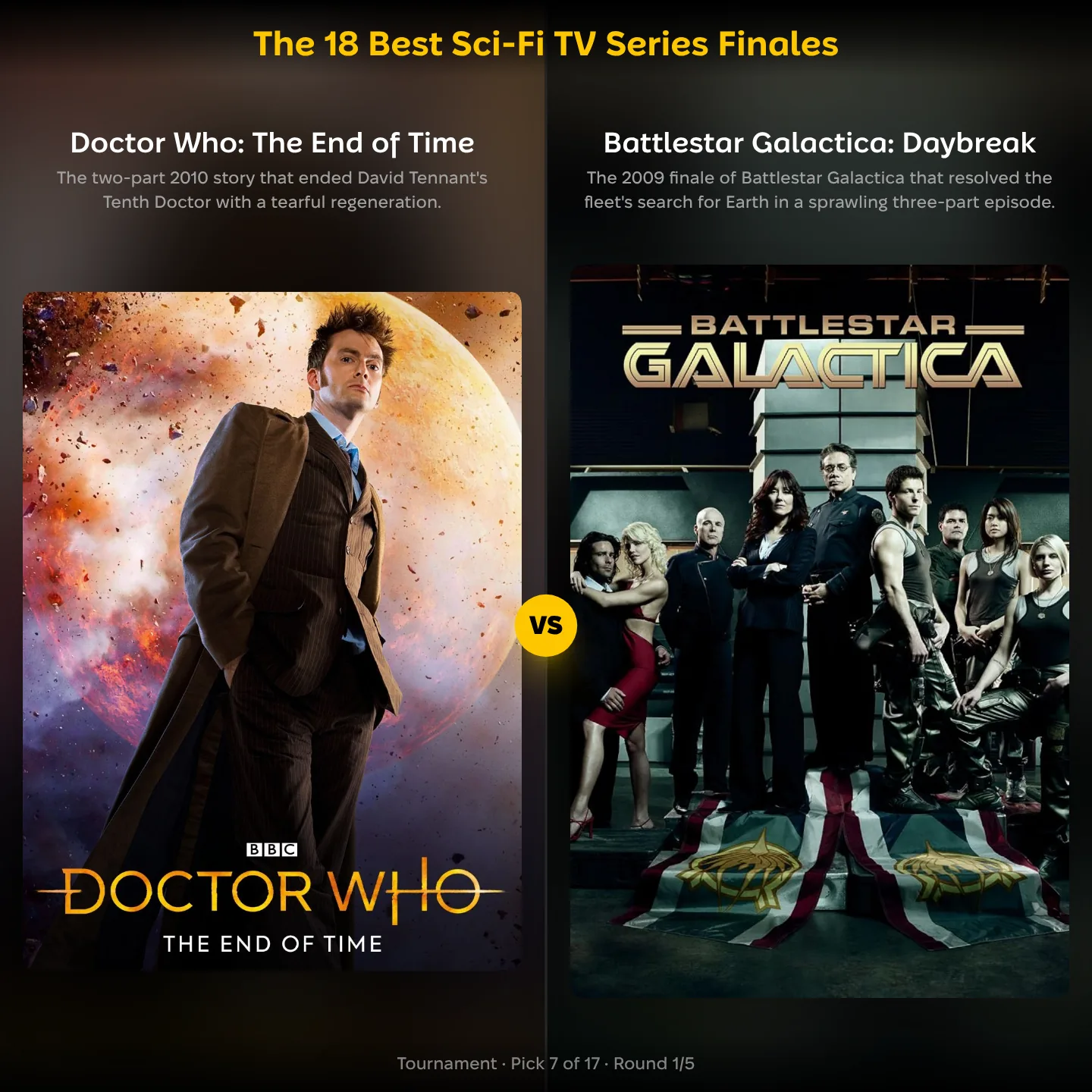
Doctor Who has never had a series finale, so the sci-fi finales ranking takes the nearest thing: The End of Time, the 2009–10 special in which David Tennant's Doctor regenerates and Russell T Davies hands the show to Steven Moffat.
It is an odd fit beside Battlestar Galactica's Daybreak and The Next Generation's All Good Things, stories that closed their universes. The End of Time closed an era, and its last scene introduces Matt Smith.
The Caves of Androzani vs Blink
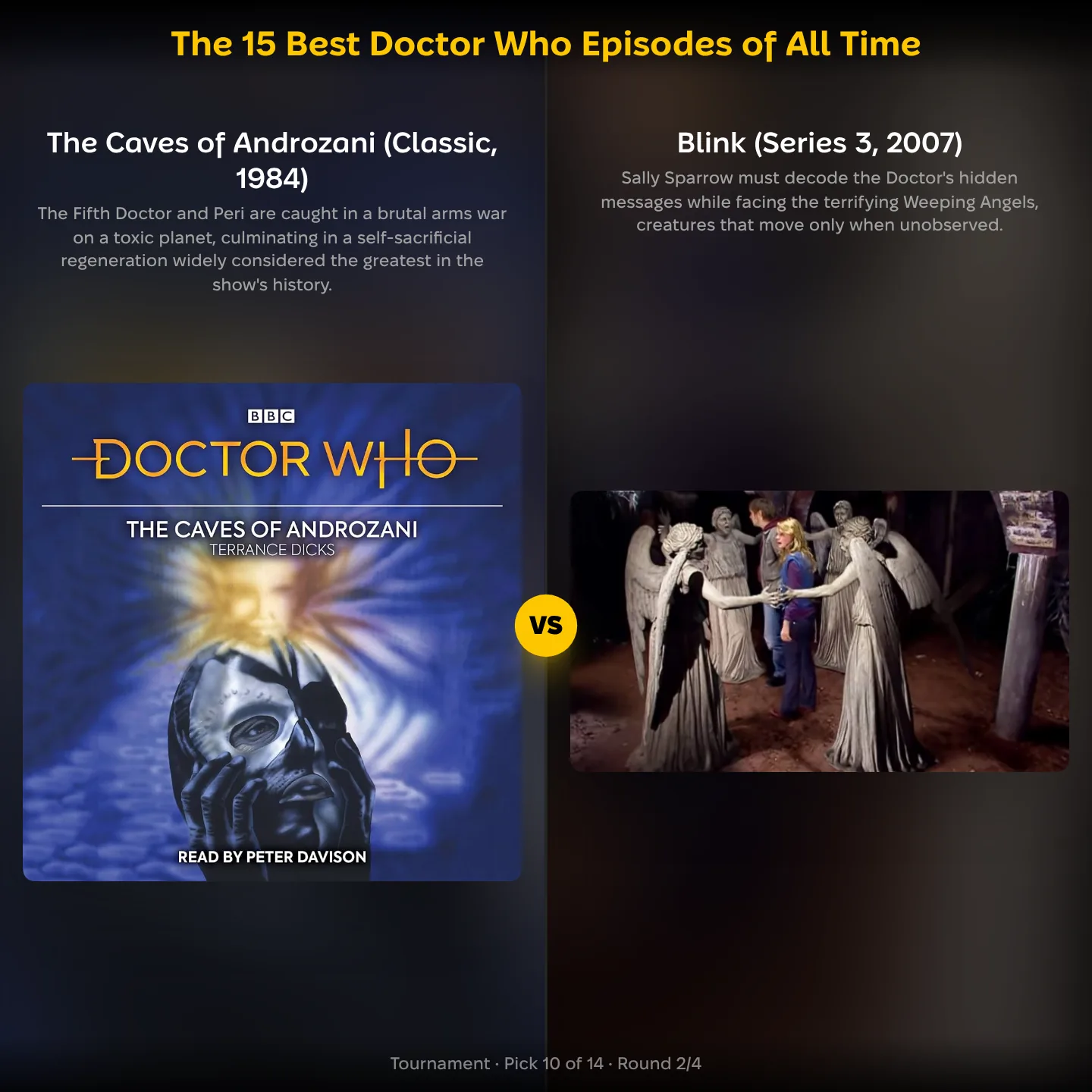
The last ranking asks from inside the show: the best of 15 Doctor Who episodes, from Genesis of the Daleks in 1975 to Heaven Sent in 2015.
Two stories usually fight for first. Doctor Who Magazine readers voted The Caves of Androzani, Peter Davison's 1984 farewell, the best story ever, narrowly ahead of Blink, as Guinness reported in 2013.7
The list itself splits five classic serials to ten from the revival. That ratio is a fair picture of which Doctor Who most viewers alive today grew up with.
A lead who keeps changing
No other series on these lists has replaced its star again and again and kept its name. That is how Doctor Who fits a 1960s ranking and a revivals ranking at once, and why whoever wins the BBC tender inherits a show that can still become almost anything.
All thirteen orders here come out of single matchups, which is how pairwise comparison builds a ranking. If you keep your own order of Doctors, companions or monsters, build a ranking of them and let other fans pick.
More rankings, more angles
- Star Trek Among the Greatest Sci-Fi Series of All Time: 16 Lists — Kirk, Picard and the rival franchise
- Is Stranger Things the Best Netflix Show Ever? 15 Lists — Hawkins, synths and the Upside Down
- Game of Thrones: Best TV Show of All Time? 59 Emmys, 15 Lists — HBO's fantasy giant and its finale
Sources
- Explosion Network — Doctor Who Day on 23 November and the 2026 cinema screening of The Satan Pit extended cut: explosionnetwork.com (checked 2026-11-22)
- Variety — BBC cancels the 2026 Christmas special, puts Doctor Who out to competitive tender; Russell T Davies and Bad Wolf exit (11 June 2026): variety.com (checked 2026-11-22)
- Guinness World Records — Most successful sci-fi TV show: guinnessworldrecords.com (checked 2026-11-22)
- Guinness World Records — Most consecutive sci-fi TV episodes: 694 episodes across 26 seasons, 23 November 1963 to 6 December 1989: guinnessworldrecords.com (checked 2026-11-22)
- Guinness World Records — The Day of the Doctor sets the record for the largest simulcast of a TV drama, 94 countries (2013): guinnessworldrecords.com (checked 2026-11-22)
- University of Manchester — Delia Derbyshire, who created the original Doctor Who theme, and her tape archive: manchester.ac.uk (checked 2026-11-22)
- Guinness World Records — Doctor Who 50th anniversary records: Tom Baker's 173 episodes, Matt Smith as the youngest Doctor, The Caves of Androzani voted best story ahead of Blink (2013): guinnessworldrecords.com (checked 2026-11-22)
- The Hugo Awards — 2008 results, Best Dramatic Presentation, Short Form: Doctor Who "Blink", written by Steven Moffat: thehugoawards.org (checked 2026-11-22)