
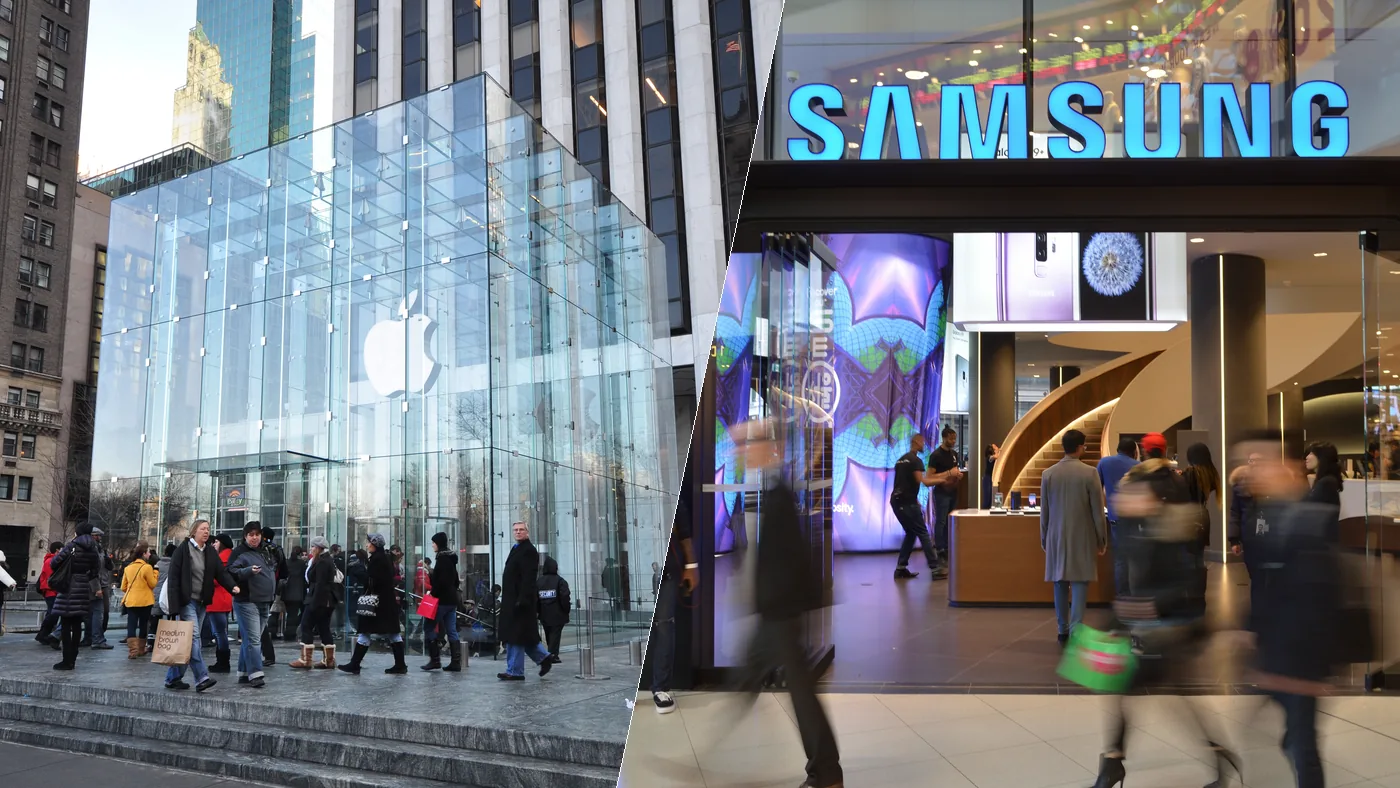
Apple and Samsung have been selling the same categories to the same people for fifteen years, and for seven of those years they were also suing each other. In May 2018 a California jury handed Apple $539 million over three design patents and two utility patents covering things as small as rounded corners and the grid of icons on a home screen.1
They settled. They kept competing. This September the fight is expected to reach the one category Samsung has had entirely to itself: analysts and supply-chain leaks point to Apple's first folding iPhone, priced north of $2,000, though Apple has announced no such product.2
Today Samsung ships more phones and Apple keeps more of the money, and both of them turn up on the same lists about phones, watches, earbuds, laptops and the products everyone would rather forget.
Apple and Samsung sell the same six categories to the same buyers, and each category is a separate fight — down to the folding screen Samsung shipped seven years before Apple got there.
Apple vs Samsung: the brand question everyone answers first
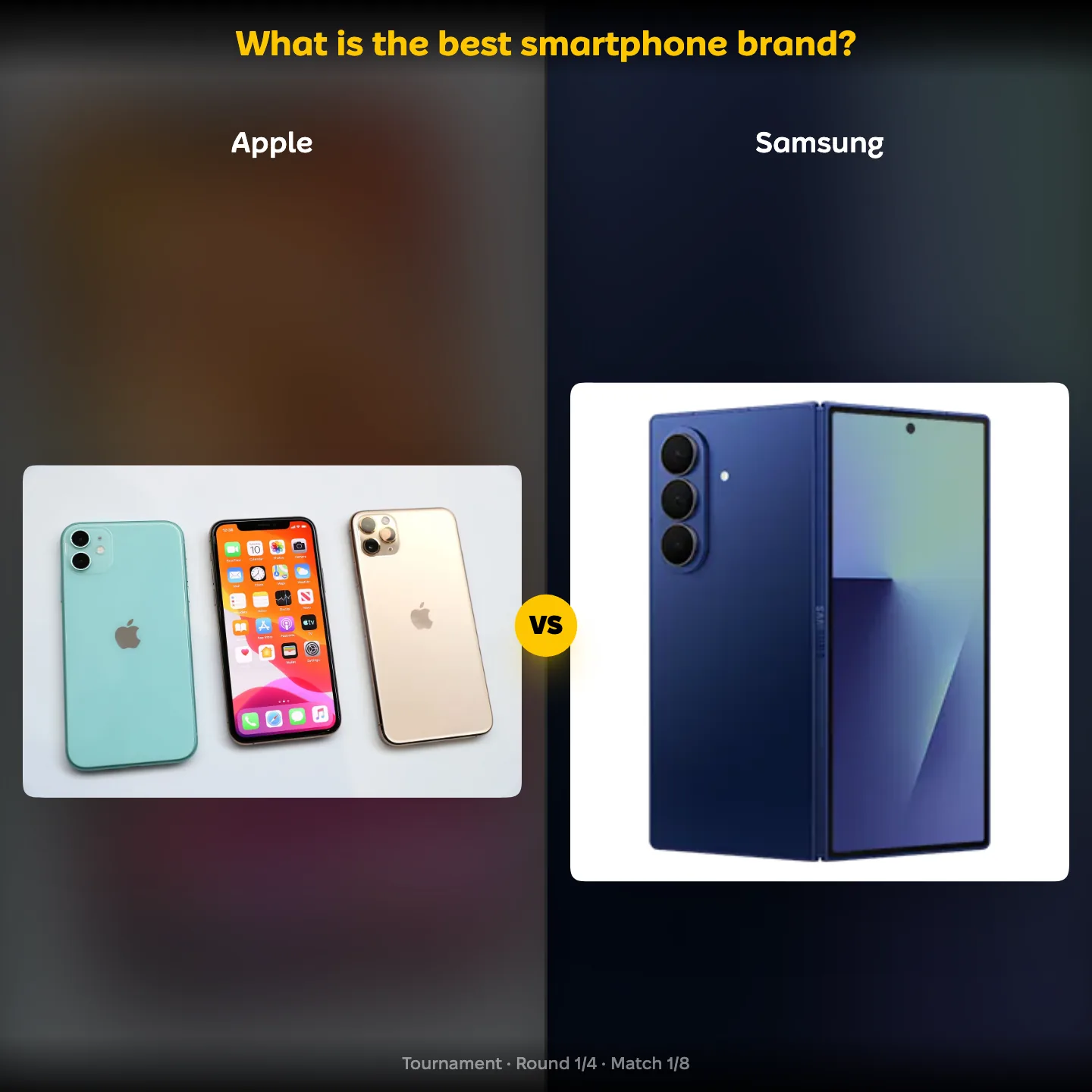
The bluntest version of the matchup asks you to pick a company rather than a product. No model numbers, no spec sheets, just the badge.
Apple's case is that it defines what a phone is supposed to look like, then everyone else follows. That was literally the legal claim in 2011, when Apple's complaint accused Samsung of copying the iPhone, and it is still the shape of the argument in a shop.
Samsung's case is scale and range. In the second quarter of 2026 Samsung took 24% of global smartphone shipments to Apple's 20%, in a market that fell 11% year on year to its weakest second quarter since 2013.3 Samsung sells a phone at almost every price; Apple does not really try to.
The list also holds fourteen other names. Google, Xiaomi, OnePlus, Huawei, Nothing and Nokia are all on it, and any one of them is somebody's daily phone.
iPhone 17 Pro Max, Galaxy S26 Ultra, and this year's field
Narrow the question to phones you can buy right now and the shape changes, because Samsung brings more bodies to the fight.
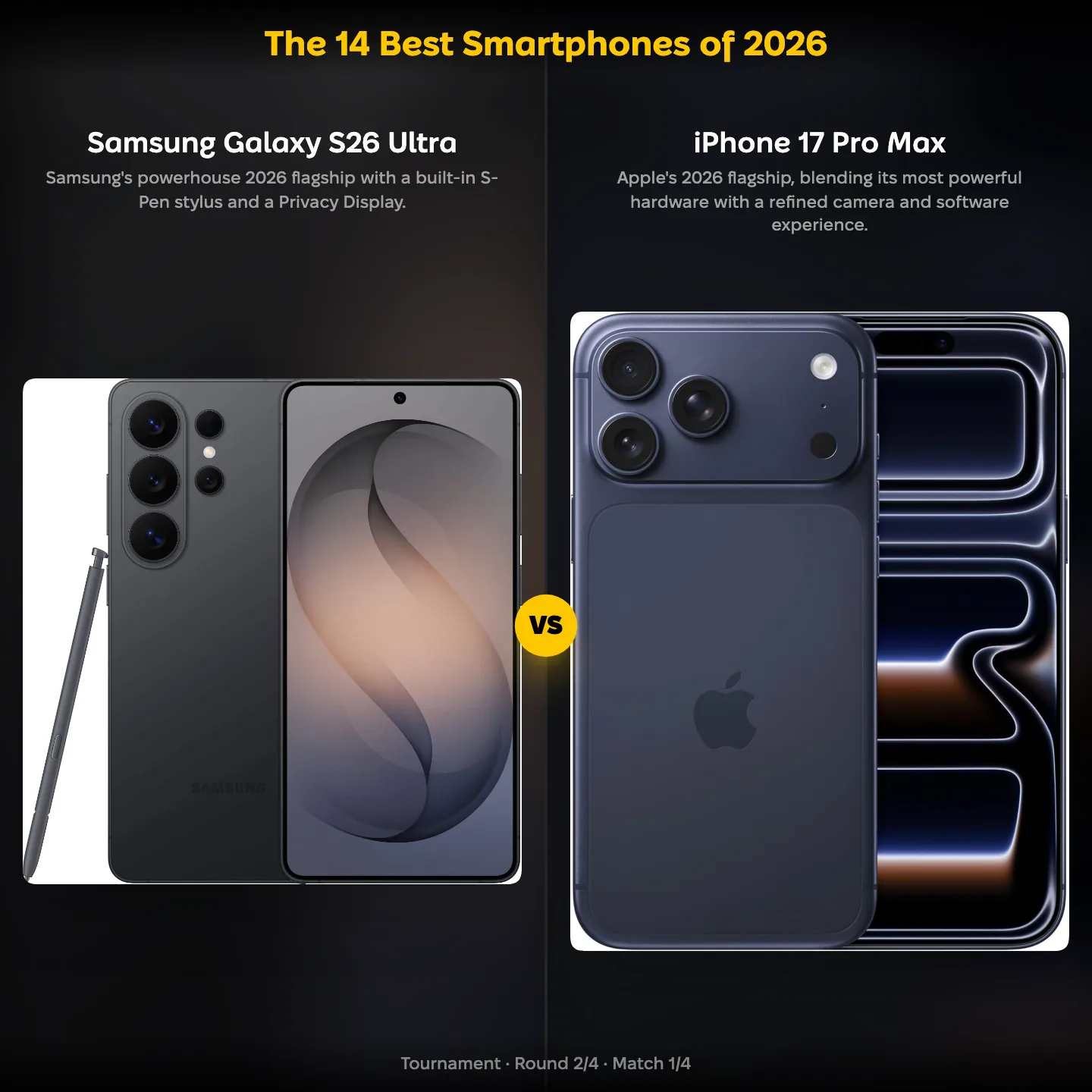
Samsung has four entries in this year's fourteen: the Galaxy S26 Ultra, the standard S26, the Z Fold 7 and the Z Flip 7. Apple has two, the iPhone 17 Pro Max and the iPhone 17.
That is the strategies in miniature. Samsung covers slab, foldable and flip; Apple ships one shape and sells it very hard.
Google's Pixel 10 line takes three slots of its own. The two-horse framing is a habit rather than a fact.
iPhone Fold vs Galaxy Z Fold 7: Apple arrives seven years late
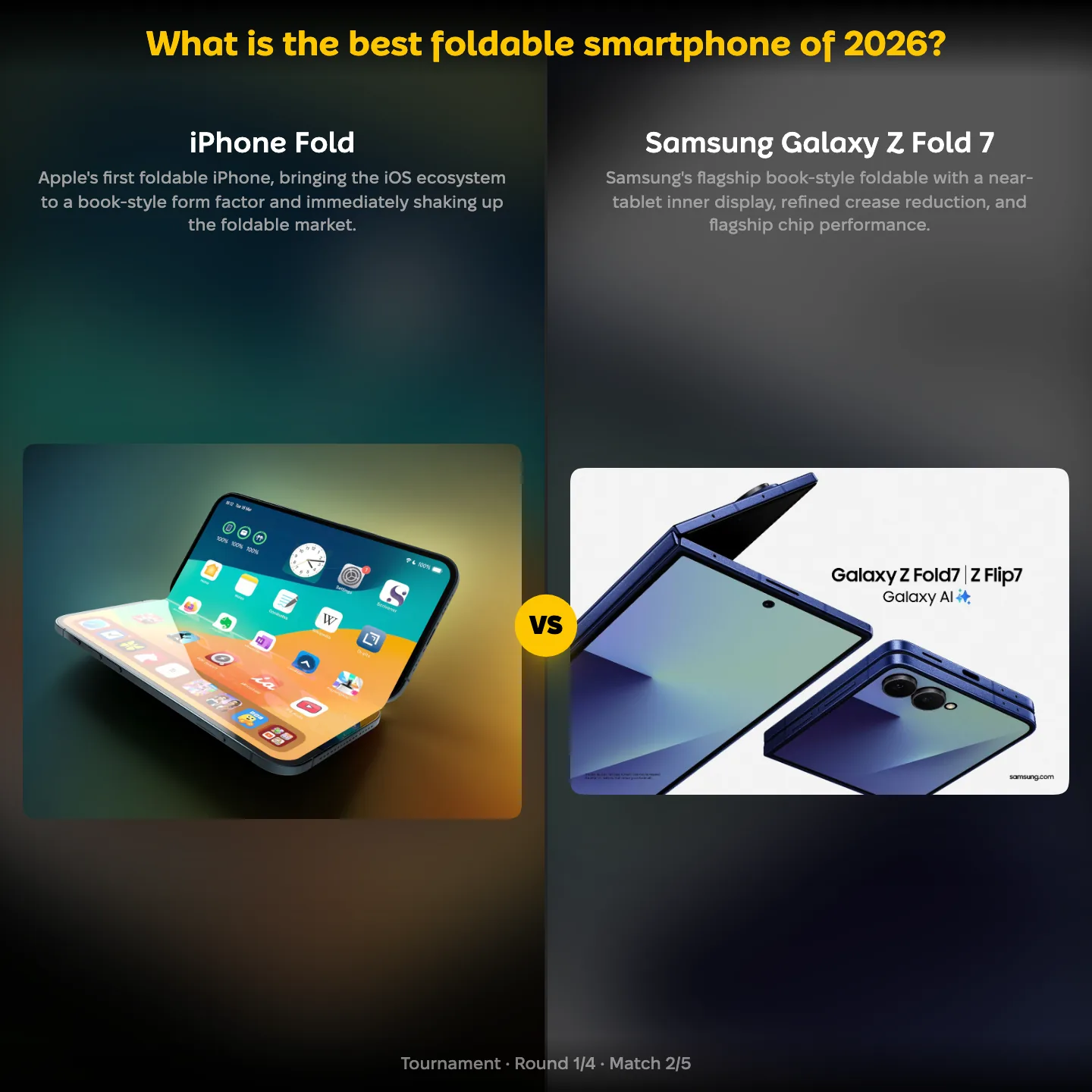
This is the section that only exists in 2026, and it rests on a phone nobody has held. Apple has announced no foldable, confirmed no name and quoted no price; the September date is an analyst consensus, not a keynote.2
Samsung shipped the first mainstream folding phone seven years ago and is on its eighth generation now. The Z Fold 7, the Z Flip 7 and a three-panel TriFold are all in this ranking.
The awkward part for Apple is that arriving late is normally its best trick. It skipped the first MP3 players, the first smartphones and the first tablets, then defined each category on arrival. Foldables are the first time the head start has been this long, and a competitor has spent all of it fixing hinges.
Honor, Motorola, OnePlus, Huawei and Google fill out the same ranking. Foldables stopped being a two-company category some time ago.
The Galaxy Fold, 2019: the list Apple is not on
Ask the same question about all time instead of this year and Apple disappears from it completely. There is no Apple entry, because there is no Apple foldable yet.
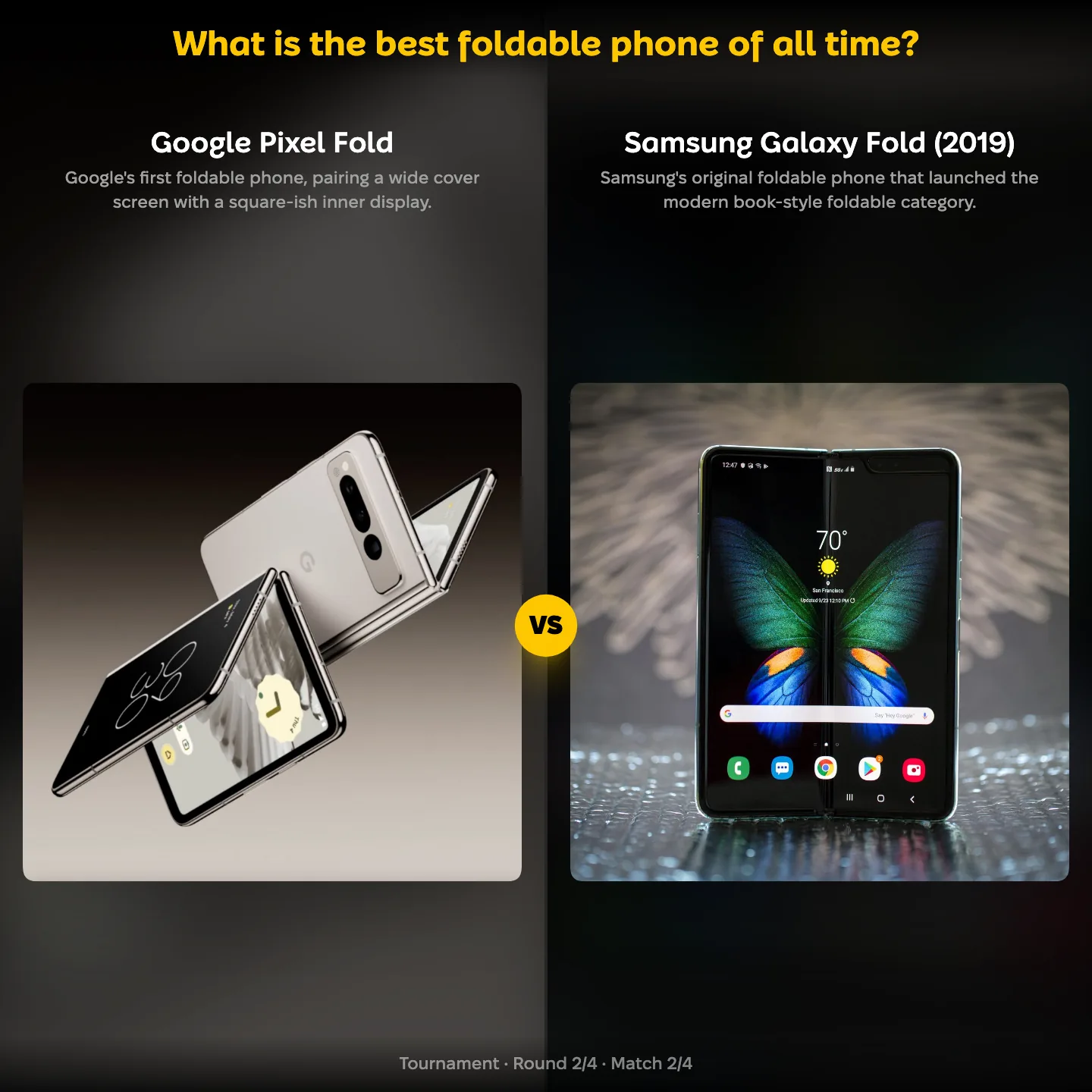
Samsung has four, including the original Galaxy Fold, and that phone's launch is worth remembering before anyone treats the head start as a free win. Samsung cancelled its April 2019 launch events after review units failed within days, several of them because testers peeled off what looked like a screen protector and was actually part of the display.4
Motorola, Huawei, Google, OnePlus, Xiaomi and Oppo fill the rest of the list. Being first cost Samsung a genuinely embarrassing month, and it also bought years of hinge engineering that nobody else has.
Apple Watch vs Galaxy Watch: the wrist is a separate argument
The phone rivalry does not automatically transfer to the wrist, though both companies would like it to.
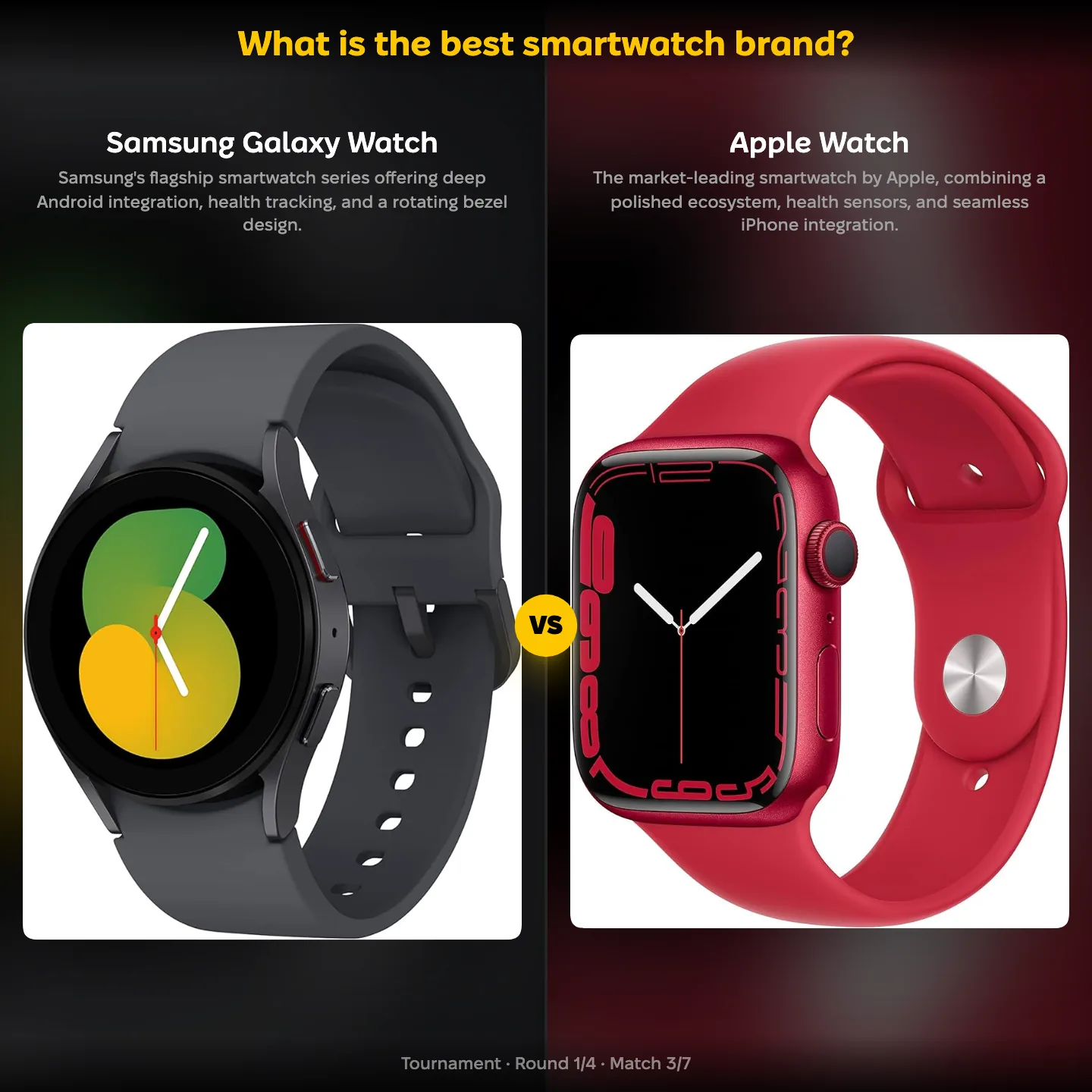
Apple Watch has the advantage of being locked to one phone, which sounds like a weakness and works as a moat. It only pairs with an iPhone, so every iPhone owner shopping for a watch starts with it already half-chosen.
Samsung's Galaxy Watch is the Android side of the same bet, and it plays a wider field: it works with far more phones and competes on price as well as fit.
Garmin, Fitbit, Polar, Suunto, COROS and Withings fill out the ranking. They sell watches to people who care about training data more than notifications, and several of them were making wrist computers before either of these two turned up.
Ultra against Ultra: the watches at the top of both ranges
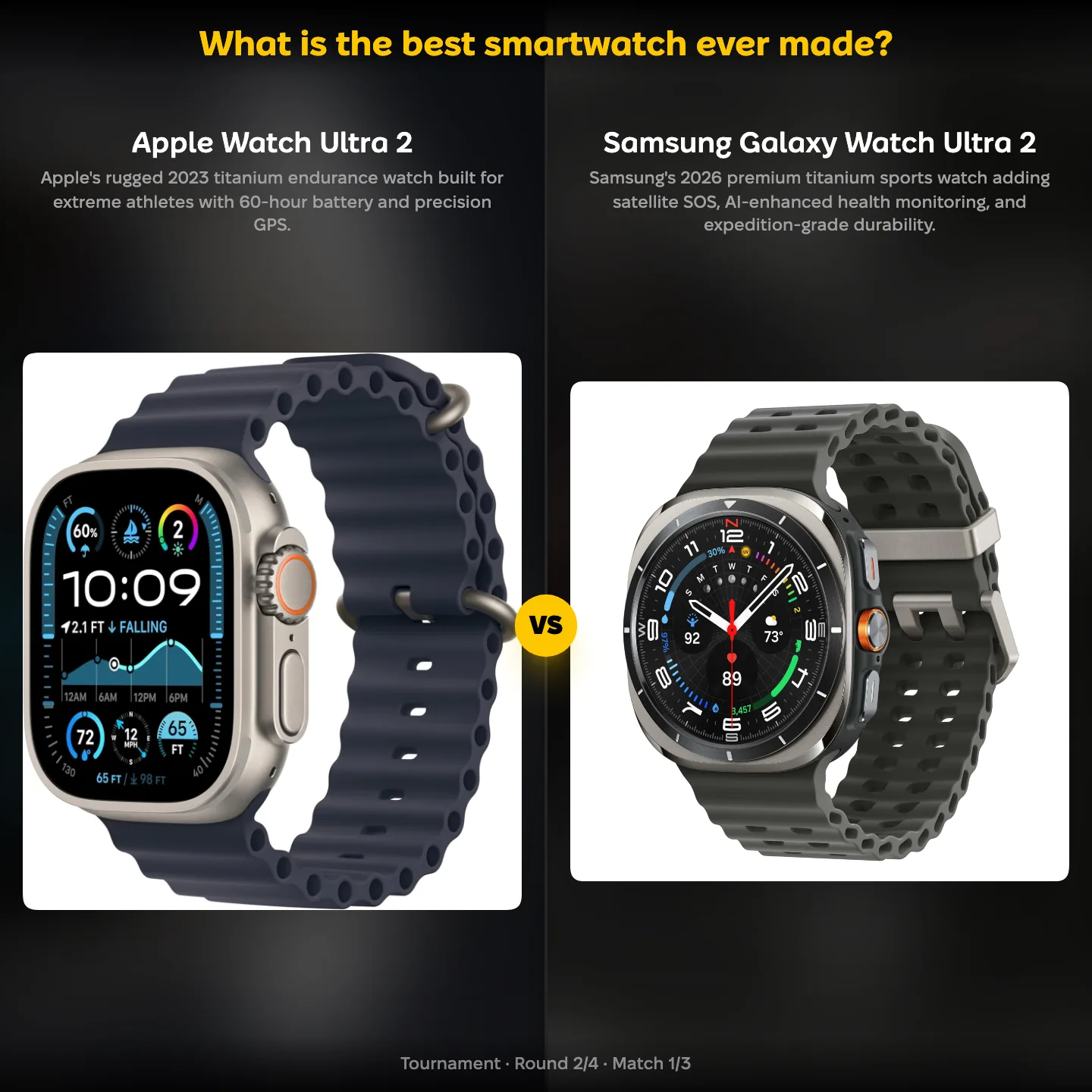
Both companies now sell a big, rugged, expensive watch with "Ultra" in the name, which tells you how closely they watch each other.
Apple has three models on this list, Samsung has three, and the naming convergence is not subtle: Apple Watch Ultra 2 against Galaxy Watch Ultra 2.
Garmin's Fenix 8 is in the same ranking and has a much longer claim to the rugged end of the category.
AirPods Pro 2 vs Galaxy Buds 2 Pro: the category Apple defined
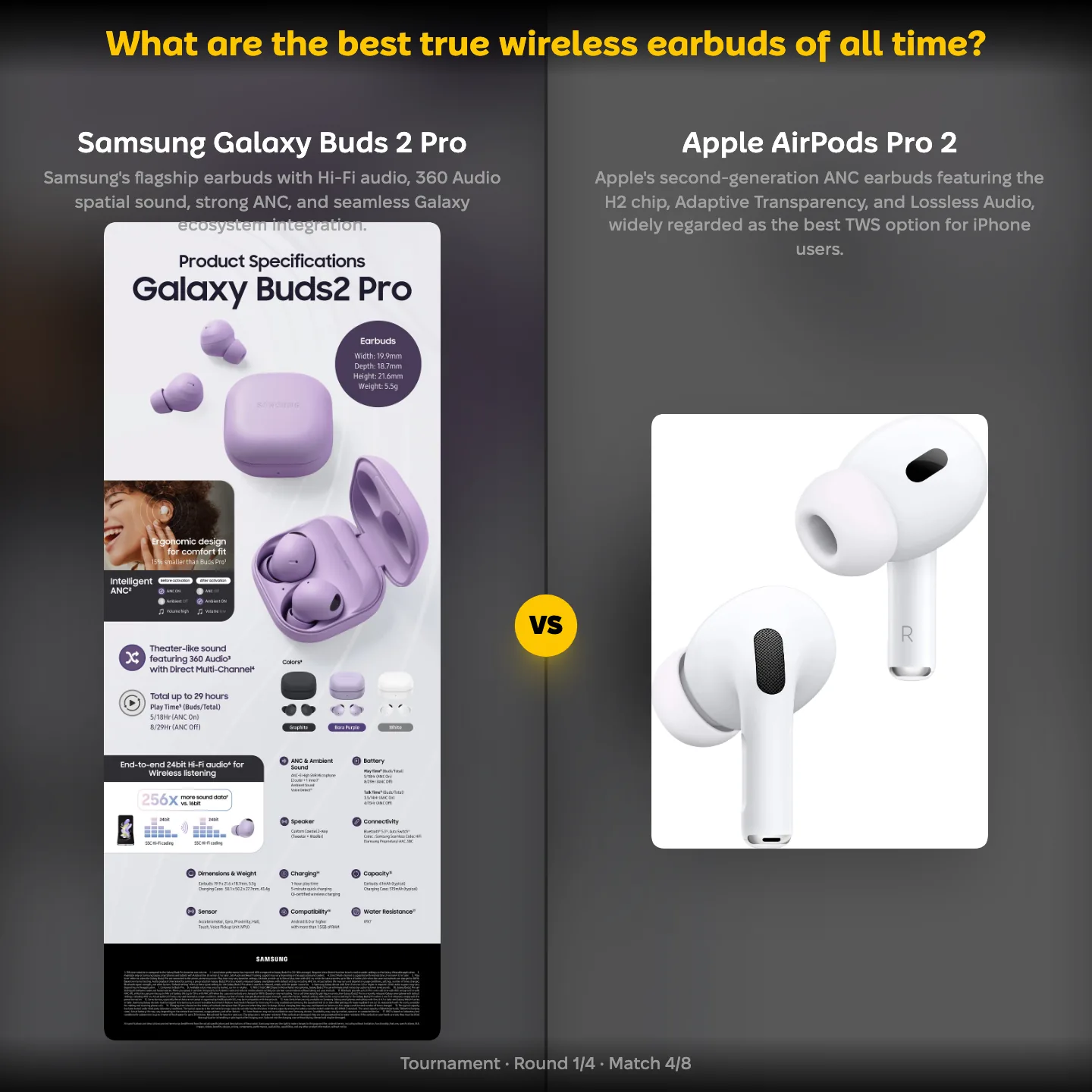
Apple did not invent wireless earbuds. It did make everyone else's look like an accessory, and AirPods became the default answer for anyone with an iPhone.
Samsung's Galaxy Buds are the same idea aimed at the same customer from the other side of the phone divide, and they arrive with the same trick: pair instantly with the phone you already own.
The rest of this list is where it gets interesting for both of them. Sony, Bose, Sennheiser, Jabra, Technics and Nothing are all here, and the audio specialists have been tuning drivers for decades longer than either phone company.
One pair each, in a category with sixteen entries, is a fair summary of how much of this fight is about ecosystems rather than sound.
Sony and Bose: the audio list where neither Apple nor Samsung leads
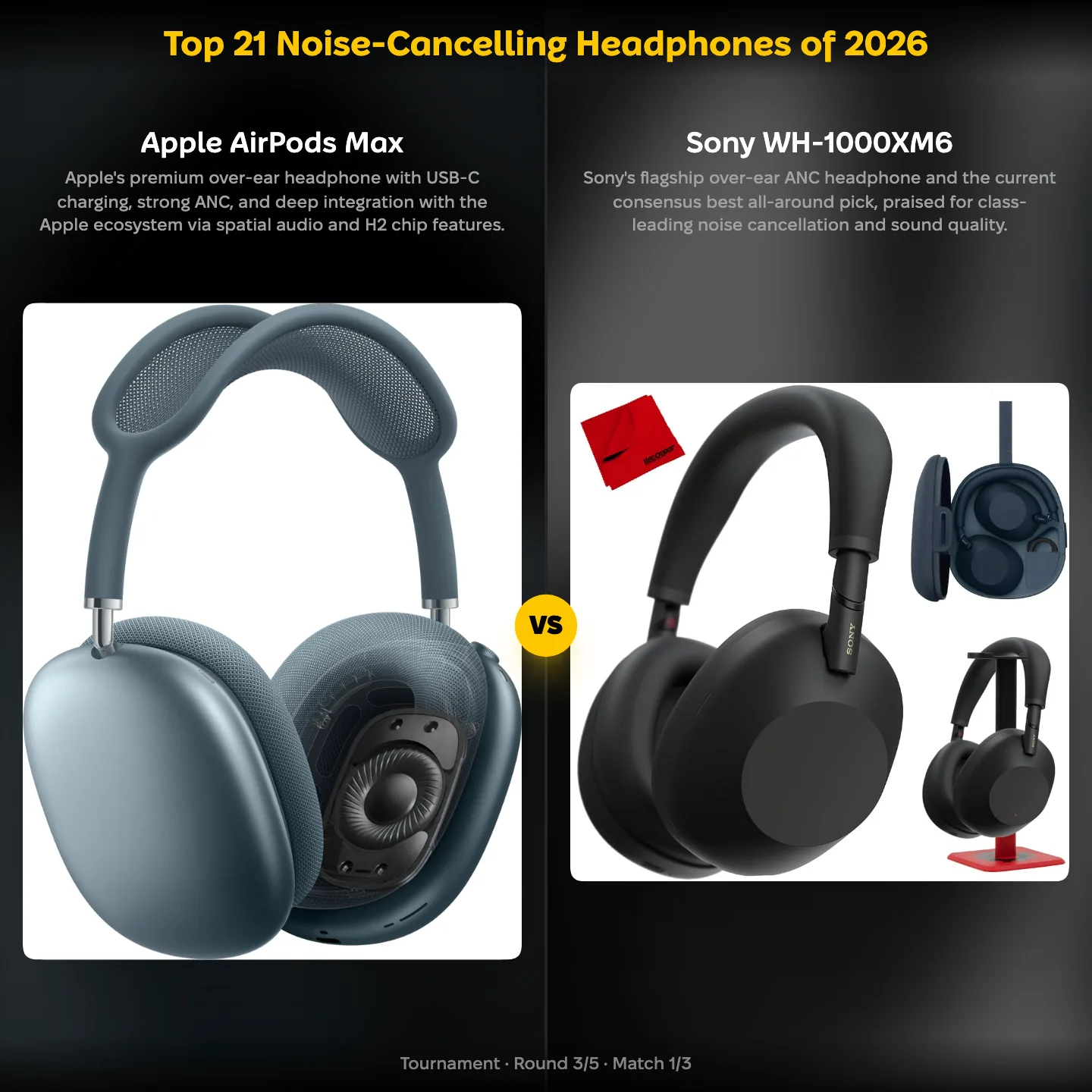
Twenty-one entries, and the phone companies are guests.
Apple has AirPods Max and AirPods Pro 3 here; Samsung has the Galaxy Buds3 Pro. Everything around them belongs to companies that only make audio: Sony, Bose, Sennheiser, Bang & Olufsen, Focal, Bowers & Wilkins.
This is the section where the whole framing of the article stops working, and that is exactly why it is in it.
Garmin and Fitbit got to fitness tracking first
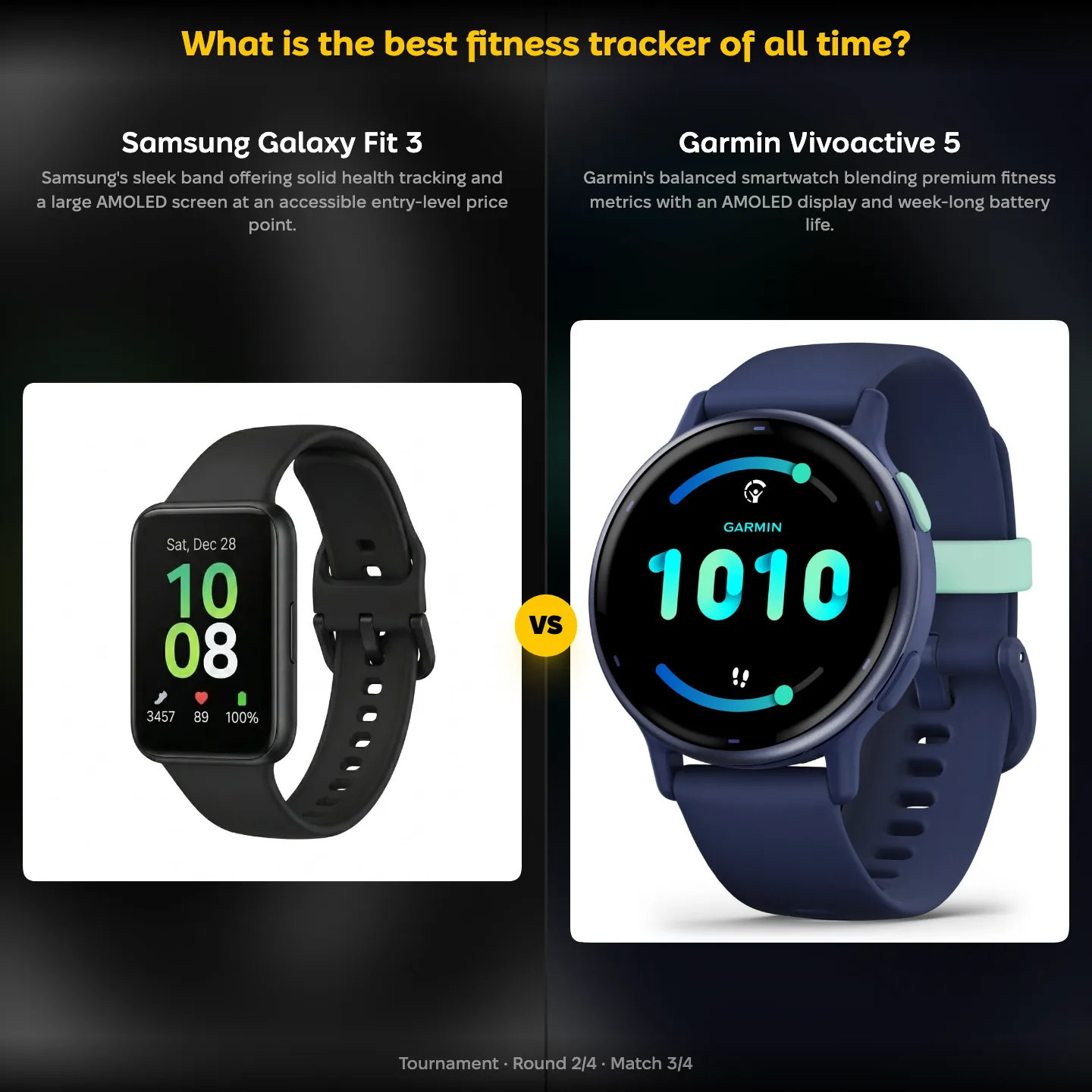
Fitness trackers are older than either the Apple Watch or the Galaxy Watch, and the list shows it.
Apple brings the Watch Series 10 and the Watch Ultra 2. Samsung brings the Galaxy Fit 3, a cheap band rather than a watch, which is a different product answering a different budget.
Garmin has four entries. Fitbit has four. Oura and Whoop, which do not make screens at all, are here too.
MacBook vs Samsung's laptops: same two names, very different weight
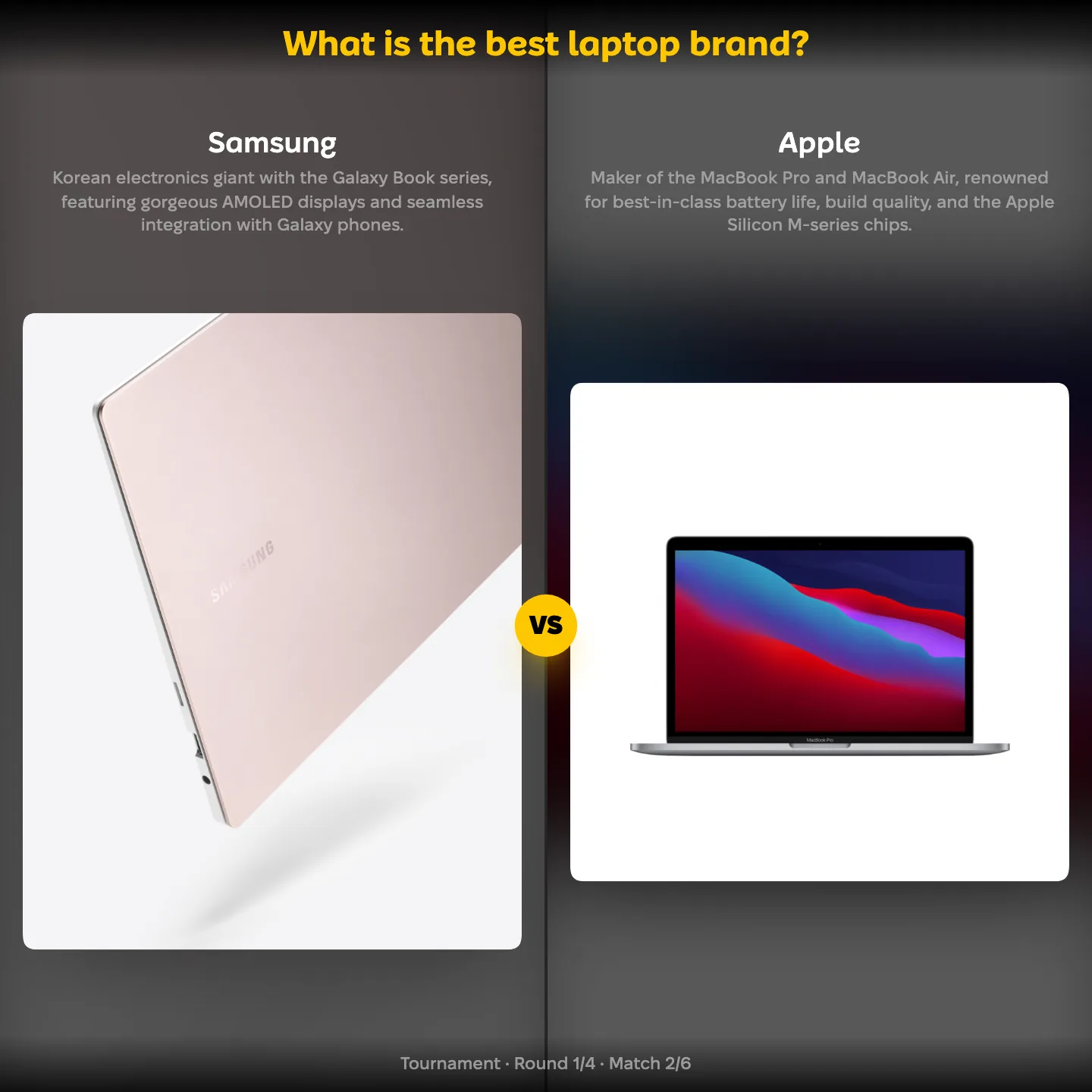
Both companies make laptops. Only one of them is known for it.
Apple's laptop business is a defining part of what the company is, and the MacBook Air is the machine most people picture when they hear "laptop" and "Apple" in the same sentence.
Samsung's Galaxy Book exists, sells, and is nobody's first association with the brand. Samsung is a display and memory giant whose components sit inside its rivals' laptops, including some of Apple's. That is a quieter kind of presence than a badge on a lid.
Lenovo, Dell, HP, ASUS and Microsoft are all here too, and in laptops those are the volume names rather than either of ours.
Apple Intelligence vs ChatGPT: the list Samsung is missing from
Software flips the matchup around. Apple is on this ranking and Samsung is not.
Apple Intelligence is here as the on-device assistant built into the iPhone, iPad and Mac. Samsung's Galaxy AI, despite shipping on every recent Galaxy, did not make the list at all.
Neither absence nor presence helps much, because the names that own this category are not phone makers. ChatGPT, Claude, Gemini, Copilot, Perplexity, Grok and DeepSeek are the assistants people actually go looking for, and Apple's entry is the one bolted onto hardware you bought for other reasons.
Apple is on the ranking. Nobody opens it looking for Apple.
The Galaxy Note 7 and AirPower: the ranking neither company wants
The other thirteen rankings ask who is good at something. This one asks who failed hardest, and both companies qualify more than once.
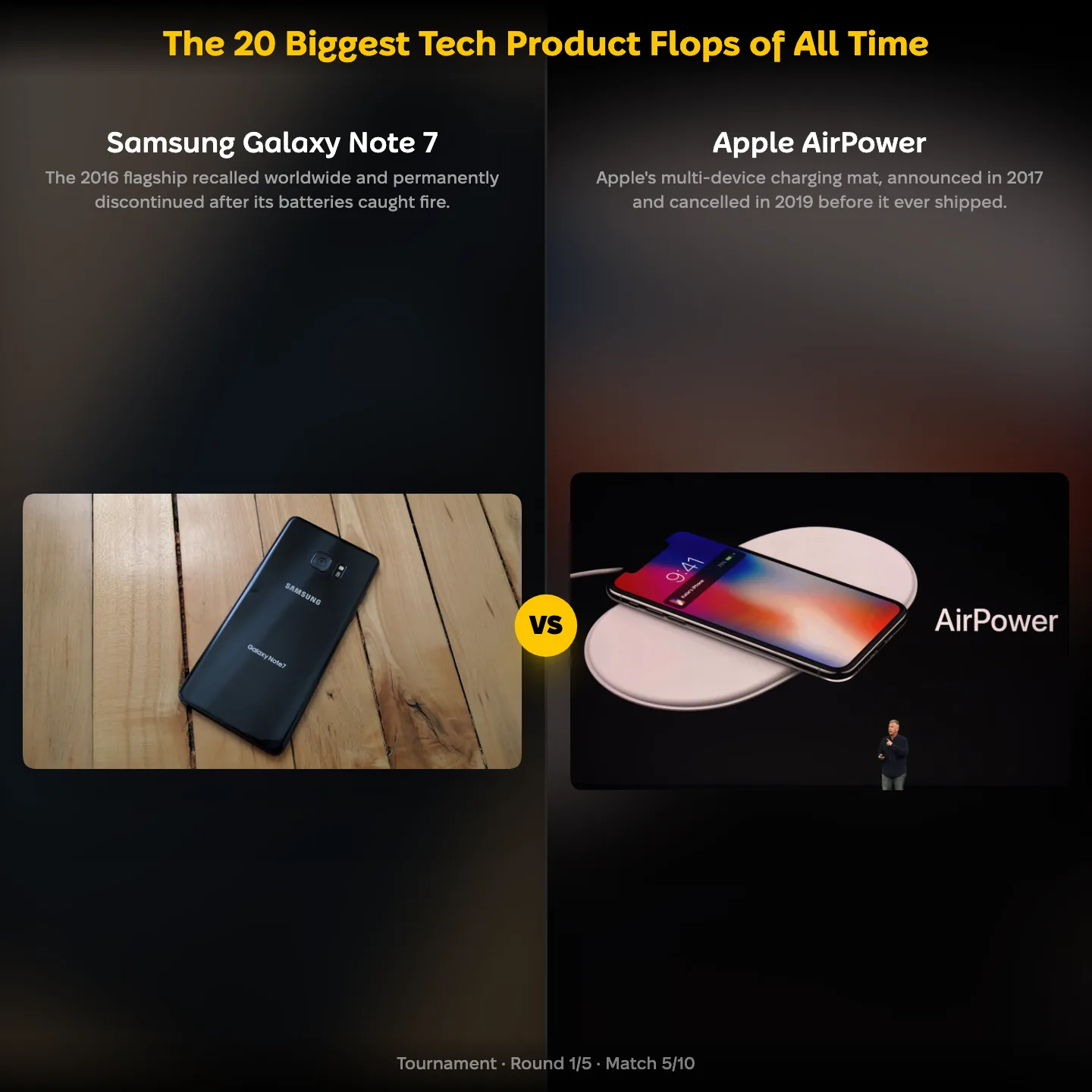
Samsung's Galaxy Note 7 is the worst hardware failure in modern phone history. US regulators recalled about a million units on 15 September 2016 after 92 reports of batteries overheating, including 26 burns and 55 reports of property damage, some of them fires in cars and a garage.5 Samsung stopped production entirely a few weeks later.
Apple's AirPower never made it that far, because it never shipped. Announced in September 2017 as a mat that would charge an iPhone, a Watch and AirPods at once, it was killed eighteen months later in a statement from hardware chief Dan Riccio: "After much effort, we've concluded AirPower will not achieve our high standards and we have cancelled the project."6
Apple appears three times on this list, Samsung twice, alongside the Zune, Google Glass, the Fire Phone, Juicero and the Virtual Boy. The 2019 Galaxy Fold sits here too. Going first has a price, and Samsung has paid it twice.
From the Apple II to Vision Pro: Apple against itself
Take Samsung out of the room and Apple still has an argument, this time with its own back catalogue.
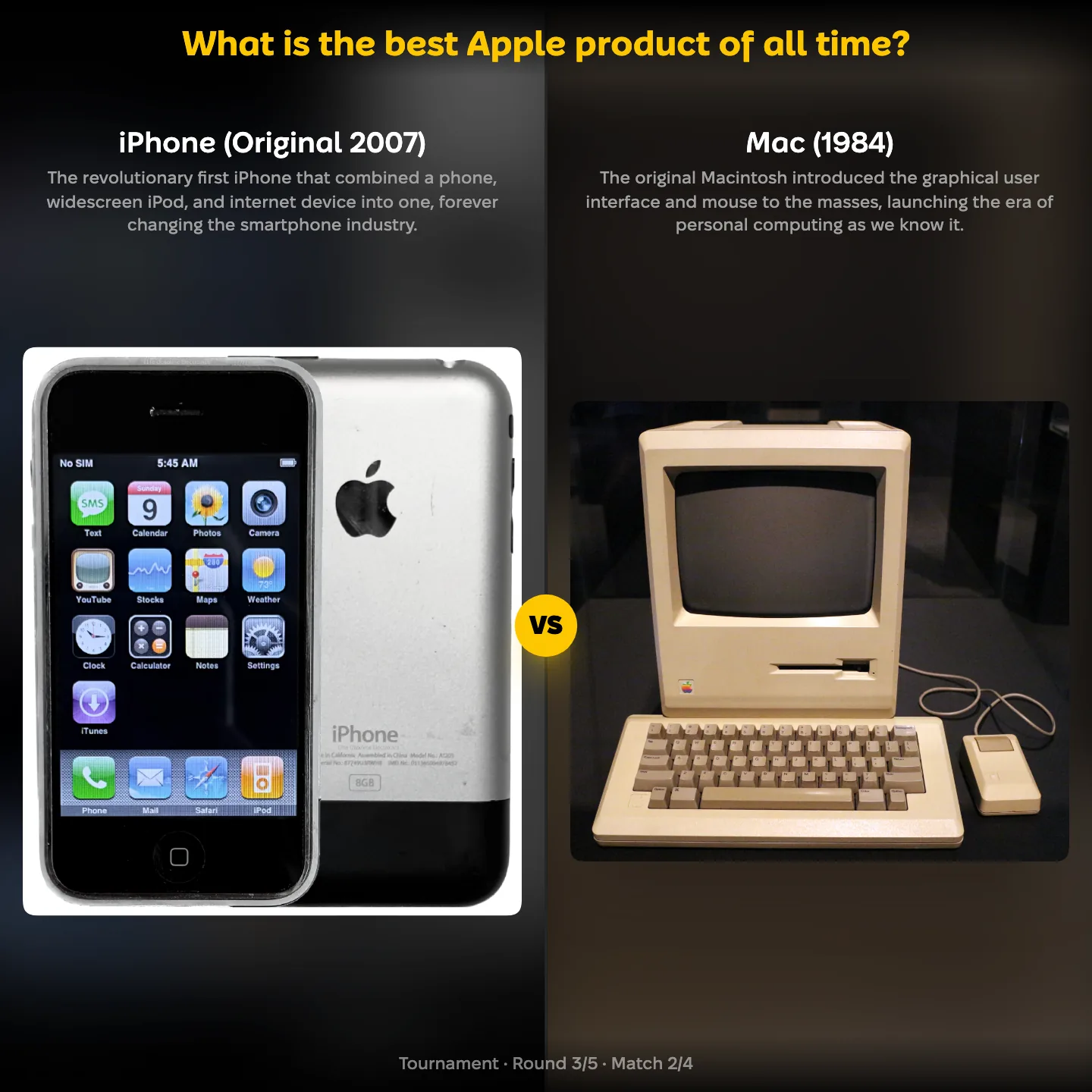
Twenty-six products are on this list, covering close to five decades: the Apple II, the 1984 Mac, the iPod, the iPhone, the iPad, AirPods, the Vision Pro.
The Vision Pro is the interesting entry, because it is the only recent one whose place is contested rather than assumed.
Samsung has no equivalent ranking of its own on this scale, which says something about how the two companies are remembered: Apple's history is told as a sequence of products, Samsung's as a sequence of phones.
From the Galaxy S to the Z Fold: Samsung against itself
Samsung's version of that exercise is narrower and, in its way, more revealing.
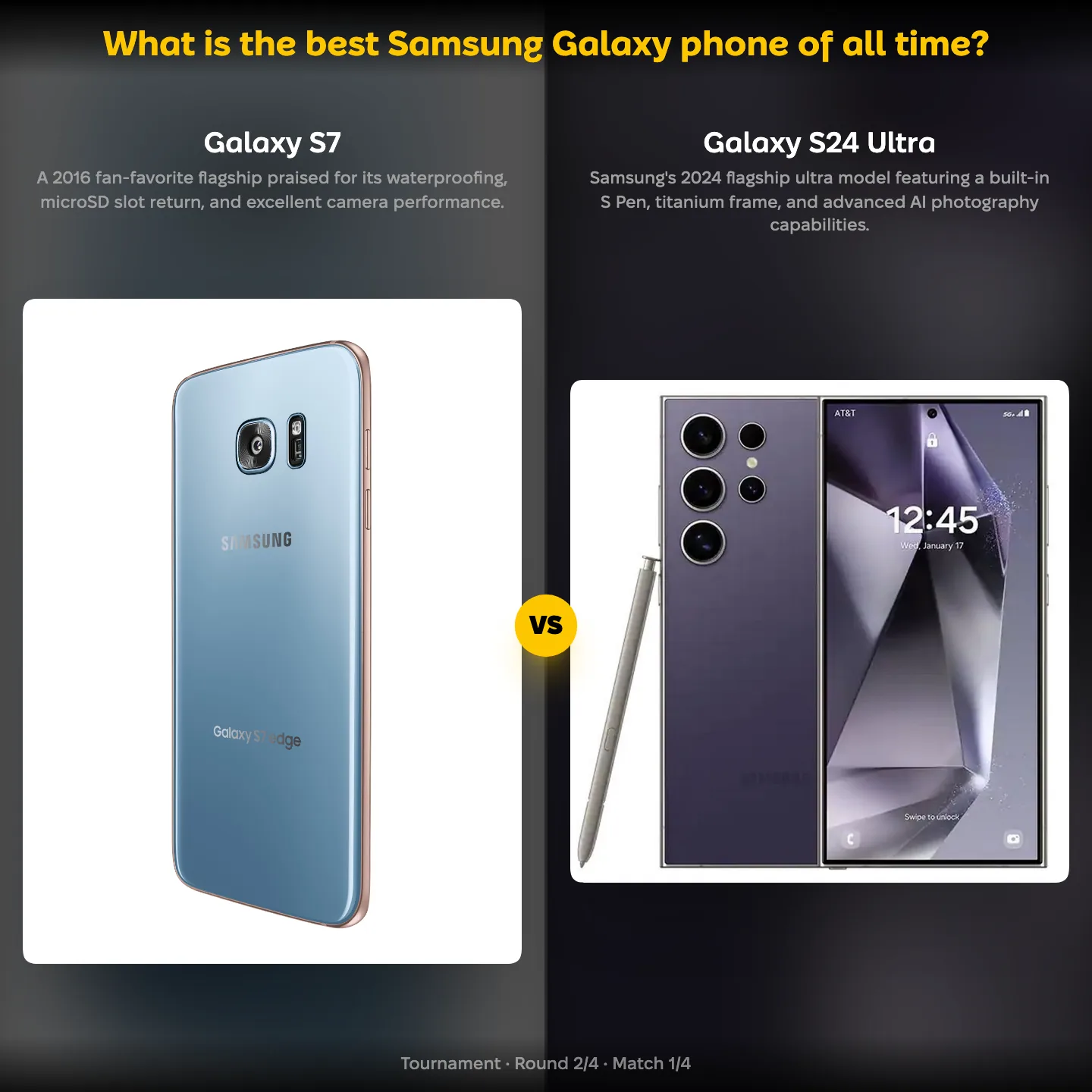
Thirteen Galaxy phones are on this list, running from the Galaxy S6 and S7 through the Note 9 and Note 20 Ultra to the S24 Ultra and the Z Fold 5. Sixteen years of hardware, all of it phones.
The Note line matters here. Samsung spent a decade insisting people wanted a stylus and a bigger screen, was proved right, and then retired the name after the Note 7 recall poisoned it.
Apple is absent, as it should be. The point of putting these two rankings next to each other is that Apple's history is a catalogue and Samsung's is an iteration.
Fourteen categories, fourteen separate fights
Apple and Samsung are not one rivalry. They are a phone rivalry, a watch rivalry, an earbud rivalry and a laptop mismatch, plus a software category where one of them is missing entirely and another where they turn up only as mistakes.
Sony owns the headphones, Garmin owns the training data, and across half of these lists the two biggest names in consumer technology are guests in somebody else's category.
Each of those orders gets built by picking a winner from two names at a time. A category can flip without anything about either company changing.
Own a phone from one camp and earbuds from the other? Start with the category where you switched sides.
More rankings, more angles
- Where Does YouTube Actually Rank? — sixteen categories, sixteen sets of rivals
- Nike vs Adidas: The Swoosh, the Three Stripes, 16 Lists — two logos, sixteen different surfaces
- Google Won Search. It Also Built Glass and Stadia. — the third name in every phone list here
- PlayStation vs Xbox vs Nintendo, Ranked Side by Side — three consoles, one shelf
Sources
- GSMArena — 2018 retrial jury award of $539 million to Apple over three design and two utility patents: gsmarena.com (checked 2026-08-02)
- MacRumors — foldable iPhone roundup: September 2026 expected launch, $2,000+ rumoured pricing, nothing confirmed by Apple: macrumors.com (checked 2026-08-02)
- Android Authority, reporting Counterpoint Research — Q2 2026 global smartphone shipments: Samsung 24%, Apple 20%, market down 11% YoY to the weakest Q2 since 2013: androidauthority.com (checked 2026-08-02)
- GSMArena — Samsung postpones the April 2019 Galaxy Fold launch events after review units fail: gsmarena.com (checked 2026-08-02)
- US Consumer Product Safety Commission recall record (via Justia) — Galaxy Note7 recall of 15 September 2016, about 1 million US units, 92 overheating reports, 26 burns, 55 property-damage reports: recalls.justia.com (checked 2026-08-02)
- TechCrunch — Apple cancels AirPower on 29 March 2019, with the full statement from Dan Riccio: techcrunch.com (checked 2026-08-02)