Championship-winning wedges, ground-effect wizardry and lean years under famous liveries. Pick the stretch when this team mattered most.
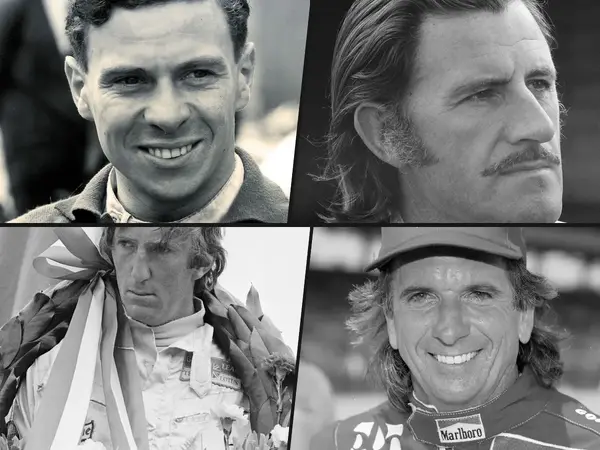
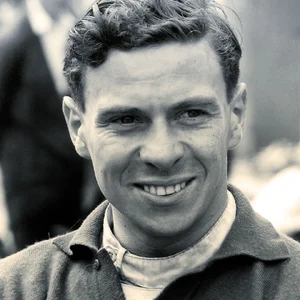
 1Jim Clark Era (1962–1965)The monocoque Lotus 25 and 33 carried Jim Clark to world titles in 1963 and 1965 and redefined chassis design.1000pts
 2Ayrton Senna Era (1985–1987)The black-and-gold Renault turbo cars gave Ayrton Senna his first Grand Prix wins and a run of pole positions.733pts
 3Lotus 72 Era (1970–1975)The wedge-shaped Lotus 72 won titles with Jochen Rindt and Emerson Fittipaldi and stayed competitive for six seasons.732pts
 4Ground-Effect Era (1977–1978)The Lotus 78 and 79 wing cars dominated 1978 and won Mario Andretti the last drivers' title for Team Lotus.599pts
 5Early Years (1958–1961)Colin Chapman's first Formula 1 seasons, when the rear-engined Lotus 18 gave the team its first Grand Prix wins.0pts
 6De Angelis–Mansell Years (1979–1984)A turbulent stretch of twin-chassis experiments and Chapman's death, lit up by Elio de Angelis's 1982 Austrian win.0pts
 7Final Years (1988–1994)The last chapter of the original Team Lotus, from Nelson Piquet's podiums to a young Mika Häkkinen before the 1994 collapse.0pts
 8Lotus F1 Team (2012–2015)The rebranded Enstone team whose black-and-gold cars won with Kimi Räikkönen in Abu Dhabi 2012 and Australia 2013.0pts
 9Lotus 49 Era (1967–1969)The Cosworth DFV-powered Lotus 49 won on debut and took Graham Hill to the 1968 drivers' championship.0pts
Photo credits
- Ayrton Senna Era (1985–1987) — BiTurbo228, CC BY 2.0
- Lotus 72 Era (1970–1975) — Lothar Spurzem, CC BY-SA 3.0
- Ground-Effect Era (1977–1978) — Martin Lee from London, UK, CC BY-SA 2.0
- Early Years (1958–1961) — John Chapman (Pyrope), CC BY-SA 3.0
- De Angelis–Mansell Years (1979–1984) — https://www.flickr.com/photos/95472204@N03/, CC BY 2.0
- Final Years (1988–1994) — Martin Lee from London, UK, CC BY-SA 2.0
- Lotus F1 Team (2012–2015) — Morio, CC BY-SA 3.0
- Lotus 49 Era (1967–1969) — Lothar Spurzem, CC BY-SA 2.0