
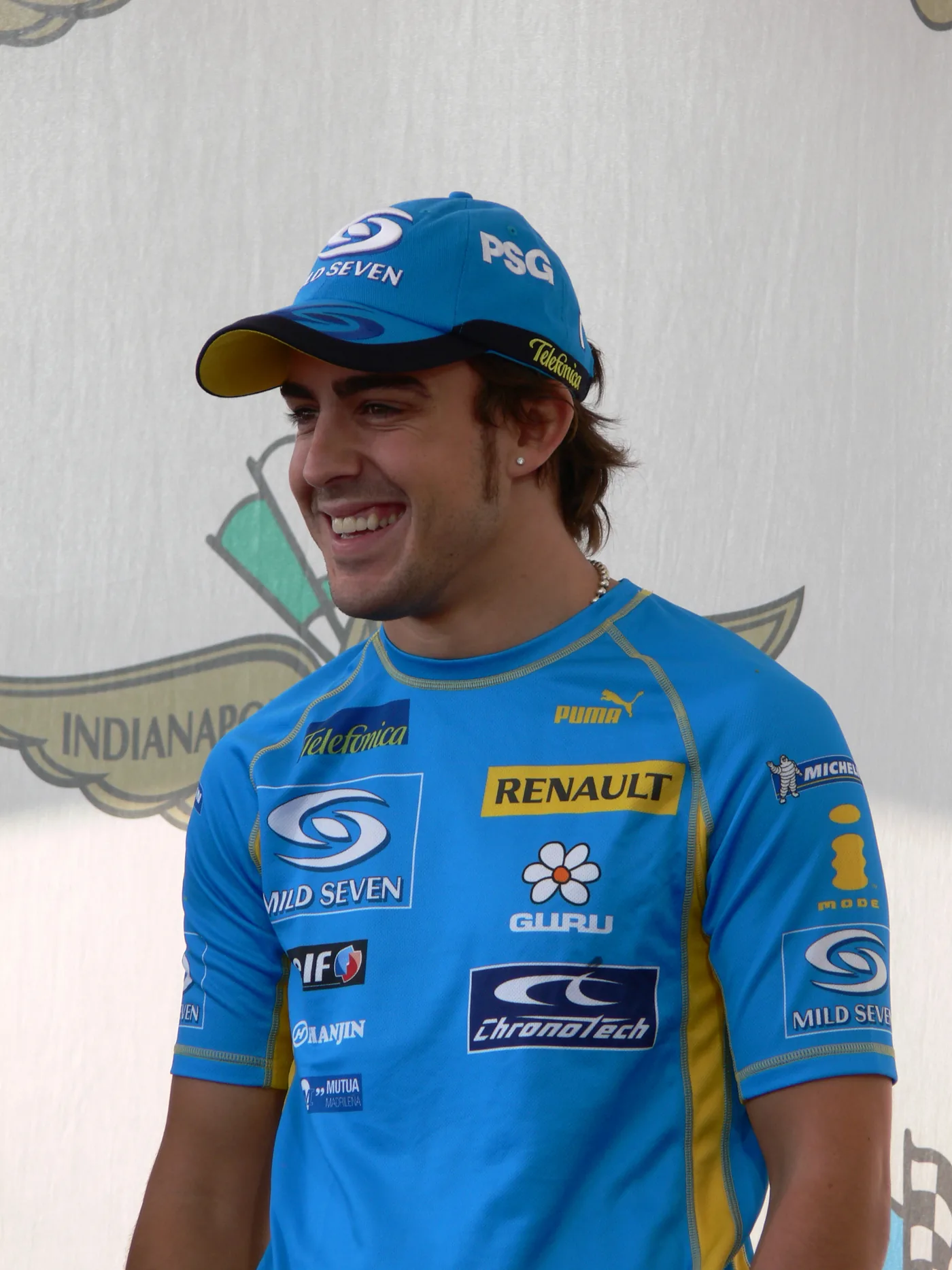
Fernando Alonso has one championship point in the 2026 season. It came from tenth place at Monaco — eleven grands prix have produced nothing else for him, and five of them ended in retirement.1 The same driver has entered 438 grands prix, won 32, stood on 106 podiums and scored 2,394 points.2 Two world championships, both in a Renault. Two overall wins at Le Mans. A Rolex 24 at Daytona, taken in the rain. The fifteen rankings below put all of that into fifteen different rooms, and the room decides which Alonso shows up.
Alonso's best rankings and his worst rest on the same evidence: a very long career spent mostly in cars that could not win.
Alonso, Schumacher and Hamilton on the all-time list
Everyone who has raced since 1950 is eligible here, and the sorting key is almost always championships. Alonso has two, won in 2005 and 2006.
Michael Schumacher and Lewis Hamilton have seven each, and championship count is the first thing an all-time list reaches for.
Duration and breadth are Alonso's counter-evidence. Formula 1's own driver page credits him with 438 grands prix entered, 106 podiums, 22 pole positions and 2,394 points, collected at Minardi, Renault, McLaren, Ferrari, Alpine and Aston Martin.2 He arrived in 2001 and has not left.
One date works against him. Alonso's last win came at the 2013 Spanish Grand Prix,3 and nothing since has been a victory, while Juan Manuel Fangio and Ayrton Senna appear on the same list with far fewer starts and more trophies. Is a list like this ranking drivers, or the machinery they were handed?
The 2000s: the decade Alonso broke Ferrari's grip
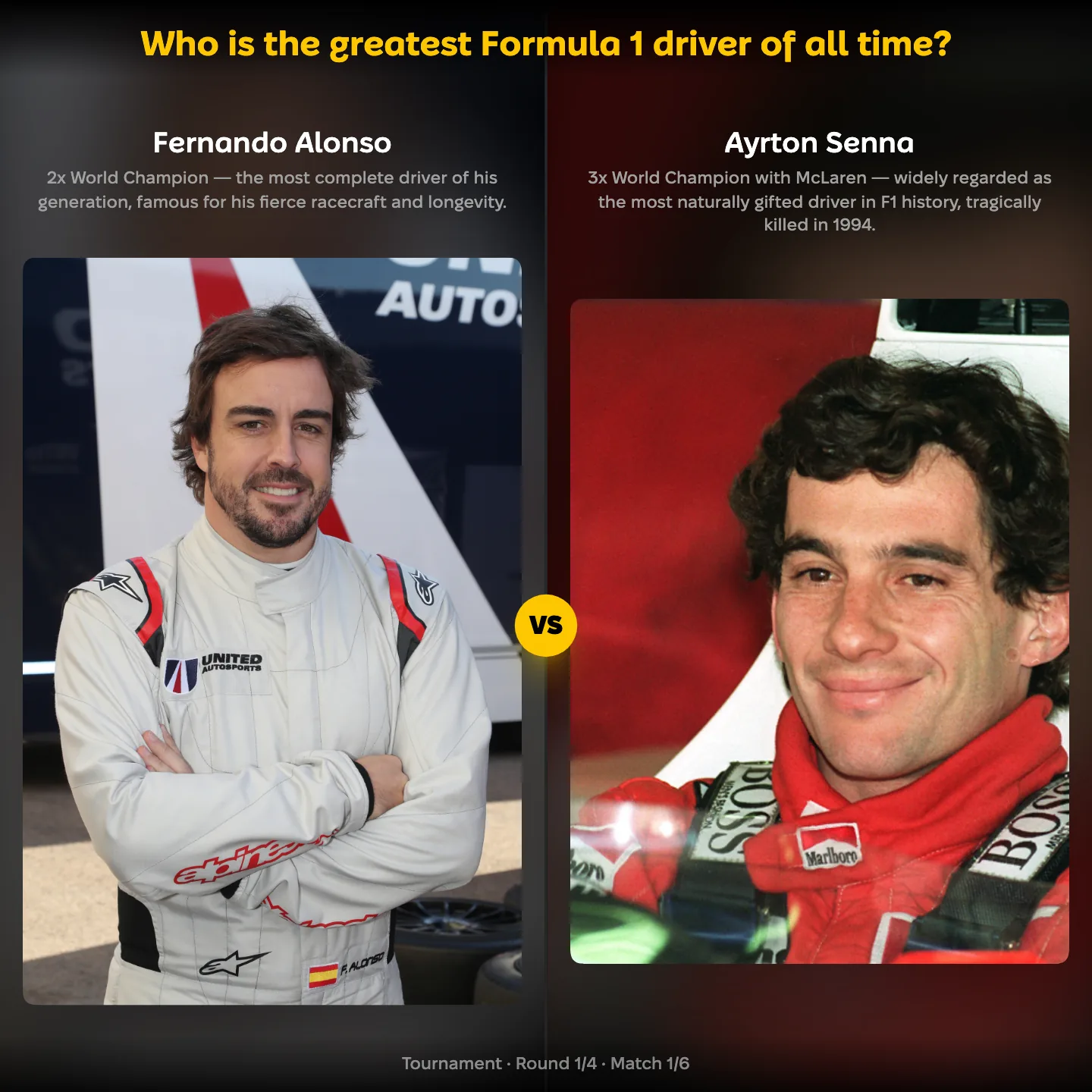
Cut the field down to one decade and Alonso's case gets much easier to state. This ranking covers 2000 to 2009, and his two championships fall in the middle of it.
Ferrari and Michael Schumacher had taken the drivers' title five years running when Alonso ended the streak in 2005, aged 24.3 He repeated it in 2006.
Both titles were settled at Interlagos, a circuit where he never won a race.4 Twice he arrived in São Paulo needing a result rather than a victory, and twice he collected exactly that.
Schumacher, Kimi Räikkönen and Lewis Hamilton are on the same decade list, and on silverware the count still runs against Alonso: five championships for Schumacher inside those ten years, two for the man who stopped him.
Champions ranked: two titles in a room full of multiples
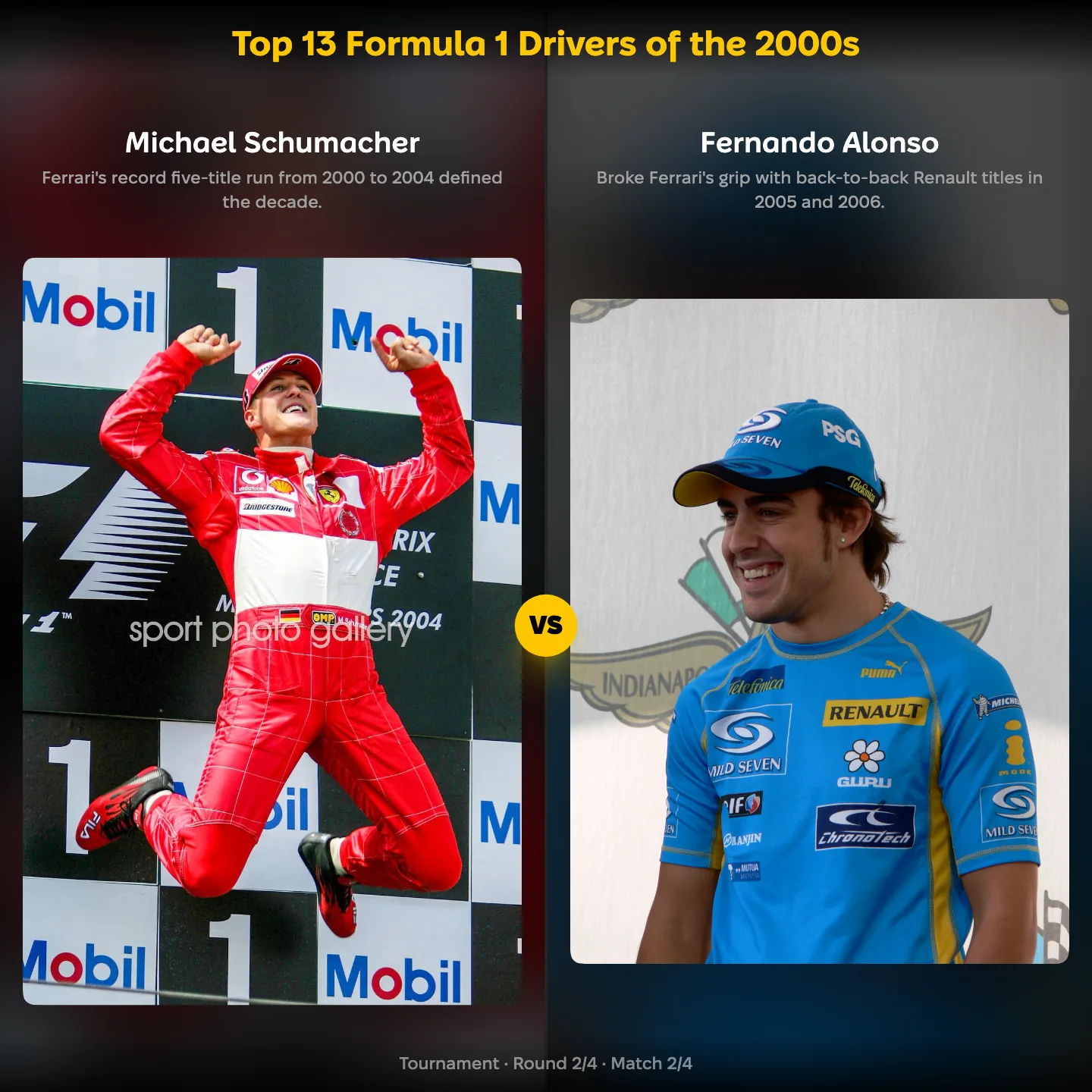
This list throws out every driver who never won a championship, which sounds like it should help Alonso and does the opposite. Among champions only, two is a modest number.
Sebastian Vettel is the sharpest comparison. He won four in a row from 2010, and Alonso was his runner-up in 2012, three points behind.5
Fangio, Alberto Ascari, Jackie Stewart and Niki Lauda keep him company, all of them multiple champions, most of them with fewer seasons in which to do it.
A champions' list ranks results, and results need a car underneath them. Vettel spent his four title years in the quickest one on the grid.
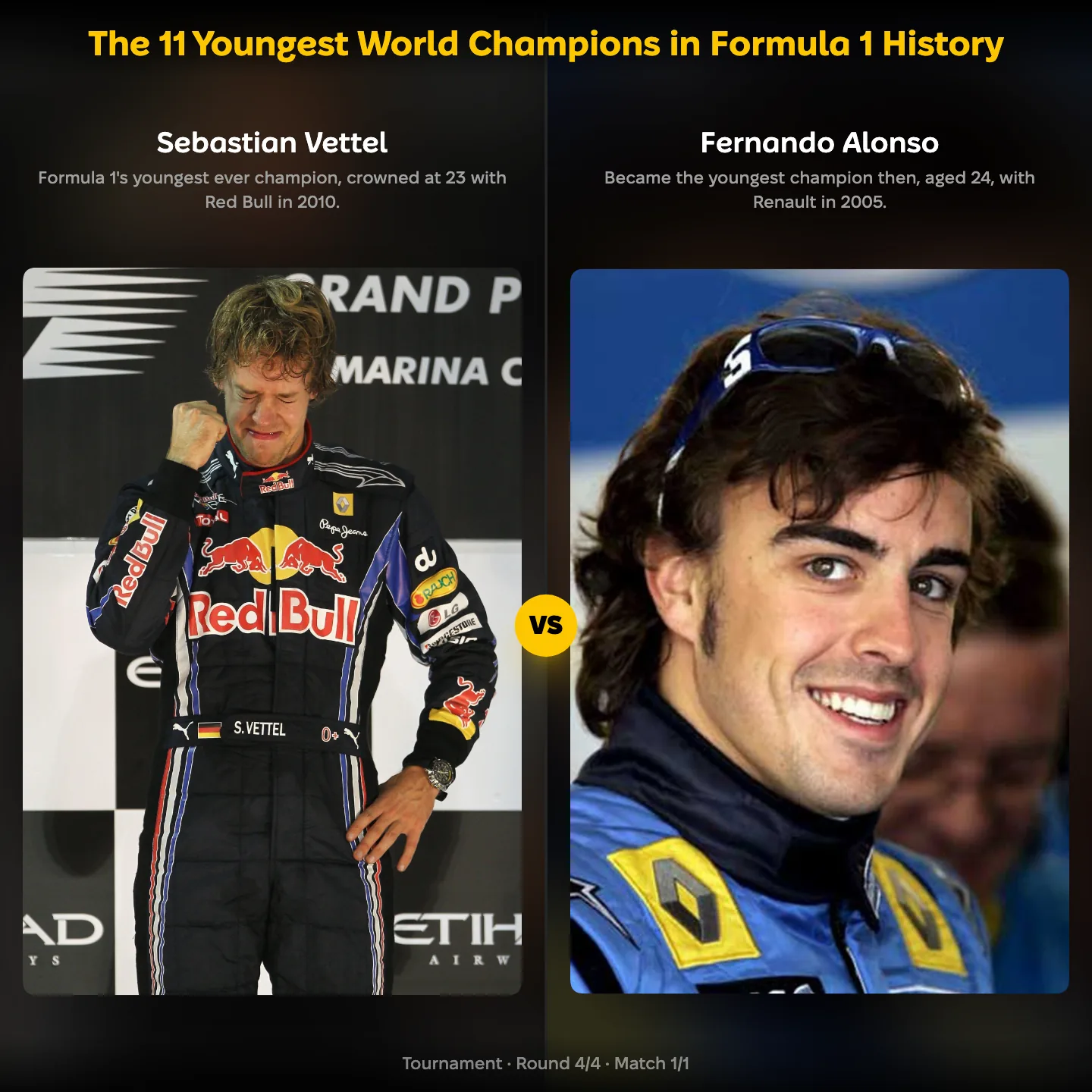
Alonso vs Vettel: the youngest-champion record
Alonso was 24 years, one month and 27 days old when the 2005 championship was settled, younger than any champion before him.3 Lewis Hamilton beat that in 2008, Vettel beat Hamilton in 2010, and the line has been a historical footnote on Alonso's record ever since.
Eleven points short of five titles
This is the ranking with Alonso's strongest claim on it, and the claim is arithmetic. Formula 1's own list of career facts does the sum: eleven more points, spread across his three closest seasons, and he would hold five championships instead of two.4
Eleven points is one third-place finish. The 2012 title went to Vettel on 281 against Alonso's 278, settled at the last race in Brazil.5
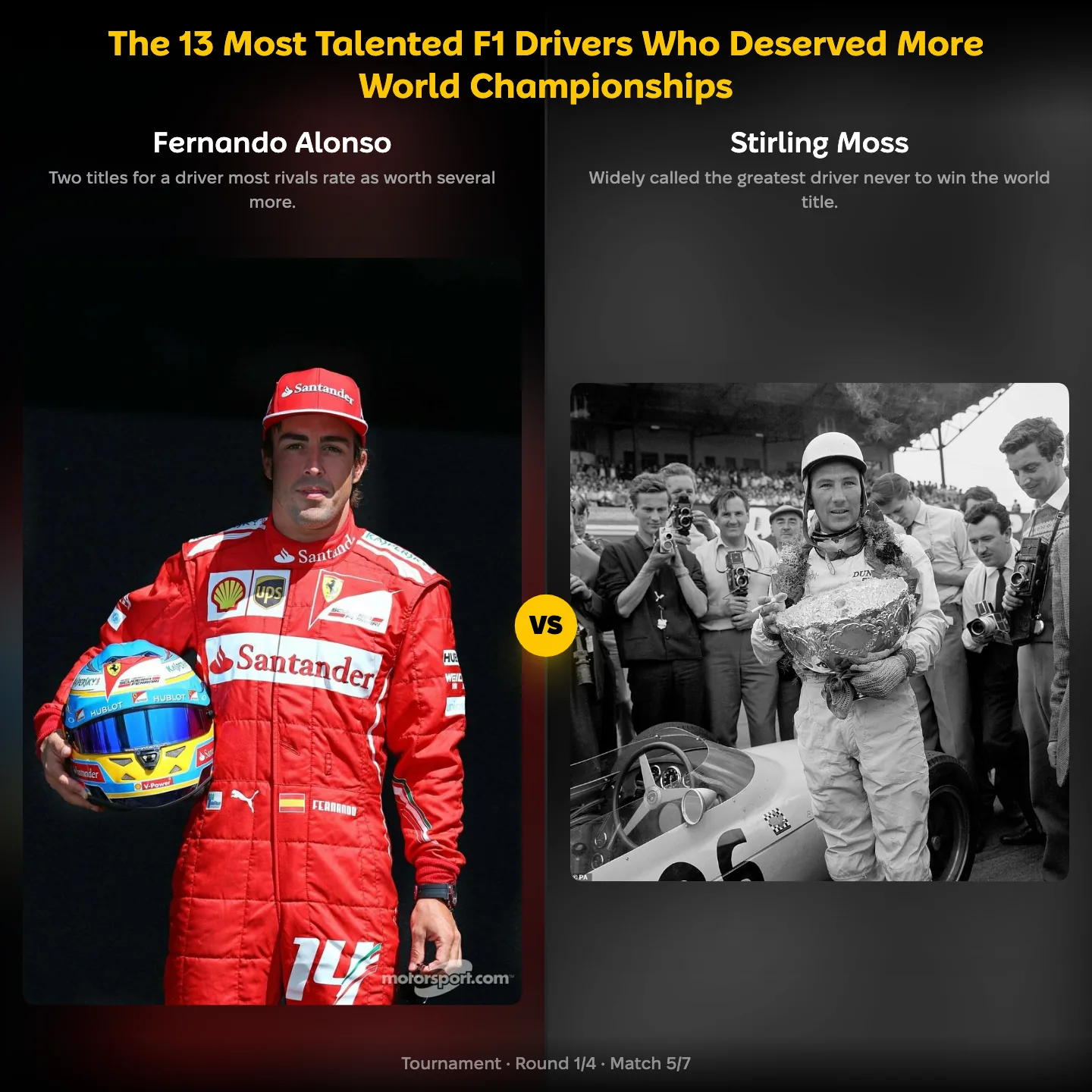
Most names in this field never won a championship at all. Stirling Moss went without one, and so did Gilles Villeneuve and Chris Amon. Alonso has two, so his entry is a shortfall rather than a void — which makes him the awkward name here.
Alonso chose several of those cars, which is the case against him here. He walked out of McLaren after one season, left Ferrari at the end of 2014 and went back to McLaren for the Honda engine years. Luck explains 2007, 2010 and 2012. It does not explain 2017.
Lewis Hamilton's rivals: the season that finished level on points
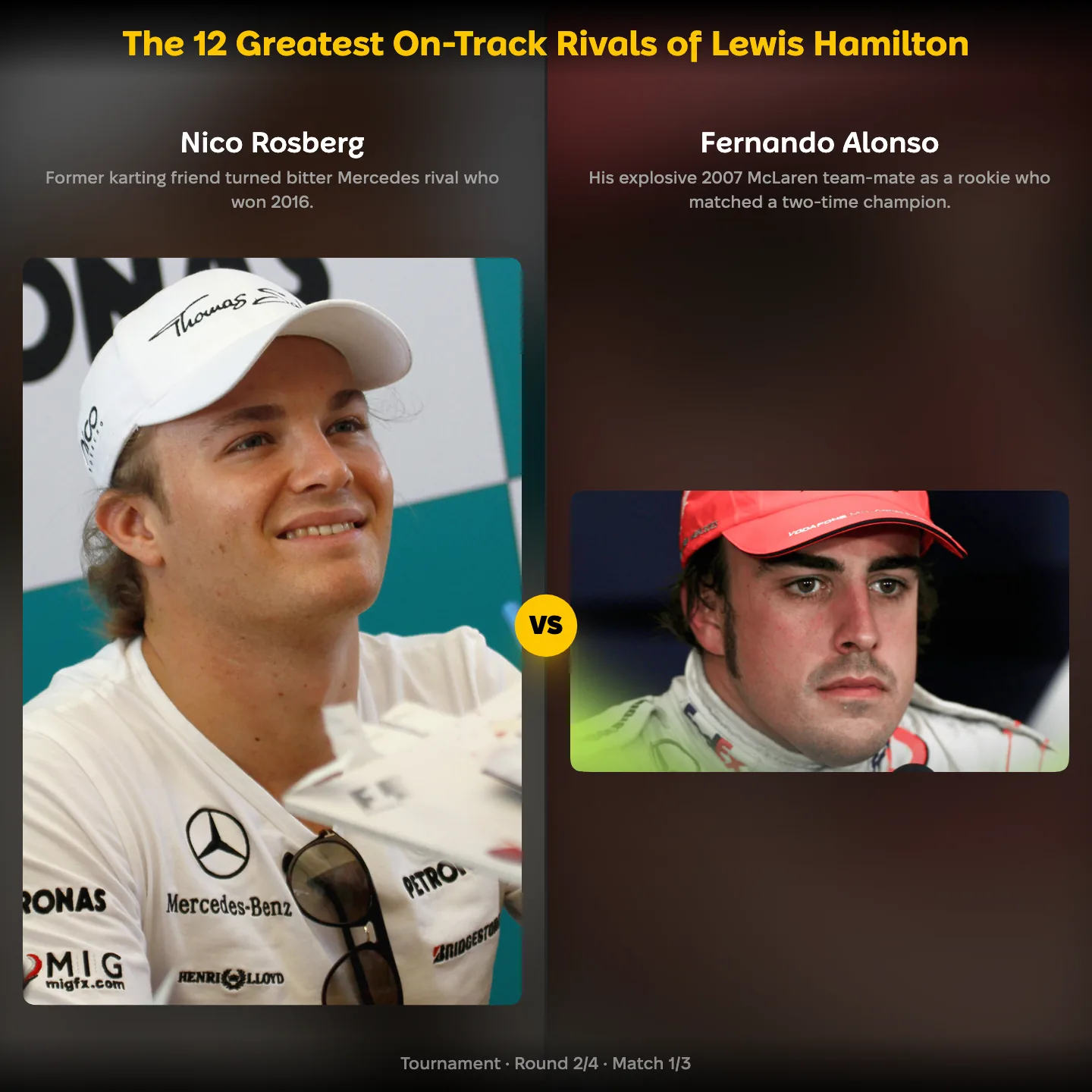
This list ranks the drivers who have made life hardest for Hamilton, and Alonso's entry comes from Hamilton's first year in the sport.
They were McLaren team-mates in 2007, Alonso a double champion in his prime, Hamilton a rookie. The season ended with Räikkönen champion on 110 points and both McLaren drivers on 109.6
The McLaren partnership did not survive the season. Alonso left for Renault that winter, and the two never shared a garage again.
Nico Rosberg and Max Verstappen have stronger entries here, because both took a championship directly off Hamilton. Alonso's case is that he pushed a rookie to the final race of the year in equal equipment — and that the rookie was Hamilton.
Renault: nine wins for Prost, two titles for Alonso
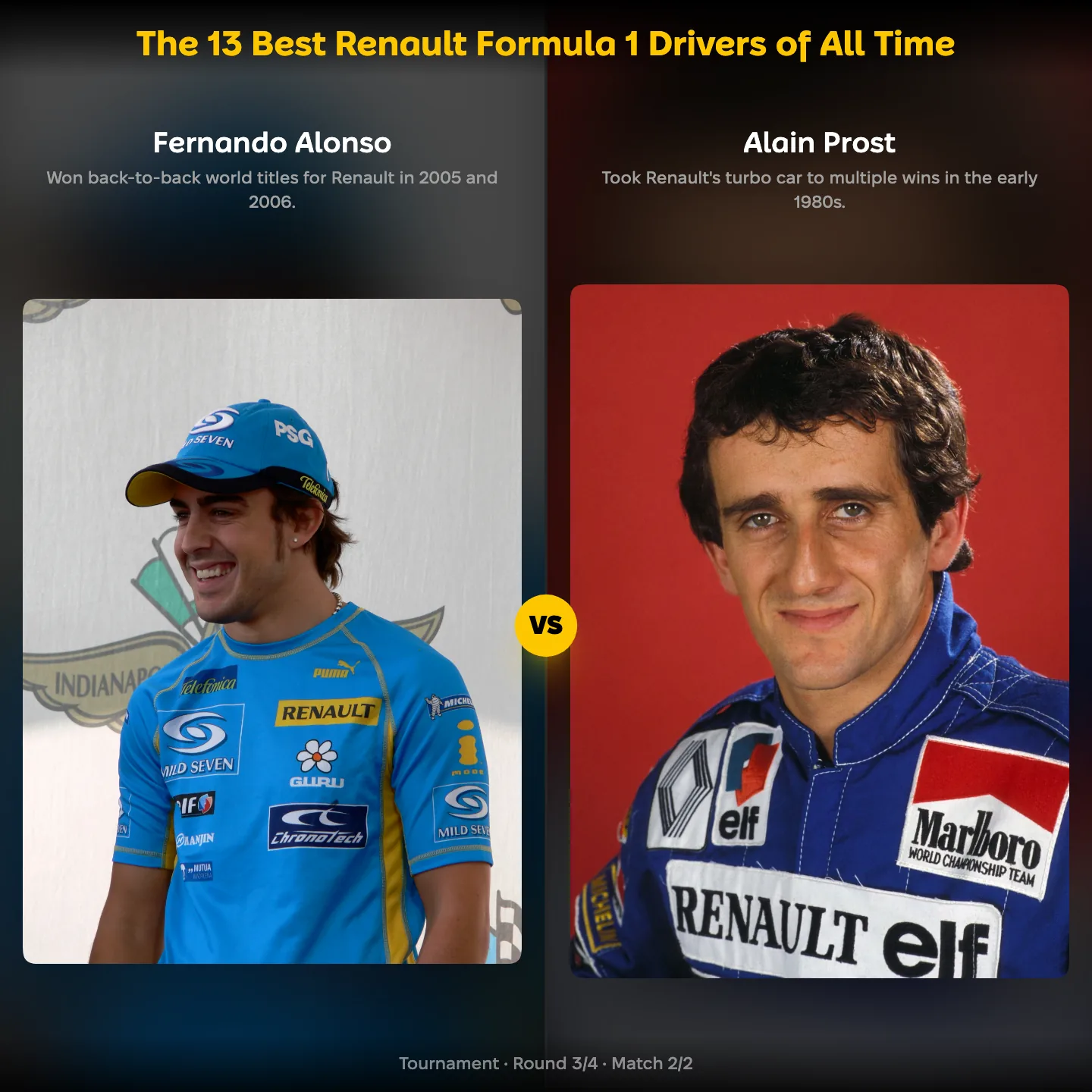
Renault's list of drivers is a short one, and Alonso's two championships are the largest thing on it.
Alain Prost is the name that complicates the Renault list. Formula 1's Hall of Fame records nine wins across his three Renault seasons in the early 1980s, and a management that made him the scapegoat for failing to turn them into a championship.7
Alonso turned his into titles in 2005 and 2006, then came back to the team for 2008 and 2009 after the McLaren move went wrong.
Jarno Trulli won at Monaco for Renault in 2004, and Esteban Ocon won in Hungary under the Alpine name in 2021. Neither result is a championship, which is why the Renault question answers itself faster than any other on the list.
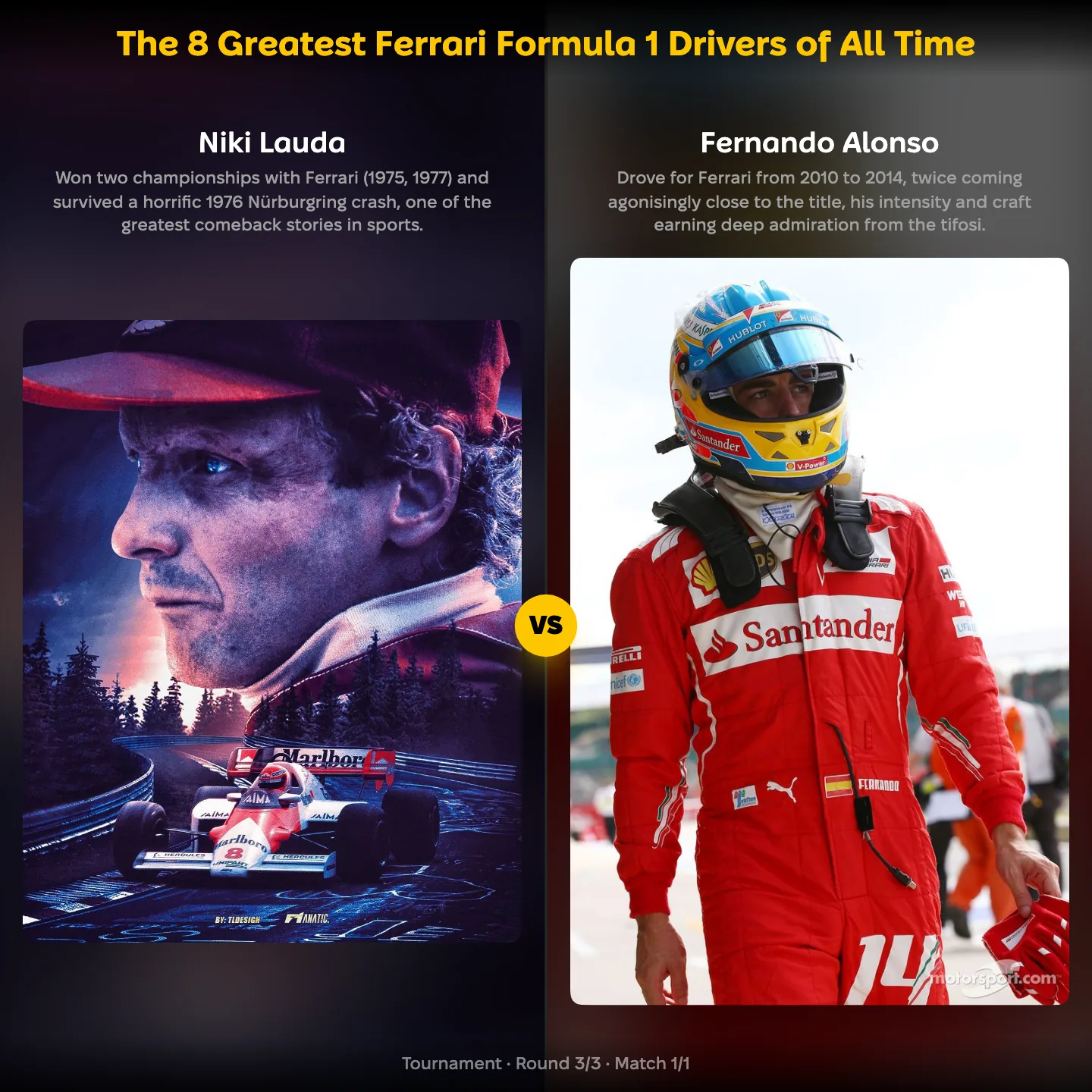
Ferrari: eleven wins in ninety-five starts, no title
Alonso spent five seasons at Maranello, from 2010 to 2014. No other ranking sets his numbers against his outcome so directly.
Formula 1 counts 11 wins from his 95 Ferrari starts, against Kimi Räikkönen's 10 from 151 in the same red cars.4 On strike rate he is the better Ferrari driver of the two.
No championship came out of those five years. Alonso finished runner-up in 2010 and again in 2012, and he left at the end of 2014 with the team's title drought intact.
The list is Ferrari's own, and it holds Michael Schumacher's five championships at the team plus Niki Lauda, Alberto Ascari and Juan Manuel Fangio, all of whom won titles in a red car. Against that, eleven wins in five years is a good spell rather than a great one. The counter-case Ferrari supporters make is that the 2012 car was not the quickest on the grid and Alonso still took the fight to the final round.
McLaren: 2007, then the Honda years
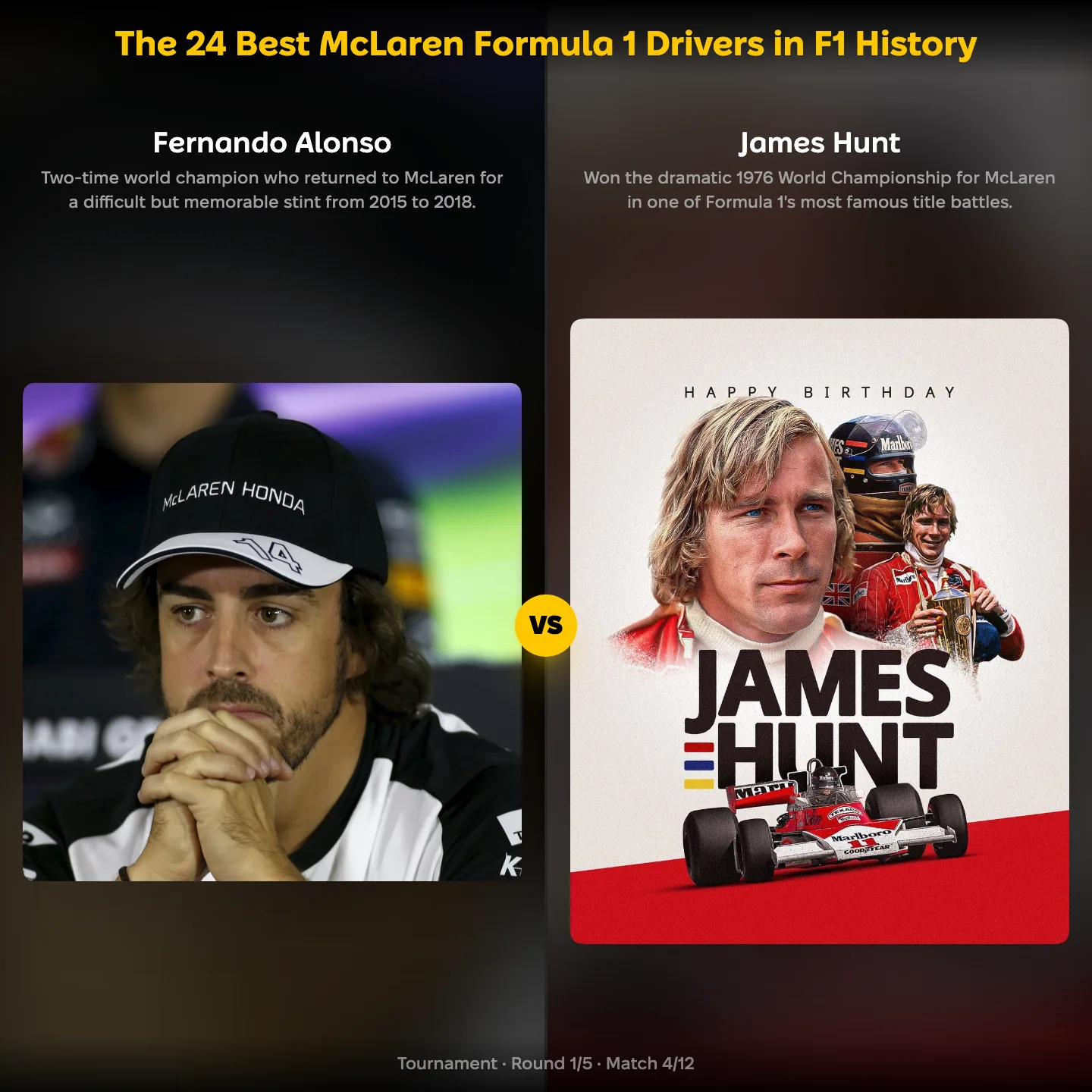
Alonso drove for McLaren twice, and the two spells have almost nothing in common.
The first spell lasted a single season, 2007, and finished with Alonso level on points with his rookie team-mate.6 The second ran from 2015 to 2018, the first three of those years with Honda engines, and produced no wins.
McLaren's own list is stacked. Ayrton Senna, Alain Prost, Niki Lauda, Mika Häkkinen and Lewis Hamilton all won world championships in a McLaren, and Alonso won races for the team in one year only.
Aston Martin: eight podiums in 2023
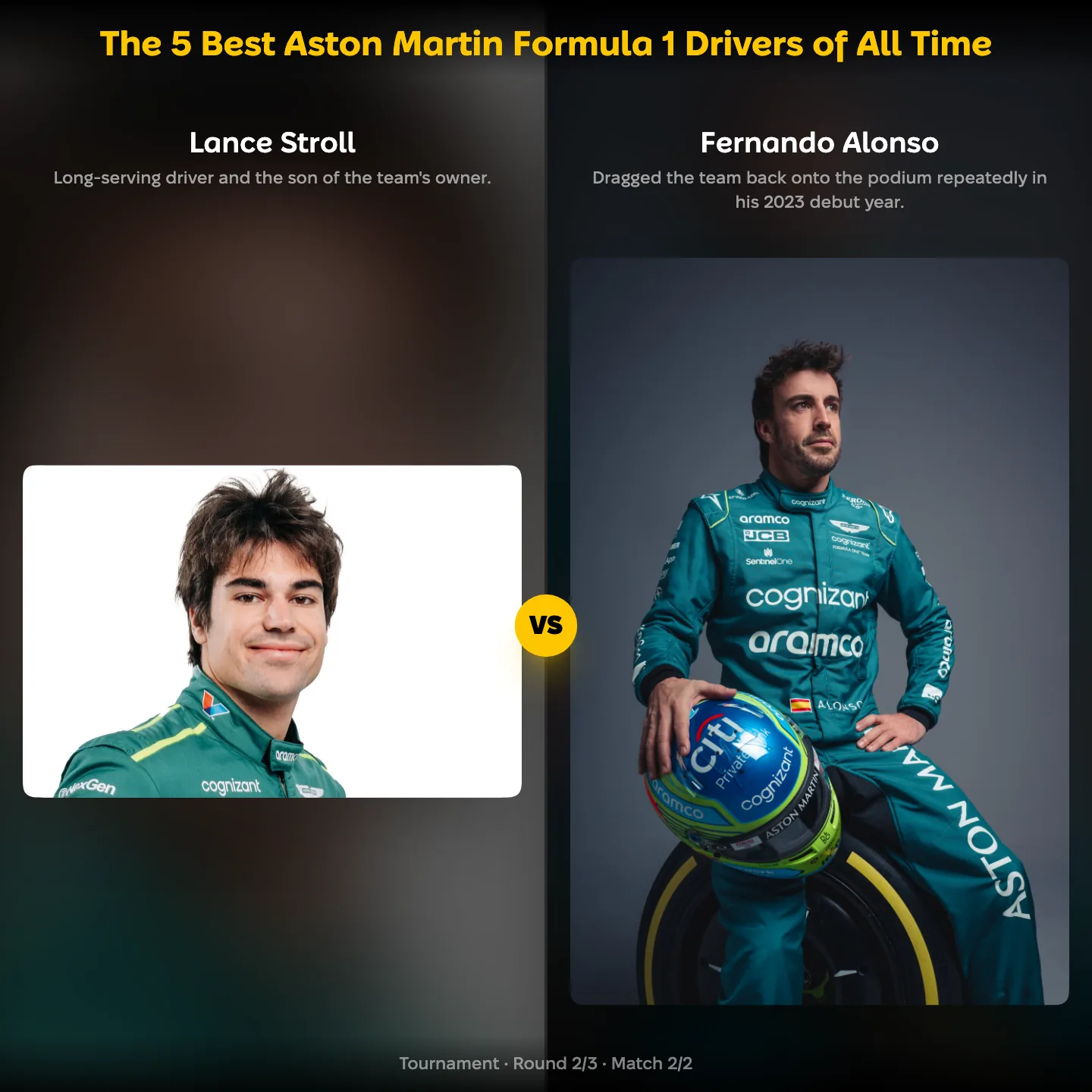
Aston Martin is Alonso's current employer, and the shortest field he is ranked in.
Alonso's first season at Aston Martin is the reason he is on it. In 2023 he took eight podiums, among them Monaco, Canada and São Paulo,8 and finished fourth in the championship with 206 of the team's 280 points.3
The seasons since have thinned out. The team's own records show thirteen top-ten finishes in 2024 and one standout result in 2025, fifth place in Hungary.8
Lance Stroll has been his team-mate throughout, and Sebastian Vettel had the seat before him. Size of field is the objection: five names flatter whoever had the best single year among them, and 2023 is that year.
Nadal vs Alonso: Spain's own list
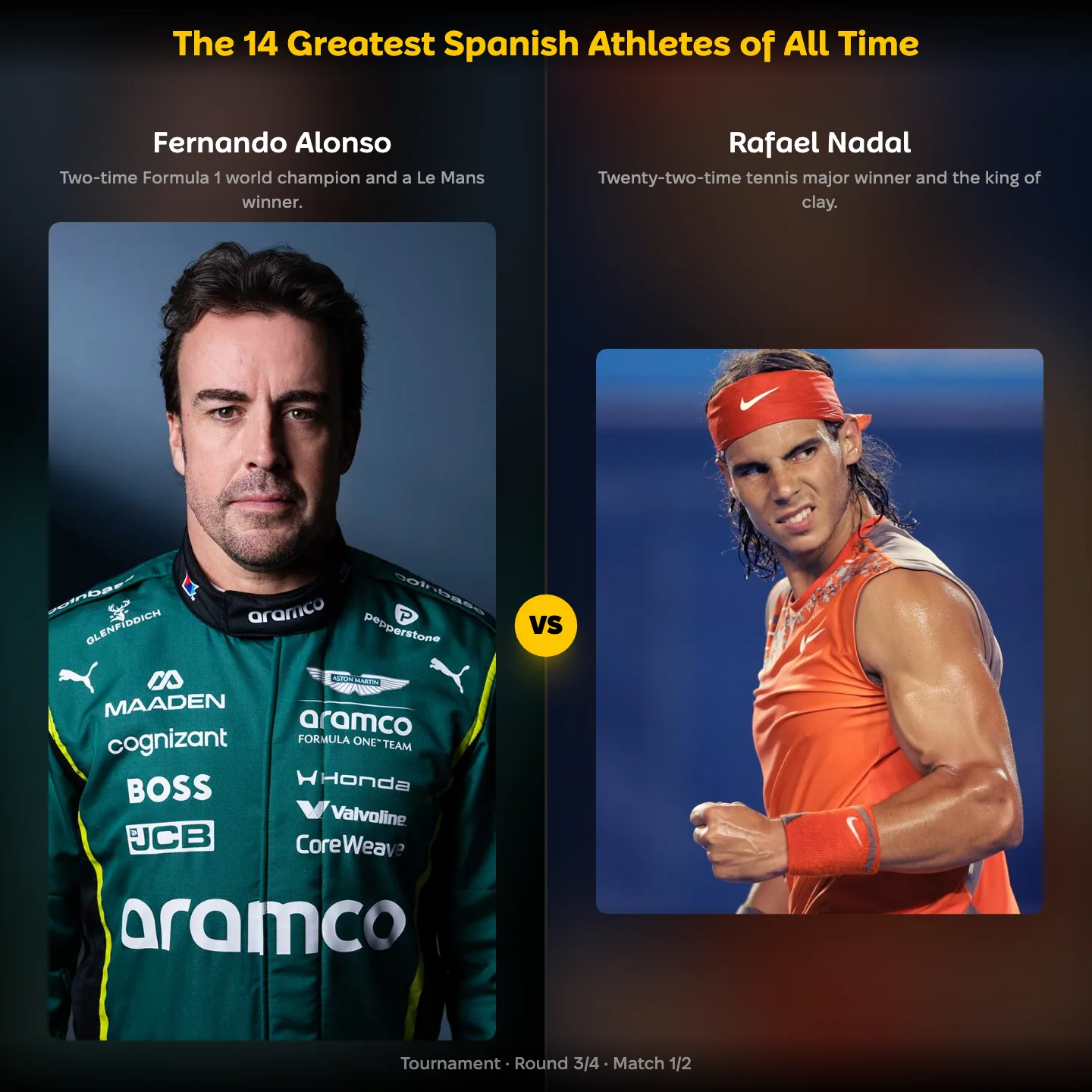
Leave motorsport and Alonso is up against a century of Spanish sport.
His claim is exclusivity. Formula 1's records make Alonso the only Spanish driver ever to win the world championship.4 Carlos Sainz has since won four grands prix and taken six poles for Spain, and no second Spanish title has followed.9
Rafael Nadal, Pau Gasol, Miguel Induráin and Andrés Iniesta are the names around him, and tennis, basketball and football all travel further in Spain than single-seaters do. Iniesta's goal in the 2010 World Cup final belongs to everybody; a title fight at Interlagos belongs to the people who were awake for it.
Working against Alonso is repetition. Nadal and Gasol collected trophies for a decade and a half each, while Alonso's championships arrived back to back and then stopped.
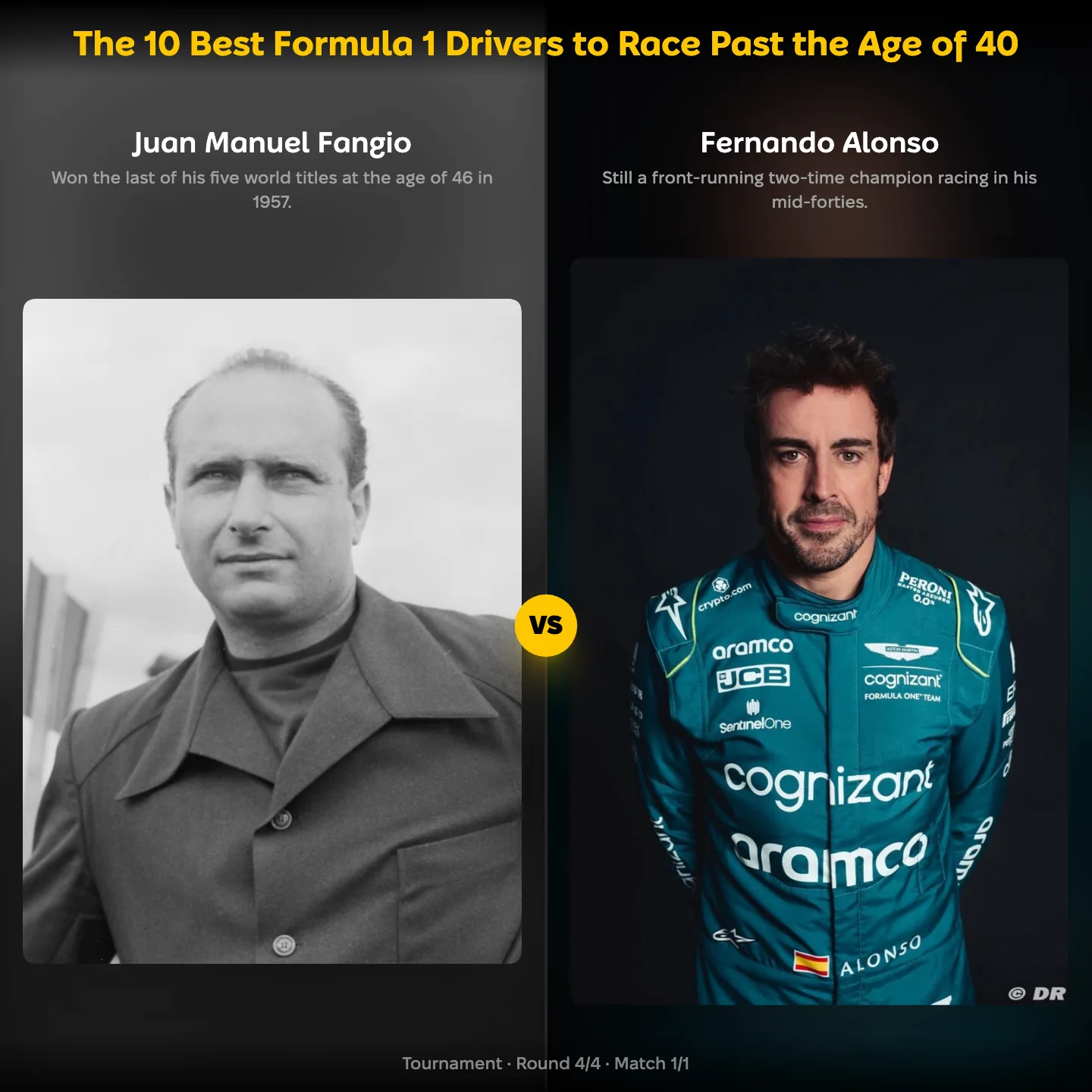
Fangio won at 46: the list for drivers who stayed
Age is the only qualification here, and nowhere else does the sheer length of Alonso's career do all the work.
He was born on 29 July 1981 and turned 45 last week.2 He is the oldest man on the 2026 grid, and the only one who was already racing in 2001.
The history he is measured against is old. Juan Manuel Fangio's final win came at the Nürburgring in 1957, at 46 years and 41 days.10
Michael Schumacher came back with Mercedes at 41 and won nothing in three seasons, which is the warning attached to every entry here. Alonso's answer is 2023, a season of podiums at 42.
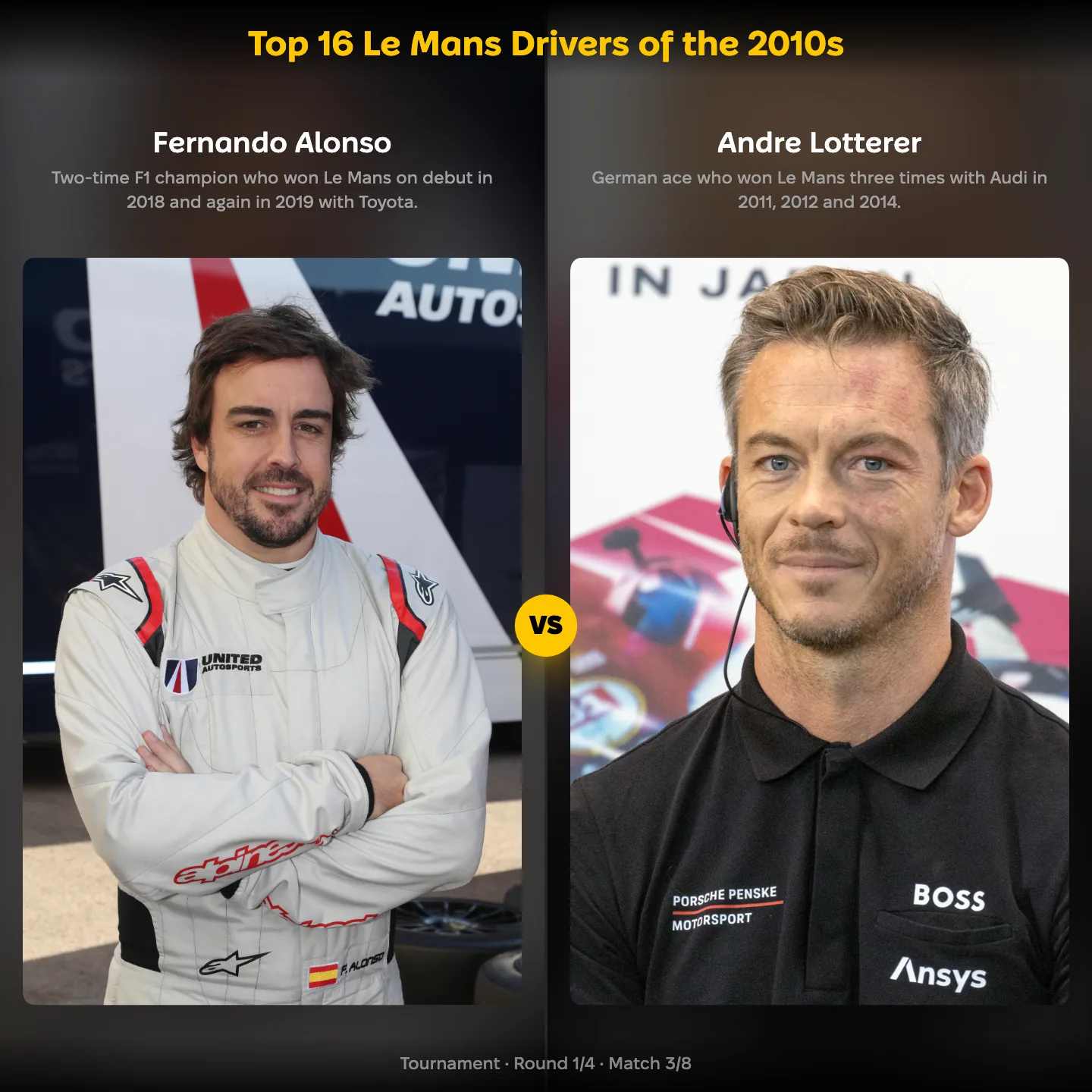
Le Mans 2018 and 2019: what Alonso did with a Toyota
With no winning seat available in Formula 1, Alonso signed up for Toyota's endurance programme in 2018 and kept his Formula 1 seat at the same time.
He won the Le Mans 24 Hours at his first attempt, in the number 8 Toyota TS050 Hybrid he shared with Sébastien Buemi and Kazuki Nakajima. It was Toyota's first overall victory in twenty attempts at the race, and it made Alonso the fifth Formula 1 world champion to take it.11
He won again in 2019, same car, same crew, and the second one carried the world endurance title with it.12
The rest of the decade's field are sportscar regulars. Buemi, Nakajima, André Lotterer and Timo Bernhard spent years at La Sarthe, including the years Toyota kept losing, while Alonso entered twice and won twice. Two starts is a thin sample, which is the honest case against him, and also the reason both wins are remembered.
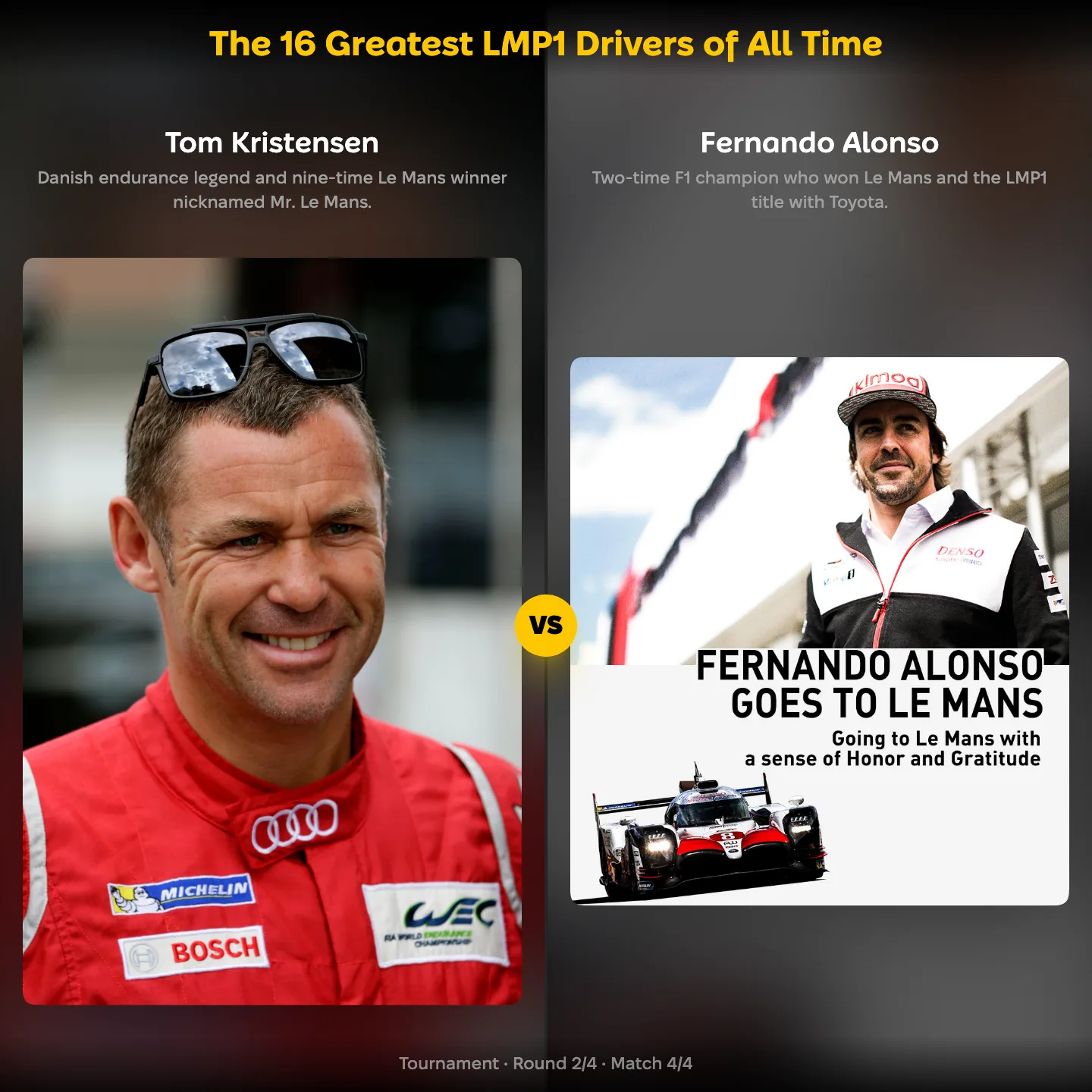
Sébastien Buemi, Kazuki Nakajima and the LMP1 list
LMP1 was endurance racing's top class until 2021, and its greatest-drivers list is mostly professionals who drove nothing else; Alonso won the 2018-19 world endurance championship in one, sharing the car with Buemi and Nakajima.12 He had won the Rolex 24 at Daytona five months before that, in a Cadillac, in a downpour that stopped the race with eleven minutes to run.13
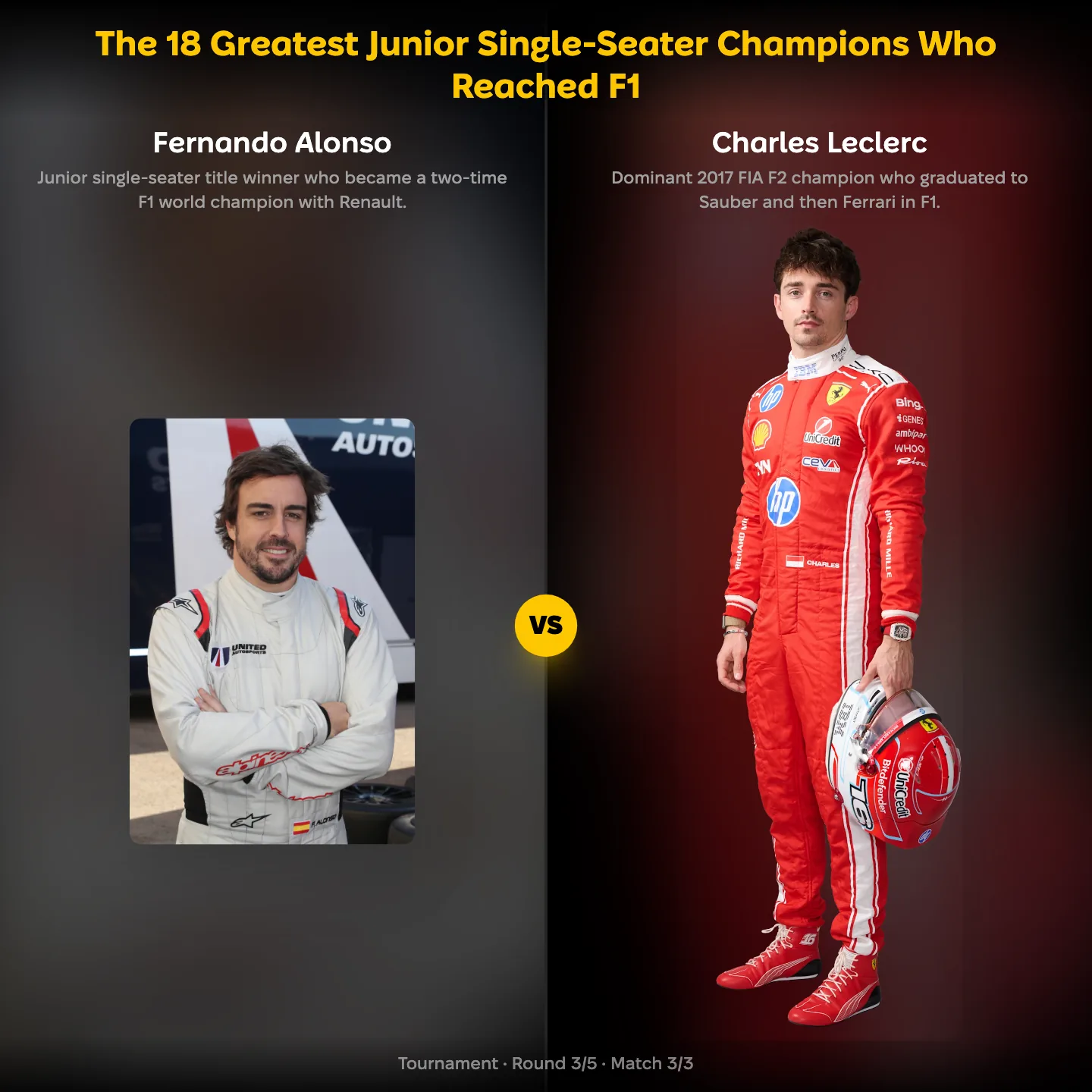
Euro Open by Nissan, 1999: the season before Formula 1
Alonso won the Euro Open by Nissan at the first attempt in 1999, the first year he raced cars rather than karts, and moved straight into International Formula 3000.8 By March 2001 he was on the Australian Grand Prix grid in a Minardi, a shorter apprenticeship than most names on this list served.
Alonso is still in the car
Fifteen rankings disagree about Alonso because his career handed each of them different material: two championships in consecutive seasons, a Le Mans record built out of two attempts, and thirteen years of podiums with no win at the end of them.
Luigi Fagioli won a championship grand prix at 53 years and 22 days, in France in 1951, and nobody has come close since,10 so the age lists are not finished with Alonso yet. Every order on this page was built by the head-to-head method.
Fifteen questions about one driver, and the sixteenth is yours to write.
More rankings, more angles
- Hamilton vs Schumacher: Seven Titles Each, One Red Car — the seven-title mark Alonso never reached
- Ferrari Means Something Different on Every List — the team that gave him five seasons and no title
- Mario Andretti Won Indy, Daytona and F1 — Once Each — the triple Alonso is still missing an Indy 500 for
- Senna vs Prost: 14 Rankings, One Argument — one McLaren garage, two seasons, forty years of argument
Sources
- Formula 1 — Alonso's 2026 race-by-race results: one point from eleven rounds, tenth place at Monaco, five retirements: formula1.com (checked 2026-08-03)
- Formula 1 — Alonso's official driver profile: 438 grands prix entered, 106 podiums, 32 wins, 22 poles, 2,394 points, born 29 July 1981: formula1.com (checked 2026-08-03)
- Formula 1 Hall of Fame — Alonso as the then-youngest champion at 24 years, one month and 27 days, his last win at the 2013 Spanish Grand Prix, and fourth place in 2023 with 206 of Aston Martin's 280 points: formula1.com (checked 2026-08-03)
- Formula 1 — career facts on Alonso: eleven more points would have made him a five-time champion, 11 wins from 95 Ferrari starts against Räikkönen's 10 from 151, Spain's only world champion, and both his championships clinched at Interlagos without ever winning there: formula1.com (checked 2026-08-03)
- Formula 1 — final 2012 drivers' standings: Vettel 281 points, Alonso 278: formula1.com (checked 2026-08-03)
- Formula 1 — final 2007 drivers' standings: Räikkönen 110 points, Hamilton and Alonso 109 each: formula1.com (checked 2026-08-03)
- Formula 1 Hall of Fame — Prost's nine wins in three Renault seasons and the team blaming him for the missing championship: formula1.com (checked 2026-08-03)
- Aston Martin Aramco Formula One Team — Alonso's team profile: eight podiums in 2023 including Monaco, Canada and São Paulo, thirteen top-ten finishes in 2024, fifth in Hungary in 2025, and the 1999 Euro Open by Nissan title in his first season in cars: astonmartinf1.com (checked 2026-08-03)
- Formula 1 — Carlos Sainz's official driver profile: four race wins, six pole positions, no world championship: formula1.com (checked 2026-08-03)
- Formula 1 — oldest drivers and oldest race winners: Fangio's final win at 46 years and 41 days at the Nürburgring in 1957, Fagioli's at 53 years and 22 days in France in 1951: formula1.com (checked 2026-08-03)
- 24 Hours of Le Mans (ACO) — 2018 race statistics: the number 8 Toyota TS050 Hybrid of Alonso, Buemi and Nakajima, Toyota's first overall win in twenty participations, Alonso the fifth F1 world champion to win the race: 24h-lemans.com (checked 2026-08-03)
- 24 Hours of Le Mans (ACO) — 2019 report: a second win for the same crew and the FIA World Endurance Championship title with it: 24h-lemans.com (checked 2026-08-03)
- 24 Hours of Le Mans (ACO) — Alonso's 2019 Rolex 24 at Daytona win in the number 10 Konica Minolta Cadillac, the race red-flagged in the rain with about eleven minutes left: 24h-lemans.com (checked 2026-08-03)