
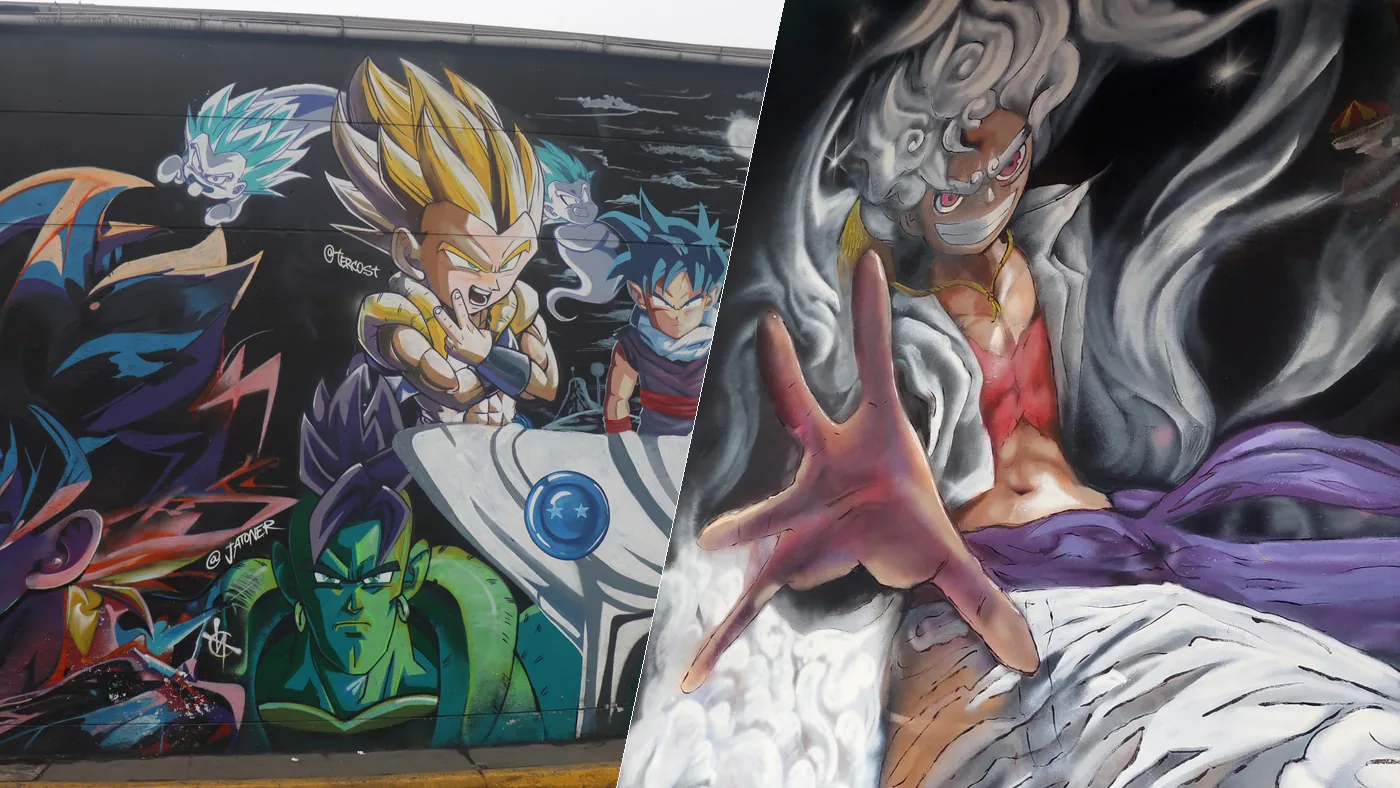
Dragon Ball turned forty this year, and One Piece is still being drawn. In January 2026 Toei marked the anniversary with a new series, Dragon Ball Super: The Galactic Patrol, scored by Hans Zimmer.4 Three months later One Piece opened its Elbaph arc at episode 1156 and slowed to 26 episodes a year, a pace it can hold for a decade.6
Put the two on the same list and something odd happens. They agree on almost nothing.
Dragon Ball wrote the rules of shonen and One Piece has spent twenty-seven years refusing to stop. Fourteen lists split along exactly that line.
Fullmetal Alchemist, Attack on Titan and the list both franchises sit on
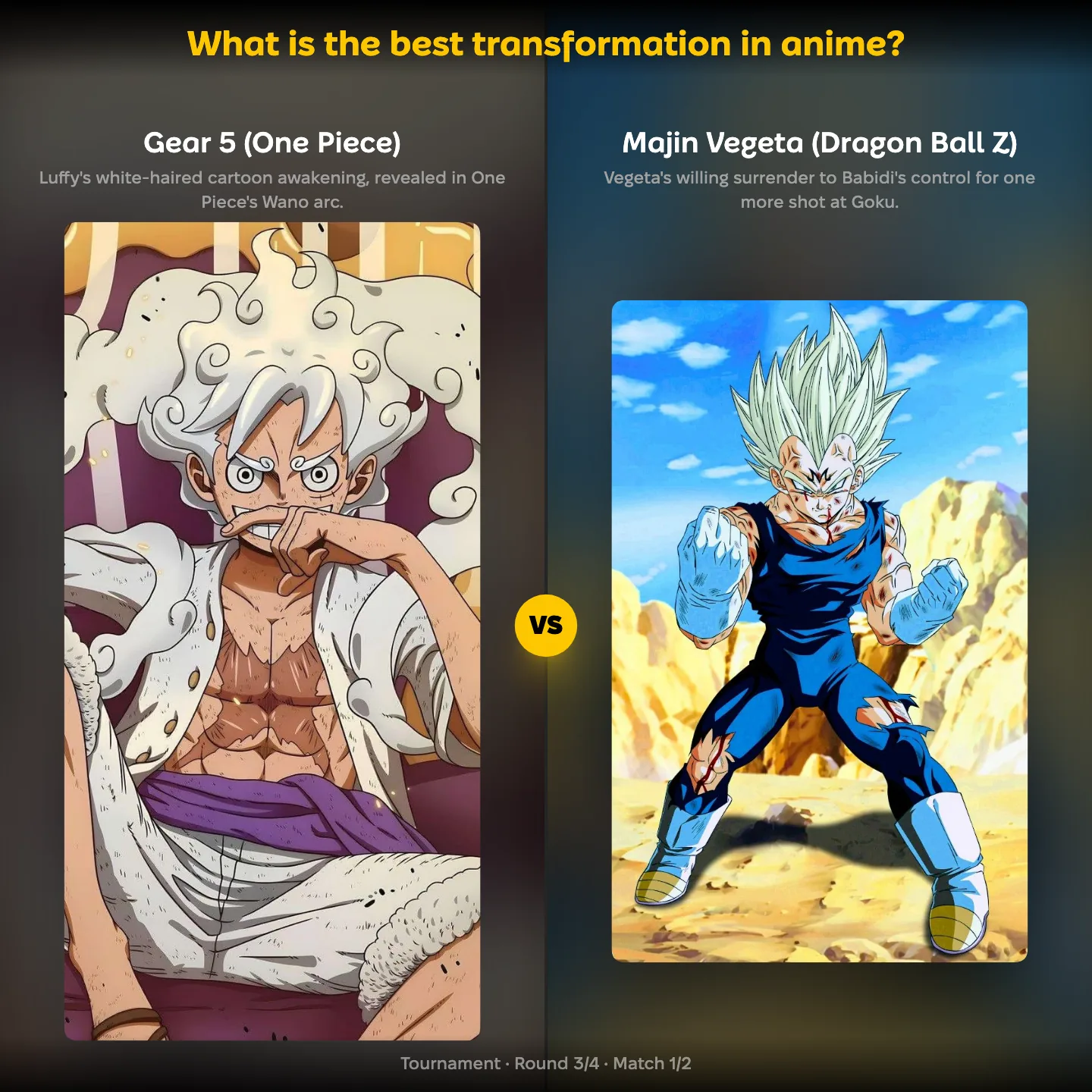
The broadest ranking on the site asks for the best anime series ever made, and it holds fifteen names.
Dragon Ball Z is one of them. One Piece is another. Neither is the obvious answer to a question that also contains Fullmetal Alchemist: Brotherhood, Neon Genesis Evangelion and Cowboy Bebop.
Starting here is useful for one reason. On the widest possible question the two most commercially successful shonen franchises in history are two entries among fifteen, and the names beside them were made by people who were explicitly reacting against what Dragon Ball had built.
Astro Boy came first, and both of these came after
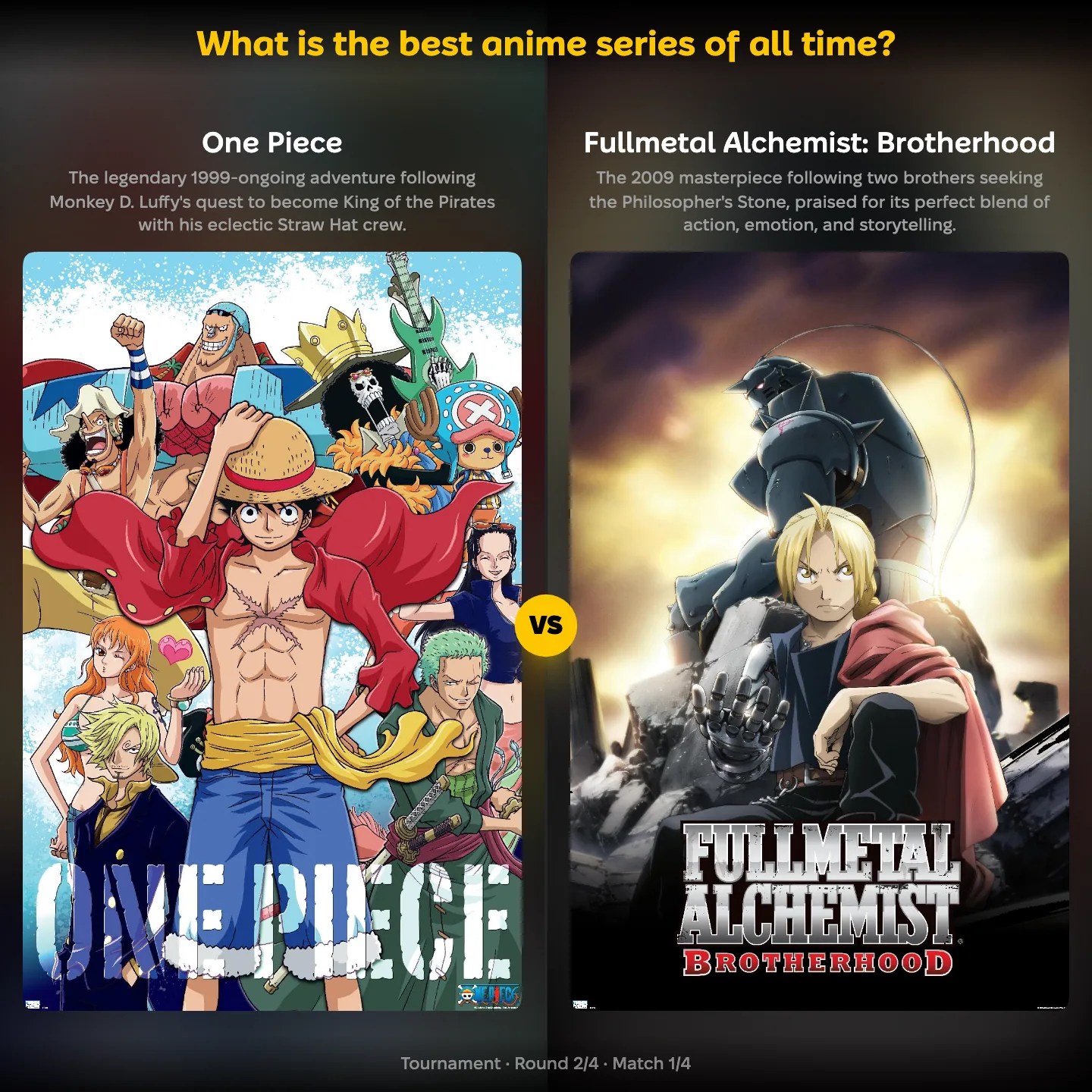
Influence is measured in imitators, and Dragon Ball's strongest case in this article sits right here.
Akira Toriyama serialised Dragon Ball in Weekly Shonen Jump from 1984 to 1995,2 and the manga has sold 260 million copies since.3 Almost every battle series that followed borrowed its shape: the tournament, the training arc, the villain who becomes an ally, the power-up that arrives one episode before defeat.
One Piece sells more. Guinness World Records lists Eiichiro Oda's series as the single-author comic with the most copies ever printed: 416,566,000 by July 2022.1 What it does not have is a generation of authors copying its structure, because its structure is a sprawling world map rather than a ladder of stronger opponents.
Both of them came after Astro Boy, which is on this list too, and which is the reason a weekly anime industry exists at all.
Super Saiyan vs Gear 5: the power-up as a brand
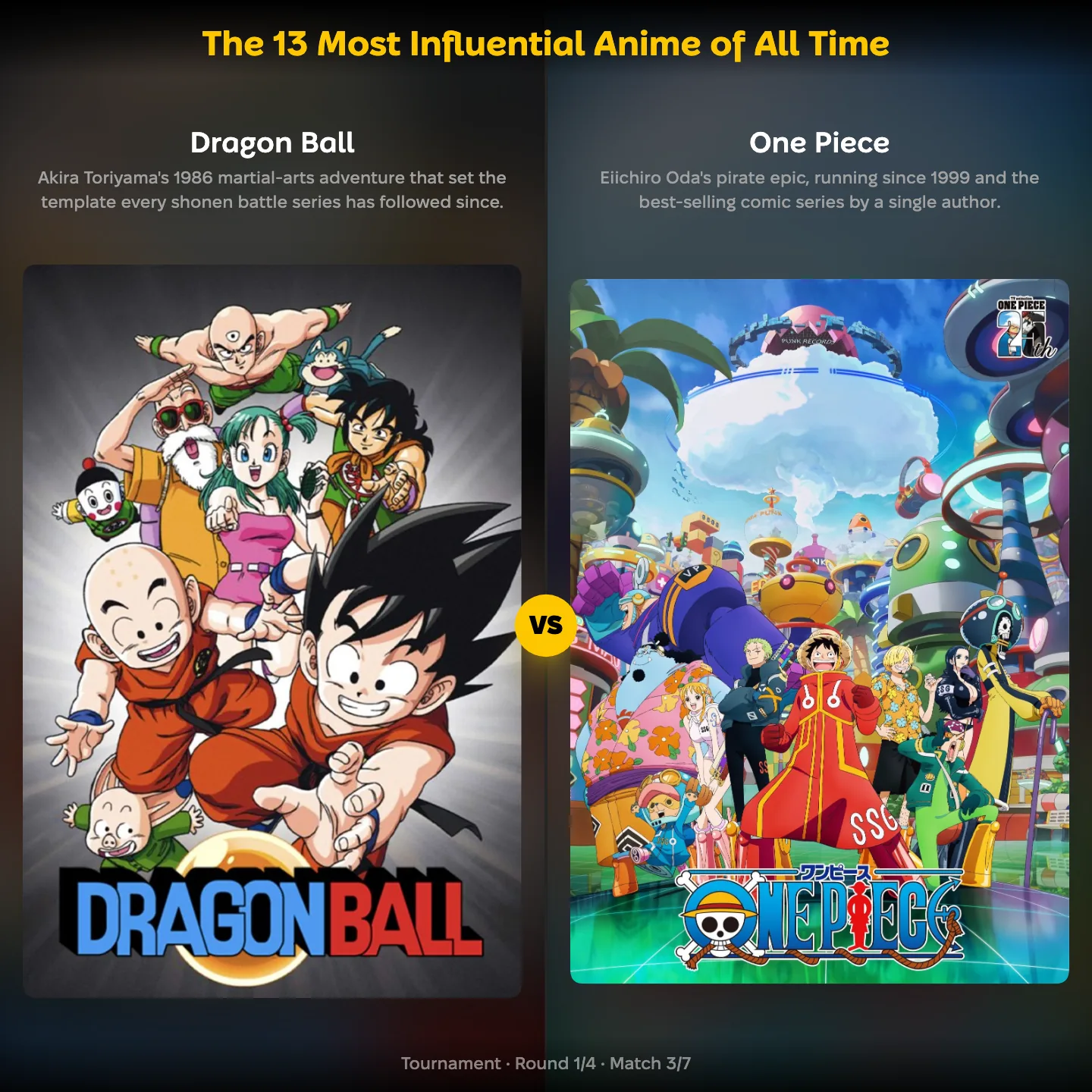
Dragon Ball invented the transformation as a merchandising event, and One Piece waited twenty-two years to attempt one.
Goku's first Super Saiyan on Namek is the template: hair colour changes, the music changes, the fight resets. Majin Vegeta belongs to the same tradition, a character accepting possession for one more round against Goku.
Gear 5 does something the Dragon Ball versions never try. Luffy's awakening makes him a rubber cartoon of himself, and Toei animated it with slapstick timing rather than power-level readouts.
Further down, the ranking fills up with borrowings from that first idea. Naruto's Six Paths Sage Mode, Ichigo's Bankai, Eren's Founding Titan: each one is a change of costume that announces a change of tier.
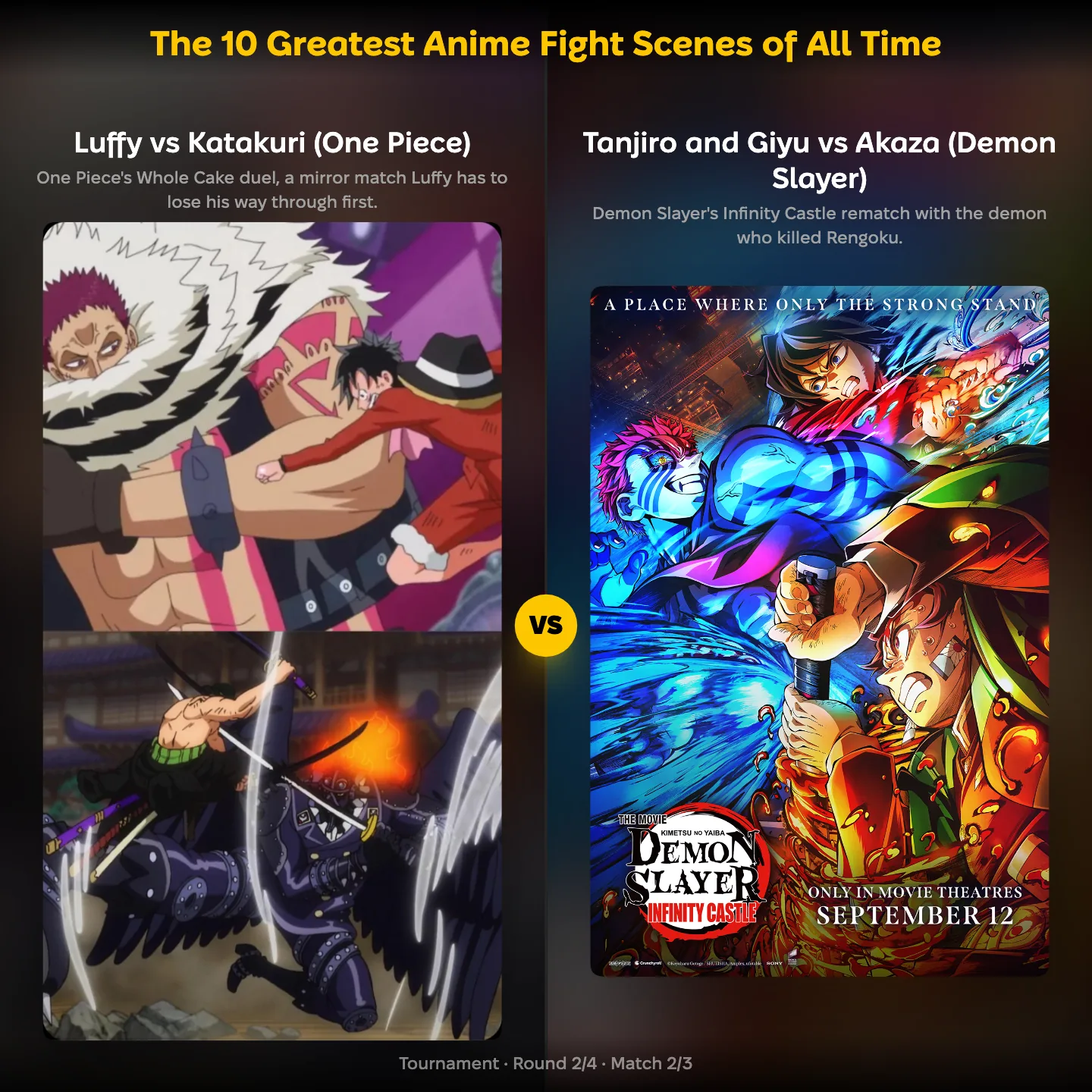
The fight that set the format, and the one that answered it
Goku against Frieza ran for a season of television and gave anime its first Super Saiyan. It is also the reason people joke about five minutes lasting nineteen episodes.
Luffy against Katakuri is the modern reply. It is a duel Luffy loses repeatedly before he wins, against an opponent who is faster, stronger and more disciplined, and it ends with both men standing rather than one crater.
Beyond those two the comparison stops being two-way. Demon Slayer's Infinity Castle rematch, Levi against the Beast Titan and Gojo against Sukuna are all shorter, denser and more expensively animated than anything either franchise did in its prime.
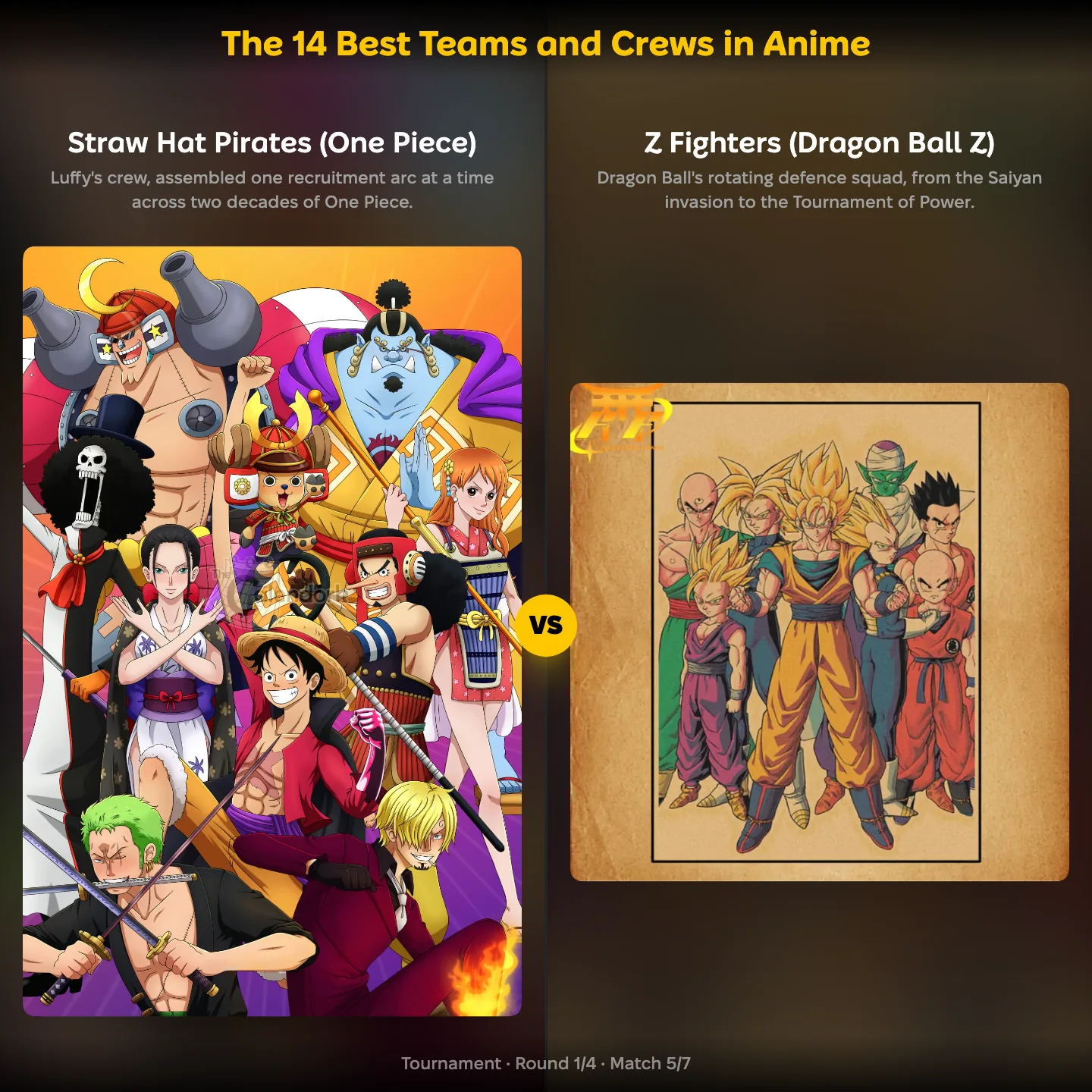
Straw Hat Pirates vs Z Fighters: a crew, or a roster
This is the ranking where One Piece has the cleanest case, and it is a structural one rather than a matter of taste.
The Straw Hat Pirates were assembled one recruitment arc at a time, and every member keeps a job on the ship. Nobody is written out when a stronger character arrives.
The Z Fighters work the opposite way. Krillin, Tien and Yamcha were leads who became bystanders as the power scale climbed, and the roster now turns over between sagas.
Both sit next to teams built for other purposes: the Survey Corps exist to die, the Phantom Troupe exist to steal, and Team Rocket exist to lose.
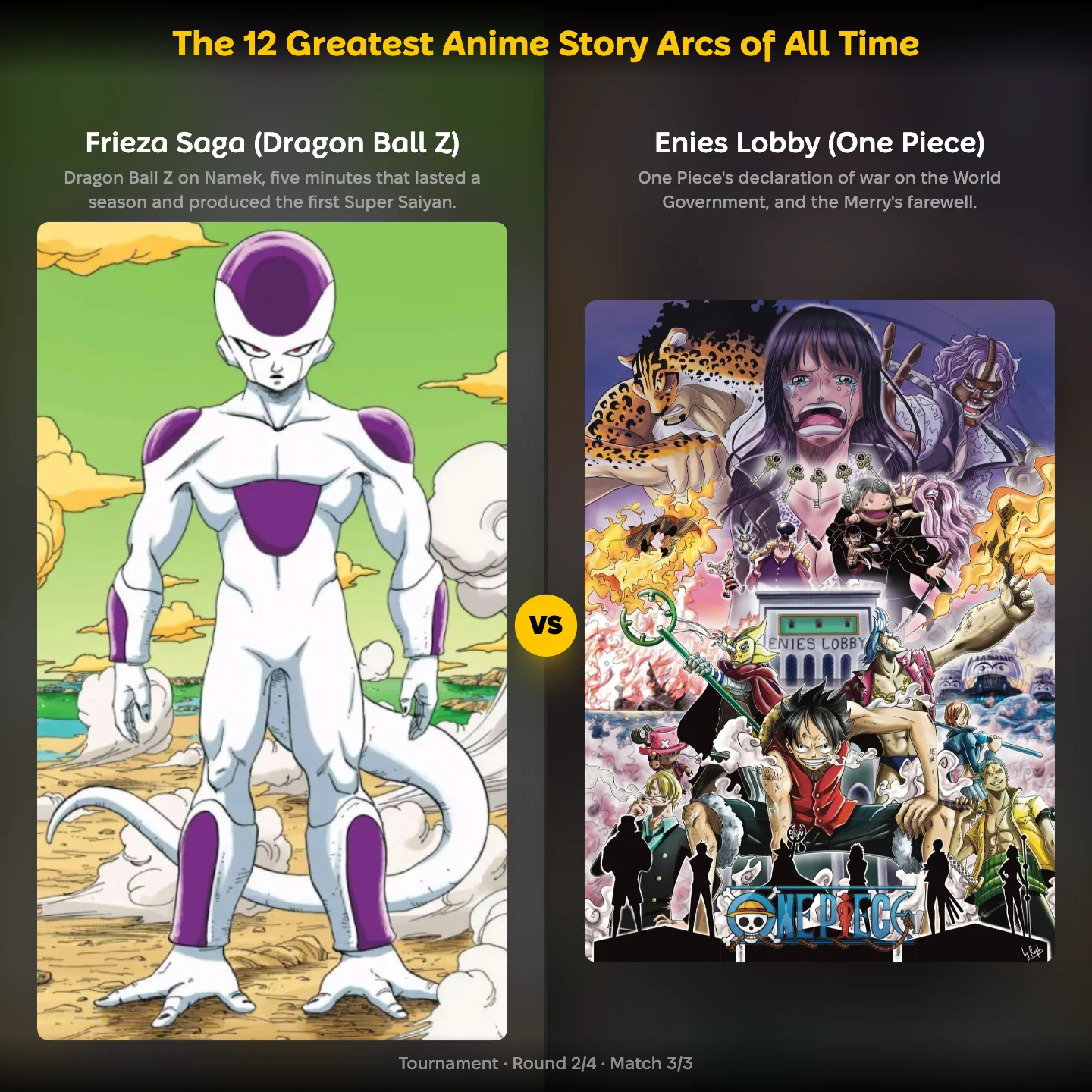
Two ways to end a war
Two arcs each. That is an unusual split, and a revealing one.
The Frieza Saga and the Buu Saga are Dragon Ball's, and they escalate on a single axis. A stronger enemy appears, the heroes lose, the heroes train, the heroes win at a higher number.
Enies Lobby and Wano Country are One Piece's, and they escalate outward. Each one adds allies, governments and consequences that survive into later arcs, which is why Wano needed four years of television.
Above both sits the Chimera Ant arc from Hunter x Hunter, built by a shonen author who used the same escalation to argue that none of it was heroic.
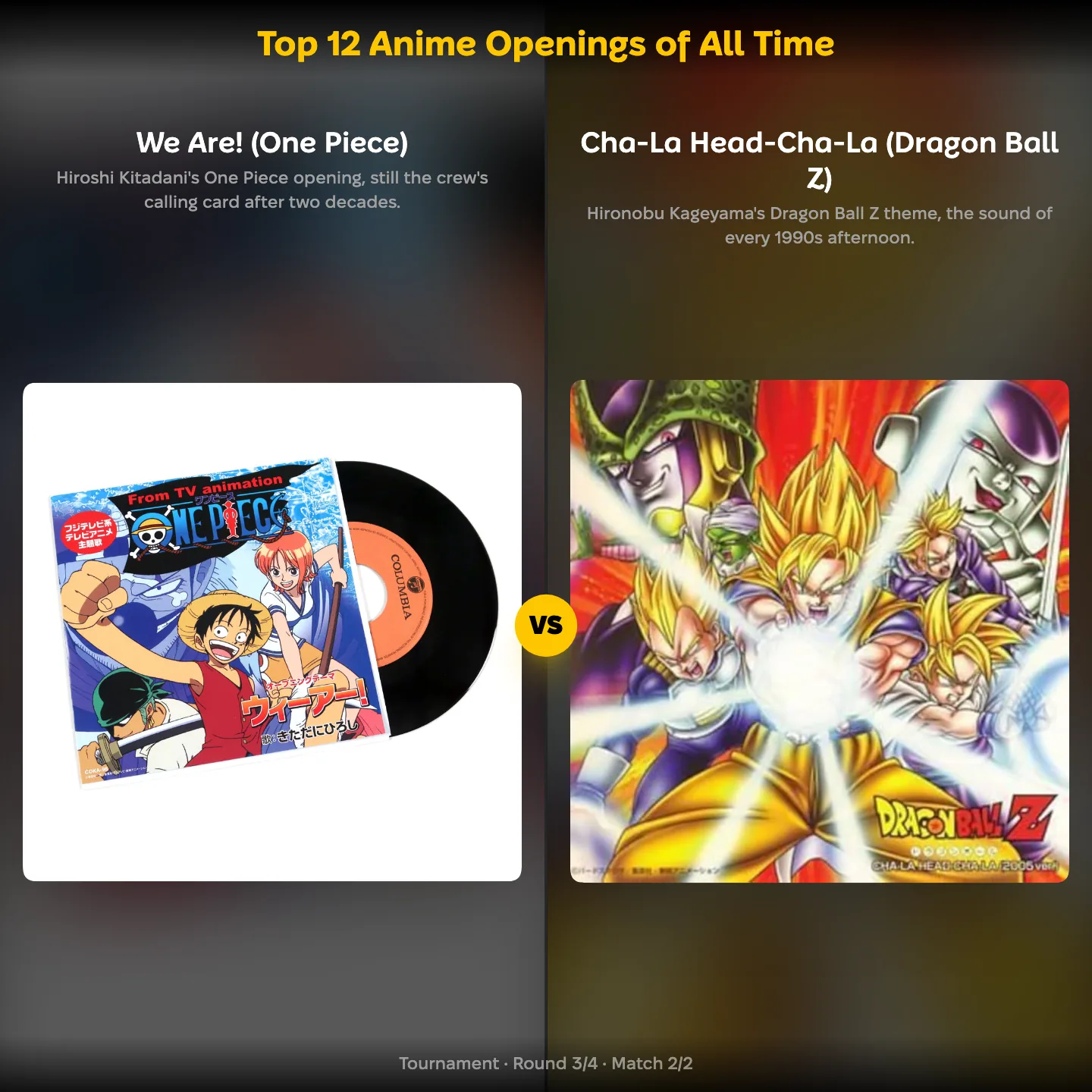
Cha-La Head-Cha-La vs We Are!: two songs nobody skips
Hironobu Kageyama recorded Cha-La Head-Cha-La for Dragon Ball Z in 1989, and it has been re-recorded for anniversaries, films and games ever since.
Hiroshi Kitadani recorded We Are! for One Piece ten years later, and Toei has brought it back for milestone episodes across five different eras of the show.
Neither is the consensus pick on a list that also holds Tank!, A Cruel Angel's Thesis and Guren no Yumiya. What they have instead is function: both were written to introduce a cast to children on a weekday afternoon, and both still do it.
Broly and Film Red: what the cinema numbers say
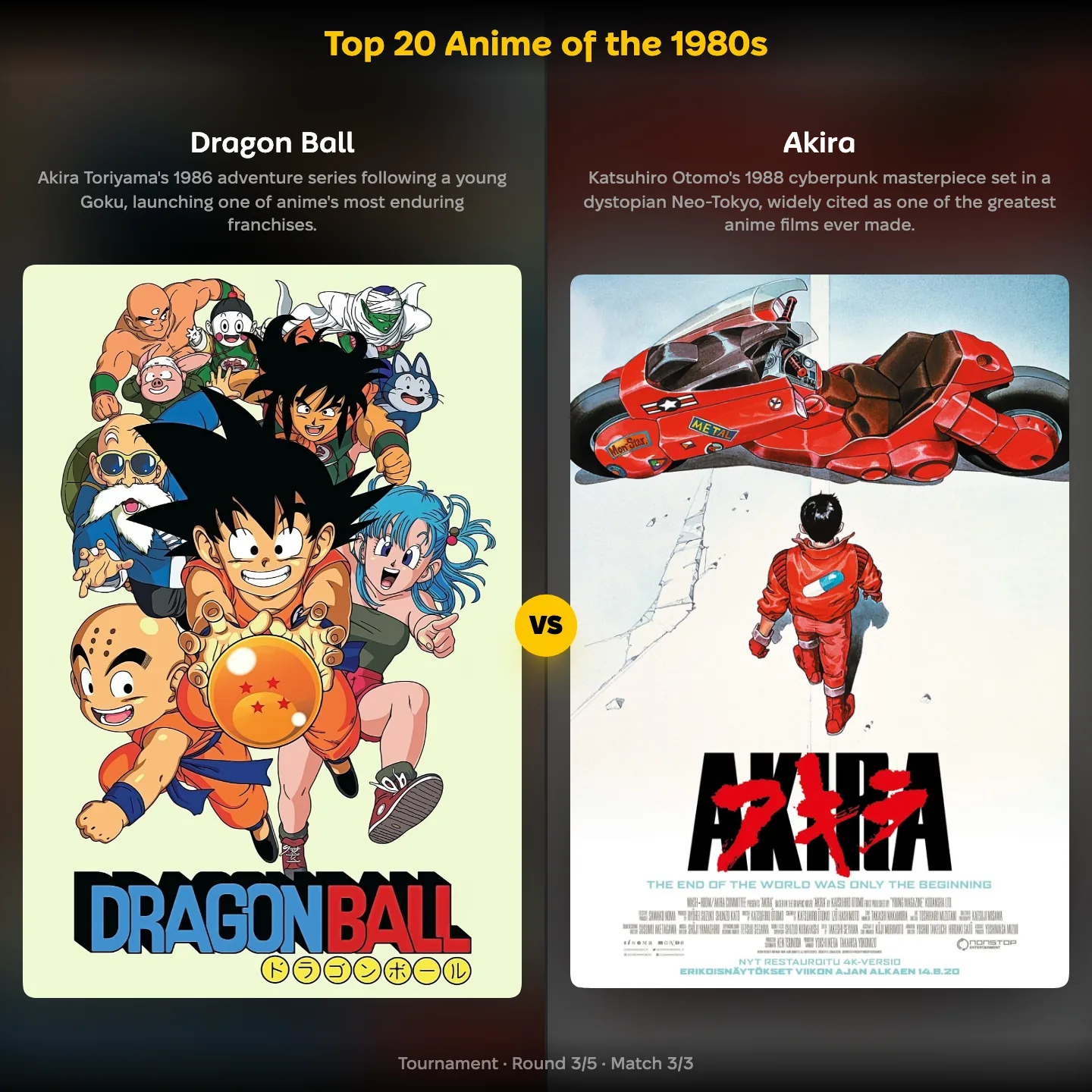
Cinema is the one place where the head-to-head has a scoreboard, and it belongs to One Piece.
One Piece Film: Red took $171,315,305 worldwide in 2022, with 92.5% of that earned outside the United States.8 Dragon Ball Super: Broly, the franchise's biggest film, took $115,750,445 in 2019 — and a quarter of that came from North America, a share no One Piece film has matched.9
Four Dragon Ball films and four One Piece films made the ranking, a share no other franchise reaches.
Neither total is near the top of it. Demon Slayer: Mugen Train is here, and it made more money than every film in this paragraph put together.
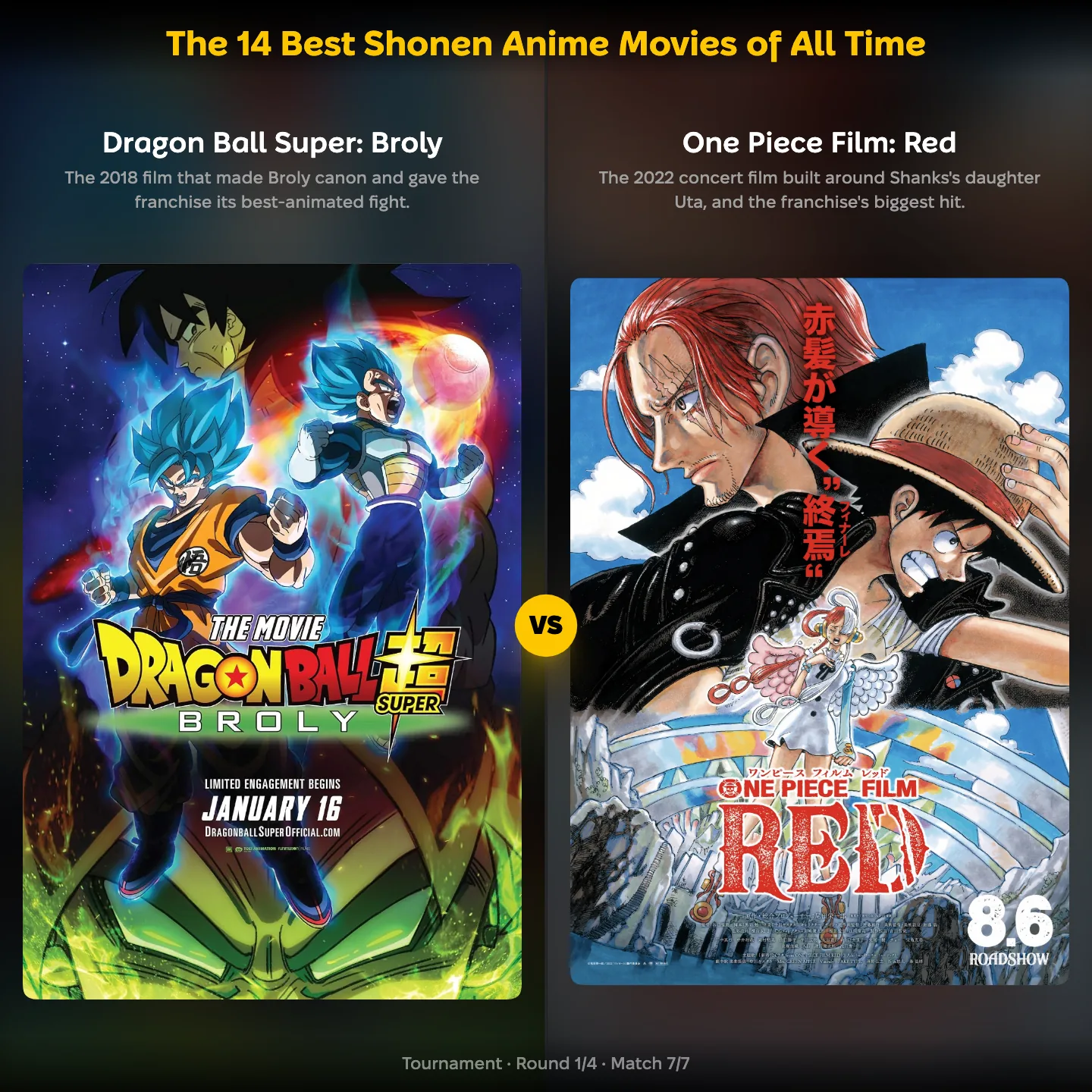
Clean lines against a crowded page
Toriyama drew for readability. A Dragon Ball character is legible at thumbnail size, which is why the designs survived translation into toys, arcade cabinets and mobile games without losing anything.
Oda draws for density. A One Piece crowd scene contains dozens of characters who could each carry their own story, and the silhouettes are deliberately absurd so that no two read alike.
Both approaches are represented further down the ranking. JoJo's Bizarre Adventure is here for fashion, Evangelion for engineering, Chainsaw Man for designs that are ugly on purpose.
Toriyama died on 1 March 2024, aged 68.3 His line is still the default look of the genre he helped invent.
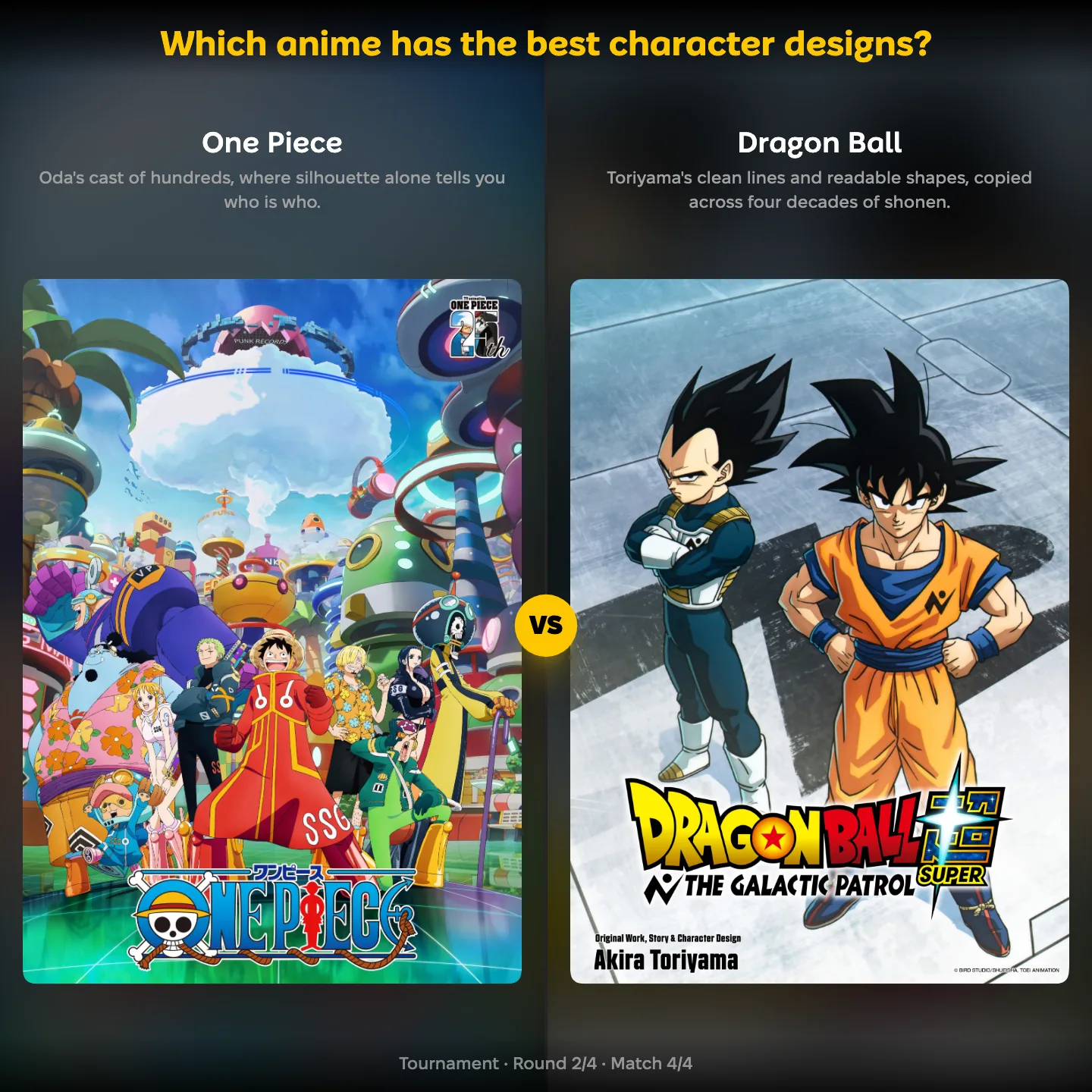
Funimation, Texas and the Dragon Ball voice America knows
For American viewers this is the ranking that decides the whole thing, because it asks which version they actually grew up with.
Dragon Ball Z arrived on American television in a Funimation dub whose cast became famous in their own right, and Sean Schemmel and Christopher Sabat are still recording those roles three decades later.
One Piece got there the hard way. The 4Kids version cut episodes, swapped a cigarette for a lollipop and gave Sanji a Brooklyn accent, and Funimation redubbed the whole series to undo it.
Cowboy Bebop, Yu Yu Hakusho and the deliberately rewritten Ghost Stories dub share the ranking, proof that English-language anime keeps a canon of its own.
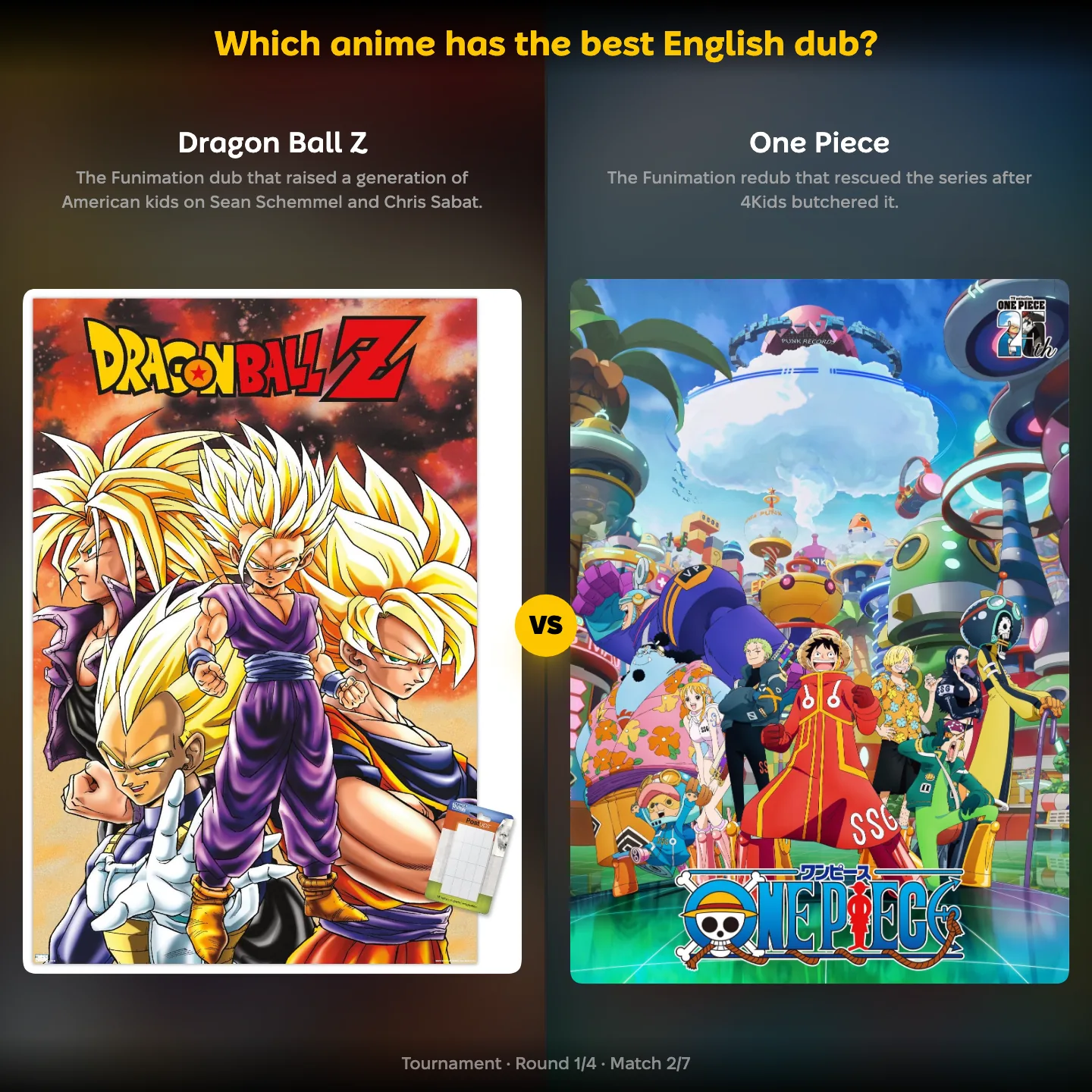
Akira, Totoro and a decade One Piece could not enter
One rule of this comparison is that Dragon Ball got a ten-year head start, and here is the ranking where that shows.
The 1980s list holds Dragon Ball and twenty other titles. One Piece did not exist, and could not.
Dragon Ball is also not the favourite. Akira, My Neighbor Totoro, Nausicaä and Grave of the Fireflies fill out the rest of it, from the decade anime spent proving it could be cinema.
Street Fighter II is here. Only one of these two is.
Leave anime entirely and the asymmetry gets sharper.
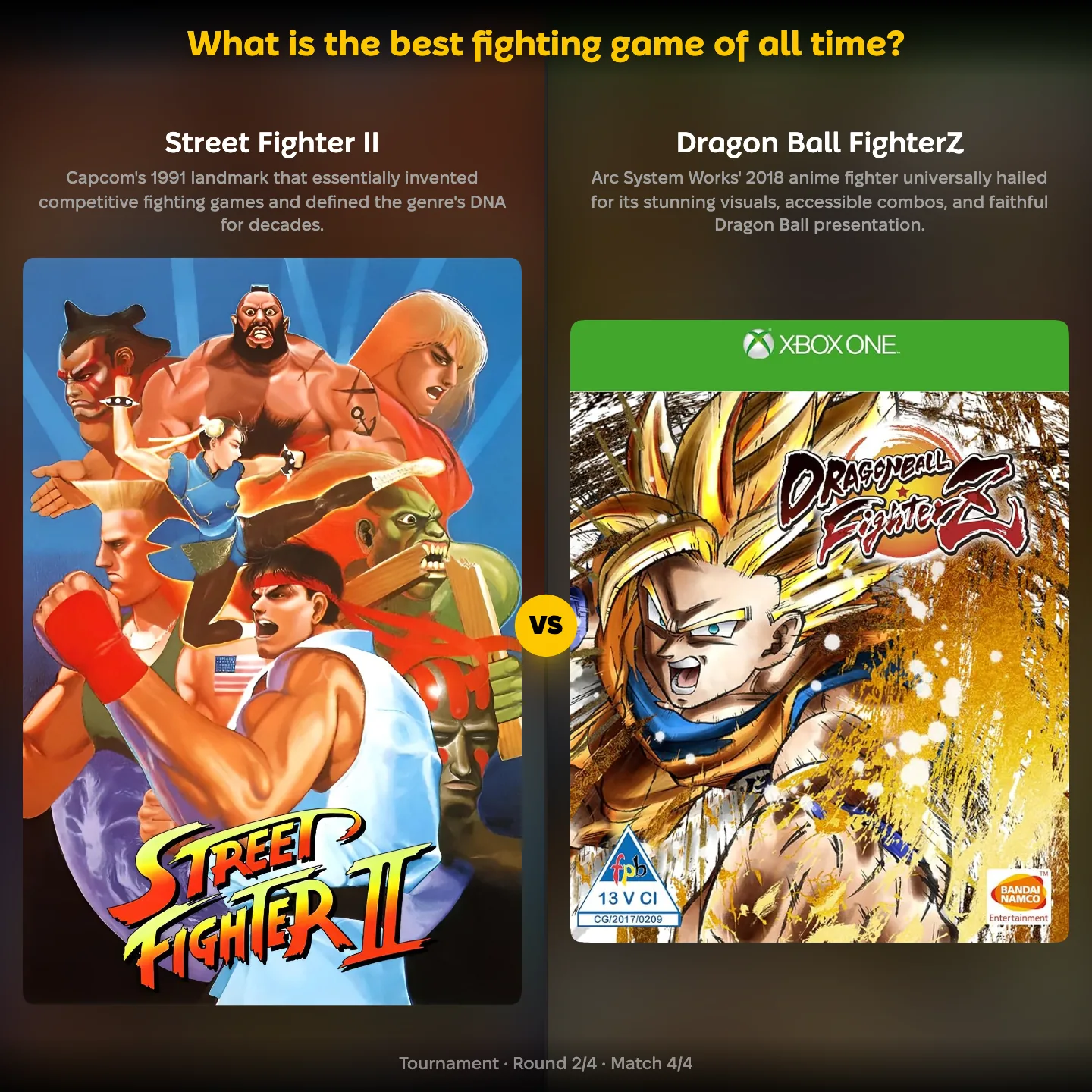
Dragon Ball FighterZ made the ranking of the best fighting games ever built, next to Street Fighter II, Tekken 3 and Super Smash Bros. Melee. Arc System Works built it to look exactly like the anime, and the competitive scene took it seriously.
One Piece has no equivalent. Its games are musou brawlers and pirate adventures, and none of them belongs in this company.
Naruto, Bleach and the filler nobody defends
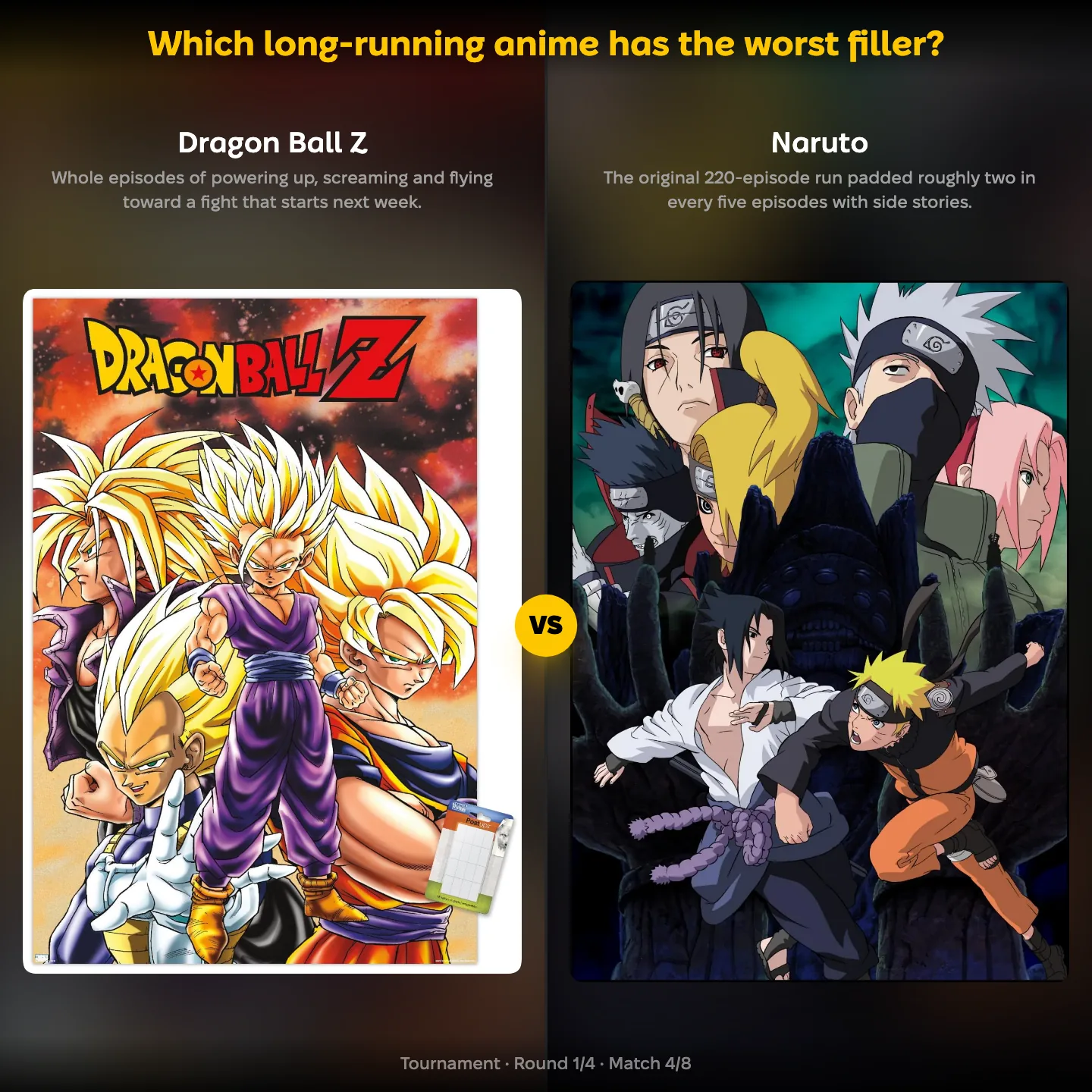
Here is the list neither franchise wants to be on, and both are on it.
Dragon Ball Z's padding is structural. Weekly episodes had to keep pace with a weekly manga, so characters spent whole episodes charging attacks and describing what was about to happen.
One Piece solved the same problem differently and no better. Toei inserted entire invented arcs — G-8, the Ice Hunter island, a hundred-odd episodes of material Oda never wrote — and then, in April 2026, gave up and cut the schedule to 26 episodes a year so the anime could stop outrunning the manga.6
Naruto and Bleach earned their places the same way. Detective Conan has been at it since 1996.
Detective Conan, Gintama and the wall facing a newcomer
This last ranking costs both franchises real viewers, and it deserves an honest answer.
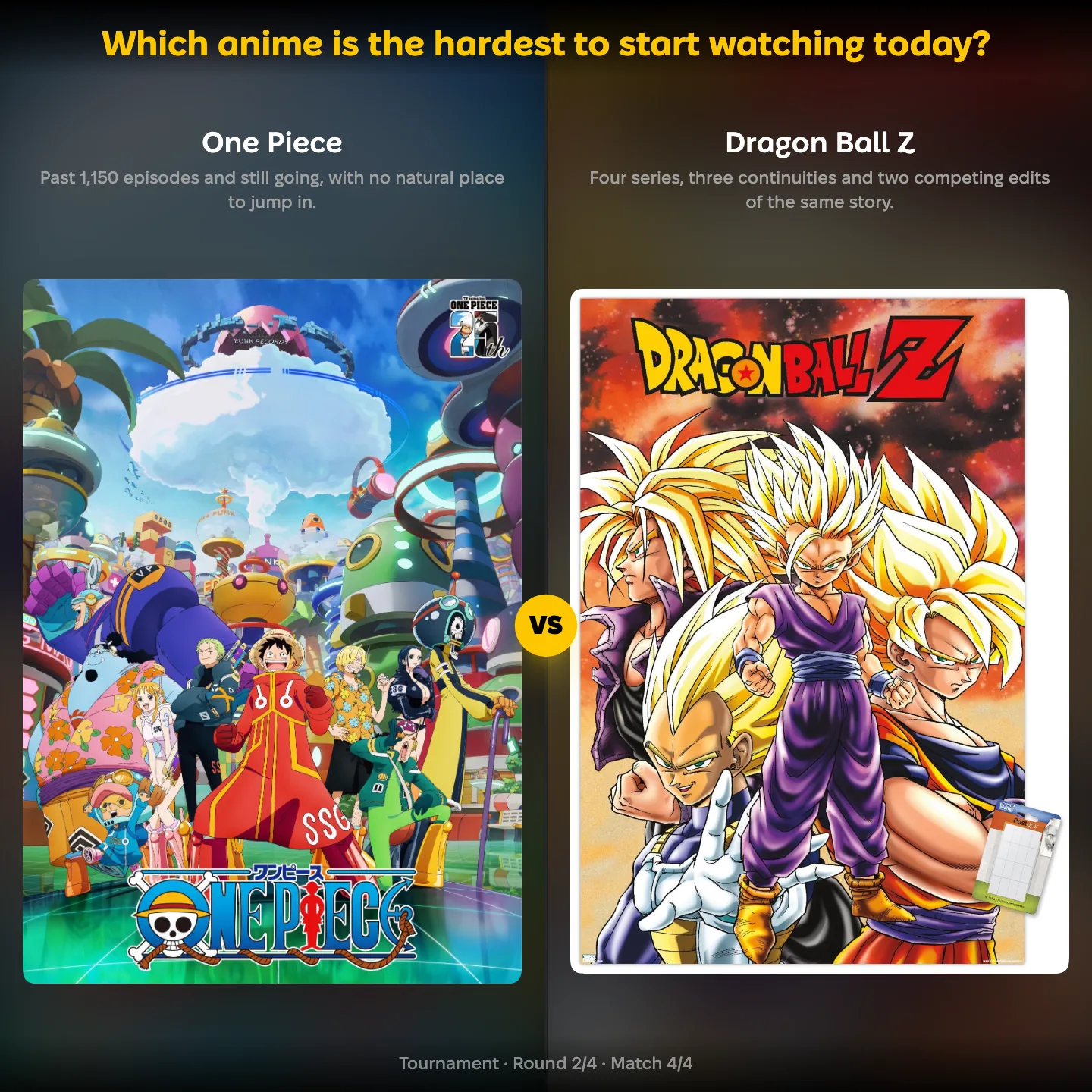
One Piece is past 1,170 episodes with no natural entry point, which is why Netflix commissioned a live-action adaptation; its second season, Into the Grand Line, reached Netflix on 10 March 2026 as a way in for people who will never start the anime.7
Dragon Ball's barrier is different and arguably worse. There are four series, two competing edits of the same story, a sequel most fans disown, and a Dragon Ball Super run of 131 episodes that stopped in 2018 and is only now being continued.4 A newcomer has to be told where to begin before they can begin.
Gintama assumes you have watched everything it parodies. Legend of the Galactic Heroes wants 110 episodes of political strategy. Detective Conan has been running since 1996.
Every entry here is a series people love and cannot recommend without a diagram.
Fourteen questions, fourteen different answers
Fourteen rankings later the pattern is clear enough to state plainly: Dragon Ball owns the questions about what shonen became, and One Piece owns the questions about how far one story can be pushed. Change the question and you change which of those matters.
The franchise that keeps remaking itself is not finished either: Dragon Ball Super: Beerus, a rebuilt version of the Battle of Gods story with new footage and re-recorded voices, arrives in autumn 2026.5
Each of these rankings was decided by judging two things at a time and repeating that until the order settles. If your own answer is missing from one of these lists, build the one you wanted to read.
More rankings, more angles
- One Piece vs Naruto vs Bleach: The Big Three, Ranked — the same crew, judged against its own generation
- Attack on Titan Is on Every List. Never in the Same Place — sixteen rankings for a series that ran nine years
- Jujutsu Kaisen vs Chainsaw Man Popularity: Two MAPPA Hits, 15 Lists — two 2018 Jump debuts, both finished by 2026
- Demon Slayer Passed Spirited Away, Not Mugen Train — ufotable craft against everyone else writing
Sources
- Guinness World Records — most copies published for the same comic book series by a single author, One Piece, 416,566,000 as of July 2022: guinnessworldrecords.com (checked 2026-08-21)
- VIZ Media — Dragon Ball serialisation dates in Weekly Shonen Jump: viz.com (checked 2026-08-21)
- Associated Press via PBS NewsHour — Dragon Ball manga sales and Akira Toriyama's death on 1 March 2024, aged 68: pbs.org (checked 2026-08-21)
- Anime News Network — Dragon Ball Super: The Galactic Patrol announced at the 40th-anniversary event, Hans Zimmer scoring, and the 131-episode Dragon Ball Super run: animenewsnetwork.com (checked 2026-08-21)
- Dragon Ball Official Site — Dragon Ball Super: Beerus, an enhanced edition premiering in autumn 2026: en.dragon-ball-official.com (checked 2026-08-21)
- Anime News Network — One Piece Elbaph arc from episode 1156 and the move to 26 episodes a year: animenewsnetwork.com (checked 2026-08-21)
- Anime News Network — live-action One Piece season 2 premiere date: animenewsnetwork.com (checked 2026-08-21)
- Box Office Mojo — One Piece Film: Red worldwide gross: boxofficemojo.com (checked 2026-08-21)
- Box Office Mojo — Dragon Ball Super: Broly worldwide gross: boxofficemojo.com (checked 2026-08-21)