
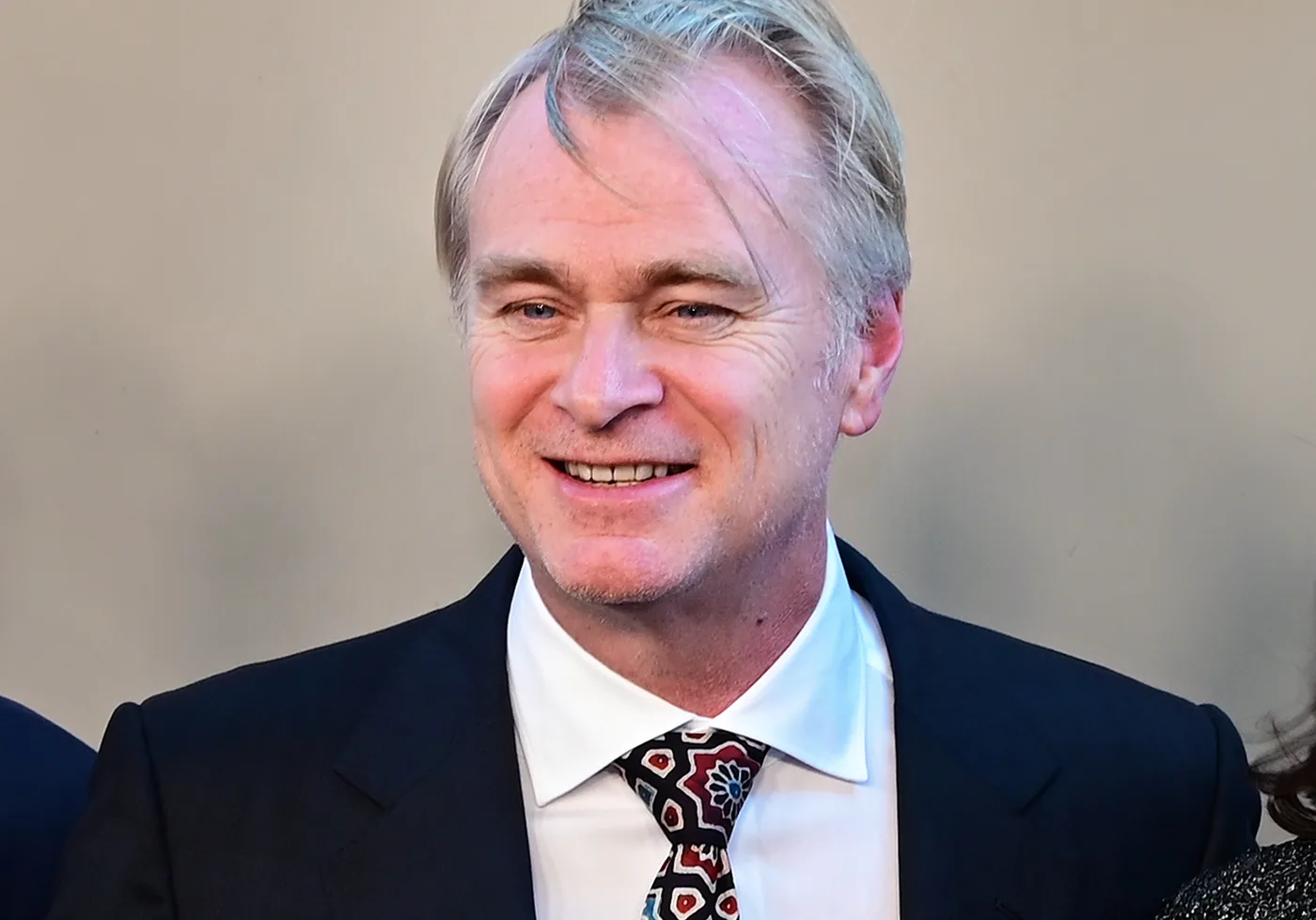
Christopher Nolan's The Odyssey opened on 17 July 2026 and took $124.5 million across 3,919 North American theatres in three days, his largest debut since The Dark Knight Rises in 2012.1 It is an R-rated adaptation of a three-thousand-year-old Greek poem, and it is also the twelfth feature by a director who has already made a superhero film, a war film, a heist film and a biopic about a physicist.
That range is the problem with ranking him. Sixteen of the rankings here include a Nolan title, filed under sixteen different categories: sword-and-sandal epics, time-travel films, Warner Bros. back catalogue, one cinematographer's portfolio, one composer's portfolio, and the greatest Al Pacino roles.
Nolan is the rare director whose films are famous individually and homeless collectively: every list files him somewhere, and no two lists agree what he makes.
Six films, one shelf: the Christopher Nolan list
Start with the only ranking where the category and the director are the same thing. Every option is his: The Dark Knight, Inception, Interstellar, Memento, Dunkirk and Oppenheimer.
Six films, six genres. A crime sequel, a heist picture, a space drama, a reverse-chronology thriller, a war film and a three-hour biopic have almost nothing in common except the person who directed them.
That is unusual even among famous directors. Scorsese has crime, Kubrick had range but worked slowly, and Villeneuve is filed under science fiction. Nolan's own list refuses to settle on a shape, which is why the fifteen rankings after this one all have a legitimate claim on him.
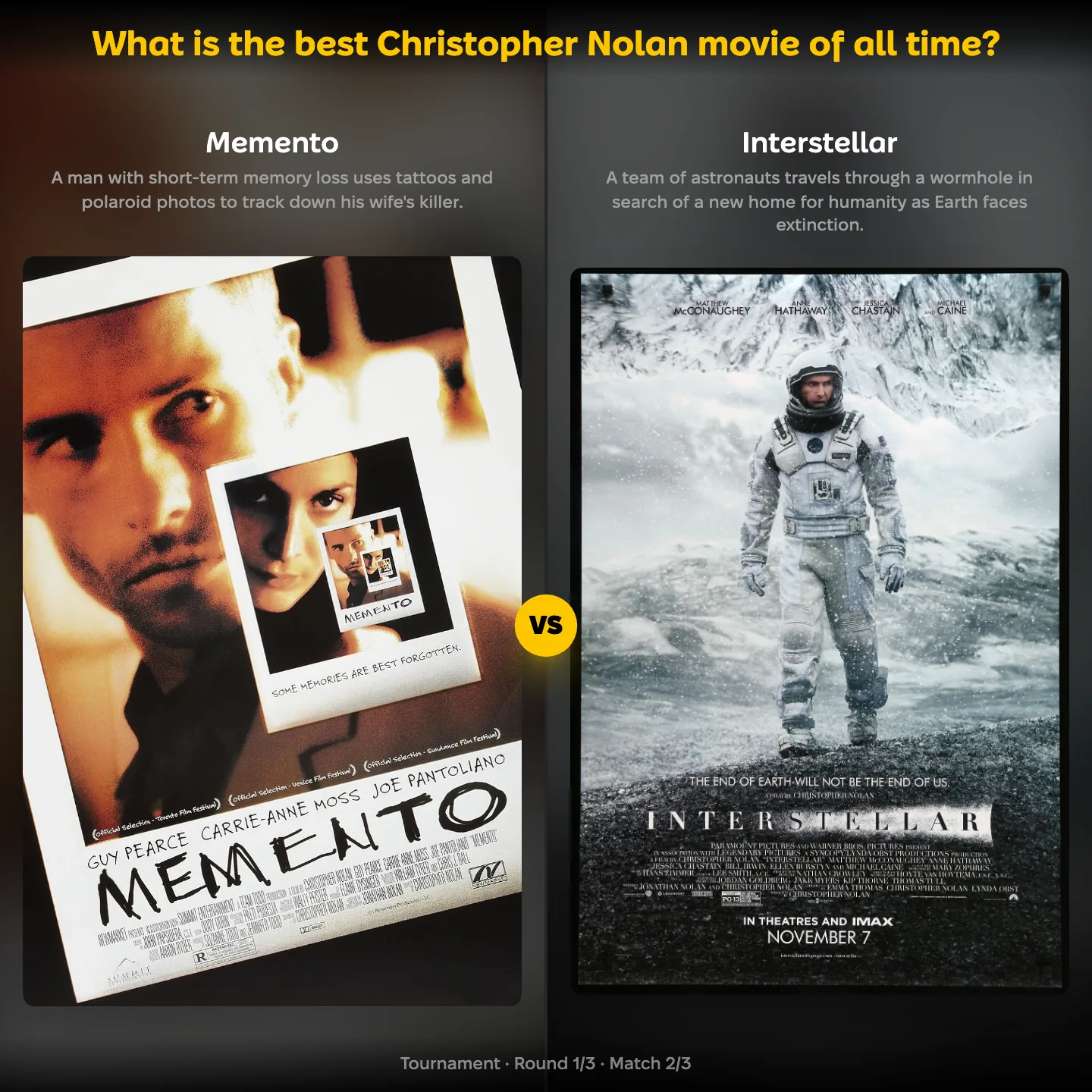
Oppenheimer vs The Godfather: the Best Picture shelf
The Best Picture shelf here runs eighteen winners deep, with Casablanca, Parasite and The Godfather on it. Oppenheimer joined most recently.
Nolan waited a long time to qualify. He was nominated eight times across two decades before the March 2024 ceremony gave him Best Director and, as producer, Best Picture.4 Until that night he was the most nominated director alive without a win.
The film itself arrived with numbers that made the Academy's decision easier. Oppenheimer grossed $975 million worldwide, which stood as the biopic record until the Michael Jackson film Michael passed it at $977 million in June 2026.6 A three-hour, R-rated film about a security clearance hearing is not supposed to do that.
Against Coppola, Spielberg and Lawrence of Arabia, though, it is the entry with the least distance from the present, and voters tend to be kinder to the films they saw young.
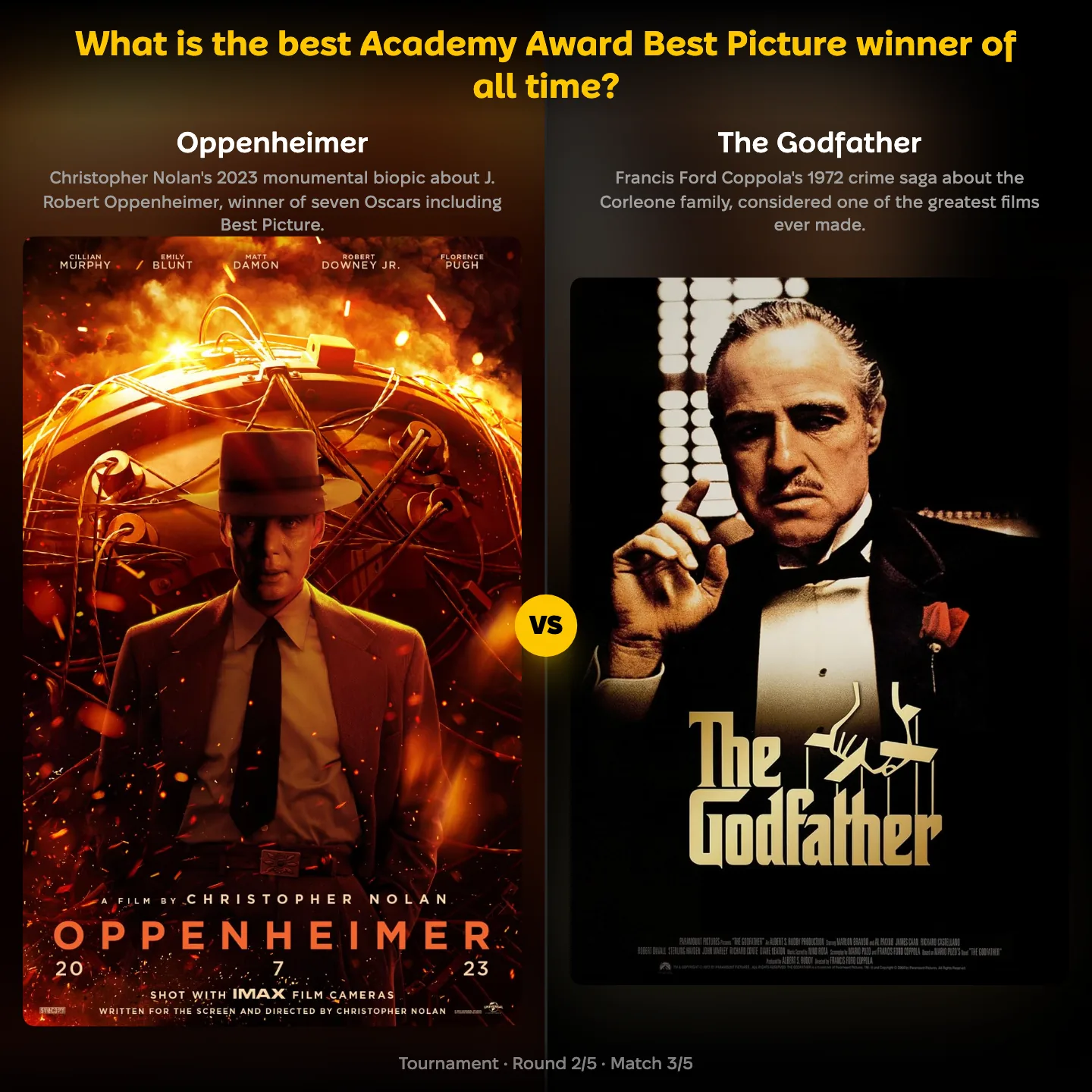
The Dark Knight vs The Lord of the Rings
Nine trilogies compete here. Nolan's Batman films are the only set begun by a director who had never made a blockbuster.
The Dark Knight is also the reason the Academy Awards look the way they do now. It took eight Oscar nominations in 2009 and won two, and it was left out of the Best Picture five. The Board of Governors expanded the category to ten films that year, and Academy president Sid Ganis conceded that the words "Dark Knight" had come up in the discussion.7
So a comic-book sequel changed the rules of the ceremony that snubbed it, which is a strange thing for a trilogy to have on its record.
The competition is heavy. The Lord of the Rings won seventeen Oscars across three films, The Godfather has two Best Picture winners inside it, and Star Wars invented the modern franchise. Nolan's trilogy has one film everybody agrees on and two that people argue about.
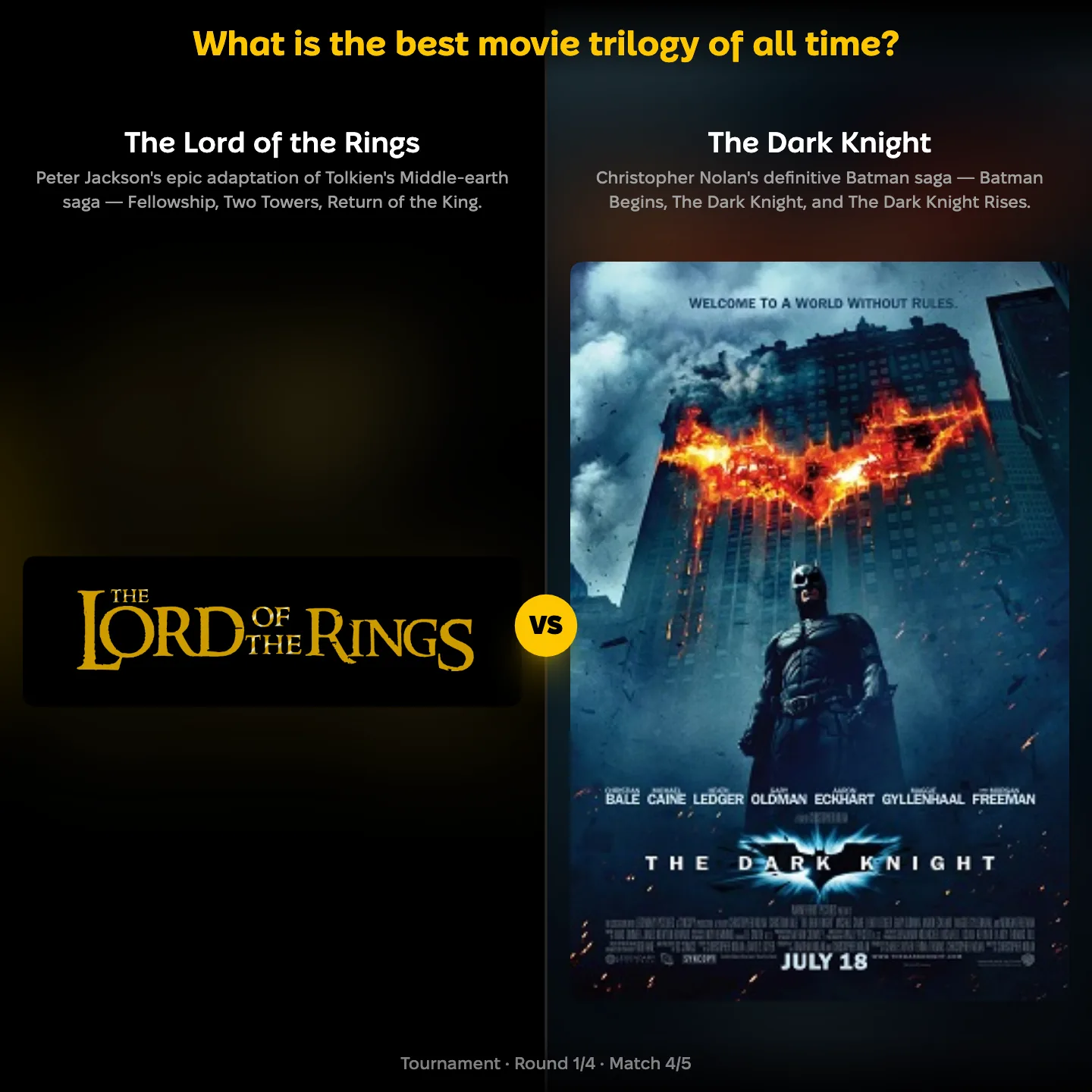
Nolan and Kubrick on the same list
Thirty-two directors appear here, among them Kubrick, Hitchcock, Kurosawa and Bong Joon-ho. This is the rare ranking where Nolan is the option rather than the credit underneath one.
His case is technical rather than formal. He shoots on film when the industry has stopped, builds practical sets instead of rendering them, and has pushed IMAX cameras into scenes nobody had tried to shoot with them.
Kubrick is the obvious comparison and the difficult one. Buster Keaton, Sergei Eisenstein, Orson Welles and Jean-Luc Godard are all here too, and each of them changed a grammar rather than a format. Nolan's innovations are largely about capture, not about what a film can be.

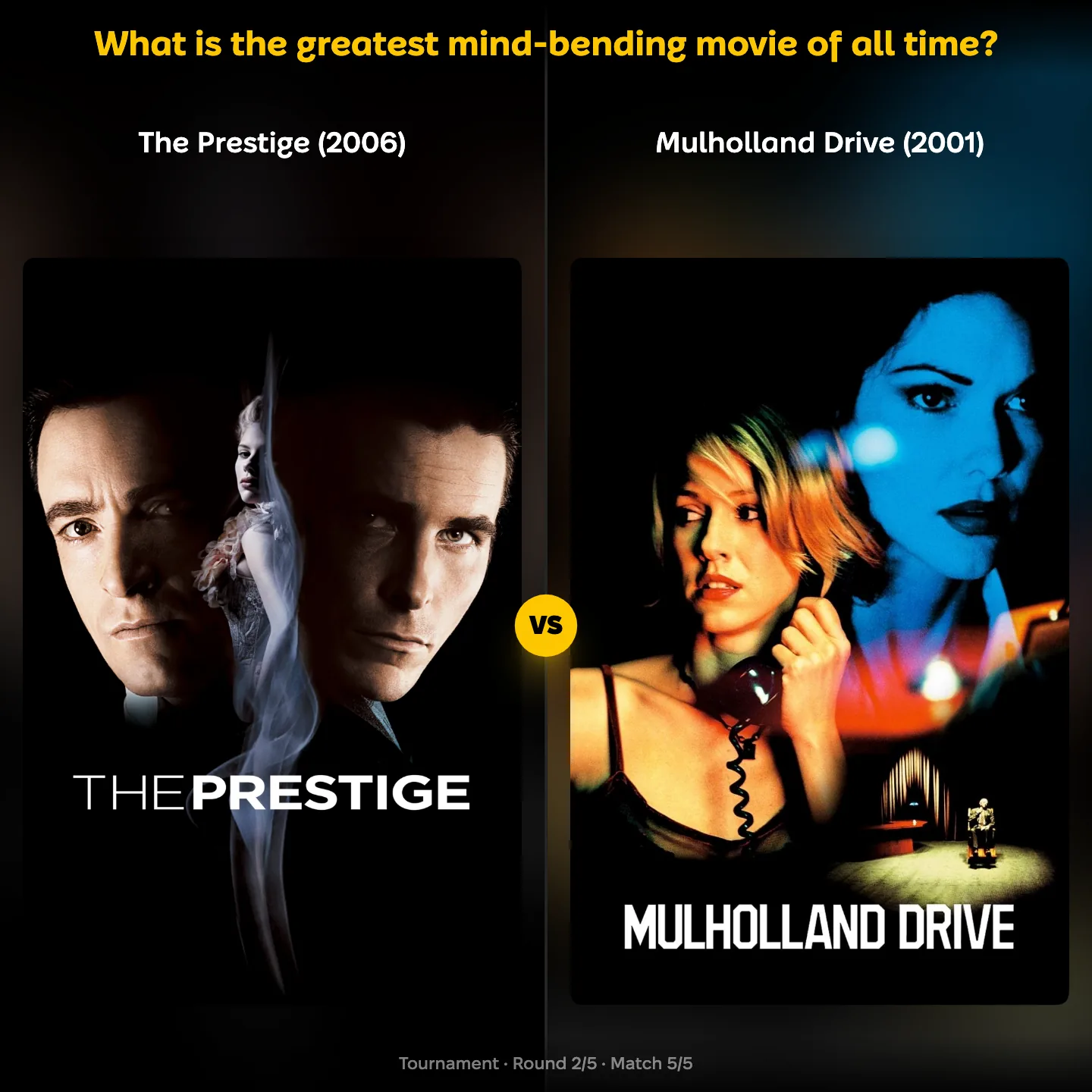
The Prestige vs Mulholland Drive: the puzzle-film shelf
Twenty puzzle films make up this one, and five belong to Nolan: Memento, Inception, The Prestige, Interstellar and Tenet.
No other director has more than one. The Matrix, Fight Club, Donnie Darko, Primer and Mulholland Drive are each somebody's single entry, which makes this the closest thing to a Nolan category that exists without his name on it.
It is also where the criticism starts. A director who occupies a quarter of the puzzle-film shelf is, by that measure, a specialist, and the charge that his films are structures before they are stories has followed him since 2000.
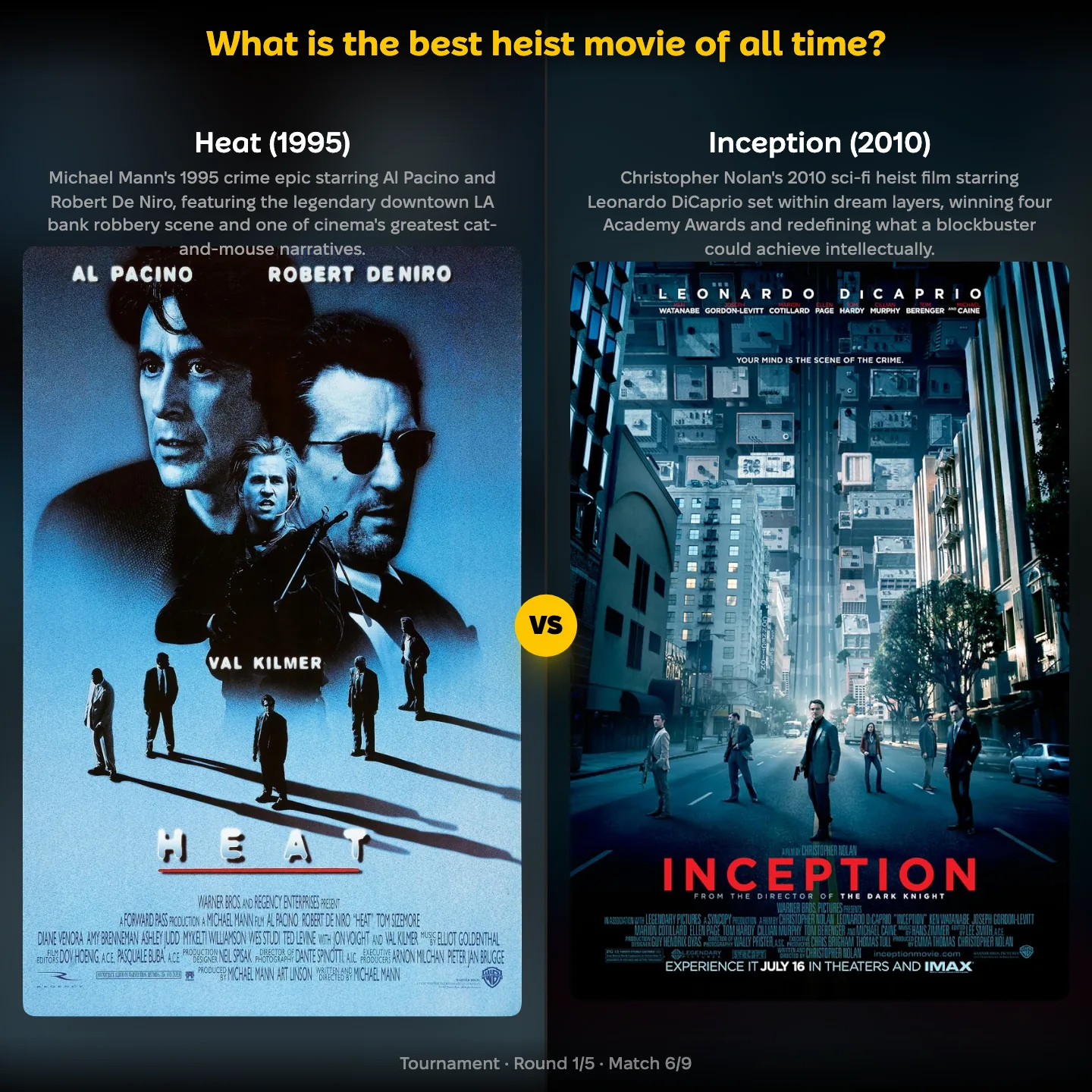
A caper where the vault is a man's head
Inception appears on a ranking of seventeen heist films, alongside Rififi, Heat, Ocean's Eleven and The Italian Job.
It belongs there structurally. The crew is assembled, the mark is cased, the plan is explained to the audience, and the job goes wrong in the third act, all of it exactly to genre. The only alteration is that the safe is a person's subconscious.
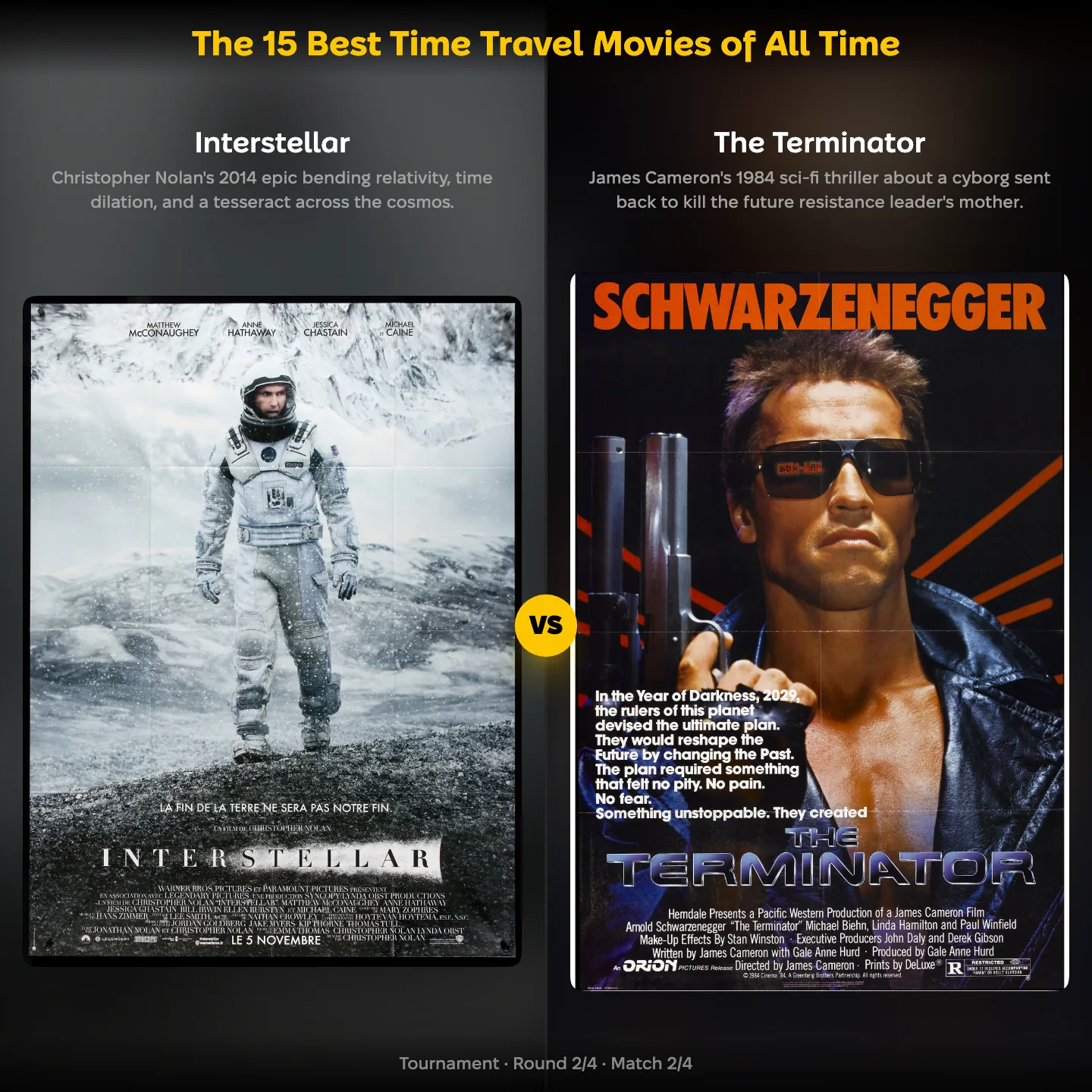
Relativity counts as time travel, so Interstellar qualifies
Most of the fifteen entries here need a machine: the DeLorean, the Terminator's arrival, the chair in Primer.
Interstellar has no machine. Its characters move through time by moving through gravity, and the hour spent on Miller's planet costs twenty-three years back on the ship. Kip Thorne, who worked on the film's science and modelled its black hole, shared the 2017 Nobel Prize in Physics for the detection of gravitational waves.10
Whether that counts as time travel is the whole reason the entry is interesting. Against Back to the Future and Groundhog Day, which are about the pleasure of repeating a day, Interstellar is about never getting the years back.
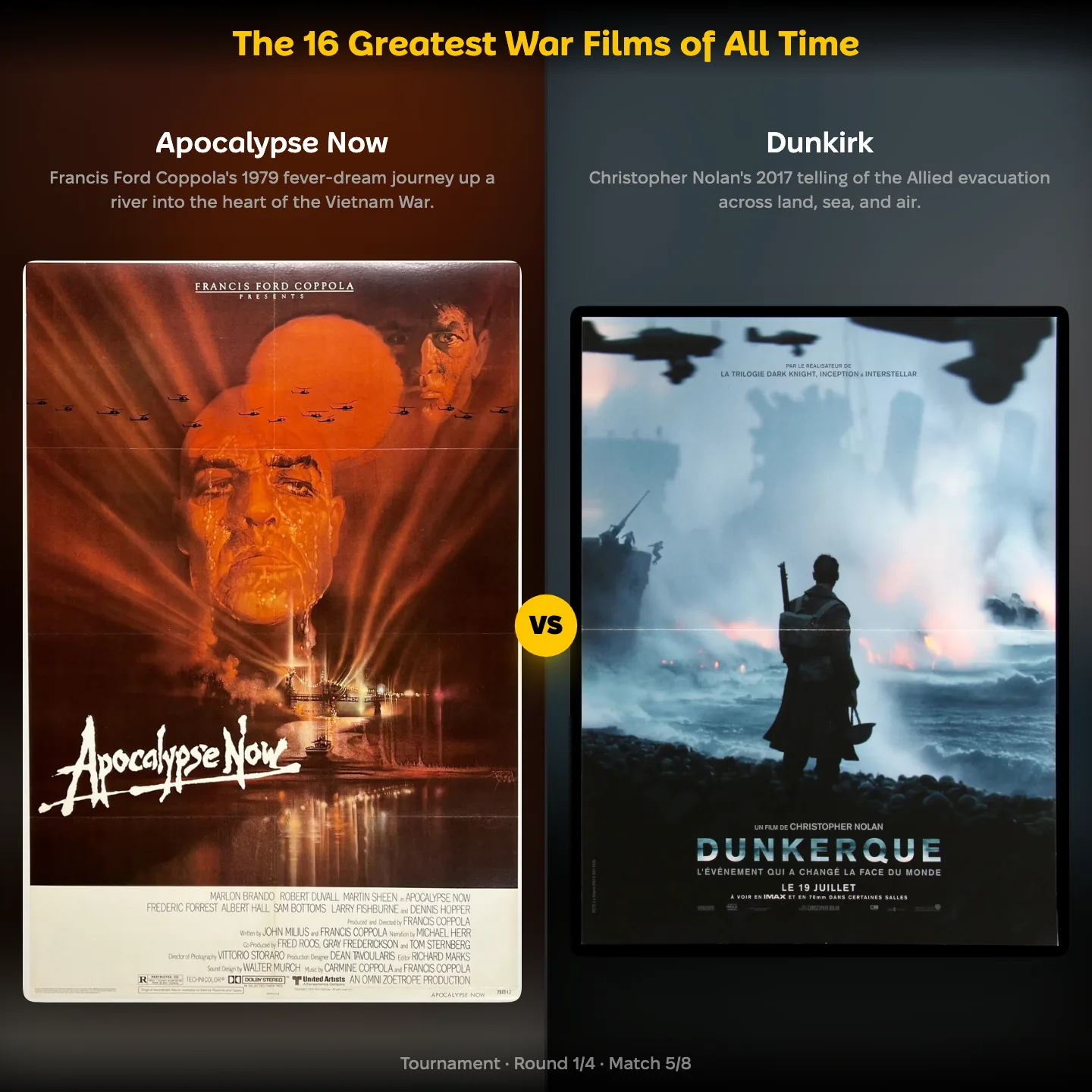
Dunkirk vs Apocalypse Now: the war film with almost no script
Dunkirk is the shortest and quietest of the sixteen war films collected here.
Nolan's 2017 film runs 106 minutes, has very little dialogue, and gives its characters almost no backstory. It also refuses the genre's usual subject: there is no battle to win, only an evacuation to survive, and the enemy is barely shown on screen.
Apocalypse Now, Platoon, Full Metal Jacket and The Deer Hunter all do the opposite. They are long, verbal, and built around what combat does to a person's interior life, which is the tradition Dunkirk deliberately stepped outside.
The counter-argument is that a war film with no interior life is a technical exercise, and that the three interlocking timelines are doing work the characters should have done.
Homer in IMAX, next to Ben-Hur
Gladiator, Ben-Hur, Spartacus, 300, Quo Vadis: the sword-and-sandal ranking runs twenty deep, and The Odyssey is its only entry released this decade.
The genre had been more or less dormant as a prestige proposition, and Universal restarted it at scale. The studio spent $250 million on production and another $125 million on marketing, and after two weekends the film had taken $289 million in North America and $652 million worldwide.2 Matt Damon plays Odysseus.
Ben-Hur is the benchmark it has to clear. William Wyler's 1959 epic won eleven Academy Awards, a total matched only twice since, and it is the film every chariot-scale production has been measured against for sixty-seven years.
What Nolan brings that the others could not is format. The Odyssey is the first feature shot entirely with IMAX film cameras, which required IMAX to build a new camera generation for it.11 A poem about a man crossing water is an unusually good excuse for a very large frame.
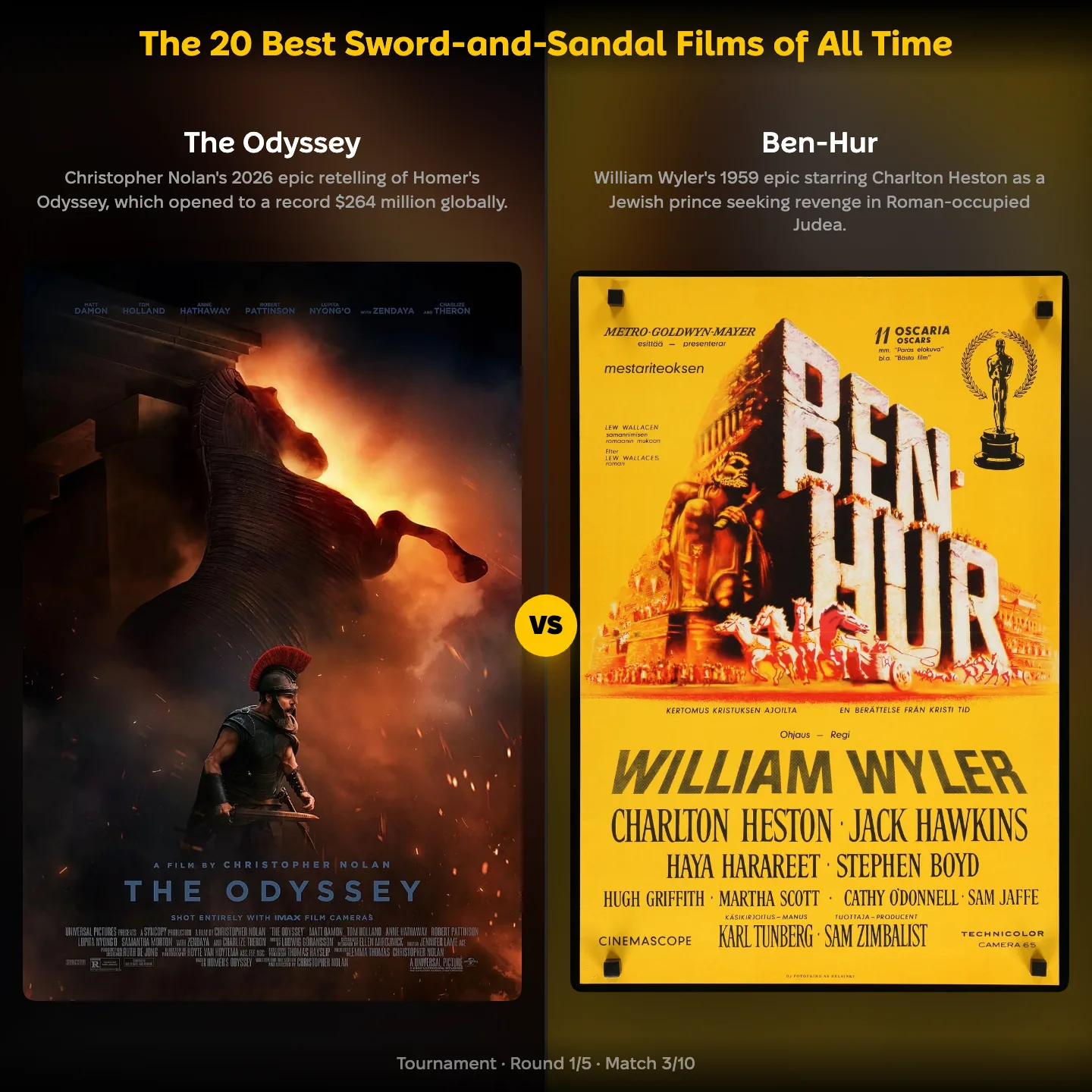
Five of Warner Bros.' twenty-four
This ranking covers a century of one studio, from Casablanca and The Wizard of Oz to Mad Max: Fury Road. Five of the twenty-four entries are Nolan's: Interstellar, Batman Begins, Dunkirk, Inception and The Dark Knight.
No other director on the ranking has more than two. Stanley Kubrick, who spent much of his career at the same studio, has A Clockwork Orange and Full Metal Jacket.
The partnership behind those five films no longer exists. Warner Bros. put Tenet into theatres during the pandemic and then announced its entire 2021 slate would go to streaming on release day, and Nolan took his next film to Universal.8
So a fifth of the studio's best-of list was made by a director who left it, which is the kind of detail a studio retrospective tends to leave out.
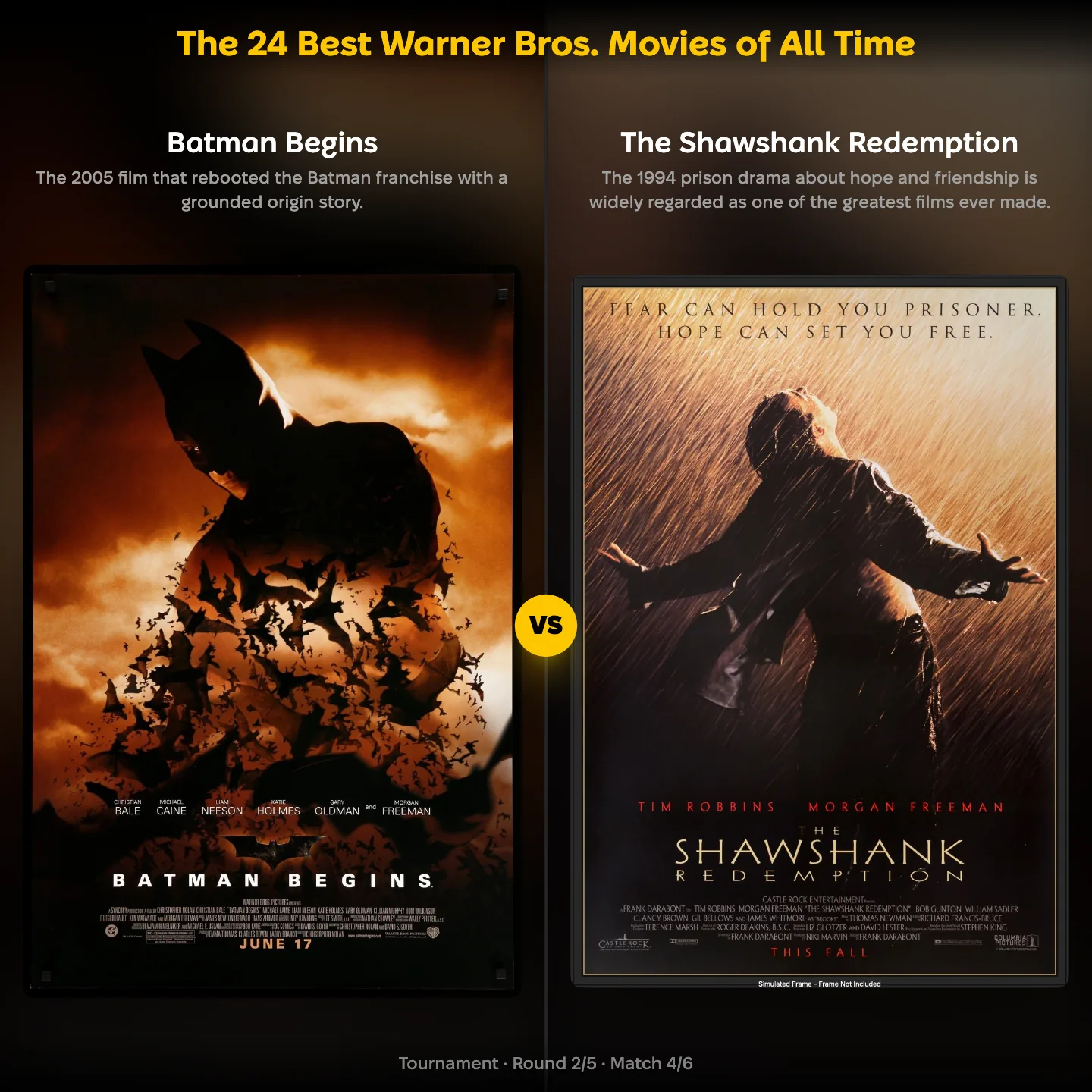
Cillian Murphy's filmography is mostly Nolan's
Murphy has fifteen films here, and five carry Nolan's name: both Batman pictures, Inception, Dunkirk and Oppenheimer.
The two met when Murphy auditioned for Batman in 2004, did not get it, and was cast as the Scarecrow instead. He then appeared in four more Nolan films across eighteen years, mostly in supporting parts, before being handed the lead in Oppenheimer and winning Best Actor for it. Robert Downey Jr. took Best Supporting Actor from the same film, part of a haul of seven Oscars from thirteen nominations.5
28 Days Later is the counterweight. Danny Boyle gave Murphy his breakout in 2002, and the remaining entries, among them Sunshine and Small Things Like These, are the career he built when Nolan was not calling.
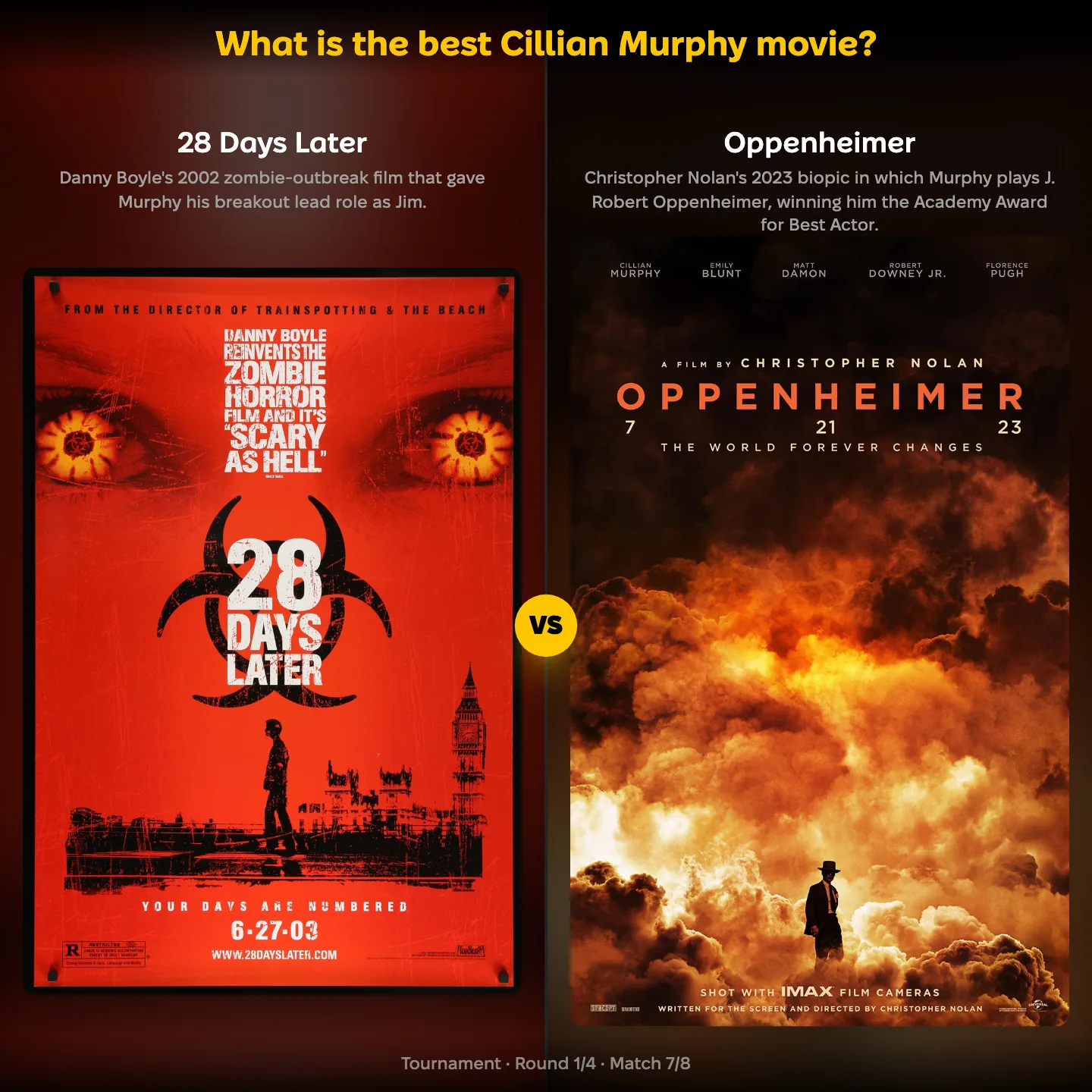
Hans Zimmer wrote four of these for one director
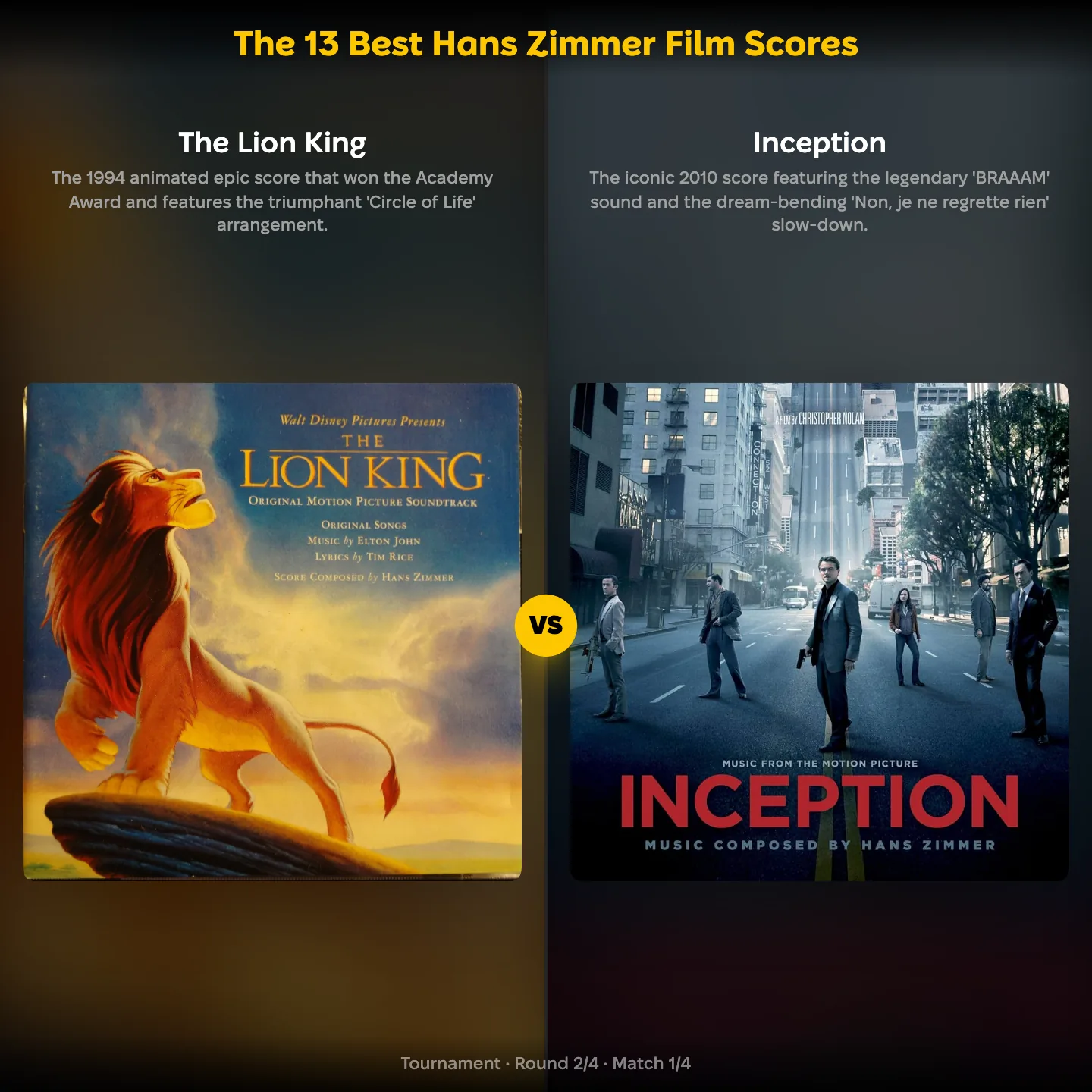
Zimmer's thirteen best scores cover four decades of work. Four were written for Nolan: Inception, Dunkirk, The Dark Knight and Interstellar.
Those four also changed what a blockbuster sounds like. The braying brass note in Inception was imitated so widely that it acquired a nickname, and the ticking-watch pulse under Dunkirk is a Nolan pocket watch recorded and built into the score.
Zimmer then turned Nolan down for Tenet to score Dune instead, and the two have not worked together since.
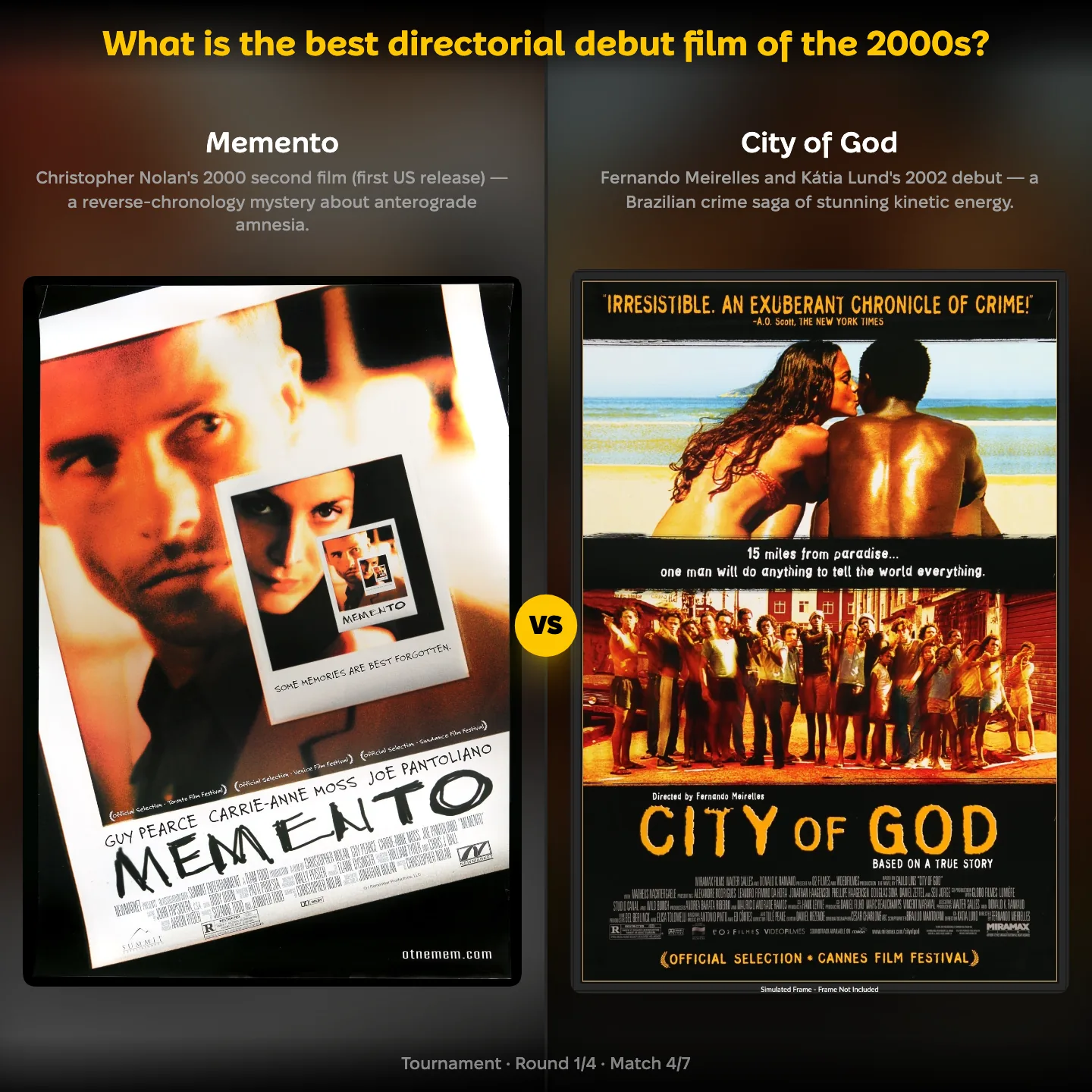
Memento vs City of God: the debut that wasn't a debut
Memento qualifies for this ranking of thirteen 2000s directorial debuts by a technicality.
It was Nolan's second feature. The first was Following, made for $6,000 in black and white, shot on weekends across a year because everyone in the cast had a day job, and cut to 70 minutes to save on film stock.3 Almost nobody saw it, so Memento became the debut in practice.
It was also the film that got the Academy's attention for the first time, earning Nolan a nomination for Best Original Screenplay.9
City of God, District 9 and Primer are the competition, and each of them is a genuine first film. Memento is the entry that had a rehearsal nobody remembers.
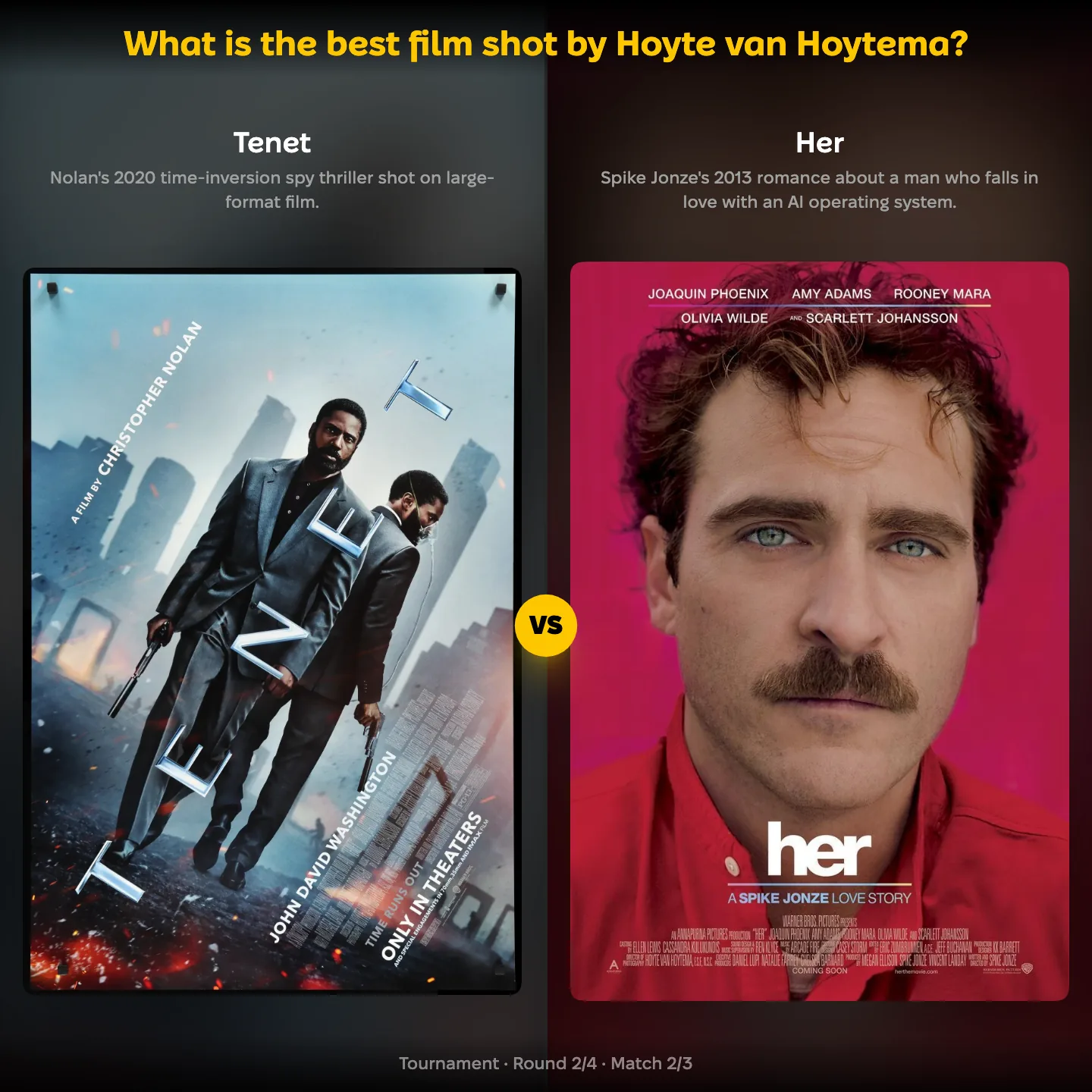
Hoyte van Hoytema, and the one ranking with room for Tenet
Van Hoytema has photographed every Nolan film since 2014. Four of the twelve entries here are theirs together: Oppenheimer, Tenet, Interstellar and Dunkirk.
Tenet is the interesting entry, because this is close to the only ranking that still has room for it. The film cost $205 million, opened into a pandemic in 2020, and has taken $366.3 million worldwide. North American cinemas supplied $59.5 million of that.8
Nolan had pushed for a theatrical release as a way of restarting the industry, and the fallout from that release ended his partnership with Warner Bros. after eighteen years.
Against Her, Ad Astra and Tinker Tailor Soldier Spy, Tenet is not the strongest thing on the ranking. It is on it because of how it was photographed, which is roughly the consensus on the film itself.
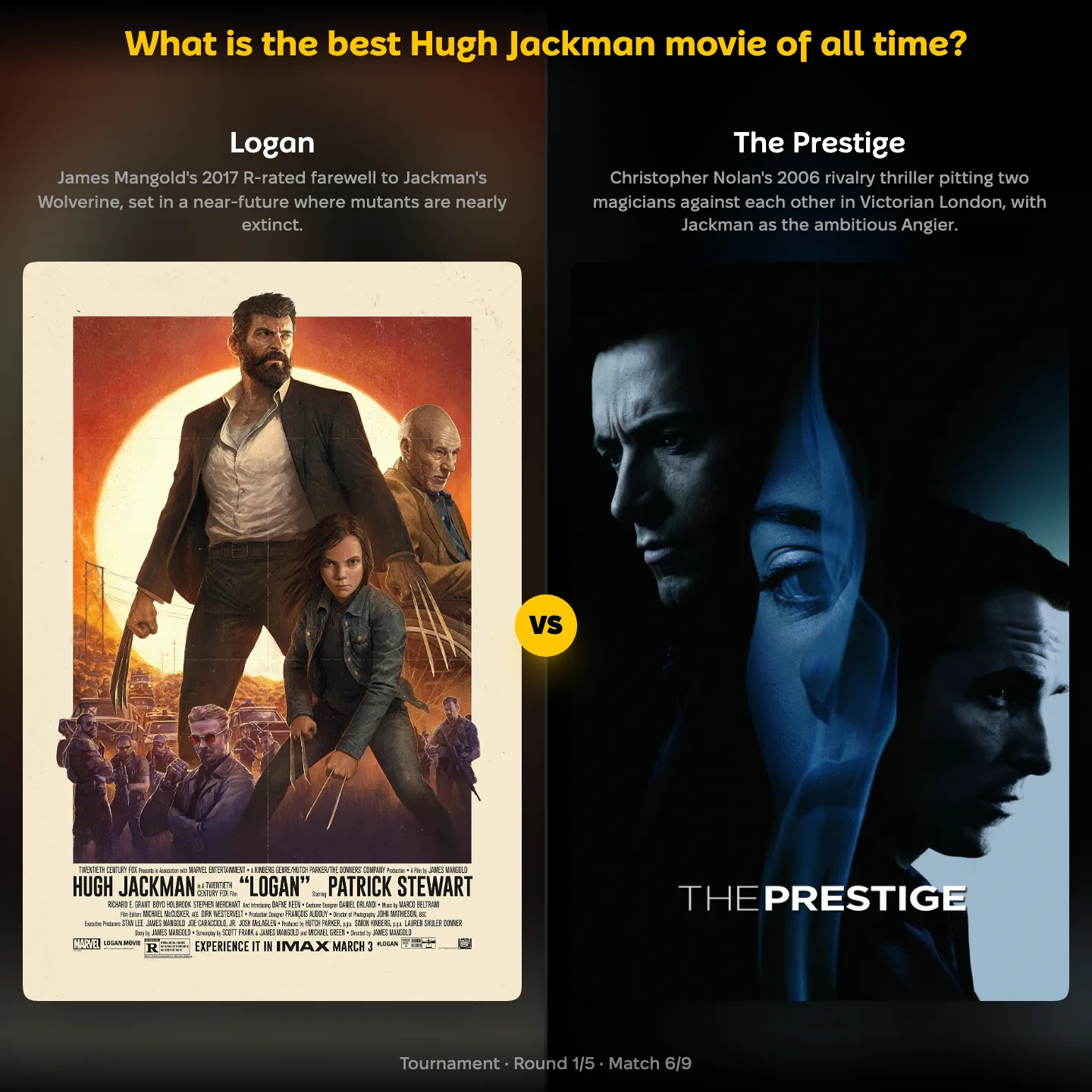
Hugh Jackman: Wolverine, a showman, and a Victorian magician
Jackman's seventeen entries here are mostly what he is known for: Logan, three more X-Men films, The Greatest Showman, Les Misérables.
The Prestige is the outlier. Jackman plays Robert Angier, a stage magician conducting a twenty-year feud with a rival, in a film Nolan made in 2006 between Batman Begins and The Dark Knight using largely the same crew.
It is the one entry on the ranking where Jackman is neither a franchise lead nor a singer, and it is the film most often named when people argue he was underused for a decade.
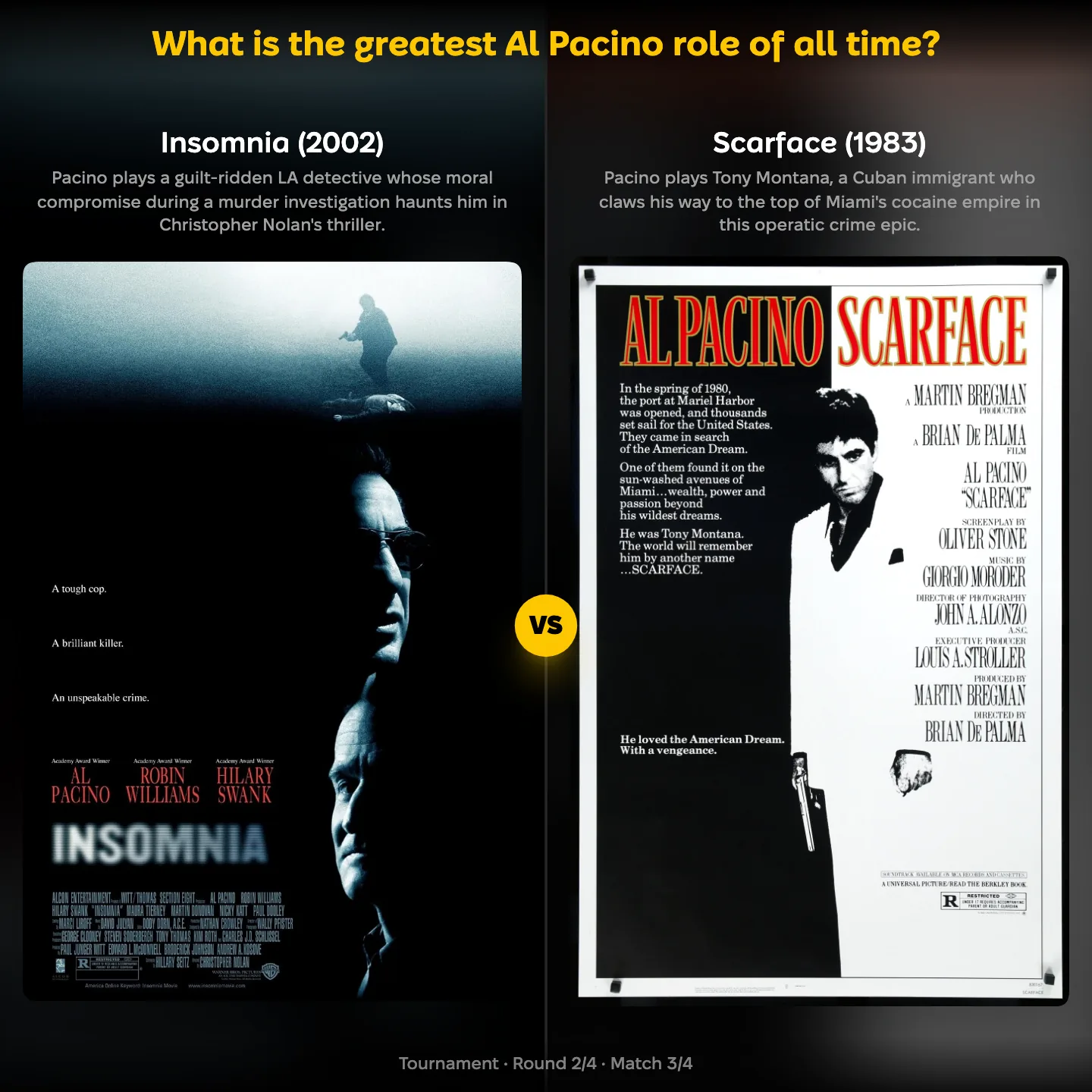
Insomnia vs Scarface: the Nolan film nobody lists
One of the fourteen Al Pacino roles collected here was directed by Christopher Nolan.
Insomnia came out in 2002, between Memento and Batman Begins. Pacino plays a Los Angeles detective sent to a town in Alaska where the sun does not set, unable to sleep and unable to stop lying about a shooting. Robin Williams plays the killer against type, in one of the rare thrillers where he is genuinely frightening.
It is also a remake of a 1997 Norwegian film, the only Nolan feature he neither wrote nor co-wrote, and the one that appears on no best-of-Nolan ranking anywhere.
Michael Corleone, Tony Montana, Frank Serpico and Sonny Wortzik are the company here. A tired cop in Alaska is not going to displace any of them, and that is precisely why this is the most interesting place Nolan turns up.
Sixteen categories, one filmography
Nolan has spent twenty-eight years being the most recognisable director working and the hardest one to file. A career that runs from a black-and-white thriller shot on weekends to a Greek epic in IMAX does not produce a category, it produces sixteen of them, and the disagreement about which one is the real one is the reason he keeps being worth arguing about.
Each of these sixteen orders came out of the same method, one head-to-head at a time.
Pick the category you think he actually belongs in, and go make the case.
More rankings, more angles
- Dune: A Flop, a Masterpiece, and 15 Lists in Between — the other unfilmable book that got filmed twice
- 16 Rankings, One Batman — the character Nolan handed back to Warner Bros.
- How Many Ways Can You Rank Matt Damon? — Odysseus, before he was Odysseus
- Tom Cruise: Fighter Pilot, Sports Agent, Vampire, Hitman — one actor across sixteen unrelated shelves
Sources
- Variety: The Odyssey opening weekend, $124.5m from 3,919 theatres and Nolan's biggest debut since 2012: variety.com (checked 2026-08-19)
- Variety: The Odyssey second weekend, $289m domestic / $652m worldwide, $250m production and $125m marketing spend: variety.com (checked 2026-08-19)
- Wikipedia: Following (1998), the $6,000 budget, weekend shooting schedule and 70-minute running time: en.wikipedia.org (checked 2026-08-19)
- The Hollywood Reporter: Nolan's first Academy Award, after eight nominations: hollywoodreporter.com (checked 2026-08-19)
- Variety: Oppenheimer's seven Oscars from thirteen nominations, including Cillian Murphy and Robert Downey Jr.: variety.com (checked 2026-08-19)
- Deadline: Michael passing Oppenheimer's $975m as the highest-grossing biopic, June 2026: deadline.com (checked 2026-08-19)
- Variety: The Dark Knight's Best Picture omission and the Academy's expansion to ten nominees, with Sid Ganis quoted: variety.com (checked 2026-08-19)
- Wikipedia: Tenet's $205m budget, $366.3m worldwide gross, $59.5m US and Canada share, and Nolan's dispute with Warner Bros. over the 2021 HBO Max slate: en.wikipedia.org (checked 2026-08-19)
- Wikipedia: Nolan's awards record, including the Best Original Screenplay nomination for Memento at the 74th Academy Awards: en.wikipedia.org (checked 2026-08-19)
- The Nobel Prize: Physics 2017, awarded to Rainer Weiss, Barry Barish and Kip Thorne for the detection of gravitational waves: nobelprize.org (checked 2026-08-19)
- Variety: The Odyssey as the first film shot entirely with IMAX cameras, and the camera built for it: variety.com (checked 2026-08-19)