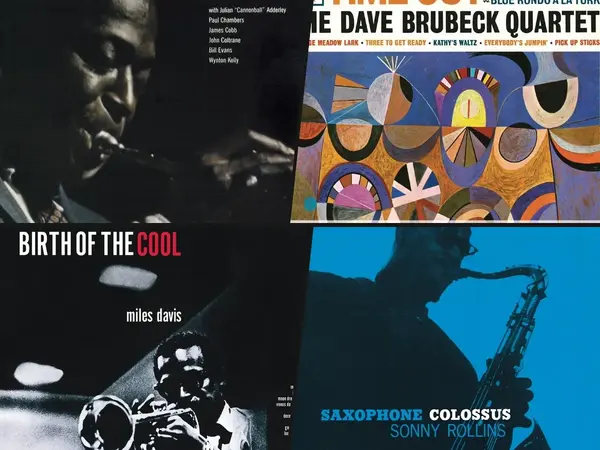
Modal jazz replaced chord changes with scales and modes, opening vast new spaces for improvisation. From Kind of Blue to Maiden Voyage, these records permanently changed how musicians think about harmony.
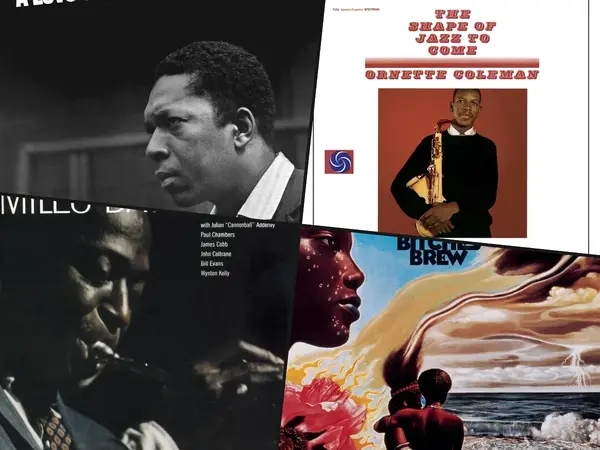
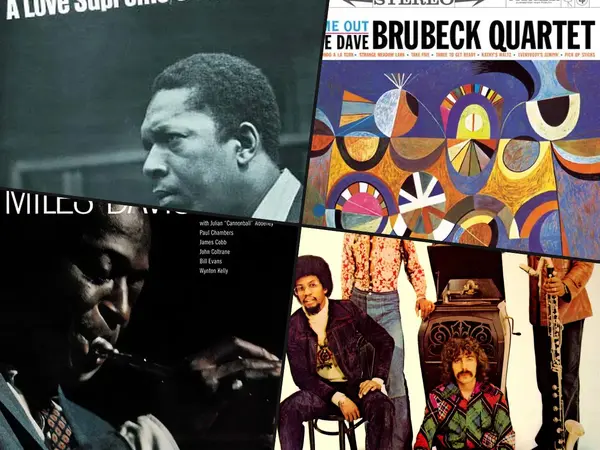
 1Kind of BlueMiles Davis's 1959 album — the Rosetta Stone of modal jazz.1000pts
 2A Love SupremeJohn Coltrane's 1964 modal spiritual suite — the genre's ultimate statement.694pts
 3MilestonesMiles Davis's 1958 album with his sextet, including Cannonball Adderley and John Coltrane, whose title track was his first full step into modal jazz.661pts
 4Search for the New LandLee Morgan recorded this session in 1964, before The Sidewinder came out, but Blue Note shelved it for two years; the modal title track runs over 15 minutes.535pts
 5Journey in SatchidanandaAlice Coltrane's 1971 album with Pharoah Sanders, Cecil McBee and Rashied Ali sets her harp over drones and modal vamps inspired by her spiritual teacher.480pts
 6Speak No EvilWayne Shorter's 1964 modal post-bop classic with Herbie Hancock and Freddie Hubbard.480pts
 7Night DreamerWayne Shorter's 1964 Blue Note album, with trumpeter Lee Morgan, features six of his originals, including the modal waltz that gives the record its name.480pts
 8RosewoodWoody Shaw's major-label debut, recorded in 1977 and released by Columbia in 1978, brought his fourths-based, post-Coltrane modal trumpet style to a wider audience.480pts
 9Blackstone LegacyWoody Shaw's 1970 modal jazz masterpiece — post-Coltrane trumpet at its boldest.480pts
 10KarmaPharoah Sanders' 1969 Impulse! album is built around the 32-minute modal chant 'The Creator Has a Master Plan' and became a founding record of spiritual jazz.416pts
 11My Favorite ThingsJohn Coltrane's 1961 album reimagining the Broadway tune as modal exploration.416pts
 12Live at the Village VanguardJohn Coltrane's 1961 live recordings — modal jazz stretching into new dimensions.416pts
 13Sketches of SpainMiles Davis and arranger Gil Evans recorded this 1960 album of Spanish-inspired music, including the Concierto de Aranjuez, with static, scale-based harmonies that extend Kind of Blue.416pts
 14UnityOrganist Larry Young's 1966 Blue Note album with Woody Shaw, Joe Henderson and Elvin Jones applied Coltrane-style modal playing to the Hammond B-3.341pts
 15JujuWayne Shorter's 1965 Blue Note album sets his tenor against McCoy Tyner, Reggie Workman and Elvin Jones, all veterans of John Coltrane's bands, on hypnotic modal originals.341pts
 16Everybody Digs Bill EvansBill Evans's 1959 Riverside trio album includes 'Peace Piece', a solo improvisation over two repeated chords that foreshadowed the mood of Kind of Blue.341pts
 17ExplorationsBill Evans Trio's 1961 modal piano trio triumph with Scott LaFaro.341pts
 18The Real McCoyMcCoy Tyner's 1967 Blue Note debut, made after he left Coltrane's quartet, with Joe Henderson, Ron Carter and Elvin Jones.340pts
 19Empyrean IslesHerbie Hancock's 1964 Blue Note quartet date with Freddie Hubbard, Ron Carter and Tony Williams includes 'Cantaloupe Island' and the open-ended modal workout 'The Egg'.250pts
 20Maiden VoyageHerbie Hancock's 1965 Blue Note — modal jazz at its most beautiful.250pts
 21Out to Lunch!Eric Dolphy's 1964 avant-modal masterpiece — unlike anything before or since.250pts
 22Mode for JoeJoe Henderson's 1966 Blue Note — modal hard bop with his distinctive twist.250pts
 23SaharaMcCoy Tyner's first Milestone album, recorded in January 1972, adds African and Eastern colour to modal jazz, with Tyner also playing koto, flute and percussion.250pts
 24Africa/BrassJohn Coltrane's first Impulse! album (1961) places his quartet inside a 21-piece band with French horns and euphonium, centred on the 16-minute modal piece 'Africa'.250pts
 25Inner UrgeRecorded in November 1964 and issued in 1966, Joe Henderson's quartet date with McCoy Tyner and Elvin Jones opens with its brooding modal title track.0pts
 26In a Silent WayRecorded in one February 1969 session and edited by producer Teo Macero, Miles Davis's album floats long, static grooves and is widely seen as his first fusion record.0pts
 27Ezz-theticsGeorge Russell's 1961 Riverside sextet album with Eric Dolphy puts his Lydian Chromatic Concept into practice on pieces such as 'Lydiot' and Miles Davis's 'Nardis'.0pts
 28CrescentJohn Coltrane's classic quartet recorded this 1964 Impulse! album of originals, a calmer prelude to A Love Supreme, with Jimmy Garrison's long bass solo on 'Lonnie's Lament'.0pts
 29ImpressionsReleased in 1963, this Impulse! album mixes Village Vanguard live recordings and studio tracks, led by John Coltrane's long solo on the modal title tune.0pts
Photo credits
- Search for the New Land cover — Blue Note, rights holder
- Journey in Satchidananda cover — Impulse!, rights holder
- Night Dreamer cover — Blue Note, rights holder
- Rosewood cover — Columbia, rights holder
- Karma cover — impulse!, rights holder
- My Favorite Things cover — Atlantic, rights holder
- Sketches of Spain cover — Columbia, rights holder
- Unity cover — Blue Note, rights holder
- Juju cover — Blue Note, rights holder
- Everybody Digs Bill Evans cover — Riverside, rights holder
- Empyrean Isles cover — Blue Note, rights holder
- Sahara cover — Milestone, rights holder
- Africa/Brass cover — impulse!, rights holder
- Inner Urge cover — Blue Note, rights holder
- In a Silent Way cover — Columbia, rights holder
- Ezz-thetics cover — Riverside, rights holder
- Crescent cover — impulse!, rights holder
- Impressions cover — impulse!, rights holder
Comments 1
Milestones traded chord sequences for a scale and a lot of room in 1958; My Favorite Things used the same freedom to run fourteen minutes: https://youpick.best/articles/miles-davis-vs-john-coltrane-ranked
YP
ypb-teamSep 6