
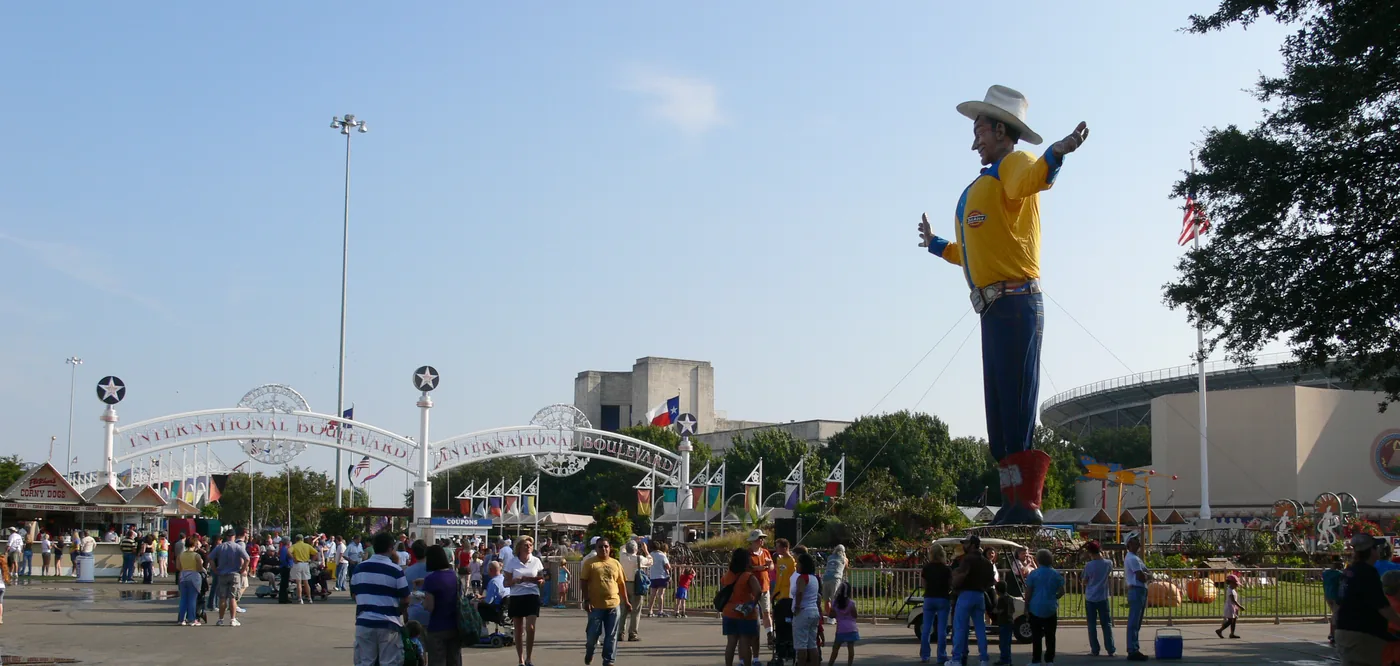
The State Fair of Texas opens in Dallas on 25 September and runs to 18 October, its 140th year.1 It is the loudest annual reminder that Texas treats itself as a country rather than a state, which it briefly was: the Republic of Texas governed itself from March 1836 until annexation in December 1845, nine years and eleven months of its own flag, army and foreign ministry.2
That self-image is why Texas ends up filed in so many unrelated places. It is a barbecue method, a country-music subgenre, a horror-film location, a burger chain, a college football program and the word astronauts say first when they call home.
Sixteen of the rankings here hold something Texan. Below, each one and the question it puts to the state.
Texas does not appear in these lists as a state. It appears as a brisket, a chainsaw, a blues record and a desert town of 1,700 people, and each of those is arguing with a different crowd.
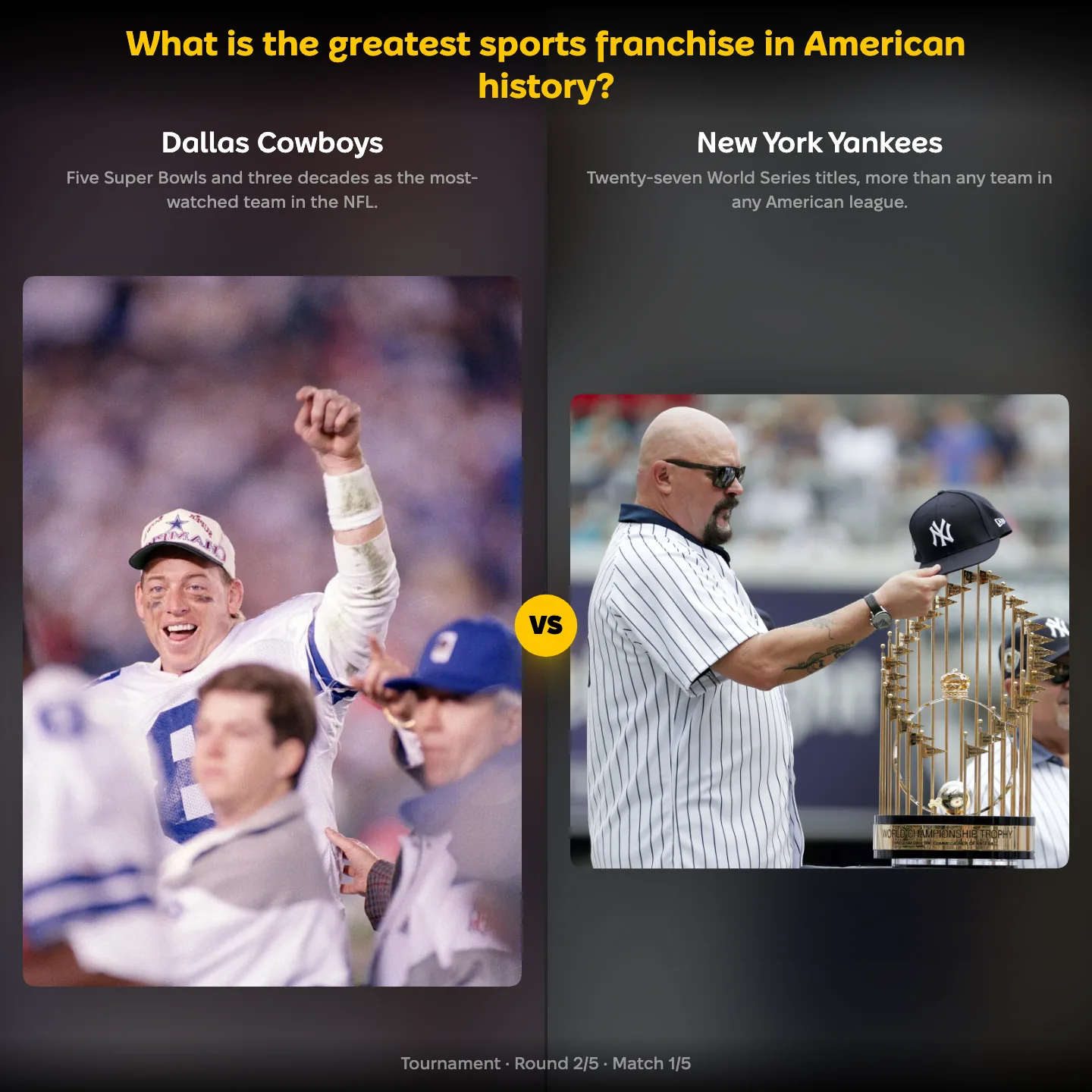
Dallas Cowboys vs New York Yankees: two claims on "America's team"
This ranking asks which franchise in any American sport has the strongest all-time case, so it mixes baseball dynasties with basketball dynasties and football ones.
Texas enters it twice. The Dallas Cowboys hold five Super Bowl titles and three decades as the most-watched team in the NFL, and the nickname "America's Team" has stuck to them since a 1978 highlight reel.
The San Antonio Spurs are the second entry, and they are the opposite kind of franchise: five titles built quietly over fifteen years in the smallest market in the league.
Both are up against the New York Yankees and their 27 World Series, the Boston Celtics, the Montreal Canadiens. Texas is one of very few states with two teams in a field like this, which is the point worth noticing.
Texas Longhorns vs Alabama Crimson Tide: 1963, 1969, 1970, 2005
College football is the sport Texas takes most personally, and the Longhorns are the state's entry in the all-time programs ranking.
Texas claims four national championships, in 1963, 1969, 1970 and 2005. The last one is the one people replay: Vince Young running in the winning touchdown against USC with nineteen seconds left.
Alabama, Ohio State, Notre Dame and Oklahoma all arrive with deeper trophy cases, and Oklahoma arrives with the Red River rivalry attached, which is played every October at the Cotton Bowl inside the State Fair grounds.
The Longhorn case is reach rather than count: no program has produced more of the sport's money, its television contracts or its arguments.
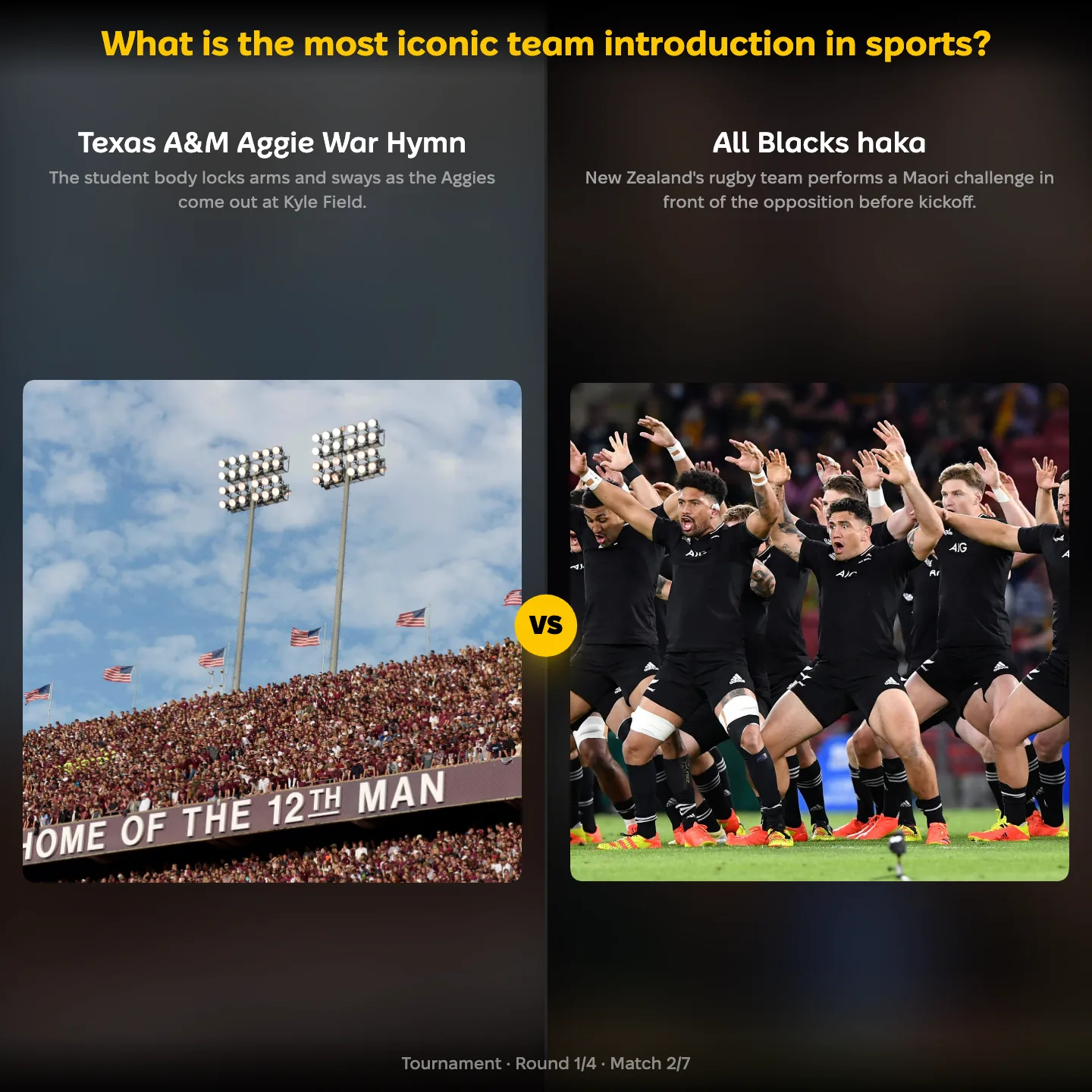
The Aggie War Hymn vs the All Blacks haka
Texas A&M's student section links arms and saws its legs sideways during the War Hymn, a ritual that visibly moves Kyle Field.
This ranking covers pre-match theatre worldwide, so the company is Liverpool's Kop, Borussia Dortmund's Yellow Wall and the All Blacks performing the haka in front of an opponent standing still.
American college traditions crowd the rest of the list — Clemson running down the hill, Virginia Tech and Enter Sandman, the LSU night game.
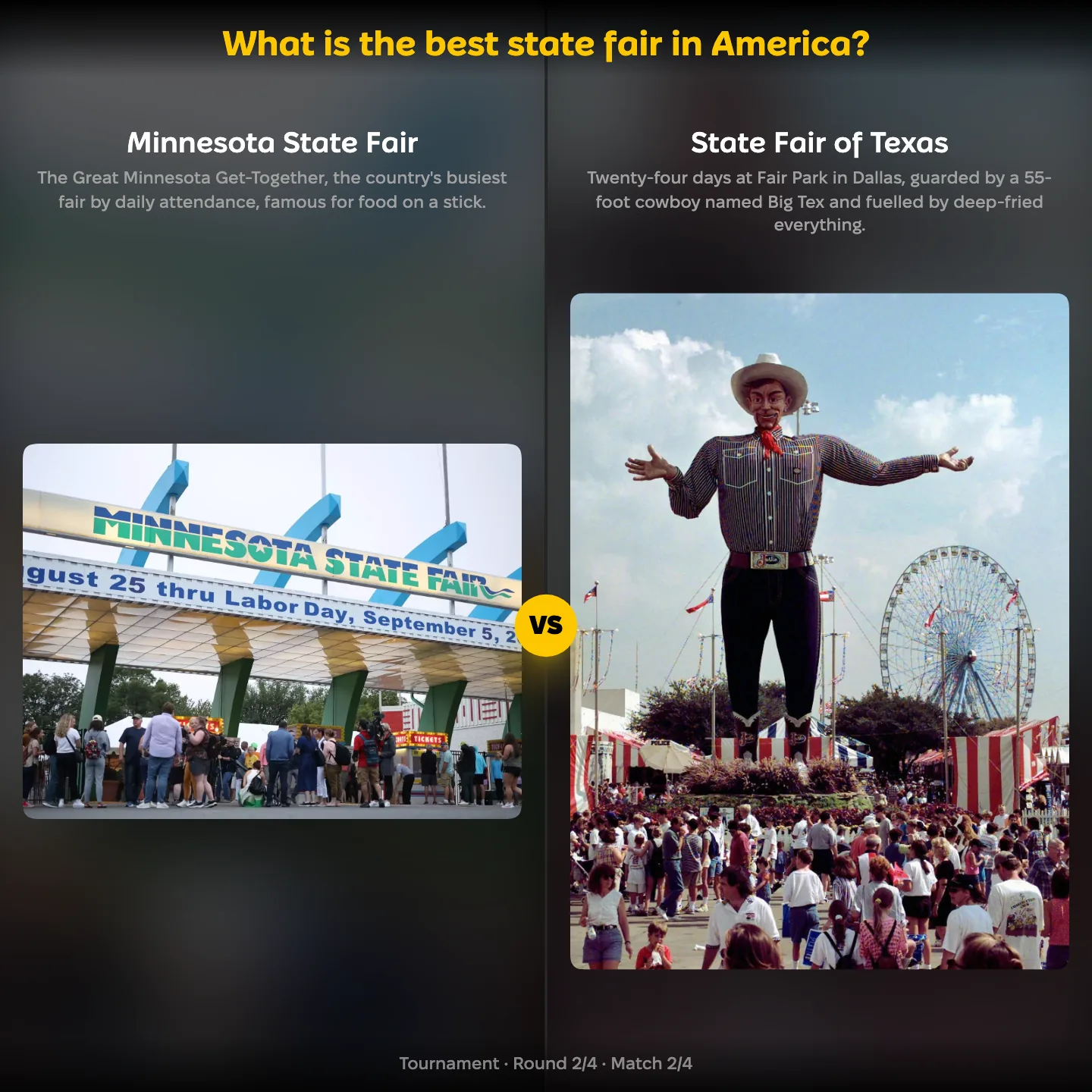
State Fair of Texas: 140 years, 24 days, one 55-foot cowboy
The fair opening in Dallas this week is unusually large even by the standards of a country that takes state fairs seriously.
Big Tex has greeted visitors since 1952. He stands 55 feet after the rebuild that followed a 2012 electrical fire, has a chest measuring 33 feet 9 inches, and wears size 96 boots.3 He began life as a 49-foot Santa Claus bought from the town of Kerens for $750.
The food is the other half of the reputation. Fletcher's brothers Neil and Carl sold the first corny dog at the fair in 1942, which makes the fried hot dog on a stick older at Fair Park than the cowboy watching over it.4
The opposition is real. Minnesota packs more people into fewer days, Iowa sculpts a cow out of butter every August, and Alaska grows cabbages heavy enough to need two men to lift them.
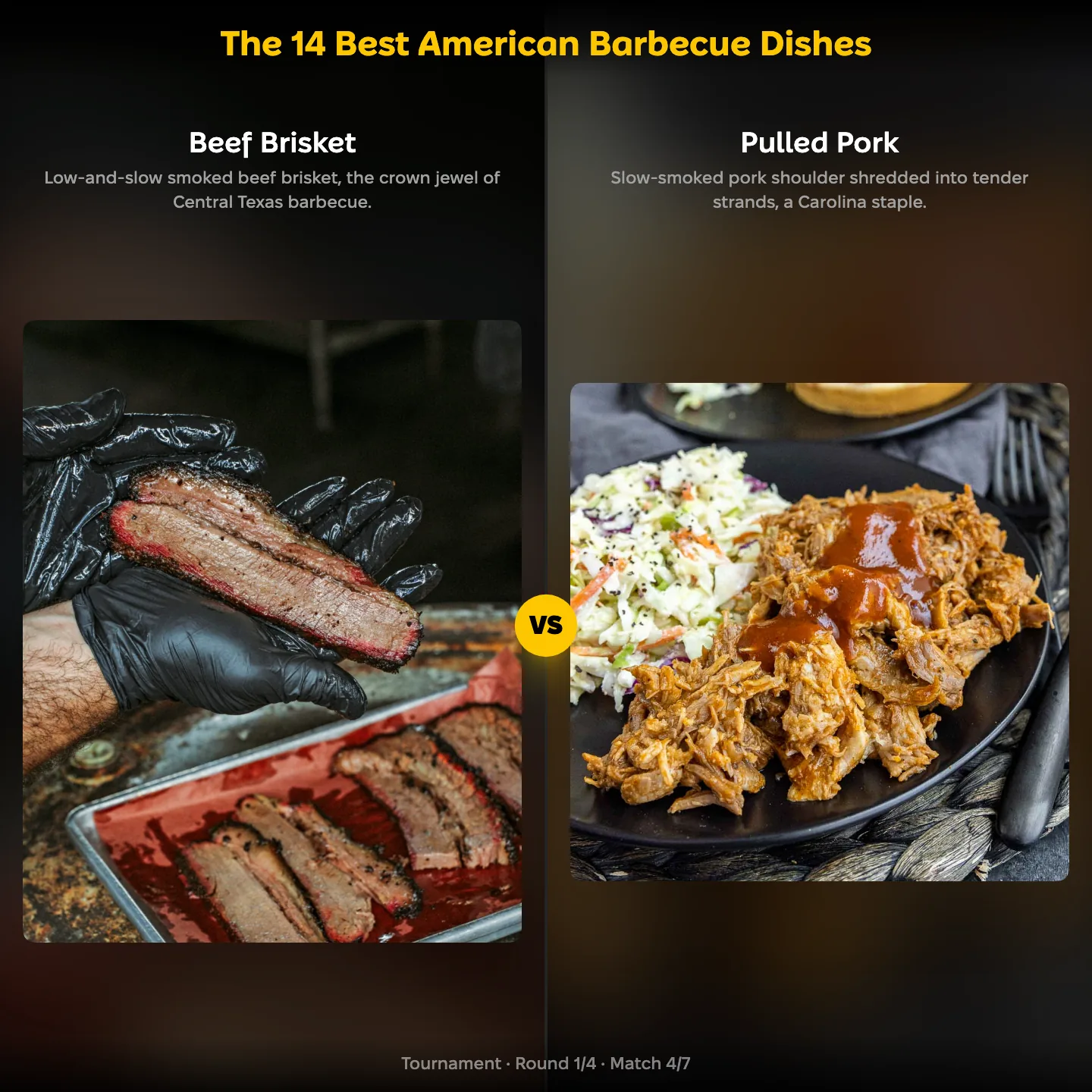
Central Texas brisket vs Carolina pulled pork
American barbecue splits along regional lines, and the split is mostly about which animal a region smokes.
Texas smokes beef. Central Texas brisket comes out of German and Czech butcher shops in towns like Lockhart and Elgin, where meat was sold by the pound on butcher paper with white bread and raw onion on the side, and where the seasoning is still salt and black pepper.
The Carolinas smoke whole hog and pull it, Memphis works ribs, and Kansas City sauces everything and gave the ranking burnt ends.
The Texas method is the most exported of them: the brisket-and-butcher-paper format now shows up in London, Melbourne and Tokyo, usually with the word "Texas" on the sign.
What keeps the argument alive is that brisket is the hardest cut to get right. A pulled-pork shoulder forgives an hour of inattention; a brisket at fourteen hours does not.
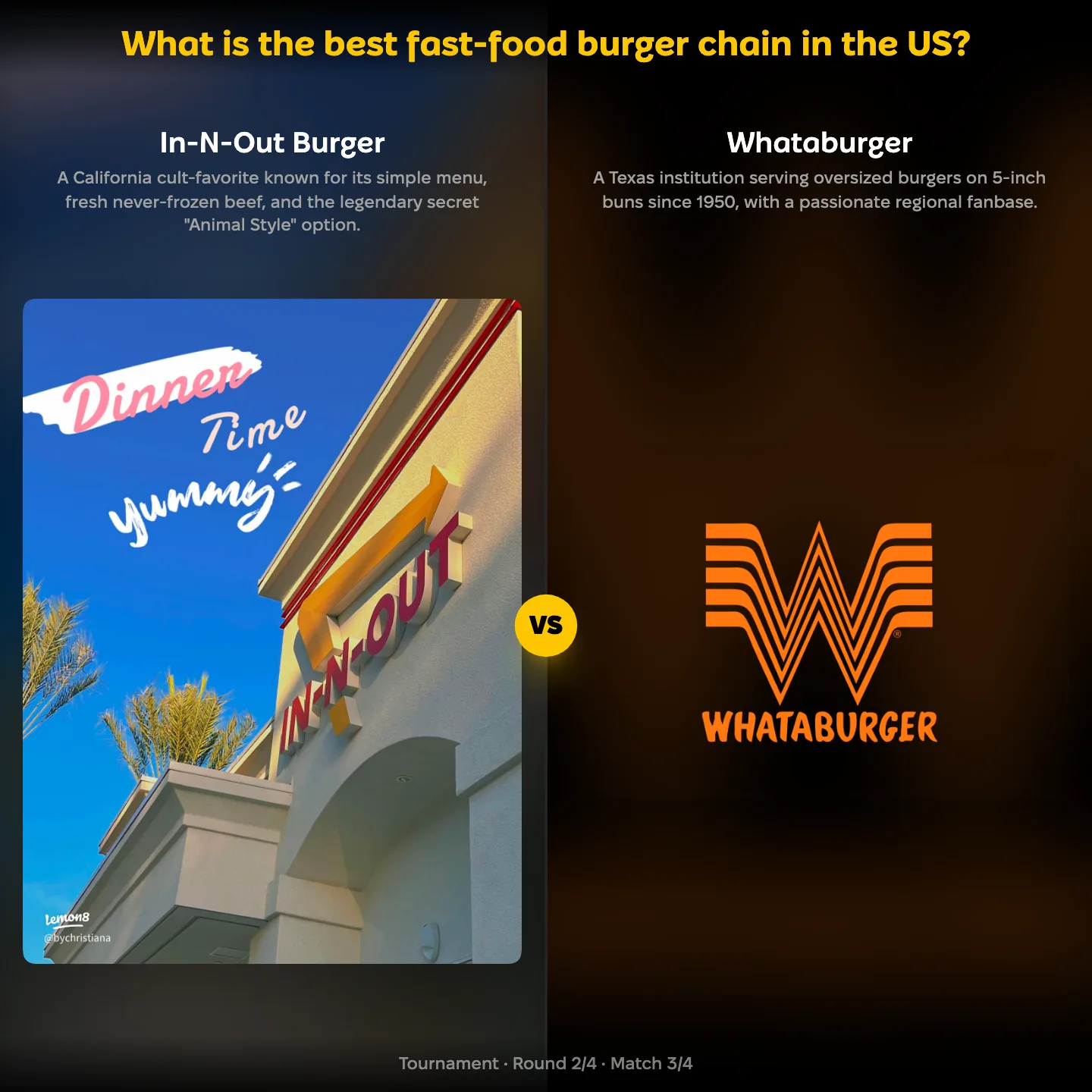
Whataburger vs In-N-Out: the burger map's state line
Harmon Dobson sold the first Whataburger through the window of a portable building on Ayers Street in Corpus Christi on 8 August 1950, for twenty-five cents.5
By its seventy-fifth anniversary the chain was past 820 restaurants, and the orange-and-white A-frame had become one of the few pieces of architecture Texans will defend to strangers.
The ranking puts it against In-N-Out, the California chain with the same devotional following and the same refusal to behave like a national brand, plus McDonald's, Wendy's and Five Guys operating at a scale neither regional chain wants.
Regional loyalty is the whole subject here. A Texan asked to choose between Whataburger and In-N-Out is not being asked about hamburgers.
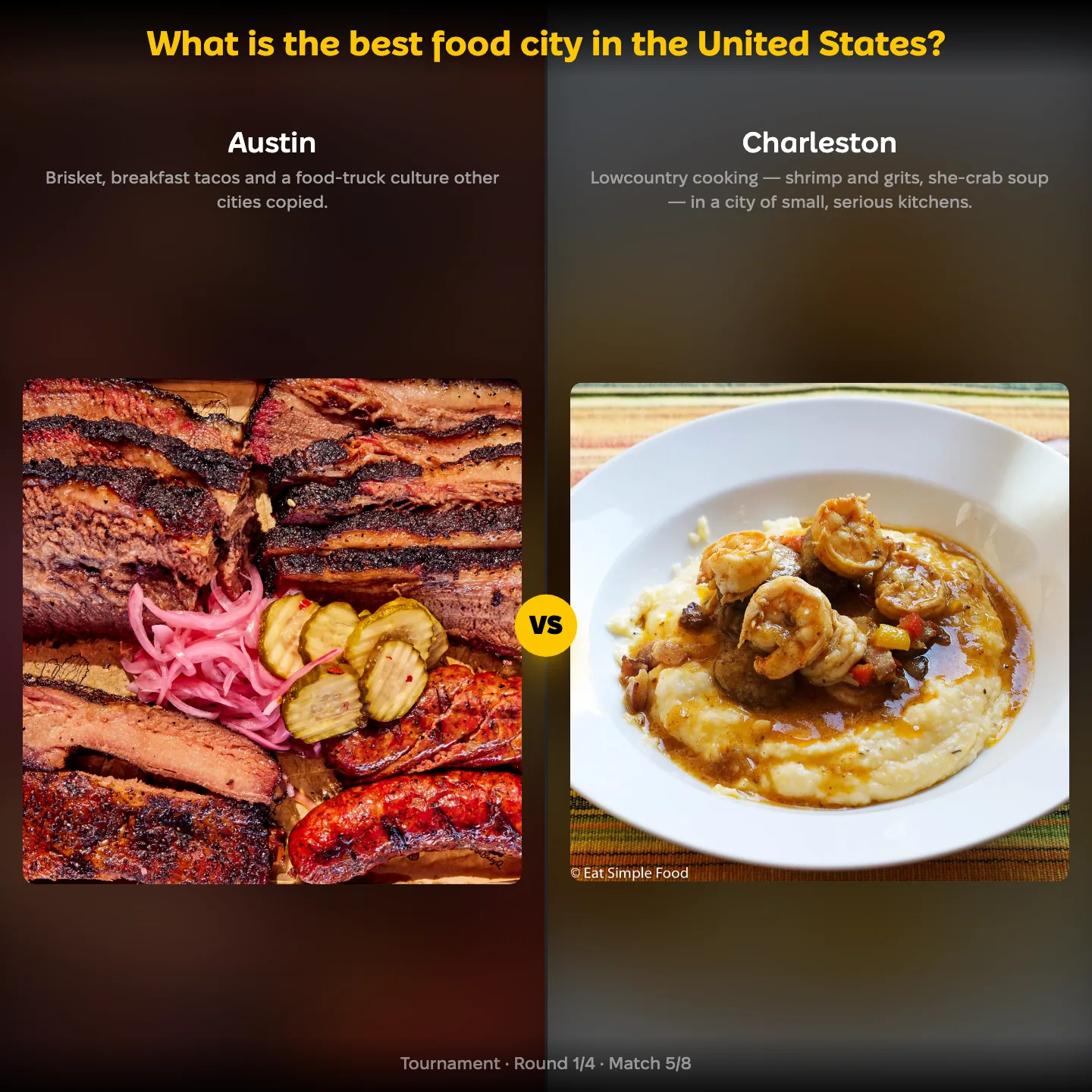
Austin and Houston: two Texas food cities, two different arguments
The best-food-city ranking is one of the few here that holds two Texas entries, and they are there for opposite reasons.
Houston is the immigration argument. It is among the most ethnically diverse large cities in the country, and its food reflects that: Vietnamese, Nigerian, Mexican and Indian kitchens sitting in the same strip malls, plus a Gulf Coast seafood tradition older than any of them.
Austin is the trend case, built on breakfast tacos, the barbecue pilgrimage and a restaurant scene that grew with the tech money.
Both are up against New York, New Orleans and Charleston, cities with older claims and tighter stories. Charleston in particular does with Lowcountry cooking what Austin does with tacos, in a city a fraction of the size.
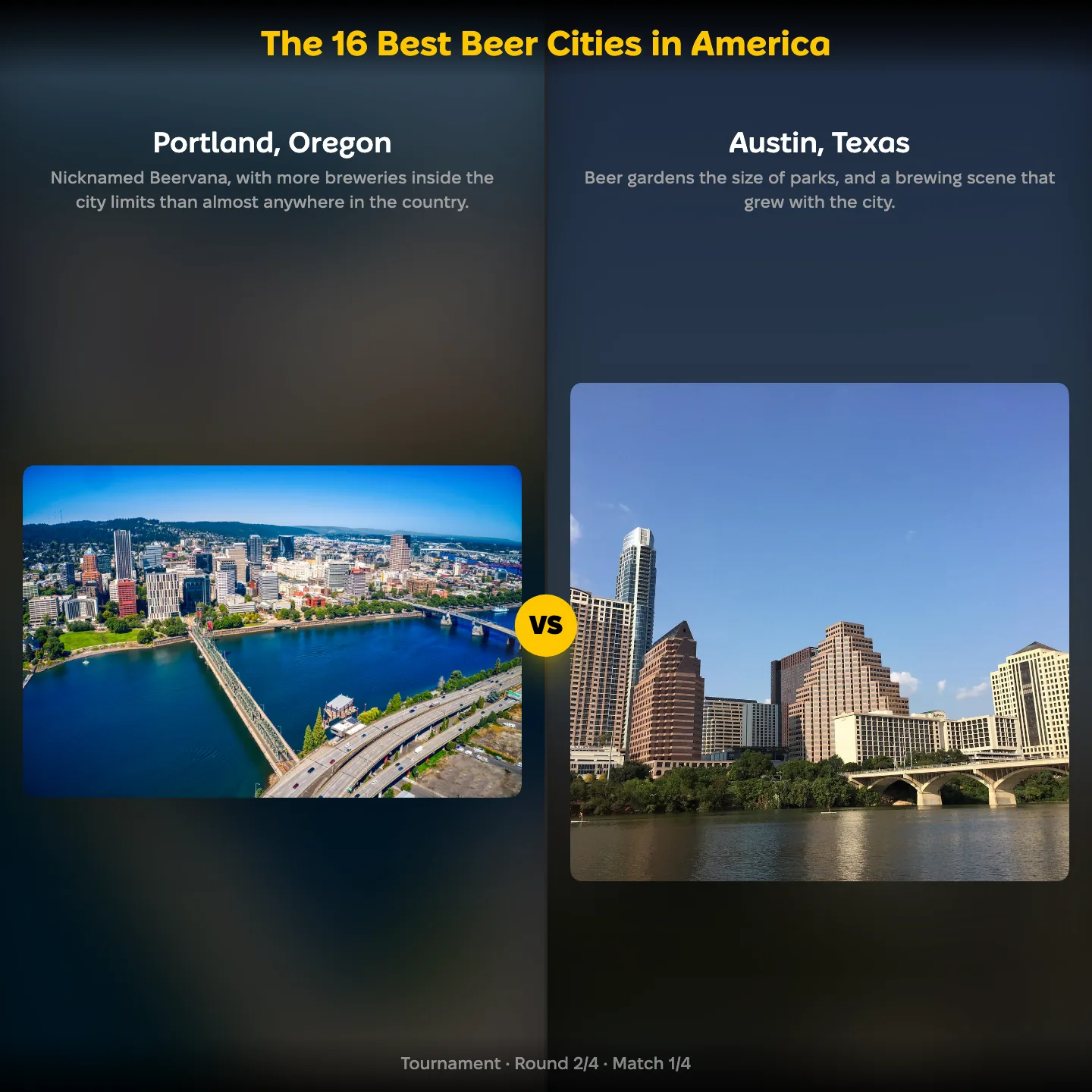
Austin vs Portland: the beer city nobody expected
Texas was a late arrival to craft brewing. The state's brewpub laws stayed restrictive long after Oregon and Colorado had built their scenes, and the rules only loosened properly in the 2010s.
Austin is what happened afterwards, and it carries Texas into the beer-cities ranking: a dense cluster of taprooms, a strong sour and wild-fermentation streak, and beer gardens that work because the weather allows it for eight months a year.
Portland, Denver, San Diego and Asheville arrived earlier and have more breweries per head. Grand Rapids and Bend belong there on the same grounds.
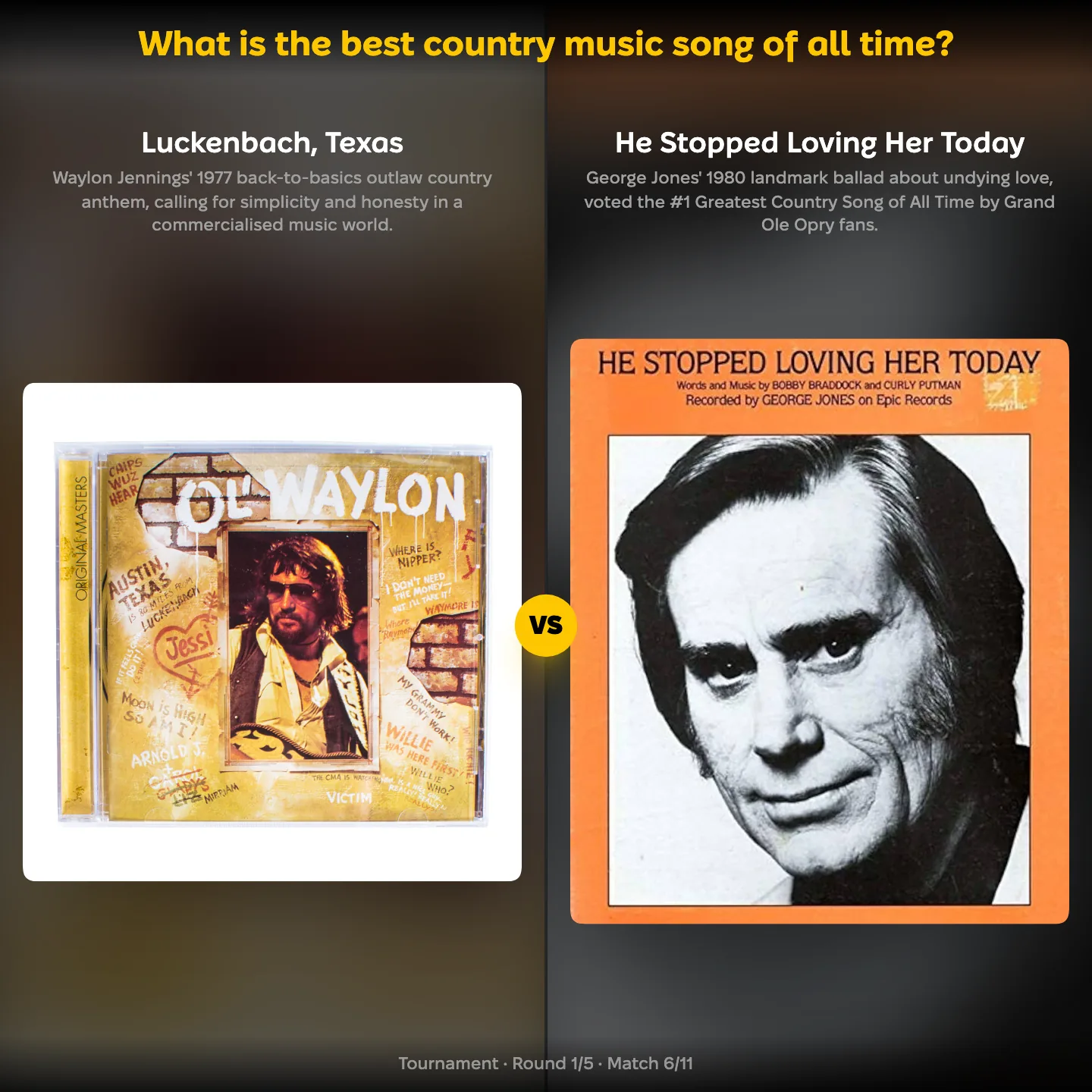
Luckenbach, Texas: a hamlet of three buildings in the country canon
Waylon Jennings and Willie Nelson recorded "Luckenbach, Texas (Back to the Basics of Love)" in 1977, and it went to number one on the country chart.
Luckenbach itself is a dance hall, a general store and a post office in the Hill Country, with a population you can count without taking your shoes off. Neither Jennings nor Nelson had been there when the song was cut.
The list around it runs to 22 songs and holds the genre's settled monuments: "He Stopped Loving Her Today", "Jolene", "Ring of Fire", "Crazy" — the last of which Willie Nelson wrote, though Patsy Cline is the voice everyone hears.
Texas is over-represented in country music without being the genre's home; Nashville is. What the state supplies is the outlaw wing, the part that left Nashville on purpose.
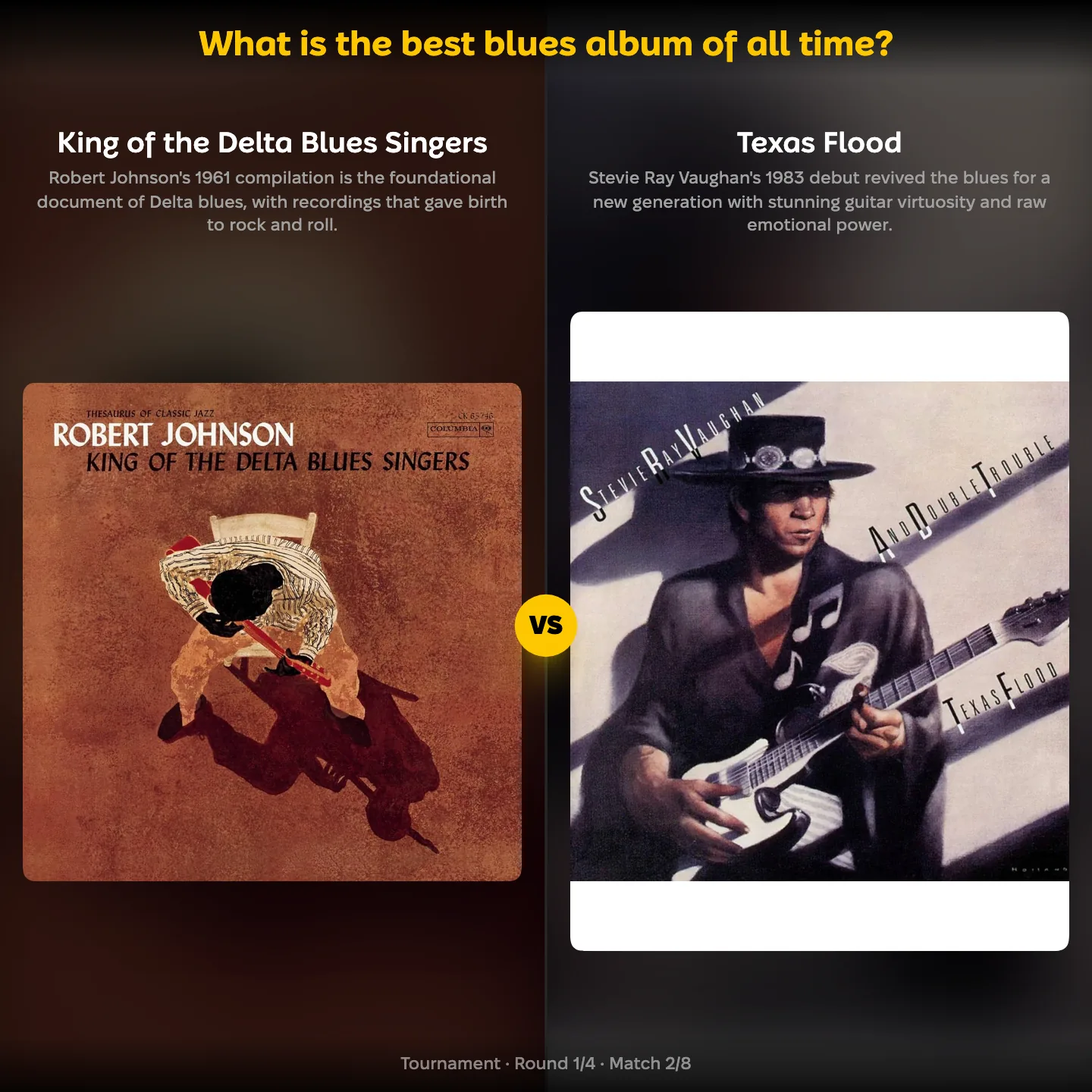
Texas Flood: Stevie Ray Vaughan in the blues canon
Stevie Ray Vaughan and Double Trouble recorded Texas Flood in 1983, in two days, in Jackson Browne's studio, for nothing.
Texas's entry in the best-blues-album ranking is also the youngest record in serious contention there, by a wide margin.
Around it sit the foundations of the genre: Robert Johnson's King of the Delta Blues Singers, B.B. King's Live at the Regal, Albert King's Born Under a Bad Sign, Muddy Waters' Folk Singer. Those records built the vocabulary Vaughan was speaking.
The Texas claim is a lineage rather than a single album. Blind Lemon Jefferson, T-Bone Walker, Lightnin' Hopkins and Freddie King were all born in Texas, and the electric guitar sound that now stands in for "the blues" descends from that line.
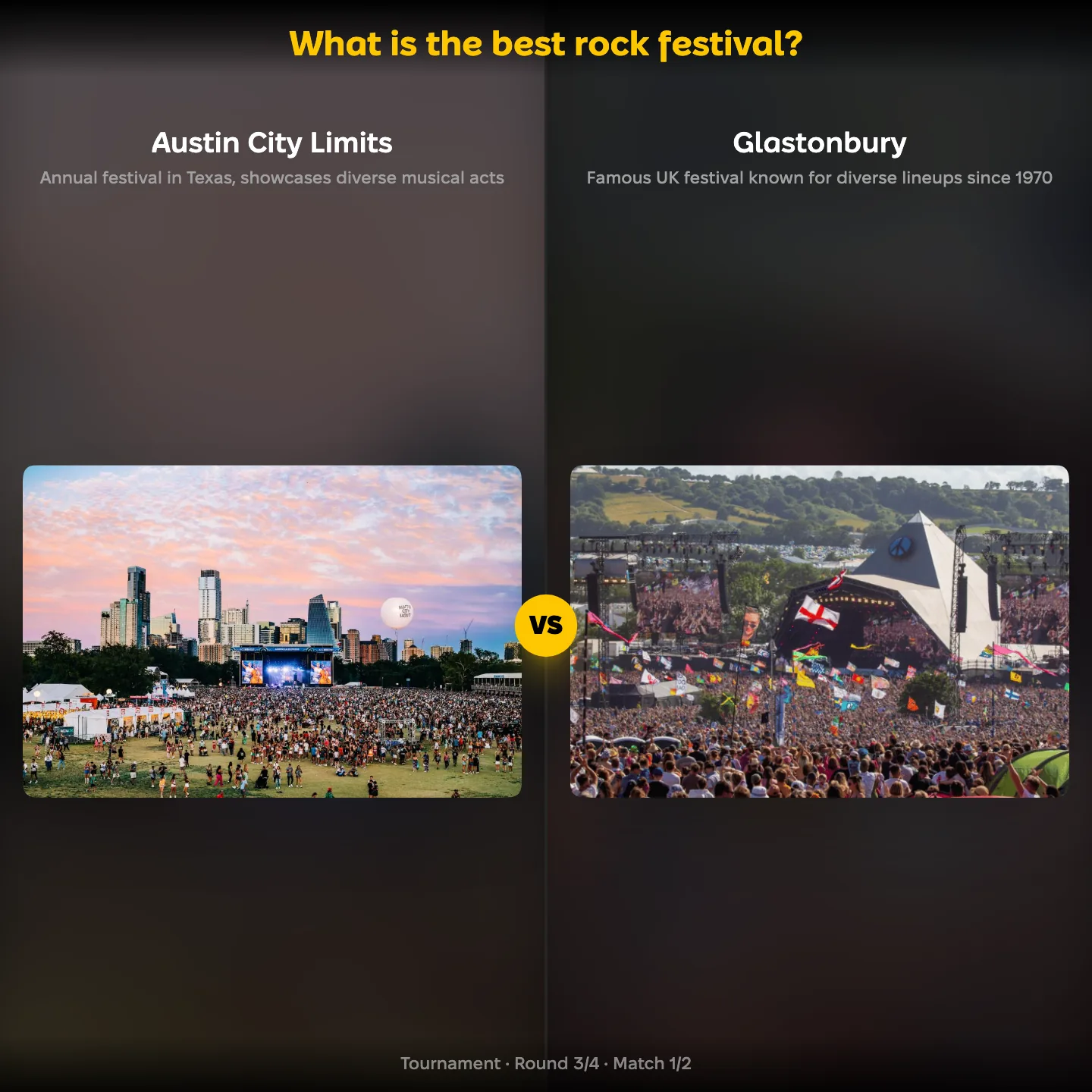
Austin City Limits vs Glastonbury
Austin City Limits started as a public television programme, and PBS now calls it "the longest-running music series in American television history"; it is also the only television programme to hold the National Medal of Arts.6
The festival came much later, in 2002, and borrowed the name. It fills Zilker Park in Austin over two weekends every autumn.
The ranking sets it beside Woodstock, Glastonbury and Coachella, festivals with either a myth or a scale that a city park cannot match.
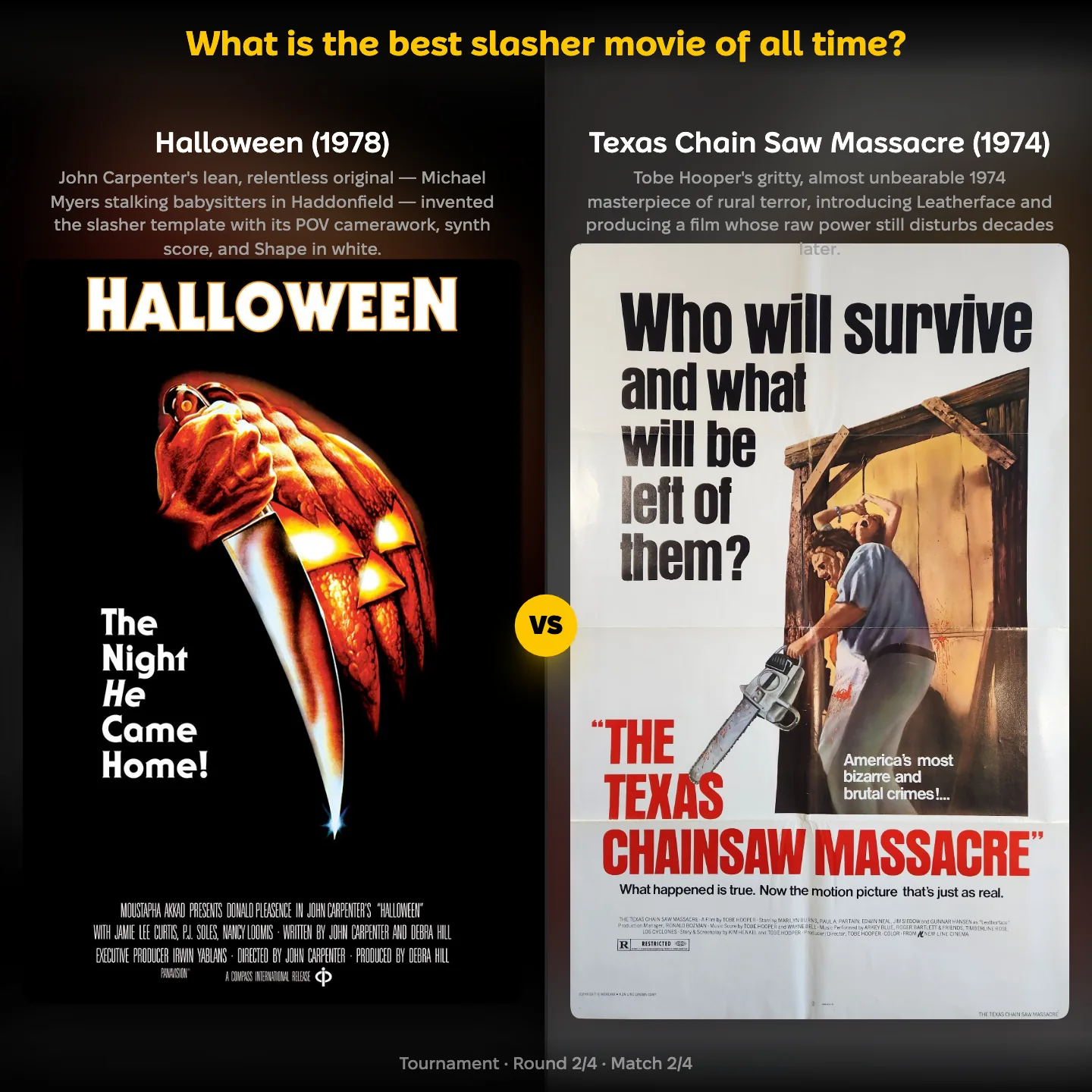
The Texas Chain Saw Massacre vs Halloween: the state's biggest export abroad
Ask someone outside the United States to name a film set in Texas and this is usually the answer, which is a strange fate for a state with an active tourism budget.
Tobe Hooper shot The Texas Chain Saw Massacre outside Austin in the summer of 1974 on a tiny budget, in heat that ruined the cast, and released it with a narration claiming it was based on real events. It was not, beyond a loose borrowing from the Ed Gein case in Wisconsin.
The film invented much of the grammar the rest of this ranking uses: the rural isolation, the family of killers, the final girl running through trees.
Its company here is Halloween, Psycho, Black Christmas and Scream, and two of those came first. John Carpenter's film arrived four years later with a score, a suburb and a much larger audience.
The Texas entry is the ugliest of them and the most imitated, and it did more to shape what the world pictures when it hears the state's name than any ranking on this page.
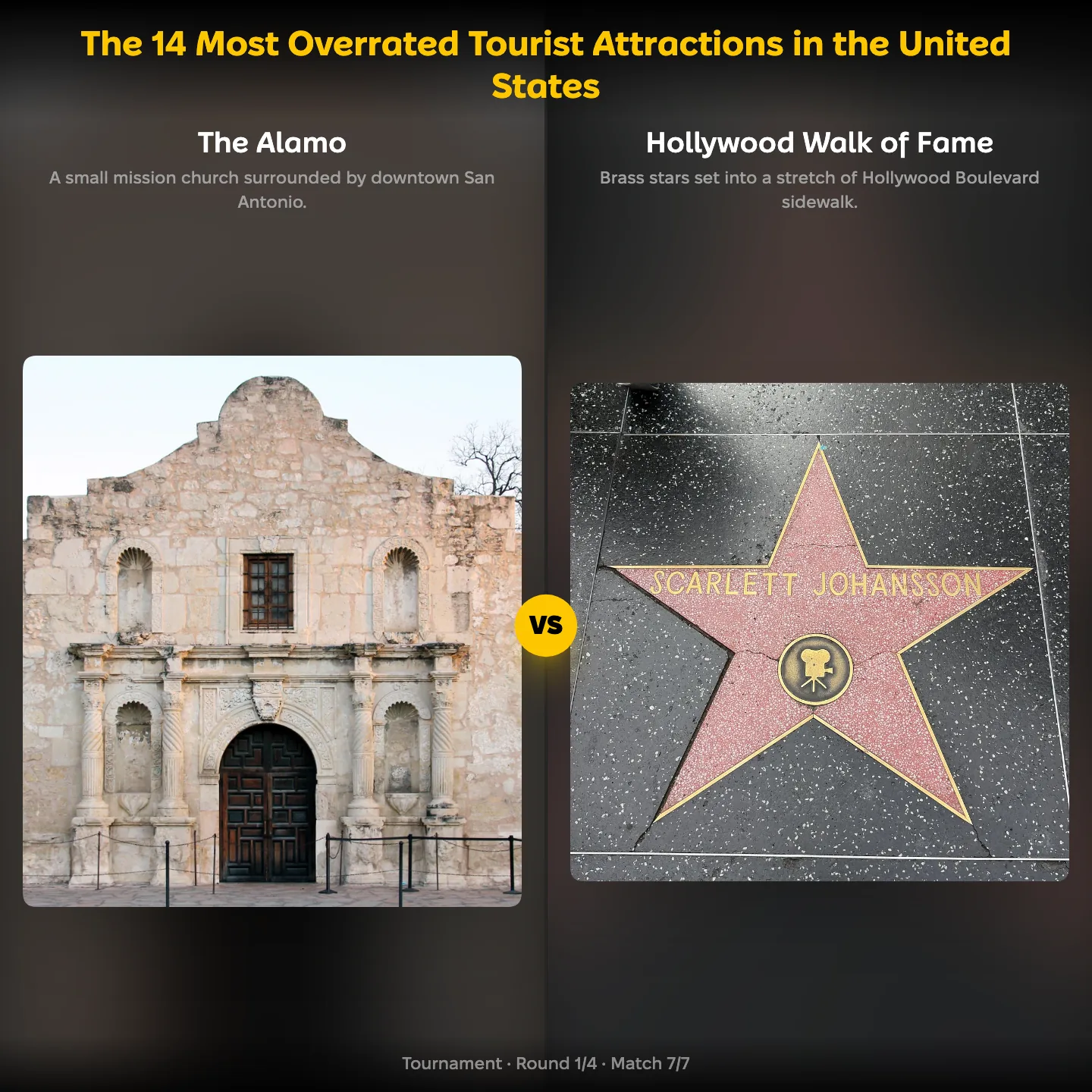
The Alamo, on a list nobody wants to be on
Not every ranking is flattering, and this is the one where Texas has to answer for its founding shrine.
The Alamo is a small mission church in the middle of downtown San Antonio, hemmed in by a shopping street, a wax museum and a Ripley's. Visitors who arrive expecting a fort on a plain find a chapel facade roughly the size of a large house.
The complaint is not about the history. It is about the gap between what the building carries and what a visitor actually gets to see in fifteen minutes.
Its company on the list is Times Square, the Hollywood Walk of Fame, Plymouth Rock and the Liberty Bell, all of them famous, all of them smaller or busier than the postcard implies.
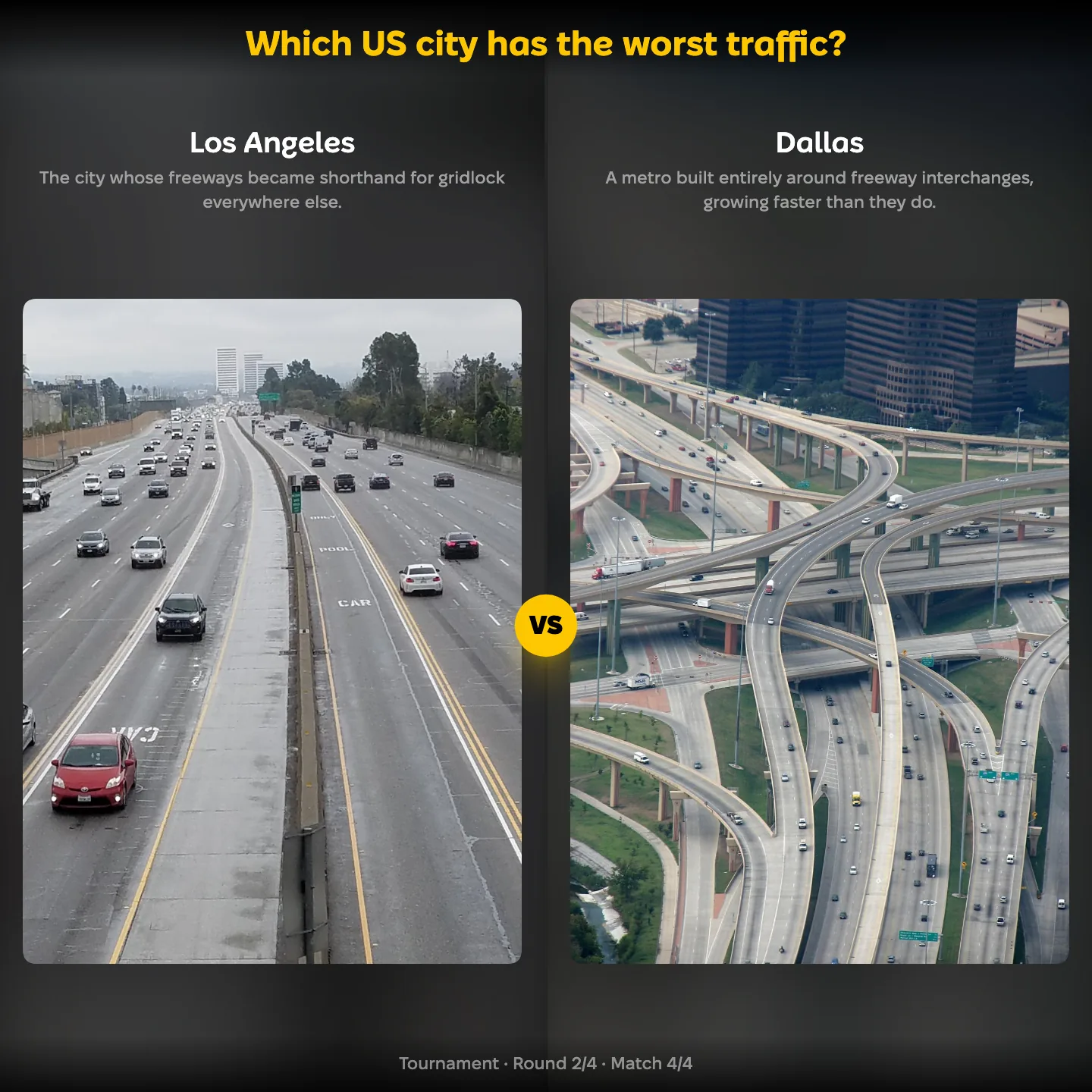
Houston and Dallas: the commute is the price of the boom
The worst-traffic ranking is the second unflattering one, and Texas supplies two of its thirteen entries.
Houston built outwards with almost no zoning, which produced cheap housing and a metro area where a daily commute of an hour each way is ordinary. Dallas–Fort Worth did the same across a wider footprint.
Roadside culture is the compensation the state offers. The Buc-ee's in Luling is the largest convenience store in the world at 75,593 square feet, with a wall of fuel pumps and a brisket counter, and Texans plan routes around it.7
Los Angeles, Chicago and New York keep them company, and Los Angeles is the benchmark Texan drivers get measured against.
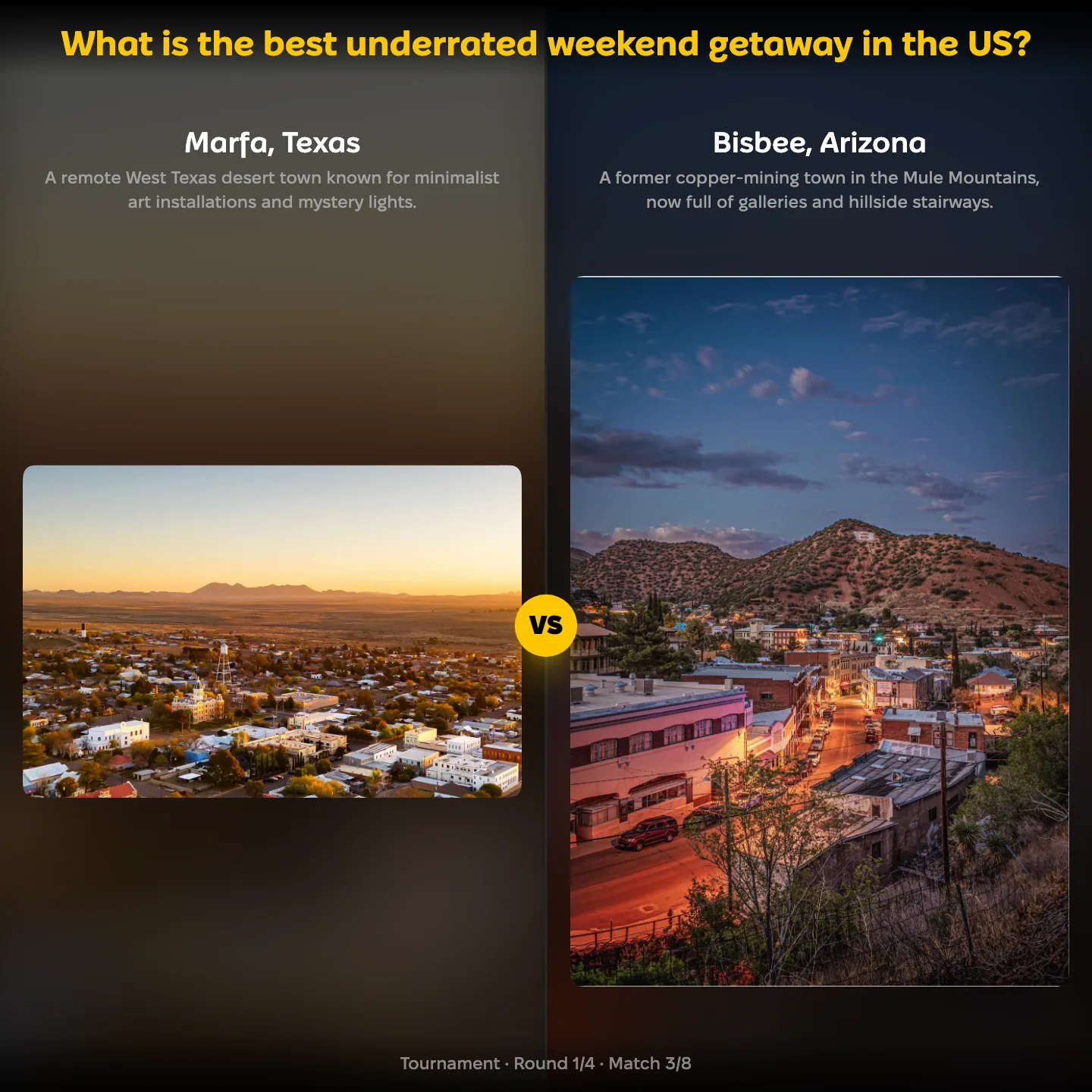
Marfa, Texas: a desert town of 1,700 and an art pilgrimage
Marfa sits in the high desert of West Texas, three hours from the nearest commercial airport and closer to Mexico than to any Texan city.
It is on the underrated-getaway ranking because of what Donald Judd did there. The Chinati Foundation occupies a decommissioned army base outside town and holds permanent installations by Judd, Dan Flavin and Carl Andre in artillery sheds and barracks.8
The other draws are smaller and stranger: a fake Prada storefront on the highway forty minutes away, and the unexplained Marfa lights that people drive out to watch from a viewing platform.
Bisbee, Astoria, Paducah and Bentonville qualify the same way: small towns that became famous for one specific thing.
Paris, Texas: a German director's Palme d'Or
Here the Texas entry is least expected of all, and the state qualifies by name only.
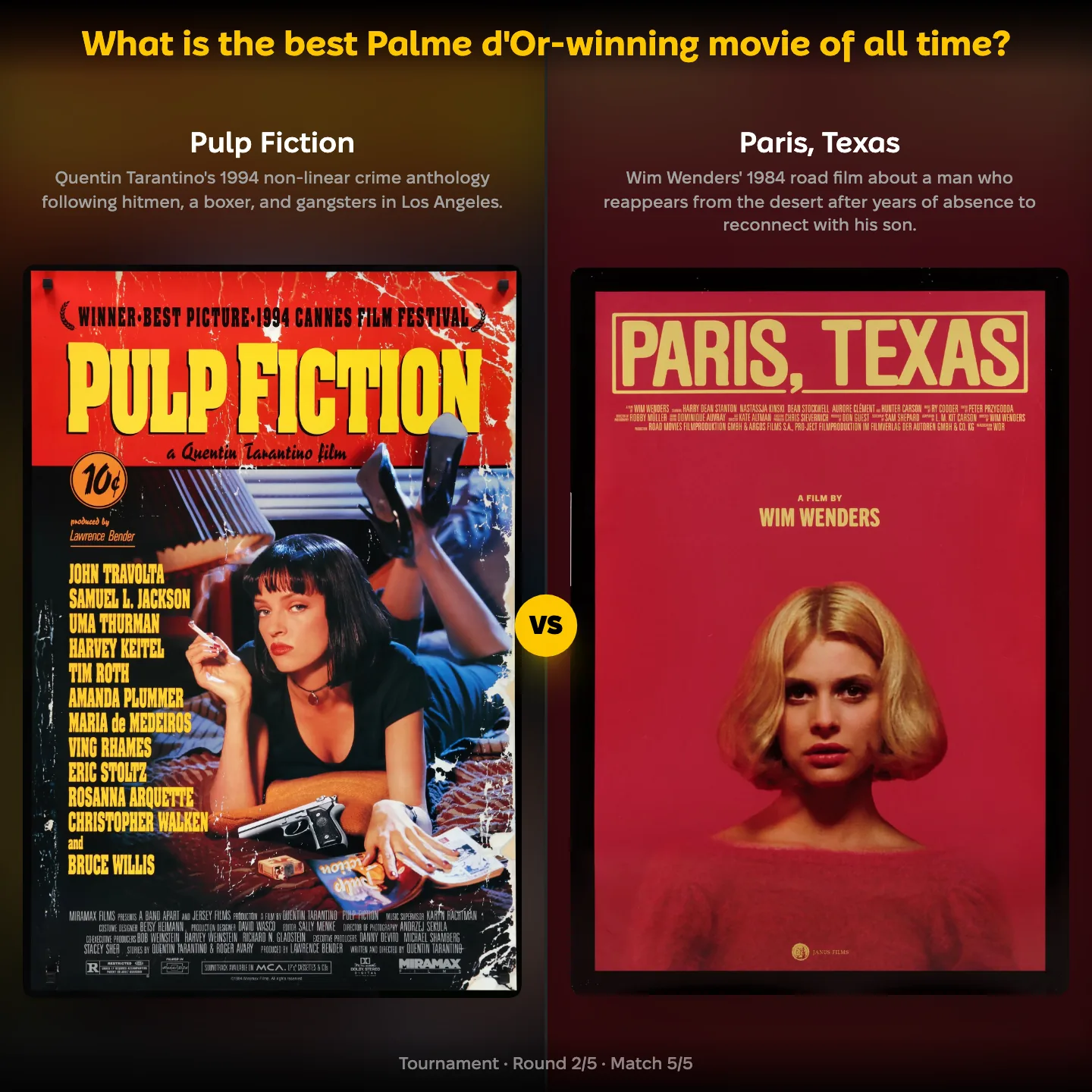
Wim Wenders won the Palme d'Or at Cannes in 1984 with Paris, Texas, a film about a man who walks out of the Chihuahuan Desert after four years missing. Harry Dean Stanton says nothing for the first twenty-five minutes. Ry Cooder's slide guitar does the talking, and Robby Müller shot the whole thing in colours that people have been copying ever since.
The title refers to a town in northeast Texas the main character has never seen. He owns a vacant lot there because he believes he was conceived on it.
The competition is Pulp Fiction, Apocalypse Now, Taxi Driver and Parasite. Wenders' film is quieter than any of them, and it turned the Texan roadside into an art-house landscape for European audiences.
Sixteen questions, sixteen different Texases
None of these sixteen rankings is about Texas. They are about barbecue, blues records, festivals, slashers and traffic, and Texas happens to qualify for all of them under a different name each time: a brisket, a debut album, a city park, a chainsaw, a commute.
That is what a place looks like once it stops being a location and becomes a set of categories. Each of the sixteen resolves through a long series of two-way choices. That is how one state ends up a serious contender in one question and a cautionary tale in the next.
Pick whichever Texas you hold an opinion about, or build the ranking this page is missing.
More rankings, more angles
- Las Vegas, Ranked 15 Different Ways — a race circuit, a slogan and a hockey title
- Chicago Is on Every List. Never in the Same Place — deep dish, six NBA titles, the first skyscraper
- Los Angeles: 15 Lists, 15 Different Cities — best food city and best beach city at once
Sources
- State Fair of Texas — 2026 dates and the fair's 140 years: bigtex.com (checked 2026-09-20)
- Texas State Historical Association, Handbook of Texas — the Republic of Texas, 1836–1845: tshaonline.org (checked 2026-09-20)
- State Fair of Texas — Big Tex: 1952 debut, 55 feet, 33ft 9in chest, size 96 boots, the Kerens Santa Claus: bigtex.com/big-tex (checked 2026-09-20)
- Fletcher's Original Corny Dogs — first sold at the fair in 1942 by Neil and Carl Fletcher: fletcherscornydogs.com (checked 2026-09-20)
- Texas State Historical Association, Handbook of Texas — Whataburger: Harmon Dobson, Corpus Christi, 8 August 1950, and 820+ restaurants at the 75th anniversary: tshaonline.org (checked 2026-09-20)
- PBS — Austin City Limits, the longest-running music series in American television history and the only television programme awarded the National Medal of Arts: pbs.org (checked 2026-09-20)
- Buc-ee's — the Luling store, the largest convenience store in the world at 75,593 square feet: buc-ees.com (checked 2026-09-20)
- The Chinati Foundation — Marfa, Texas, with permanent installations by Donald Judd, Dan Flavin and Carl Andre: chinati.org (checked 2026-09-20)