
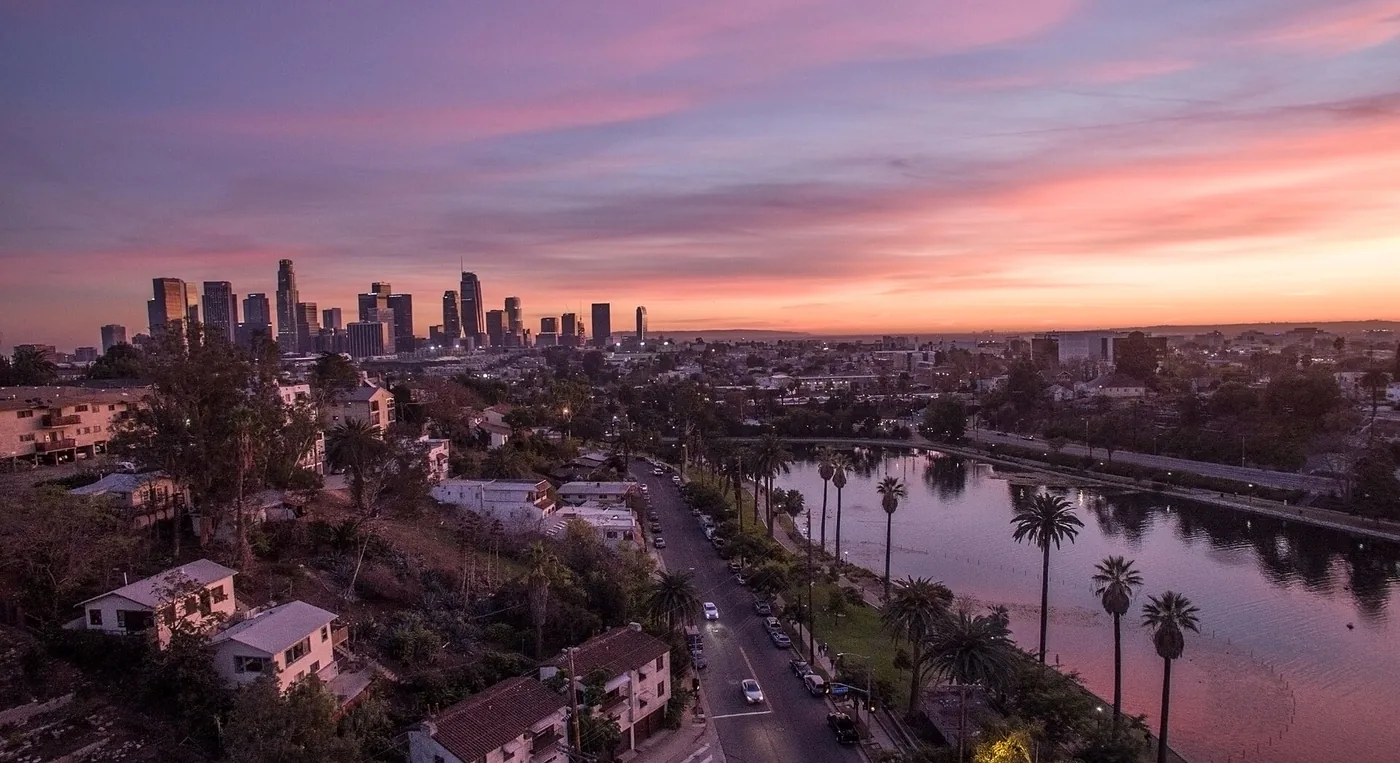
Los Angeles drew 49.5 million visitors in 2025, and spends most of its reputation on two things: Hollywood and the freeways.1 Right now the city is selling tickets to something larger. The second LA28 ticket drop runs from 10 to 20 August 2026, two years out from a Games staged in the Coliseum, SoFi Stadium and Venice Beach rather than in anything newly built.2
Los Angeles appears in fifteen separate rankings here: travel lists, food lists, one Olympic summer, and three categories any city would rather skip.
Fifteen rankings file Los Angeles under fifteen different headings, and the ones it belongs in are rarely the ones it is famous for.
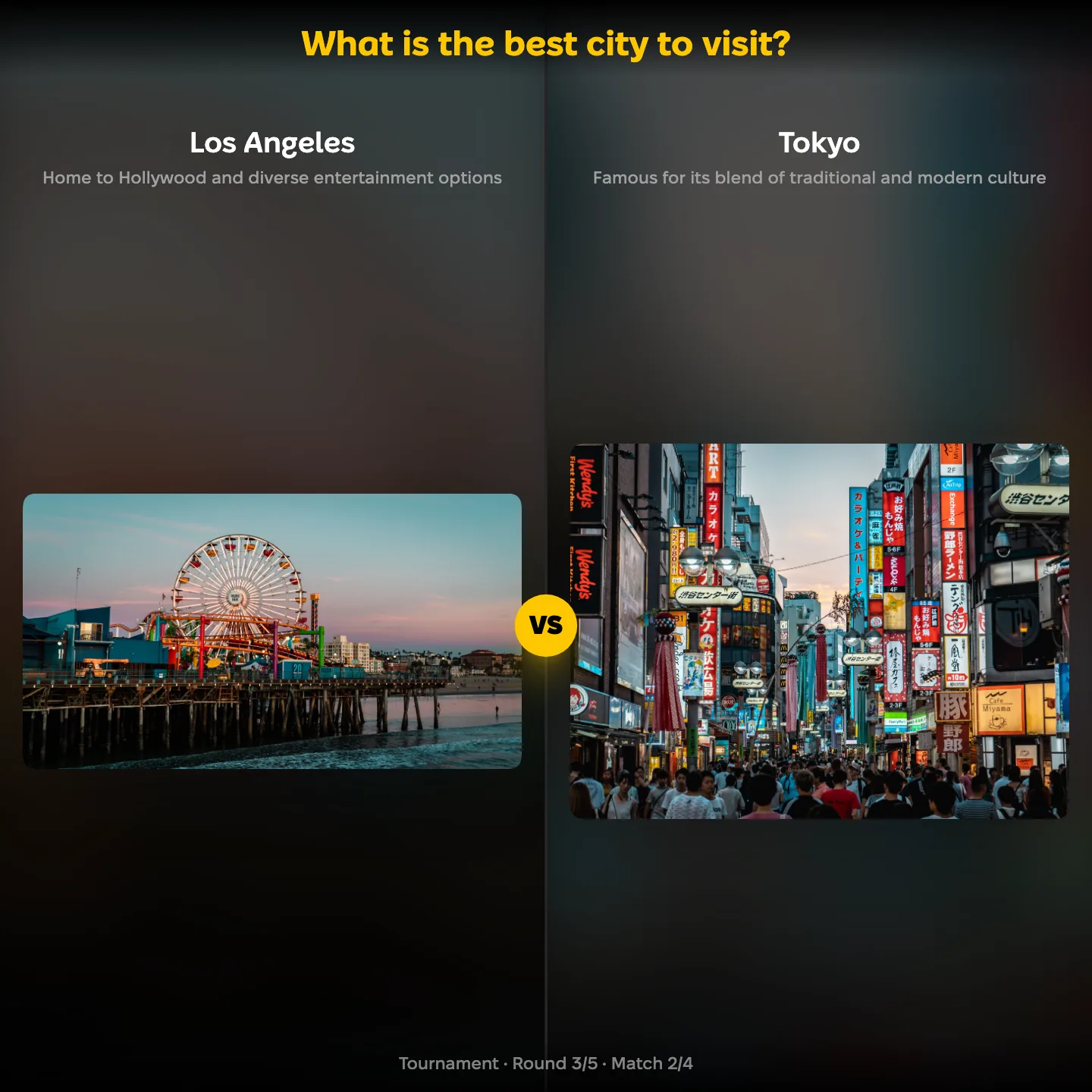
Los Angeles vs Tokyo: the city you drive, not walk
"What is the best city to visit" drops Los Angeles into a field of 32, most of them walkable European capitals and dense Asian megacities.
Los Angeles took 6.4 million international visitors in 2025, and gave them a city with no centre to tour.1 Santa Monica, Koreatown, Silver Lake and Venice behave like separate towns that happen to share a county.
Tokyo, Paris and Rome are built the other way round. A visitor lands, walks out of a station and is already inside the thing they came to see.
The case for LA is what happens after the sightseeing stops: the beach, the canyons and the food are the reason people extend the trip, not the landmarks they photographed on day one.
Los Angeles vs New Orleans: two three-star kitchens and a taco truck
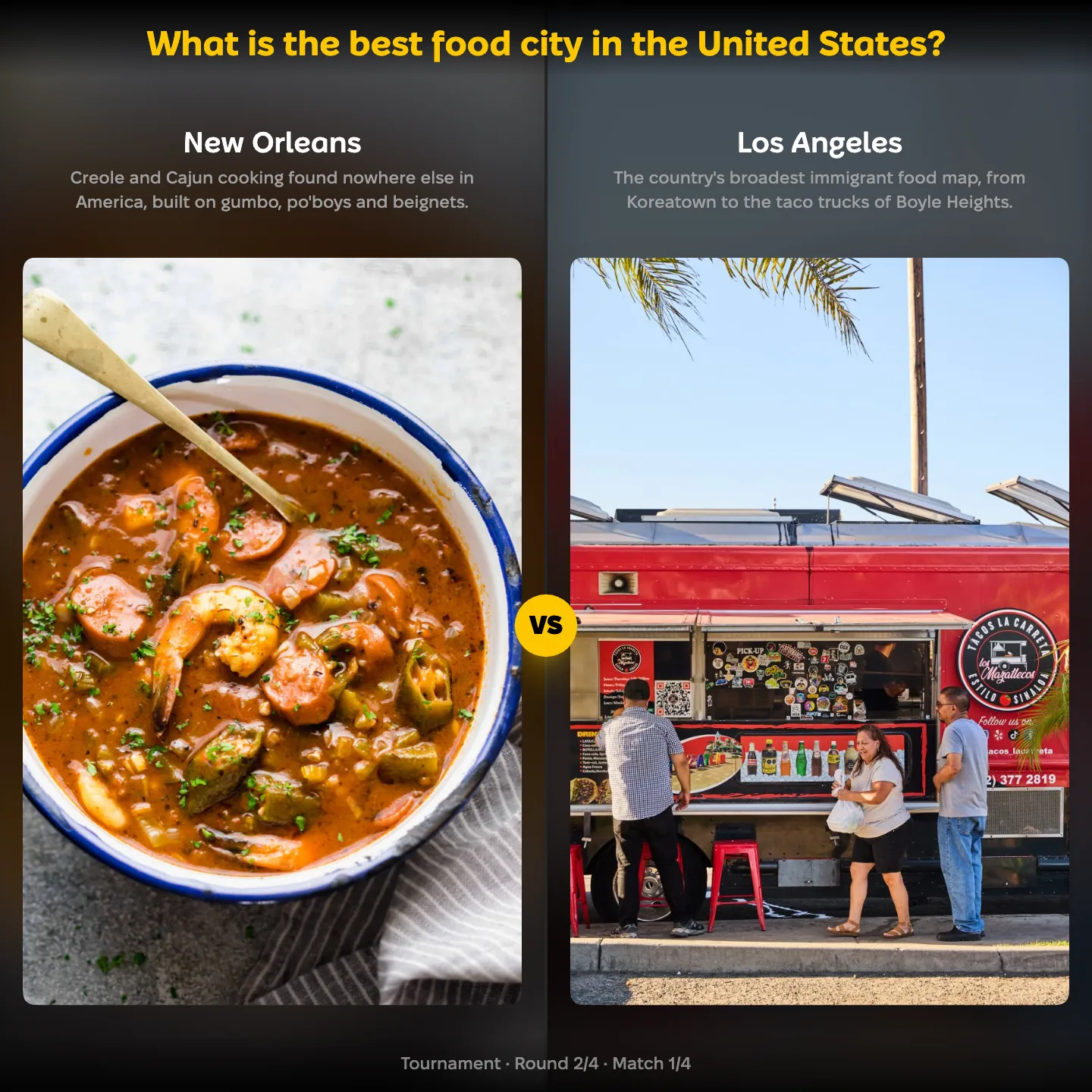
The American food-city ranking is the one where Los Angeles has a claim at both ends of the price range.
Somni and Providence hold three MICHELIN stars in the 2026 California guide, announced in June.3 That is the top of the city's kitchen scene, and it is not what most people eat here.
The rest of the case is Koreatown, the San Gabriel Valley's Chinese restaurants, the Oaxacan places on Pico and the taco trucks that park outside them. Immigration built the menu, not chefs with tasting rooms.
New Orleans answers with the opposite virtue. Creole and Cajun cooking exists nowhere else in this form, and a visitor can eat the entire canon in three days without leaving the French Quarter.
Both cases hold up, and so do New York, Chicago, Charleston and Nashville, which is why nothing here resolves quickly.
Santorini, Bali and one American city on the same list
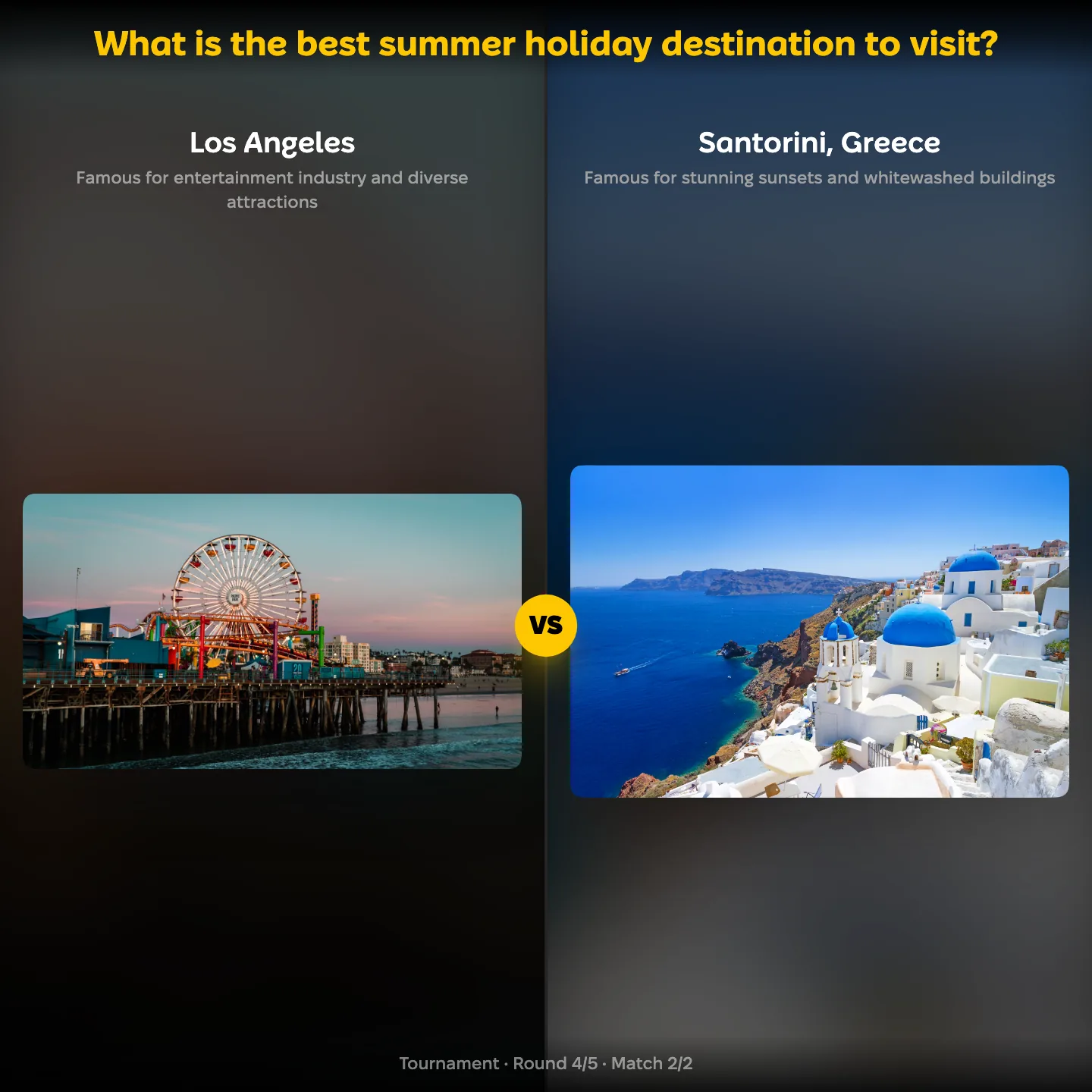
The summer-holiday ranking is not a contest between cities. It is islands: Santorini, Bali, the Maldives, Bora Bora, the Amalfi Coast.
Los Angeles is on that list because 43.1 million domestic visitors treat it as a holiday, not a stopover.1 An American family flies two hours, not eleven, and gets a beach at the end of it.
What the city cannot offer is what everything else on that page is selling. Nobody goes to Santorini and spends a day in traffic to reach the good restaurant.
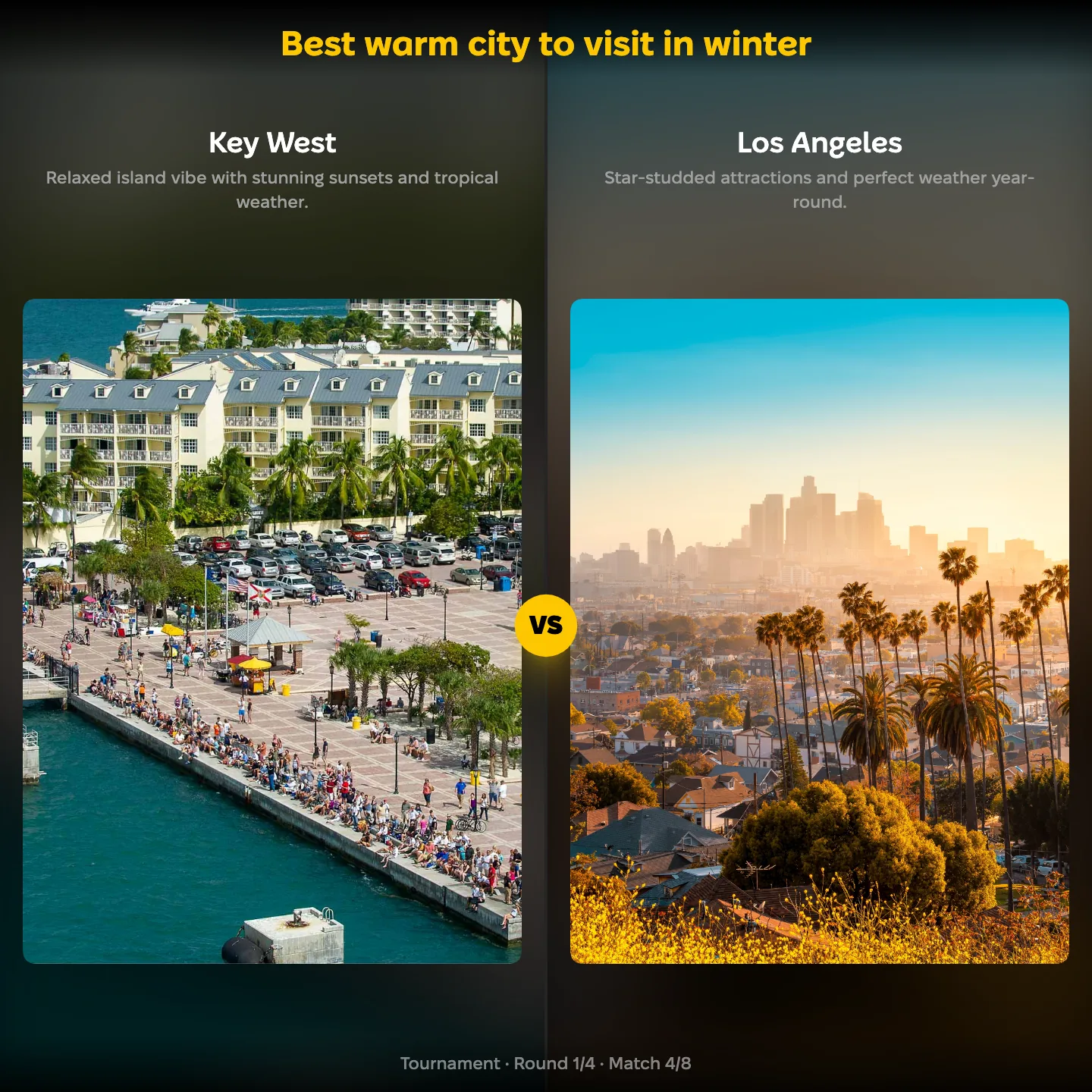
Key West in January, and the one thing LA never has to explain
Winter is the category Los Angeles enters without preparing an answer. The field is Florida, Hawaii, Mexico and a couple of desert cities, and the Californian entries are the only ones on the Pacific.
Key West sells the same January as a genuine island. Los Angeles offers it inside a metro of ten million people, with everything a large city carries the rest of the year still open.
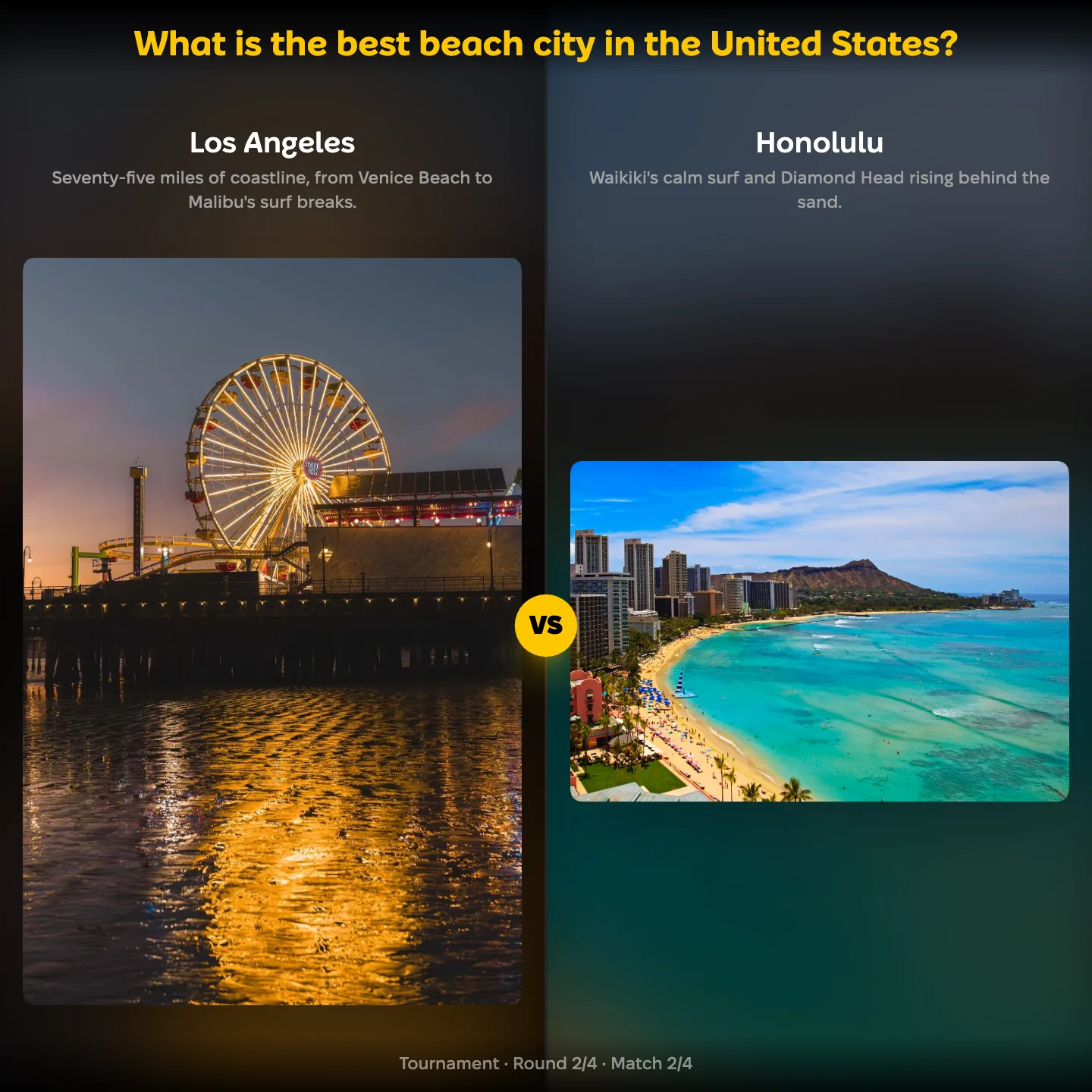
Seventy-five miles of coast: Los Angeles vs Honolulu
The beach ranking is the one where the city's geography does the arguing for it. Los Angeles County holds roughly seventy-five miles of coastline, taking in the Venice boardwalk and the surf breaks past Malibu.
Venice Beach is enough of a venue in its own right that LA28 will hold competition there in 2028, on the same list of existing sites as the Coliseum.2
Honolulu answers with water nobody in California swims in without a wetsuit, and with Diamond Head behind the sand.
San Diego, Malibu, Santa Barbara and Newport Beach are all on the list too, and three of them are close enough to Los Angeles to be a day trip from it. A city that has to share its own coast with four rivals on the same page is in an odd position.
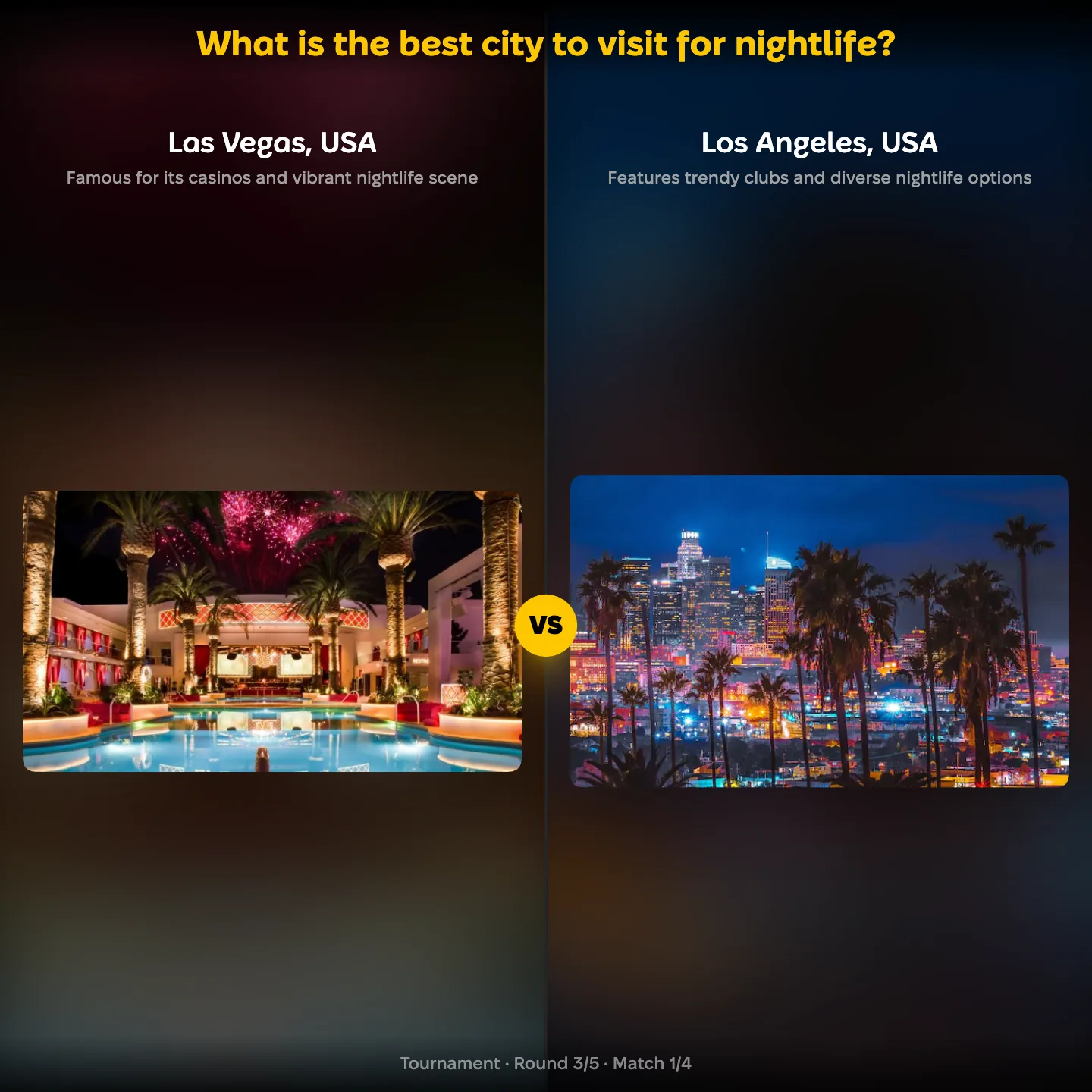
Las Vegas vs Los Angeles: the two o'clock problem
Nightlife is where the city runs into California law. Bars stop serving at two, and every venue in Los Angeles empties on the same schedule.
Las Vegas is four hours up the I-15 with casino floors that never close, which is why half of LA's biggest nights out happen in Nevada.
What Los Angeles has instead is range: Hollywood clubs, Koreatown karaoke until the small hours, warehouse parties downtown, and a hotel-rooftop circuit built for people who fly in for two days.
Berlin, Ibiza, Bangkok and New York all keep going later than California permits.
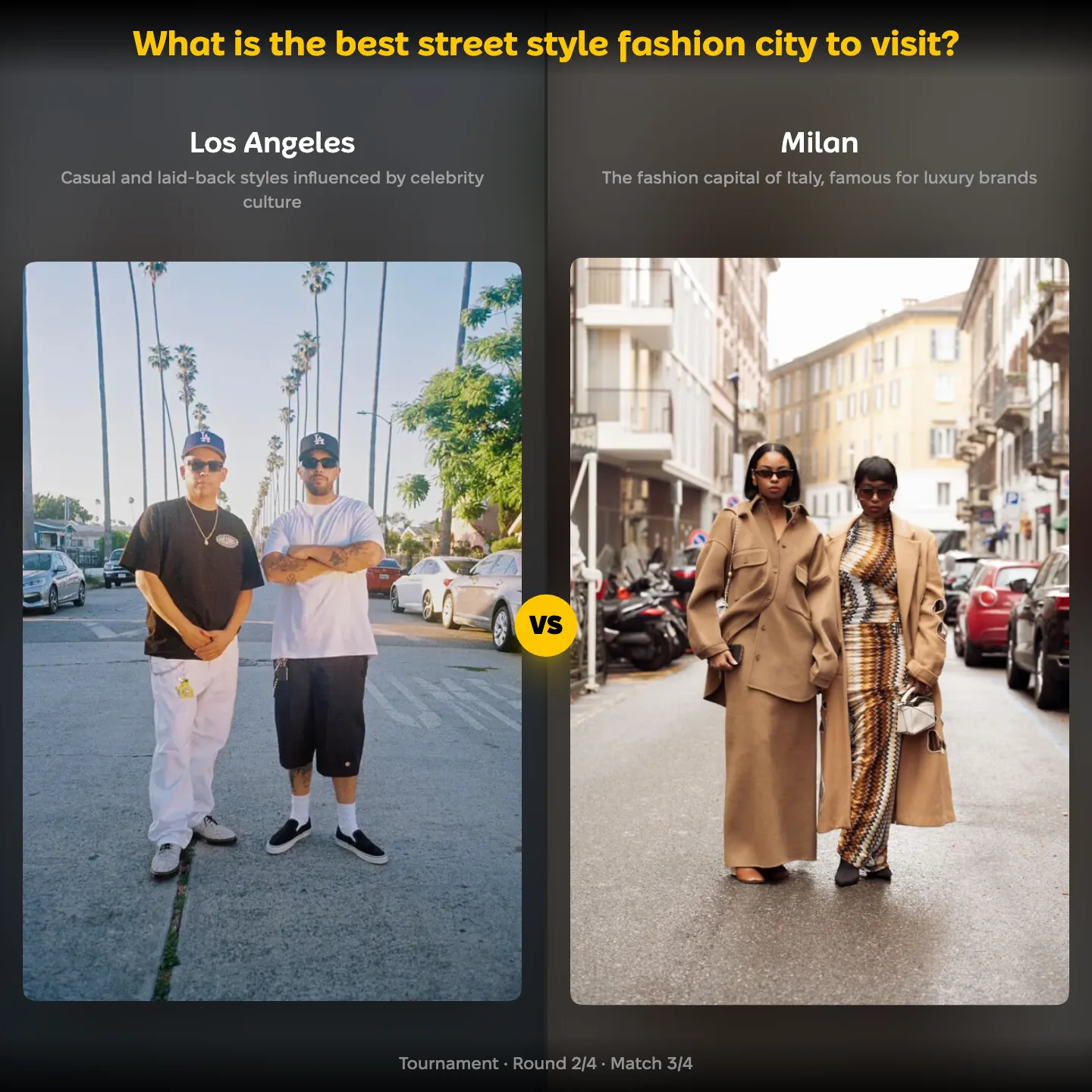
Milan, Paris, and a city that dresses down on purpose
Street style puts Los Angeles against the four capitals that run fashion weeks. Milan and Paris are on the list because of the houses headquartered there.
Los Angeles is on it for the opposite reason. The clothes that travel out of this city are gym wear, skate brands and vintage denim, sold by people who never staged a runway show.
Boston vs Los Angeles: the best sports city in America
This is the ranking with the most crowded case for Los Angeles, and the hardest opposition.
The Dodgers beat Toronto in seven games in November 2025 to go back-to-back, the first repeat champions in Major League Baseball in a quarter of a century.4 The Lakers, Rams, Kings, Clippers and Sparks all play in the same metro area, and two American football teams share one stadium in Inglewood.
Boston's counter is culture rather than count. Four franchises, one small city, and a crowd that treats a July loss as a civic emergency.
Green Bay is the outlier that makes the ranking interesting: a town of about 100,000 people that owns its NFL team outright and has thirteen championships to argue with.
Pittsburgh, Philadelphia, Chicago and Kansas City fill out the field, and the honest version of this list is that "best sports city" means a different thing in each of them.
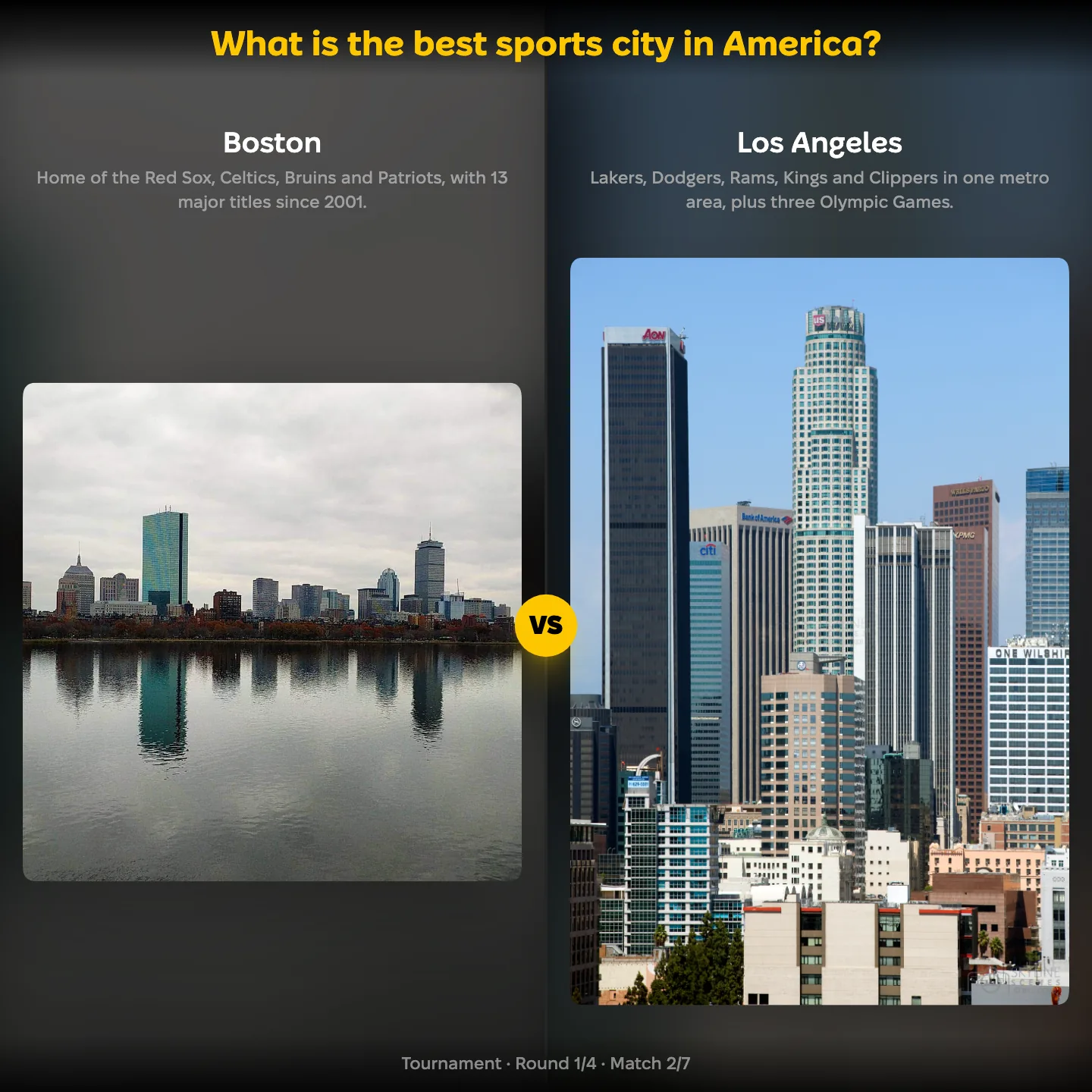
SoFi Stadium: eight World Cup matches in one summer
The 2026 host-city ranking is the freshest list on this page, because the tournament finished last month.
SoFi Stadium held eight matches, five in the group stage and three in the knockout rounds, and more than 560,000 people came through the gates. The quarterfinal there was Belgium against Spain, and Spain lifted the trophy three weeks later. Los Angeles County projects 892 million dollars of economic impact from the month.5
Mexico City has the older claim. The Estadio Azteca is the only stadium to have hosted two World Cup finals, and it opened this tournament rather than closing it.
New York and New Jersey took the final itself, which is the argument that ends most of these conversations. Dallas, Miami, Atlanta, Toronto and Vancouver each got their own version of the same month, all of it barely a fortnight cold.
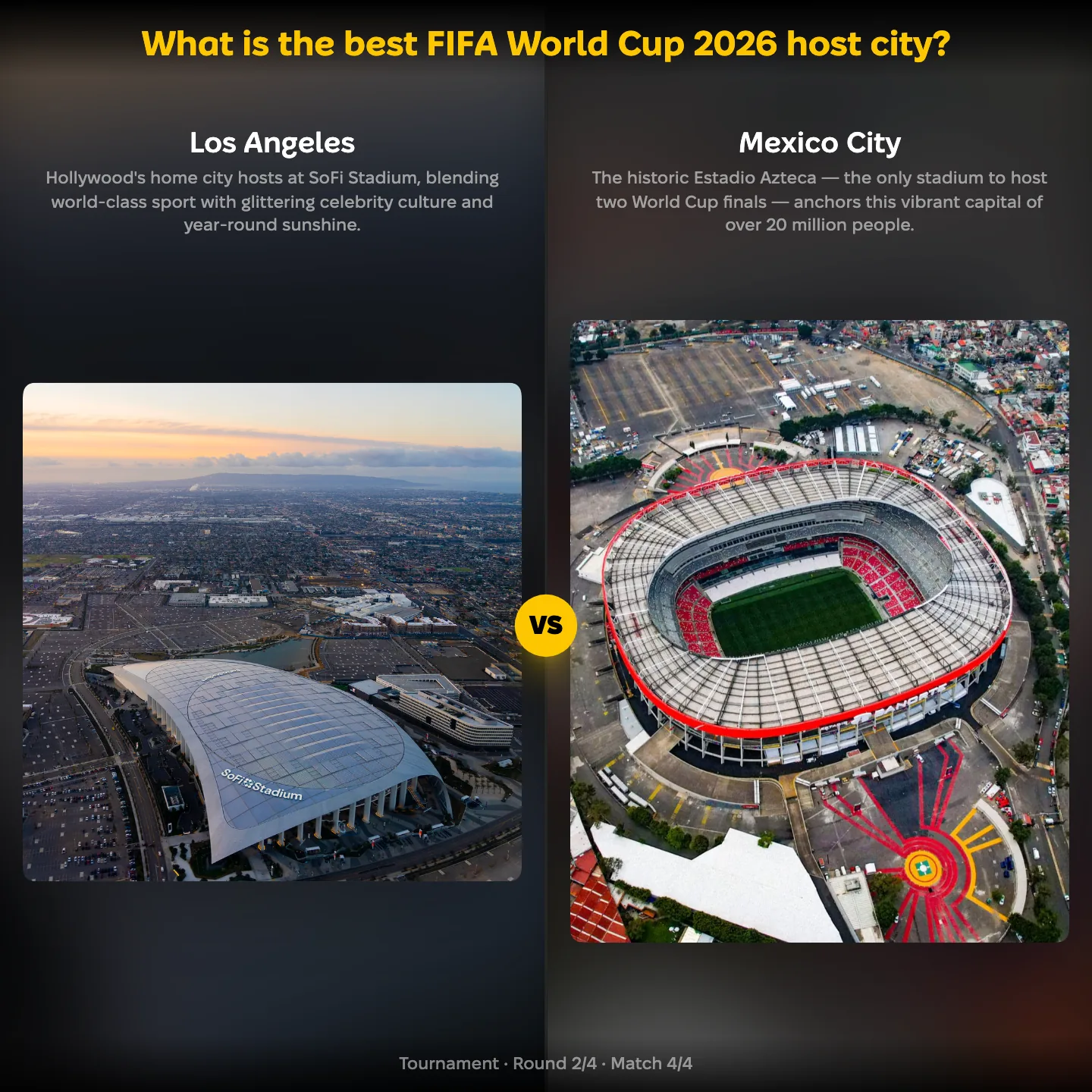
Los Angeles 1984 vs Atlanta 1996: the Games that turned a profit
On this list the entry is not a city at all. It is one summer, and a balance sheet.
The 1984 Games ended with a surplus of 232.5 million dollars. Forty per cent of it stayed in Southern California and endowed what is now the LA84 Foundation, which has funded youth sport here ever since.6 Montreal was still paying off 1976 at the time, and cities had stopped bidding. Los Angeles used venues it already had and made hosting look survivable again.
Atlanta 1996 enters as the centennial Games, remembered mostly for Michael Johnson's 200 and 400 metres double.
Barcelona 1992, Sydney 2000, London 2012 and Beijing 2008 were all staged by cities that could afford to build. That is the interesting part of 1984's case: it is the one entry that won by refusing to.
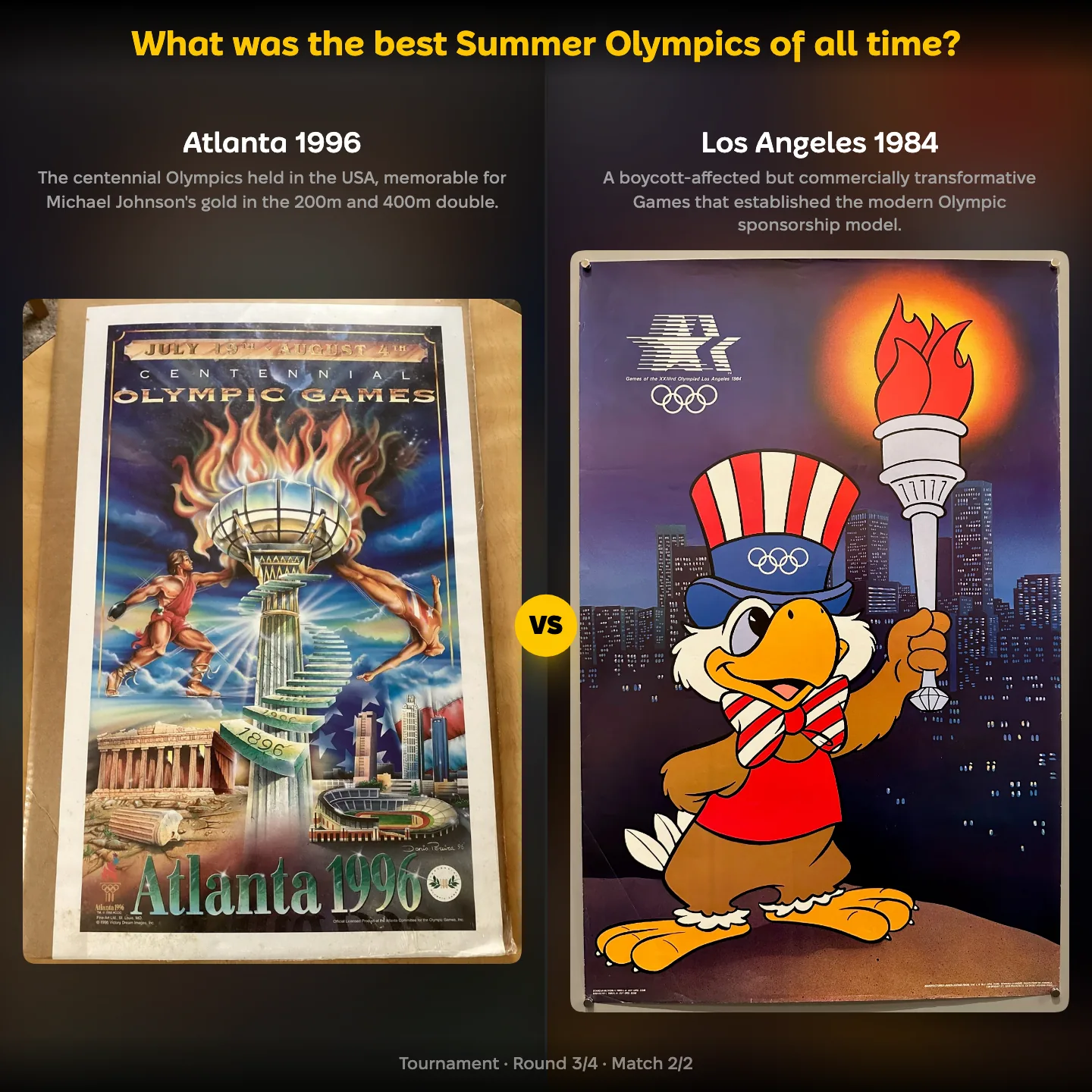
The rocket man in the Coliseum, 1984
The entry narrows once more here. Not the city, not the Games, but ninety seconds of one afternoon.
A man in a jet pack flew into the Coliseum and landed on the infield to open the 1984 ceremony. It was pure Los Angeles: a stunt performer doing something impractical extremely well, with a full Coliseum and most of the planet watching.
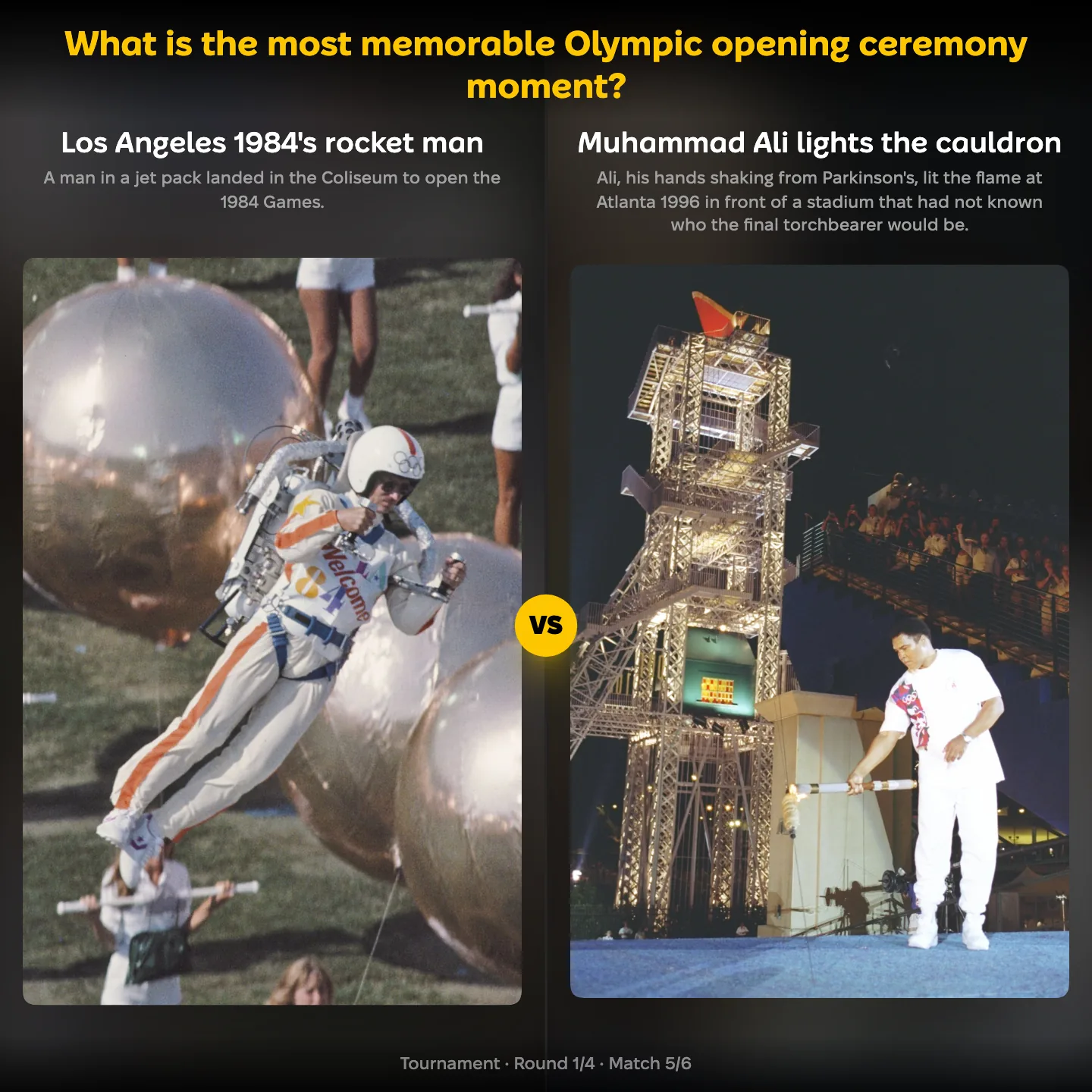
Muhammad Ali lighting the Atlanta cauldron in 1996 competes here too, carrying a weight the jetpack never reached for.
Interstate 10: Los Angeles as a starting line
On the American road-trip list the city is not a destination. It is where the driving begins.
The entry is the coast-to-coast run east out of Los Angeles, and the appeal is everything that comes after: the desert, Texas, the Gulf. The city is the place you leave at six in the morning to beat the traffic you were complaining about all week.
The Pacific Coast Highway competes on the same page, and it uses Los Angeles differently again: a midpoint between San Diego and Big Sur rather than an origin.
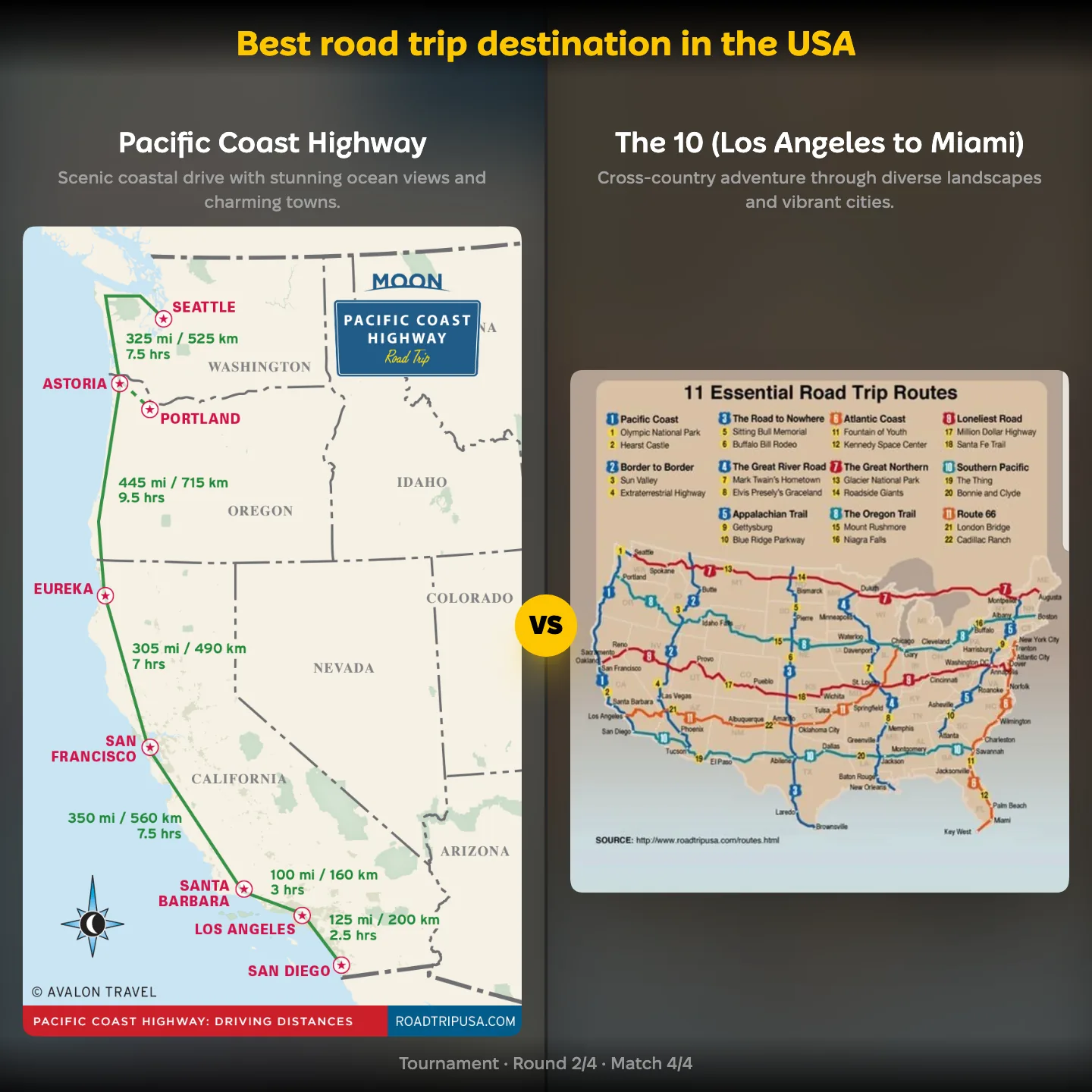
The Hollywood Walk of Fame, in the category nobody wants
Every city on this list has an attraction that photographs better than it visits. Los Angeles supplied the most reliable one.
The Walk of Fame is brass stars set into a stretch of Hollywood Boulevard pavement, surrounded by souvenir shops and costumed characters working for tips. Visitors arrive expecting the industry and find the sidewalk.
The awkward part is what the sidewalk now commemorates. Greater Los Angeles recorded 4,711 on-location shoot days across April, May and June 2026, down 12.7 per cent year on year, with reality television down almost 40 per cent.7 The monument to film production is holding up while the production leaves for Atlanta, London and Budapest.
Times Square, Fisherman's Wharf, Plymouth Rock and the Four Corners marker are on the list too. Being disappointed by an American landmark is a national tradition with several regional variants.
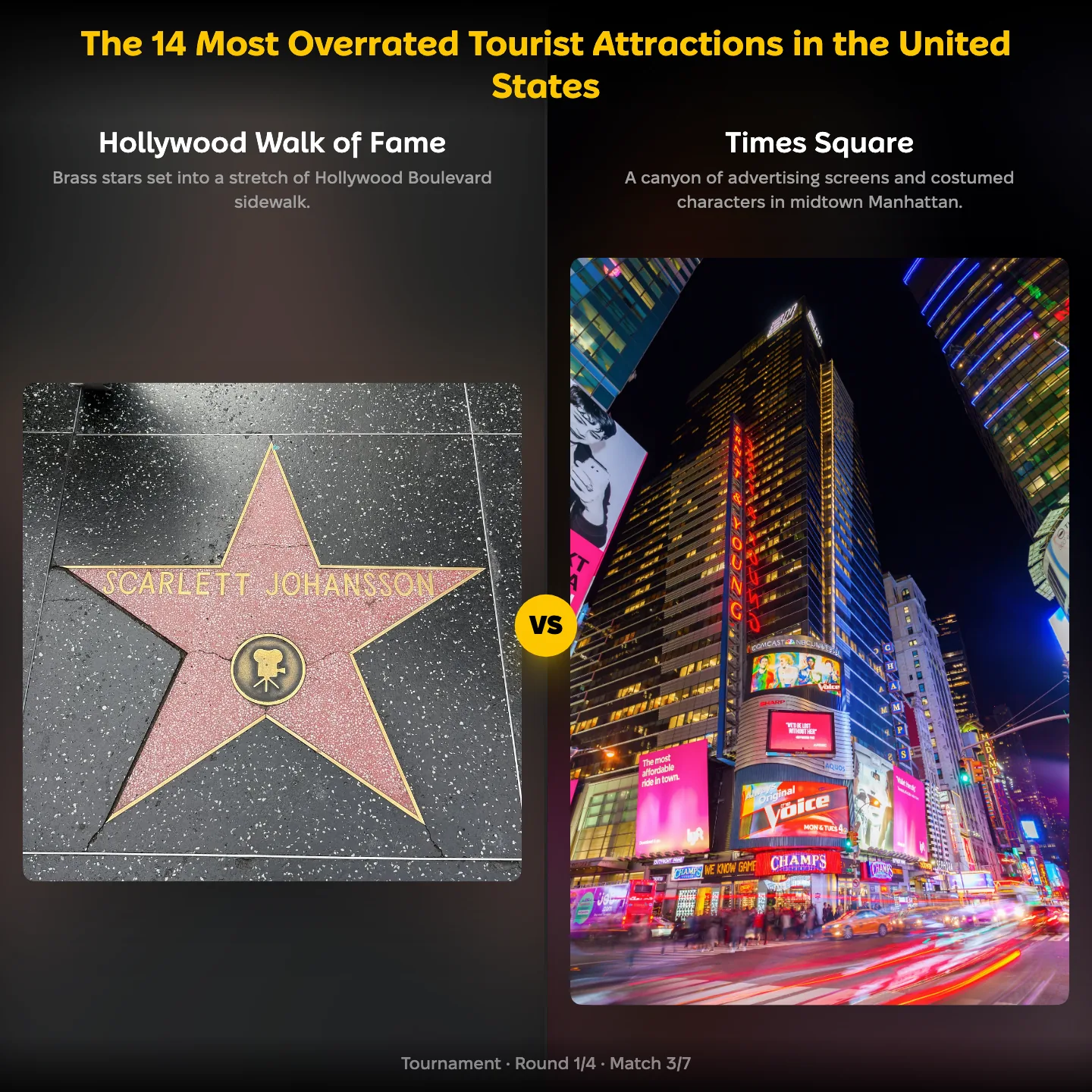
Chicago, not Los Angeles, lost the most hours to traffic
Gridlock is the thing Los Angeles is best known for after Hollywood, and the numbers put it fourth.
INRIX measured 87 hours lost per driver here in 2025. Chicago lost 112, New York 102 and Philadelphia 101.8 The city that gave the world the traffic report is behind three others on its signature complaint.
The reason is that Los Angeles congestion is long rather than dense. Distances are enormous, the jams are spread across a dozen freeways instead of funnelled through one downtown, and there is no single bottleneck of the kind that makes Chicago's numbers.
That is cold comfort at five in the afternoon on the 405, which is why the reputation survives the data.
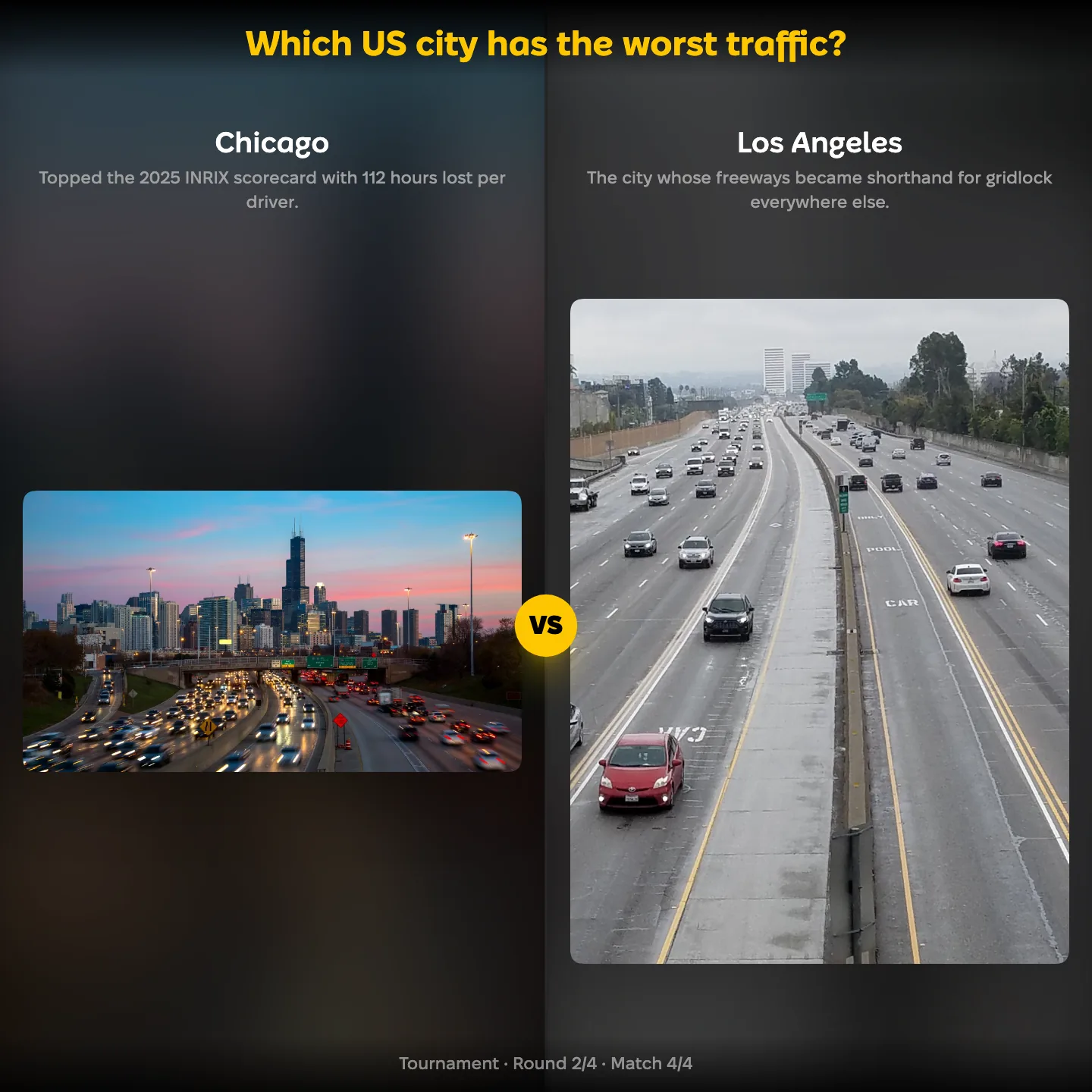
LAX: the front door, and the one list Angelenos would skip
Residents would answer this one fastest, and not in their own city's favour.
LAX was the second-busiest airport in the United States in 2019. By 2024 it had slipped to fifth, with traffic still 13 per cent below its pre-pandemic level.9 A multi-billion rebuild has been under way through all of it, which is why arriving here has meant construction hoarding for the better part of a decade.
Denver's tented roof, Portland's timber ceiling and the rocking chairs in Charlotte are what an airport looks like when it is finished.
The case for LAX is scale and reach rather than comfort: more nonstop destinations than almost anywhere in the country, and the terminal most of Asia and Latin America uses to enter the western United States.
Fifteen categories, one county
A city of 500 square miles does not have to be one thing at a time, and Los Angeles never has been. It is a beach town, a food capital, a fashion outlier, an Olympic host three times over and the punchline of a traffic joke it does not statistically deserve, depending entirely on which of these fifteen questions you happen to be answering.
All fifteen get decided the same way on this site: two options on screen, pick one and move on, no scores to average.
If your own city keeps turning up in categories it never applied for, put the question on the board and see who else belongs there.
More rankings, more angles
- New York City Is on Every List. Never in the Same Place — the other American city that fits every category
- Chicago Is on Every List. Never in the Same Place — the city that actually tops the traffic table
- Texas: Nine Years a Republic, 140 Years a State Fair — barbecue, college football and a state fair
- Las Vegas, Ranked 15 Different Ways — buffets, boxing nights and a fake Eiffel Tower
Sources
- Los Angeles Tourism & Convention Board / Tourism Economics — 2025 visitation: 49.5m total, 43.1m domestic, 6.4m international, $42.6bn in business sales: discoverlosangeles.com (checked 2026-08-11)
- LA28 — Games dates of 14–30 July 2028, the 10–20 August 2026 ticket drop, and the existing-venue plan including the Coliseum, SoFi Stadium and Venice Beach: la28.org (checked 2026-08-11)
- MICHELIN Guide California 2026, via Resy — Somni and Providence at three stars, announced June 2026: blog.resy.com (checked 2026-08-11)
- CBS Sports — the Dodgers' 2025 World Series win over Toronto in seven games, the first back-to-back champions in 25 years: cbssports.com (checked 2026-08-11)
- NBC Los Angeles — eight 2026 World Cup matches at SoFi Stadium, 560,000+ attendance, the Belgium–Spain quarterfinal, and the $892m county impact projection: nbclosangeles.com (checked 2026-08-11)
- LA84 Foundation — the $232.5m surplus from the 1984 Games and the 40 per cent share that endowed the foundation: en.wikipedia.org (checked 2026-08-11)
- FilmLA — Q2 2026 regional production report: 4,711 shoot days, down 12.7 per cent year on year, reality television down 39.9 per cent: filmla.com (checked 2026-08-11)
- INRIX 2025 Global Traffic Scorecard — hours lost per driver: Chicago 112, New York 102, Philadelphia 101, Los Angeles 87: inrix.com (checked 2026-08-11)
- Los Angeles Business Journal — LAX from second-busiest US airport in 2019 to fifth in 2024, traffic 13 per cent below 2019: labusinessjournal.com (checked 2026-08-11)