
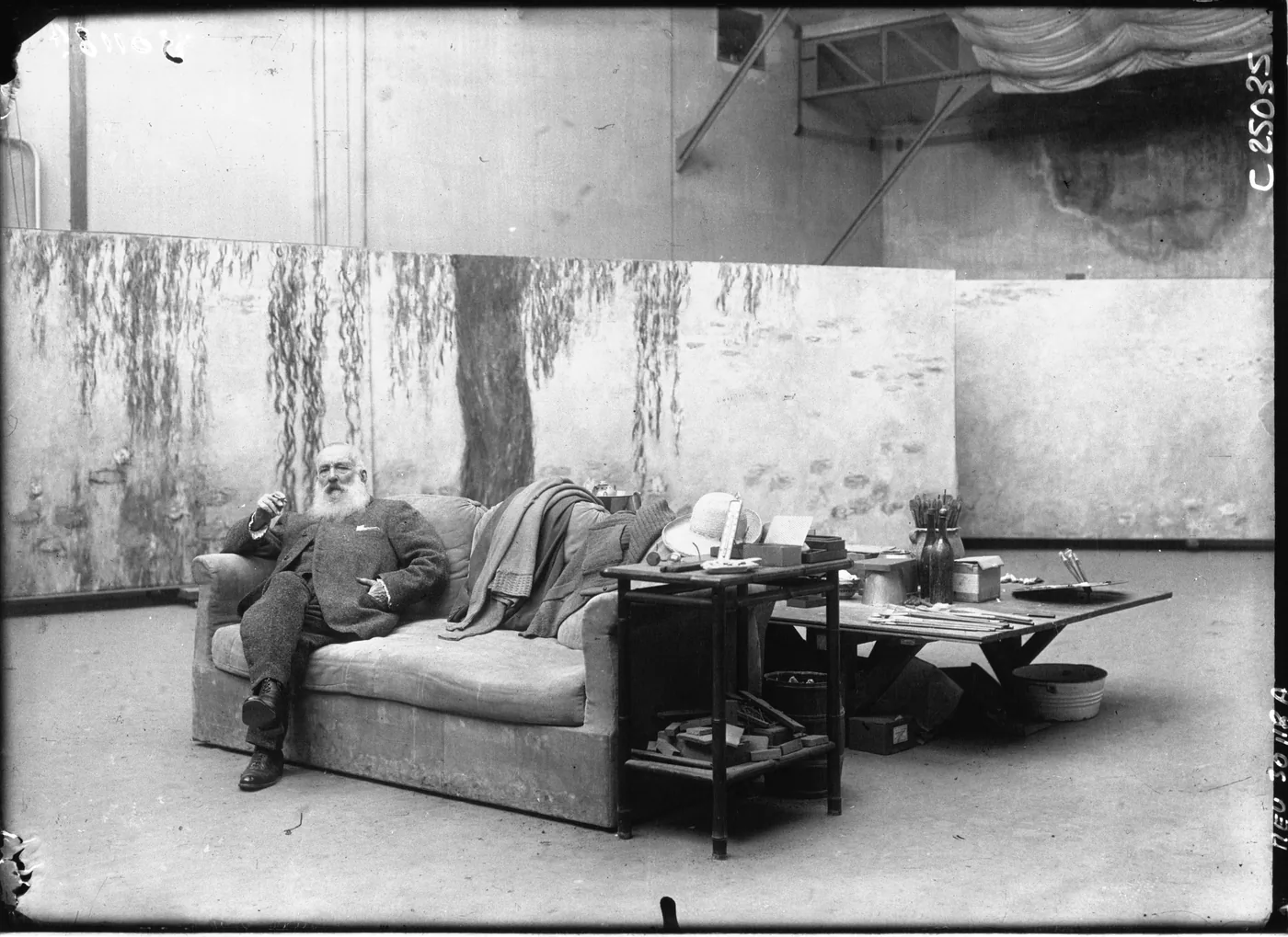
Claude Monet died at Giverny on 5 December 1926, aged 86.1 A hundred years later the Musée de l'Orangerie opens Monet, painting time on 30 September 2026, with nearly forty canvases hung in the two oval rooms that already hold his eight Water Lilies panels; the Musée d'Orsay marks the same centenary from the same date inside its permanent collection.2
He is the painter who spent the last three decades of his life on one pond, in a garden he dug himself. Before that he painted the same stacks of wheat about twenty-five times, and the same cathedral façade about thirty.
This page gathers fourteen rankings that all hold Monet, his paintings, his garden or the movement he accidentally named.
Monet built his career on refusing to move, and the rankings can't decide whether that makes him the most disciplined painter who ever lived or the most repetitive.
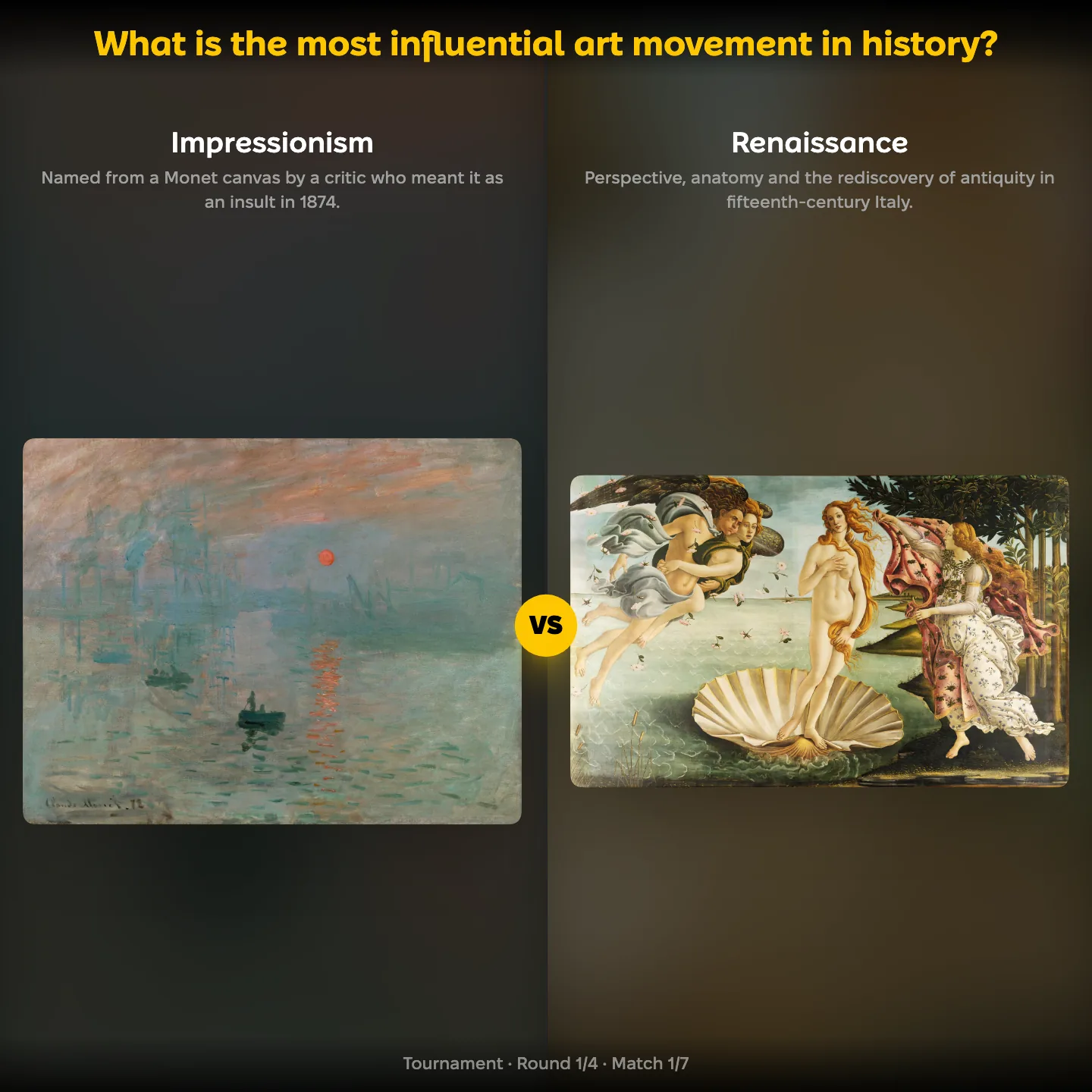
Impressionism vs the Renaissance: a movement named by an insult
Before Monet can be sorted by painting, garden or museum, the thing he helped start has to survive a much larger question: which movement changed art most.
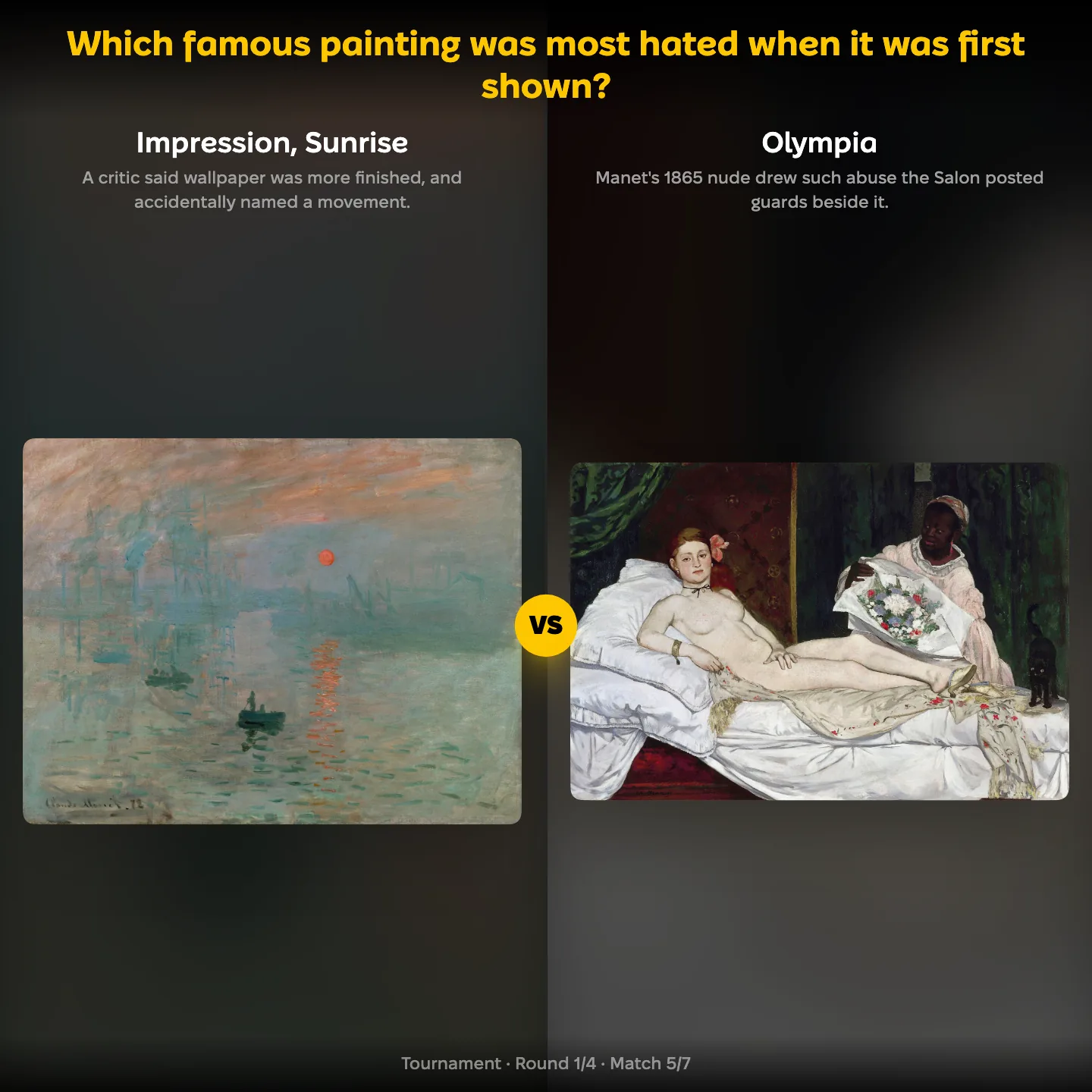
Impressionism has an unusual origin for a candidate here. Louis Leroy's satirical review in Le Charivari on 25 April 1874 took its headline, "Exhibition of the Impressionists", from the title of one Monet canvas, and used the word as a joke; one of Leroy's invented viewers says a preliminary wallpaper sketch is more finished than the seascape.4 The painters adopted the insult as a name.
The Renaissance arrives with perspective, anatomy and four centuries of authority behind it. So do Baroque, Cubism, Surrealism and the Bauhaus, all of them in this list.
Impressionism's separate case is the turnstile. It is the movement the general public queues for. Queueing and changing the course of art are two different achievements.
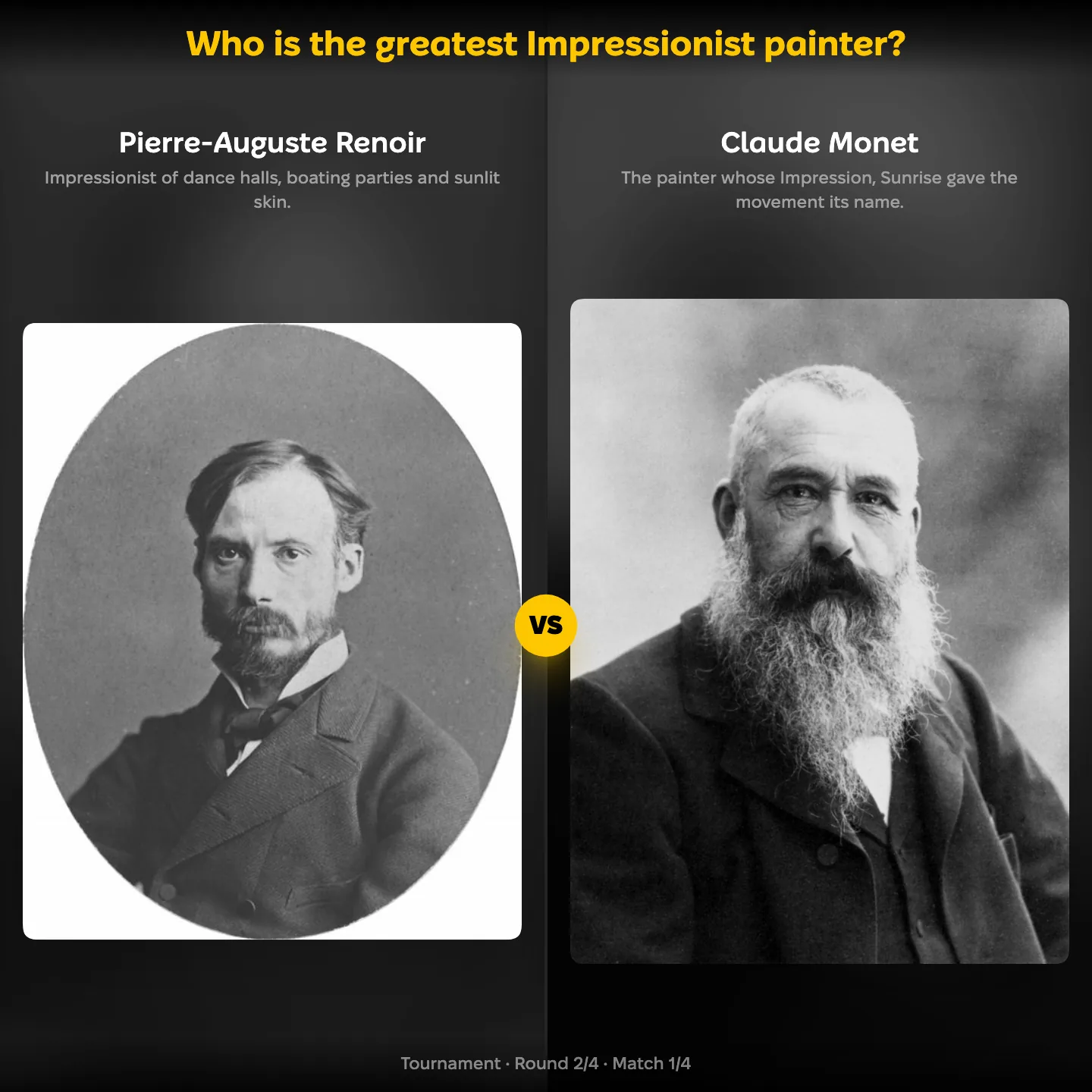
Monet vs Renoir: who actually led the Impressionists
Narrow it to the group itself and the leadership is genuinely unsettled, because the group had no leader and several members disliked the label.
Monet's claim is nominal and literal at once: the word came from his canvas. Renoir's is the crowd: dance halls, boating parties, skin in dappled light, the paintings that made the movement lovable rather than difficult.
Camille Pissarro's claim is structural. He was the only painter to show in all eight Impressionist exhibitions, and he taught both Cézanne and Gauguin.
Degas exhibited with the group while rejecting the name outright, and Berthe Morisot was a founding member whose work hung in the 1874 show. Mary Cassatt and Gustave Caillebotte are here too, the second of whom kept the others solvent by buying their canvases.
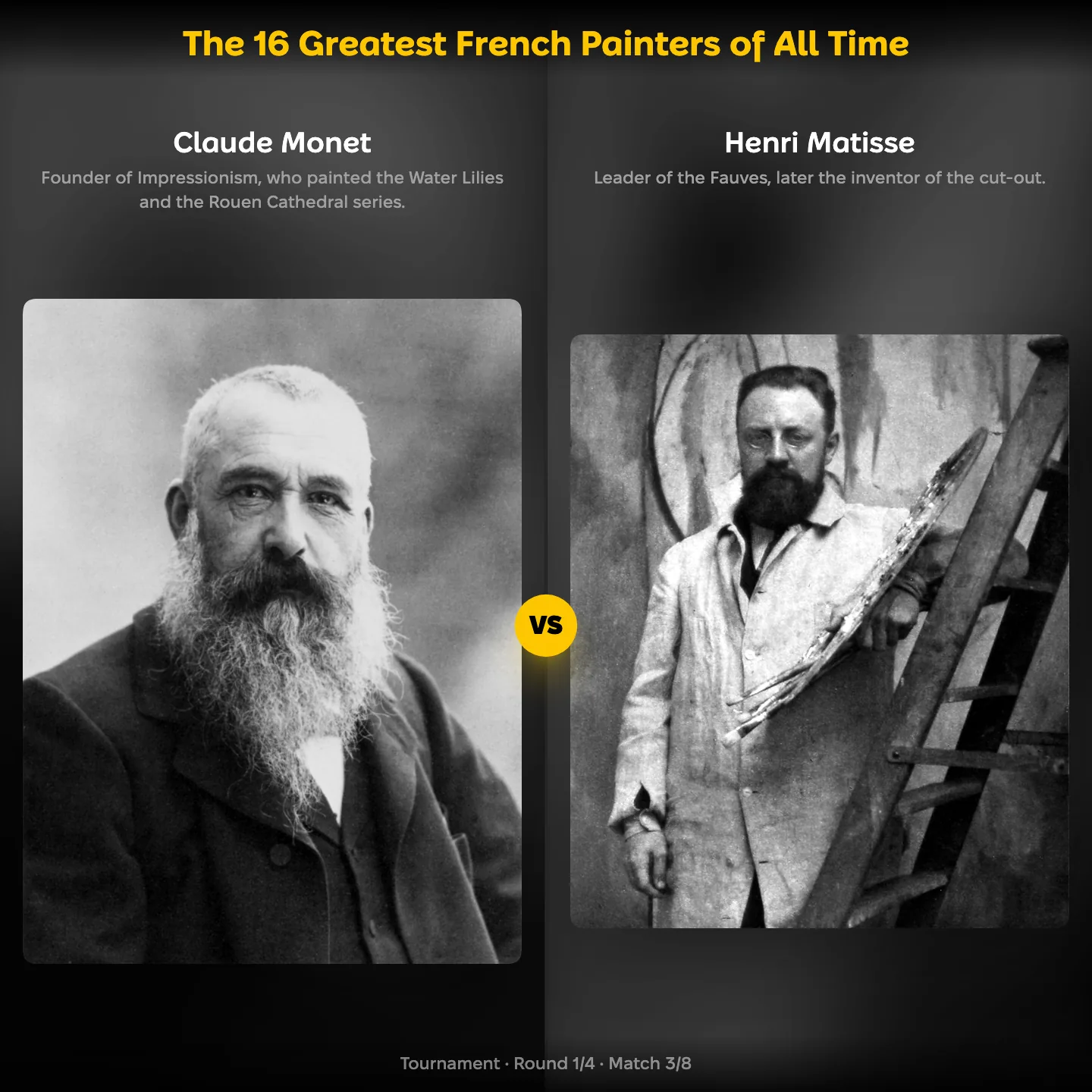
Poussin to Matisse: four centuries of French painting
Widen the frame to French painting as a whole and Monet stops being the reference point. He becomes one of sixteen names spread across four hundred years.
Poussin and Fragonard were dead before he was born. Matisse outlived him by decades and invented a second career out of coloured paper.
Monet's case here is method, not range: he did one thing until the thing itself changed.
Range is what a list like this usually rewards.
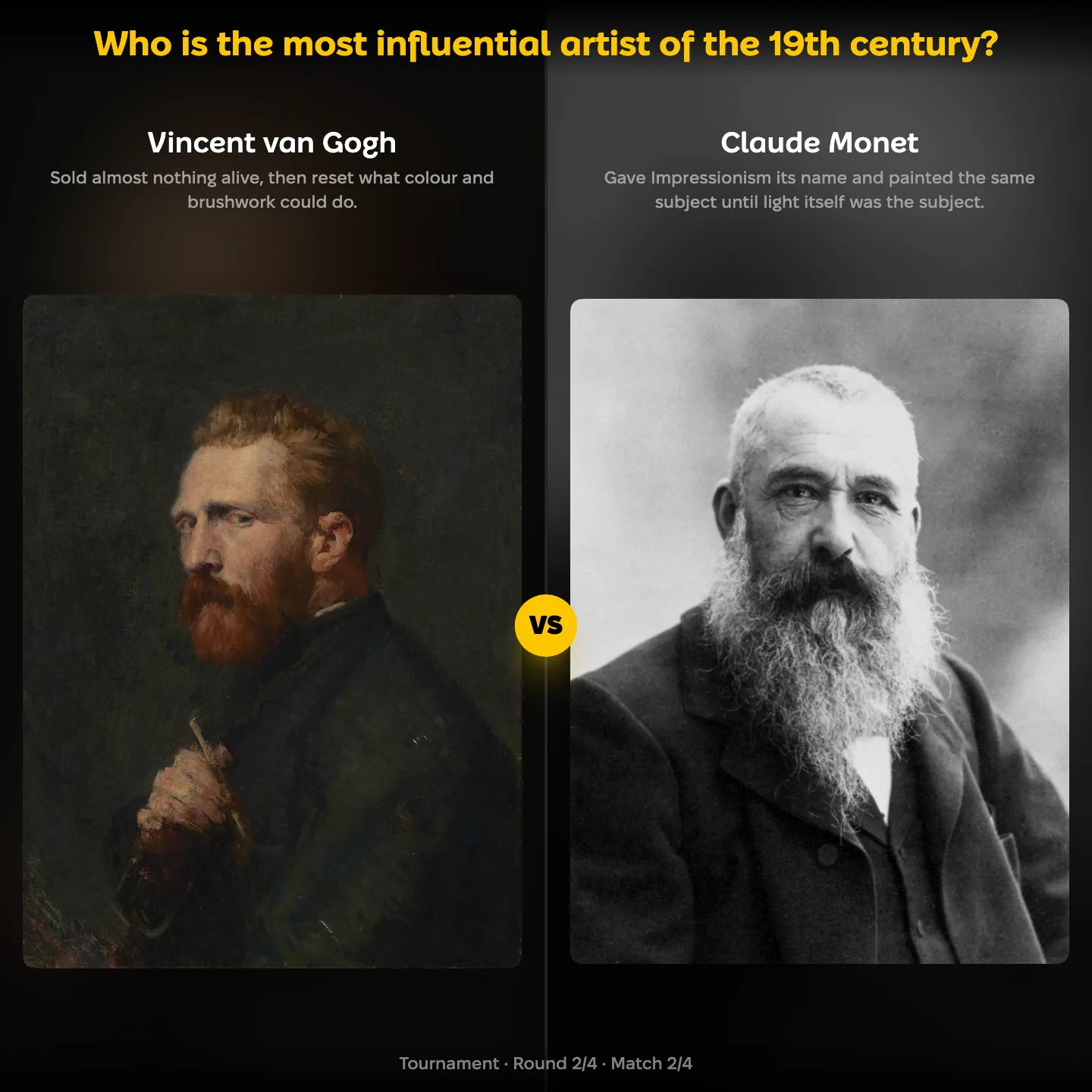
Monet vs Van Gogh: the 19th century's most influential artist
Drop the nationality filter and keep the century, and the field gets harder. This is the list where Monet is a strong name among several stronger ones.
Van Gogh sold almost nothing in his lifetime and reset what colour and brushwork were allowed to do. Cézanne was called the father of modern art by Picasso and Matisse both. Hokusai's prints reached Paris in the 1860s and changed how European painters composed a picture, Monet included; he hung Japanese prints throughout the Giverny house.
Monet's contribution is narrower, and nobody disputes it: he made the subject of a painting the light falling on it rather than the thing itself.
Turner, Goya, Rodin, Courbet and Gauguin fill the rest, which is a reminder that the nineteenth century had more revolutions than any one movement can claim.
Impression, Sunrise vs Water Lilies: Monet against himself
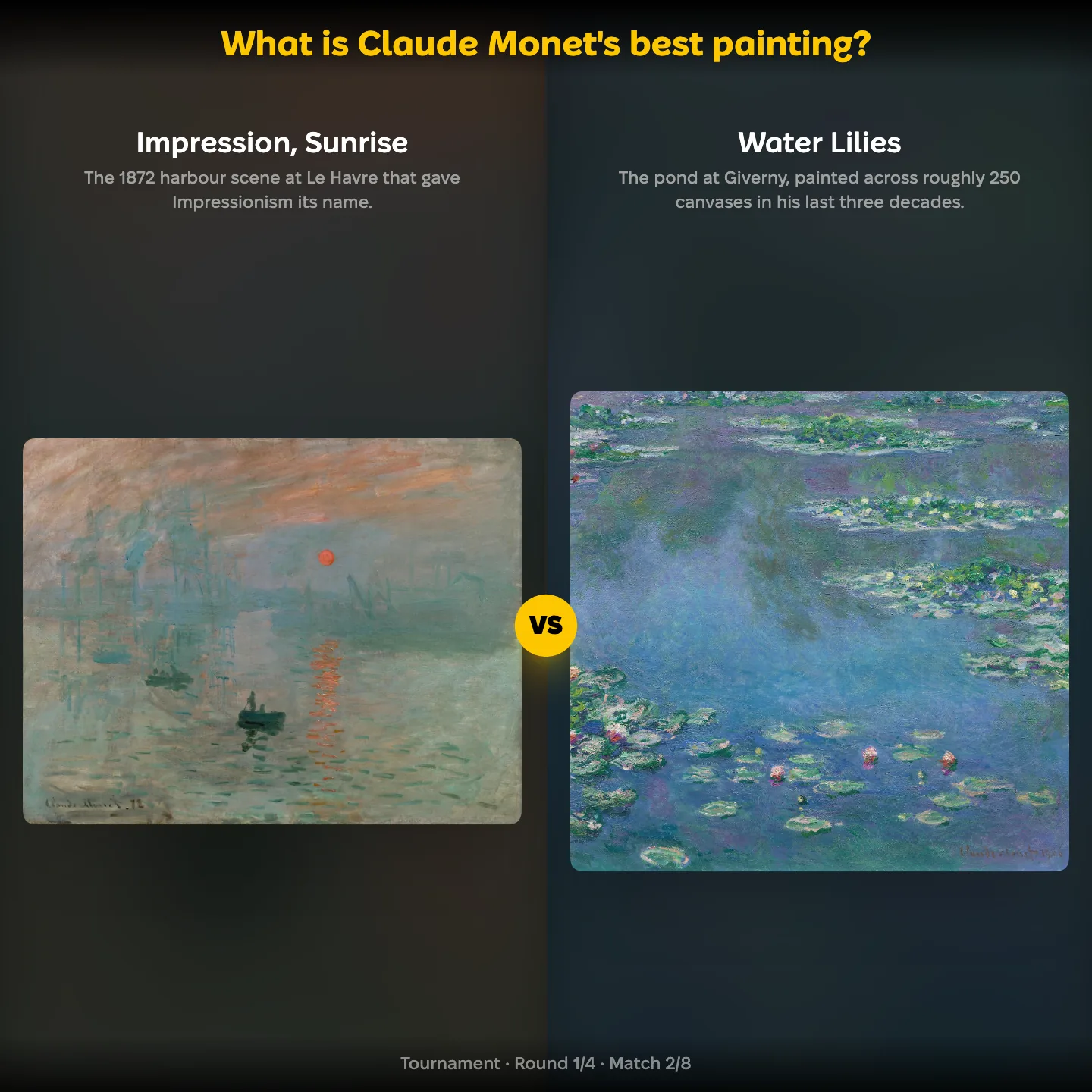
Here the whole field is his own work, so it becomes a fight between the painting that named a movement and the one that consumed three decades.
Impression, soleil levant is a view of Le Havre harbour at dawn, painted in 1872, and it is the smaller and faster of the two. Its whole importance is what a hostile critic did with its title.
The Water Lilies are the opposite kind of achievement: roughly 250 canvases of one pond, painted across the last thirty-one years of his life, through cataracts, war and the deaths of his wife and elder son.3
His eyes were failing for most of that time. He had cataract surgery on the right eye in 1923 under the Paris ophthalmologist Charles Coutela, saw colour differently afterwards, complained of a blue cast, and destroyed canvases he had painted before the operation.9 Whether the late Water Lilies are a style or a symptom is still argued.
Underneath those two the list runs through the Rouen Cathedral façades, the Haystacks, the Poplars and the steam of the Gare Saint-Lazare. It also holds Camille on Her Deathbed: his first wife, painted as she died in 1879, a picture he later admitted he had begun by noticing the colours moving across her face.
Twenty-five haystacks, thirty cathedrals, one pond
Repetition is the one measure that flatters Monet outright, because the whole list is artists who refused to move on.
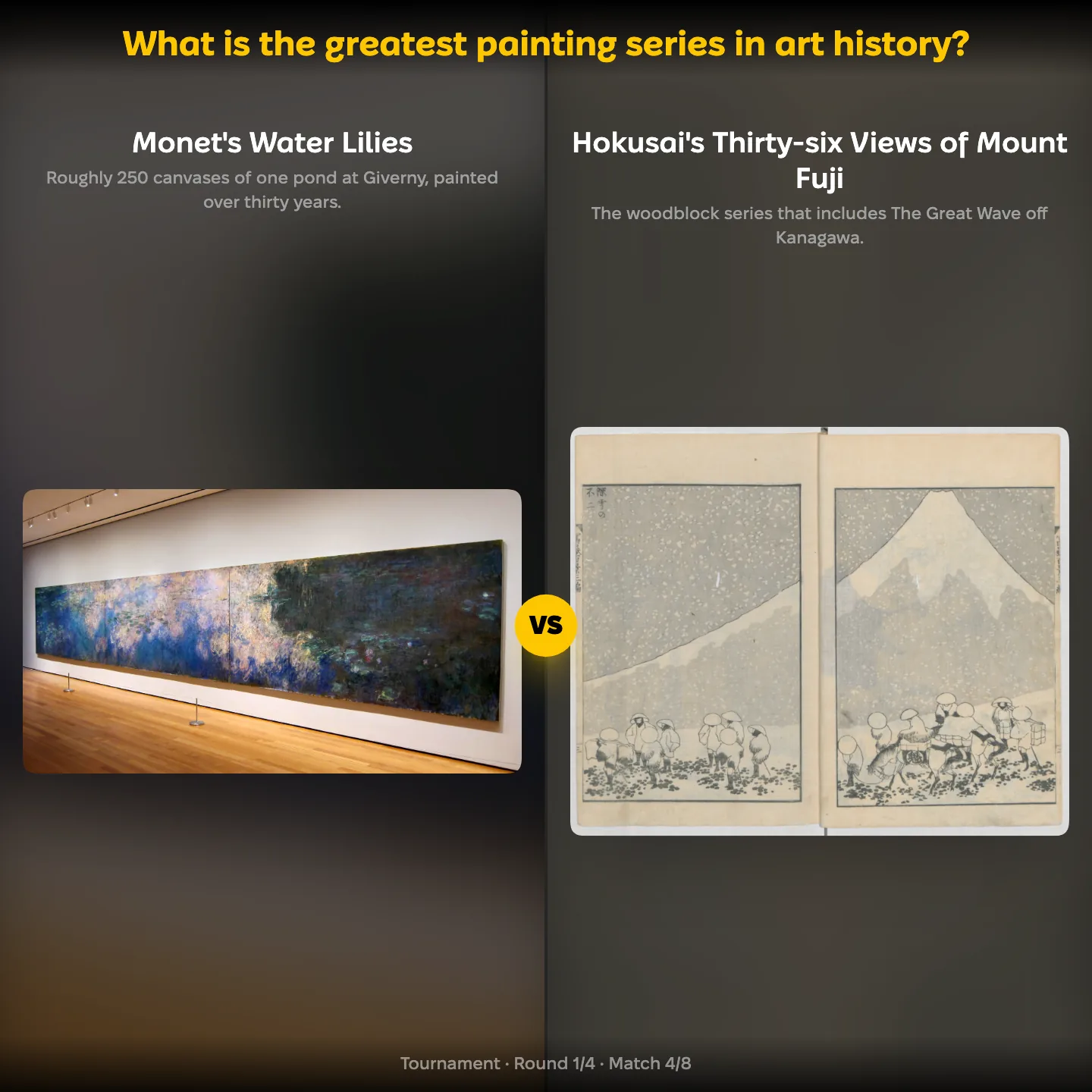
He appears three times in it. The Haystacks run to about twenty-five canvases of the same stacks of wheat in a neighbour's field;8 the Poplars were painted through a full season, after Monet bought the trees outright to stop a timber merchant felling them mid-series; the Water Lilies dwarf both.
Hokusai's Thirty-six Views of Mount Fuji is the direct rival and the direct influence — the series that includes The Great Wave off Kanagawa, and the kind of Japanese printmaking Monet collected.
Cézanne painted Mont Sainte-Victoire dozens of times. Goya covered his own walls with the Black Paintings. Piranesi re-etched his imaginary prisons a decade after finishing them. Repetition here is not a flaw anyone needs to excuse.
The commercial argument sits with Monet too. Meules, one of the Haystacks, sold at Sotheby's New York in May 2019 for $110.7m, an artist record and the first Impressionist work to pass $100m at auction; the same canvas had changed hands for $2.5m at Christie's in 1986.8
Impression, Sunrise vs The Fighting Temeraire: landscape as its own category
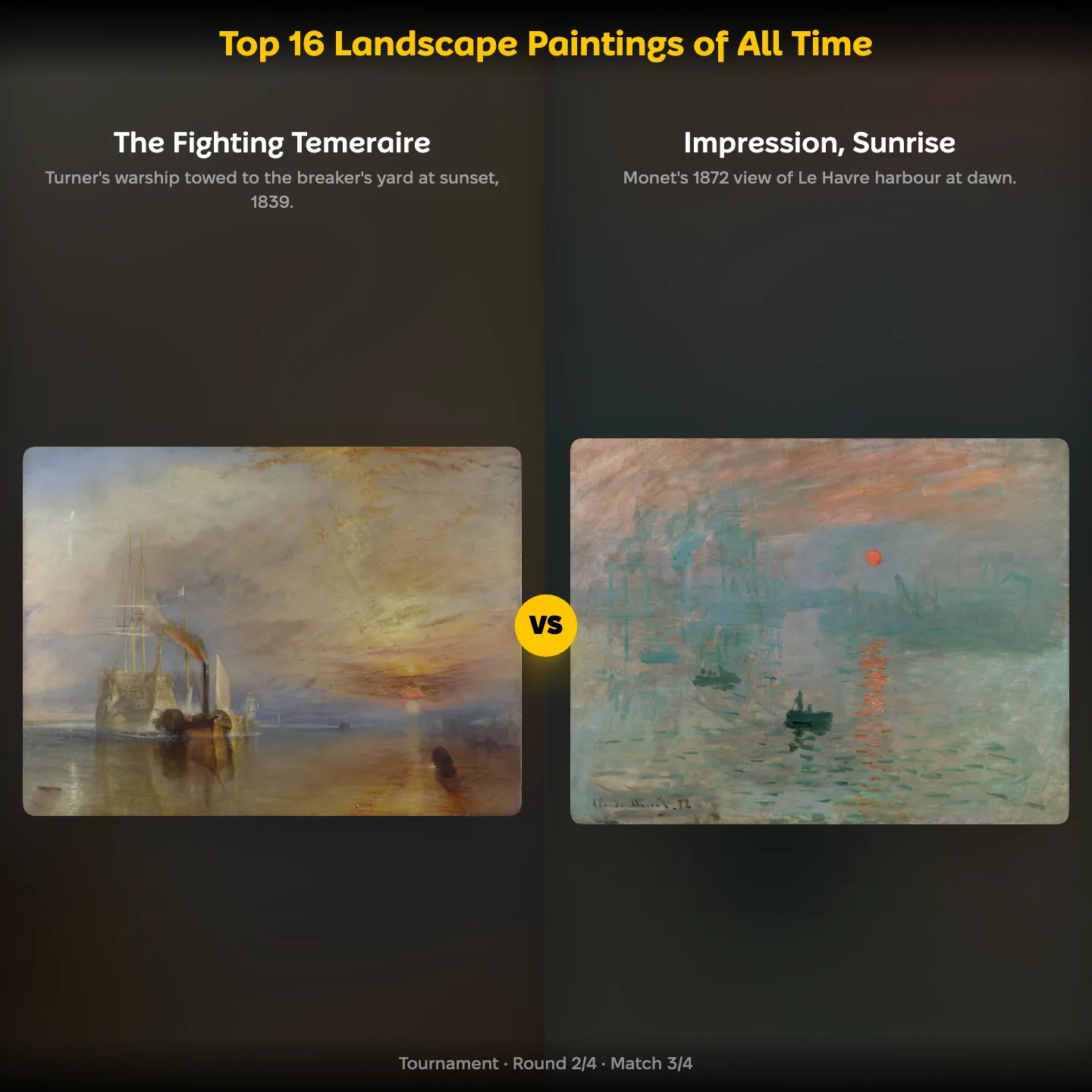
Sorted as landscape rather than as art history, Monet's harbour scene meets the genre's heaviest names.
Turner's The Fighting Temeraire, a warship towed to the breaker's yard at sunset in 1839, is the closest thing to an ancestor here, and Monet studied Turner during his London years. Constable's Hay Wain, Friedrich's Wanderer above the Sea of Fog and Bruegel's Hunters in the Snow come from three different centuries.
Impression, soleil levant is the least finished picture in the room by some distance. That was the complaint in 1874 and it is the argument for it now.
Cole's Oxbow and Bierstadt's Among the Sierra Nevada bring the American sublime; Hokusai's wave brings the Japanese one. Monet's second entry, the green Japanese bridge at Giverny, is the only landscape here of a place its painter built.
Impression, Sunrise vs Olympia: the paintings people hated first
Here is the unflattering angle, and Monet earned his place in it fairly.
The 1874 review that gave Impressionism its name was not a compliment. Leroy's piece runs as a dialogue between two visitors, one of whom decides the Monet is wallpaper at an earlier stage of production.4
Manet's Olympia did considerably worse. Shown at the Salon in 1865, it drew such hostility that the painting had to be rehung high and guarded.
What follows is a catalogue of first-night failures: Whistler's Nocturne, which Ruskin said was a pot of paint flung in the public's face; Géricault's Raft of the Medusa; Seurat's dots; Duchamp's urinal; Michelangelo's Last Judgment, whose nudes were painted over after his death. Every one of them now hangs somewhere with a queue outside.
The Water Lilies as hotel-corridor wallpaper
The second uncomfortable question is what happens to a painting after everyone agrees it is good.
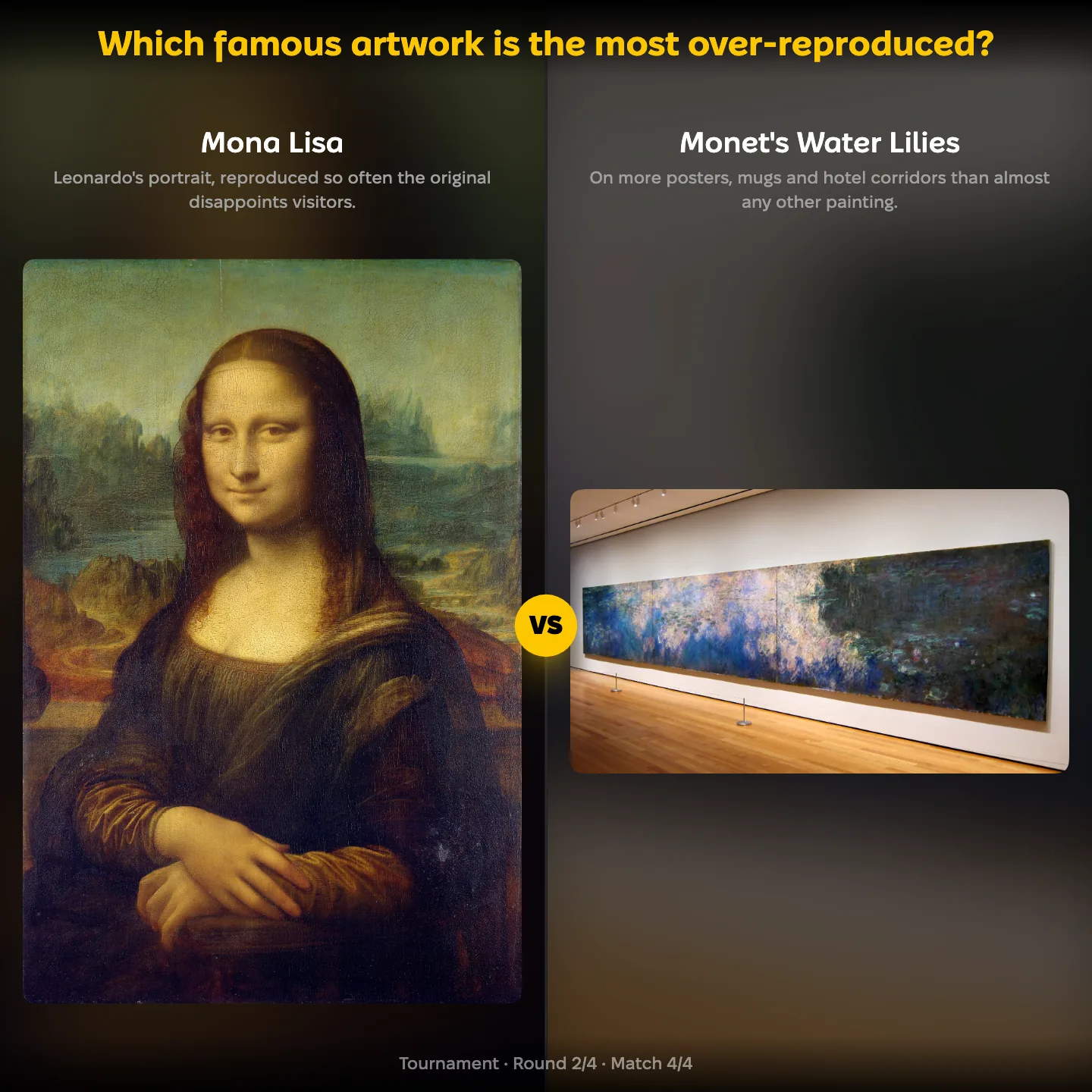
The Water Lilies are now a default hotel corridor, a jigsaw, a laptop sleeve and a scarf. Their softness is part of the reason: they carry no subject a viewer has to think about, which makes them frictionless as decoration in a way Goya never will be.
The Mona Lisa sets the ceiling for this kind of exhaustion. Reproduction is so total that the Louvre's own visitors regularly report the original as disappointingly small.
Van Gogh's Starry Night, Munch's Scream, Klimt's Kiss, Hokusai's wave and Grant Wood's American Gothic fill out a list measuring ubiquity, not quality. Being on it at all takes a level of fame most painters never reach.
Rouen vs Chartres: the façade Monet painted thirty times
Monet himself is absent from this ranking. His subject is not.
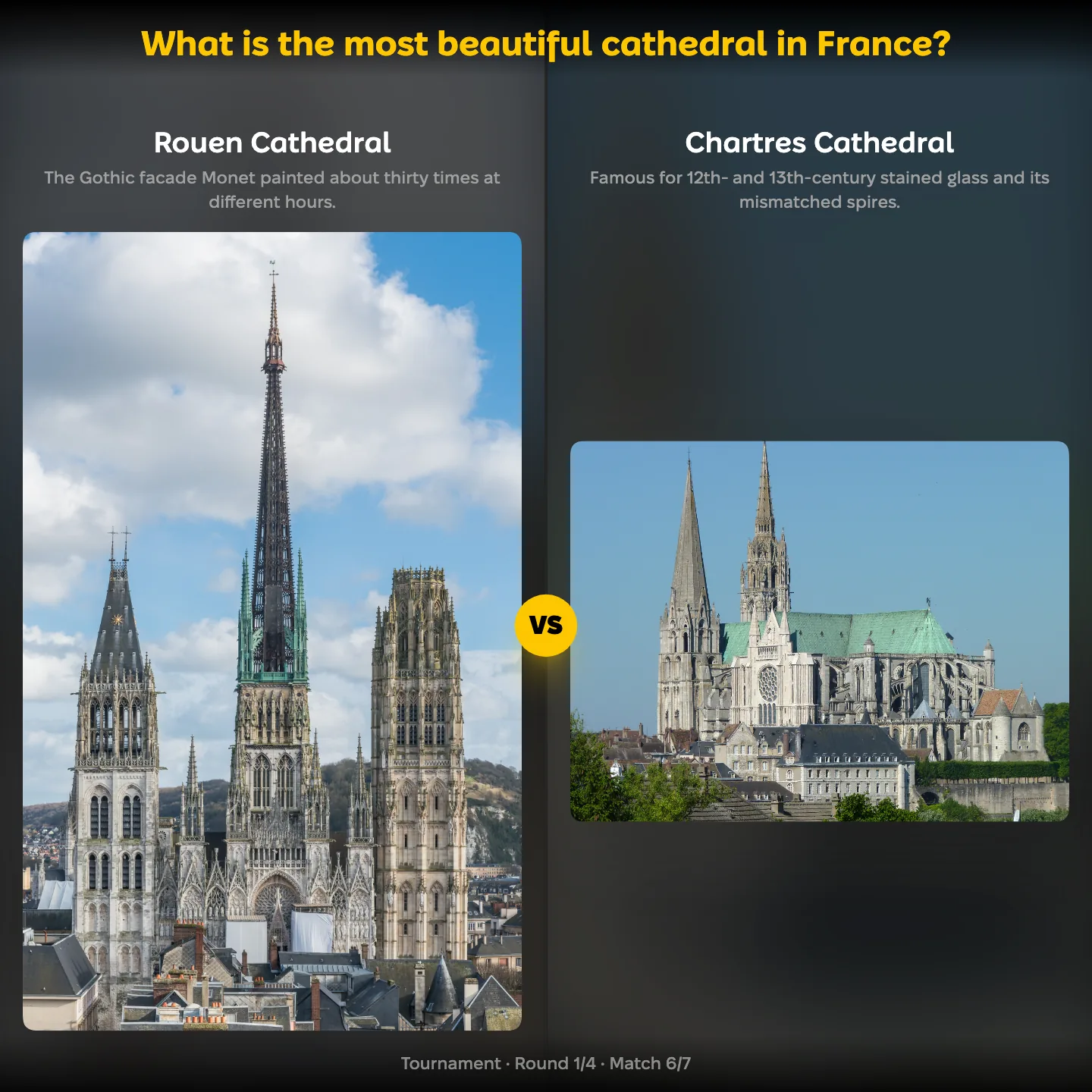
Between 1892 and 1894 he painted the west front of Rouen Cathedral about thirty times, working from rented rooms across the square, switching canvases as the light moved and returning in later years to finish them in the studio. The building is the constant; the hour is the variable.
Chartres is the sterner rival, with the best-preserved medieval stained glass in France and two deliberately mismatched spires. Reims crowned the kings, Amiens holds the largest interior volume, and Beauvais has the tallest Gothic choir ever attempted, which collapsed in 1284 and was never completed.
Rouen's own case is architectural as well as painted: its cast-iron spire briefly made it the tallest structure on earth in the 1870s.
Giverny vs Versailles: a garden one man dug
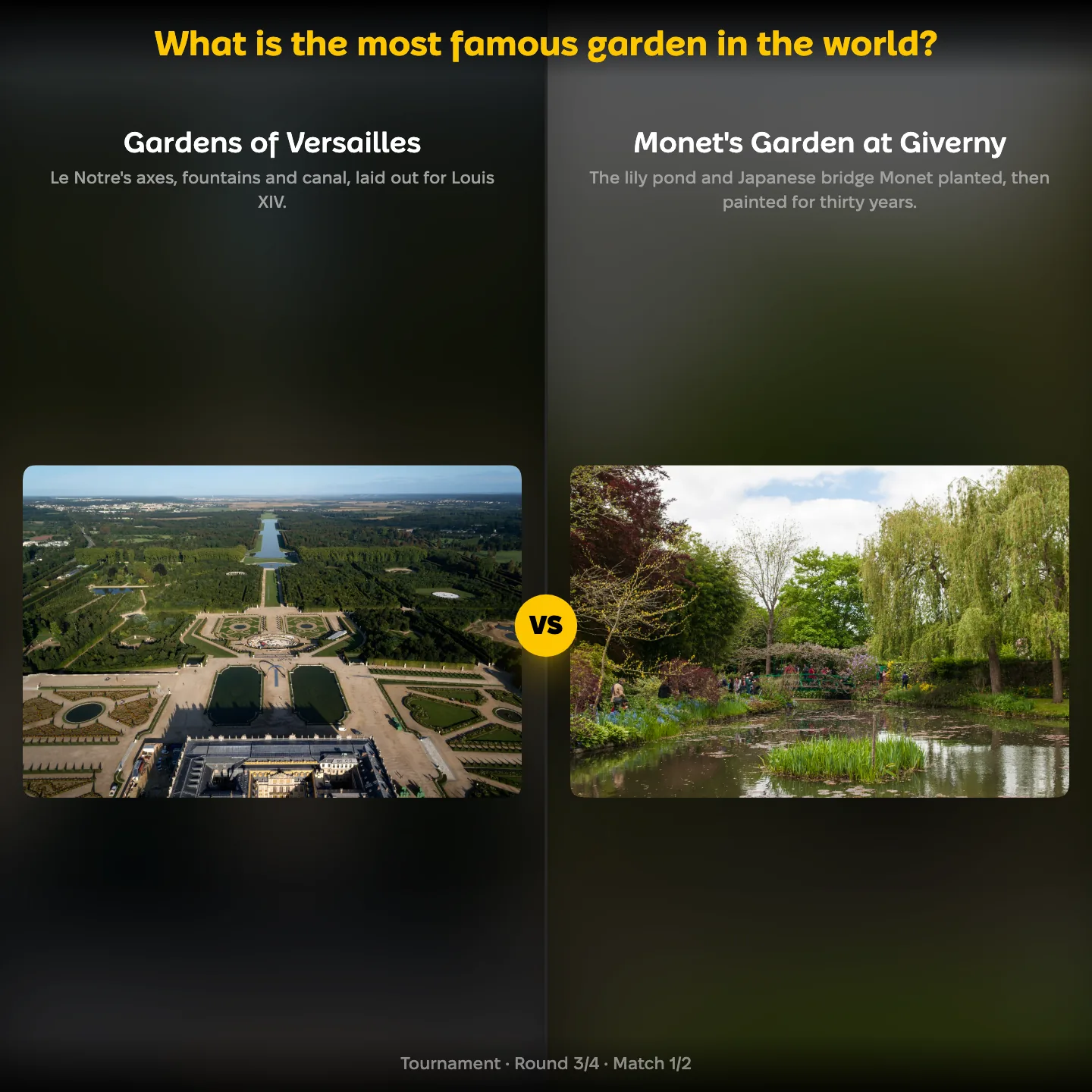
Monet rented the house at Giverny on 29 April 1883 and never left.1 He bought the land, diverted a stream to make the pond, imported the water lilies and built the Japanese bridge — and then painted the result for three decades.
That makes it the only garden on this list designed as a subject rather than as an ornament.
Versailles is the opposite proposition: Le Nôtre's axes, fountains and canal, laid out for Louis XIV on a scale meant to be read from a palace window. Keukenhof plants seven million bulbs a year. Ryōan-ji is fifteen rocks in gravel.
Giverny draws about 750,000 visitors a year, which makes it the second most visited site in Normandy after Mont-Saint-Michel.5 Almost all of them are there because of the paintings.
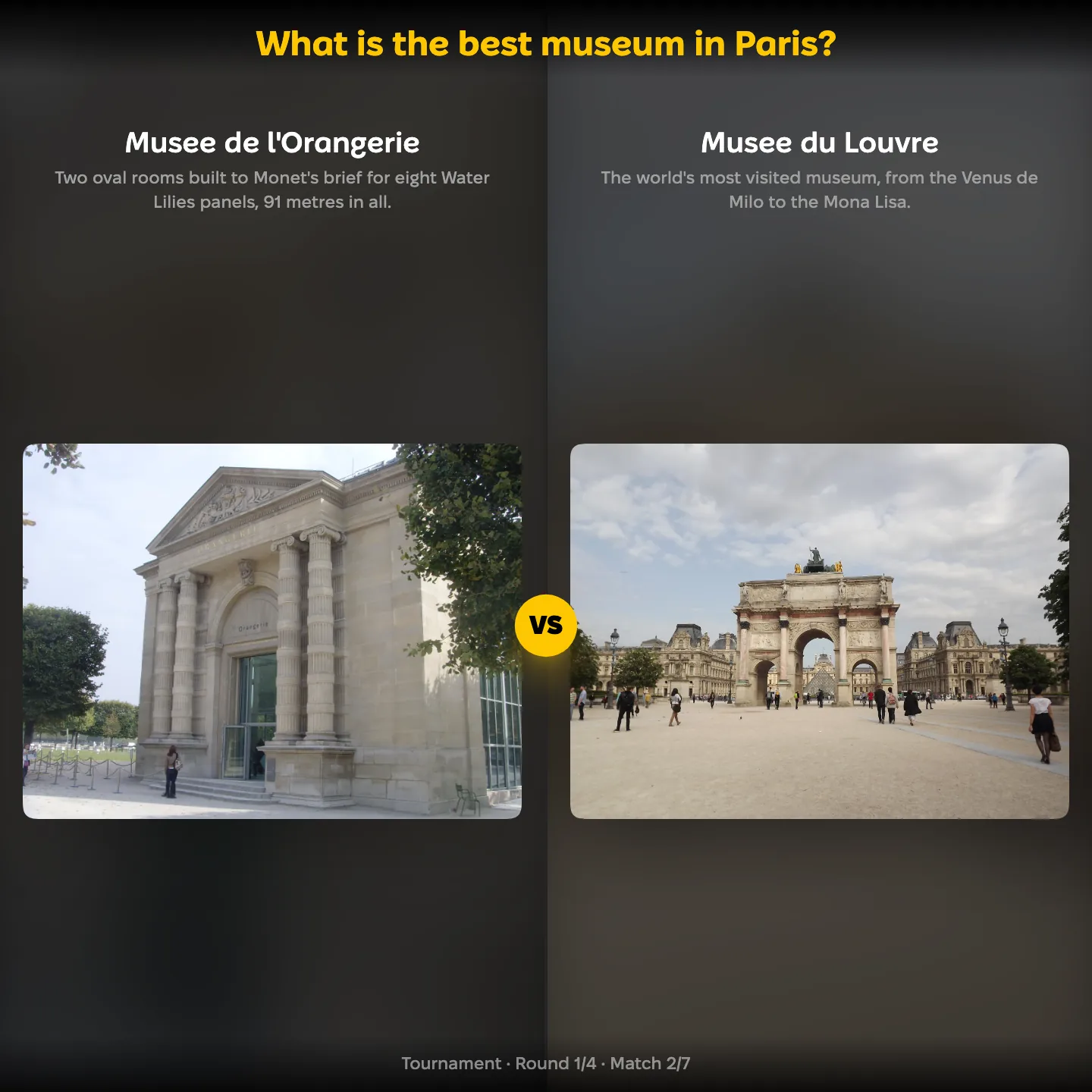
The Orangerie: two oval rooms built to Monet's brief
The Musée de l'Orangerie exists in its current form because of one donation. Monet offered the state a set of large decorative panels on 12 November 1918, the day after the Armistice; the contract was settled in 1922 and the rooms opened on 17 May 1927, five months after he died.6
Eight panels, two metres high and 91 metres long in total, hang in two oval rooms built to his brief with the architect Camille Lefèvre, arranged as a figure of eight and lit from above by daylight.6
Against that, the Louvre holds the Mona Lisa, the Venus de Milo and the Winged Victory, and takes more visitors than any museum anywhere. The Orsay has the largest Impressionist collection anywhere, inside a converted railway station.
The Marmottan is the specialist's answer: 94 Monet canvases, 29 drawings and 8 sketchbooks, the largest collection of his work in the world, most of it left to the museum by his son Michel in 1966.7 Impression, soleil levant hangs there.
Giverny vs Mont-Saint-Michel: the garden as a train ticket
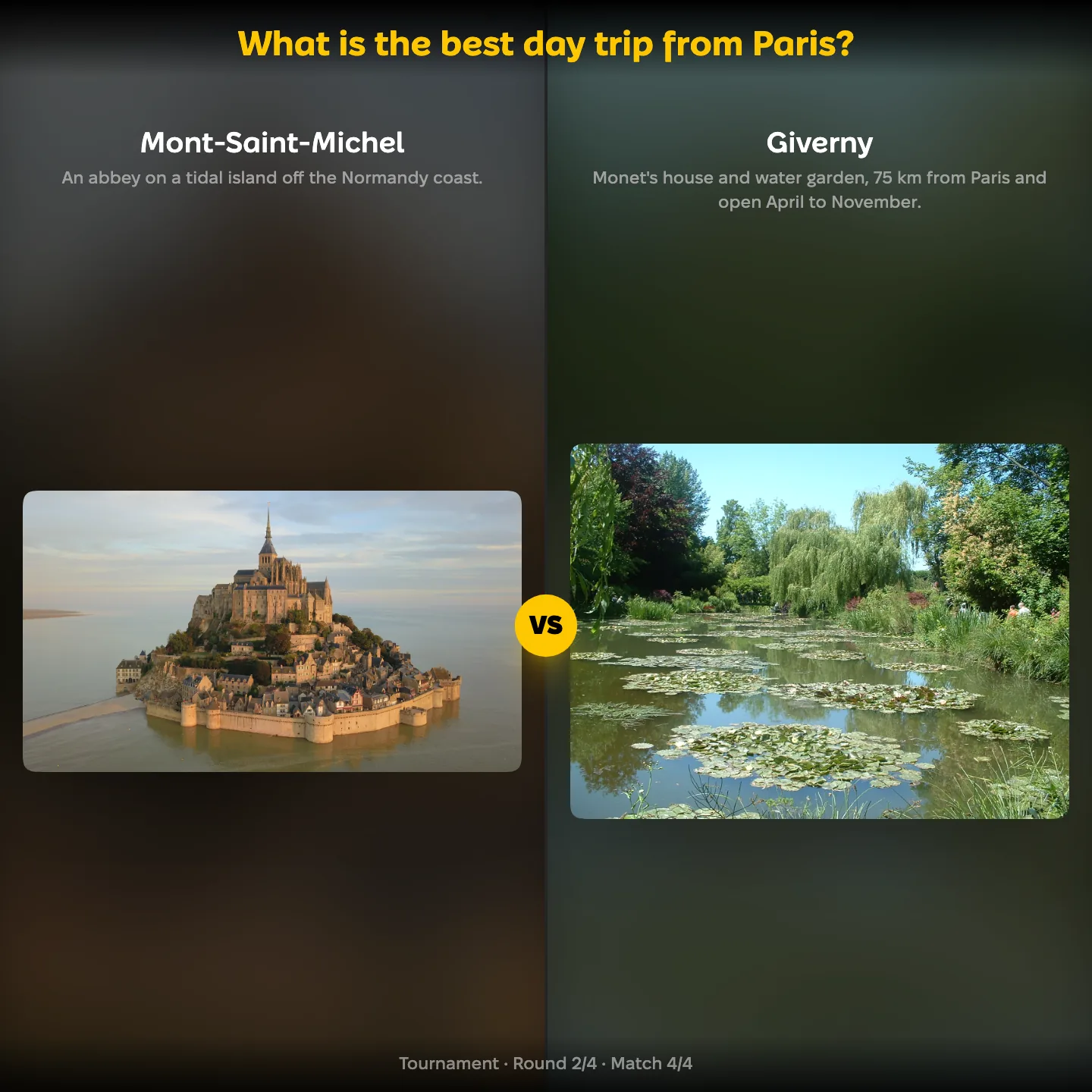
Sorted as a day out rather than as art, Giverny stops being a monument and becomes 75 kilometres of track and a shuttle bus, open April to November.
That seasonality is a real handicap in this company. Versailles, Chartres and Fontainebleau run all year; the water garden is at its best for a few weeks in early summer and closed for the whole winter.
Mont-Saint-Michel is the rival with the better postcard — an abbey on a tidal island, and the site that keeps Giverny in second place in Normandy.
Auvers-sur-Oise appears in the same ranking and makes the comparison sharper: the village where Van Gogh painted his last seventy days and is buried. Two painters' villages, both an hour from Paris, and only one of them is a garden its painter designed.
Impressionism, champagne and the metric system
The last lens drops art entirely and asks what France has given away that the rest of the world kept.
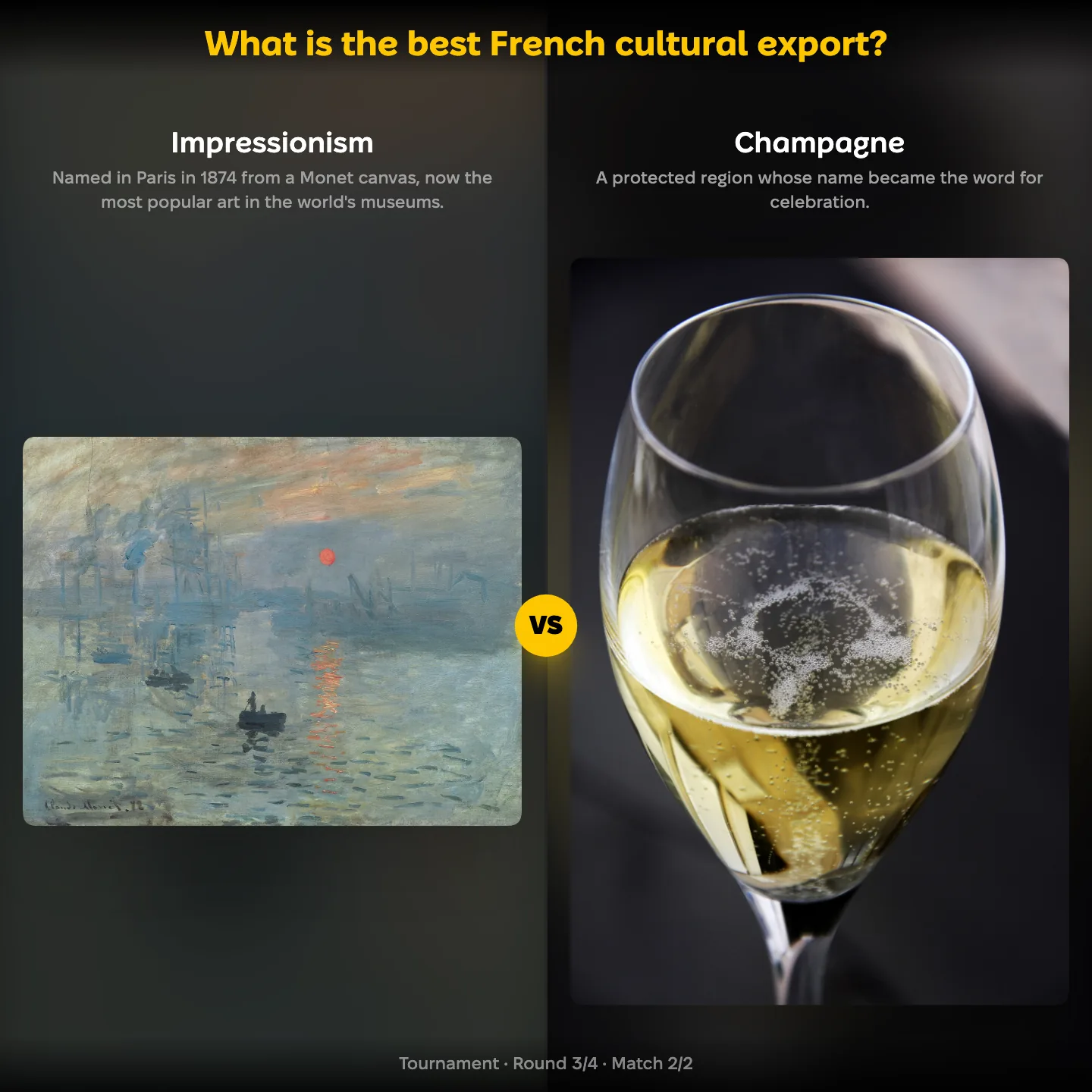
Impressionism is an odd entry on a list of exports, because nobody sold it. It travelled by being copied: American, Australian, Russian and Japanese painters all produced their own versions, and Childe Hassam brought the method to New England while Monet was still alive.
Champagne, by contrast, is a protected region whose name became the ordinary word for celebration. The baguette went onto UNESCO's intangible heritage list in 2022.
The metric system, Gothic architecture, haute couture, the Tour de France and the Statue of Liberty round out a list where a painting movement has to compete with a unit of measurement and a gift to New York.
One pond, fourteen different questions
Fourteen rankings, and Monet's standing in each depends entirely on what the question decides to measure: invention, range, repetition, ubiquity, or how far you have to travel to see it.
The Orangerie's centenary show calls itself Monet, painting time, which is the most accurate description anyone has managed. A painter who spent thirty years on one pond was never really painting the pond.
Every one of these lists gets decided one matchup at a time, by whoever votes.
Think a painter, a garden or a movement belongs somewhere else entirely? Make the list that proves it.
More rankings, more angles
- Leonardo da Vinci Is on Every List. Never in the Same Place — the other painter, and history's greatest quitter
- Paris vs London, Ranked Side by Side — Michelin stars, museums and metro systems, 214 miles apart
- Agatha Christie: 100 Years On, 15 Different Lists — the other centenary, sorted by detectives and West End runs
Sources
- Wikipedia — Claude Monet: birth and death dates, and the move to Giverny on 29 April 1883: en.wikipedia.org (checked 2026-09-18)
- Musée de l'Orangerie — Monet, painting time, 30 September 2026 to 25 January 2027, and the centenary programme shared with the Musée d'Orsay: musee-orangerie.fr (checked 2026-09-18)
- Wikipedia — Water Lilies (Monet series): roughly 250 canvases painted over the last thirty-one years of his life: en.wikipedia.org (checked 2026-09-18)
- Wikipedia — Impression, Sunrise: Louis Leroy's review in Le Charivari, 25 April 1874, its wallpaper line and the adoption of the name: en.wikipedia.org (checked 2026-09-18)
- Wikipedia — Fondation Monet in Giverny: about 750,000 visitors in 2023, second in Normandy after Mont-Saint-Michel: en.wikipedia.org (checked 2026-09-18)
- Wikipedia — Musée de l'Orangerie: the 1922 donation, the eight panels two metres high and 91 metres long, Camille Lefèvre's two oval rooms, and the 17 May 1927 opening: en.wikipedia.org (checked 2026-09-18)
- Wikipedia — Musée Marmottan Monet: 94 canvases, 29 drawings and 8 sketchbooks, bequeathed by Michel Monet in 1966: en.wikipedia.org (checked 2026-09-18)
- CNBC — Monet's Meules sells for a record $110.7m at Sotheby's, May 2019, and the series of 25 paintings of stacks of wheat in a neighbour's field at Giverny: cnbc.com (checked 2026-09-18)
- British Journal of General Practice — the effect of cataracts and cataract surgery on Claude Monet: the 1923 operation under Charles Coutela, the altered colour vision afterwards, and the canvases he destroyed: bjgp.org (checked 2026-09-18)