Each World Cup brought a new ball — some celebrated for feel and design, others infamous for unpredictable flight paths. Which official match ball do you consider the greatest?
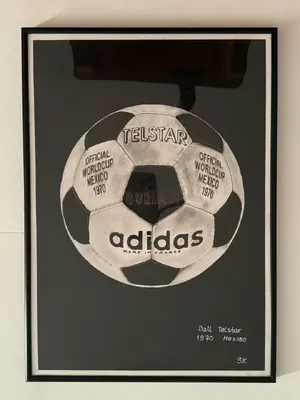 1Telstar (1970)The first Adidas-designed World Cup ball, introduced at Mexico 1970, featuring the iconic black and white 32-panel hexagon-pentagon pattern that became the universal visual symbol of football.
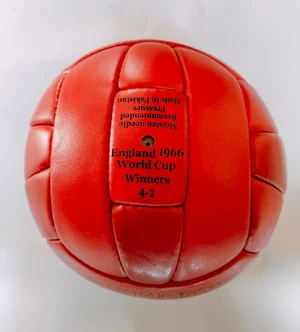 2Challenge 4-Star (1966)The Slazenger-made ball used at England 1966, selected in a blind FIFA test and remembered as the last non-Adidas World Cup ball, witnessing England's only World Cup triumph.
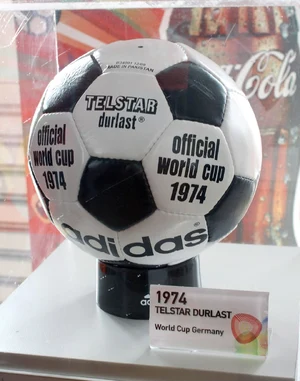 3Telstar Durlast (1974)An evolution of the 1970 Telstar produced for West Germany 1974, it was the first polyurethane-coated World Cup ball, making it fully waterproof and significantly more durable than its predecessor.
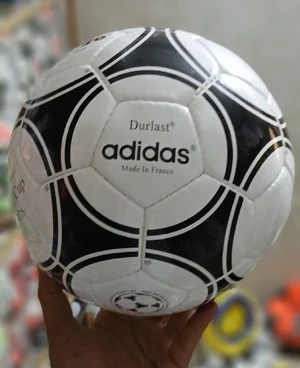 4Tango (1978)Introduced at Argentina 1978, the Tango replaced the hexagonal panels with a seamless-looking triadic pattern of swirling black shapes on white that went on to define the look of football for a decade.
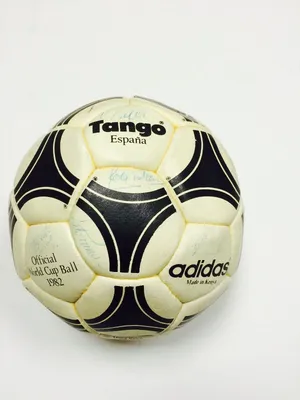 5Tango España (1982)Used at Spain 1982, this was the last leather ball ever used at a World Cup and the first to feature the Adidas Trefoil logo, also incorporating rubberized seams to dramatically improve water resistance.
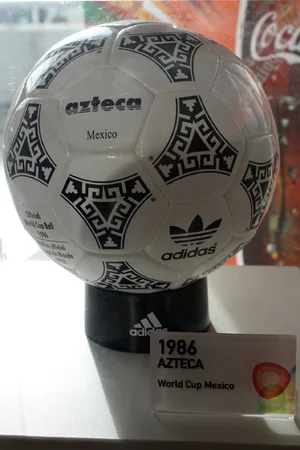 6Azteca (1986)The game-changing ball of Mexico 1986, the first fully synthetic World Cup ball, was rain-resistant and witnessed Maradona's Hand of God and Goal of the Century.
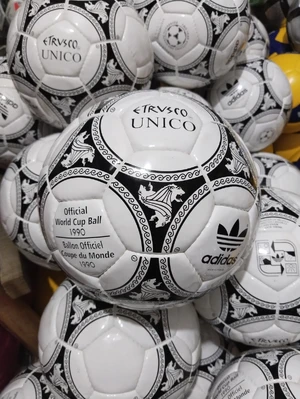 7Etrusco Unico (1990)Used at Italy 1990, the Etrusco Unico featured Etruscan lion-head motifs on its panels and was the first World Cup ball to incorporate an internal polyurethane foam layer for improved feel.
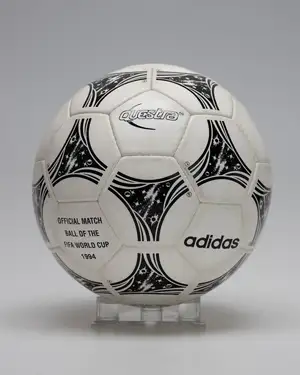 8Questra (1994)The official ball of USA 1994, the Questra was created to honor the 25th anniversary of the moon landing, incorporating polystyrene micro-beads that made it one of the fastest and most responsive balls yet.
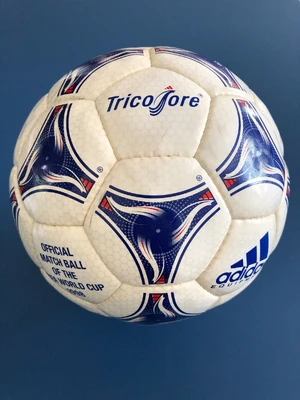 9Tricolore (1998)Used at France 1998, the Tricolore was a landmark ball as the first multi-coloured match ball in World Cup history, its blue, red, and gold design inspired by the French Tricolore flag.
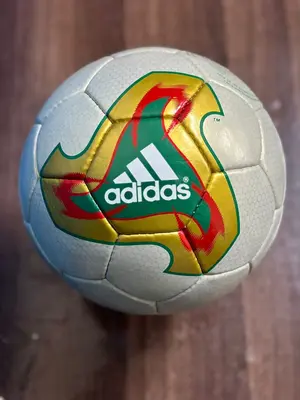 10Fevernova (2002)The ball of Korea/Japan 2002, with its Asian-inspired geometric design, was one of the most controversial in history with an unpredictable flight path heavily criticized by goalkeepers worldwide.
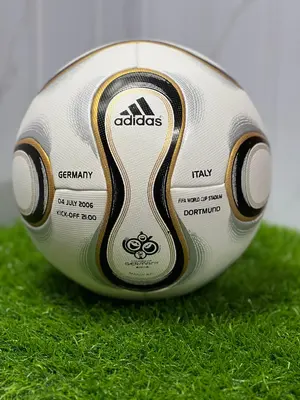 11Teamgeist (2006)Introduced at Germany 2006, the revolutionary 14-panel Teamgeist design minimized seams to create an almost perfectly spherical surface, widely praised as one of the truest-flying balls ever produced.
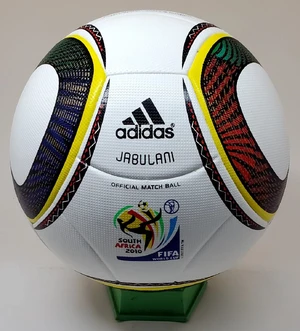 12Jabulani (2010)The 8-panel thermally-bonded ball of South Africa 2010, its knuckleball aerodynamics were loved by some but blamed by goalkeepers for a tournament full of wild, dipping shots.
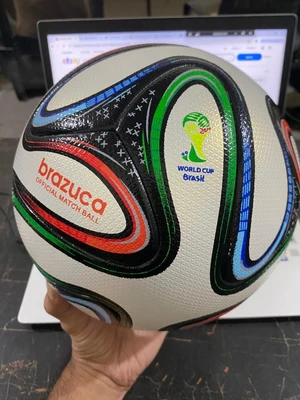 13Brazuca (2014)The official ball of Brazil 2014, named by fans and featuring six interlocking polyurethane panels mimicking Brazilian wish-bands, was widely praised by players as one of the most predictable balls in recent World Cup history.
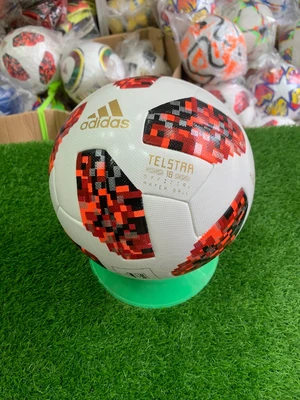 14Telstar 18 (2018)The official ball of Russia 2018, a modern homage to the 1970 original featuring a black-and-white pixelated panel design that also contained an embedded NFC chip.
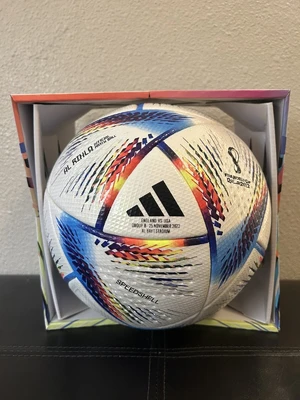 15Al Rihla (2022)The official ball of Qatar 2022, whose name means The Journey in Arabic, was the fastest World Cup ball ever tested in wind tunnels and the first produced using entirely water-based inks and glues.