# Leonardo da Vinci Is on Every List. Never in the Same Place
> Painter, scientist, inventor, record-breaking auction lot and history's greatest quitter: Leonardo da Vinci seen through fourteen very different rankings.
*By YPB Team · Published August 16, 2026 · https://youpick.best/articles/leonardo-da-vinci-ranked-many-ways*
---
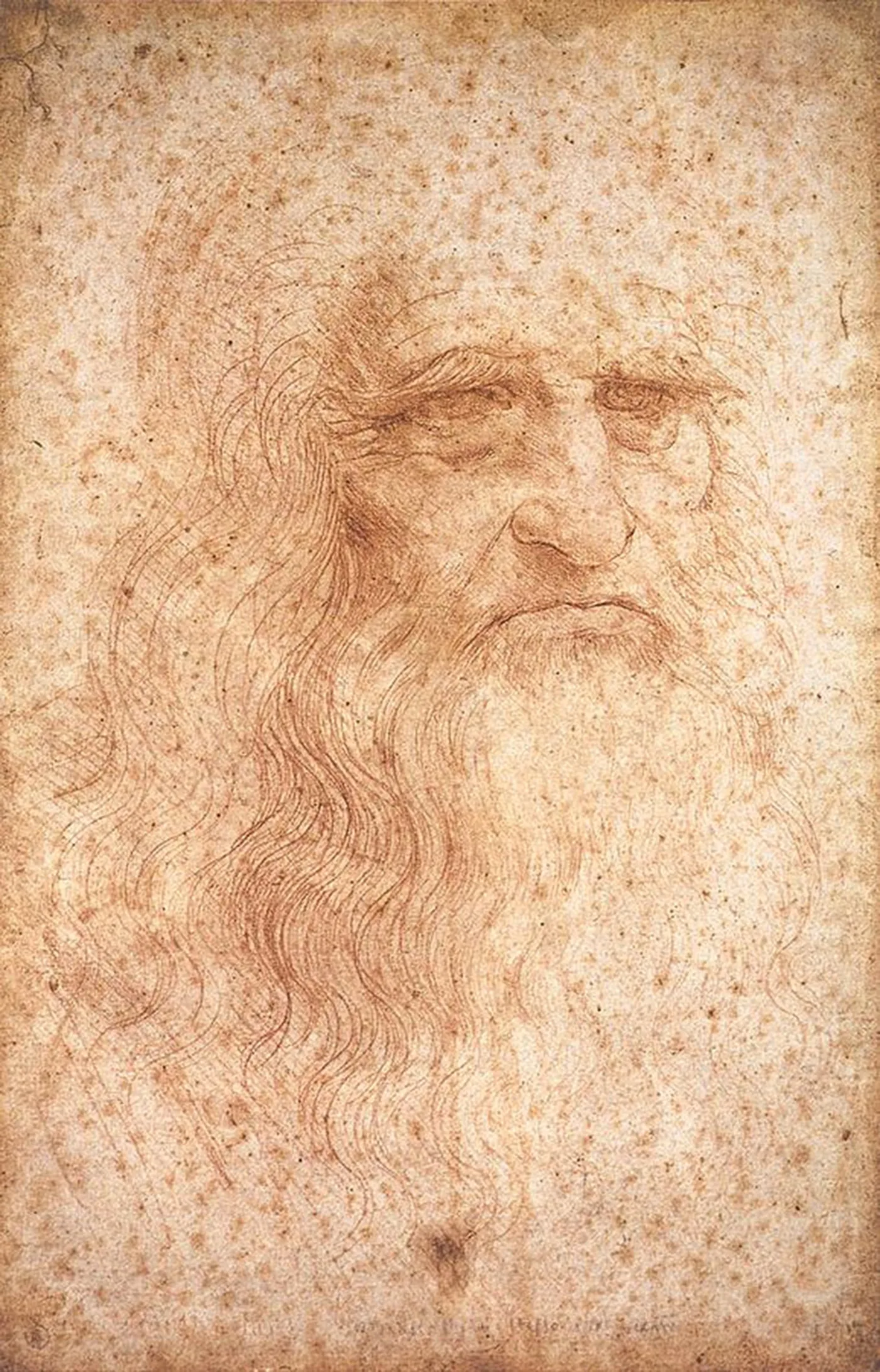
Leonardo da Vinci — one man, fourteen very different rankings. Presumed self-portrait in red chalk, Biblioteca Reale, Turin (public domain, via Wikimedia Commons).
On the morning of 21 August 1911 a former Louvre workman named Vincenzo Peruggia walked out of the museum with the Mona Lisa under his coat. Before that theft, 115 years ago this month, the painting was known mainly to specialists. The manhunt put it on front pages across the world and left it the most recognised object in Western art.1 The Louvre is still dealing with the consequences. In May 2026 the French Ministry of Culture named the architects who will build the painting a room of its own, 33,000 square feet under a project called Louvre Nouvelle Renaissance, because some 20,000 people a day now come to see one 79-centimetre panel.2
Leonardo painted it. He also dissected corpses, designed war machines, wrote backwards, and left most of what he started unfinished.
> Leonardo finished fewer than twenty-five major works in sixty-seven years, and the lists still cannot agree whether that makes him the greatest painter alive, the greatest scientist, or history's most spectacular quitter.
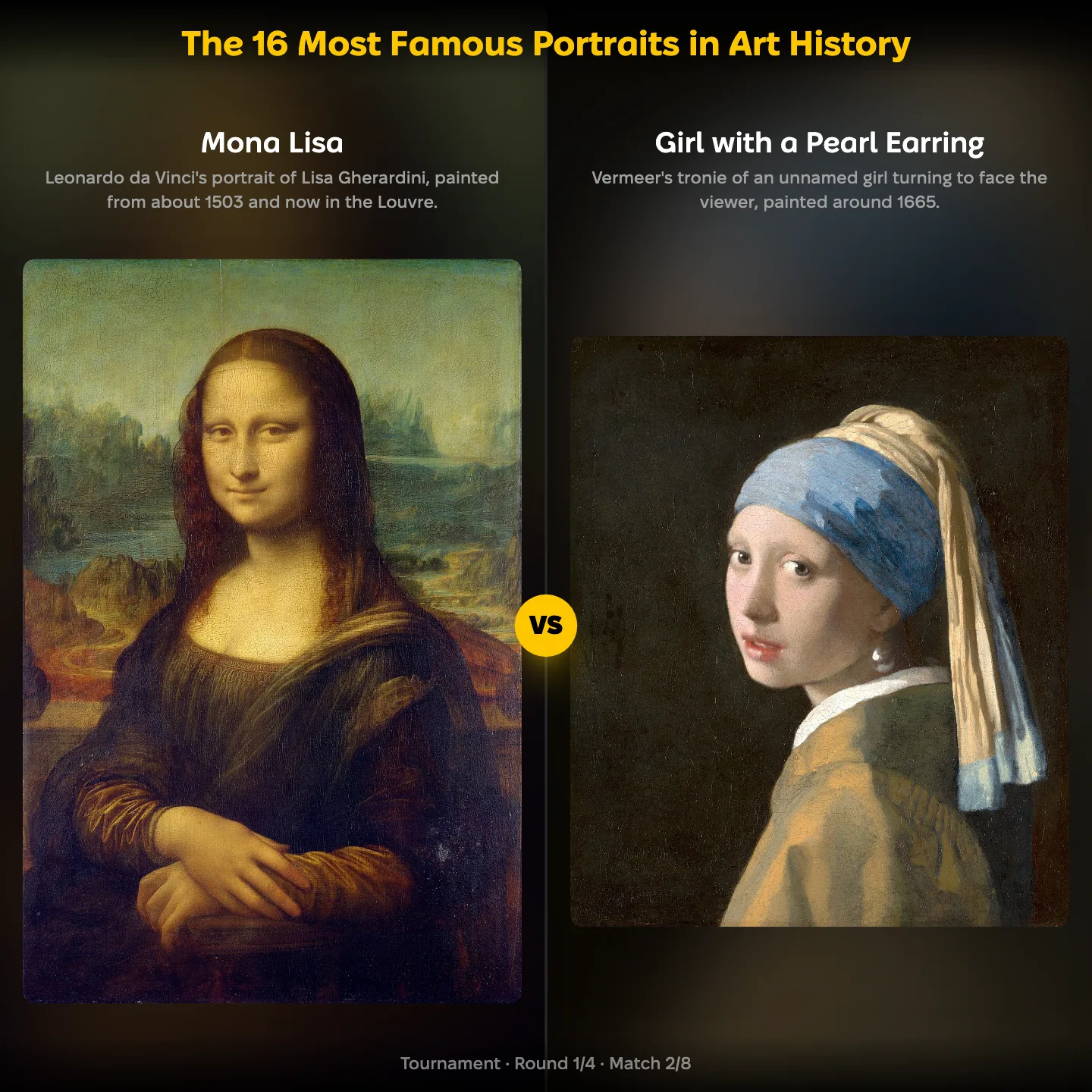
## Mona Lisa vs Girl with a Pearl Earring: the two faces everyone knows
This ranking asks which portrait in the whole history of art is the most famous, and it puts Leonardo in the field twice.
The Mona Lisa is the obvious entry and the odd one physically. It is oil on a poplar panel measuring 79.4 by 53.4 centimetres, smaller than most people expect from the queue and smaller than nearly everything else on this list.3
Vermeer's Girl with a Pearl Earring is the modern challenger, helped by a novel and a film. Van Eyck's Arnolfini couple, Velázquez's Las Meninas and Klimt's gold portrait of Adele Bloch-Bauer all have longer art-historical arguments behind them than either.
Leonardo's second entry is the quieter one. Lady with an Ermine hangs in Kraków, travels rarely, and shows Cecilia Gallerani holding an animal that was a pun on her lover's name.
Sixteen faces, and two of them are Leonardo's. Play it →
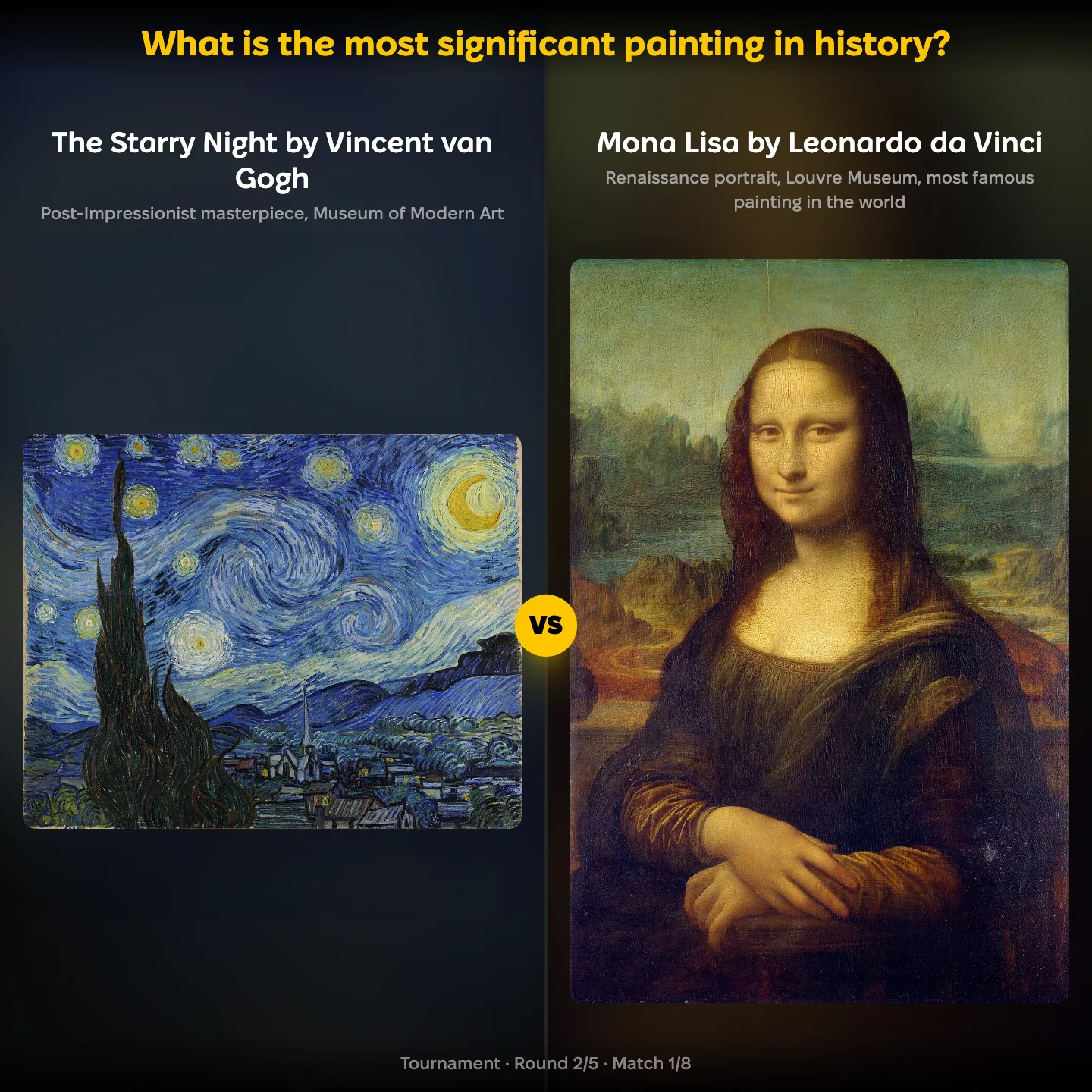
## The painting that outranks The Starry Night and Guernica
Open the question to every painting ever made and the field changes completely: Van Gogh's Starry Night, Picasso's Guernica, Munch's Scream, Botticelli's Birth of Venus.
Leonardo is the only artist here with two separate entries, so his own work splits his case in half.
The Mona Lisa reached the public slowly. Francis I most probably acquired it in 1518 through Leonardo's pupil Salaì, it stayed in the French royal collection for two and a half centuries, and it entered the Louvre only in 1793, after the Revolution turned a palace into a museum.3
The Last Supper never moved at all. It is a wall in a Milanese refectory.
Thirty-two paintings, and the same man twice. Play it →
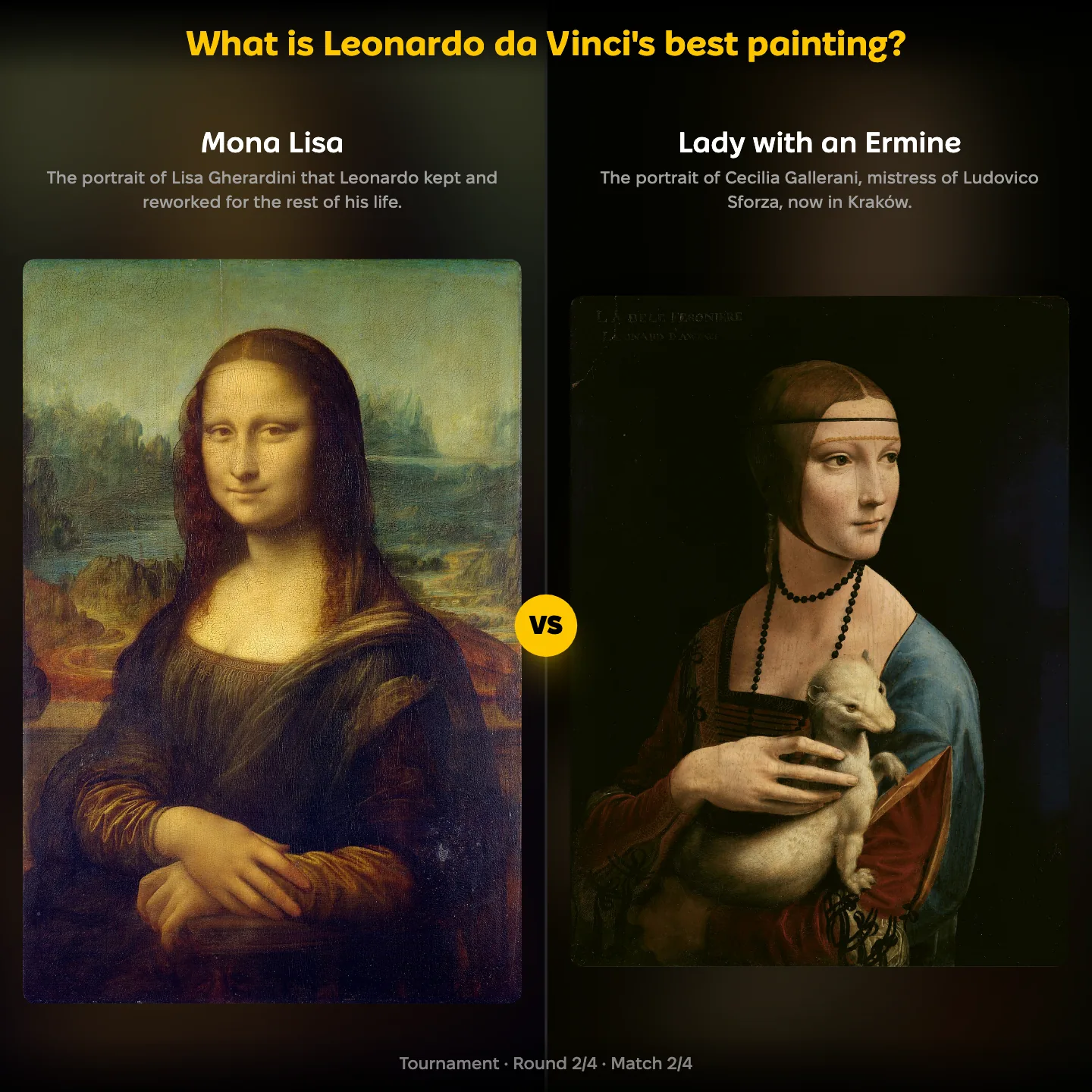
## Mona Lisa vs Lady with an Ermine: Leonardo against himself
Strip out every other artist and one question is left: which of Leonardo's own paintings is the best?
It is a short list by necessity. Fewer than twenty-five major works survive that are attributed to him, alongside a trail of unfinished panels and lost commissions. A prolific contemporary could produce as much in five years.4
The Mona Lisa's case is that Leonardo never let it go. He was still working on it in his last years, having carried it out of Florence, through Milan and into France rather than deliver it.
Lady with an Ermine makes the opposite case: it is sharp, finished, and painted while he was a salaried court artist in Milan with something to prove. Salvator Mundi, Ginevra de' Benci and the two Virgin of the Rocks panels are all here too, and the last of those exists in two versions because of a payment dispute that ran for decades.
Thirteen paintings, and he is only competing with himself. Play it →
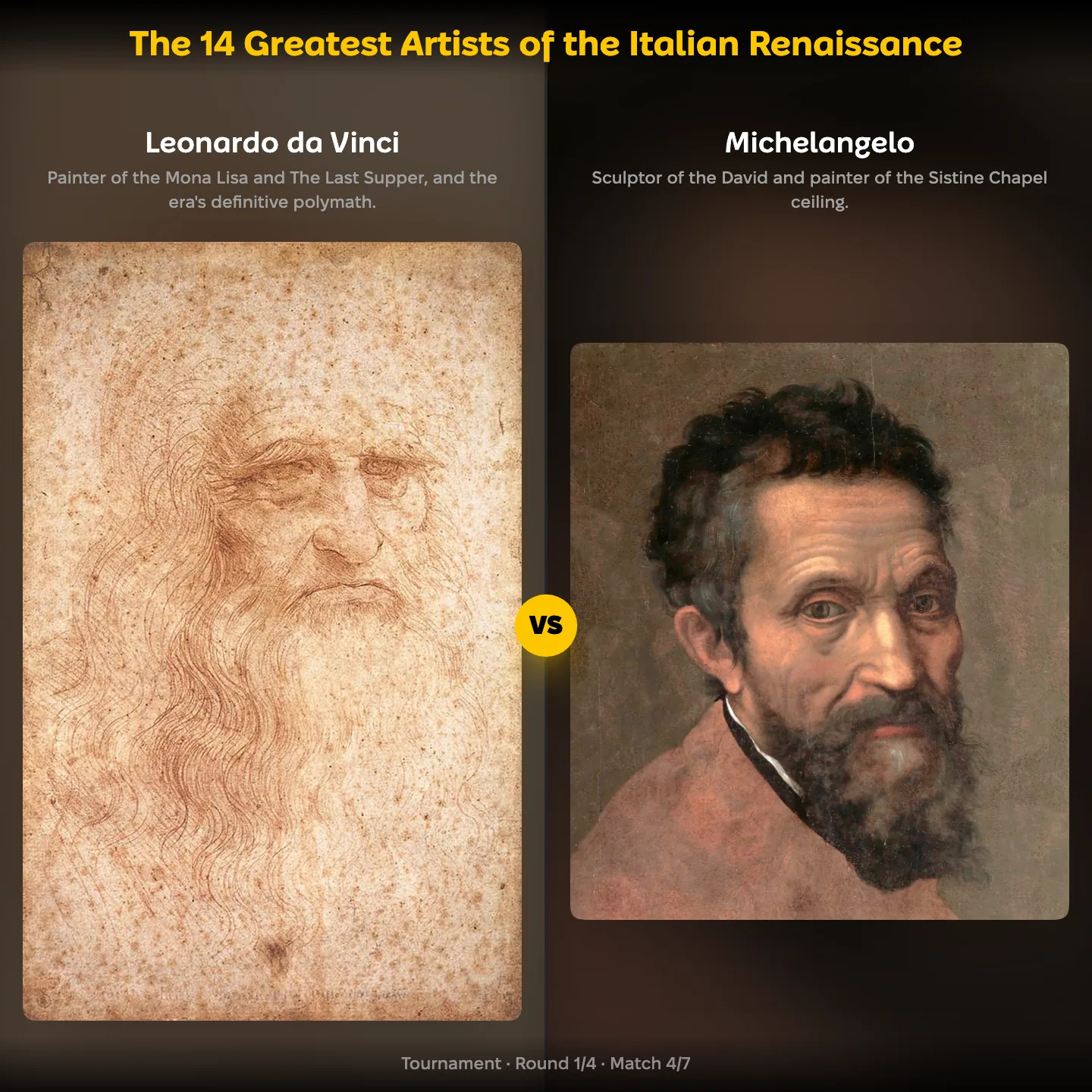
## Leonardo vs Michelangelo: the argument Florence never settled
Narrow the field to one century in one country and the competition gets much harder, because that century produced Michelangelo, Raphael, Titian, Donatello and Botticelli.
Michelangelo is the specific problem. He carved the David, painted the Sistine ceiling and designed the dome of St Peter's, and he finished all three. That is the exact quality Leonardo lacked.
The two men were once set to work on facing walls of the same hall in Florence's Palazzo Vecchio, Leonardo painting the Battle of Anghiari and Michelangelo the Battle of Cascina. Neither finished. Leonardo's version was wrecked by his own experiment with wax and heat, and survives only through copies made by other artists.4
Raphael, twenty-eight years younger than Leonardo, learned from both of them and outsold both in influence on the next three centuries of European painting.
The rivalry that had them painting facing walls of the same room. Play it →
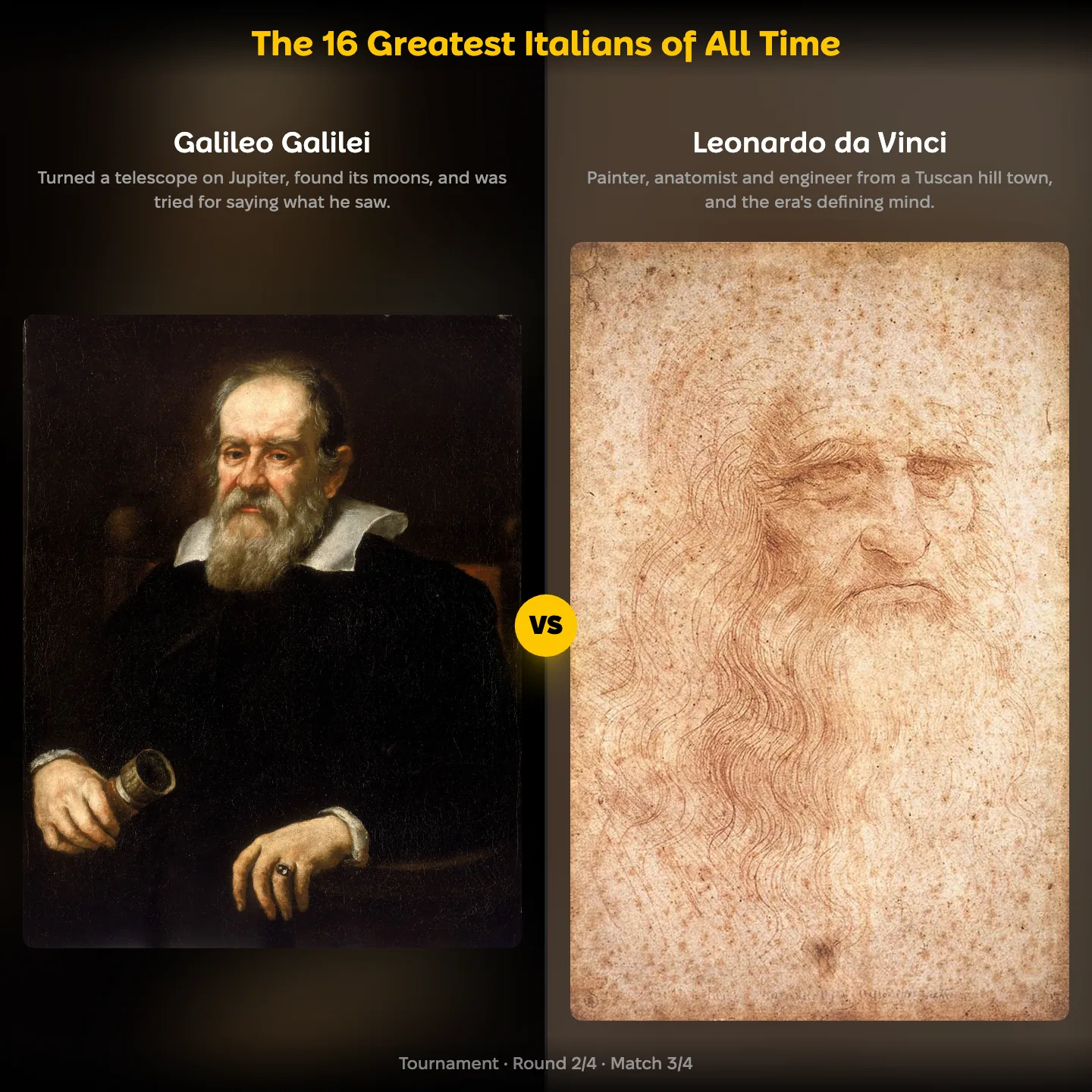
## Galileo, Dante and a two-thousand-year shortlist
Rank by nationality instead of by trade, and Leonardo is competing with poets, physicists, generals and a carmaker.
He was born on 15 April 1452 in or near the Tuscan hill town of Vinci, and died on 2 May 1519 at Clos Lucé in Amboise, in the service of the King of France.4 He spent his last years outside Italy, which is a small awkwardness for a list of the greatest Italians.
Dante has the strongest structural claim of anyone here: the Divine Comedy did not just describe Italy, it largely fixed the written language Italians still use.
Then there is everyone else: Galileo, tried for reporting what he saw through a telescope; Julius Caesar; Marconi and Fermi; Verdi and Pavarotti; Sophia Loren; Maria Montessori, whose teaching method now runs in schools on every continent.
Two thousand years of Italians, one shortlist. Play it →
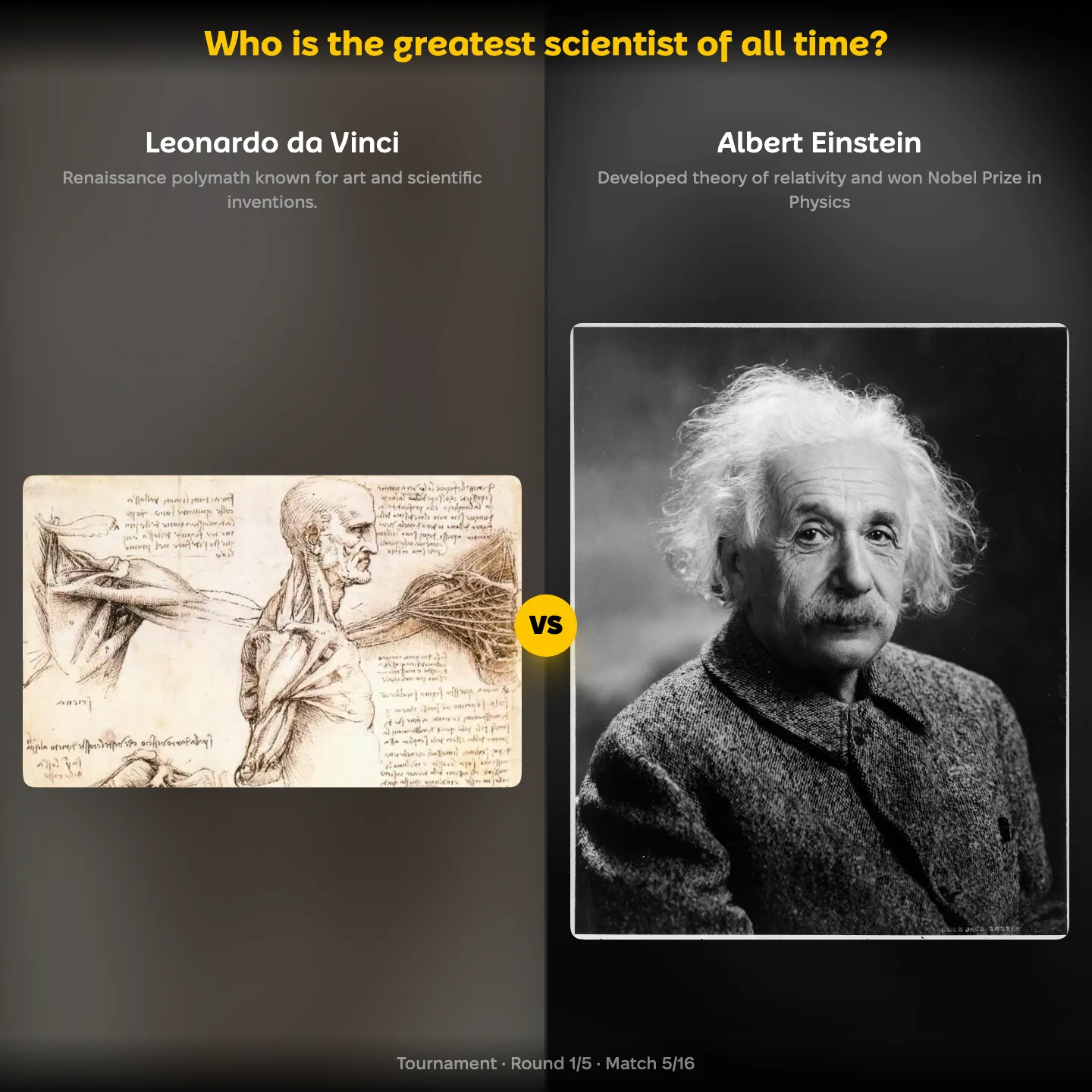
## Leonardo vs Einstein: the scientist who never published
This is the question where Leonardo's reputation and his record pull hardest against each other.
The notebooks are extraordinary. He worked out how water moves in rivers, why mountains hold fossils, and why the dark part of the Moon glows faintly, decades or centuries before the people usually credited with those ideas.
The problem is that he told almost nobody. The Codex Leicester, eighteen sheets folded into 72 pages covering exactly those subjects, sat in private hands for centuries and was bought by Bill Gates at Christie's in November 1994 for $30,802,500.5 Science advances by publication, and Leonardo published nothing.
Newton, Darwin, Curie and Einstein all did the opposite: they wrote it down, sent it out, and let other people test it. That is the counter-argument, and it is a strong one.
Thirty-two scientists, and one of them kept his results to himself. Play it →
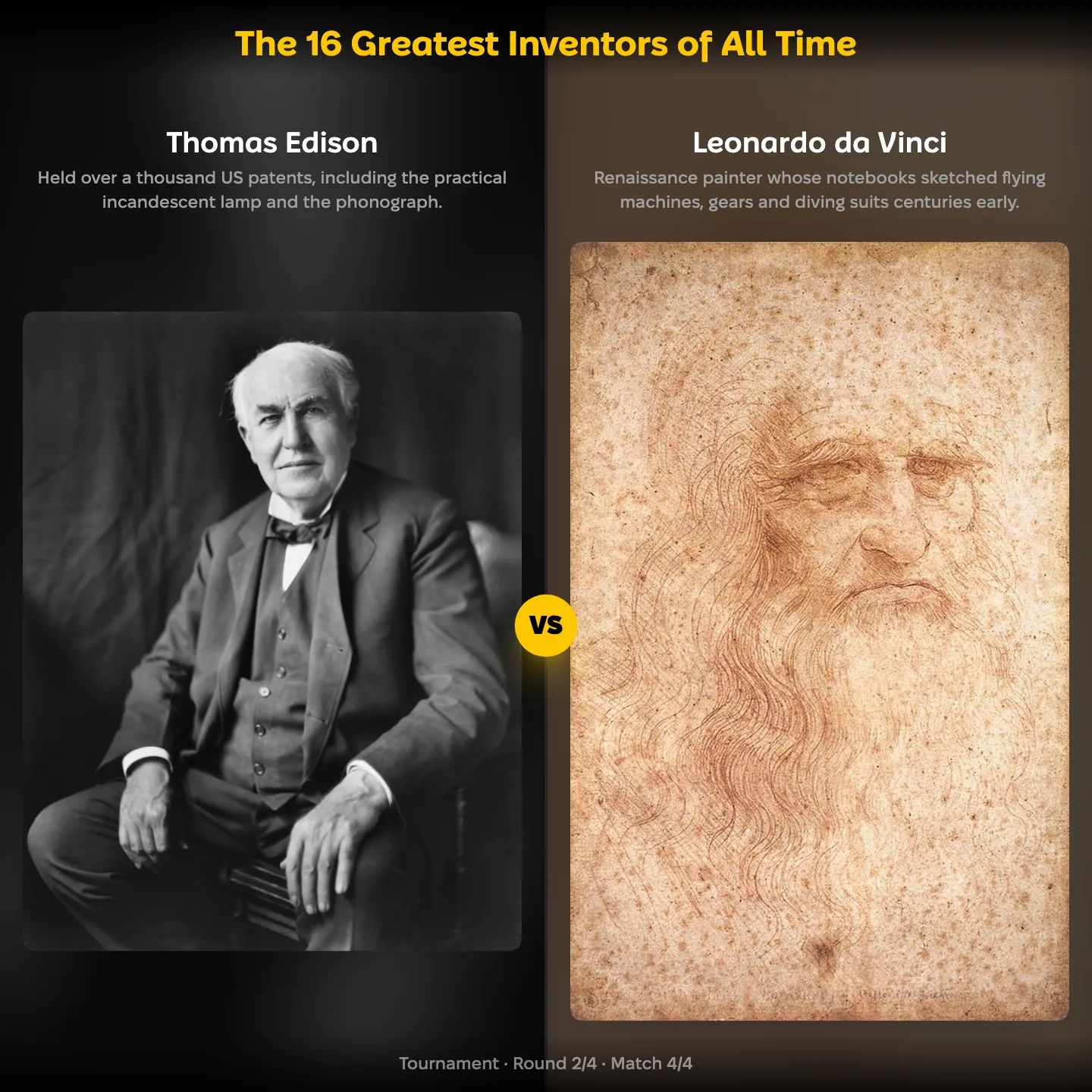
## Thomas Edison built his machines. Leonardo drew his.
The inventor ranking sets a designer against a group of people who shipped products.
Edison, Bell, Watt, Gutenberg and the Wright brothers all put working devices into the world.
Leonardo's flying machines, diving suits, gearing and war engines exist as drawings. None was built in his lifetime.
The clearest case is the one he took furthest. He spent years on a colossal bronze horse for Ludovico Sforza and finished a full-size clay model. In November 1494 Ludovico handed the bronze to his brother-in-law to be cast into cannon, and the monument was never made.4
Sixteen inventors, and one of them shipped nothing. Play it →
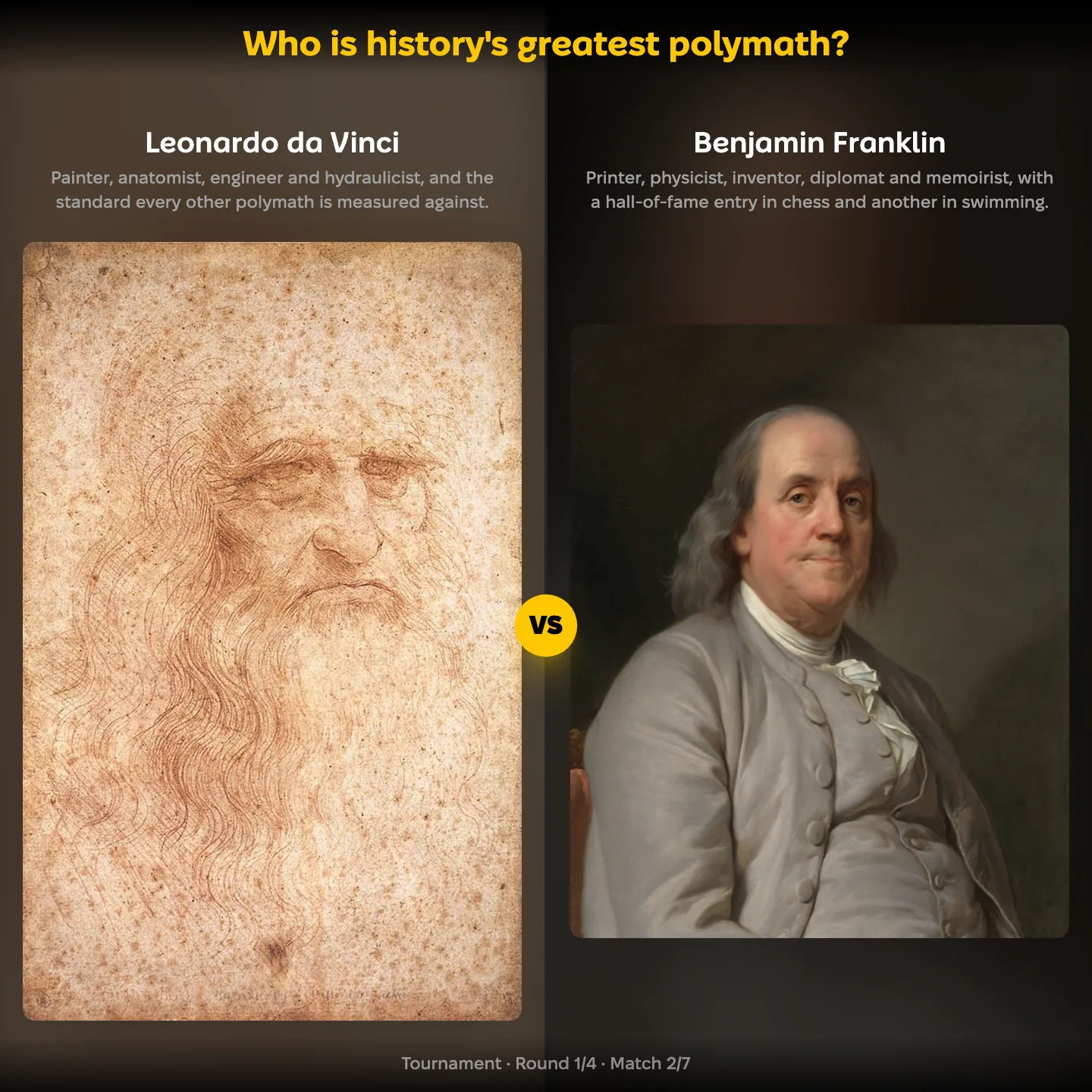
## Polymath: the category built around Leonardo, with Franklin next
Some rankings exist because one person made them necessary. This is one of them.
"Polymath" as a popular idea is more or less Leonardo-shaped: the painter who was also an anatomist, an engineer, a botanist and a military consultant, and who moved between them without treating any as a hobby. Every other name here gets measured against that.
Benjamin Franklin runs him closest. Printer, physicist, diplomat, postmaster and memoirist, Franklin also finished what he began: the lightning rod, the stove, the treaties.
Aristotle, Ibn Sina, Leibniz, Al-Biruni and Hildegard of Bingen cover two millennia and four continents between them. Each left a written body of work that circulated in their own lifetime, which is precisely what Leonardo did not.
Fourteen polymaths, and the word was practically coined for one of them. Play it →
## Vitruvian Man, and the case that paper was his real medium
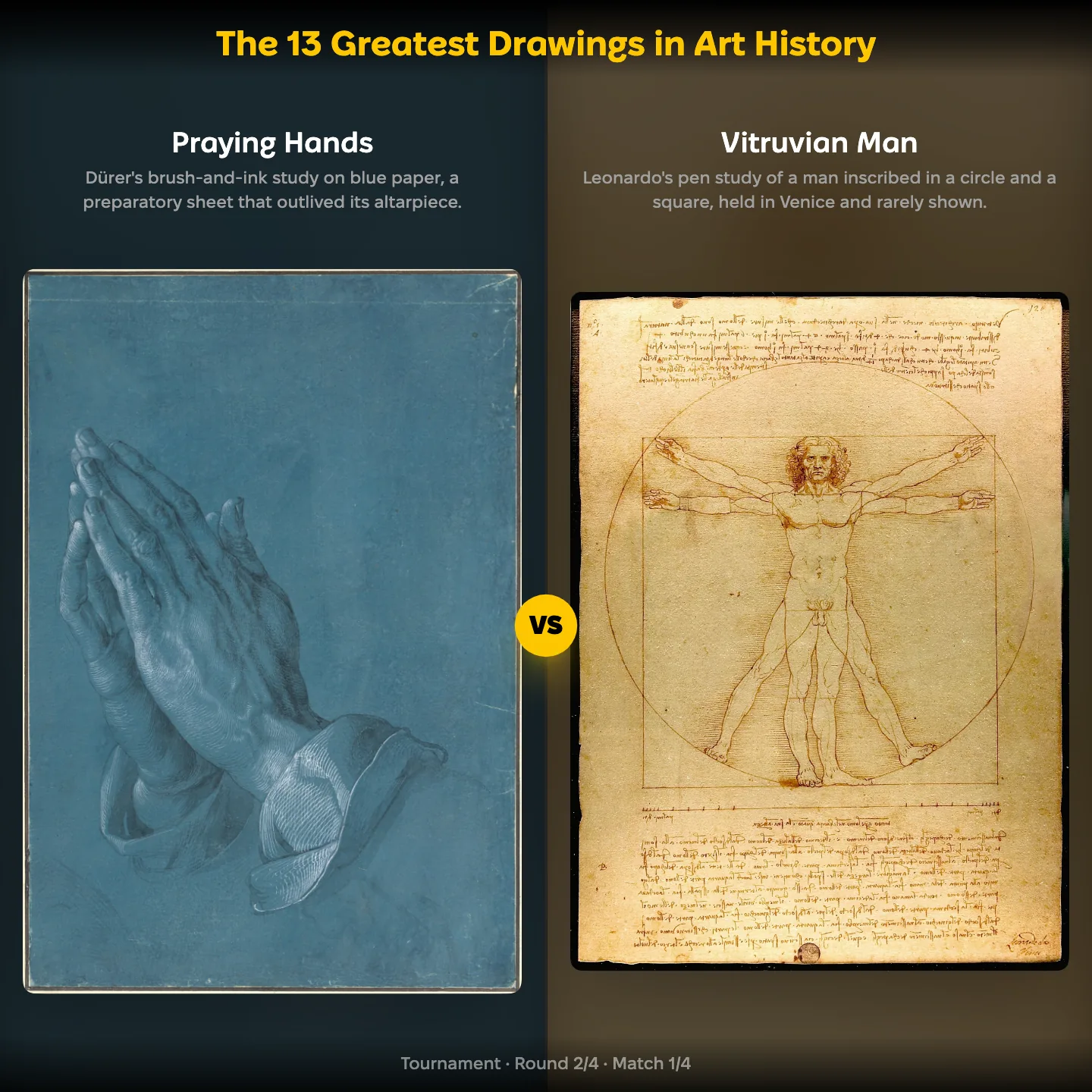
Drawings are where Leonardo stops sharing the field. Four of the thirteen works on this list are his.
The Vitruvian Man is the famous one: a man inscribed in a circle and a square, drawn to test an ancient Roman claim about human proportion. It belongs to the Gallerie dell'Accademia in Venice and is shown only rarely, because light damages the paper.4
His other three are stranger and better. There is a red-chalk sheet of a foetus curled inside the womb, drawn from dissection; the full-scale charcoal cartoon of the Virgin, Child and St Anne; and a silverpoint bear's head roughly the size of a postcard.
Dürer's Praying Hands and Young Hare, Michelangelo's Libyan Sibyl studies and Rembrandt's drawing of a performing elephant are the competition. On paper, with nobody commissioning and nothing to deliver, Leonardo worked at a level his finished paintings only occasionally reach. That is either the highest possible compliment or the sharpest possible criticism.
Thirteen drawings, four of them by the same hand. Play it →
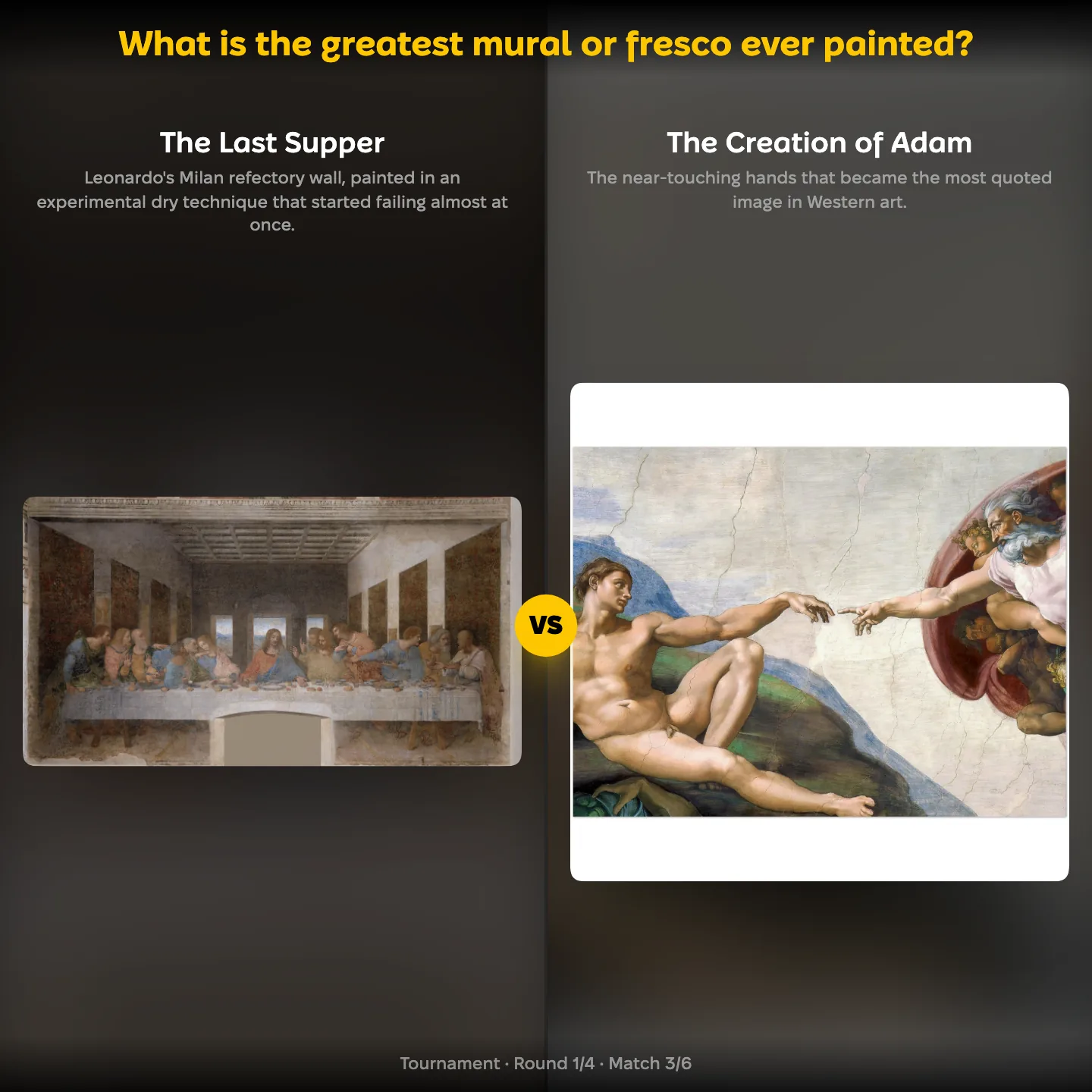
## The Last Supper vs The Creation of Adam: two walls, two techniques
Restrict the field to art painted directly onto architecture, and Leonardo has exactly one entry against a Sistine Chapel that supplies several.
The Last Supper covers the end wall of the refectory at Santa Maria delle Grazie in Milan. Its composition, twelve men reacting in four groups to a single sentence, is the reason it is quoted, parodied and reproduced more than almost any other religious image.
Its condition is the counter-argument. Leonardo would not work in true fresco, which demands speed and permits no revision, so he painted onto dry plaster in a tempera-and-oil mixture he devised himself. It began flaking within his own lifetime, and what hangs on that wall today is substantially the work of restorers.4
Michelangelo took the opposite approach on the Sistine ceiling: true fresco, wet plaster, no second chances, more than 300 figures. Five centuries later it is still the original paint.
Giotto's Scrovegni Chapel, Raphael's School of Athens, Lorenzetti's Siena council chamber and Diego Rivera's Detroit factory panels round out a list that stretches from 1305 to the 1930s.
One man refused to work in fresco. It shows. Play it →
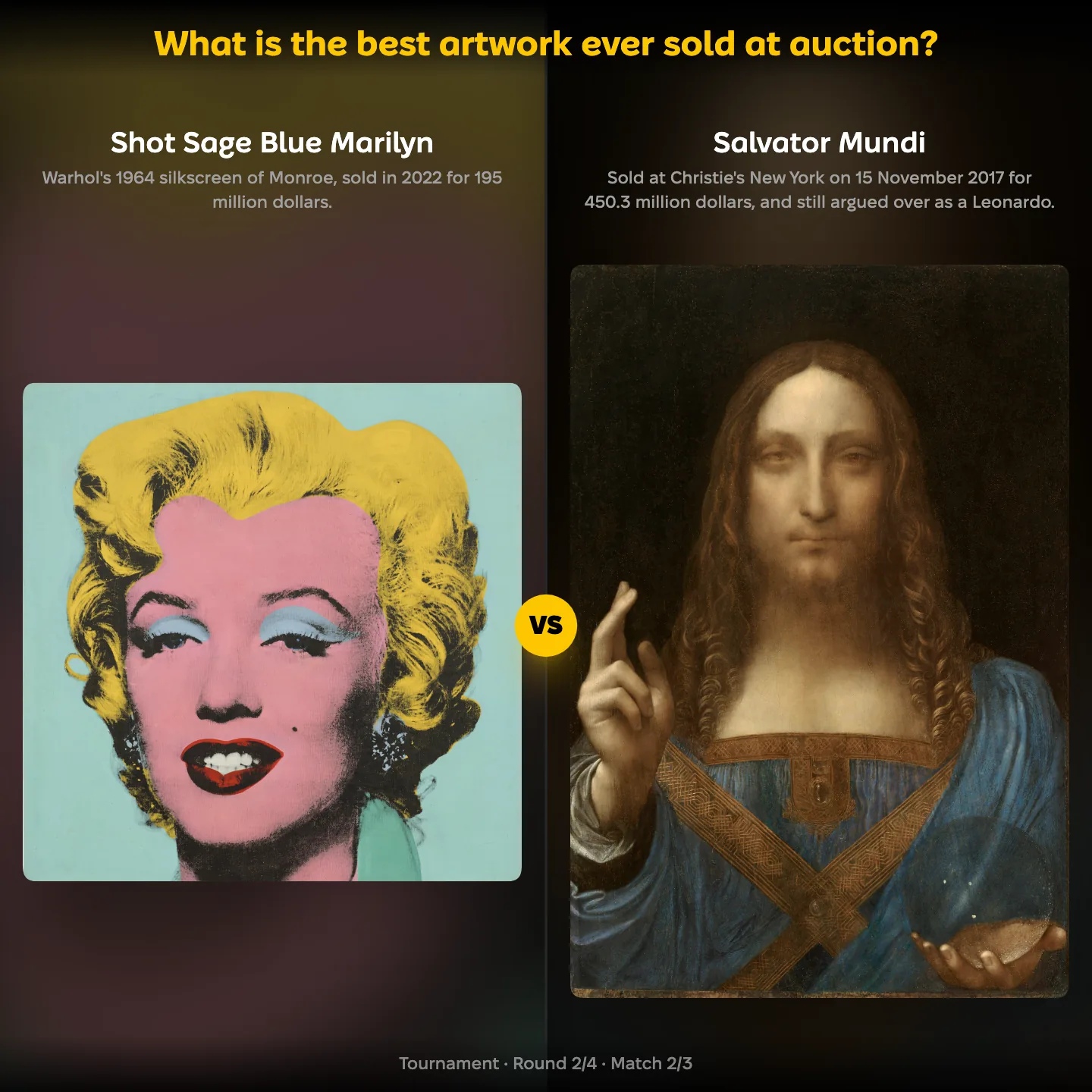
## Salvator Mundi and the $450.3 million question
Auction results replace critical judgement with money, and they hand Leonardo a record that comes with an asterisk.
Salvator Mundi sold at Christie's in New York on 15 November 2017 for $450.3 million: a $400 million hammer price plus just over $50 million in fees. No artwork has ever sold for more at auction.6
Whether Leonardo painted it is genuinely unsettled. Carmen Bambach has argued he executed only parts of it, with the rest left to his workshop; Charles Hope and Jacques Franck reject his hand altogether. Heavy restoration makes the question harder rather than easier to answer, and the painting has been in storage in Saudi Arabia since at least late 2020, so almost nobody can look at it.6
Everything else on the list is twentieth-century: Warhol's Marilyn, Basquiat's skull, Klimt, Rothko, Bacon's triptych of Lucian Freud, Van Gogh's Dr Gachet.
The most expensive painting ever sold, and the one scholars keep arguing about. Play it →
## 21 August 1911: the morning the Mona Lisa disappeared
This ranking is about crimes rather than artworks, and Leonardo is on it because of something done to his painting rather than by him.
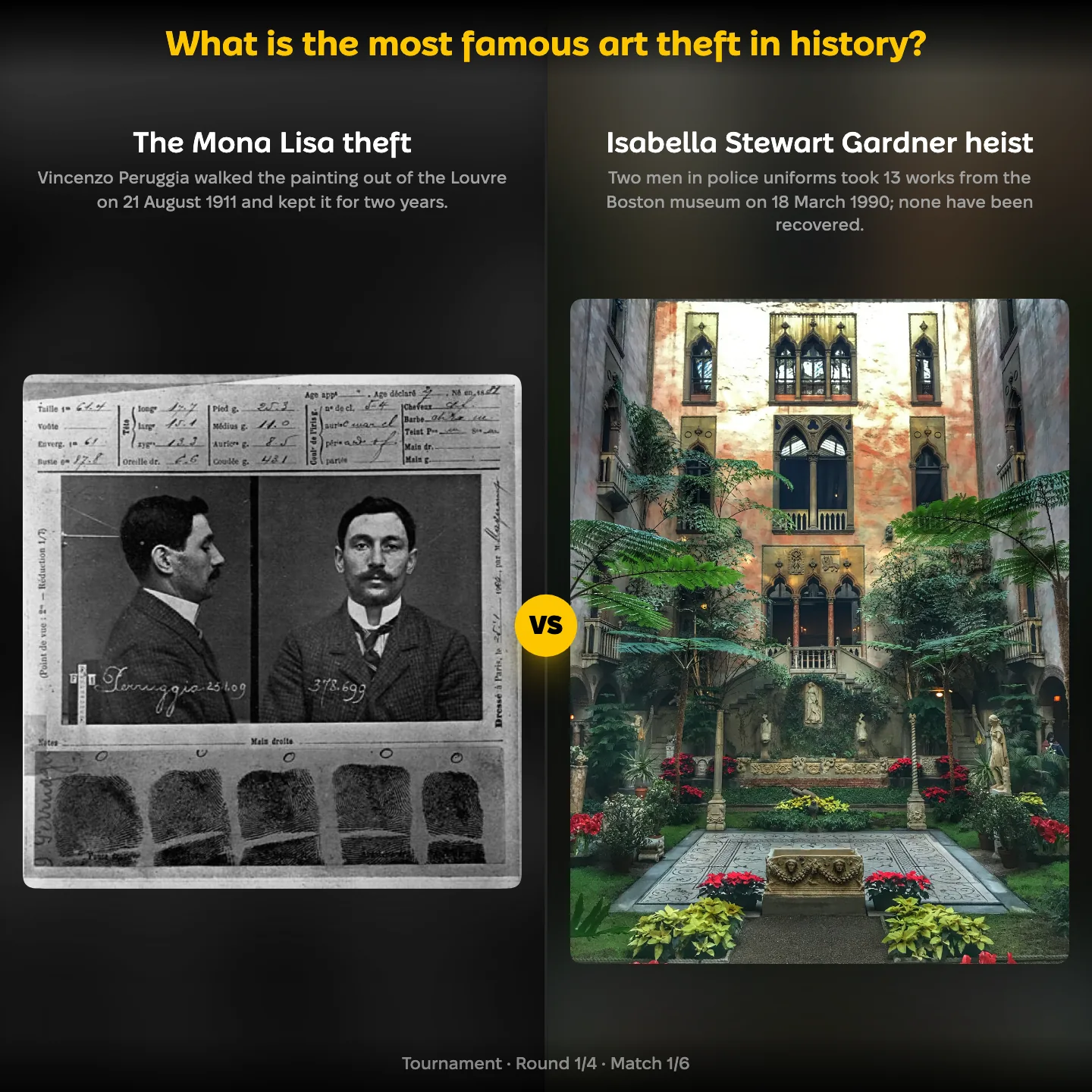
Peruggia had briefly worked at the Louvre building frames and cases. He put on his old uniform, walked in, waited, and left with the panel. It was gone for two years and turned up when he tried to sell it in Florence, apparently convinced he was returning Italian property to Italy.1
The Isabella Stewart Gardner heist of March 1990 is the larger crime by value: thirteen works taken from the Boston museum by two men in police uniform, none of them ever recovered, the empty frames still hanging.
Van Eyck's stolen Ghent Altarpiece panel, two separate thefts of Munch's Scream, the Dresden Green Vault raid and the 2025 Louvre jewel robbery fill out the rest. The Mona Lisa's entry is the only one where the crime made the victim famous.
The theft that turned a specialist's painting into a household one. Play it →
## The Adoration of the Magi, abandoned in 1482
Now the category that suits Leonardo uncomfortably well, because he has four entries on a list of twelve.
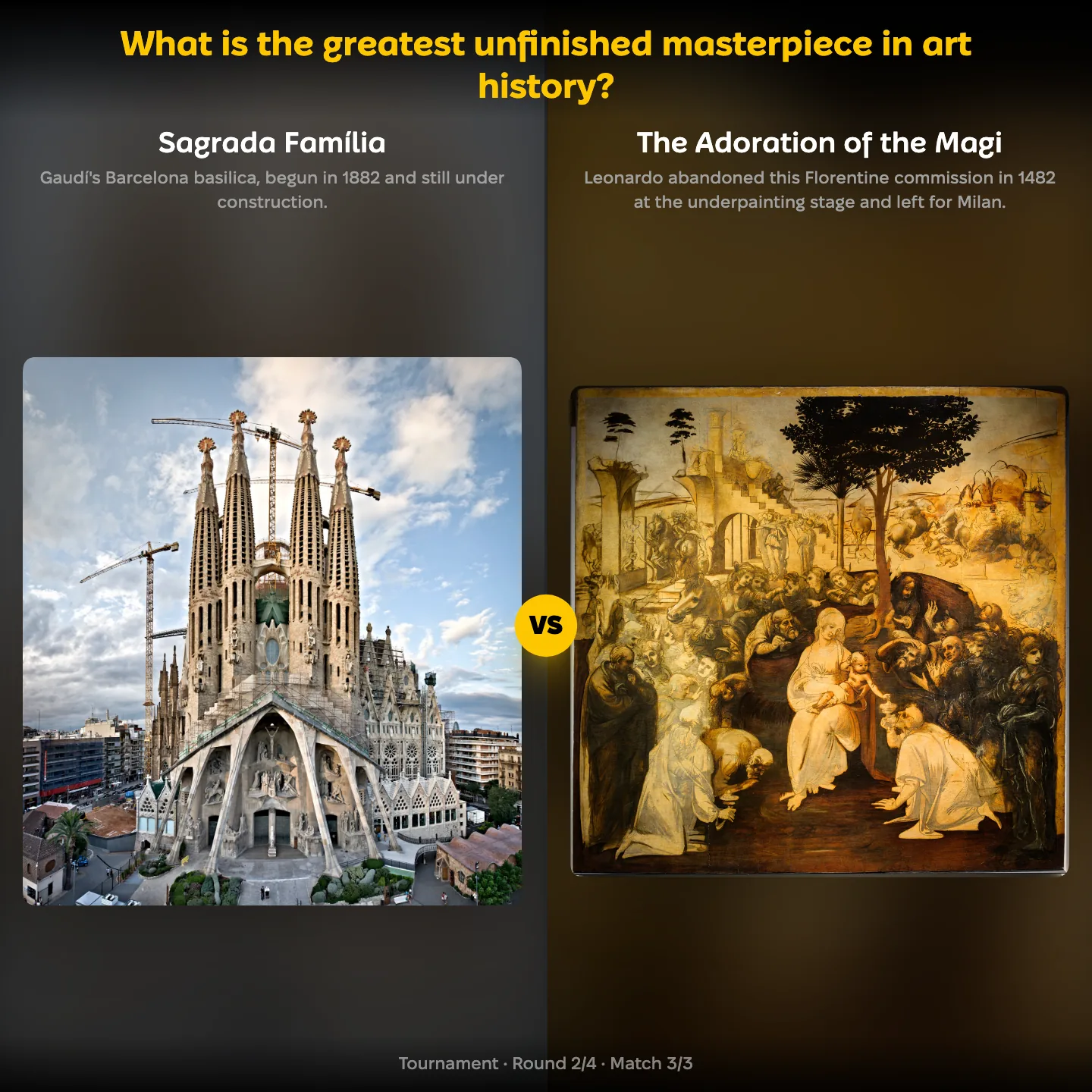
The Adoration of the Magi was a serious Florentine commission. He laid in the composition, a crowd and a ruin and rearing horses, in brown underpaint, then left for Milan in 1482 and never came back to it. What hangs in the Uffizi is a ghost of a painting, and one of the most-studied objects in the museum.4
His other three are St Jerome in the Wilderness, the wrecked Battle of Anghiari, and the Sforza horse that became cannon. Nobody else on the list has more than two.
Gaudí's Sagrada Família is the opposite kind of unfinished: begun in 1882, still under construction, still gaining towers, with an end date that keeps moving. Michelangelo's Rondanini Pietà was being cut days before he died at 88, and Rodin worked on the Gates of Hell for 37 years without delivering them.
There is a case that unfinished is a category Leonardo essentially owns, and a harder case that owning it is not a compliment.
Twelve unfinished works. Four of them his. Play it →
## Mona Lisa vs Cattelan's banana: the list where winning stings
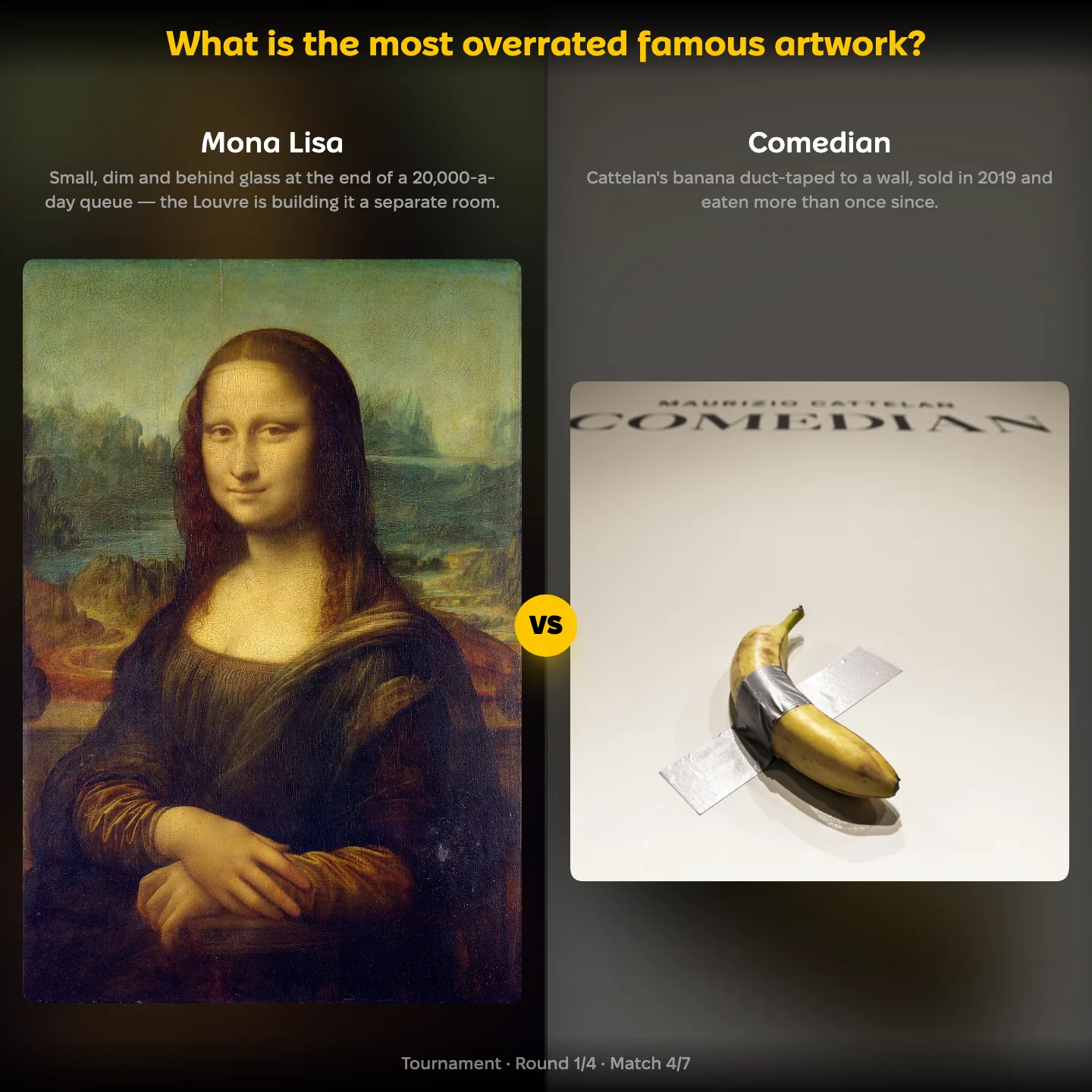
The final question inverts every other one. It asks which famous artwork is overrated, and the Mona Lisa is the standing answer.
The complaint is rarely about the painting. It is about the experience: a small panel behind glass at the end of a long room, photographed by a crowd that arrives, raises its phones and leaves. The Louvre is not arguing. Its billion-euro redevelopment exists partly to move the picture into a dedicated space by 2031 so the other 30,000 works in the building get looked at.2
Its rivals here are mostly modern and mostly deliberate provocation: Duchamp's urinal, Malevich's black square, Hirst's shark, Koons's balloon dog, and Maurizio Cattelan's banana taped to a wall, which has now been eaten more than once.
The defence of the Mona Lisa is that a painting cannot be blamed for its own crowd. Take away the queue and the bulletproof glass, and it is a portrait of a Florentine merchant's wife that its painter could not stop reworking.
Fourteen artworks, and one of them draws 20,000 people a day. Play it →
## Fourteen lists, one man, no agreement
The pattern across these fourteen rankings is not that Leonardo moves up and down. It is that the same trait keeps changing sign. The refusal to work fast, ship, publish or deliver is what wrecked the Battle of Anghiari, cost him the bronze horse and left the Adoration as underpaint. It is also why the notebooks, the drawings and a portrait he never handed over exist at all.
You can still stand where he died. The Château du Clos Lucé at Amboise, the house Francis I gave him, is running an exhibition on his forty-five years of work on water until 13 September 2026, with two original drawings on loan from the Ambrosiana in Milan.7
None of the lists above hands you a scoreboard. They put one thing beside another, ask which you prefer, and assemble the order out of those single verdicts, which is [how pairwise voting works](/articles/what-is-pairwise-comparison) and why the result belongs to whoever turned up.
Disagree with any of them? Every list above is open, and building your own takes a few minutes.
## More rankings, more angles
- [Theodore Roosevelt: Rough Rider, Nobel Laureate, Teddy Bear](/articles/theodore-roosevelt-ranked-many-ways) — a president who kept turning up in unrelated categories
- [15 Rankings, One Benjamin Franklin](/articles/benjamin-franklin-ranked-many-ways) — the other polymath on that list, and the other side of the argument
- [How rankings are scored](/articles/how-rankings-are-scored) — what happens to a result after each individual matchup
Sources
The Washington Post — the 1911 theft of the Mona Lisa by Vincenzo Peruggia and how it made the painting famous: washingtonpost.com (checked 2026-08-16)
Smithsonian Magazine — the Louvre Nouvelle Renaissance project, the 19 May 2026 architect announcement, the 33,000 sq ft Mona Lisa gallery due 2031 and the ~20,000 daily visitors: smithsonianmag.com (checked 2026-08-16)
Musée du Louvre collections catalogue — the Mona Lisa's dating (1503–1519), dimensions (79.4 × 53.4 cm), acquisition by Francis I in 1518 and entry into the Louvre in 1793: collections.louvre.fr (checked 2026-08-16)
Wikipedia — Leonardo da Vinci: birth and death dates, the fewer-than-25 surviving attributed works, the abandoned Adoration of the Magi and Battle of Anghiari, the Sforza bronze melted for cannon in November 1494, the Last Supper's failing technique, and the Vitruvian Man at the Gallerie dell'Accademia: en.wikipedia.org (checked 2026-08-16)
Wikipedia — Codex Leicester: bought by Bill Gates at Christie's New York on 11 November 1994 for $30,802,500; 18 sheets forming 72 pages on water, fossils and the light of the Moon: en.wikipedia.org (checked 2026-08-16)
Wikipedia — Salvator Mundi: the $450.3 million Christie's sale on 15 November 2017, the attribution dispute (Bambach, Hope, Franck) and the painting's storage in Saudi Arabia: en.wikipedia.org (checked 2026-08-16)
Amboise Val de Loire tourist office — "Leonardo da Vinci, Master of Water" at the Château du Clos Lucé, 6 June to 13 September 2026, with two original drawings loaned by the Biblioteca Ambrosiana: amboise-valdeloire.com (checked 2026-08-16)